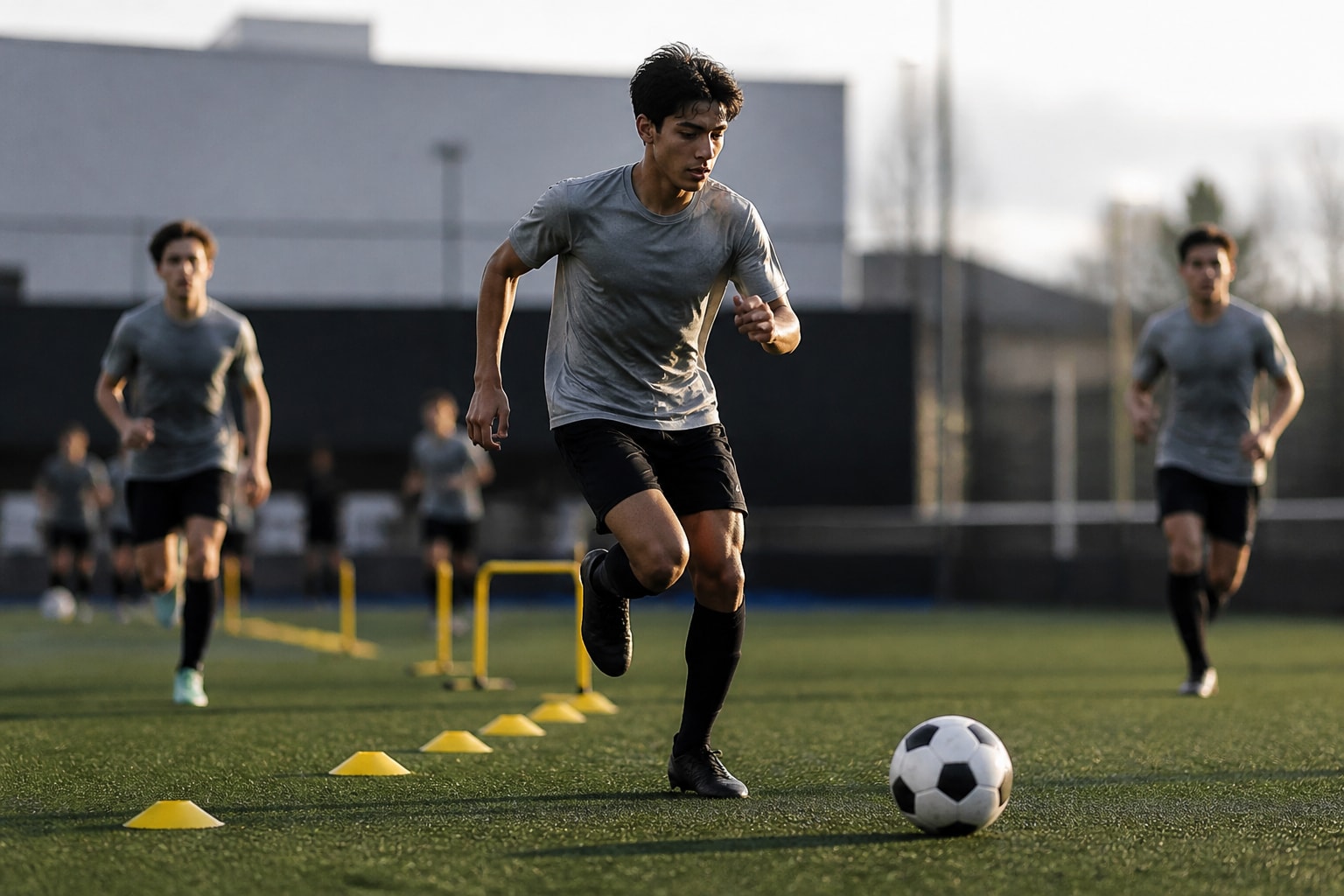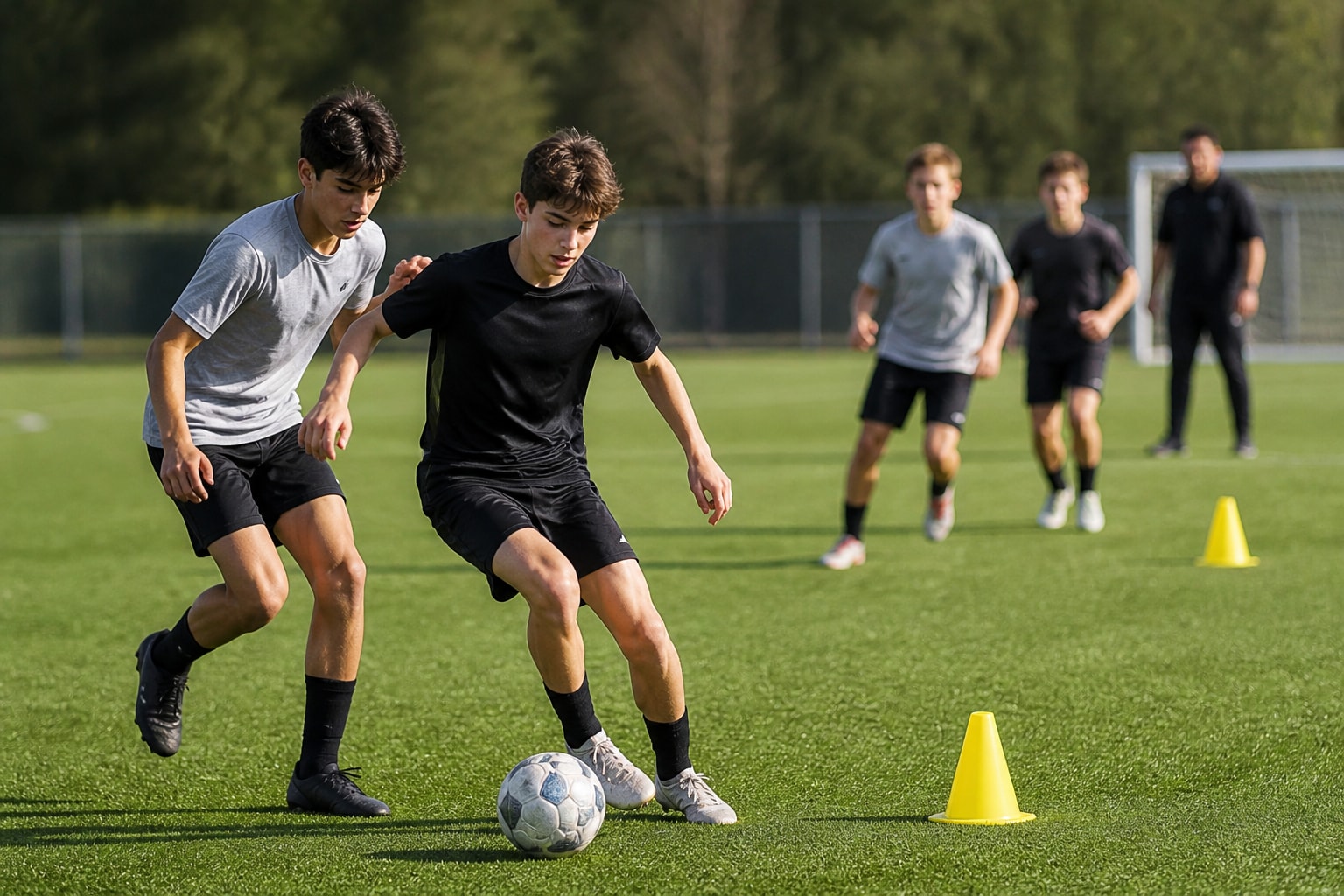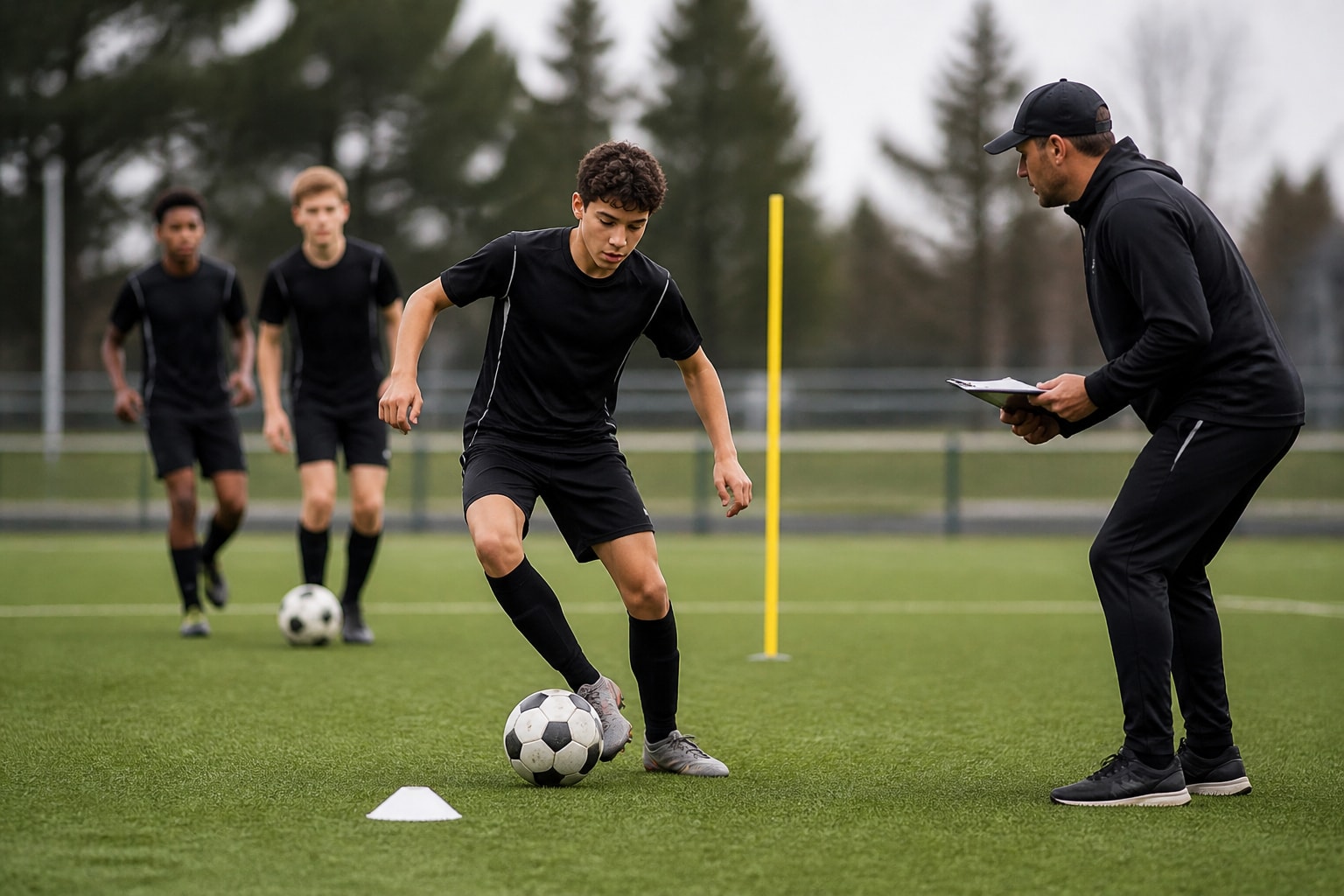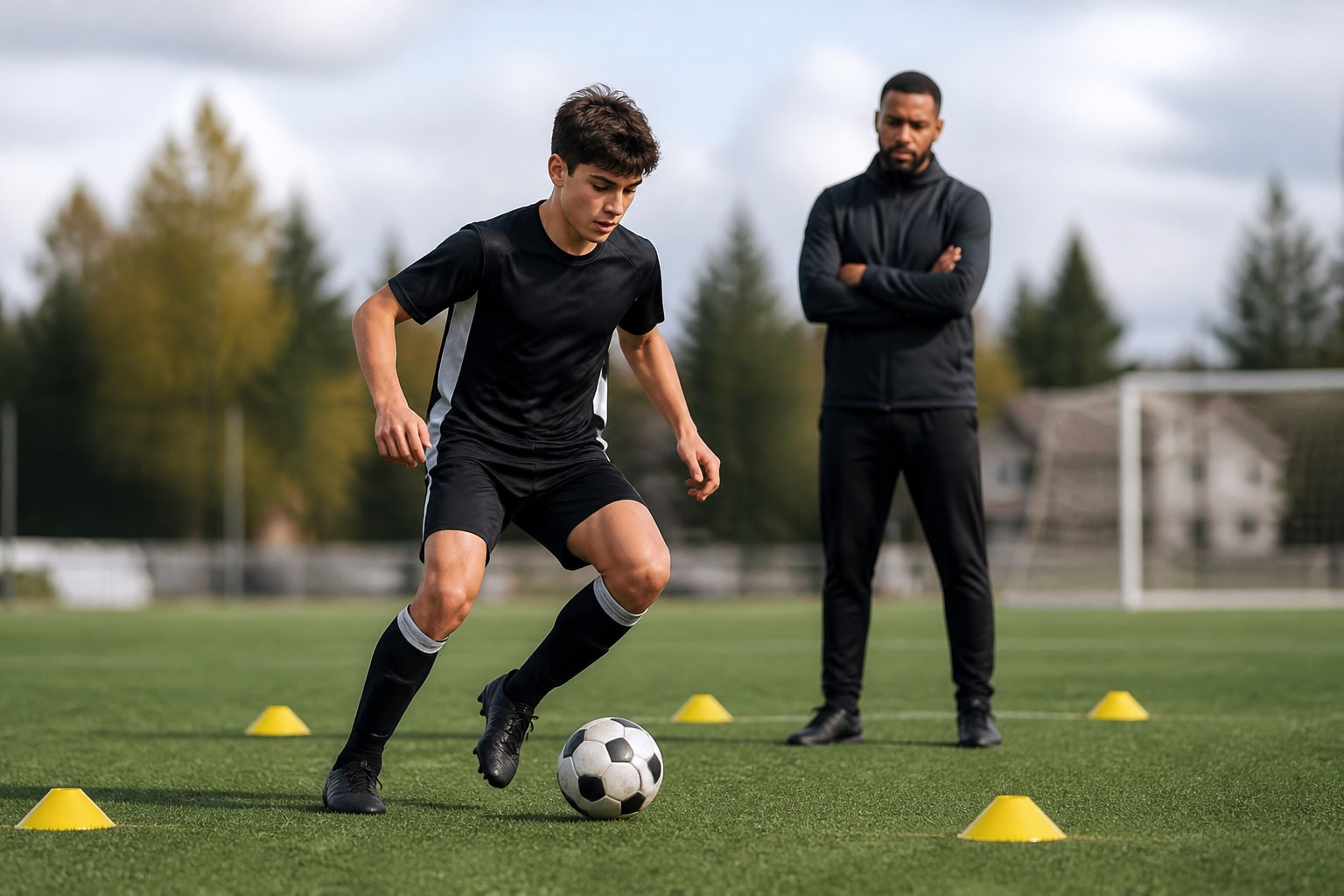
Effective U17 soccer training in Surrey BC combines small-group, high-touch technical work with tactical coaching, age-appropriate physical development, and attention to the psychological demands of competing for a place on a higher-level team. For a player born in 2009, 2026 is a pivotal year: roster decisions, college exposure, and academy pathways all start to narrow. This guide explains what to look for in a program, how to structure a training week around club commitments, and how to protect your player's health while they push toward the next level.
What U17 Players Need From Training in 2026
U17 players need training that bridges youth development and senior-level demands, which means faster decision-making, greater physical output, and a clearer sense of role. For 2026, U17 corresponds to players born in 2009 in the Cascadia Spring League age divisions, so most families reading this have a player in their final or second-to-last year of youth-age eligibility.
At this age, the gap between players is rarely about effort. It shows up in four areas:
- Technical: first touch under pressure, passing range, and the ability to execute with either foot at game speed.
- Tactical: reading the game, positioning without the ball, and understanding how a team shifts between phases of play.
- Physical: speed, strength, and endurance that match the demands of a competitive league schedule.
- Psychological: confidence, resilience after mistakes, and the focus to perform when selection is on the line.
A program that treats only one of these areas leaves the player incomplete. A winger with excellent footwork who cannot track back, or a midfielder with great vision who tires in the second half, will be limited regardless of talent.
What to Look for in a Surrey U17 Program
The strongest programs share a few measurable traits: qualified coaches, low player-to-coach ratios, grouping by ability, and a clear development framework. Ask any provider about each of these directly.
Coaching Credentials
Check whether coaches hold licenses through Canada Soccer. Licensing signals formal training in player development, session design, and age-appropriate coaching. At Strive Soccer Academy, all coaches are fully licensed through Canada Soccer, ranging from National A Licenses to Soccer for Life certifications for developing coaches.
Ratio and Touches
A large group means fewer touches per player. Small-sided, high-touch sessions are designed to give each player many touches in a single session, which is the volume that builds technique into habit. Strive Soccer Academy runs an average 8:1 player-to-coach ratio, which allows more individual feedback than a large group would.
Grouping by Level
Mixed-ability groups can hold back advanced players or overwhelm those still developing. Skill-based grouping and bio-banding, which accounts for physical maturity as well as age, keep players training at a level that challenges them without discouraging them. At 15 and 16, maturity differences can be dramatic, so this matters more than many families expect.

How Training Fits Around Your Club Schedule
Supplemental training works best when it addresses what club practice cannot, rather than duplicating it. Most U17 players already train two to three times a week with their club, and a full team practice often has too many players for individual technical correction.
Extra sessions fill that gap. Soccer training outside club practice lets a player work on weaknesses identified by their coach, whether that is finishing with the weaker foot, receiving on the half-turn, or defending in one-on-one situations.
Timing matters as well. Surrey's club calendar is seasonal, and registration windows close quickly. For example, Surrey United’s 2026 spring registration is open to U6 through U18 players, with a stated deadline of March 1, 2026, or earlier if capacity is reached. Families who plan training around those dates avoid scrambling when rosters fill.
Year-round programming helps maintain continuity. Strive Soccer Academy offers training across the fall and spring outdoor leagues and winter indoor and futsal blocks. Indoor training in Surrey is especially valuable in the wet months, because futsal's tight spaces force quicker thinking and cleaner touches. The same skills carry back to the grass in spring.
A Sample Weekly Structure for a Committed U17
A balanced week for a competitive U17 typically includes club training, one or two targeted technical sessions, strength and mobility work, and a genuine rest day. The exact mix depends on the player's position, club commitments, and school load.
Here is one hypothetical framework a family might discuss with their coaches:
- Monday: club practice (tactical focus, team shape).
- Tuesday: small-group technical session (receiving, passing under pressure).
- Wednesday: club practice plus a short mobility and warm-up routine.
- Thursday: strength and speed work, or an individual session on a weakness.
- Friday: light activation before the match.
- Saturday: match day.
- Sunday: full rest or low-intensity recovery.
This is an illustration, not a prescription. A goalkeeper, a center back, and a striker will need different emphases, and a player coming off a heavy match week may need to scale back. For positional work, goalkeeper training is a separate discipline with its own technical demands and deserves dedicated attention.
Building Workload Without Breaking Down
The most common setback for committed teenage players is injury from doing too much too soon, so workload management is part of training, not a separate concern. Active & Safe reports that a gradual workload buildup can reduce soccer injury risk, and it also recommends completing the 11+ warm-up at least twice weekly.
Practical steps for families:
- Increase training volume gradually, especially after a break or at the start of a new season.
- Build the 11+ warm-up into every session, not only matches.
- Watch for early warning signs such as persistent soreness, changes in running mechanics, or reluctance to train.
- Communicate with coaches when a player is also carrying a heavy academic load or playing for multiple teams.
Bio-banding supports this approach. A player who has grown several inches in one year may be physically awkward and more injury-prone for a time, and a program that adjusts expectations accordingly protects both their development and their confidence.
Sleep, Recovery, and the Rest of the Week
Training sessions produce the stimulus, but sleep and recovery produce the adaptation. The Canadian 24-Hour Movement Guidelines recommend that teens aged 14 to 17 get 8 to 10 hours of uninterrupted sleep nightly, keep consistent bed and wake times, and limit recreational screen time to no more than two hours per day.
For a U17 balancing school, a club schedule, and extra training, those numbers are easy to miss. Late evening sessions followed by homework and a phone can compress sleep to six or seven hours, which blunts both physical recovery and focus on the field.
The same guidelines recommend at least 60 minutes of moderate-to-vigorous physical activity daily, with vigorous activity and muscle- and bone-strengthening activity each at least three days per week. A committed soccer player usually exceeds this, which is exactly why recovery habits deserve as much planning as the sessions themselves.
Simple habits that help:
- A fixed bedtime that holds on school nights and match weekends.
- A protein-and-carbohydrate meal within a reasonable window after hard sessions.
- Screens out of the bedroom.
- One scheduled rest day per week, treated as non-negotiable.
The Psychological Side of U17 Soccer
The mental side of the game becomes decisive at U17, because the margins between players are small and the pressure is real. Tryouts, roster cuts, and conversations about college or academy pathways all arrive in the same stretch of a player's life.
Good training addresses this directly. Players learn to reset after a mistake, to stay composed when a coach is critical, and to compete for a spot without it consuming their identity. These are teachable habits, and they develop when sessions are demanding but supportive, with coaches who give specific feedback rather than only results-based praise.
Parents influence this more than they sometimes realize. A few approaches that tend to help:
- Ask about effort and learning after a match before asking about the score.
- Let the coach coach, and keep sideline commentary minimal.
- Help your player set process goals, such as completing a set number of quality passes or improving their weak-foot finishing, rather than outcome goals they cannot control.
Understanding the Pathway: College, Academy, and Beyond
Realistic pathway planning at U17 means knowing which doors are open, what each requires, and how many years of development remain. Strive Soccer Academy has over 20 years of experience developing youth players from grassroots level, and some Strive-trained players have gone on to professional academy environments, U SPORTS and NCAA scholarships, and overseas trials in Europe.
Those outcomes come from years of consistent development, not a single showcase. Families should be wary of any program that promises a fast track to a professional contract. The players who progress are generally those who combined strong technical habits, good decision-making, physical readiness, and mental resilience over several seasons.
A practical planning checklist for a U17:
- Identify target pathways (college, academy, club-level competition) and the timelines each follows.
- Ask the current coach for honest feedback on strengths and gaps.
- Build a development plan around the gaps, using targeted training rather than more of the same.
- Document highlights and match footage early, since recruiters often want a season of evidence.
- Keep academics strong, because eligibility and scholarship offers depend on grades as well as soccer.
Programs that focus on competitive development in Surrey can help players test themselves against stronger opposition, which is useful preparation for the intensity of the next level.
Choosing Between Group and Individual Sessions
Both formats have a place, and the right balance depends on the player's current needs. Small-group sessions develop game-realistic skills, because there are teammates, opponents, and decisions to make. Small group training in Surrey preserves that competitive environment while keeping coach attention high.
One-on-one work is more precise. A player who needs to correct a specific flaw, such as striking technique, body shape when receiving, or goalkeeping footwork, can benefit from private soccer training in Surrey, where every repetition can be observed and adjusted.
For many players, a mix works best: group sessions for game intelligence and tempo, with occasional individual sessions to address a particular weakness.
Questions to Ask Before You Commit
Before signing up for any U17 program, a few direct questions will tell you most of what you need to know:
- What licenses do the coaches hold, and who will actually lead my player's sessions?
- What is the typical player-to-coach ratio?
- How are players grouped, and how do you account for differences in physical maturity?
- How do sessions address the technical, tactical, physical, and psychological areas?
- How does the schedule fit with fall, spring, and winter league seasons?
- How do you communicate progress to parents and to the player's club coach?
Strive Soccer Academy's Soccer Skills Training is one option for families who want structured, coach-led development outside their club schedule. For details on session formats, availability, and fees, contact the academy directly rather than relying on assumptions.
Start by writing down your player's top two technical gaps and one pathway goal, then share them with their club coach so any extra training addresses real needs. From there, the next step is seeing how a program runs in person, and the team at Strive Soccer Academy can show you how licensed coaches, small groups, and year-round programming come together for competitive players. If you want to see what the 8:1 ratio and high-touch sessions feel like for your own player, you can book a trial at Strive Soccer Academy and judge the fit firsthand.