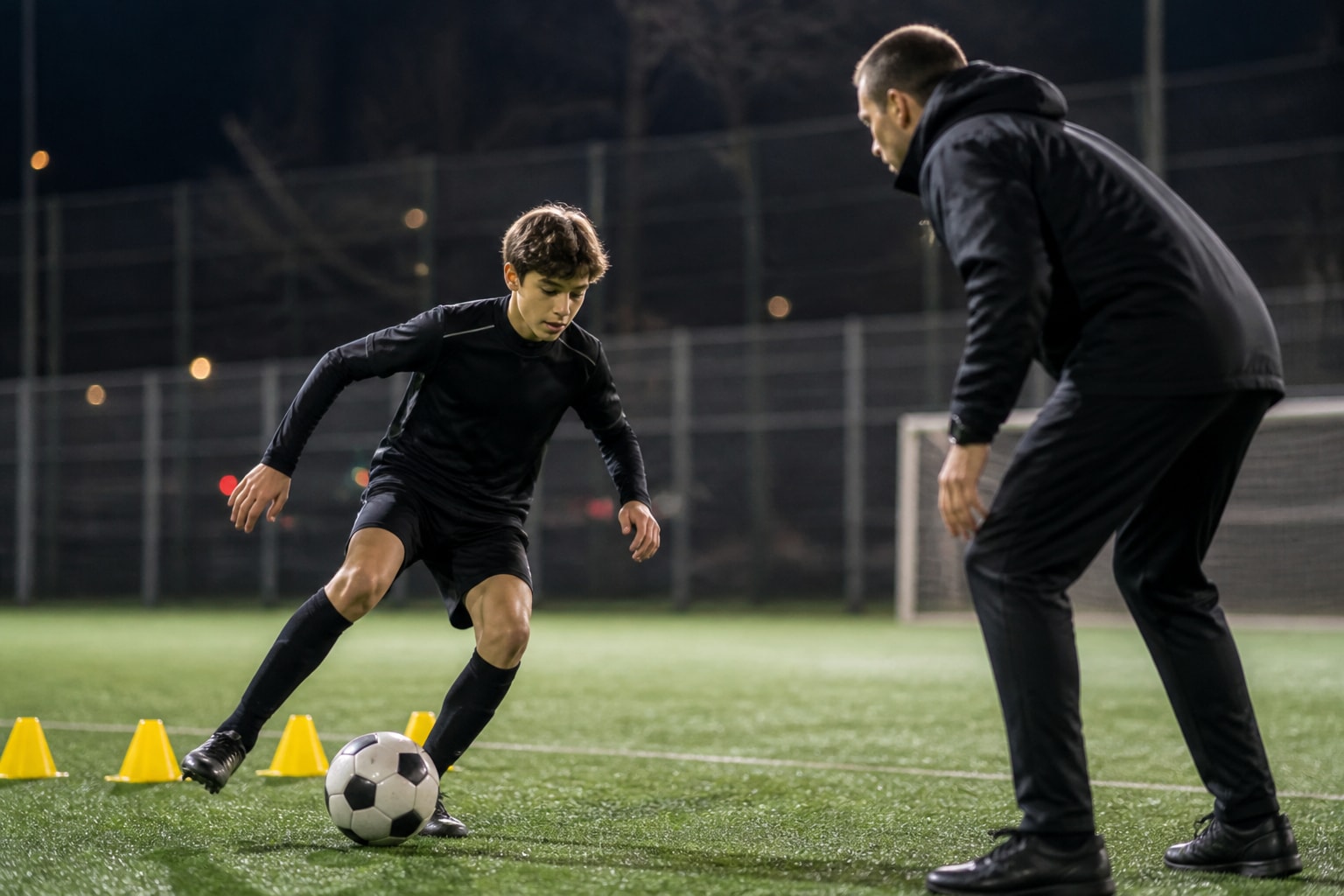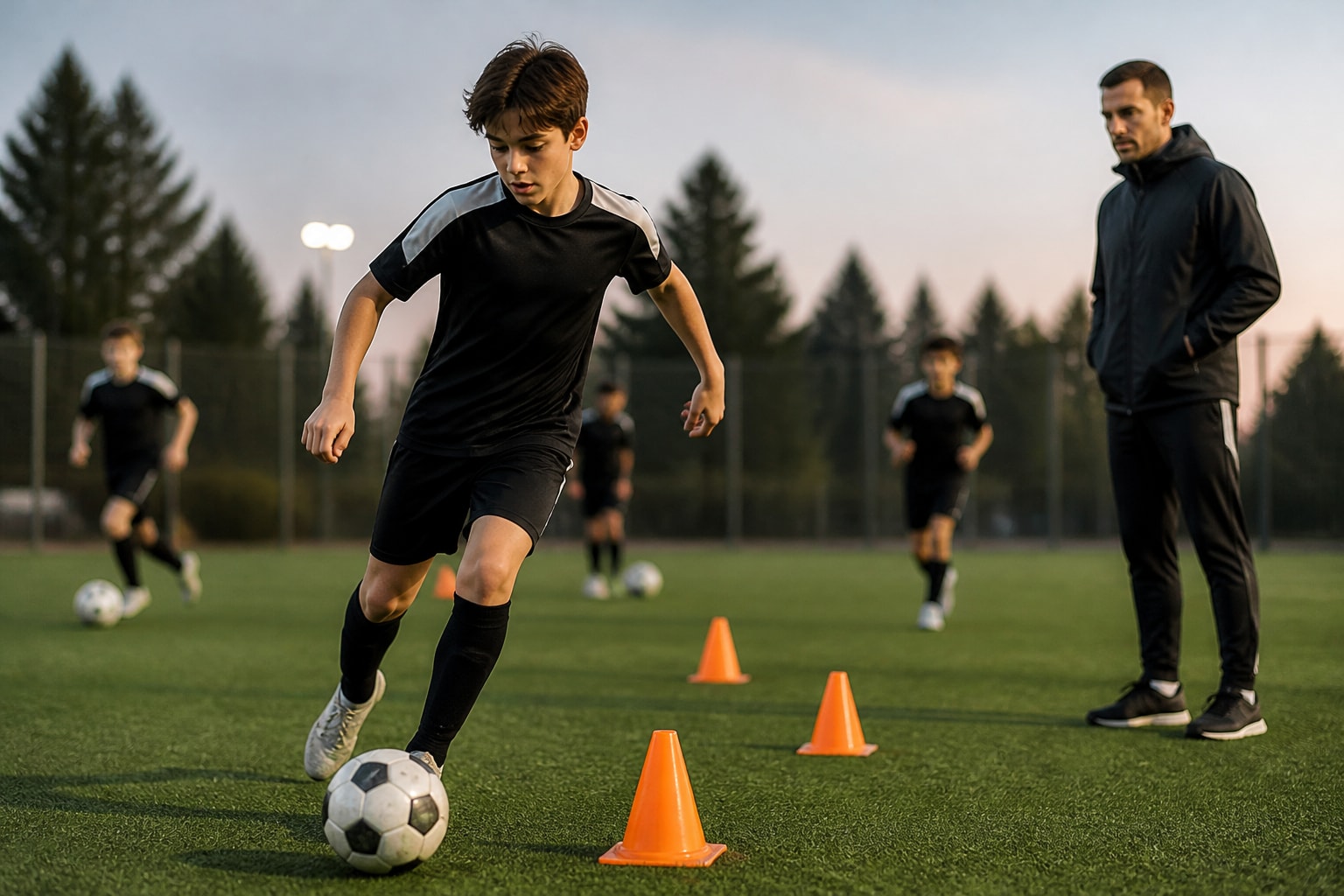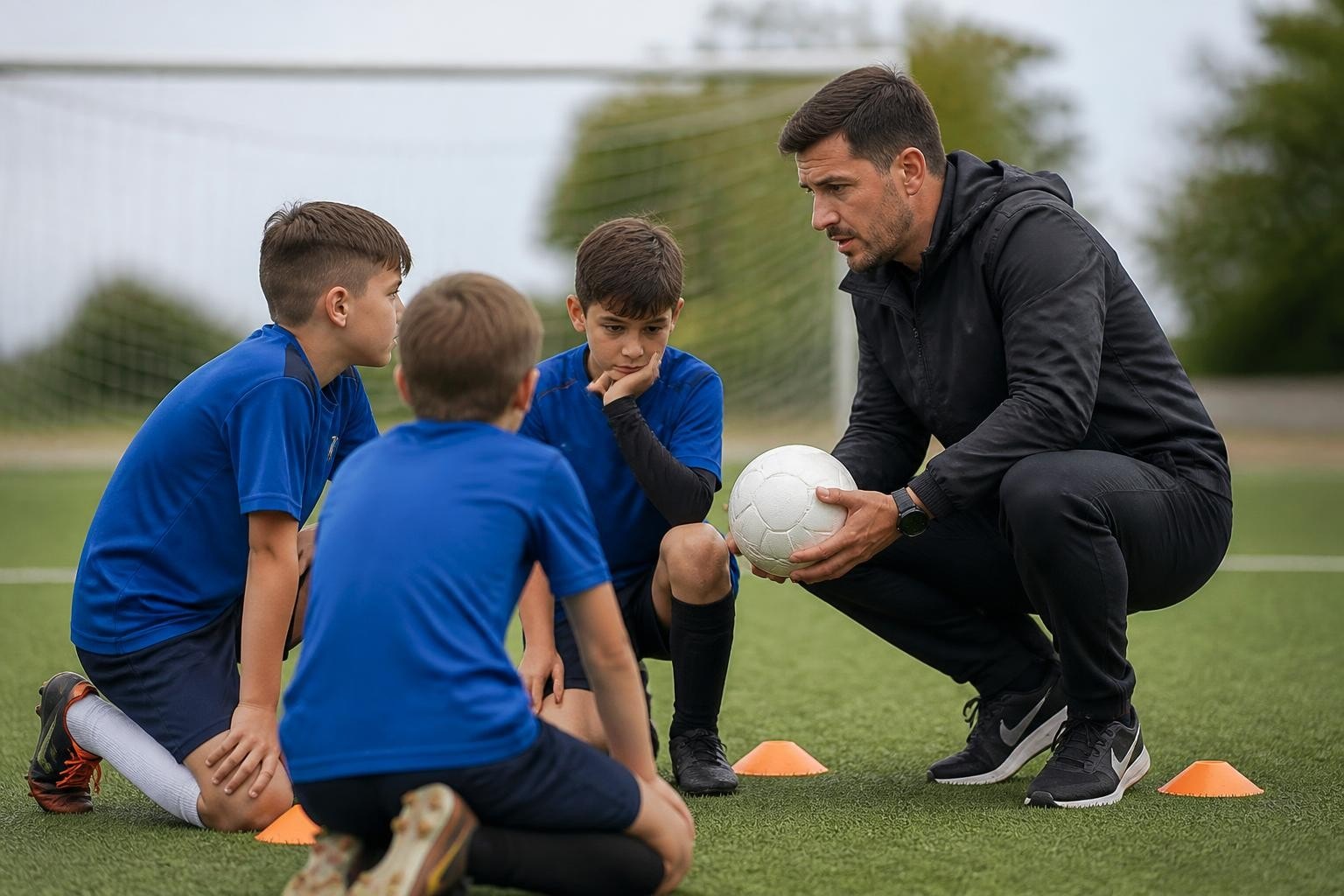
Parents across Surrey, BC are discovering a more effective way to develop their young soccer players. Rather than large team practices where individual attention gets diluted, small group soccer training in Surrey BC offers a focused, personalized approach that accelerates skill development while building confidence and game intelligence. With the city's growing investment in quality facilities and an increasing number of licensed coaches adopting European training methodologies, small group sessions have become the gold standard for serious player development in the region.
Why Small Group Training Outperforms Traditional Team Practice
The most significant advantage of small group soccer training in Surrey BC lies in the player-to-coach ratio. When a coach works with four to eight players instead of fifteen to twenty, every touch on the ball receives attention, every movement gets corrected, and every question gets answered.
Research demonstrates this impact quantitatively. A systematic review on small-sided games shows that reduced group sizes lead to measurable improvements across technical, tactical, and physical domains. Players in smaller groups touch the ball 30-50% more frequently during sessions, directly translating to faster skill acquisition.
Increased Ball Contact and Repetition
In a typical twenty-player team practice, each athlete might get 100-150 meaningful ball touches across ninety minutes. In small group formats, that number jumps to 300-400 touches during the same period.
Key benefits of increased repetition:
- Muscle memory develops faster through consistent, corrected practice
- Technical mistakes get identified and fixed immediately
- Players build confidence through successful execution
- Training intensity remains high throughout the session
The difference becomes obvious within weeks. Parents notice their children demonstrating skills at home that previously took months to develop.

The Four Pillars of Development in Small Group Settings
Small group soccer training in Surrey BC allows coaches to systematically address the four essential areas of player growth: technical, tactical, physical, and psychological development. This comprehensive approach mirrors the Long-Term Development principles endorsed by Sport for Life and Canada Soccer.
Technical Skill Mastery
Technical work forms the foundation of player development. In small groups, coaches dedicate specific time to fundamental skills without the chaos of large-team drills.
| Skill Category | Small Group Focus | Weekly Contact Time |
|---|---|---|
| Ball mastery | Individual manipulation, both feet | 20-25 minutes |
| Passing accuracy | Short, medium, long range with pressure | 15-20 minutes |
| Receiving | First touch under defensive pressure | 10-15 minutes |
| Finishing | Shooting technique and decision-making | 15-20 minutes |
Sessions at Strive Soccer Academy incorporate these technical elements into every training block, ensuring players build proper mechanics before adding game complexity.
Tactical Intelligence and Game Understanding
Small group formats create ideal conditions for teaching tactical concepts. With fewer players, coaches can pause play, adjust positioning, and explain decision-making without losing engagement.
Players learn:
- When to play forward versus recycling possession
- How to create and exploit space through movement
- Defensive positioning and pressing triggers
- Transition moments between attack and defense
The Canada Soccer grassroots program emphasizes that tactical learning happens best in small-sided formats where players experience realistic game scenarios at manageable complexity.
Physical Conditioning Tailored to Development Stage
Small group soccer training in Surrey BC enables age-appropriate physical development. Coaches modify intensity, duration, and recovery based on individual player needs rather than averaging across a large roster.
Physical components addressed:
- Acceleration and change of direction
- Aerobic capacity through game-based conditioning
- Coordination and balance work
- Injury prevention protocols
Evidence from peer-reviewed injury prevention research shows that structured warm-ups like FIFA 11+ Kids significantly reduce injury risk in youth players. Small group settings make these protocols practical and effective.
Psychological Growth and Confidence Building
Perhaps the most underestimated benefit of small group training is psychological development. Players receive regular positive reinforcement, learn to handle mistakes constructively, and develop resilience through appropriate challenges.
In groups of six to eight, every player participates actively. There's no hiding in the back, but also no overwhelming pressure. This sweet spot creates optimal conditions for building self-confidence and competitive mentality.
Optimal Group Sizes and Session Structures
Not all small group soccer training in Surrey BC follows the same format. Understanding how group size impacts training outcomes helps parents choose the right program for their child's development stage.
Group Size and Player Development Correlation
Recent research examining how player numbers influence creative movements provides clear guidance on optimal group sizes for different training objectives.
| Group Size | Best For | Primary Benefits |
|---|---|---|
| 3-4 players | Technical mastery, 1v1 situations | Maximum touches, individual attention |
| 5-6 players | Tactical patterns, small-sided games | Balance of repetition and game realism |
| 7-8 players | Advanced tactics, transition play | Complex scenarios, competitive intensity |
Most effective programs rotate through different group sizes based on training phase and development goals.
Typical Session Structure
A well-designed ninety-minute small group session follows a progressive structure that maximizes learning while maintaining engagement:
Warm-up and activation (15 minutes):
Dynamic movement patterns, ball manipulation, injury prevention exercises
Technical focus (25 minutes):
Isolated skill work with progressive difficulty, immediate feedback and correction
Tactical application (25 minutes):
Small-sided games implementing technical skills in game contexts
Competitive play (20 minutes):
Scrimmage scenarios with coaching interventions
Cool-down and reflection (5 minutes):
Static stretching, session review, questions
This structure ensures players experience appropriate progression from controlled practice to competitive application.
Surrey's Facilities and Training Environments
The City of Surrey has invested significantly in soccer infrastructure, creating excellent venues for small group soccer training in Surrey BC. Quality facilities enhance the training experience and allow year-round development regardless of weather.
Premier Training Locations
Surrey offers several synthetic turf fields ideal for small group work. These all-weather surfaces provide consistent playing conditions and reduce cancellations due to rain or cold.
Recent additions include new turf fields at Cloverdale Athletic Park, expanding capacity for specialized training programs. These modern facilities feature proper lighting for evening sessions, crucial for year-round training schedules.
Top venues for small group training:
- Cloverdale Athletic Park (multiple fields, excellent lighting)
- Newton Athletic Park (centrally located, tournament-grade surfaces)
- South Surrey Athletic Park (newer facilities, ample parking)
- Indoor options at various sports complexes for winter months
Access to professional-quality facilities means players train in environments that mirror competitive match conditions.
Age-Appropriate Programming and Development Stages
Effective small group soccer training in Surrey BC adapts to players' developmental stages. What works for twelve-year-olds differs dramatically from appropriate training for eight-year-olds.
Early Development (Ages 6-9)
Young players need fun, engaging sessions focused on fundamental movement and basic ball skills. Small groups work exceptionally well at this age because children require frequent feedback and encouragement.
Training emphasis:
- Ball mastery and confidence with the ball
- Basic coordination and balance
- Introduction to simple 1v1 situations
- Positive reinforcement and enjoyment
Session length typically runs 60-75 minutes, matching attention spans and physical capacity.
Middle Development (Ages 10-13)
This critical period determines whether players continue advancing or plateau. Small group soccer training in Surrey BC provides the focused attention needed during these formative years.
A scoping review on training regimens shows that periodized, progressive training during these ages leads to superior long-term outcomes compared to random practice.
Development priorities:
- Technical refinement under pressure
- Tactical understanding of positions and roles
- Physical literacy and athleticism
- Mental resilience and competitive spirit
Players at elite youth soccer academies typically train 3-4 times weekly in small group formats during this stage.
Advanced Development (Ages 14-18)
Older players benefit from small group training that simulates high-level competition while addressing individual weaknesses. Sessions become more intense, tactical, and position-specific.
Cost Considerations and Value Proposition
Parents naturally question whether small group soccer training in Surrey BC justifies the investment compared to recreational leagues or larger academy programs. Understanding the cost structure and long-term value helps make informed decisions.
Typical Program Costs
| Program Type | Monthly Cost | Sessions per Week | Player-to-Coach Ratio |
|---|---|---|---|
| Recreational league | $100-150 | 2 | 15-20:1 |
| Large academy program | $200-300 | 2-3 | 12-15:1 |
| Small group training | $300-450 | 2-3 | 6-8:1 |
| Private 1-on-1 | $600-900 | 2-3 | 1:1 |
Small group formats offer the optimal balance between personalized attention and cost efficiency. Players receive nearly individualized coaching at roughly half the cost of private sessions.
Return on Investment
The true value extends beyond immediate skill improvement. Players who develop proper technique and tactical understanding through focused small group work:
- Earn positions on competitive teams more frequently
- Reduce injury risk through proper movement patterns
- Build transferable life skills like resilience and work ethic
- Open pathways to higher levels of competition
Many families view small group training as an investment in their child's overall development rather than simply soccer instruction.
Selecting the Right Program and Coach Credentials
Not all small group soccer training in Surrey BC delivers equal results. Parents should evaluate programs based on coaching credentials, training philosophy, and demonstrated outcomes.
Essential Coach Qualifications
Quality programs employ coaches certified through Canada Soccer's licensing pathway. These credentials ensure coaches understand child development, proper technique, and effective teaching methods.
Minimum coaching standards:
- Canada Soccer "C" License or higher for head coaches
- First Aid and concussion protocol certification
- Criminal record check and vulnerable sector screening
- Ongoing professional development participation
The best programs feature coaches with National "B" or "A" Licenses who bring professional playing or high-level coaching experience.
Training Philosophy Alignment
European-style training methodologies emphasize individual technique, tactical intelligence, and holistic player development. This contrasts with purely competitive approaches that prioritize winning over learning.
Look for programs that:
- Focus on long-term development over short-term results
- Teach the "why" behind techniques and tactics
- Adapt to individual learning styles and paces
- Communicate regularly with parents about progress
Programs offering comprehensive player development across all four pillars (technical, tactical, physical, psychological) provide superior outcomes.
Integration with Competitive Team Play
Small group soccer training in Surrey BC works best as a complement to, rather than replacement for, team play. The combination creates comprehensive development that neither approach achieves alone.
Balancing Training and Competition
Optimal development typically includes:
Weekly training structure:
- 2 small group technical/tactical sessions (90 minutes each)
- 1 team training with full squad (90 minutes)
- 1 competitive match (70-90 minutes)
- Optional 1 conditioning or specialty session (60 minutes)
This balance ensures players develop individual skills while learning team dynamics and experiencing competitive pressure.
Transferring Skills to Match Performance
The true test of training effectiveness is match performance. Small group work accelerates this transfer because players practice skills under game-realistic pressure.
Coaches should design sessions that mirror match situations:
- Directional play toward goals
- Defensive pressure during technical work
- Decision-making under time constraints
- Consequence-based outcomes (score or defend)
Players who experience these elements in training execute confidently during matches.
Year-Round Development and Periodization
Serious player development requires consistent, structured training throughout the year. Small group soccer training in Surrey BC enables this continuity while varying intensity and focus based on competitive calendar.
Annual Training Cycles
Professional programs divide the year into distinct phases, each with specific objectives and training emphases.
Off-season (November-January):
Focus on technical refinement, individual weaknesses, physical development base
Pre-season (February-March):
Tactical implementation, team integration, building match fitness
Competition season (April-October):
Match preparation, recovery protocols, maintaining technical sharpness
This periodized approach, supported by research on training regimens, prevents burnout while ensuring continuous improvement.
Indoor Winter Training Benefits
Surrey's winter weather makes outdoor training challenging. Small group formats transition easily to indoor facilities, maintaining development momentum during cold months.
Indoor training advantages:
- Controlled environment ensures consistent quality
- Fast-paced play on smaller surfaces
- Enhanced ball control through increased touches
- Year-round program continuity
Many players actually accelerate development during winter months through focused indoor small group work.
Measuring Progress and Setting Development Goals
Effective small group soccer training in Surrey BC includes systematic progress tracking and clear development milestones. Regular assessment keeps players motivated and helps parents understand their investment's impact.
Objective Skill Assessment
Quality programs conduct quarterly evaluations across multiple competencies:
| Assessment Area | Evaluation Method | Frequency |
|---|---|---|
| Technical skills | Standardized skill tests, video analysis | Quarterly |
| Tactical understanding | Small-sided game observation, decision-making scenarios | Monthly |
| Physical markers | Speed, agility, endurance testing | Every 6 months |
| Psychological growth | Coach observation, self-assessment surveys | Ongoing |
Documentation of progress provides tangible evidence of development and identifies areas requiring additional focus.
Individual Development Plans
The best programs create personalized development roadmaps for each player. These plans outline:
- Current skill levels across all competencies
- Specific improvement targets for next 3-6 months
- Training activities designed to address weaknesses
- Timeline for reassessment and goal adjustment
Regular communication with parents ensures alignment between training focus and family expectations.
Common Questions Parents Ask About Small Group Training
Families considering small group soccer training in Surrey BC often share similar concerns and questions. Addressing these upfront helps parents make confident decisions.
Is My Child Ready for Small Group Training?
Most players aged seven and older benefit from small group formats. Younger children (under seven) typically need larger, more recreational settings focused on basic fun and movement.
Ready indicators include:
- Basic ability to follow multi-step instructions
- Demonstrated interest in improving soccer skills
- Willingness to train consistently 2-3 times weekly
- Appropriate behavior in structured learning environments
Programs should offer trial sessions allowing families to assess fit before committing.
How Quickly Will I See Improvement?
Most parents notice visible skill improvements within 4-6 weeks of consistent small group training. Technical changes appear first, followed by tactical understanding and physical development.
Realistic timelines:
- Ball control and manipulation: 4-8 weeks
- Passing accuracy and decision-making: 8-12 weeks
- Tactical positioning and awareness: 12-16 weeks
- Physical attributes (speed, endurance): 12-20 weeks
Consistent attendance and home practice accelerate progress significantly.
What Should My Child Practice at Home?
Small group sessions provide instruction and correction, but home practice reinforces skills. Coaches should recommend specific activities players can do independently.
Effective home practice activities:
- Ball mastery routines (10-15 minutes daily)
- Juggling progression (starting with hands, advancing to feet only)
- Wall passing drills for first touch and accuracy
- Cone dribbling courses for agility and close control
Even fifteen minutes daily creates noticeable improvement over time.
Small group soccer training in Surrey BC represents the most effective pathway for serious player development, combining personalized coaching, optimal training environments, and evidence-based methodologies that accelerate skill acquisition across technical, tactical, physical, and psychological domains. At Strive Soccer Academy, we bring European-style training philosophy to Surrey through small group formats led by fully licensed Canada Soccer coaches, developing not just better soccer players but confident, resilient young athletes prepared for success on and off the field.