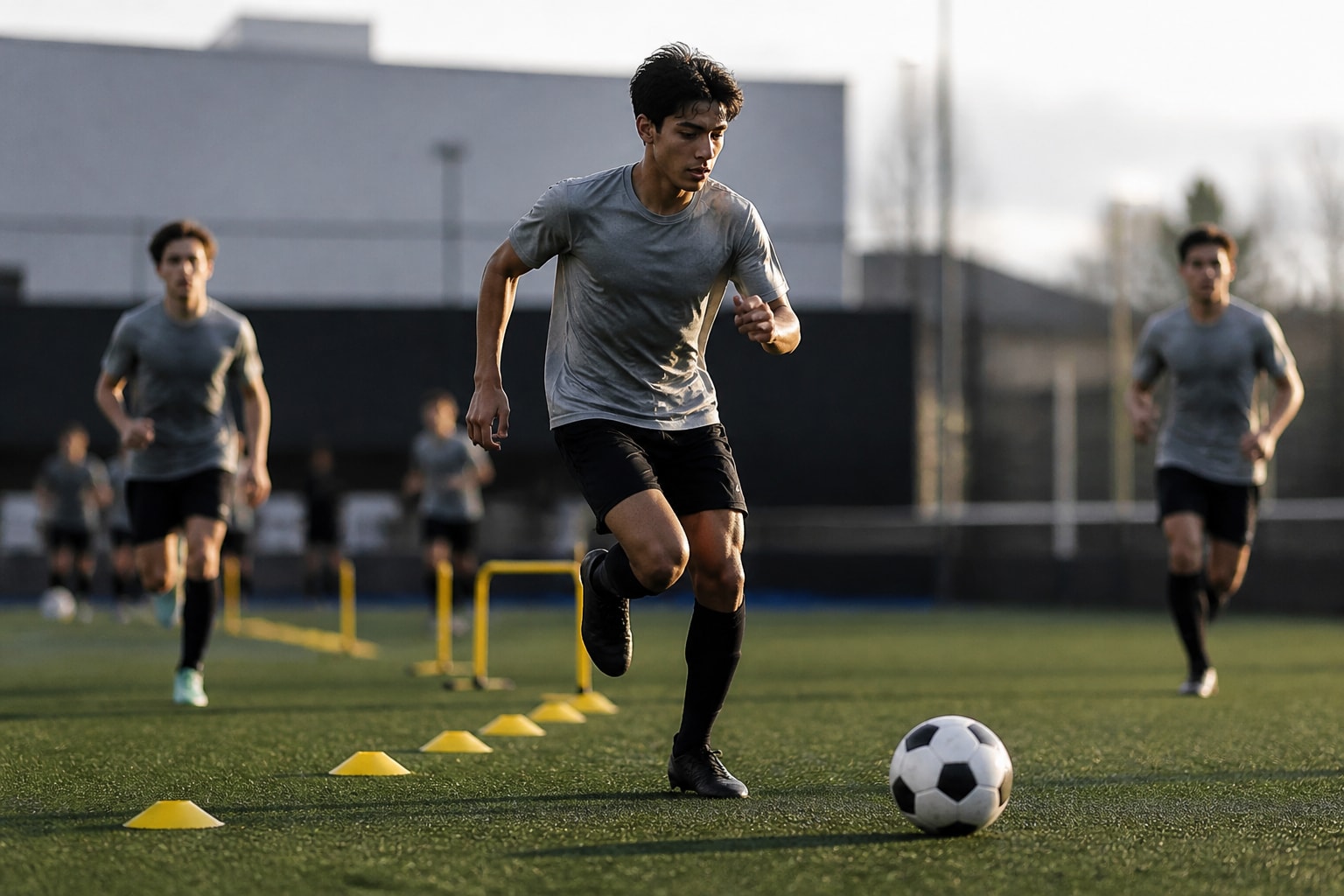
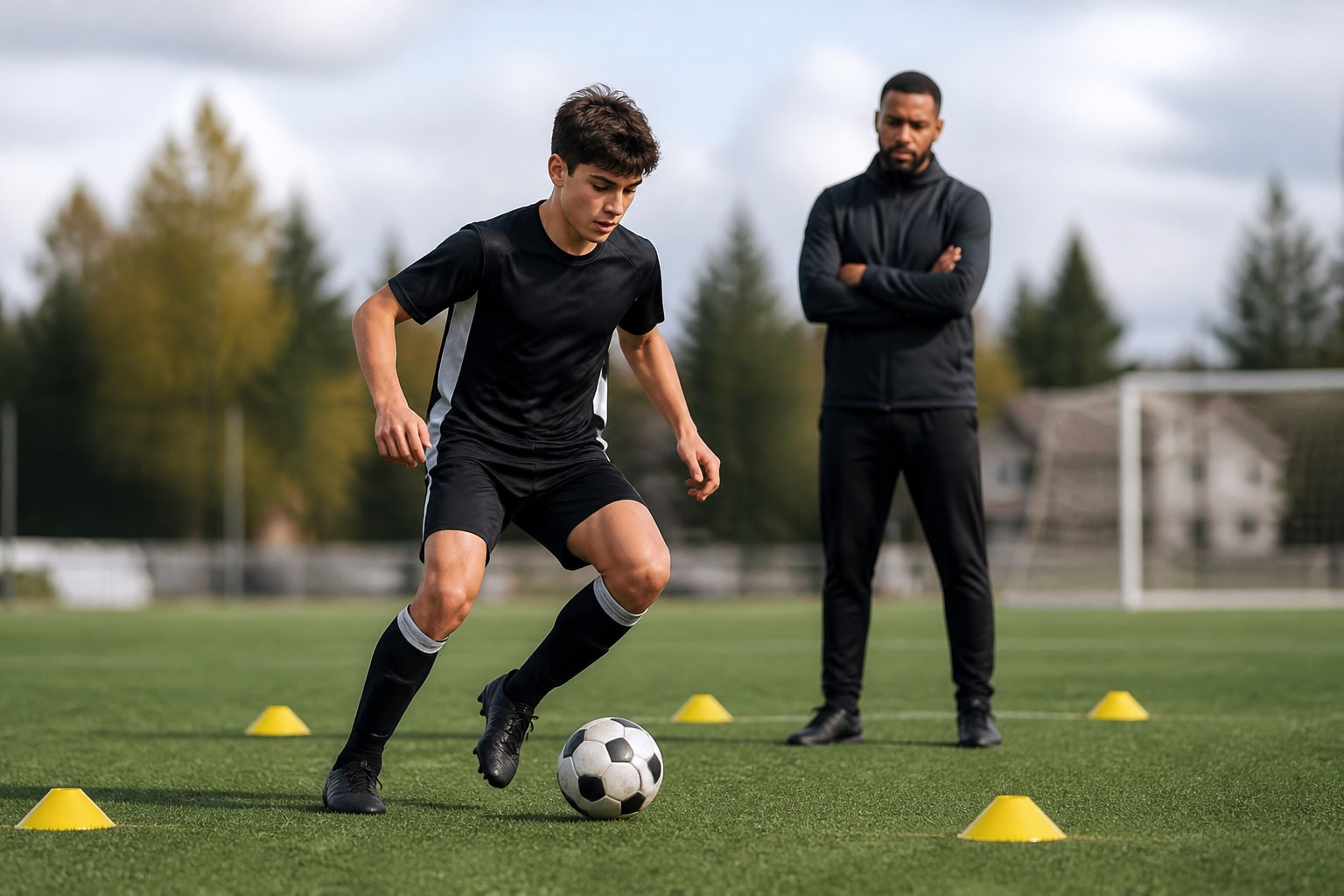
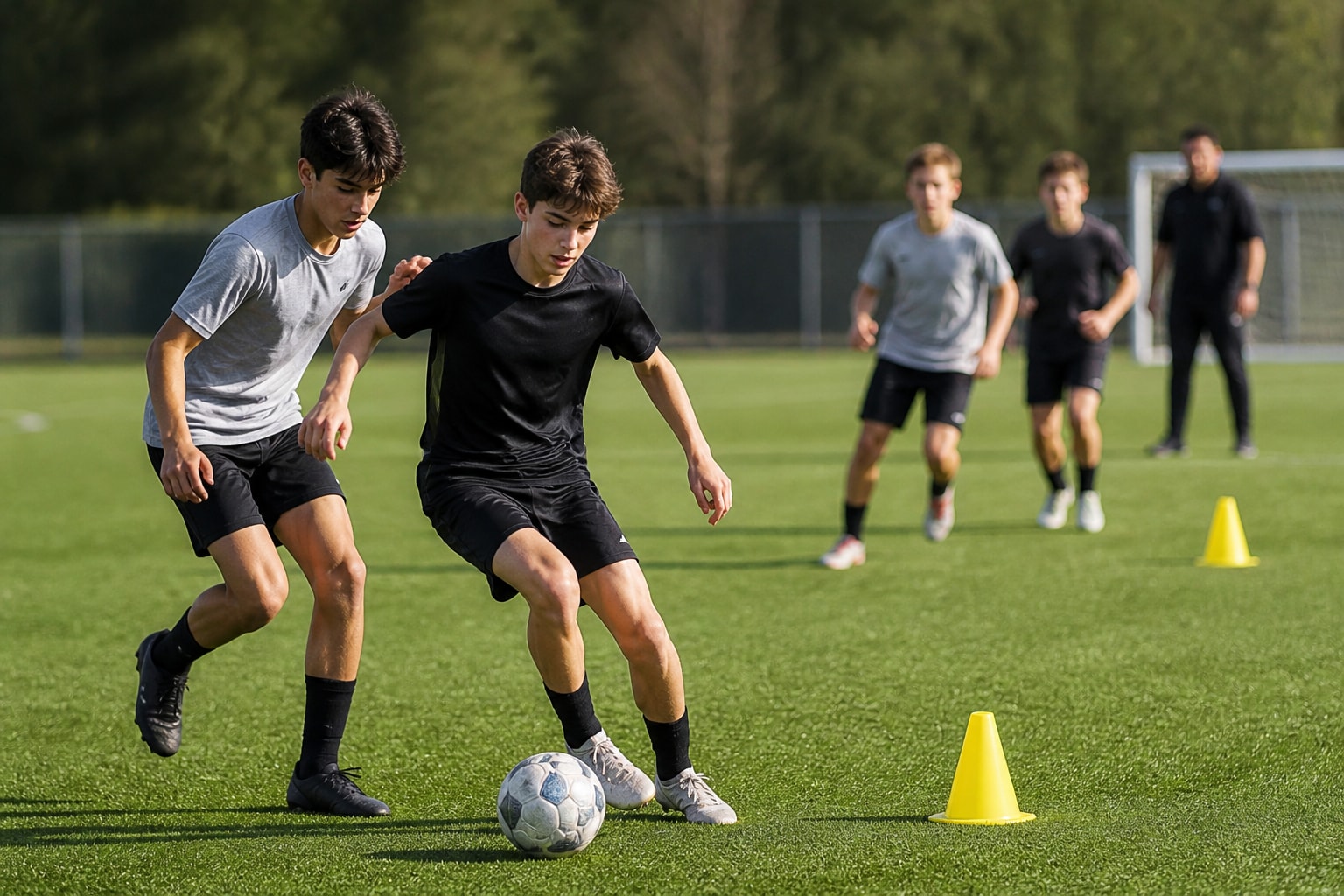
Good U13 soccer training in Surrey BC combines small groups, high ball contact, licensed coaching and a plan that fits your player's physical development, not just their birth year. For committed players aged 11 to 13, the right program adds structured technical and tactical work on top of club practices, so the jump to competitive, travel and eventually college-track soccer feels like a natural next step rather than a leap.
This guide explains what U13 players need, how much training is appropriate, what to look for in a program, and how to judge whether a pathway such as an academy is realistic for your family.
What Makes U13 a Critical Stage of Player Development
U13 is the stage where technical habits harden, tactical understanding expands and growth spurts begin to separate players of the same age. Players at this level typically move to larger formats, learn positional roles and start to feel the pace of competitive match play.
Three changes define the year:
- Bigger fields and more players. Moving from smaller formats to 9v9 or 11v11 demands better spacing, scanning and decision-making.
- Uneven physical development. Two players born in the same month can differ by several inches and a year or more of biological maturity.
- Rising stakes. Club selection, rep teams and academy pathways start to matter, and confidence becomes as important as skill.
A strong program treats these as coaching problems to solve. Technical ability must hold up under pressure, game understanding must grow, and players need the mental habits to handle selection, setbacks and competition.
The Four Areas Every U13 Program Should Develop
The most reliable U13 programs develop four areas together: technical, tactical, physical and psychological. A program that covers only one, usually technical drills, leaves gaps that show up in matches.
Technical
Technical work means first touch, passing under pressure, dribbling in tight spaces, and striking the ball with both feet. At this age, repetition volume matters. Sessions should deliver a high number of touches per player, which is only possible when groups are small and drills keep everyone involved.
Tactical
Tactical development covers how to read the game: when to support, where to receive, how to press and how to recover shape. U13 players should be learning to see the field before the ball arrives and to understand why a coach asks for a particular movement.
Physical
Physical work at this age should center on coordination, agility, balance and speed mechanics rather than heavy conditioning. Growth spurts can temporarily disrupt coordination, so patience matters.
Psychological
Confidence, resilience, focus and a willingness to try difficult skills in front of teammates are trainable. Coaches who correct without discouraging, and who let players fail safely in practice, produce players who perform better on match day.

How Long Should a 13-Year-Old Practice Soccer?
A 13-year-old committed to competitive soccer typically benefits from about three to five soccer sessions per week in total, combining club practice, one or two focused skills sessions and a match, with at least one full rest day. Quality and recovery matter more than raw hours. Players moving up to the next level can read our guide to U14 soccer training in Surrey BC for what changes at that age.
Canadian movement guidelines for children and youth recommend daily moderate to vigorous physical activity along with sufficient sleep and limited recreational screen time. Soccer sessions count toward that activity, but they should not crowd out sleep or school.
A practical weekly structure for a serious U13 player looks like this:
- Two club sessions focused on team shape and match preparation.
- One or two skills sessions outside the club, aimed at individual technique and decision-making.
- One match on the weekend.
- At least one full rest day, with light activity such as juggling or play with friends on other days.
If your player is also on a school team or plays another sport, reduce the extra sessions rather than stacking everything. Fatigue, nagging aches and a loss of enthusiasm are signals to scale back. Players who stay fresh and curious develop faster than those who burn out by 14.
What to Look For in U13 Soccer Training in Surrey BC
When comparing U13 soccer training in Surrey BC, evaluate coach qualifications, group size, session design and how a program handles different player levels. These four factors predict development better than a facility or a brand name.
| What to check | What strong looks like |
|---|---|
| Coach licensing | Coaches hold Canada Soccer licenses, not just playing experience |
| Group size | Small groups with a low player-to-coach ratio so every player gets constant touches |
| Session design | Technical repetition combined with game-like decision-making, not lines and lectures |
| Player grouping | Players placed by ability and maturity, not only by age |
| Year-round structure | A plan across outdoor and indoor seasons, not isolated camps |
Ask direct questions. How many touches does a player typically get per session? How are players grouped? Who is coaching, and what are their credentials? Can your player attend a trial before committing? A confident program answers these without hesitation.
Be cautious of programs that promise professional contracts or fast-track results. Real development is gradual, and a legitimate program talks about habits, progression and pathways rather than guarantees.
Why Small Groups and High Touch Counts Matter
Small-group training produces more repetitions, more coaching feedback and more game-like decisions per player than large-group sessions. In a group of 20 with one coach, a player may touch the ball only a few times per drill. In a group of eight, the same drill gives constant involvement.
At Strive Soccer Academy, sessions are small-sided and high-touch, with players typically getting 1,000 to 2,000 touches per session and an average 8:1 player-to-coach ratio. That ratio allows coaches to correct a body position or a weak-foot habit in the moment rather than after the fact. You can read more about small group soccer training in Surrey and how the format supports individual development.
For parents, the practical test is simple. Watch a session or a trial and count how often your player is actually playing the ball versus waiting in a line.
Skill-Based Grouping and Bio-Banding: Training at the Right Level
Players develop most efficiently when they train against peers of similar ability and physical maturity. Two ideas support this: skill-based grouping and bio-banding.
Skill-based grouping places players by current technical and tactical level. A strong player is challenged, and a developing player is not overwhelmed or left behind.
Bio-banding groups players by biological maturity rather than only chronological age. At 12 and 13, an early developer may be physically dominant without being technically superior, while a late developer may be technically excellent but outmuscled. Training them with appropriate peers protects confidence and gives both groups the right challenge.
Strive Soccer Academy uses both approaches so players train at the right level. This matters most for late-maturing players, who are often overlooked in age-group selection but can have long-term potential. If your player is smaller than teammates but technically sharp, a bio-banded environment lets those strengths show.
Year-Round Development Across the Outdoor and Indoor Seasons
A year-round plan keeps players developing through Surrey's wet winters and prevents the stop-start progress that comes from seasonal camps. The calendar generally runs in three phases.
- Fall outdoor. League play and tactical application of skills learned over the summer.
- Winter indoor and futsal. Smaller spaces and faster decisions that sharpen first touch, passing angles and close control.
- Spring outdoor. A second competitive block where winter gains show up on the full-size field.
Futsal and indoor play deserve particular attention at U13. The smaller court and heavier ball force quick thinking and clean technique, and the skills transfer directly to the outdoor game. Strive Soccer Academy offers year-round programming across fall and spring outdoor leagues and winter indoor and futsal, and you can see how that fits together on the pages for year-round soccer training and indoor soccer training in Surrey.
Supplementing Club Practice Without Overloading Your Player
Extra training works best when it fills gaps that club practice cannot, rather than duplicating it. Club sessions often focus on team shape and match preparation with a large roster, which leaves limited time for individual repetition.
A well-chosen supplementary program adds:
- Individual technical work on weaknesses such as the weaker foot or receiving under pressure
- Decision-making in small, game-like situations
- Coaching feedback that is hard to give in a squad of 18
Before adding anything, check your player's current load. If they are already training four or five times a week, replace a session rather than add one. Strive Soccer Academy's soccer training outside club practice is designed to complement a player's club commitments rather than compete with them, and the Soccer Skills Training program is the starting point for U13 players who want structured technical development alongside their team.
Understanding Academy Pathways and Selection
Getting into a professional academy environment usually depends on a combination of technical level, game intelligence, athletic potential and attitude, assessed over time through trials and match play. There is no single application route, and selection processes change by club and by year.
Some practical guidance for families:
- Focus on what you control. Technical quality, work rate and coachability are visible to any evaluator.
- Build a consistent training base. Players who develop steadily across several seasons are easier to evaluate than those who appear for one trial.
- Ask clubs directly. Each club publishes or shares its own selection and trial process. Contact them for current dates and criteria rather than relying on rumor.
- Keep options open. College soccer in Canada and the United States, and overseas trials, are all realistic pathways for developed players.
Strive-trained players have gone on to professional academy environments, U SPORTS and NCAA Division I and II scholarships, and overseas trials in Europe. That outcome comes from sustained development over many years, which is why Strive has focused on grassroots through to competitive levels for more than 20 years. Players who are younger can begin the same pathway earlier, and many families start with U11 soccer training before moving up.
How to Evaluate a Program Before You Commit
The best way to judge a program is to attend a trial session with a short checklist and watch how your player responds. Compare what you see against what the program says.
Use these questions:
- Is every player involved for most of the session?
- Are coaches correcting technique with specific, constructive feedback?
- Do drills become game-like, with opponents and decisions?
- Is the group matched to your player's level?
- Does your player leave tired, engaged and eager to return?
Pay attention to your player's reaction on the drive home. A player who talks about what they learned is in the right environment. A player who is quiet and deflated may need a different group or a different program.
FAQ
How do I get into Whitecaps Academy?
Entry is typically through the club's scouting and open trial processes, and the criteria change over time. Contact the club directly for current trial dates and requirements, and focus on steady technical and tactical development in the meantime.
Where can I find soccer camps in Vancouver and Surrey?
Soccer camps are offered by clubs, academies and municipal programs across Metro Vancouver, usually in spring, summer and school breaks. For committed players, a year-round skills program often delivers more lasting improvement than a single week of camp, because progress builds from consistent repetition.
What is the best youth soccer club?
The best club is the one that fits your player's level, goals and schedule, with licensed coaches, a clear development plan and a healthy environment. Visit more than one, attend trials and ask about coaching credentials, playing time and training philosophy before deciding.
Start by booking a trial session so you can watch your player train in a small group and judge the fit for yourself. The Soccer Skills Training program at Strive Soccer Academy brings a European-style philosophy to Surrey, developing technical, tactical, physical and psychological growth under coaches licensed through Canada Soccer. If your U13 player is ready for structured, high-touch development, Book a Trial with Strive Soccer Academy and see how the sessions work in person.