Good U11 soccer training in Surrey, BC combines high ball-touch volume, small groups, licensed coaching and a development plan that covers technical, tactical, physical and psychological growth. At this age, players are moving from learning basic skills to applying them under pressure, which makes the quality of weekly training more important than at any earlier stage. This guide explains what to look for, what has changed in Canadian standards, and how to judge whether a program fits a serious young player.
What Does U11 Soccer Training Look Like in Surrey?
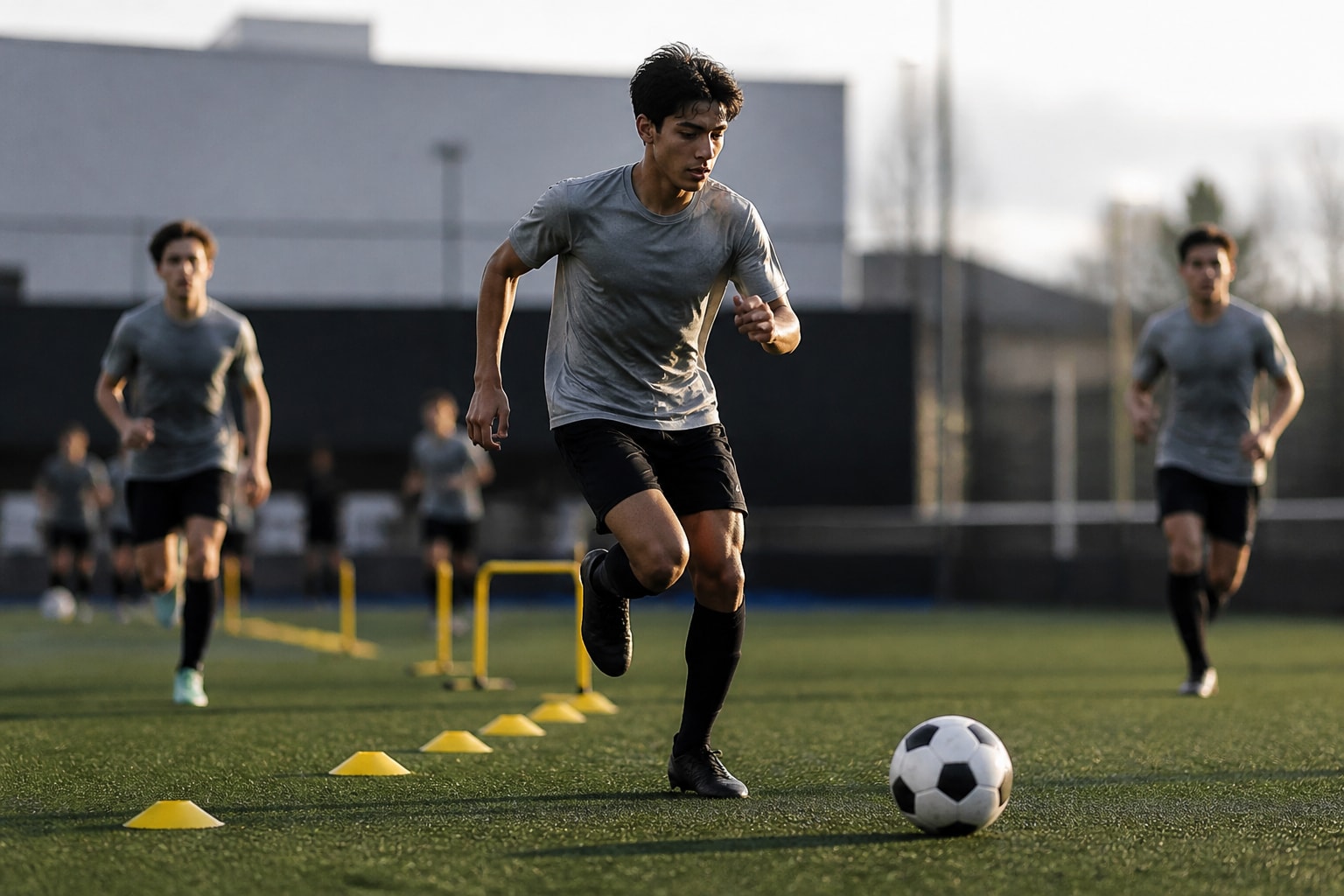
U11 training in Surrey typically involves players aged nine and ten working on technical fundamentals while beginning to understand team shape, decision making and pace of play. Most families here combine a club team schedule with extra sessions outside club practice, because a team practice shared among a full roster rarely gives each player enough repetition.
The U11 age group sits at a turning point. Players have usually gained basic control, and coaches can start asking harder questions of them: where to receive the ball, when to pass, how to find space before the ball arrives. A strong program treats these as skills to be coached, not as qualities players either have or lack.
Surrey also offers year-round playing opportunities, with fall and spring outdoor seasons and winter indoor and futsal. Families who plan training around these seasons tend to see steadier progress than those who train only when a club season is running. For a broader view of the local options, the overview of youth soccer training in Surrey, BC outlines how programs are typically structured by age.
Why U11 Is a Critical Development Window
U11 is critical because players are still in the stage where technical habits form quickly, yet the game around them is becoming faster and more complex. Skills practiced correctly now become automatic, and gaps left unaddressed are harder to close later.
Three developments define this stage:
- Technical consolidation. Both feet, first touch and close control need thousands of repetitions in game-like conditions.
- Early tactical awareness. Players begin to scan, support teammates and understand roles in small-sided formats.
- Psychological readiness. Handling mistakes, competing without fear and responding to feedback start to separate players who keep improving from those who stall.
Parents sometimes focus on wins at this age. A better measure is whether your child is getting more touches, making braver decisions and recovering quickly from errors. Those indicators predict long-term progress far better than a weekend scoreline.

The Four Pillars of Player Growth at This Age
A complete U11 program develops four areas together: technical, tactical, physical and psychological. Programs that emphasize only one, usually technique, leave players underprepared for competitive match play.
Technical
Technical work covers dribbling, passing, receiving, turning and finishing. For U11 players, the priority is repetition under realistic conditions, with defenders, limited space and time pressure introduced gradually. Sessions built around technical soccer training principles keep the ball at the player's feet as often as possible.
Tactical
Tactical learning at this age is about simple concepts: creating passing angles, supporting the player on the ball, and recognizing when to switch play. Small-sided games teach these ideas far better than long explanations. Coaches who ask questions ("Where was the open space?") develop thinkers, not followers.
Physical
Physical development at U11 focuses on coordination, balance, agility and speed of movement rather than heavy conditioning. Good sessions build these qualities through the game itself, with changes of direction, sprints with the ball and varied movement patterns.
Psychological
Confidence, focus and resilience are trainable. Players who learn to treat a lost ball as information rather than failure play with more freedom. A coach's tone, the way mistakes are handled, and the expectations set in each session all shape this pillar.
How Many Touches Should a U11 Player Get?
A U11 player should get as many quality touches as the format allows, and a strong session delivers roughly 1,000 to 2,000 touches. That range is the target at Strive Soccer Academy, where training is small-sided and high-touch by design.
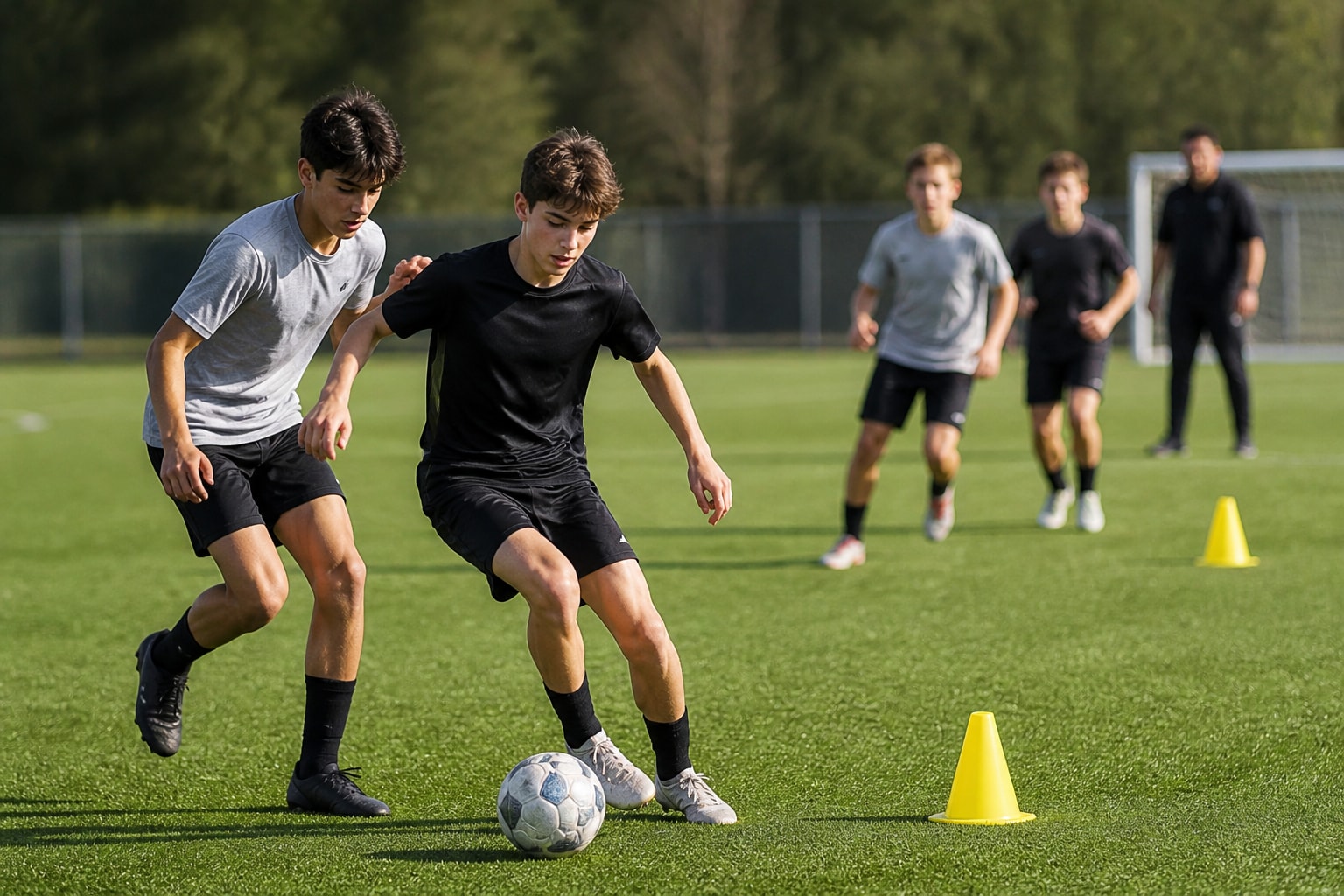
Touch count matters because skill is built through volume. A large-group practice with long lines and waiting time may give a player a few hundred touches in an hour. Small-sided games, individual ball work and continuous drills can multiply that figure several times over.
When you assess any program, ask these questions:
- How many players share each group?
- How much of the session is spent waiting?
- Does every player have a ball for most of the technical work?
- Are drills adjusted as players improve?
Parents can learn a lot just by watching ten minutes of a session. If most players are standing in lines, touch volume is probably low.
Coach Licensing and Player-to-Coach Ratio
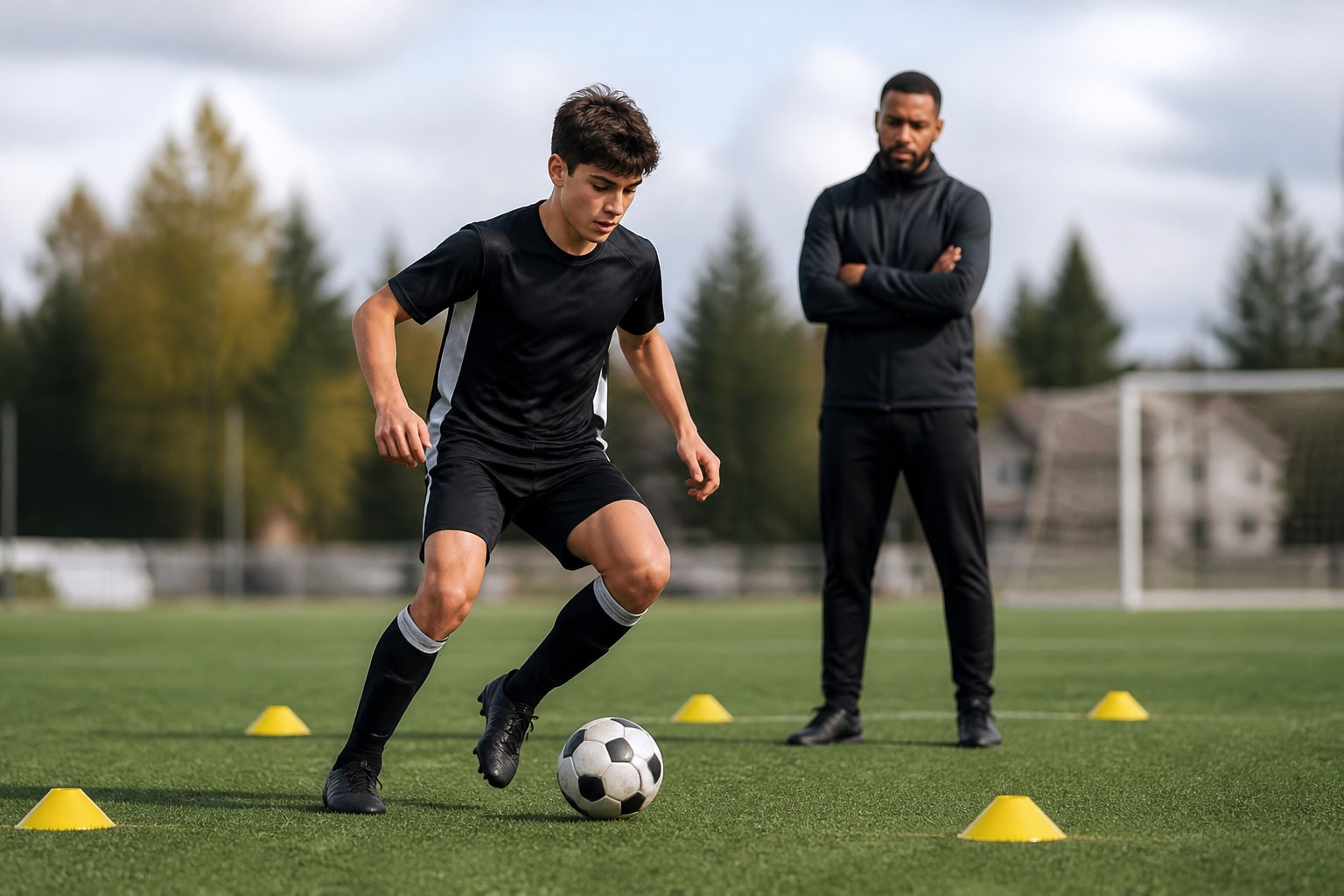
The two quickest quality checks are coach credentials and group size. Licensed coaches understand age-appropriate development, and a low player-to-coach ratio allows individual feedback.
At Strive Soccer Academy, coaches are fully licensed through Canada Soccer, ranging from National A Licenses to Soccer for Life certifications for developing coaches. The academy averages an 8:1 player-to-coach ratio, which means each player is seen and corrected often during a session.
Ratio is easy to underestimate. At 8:1, a coach can give each player specific feedback several times in an hour. At 20:1, feedback becomes occasional and generic. Ask any program you consider for its typical ratio and the licensing level of the coaches who will actually run your child's sessions. Players moving up to the next age group can read our guide to U13 soccer training in Surrey BC for what changes at that level.
Skill-Based Grouping and Bio-Banding
Players develop at different rates, so effective programs group them by ability and, where appropriate, by physical maturity. Two ten-year-olds can differ greatly in size, strength and coordination, and training them together without adjustment can frustrate both.
Skill-based grouping places players with peers who challenge them at the right level. A technically advanced player gets harder problems to solve, while a developing player gets time to build confidence without being overwhelmed.
Bio-banding groups players by biological maturity instead of strictly by birth year. It protects late developers from being overshadowed and gives early developers tasks that require more than just size and strength. Strive Soccer Academy uses both approaches so players train at the right level.
This also changes how parents should read progress. A child who is smaller than teammates this year may be on a very different physical trajectory two years from now, and a good program accounts for that.
What Canada Soccer's Updated Standards Mean for U11 Families
Canada Soccer's updated grassroots framework affects how U11 programs are organized, and parents benefit from knowing the basics. According to Canada Soccer, the updated Grassroots Standards are scheduled to become mandatory for clubs, academies, districts, regions and leagues ahead of the 2026 playing season. The same announcement notes that tiering can begin at U10 rather than U11 as set out in the original standards. In practical terms, your child may be placed in a performance tier earlier than older guidance suggested, which makes the quality of their training before and during U10 and U11 more consequential.
For background on the national philosophy behind these changes, Canada Soccer's grassroots soccer overview explains the development principles that shape youth programming across the country.
Heading and Safety Guidance
Safety rules also shape U11 training. Canada Soccer's 2025 guidance, published on its Safe Soccer page, states that U11 players should not do heading training. A reputable program will respect this and spend that time on passing, receiving and ball control instead.
Concussion management matters as well. The Canadian Paediatric Society advises that children return to sport only after returning to full-time school without special accommodations, and that each return-to-play stage last at least one day. If your child has a head injury, follow medical guidance and make sure any training provider understands and respects those steps.
Building a Weekly Training Rhythm
The most effective U11 development combines club team practice, extra technical training and enough rest. A common pattern is two club sessions, one or two additional skills sessions, and one match, with at least one full rest day.
A useful way to structure the week:
- Club practice: team tactics, shape and match preparation.
- Technical sessions: individual skill, high touch volume and small-group challenges.
- Match day: application of what was practiced, with an emphasis on effort and decisions rather than results.
- Rest: at least one day with no organized soccer, which supports growth and prevents burnout.
Many families look for soccer training outside club practice precisely because it fills the gap between team obligations and individual development. Players who train in small groups several times a week often arrive at club sessions more confident on the ball.
Seasonal planning helps too. Outdoor leagues run in the fall and spring, so winter indoor soccer training and futsal keep touch volume high when fields are wet or unavailable. Futsal in particular rewards quick decisions and close control in tight spaces, which transfers directly to outdoor play.
Looking Ahead: Pathways After U11
The path beyond U11 is long, and U11 training should build a base rather than chase early results. Players who develop sound technique, game understanding and resilience here are better placed for competitive, travel and eventual college-track soccer. Players moving on from U11 can read our guide to U14 soccer training in Surrey BC for what changes at that level.
Strive Soccer Academy has spent over 20 years developing youth players from the grassroots level. Strive-trained players have gone into professional academy environments, U SPORTS and NCAA Division I and II scholarships, and overseas trials in Europe. Those outcomes came through years of development work, not shortcuts, and that is the mindset parents should bring to U11. The academy is built for committed players and families who want structured, high-level development, not a fast track to a professional contract.
For families who want consistent technical work at this stage, Soccer Skills Training at Strive Soccer Academy offers a structured way to build the touch volume and fundamentals described above.
Questions to Ask Before You Commit
Before choosing a U11 program, ask direct questions and compare the answers. A confident provider will welcome them.
- What licenses do your coaches hold?
- What is the typical player-to-coach ratio?
- How many touches does a player get per session?
- How do you group players by ability and maturity?
- What does your program offer across fall, spring and winter?
- How do you handle safety rules such as heading restrictions and concussion protocols?
- How do you communicate progress to parents?
Parents in Surrey can also explore location-specific options, such as youth soccer training in Fleetwood, to find a venue that fits family logistics. Convenience matters, because a program your child can attend consistently will outperform a better one they attend rarely.
Finally, watch how your child responds. A well-run session leaves a U11 player tired, engaged and eager to return. If a player dreads sessions or comes home discouraged week after week, the environment may not suit them, regardless of how impressive the credentials look. The best U11 soccer training in Surrey, BC is the kind that builds both skill and a lasting love of the game.
Start by watching a session or booking a trial so you can see the touch volume, coach interaction and grouping for yourself before committing. At Strive Soccer Academy, we bring a European-style philosophy to Surrey, focused on technical, tactical, physical and psychological growth, with coaches licensed through Canada Soccer. If you're ready to see how your player fits, you can Book a Trial and experience the training firsthand.