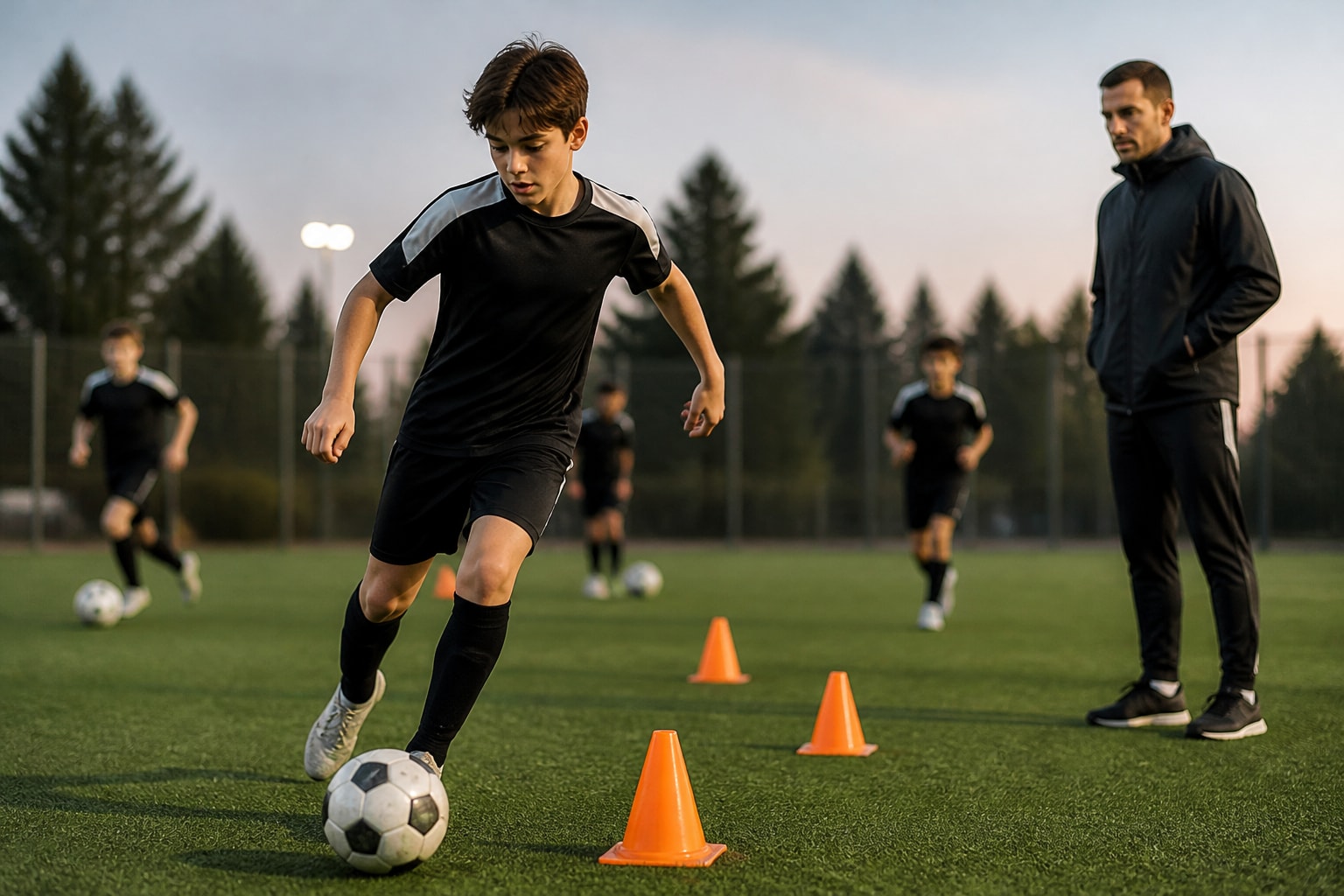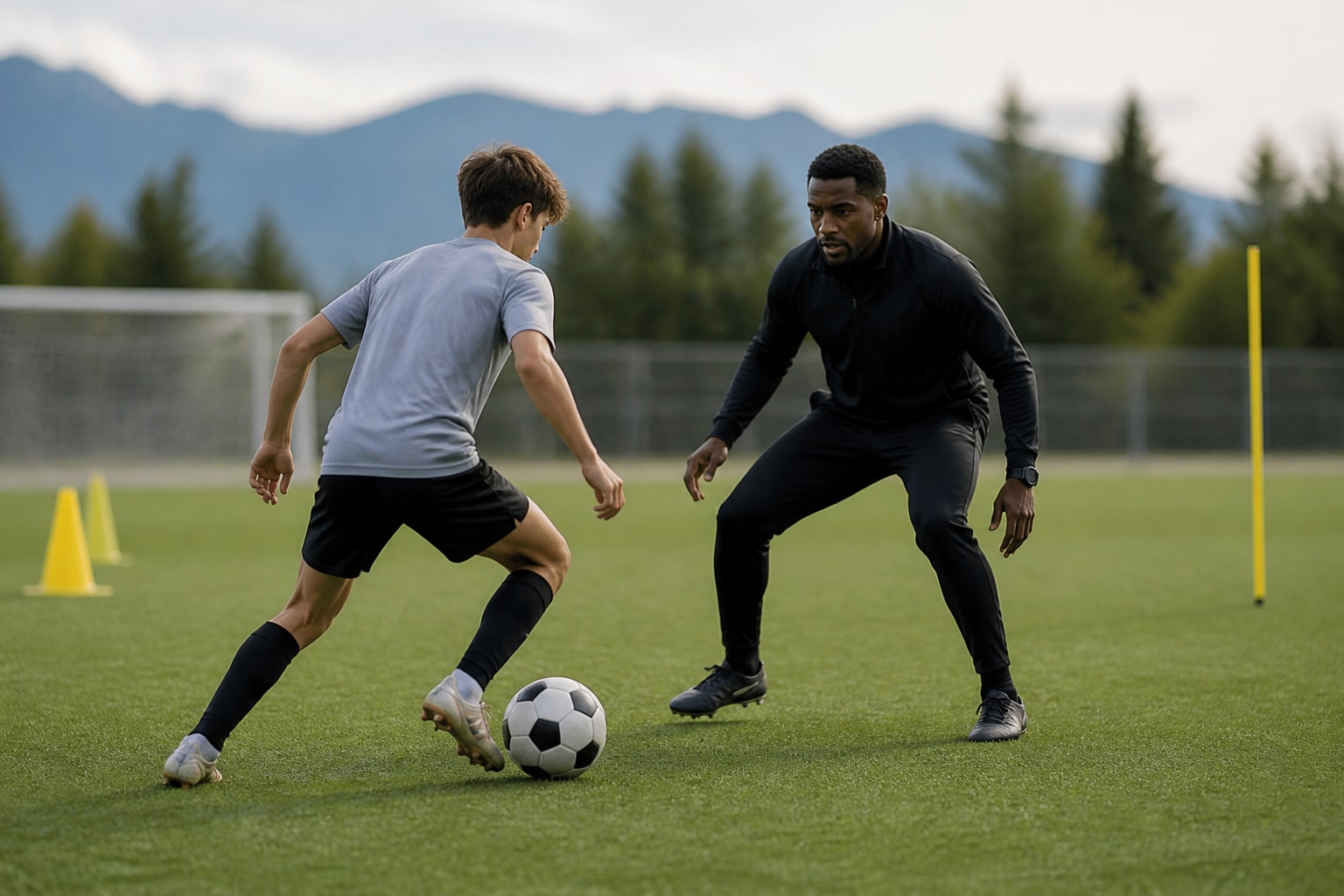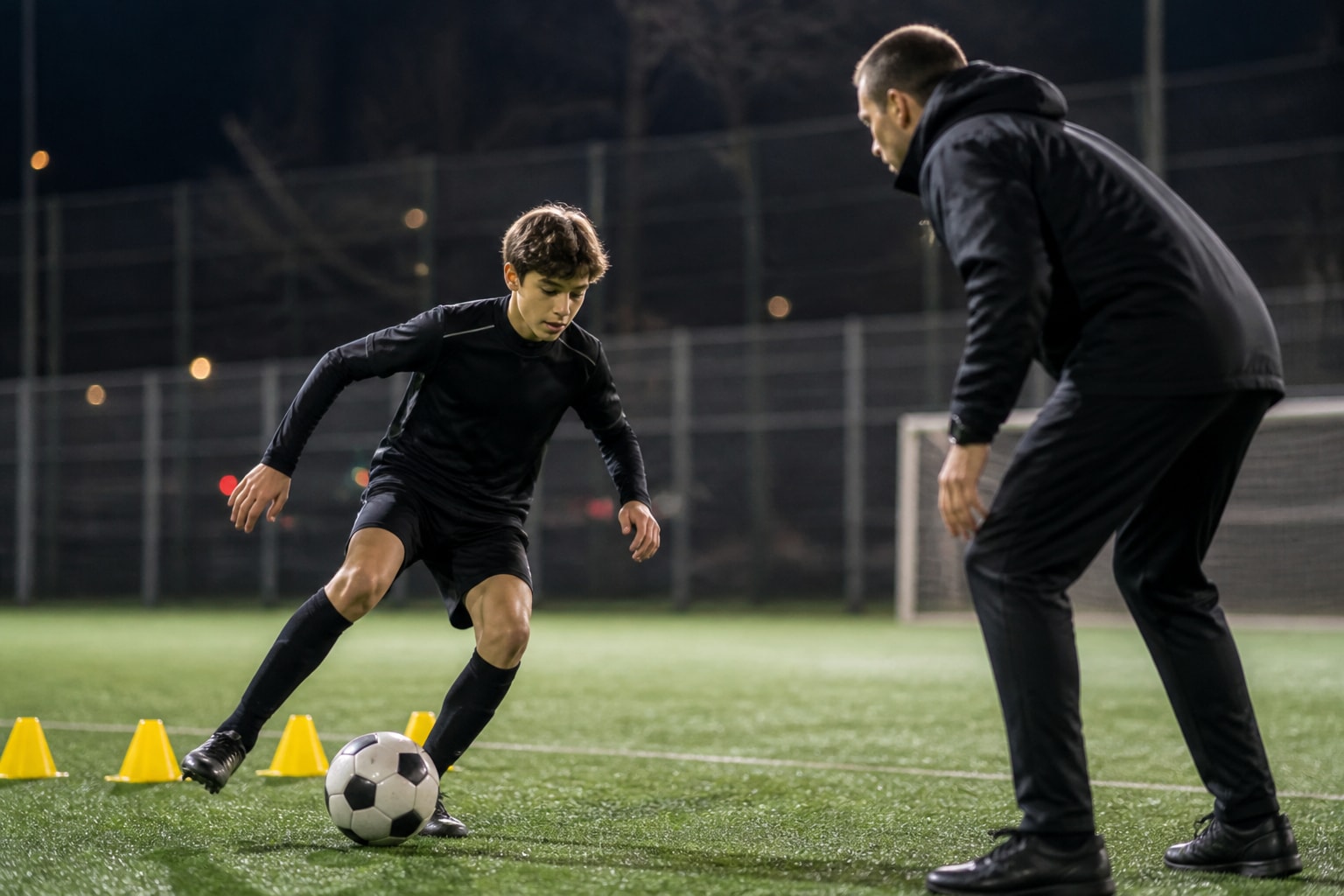
The best private soccer training near Delta BC combines licensed coaching, a low player-to-coach ratio and a clear development plan, and the closest option is Strive Soccer Academy in Surrey, a short drive from most Delta neighborhoods. For a committed player aged 5 to 18, the right program is less about the postal code and more about whether every session produces measurable growth in touch, decision-making and match readiness. This guide explains how to evaluate your options, what quality coaching looks like, and how to match training to your child's competitive goals.
Are Private Soccer Lessons Worth It?
Private soccer lessons are worth it when your child already plays competitively and needs more focused repetition than a team practice can provide. A typical club session spreads one coach across 15 to 20 players, which limits individual touches and personal feedback. Smaller training formats change that equation.
The value shows up in three places:
- Volume of touches. Small-sided, high-touch training can deliver far more touches per session than most club practices.
- Specific correction. A coach working with a few players can fix a habit, such as a weak-foot passing technique or poor body shape on the first touch, before it hardens.
- Individual pacing. Players progress at the speed their ability allows, not the speed of the slowest or fastest player on the team.
Private training is not a substitute for team play. It works best as a supplement for players who already love the game, attend regular club sessions and want an edge in tryouts, travel teams or college pathways. Families seeking only casual recreational play are better served by a community introductory program.

What Makes Private Soccer Training Near Delta BC Worth the Drive?
Delta families have several training options within a reasonable commute, and the ones worth the drive share a short list of features: licensed coaches, structured curriculum and honest grouping of players by ability. Proximity matters for consistency, but a program an extra 15 minutes away that develops your child faster beats a closer one that offers only unstructured drills.
Strive Soccer Academy sits in Surrey, which places it within reasonable reach of Delta and nearby Surrey neighborhoods. Parents comparing options can also look at the academy's pages for private soccer training in Surrey, BC and its soccer academy serving the Delta area to see how the programming is organized.
When you weigh distance against quality, consider the full weekly picture. A player who trains once or twice a week for 60 to 90 minutes spends most of the time in the car only briefly. What matters is that those hours are used well.
How to Evaluate a Private Soccer Coach or Academy
A strong private soccer program can be identified by five checks: coach credentials, coaching ratio, curriculum structure, grouping method and a track record of player outcomes. Ask about each before committing.
- Coach licensing. Look for certification through Canada Soccer. Licenses range from Soccer for Life for developing coaches up to the National A License. Strive Soccer Academy's coaches are licensed through Canada Soccer, with licenses ranging from National A Licenses to Soccer for Life certifications.
- Player-to-coach ratio. Smaller is better. A small ratio allows each player regular, direct feedback, and Strive Soccer Academy keeps its groups small for that reason.
- A written development framework. Quality programs train the whole player. Strive organizes its work around four areas: Technical, Tactical, Physical and Psychological.
- Grouping by ability. Players placed in the wrong group either coast or struggle. Skill-based grouping and bio-banding, which accounts for differences in physical maturity, keep training at the right level.
- Evidence of outcomes. Ask where former players have gone. Strive-trained players have moved into professional academy environments, U SPORTS and NCAA Division I and II scholarships, and overseas trials in Europe.
A coach who cannot answer these questions clearly is a coach to question further.
What Is the Best Age to Start Soccer Training?
Children can begin organized soccer as early as age 4 or 5, but structured individual skill training delivers the most benefit from roughly age 7 or 8, once a child can follow multi-step instructions and sustain attention for a full session. Before that age, unstructured play with a ball matters more than technical coaching.
The stages break down roughly as follows:
| Age Range | Training Focus | Typical Approach |
|---|---|---|
| 5 to 7 | Ball familiarity, coordination, enjoyment | Playful, game-based sessions |
| 8 to 11 | Technical foundation, first touch, 1v1 skills | High repetition, small groups |
| 12 to 14 | Tactical awareness, speed, strength development | Position-specific work, bio-banding |
| 15 to 18 | Match intensity, mental resilience, pathway planning | Competitive training, recruitment preparation |
The ages from 8 to 12 are often called the golden window for technical learning. Players who build clean habits in these years carry them through every later stage. That said, a 14-year-old who starts serious training is not too late. Progress depends on consistency and quality of coaching far more than a birth year.
Canada's daily activity guidelines also frame the bigger picture. Canada's physical activity recommendations highlight the value of regular movement for children, and a structured, enjoyable training routine supports that beyond soccer itself.
Goal-Based Training: Matching the Program to Your Player's Pathway
The right training plan depends on where your child wants to go, and the most useful conversation a parent can have with a coach is about the destination before the schedule. A player aiming for a competitive club roster needs different work than one targeting a college scholarship.
For Players Aiming at Competitive or Travel Teams
Focus on first touch under pressure, passing range, 1v1 ability and decision speed. Private sessions can rehearse the exact situations tryouts reveal, such as receiving on the half-turn or beating a defender in tight space.
For Players on a College Pathway
Recruiters at U SPORTS and NCAA programs look for technical consistency, athletic readiness and a clear record of development over years. Training that tracks progress across several seasons, rather than offering a one-off camp, gives a player something concrete to show.
For Goalkeepers
Goalkeeping is a specialist discipline with its own footwork, handling and distribution demands. Dedicated goalkeeper training should be separate from outfield sessions.
How Often Should a Player Train Privately?
One focused private or small-group session per week, added to regular club training, is enough for most committed players to see steady progress, while two sessions suit players preparing for tryouts or a step up in level. More is not automatically better. Overtraining raises injury risk and can drain a young player's enthusiasm.
Consider these guidelines:
- Ages 8 to 11: one session per week, plus free play and club practice.
- Ages 12 to 14: one or two sessions per week, with at least one full rest day.
- Ages 15 to 18: two sessions per week during preparation periods, reduced during heavy match schedules.
Year-round consistency beats short bursts. Strive Soccer Academy offers indoor and futsal training through the winter, so a player's development does not have to pause when the rain arrives. Parents can review the youth soccer training schedule to plan around school and club commitments.
Indoor, Outdoor and Futsal: Why Surface Variety Matters
Training on more than one surface and format makes a player more adaptable, and winter indoor and futsal sessions are among the most effective ways to sharpen close control. This is a practical point for Lower Mainland families, where wet weather limits outdoor field time for months.
Futsal uses a smaller, heavier ball in a confined space. Players get far more touches per minute, face constant pressure and must decide quickly. Those conditions build the quick feet and tight-space composure that translate directly to the outdoor game. Futsal is widely used in European youth development for building technical polish.
A balanced year might look like this:
- Fall outdoor: league play and tactical application.
- Winter indoor and futsal: technical sharpening and speed of thought.
- Spring outdoor: returning to full-field play with sharper habits.
Families interested in this rhythm can explore the academy's options for indoor soccer training in Surrey alongside its outdoor sessions.
Questions to Ask Before You Book
Asking the right questions in a first call or trial session tells you more than any website. Come prepared with a short list.
- What licenses do the coaches hold, and who will actually run my child's sessions?
- How many players are in a typical group, and how are they selected?
- How do you assess a player's starting level and track progress?
- What does a session look like from warm-up to finish?
- How do you handle players at different stages of physical maturity?
- Where have your former players gone after training with you?
Pay attention to how coaches answer. Clear, specific replies signal a structured program. Vague promises about turning a child into a professional suggest the opposite, and a realistic coach will talk about development work, not shortcuts.
Strive Soccer Academy has spent over 20 years developing youth players from the grassroots level, which shapes its emphasis on patient, long-term growth over quick results. For parents ready to see what that looks like on the field, Soccer Skills Training is the clearest place to begin, with sessions built around high-touch repetition and coach feedback.
Preparing Your Child for Their First Session
A good first session starts before your child arrives: a clear talk about goals, proper gear and realistic expectations. Share any recent coach feedback, upcoming tryout dates and areas your child wants to improve so the coach can plan with purpose.
Pack shin guards, a size-appropriate ball, water and footwear suited to the surface. Encourage your child to ask questions and to say when something feels too hard or too easy. Players develop fastest when they are challenged but not overwhelmed.
Afterward, ask your child what they learned rather than how they performed. Reflection builds the psychological side of the game, the confidence and self-awareness that separate players who keep improving from those who plateau.
Where Else Surrey-Area Training Can Help
Families across the region often compare programs by neighborhood, and the academy's local pages show how the same approach applies in different areas. Parents closer to the Langley side can look at private soccer training near Langley, BC, while those south of Surrey may prefer South Surrey training options. Whichever location fits your commute, the training philosophy stays consistent.
FAQ
How do I get into coaching soccer?
Start by earning a Canada Soccer coaching certification through your provincial association, beginning with the entry-level community stream, and gain experience assisting at a local club. Progression runs from introductory courses up to advanced licenses such as the National A License. Parents who coach their own child's team often find this is the simplest entry point.
What are some good soccer summer camps in the USA?
Families based in Delta and Surrey usually find better value in year-round local programming than in cross-border camps, since consistent weekly training produces more lasting improvement than a single week away. If you do consider a camp, check coach credentials, group sizes and what follow-up development the program offers.
The simplest next step is to write down your child's top two goals for this season and bring them to a trial session, where a coach can show you how training would address each. If you want to see how Strive Soccer Academy approaches that work, its Soccer Skills Training program is built around high-touch repetition with licensed Canada Soccer coaches. You can Book a Trial with Strive Soccer Academy to watch a session, meet the coaches and find out where your player fits.