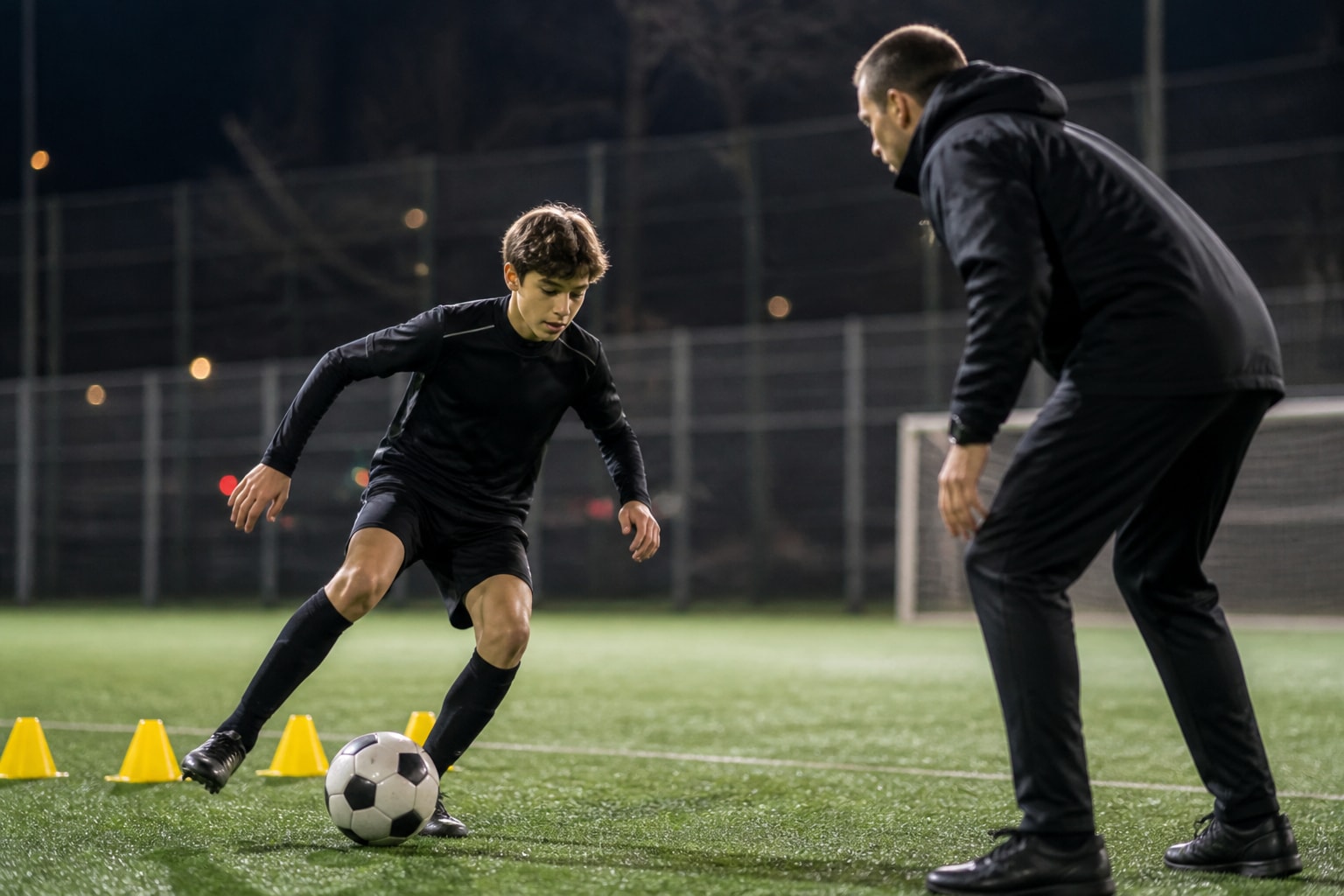
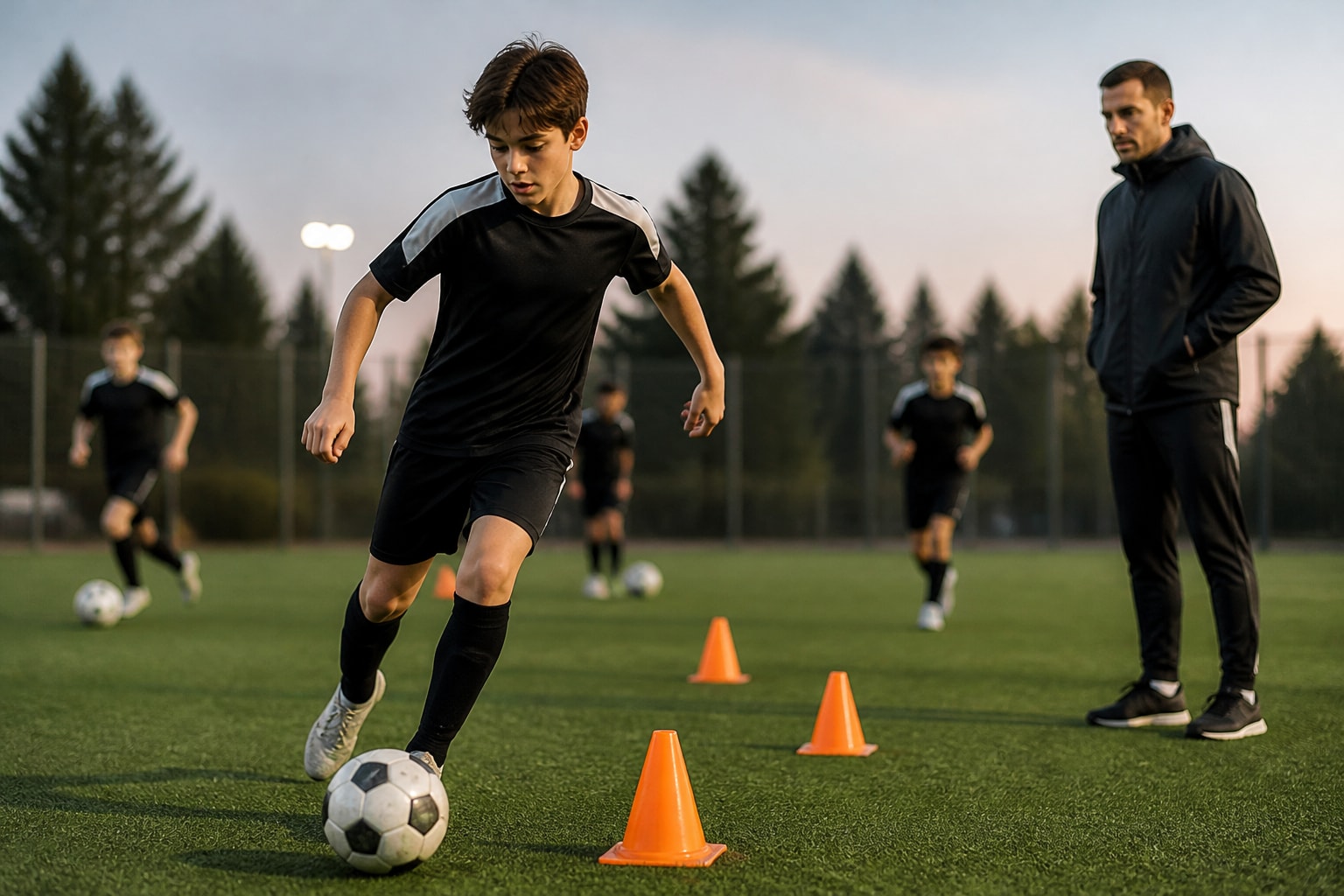
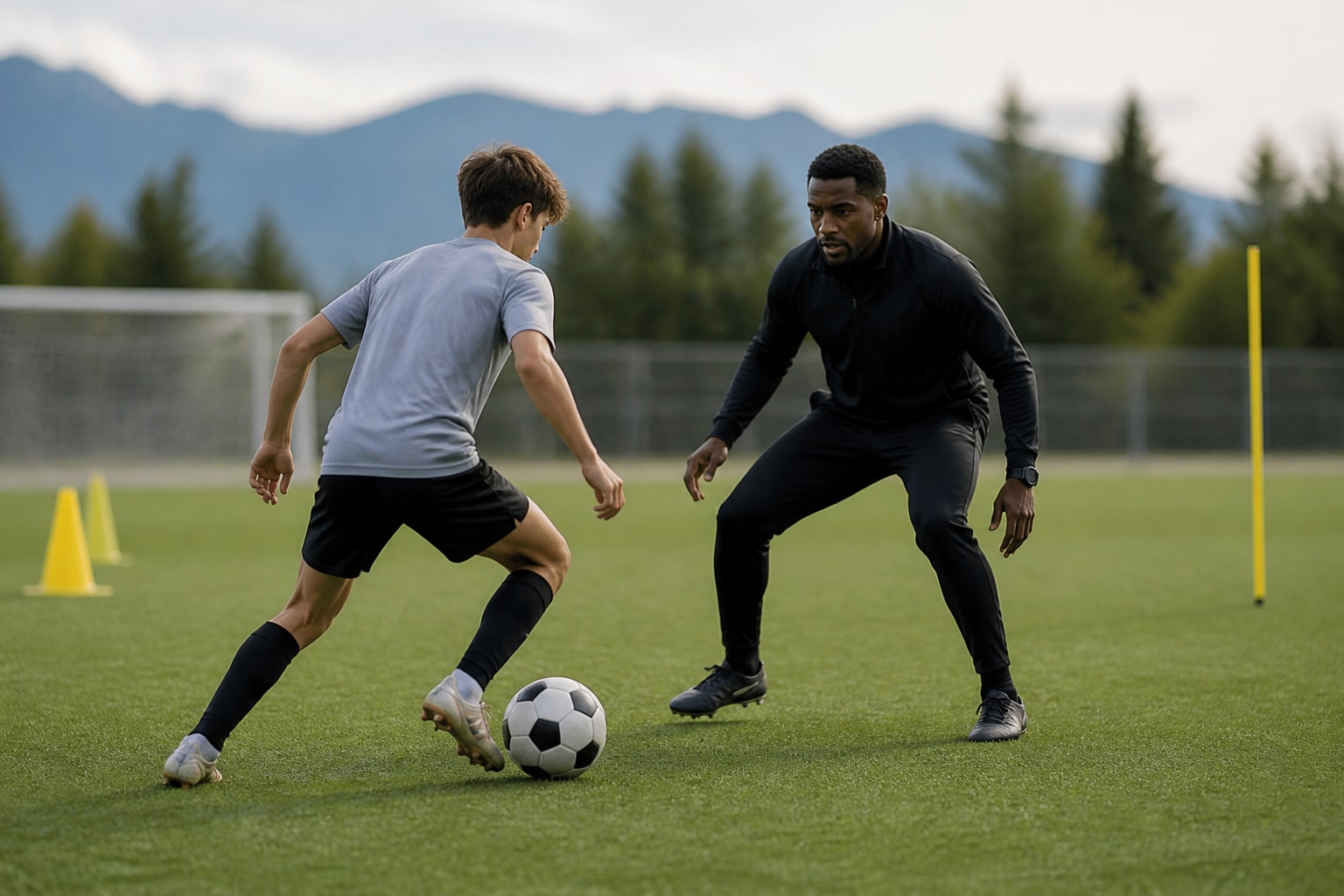
If you are looking for a soccer academy near Delta, BC, the closest option that offers structured, European-style player development is Strive Soccer Academy in Surrey, a short drive from most Delta neighborhoods. For committed players aged roughly 5 to 18, the right academy comes down to five things: coach qualifications, training volume, grouping by level, year-round programming, and a proven route to higher levels of play.
This guide walks through how to evaluate each of those factors, what Delta's local facilities mean for your training plans, and which questions to ask before you commit.
What a Soccer Academy Should Offer Beyond Club Soccer
A true academy adds individual technical development, tactical education, and physical and psychological growth on top of what a club team provides in a weekly practice and weekend game.
Most club practices serve a full roster of 15 to 18 players, often with one coach and limited time for individual correction. An academy fills that gap. The strongest programs organize their curriculum around four pillars of player growth:
- Technical: ball mastery, first touch, passing, finishing, and one-on-one skills
- Tactical: positioning, decision-making, and reading the game
- Physical: speed, agility, coordination, and age-appropriate conditioning
- Psychological: confidence, resilience, focus, and handling pressure
Strive Soccer Academy builds its programming around exactly these four areas, using a European-style training philosophy. For a player who already plays on a competitive club team, this kind of academy work complements the weekly match schedule rather than replacing it.

Why Delta Families Look to Surrey for Academy Training
Delta has strong field infrastructure but a limited number of dedicated, high-touch academy programs, so many serious players travel the short distance into Surrey.
The City of Delta says it has more than 70 athletic fields, including fields used for soccer. That is a healthy base for community and club play. Field supply, however, is not the same as coaching depth. Facilities give players somewhere to play; an academy gives them a plan for getting better.
Delta also regulates how fields are used. The City notes that organized teams and leagues must obtain a permit to use or book sports fields, and the posted rates reflect that structure. For Delta non-profit youth groups, prime-time synthetic turf is listed at $23.50 per hour and non-prime synthetic turf at $15.00 per hour, both excluding taxes. Grass fields are listed at $6.25 per hour for Tier 1 and $3.13 per hour for Tier 2, with taxes excluded.
Those figures matter to parents for one practical reason: field time is limited and scheduled around organized groups. A dedicated academy handles that logistics burden and runs a consistent training calendar, so your child's development does not depend on finding open pitch space.
If you want to map out travel time and practice locations, the City's park and amenity search lists parks with sports fields across Delta.
How to Evaluate Coaching Credentials
The most reliable measure of coaching quality is verifiable certification, and parents are entitled to ask for it.
In British Columbia, the baseline is clear. BC Soccer's club licensing requirements state that youth head coaches need a valid Criminal Record Check with Vulnerable Sector Check, Respect in Sport for Activity Leaders, concussion and emergency-action training, and age-group-specific grassroots coach education. BC Soccer also notes that clubs must be licensed to be affiliated and sanctioned by the association, a requirement that began in 2024.
That grassroots education is organized by age:
| Age group | BC Soccer grassroots stream |
|---|---|
| U6 | Active Start |
| U7 to U9 | Fundamentals |
| U10 to U13 | Learn to Train |
| U14 to U18 | Soccer for Life |
You can confirm a coach's certification status through BC Soccer's coaching pathway page, which includes a coach-status check resource. For a closer look at how the higher diploma levels work, BC Soccer outlines the coaching courses and C Diploma pathway.
At Strive Soccer Academy, all coaches are fully licensed through Canada Soccer, ranging from National A Licenses to Soccer for Life certifications for developing coaches. That range is useful to understand. Senior licenses signal advanced tactical and methodological training, while Soccer for Life certification reflects the age-appropriate approach used with older youth groups.
Questions Every Parent Should Ask About Training Structure
The training structure, meaning group size, touch volume, and level matching, determines how much your child actually improves per session.
Before registering anywhere, ask these questions directly:
- What is the player-to-coach ratio? Strive keeps group sizes small so coaches can give individual feedback in sessions.
- How many ball touches does a player get per session? Strive runs small-sided, high-touch sessions designed to maximize each player's touches.
- How are players grouped? Strive uses skill-based grouping and bio-banding, so players train at the right level for their ability and physical maturity rather than by birth year alone.
- Is programming year-round? Strive covers fall and spring outdoor leagues and winter indoor and futsal.
Bio-banding deserves particular attention for parents of players in the early teen years. Two 13-year-olds can differ dramatically in physical development. Grouping by maturity as well as skill keeps late developers from being overlooked and protects early developers from relying on size alone.
Safety and Safeguarding Standards to Verify
A reputable academy should be able to explain its approach to safeguarding, concussion protocols, and age-appropriate heading practices without hesitation.
It is a useful reference for forming your own questions. Ask any academy how its coaches handle a suspected head injury, how they screen staff, and how they apply heading guidance by age group.
The coaching requirements BC Soccer sets out give you a concrete baseline for those conversations. Youth head coaches in the province need a valid Criminal Record Check with Vulnerable Sector Check, Respect in Sport for Activity Leaders, and concussion and emergency-action training. You can ask an academy to confirm each item for the specific coach who will lead your child's group, and a confident program will answer directly. It is also reasonable to ask who is on site during sessions, how parents are told about an injury, and where emergency procedures are written down.
Those answers tell you as much about an organization's culture as its training methods do. A program that treats player welfare as a core standard is usually a program that treats development seriously across the board.
What Training Looks Like Across a Full Year
A well-built academy calendar keeps a player developing in every season, rather than limiting serious work to the outdoor months.
For Delta families, the weather alone makes year-round planning essential. Outdoor fields handle the fall and spring seasons, while winter calls for indoor and futsal environments. Futsal is especially valuable for technical growth because the smaller, heavier ball and tight spaces force quick decisions and clean touches.
Strive's calendar follows that rhythm: fall and spring outdoor leagues, plus winter indoor and futsal programming. A player who trains through all three blocks accumulates far more quality repetitions than one who plays only a club season. Over a multi-year timeline, that difference compounds.
If your child is already training at a competitive level and you want to add focused technical work, Strive's Soccer Skills Training is the program built for that purpose.
Realistic Outcomes: What an Academy Can and Cannot Promise
An academy can build the skills, habits, and exposure that open doors, but it cannot guarantee a particular result, and parents should be wary of any program that does.
What a strong program can credibly point to is a track record. Strive has spent over 20 years developing youth players from the grassroots level. Strive-trained players have gone on to professional academy environments, U SPORTS and NCAA Division I and II scholarships, and overseas trials in Europe. Those pathways reflect years of consistent development work, not a shortcut.
This is also where families should be honest about fit. Academy training suits players who are already committed to getting better and families ready to support a regular schedule. Players seeking only casual, recreational soccer are better served by community or introductory programs. Families hoping for a fast route to a professional contract without sustained development work will not find that at a genuine academy either.
Other Academy Locations and Programs Near Delta
Strive operates in the Surrey area, which gives Delta families several options depending on which side of the region they commute from.
Families coming from the north end of Delta often find the Newton area convenient, and the Newton academy page covers that location. Those traveling along the Highway 99 corridor may prefer the South Surrey option. For players who play a specific position, a goalkeeper academy provides specialized work that general sessions cannot match. Goalkeeping involves its own footwork, positioning, and handling technique, and a keeper who trains only in outfield-style sessions rarely gets enough repetitions in those areas.
Location choice also depends on the rest of the family's week. A parent who works in Surrey might prefer a site near the office, while a family with several children in different activities may want the location closest to home. If a player already trains with a Delta club, compare the academy schedule against club practice and game days so the two programs support each other instead of competing for the same evenings.
When comparing any soccer academy near Delta, BC, test the commute honestly. A program that is 20 minutes away on paper can feel much longer on a school night in rush-hour traffic. Consistency of attendance drives development more than any single feature of the curriculum, so choose a location your family can reach reliably, week after week.
How to Take the First Step With an Academy
The most productive first step is a trial session, which lets your child and your family judge the coaching, the level, and the environment firsthand.
Before the session, gather a few details so the coaches can place your child accurately: the age group, the position or positions your child plays, the current club or school team, and how many days a week the family can realistically commit. A short note about goals helps too. A player aiming for a high school or club roster spot needs a different plan from one who wants to reach a university program.
Use the trial to observe a few specific things:
- Whether coaches correct individual technique, not just run drills
- How many touches each player gets during the session
- Whether your child is placed at a level that challenges them without overwhelming them
- How coaches communicate with players and parents
Afterward, ask the coaches what they saw and what they would work on first. Specific, practical feedback is a good sign.
Pay attention to how your child feels afterward. Serious players should leave tired, focused, and eager to return. If those boxes are checked, you have found a program worth building a season around.
Start by listing your child's current level, schedule, and goals, then bring that list to a trial session so the coaches can place them correctly. At Strive Soccer Academy, we understand what parents want most for their young athletes: a program that develops skills, builds character, and creates real opportunities, delivered through a European-style philosophy built on Technical, Tactical, Physical, and Psychological growth. Our coaches are fully licensed through Canada Soccer, and you can explore Soccer Skills Training to see how sessions are structured. When you are ready to see it in person, Book a Trial with Strive Soccer Academy and let your child experience the training firsthand.