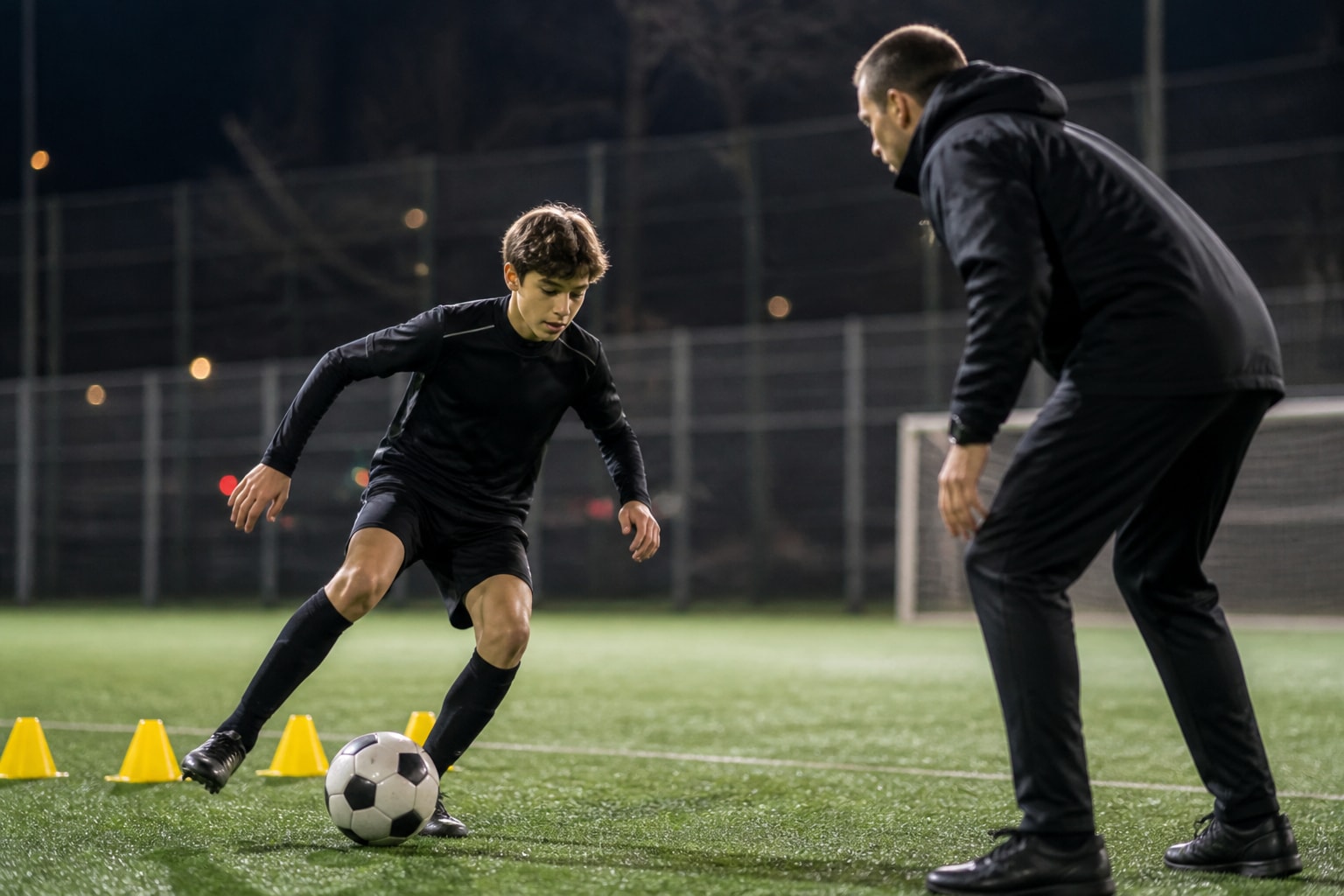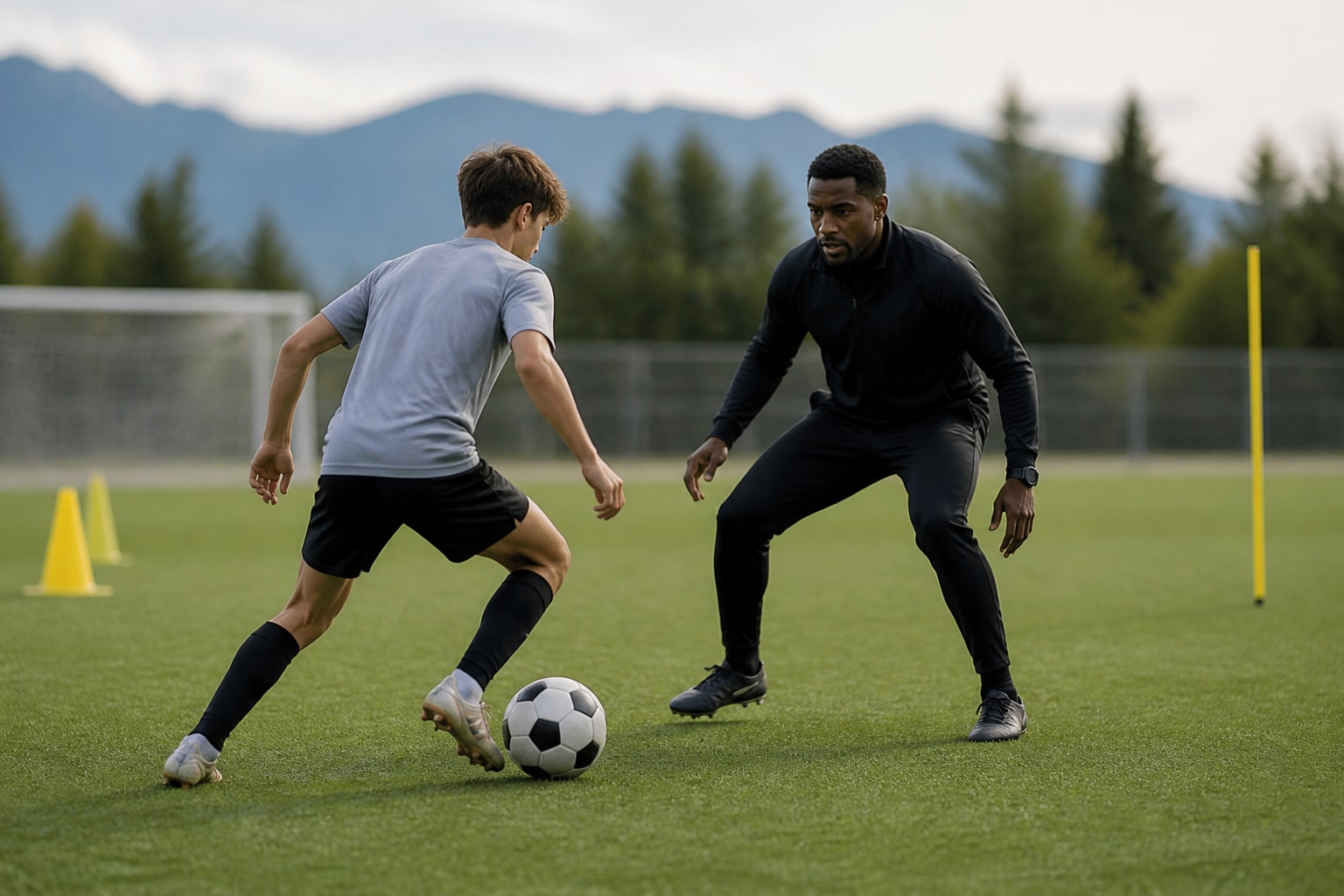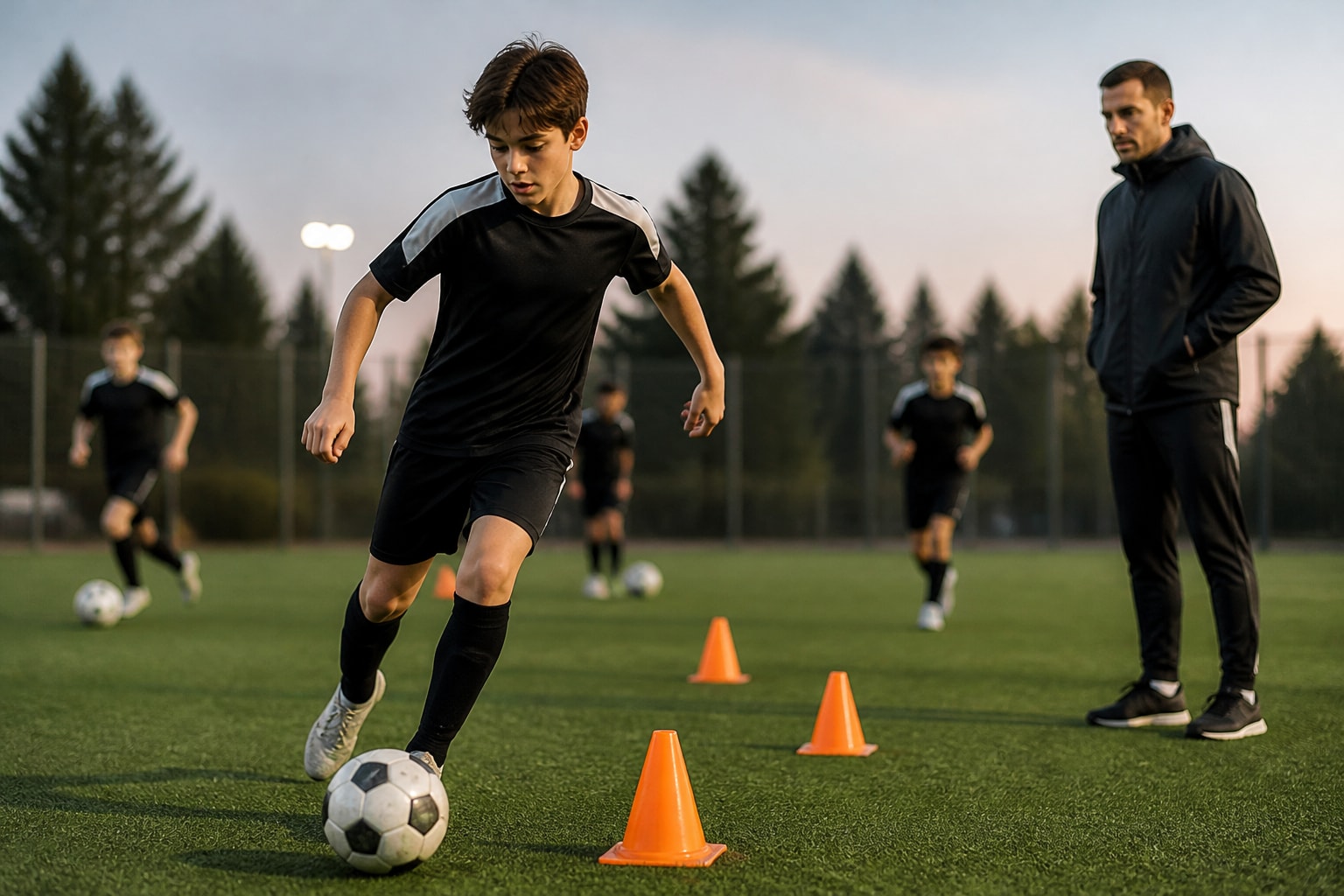
The best youth soccer training near Delta BC combines licensed coaching, small groups and year-round programming, with a clear plan for each player's technical, tactical, physical and psychological growth. Families in Delta, North Delta and Tsawwassen can reach strong options in neighboring Surrey within a short drive, so the real task is matching a program's structure to your child's level and goals.
This guide explains the types of programs available, how to judge coaching quality, what each age group should be working on, and how to evaluate whether a program will move a serious player forward.
What Types of Youth Soccer Programs Are Available Near Delta?
Families in the Delta area generally choose among four program types: recreational leagues, competitive club teams, development academies and private or small-group training. Each serves a different purpose, and many committed players combine two of them.
- Recreational leagues: Low-pressure play, mixed ability, usually one practice and one game per week. Ideal for fun and fitness, but limited for skill development.
- Club and competitive teams: Structured seasons, tryouts and travel. Coaching quality and training volume vary widely between clubs.
- Development academies: Focused technical and tactical instruction, often year-round, with players grouped by ability rather than only by birth year.
- Private and small-group sessions: Individual attention on specific weaknesses such as first touch, finishing or goalkeeping.
Local organizations such as Valor Soccer offer pathways that run from recreational play through competition, which shows how a single community can offer several entry points. For a player who already trains hard and wants more than a weekly practice, an academy layered on top of club soccer is the most common route.
How Do You Know If Your Child Is Ready for Academy-Level Training?
A child is ready for academy-level training when they show consistent interest in practicing outside team sessions and want to improve specific skills, not simply play more games. Readiness has less to do with talent than with commitment.
Look for these signs:
- Your child asks to practice on their own or kicks a ball daily without prompting.
- They accept correction from coaches and attempt to apply it.
- They can focus for 60 to 90 minutes without losing engagement.
- They are already playing on a club or school team and want a higher training volume.
- They set their own goals, such as making a competitive team or earning a spot at a regional camp.
If your child is brand new to the sport and mainly wants a social activity, a recreational or introductory program is the better starting point. Academy training rewards players who already have a baseline of enthusiasm and basic ball familiarity.
At What Age Should a Child Start Soccer Training?
Children can begin informal soccer play at a young age, and structured skills training typically becomes worthwhile in the early primary school years. At the youngest ages the priority is ball comfort and enjoyment, not tactics or competition.
The Government of Canada's physical activity recommendations call for children and youth to accumulate an average of at least 60 minutes of moderate-to-vigorous activity daily. Soccer is an efficient way to meet that guideline, and early positive experiences make long-term participation more likely.

Here is what training emphasis typically looks like by stage:
| Age group | Primary focus | Typical training format |
|---|---|---|
| 5 to 8 | Ball mastery, coordination, enjoyment | Small-sided games, playful skill drills |
| 9 to 12 | Technical foundation, decision-making | Small groups, high repetition |
| 13 to 15 | Tactical understanding, physical development | Position-specific work, bio-banded groups |
| 16 to 18 | High-performance habits, pathway planning | Competitive sessions, recruitment guidance |
The window between ages 9 and 12 is often considered the most productive for technical learning, so a program with high repetition during these years can have an outsized effect.
What Makes Youth Soccer Training Near Delta BC Worth the Drive?
Training is worth a drive from Delta when it offers something local options do not: smaller groups, licensed coaches, ability-based grouping and a year-round calendar. Surrey is the closest hub for this type of development, and a twenty-to-thirty-minute drive is reasonable for a program that changes how your child trains.
Weigh these factors against the commute:
- Player-to-coach ratio: Fewer players per coach means more individual feedback.
- Touches per session: A session where a player handles the ball constantly builds skill faster than one dominated by lines and waiting.
- Grouping method: Players placed by ability, not just age, train at a level that challenges them without overwhelming them.
- Schedule fit: Fall and spring outdoor seasons plus winter indoor and futsal keep development continuous through the Lower Mainland's wet months.
A program that is close but offers one drill-heavy session a week may deliver less than a farther one with focused, high-repetition training. Always compare what happens inside the session, not only the address.
How Do You Evaluate Coaching Quality?
Coaching quality is best judged by credentials, session design and how a coach communicates with players. Ask any program for the specific licenses their coaches hold through Canada Soccer, since certification ranges from community-level courses to National A Licenses.
Questions worth asking during a trial or inquiry:
- What Canada Soccer licenses do your coaches hold?
- What is the typical player-to-coach ratio?
- How are players grouped, and how often are groupings reviewed?
- How do you track individual progress and communicate it to parents?
- Do graduates move into higher competitive environments, and where?
Watch a session if the program allows it. Look for coaches who stop play to teach, give specific individual feedback and keep every player involved. Long lines, idle players and generic instruction signal a lower-quality environment regardless of branding.
What Does a Well-Rounded Training Program Include?
A well-rounded program develops four areas: technical, tactical, physical and psychological. Programs that focus only on drills and fitness tend to produce players who look sharp in practice but struggle under match pressure.
Technical Development
This covers first touch, passing, dribbling, shooting and ball striking. Progress depends on repetition, so look for sessions designed around constant ball contact rather than long explanations.
Tactical Understanding
Players learn to read the game: where to move, when to pass, how to press and how to recover shape. Programs with a dedicated tactical component, such as tactical soccer training for youth in Surrey, teach decision-making that transfers directly to club matches.
Physical Development
Speed, agility, balance and strength should be age-appropriate. Younger players benefit from movement skills and coordination, while older players need structured conditioning and injury-prevention habits.
Psychological Growth
Confidence, resilience and focus often separate players who plateau from those who keep improving. Good coaches build these through challenge, constructive feedback and accountability, not only through results.
Why Do Small Groups and Bio-Banding Matter?
Small groups and bio-banding matter because they give each player more touches, more feedback and a level of challenge that matches their actual development. In a large group, a child may touch the ball far less often than in a small group with one coach.
Bio-banding groups players by biological maturity and skill level instead of birth year alone. Two players born in the same month can differ by several years in physical development, and an early developer can dominate a game without learning much, while a late developer can be overlooked despite strong skills. Matching players to the right group protects confidence and keeps training productive for both.
A small player-to-coach ratio is a useful benchmark when comparing programs. Ratios much higher than that make individualized correction difficult, no matter how experienced the coach.
How Does Strive Soccer Academy Approach Development?
Strive Soccer Academy brings a European-style training philosophy to Surrey, built around the technical, tactical, physical and psychological areas described above. Sessions run small-sided and high-touch, with small groups and a focus on constant ball contact. Coaches are fully licensed through Canada Soccer, from National A Licenses to Soccer for Life certifications, and players are placed using skill-based grouping and bio-banding.
The academy has spent over 20 years developing youth players from grassroots level, and Strive-trained players have gone on to professional academy environments, U SPORTS and NCAA scholarships, and overseas trials in Europe. Programming runs year-round across fall and spring outdoor leagues and winter indoor and futsal. For serious players, Soccer Skills Training is the starting point for building the technical base that every other level of the game depends on.
If you want to see how this fits your child, the youth soccer training program page outlines the structure, and the youth soccer training schedule shows current session options.
What Should Parents Expect in Terms of Pathways and Results?
Parents should expect a development pathway measured in seasons, not weeks, with progress visible first in confidence and first touch before it shows in match results. Realistic expectations protect both the child and the parent's investment.
A sensible timeline looks like this:
- First 4 to 8 weeks: Better comfort on the ball and greater willingness to try skills in games.
- First full season: Noticeable gains in technique, decision-making and consistency.
- 12 to 24 months: Stronger competitive opportunities, such as moving up a club tier or earning a place on a higher-level team.
- Long term: For older players, recruitment conversations for U SPORTS or NCAA programs, which depend on years of consistent development and video evidence.
Be cautious of any program that promises a fast track to a professional contract. Real pathways rely on sustained development work, match exposure and the player's own commitment. A good academy will tell you honestly where your child stands and what the next step looks like.
How Do You Choose Between Group and One-on-One Training?
Group training builds game-realistic skills, while one-on-one sessions target specific weaknesses, and most committed players benefit from a mix of both. Group sessions teach players to execute under pressure, with teammates and opponents moving around them. Individual sessions allow a coach to isolate a flaw, such as a weak left foot or poor body shape when receiving, and fix it with focused repetition.
A practical approach is to use small-group academy sessions as the weekly foundation and add private work during key windows, such as before tryouts or when a coach identifies a clear gap. Goalkeepers have their own needs and often benefit from dedicated goalkeeper training alongside outfield work.
What Should You Ask Before Enrolling?
Before enrolling, confirm the schedule, coach credentials, group size, location and how the program communicates progress. Clarity at the start prevents frustration later.
- Is there a trial session so my child can experience the environment?
- How are session times structured around school and club commitments?
- How is progress reported, and how often?
- What happens if my child needs to move up or down a group?
- Are indoor and futsal options available during winter?
For details on fees, session lengths and registration, contact the program directly instead of relying on assumptions. Families comparing locations within the Lower Mainland can also review programs near Newton and South Surrey to find the most convenient drive from Delta.
FAQ
Do all youth soccer programs near Delta use licensed coaches?
No. Coaching credentials vary significantly between programs, from volunteer parents to coaches with Canada Soccer National A Licenses. Ask each program which licenses its coaches hold and request to observe a session before committing.
Can a child train with an academy while playing for a club team?
Yes, and most committed players do both. Academy sessions focus on individual skill and decision-making, while club play provides match experience. Confirm that the combined weekly load is manageable, especially during school exams and peak club schedules.
Is year-round training too much for a young player?
Not when sessions are age-appropriate, varied and followed by adequate rest. The risk comes from repetitive, high-intensity loads without recovery, particularly for players in growth spurts. Quality coaches adjust volume and intensity to the player's stage of development.
The simplest next step is to attend a trial session and watch how coaches handle group size, feedback and touch volume, since a single session reveals more than any brochure. Strive Soccer Academy offers small-group, licensed-coach training in Surrey, built on a technical, tactical, physical and psychological approach, and its Soccer Skills Training is a strong entry point for committed players. When you are ready to see it in person, Book a Trial with Strive Soccer Academy so your child can experience the training firsthand and you can see where they fit.