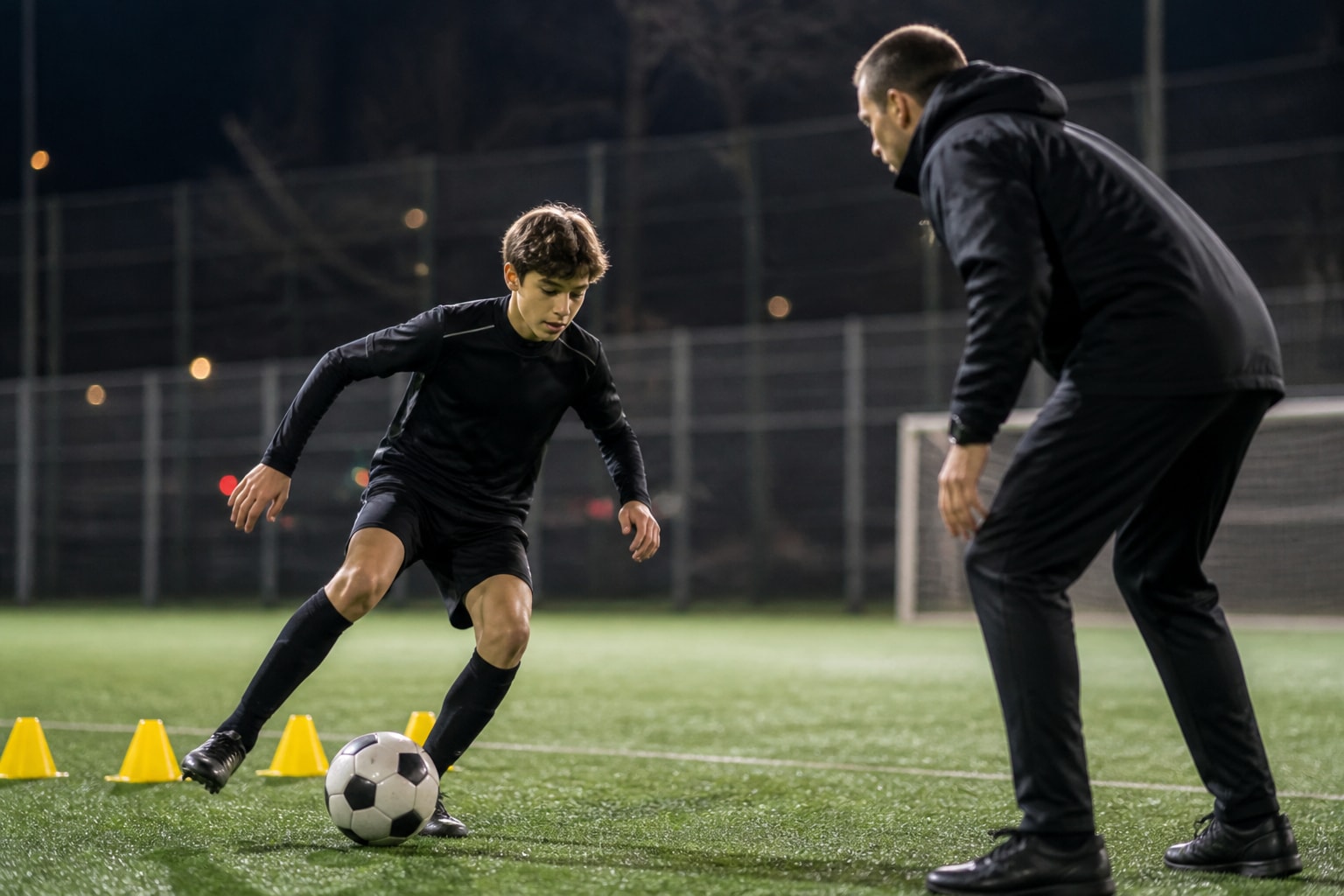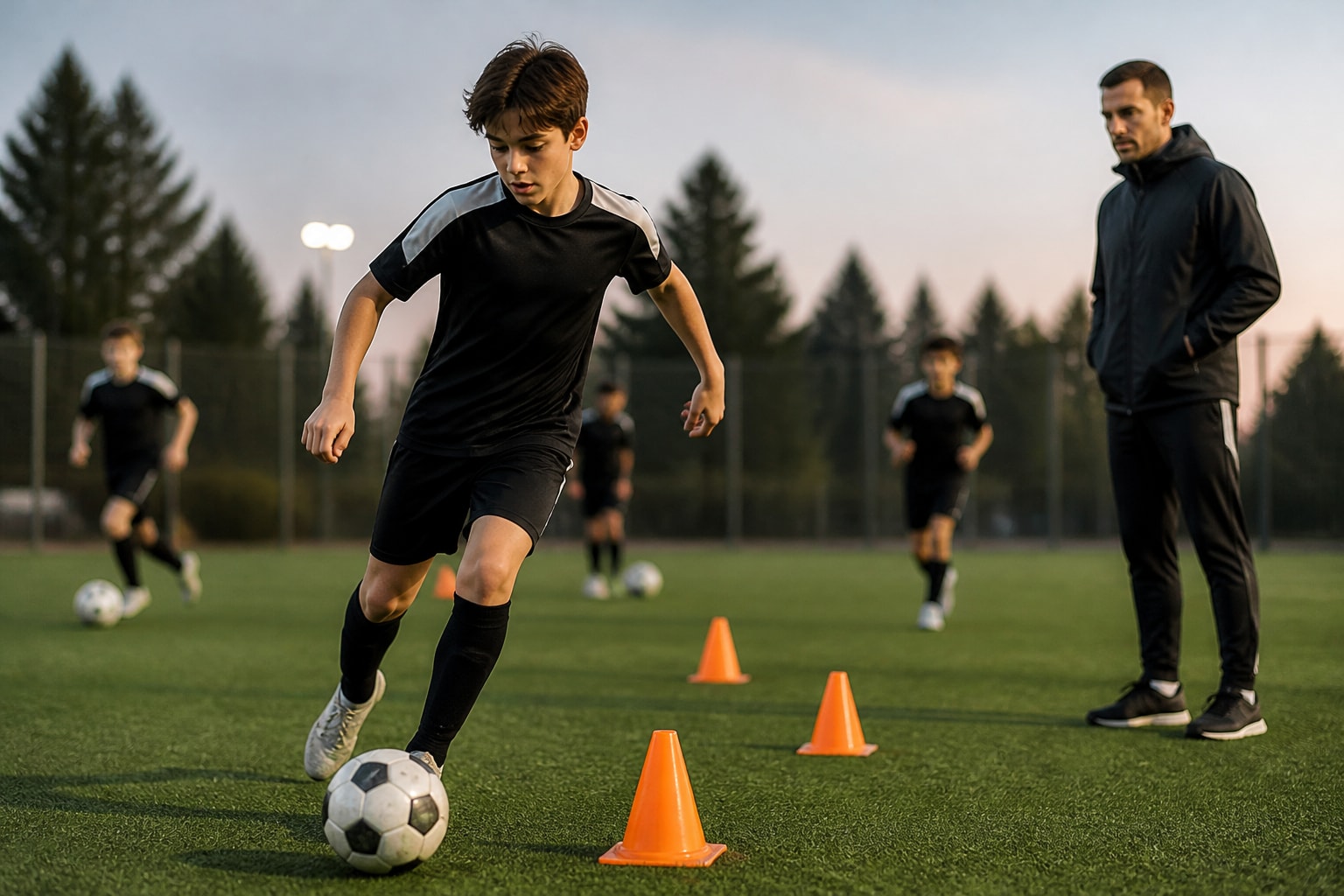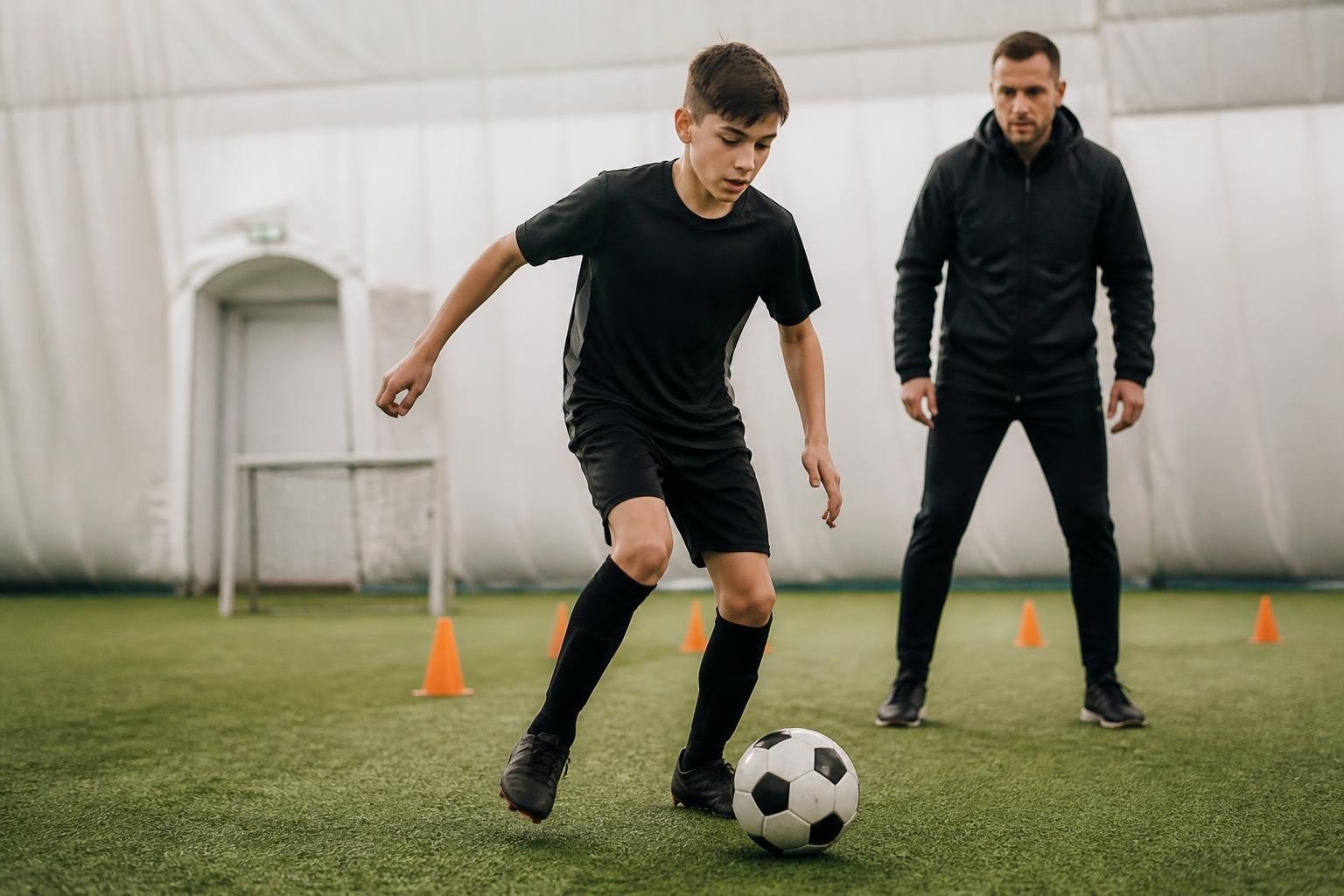
Surrey, British Columbia has emerged as a hotbed for youth soccer development, with indoor training facilities offering year-round opportunities for players to refine their skills regardless of the weather. As parents and young athletes seek competitive advantages and consistent development pathways, indoor soccer training in Surrey BC has become an essential component of player progression. The controlled environment, specialized coaching, and focused training sessions available at indoor facilities provide unique benefits that complement outdoor play while addressing the challenges of the Pacific Northwest climate.
The Advantages of Indoor Training Environments
Indoor soccer facilities deliver significant benefits that outdoor pitches cannot match during Surrey's rainy months. Climate control ensures consistent training conditions throughout the year, eliminating cancellations due to weather and maintaining the predictable schedule that young athletes need for skill development.
Controlled Training Conditions
The indoor environment allows coaches to design sessions without worrying about field conditions, temperature extremes, or visibility issues. Players develop better ball control on consistent surfaces, and training intensity remains high regardless of what's happening outside. This consistency proves particularly valuable for technical work, where surface predictability allows players to focus entirely on their touch and movement patterns.
Key benefits of climate-controlled training include:
- Elimination of weather-related cancellations and disruptions
- Consistent surface conditions for technical skill development
- Extended training seasons without seasonal breaks
- Comfortable temperatures that promote optimal performance
- Better lighting conditions for evening and winter sessions

Increased Ball Touches and Skill Repetition
Indoor training naturally increases the number of ball contacts per session. The smaller playing area, faster pace of play, and reduced downtime between drills means players get significantly more touches than in traditional outdoor sessions. This accelerated repetition drives faster skill acquisition and muscle memory development.
Research shows that players in indoor environments can achieve 30-40% more ball contacts per training hour compared to outdoor sessions of similar duration. For young players building foundational skills, this increased volume translates directly into accelerated development and improved confidence on the ball.
Facilities and Infrastructure in Surrey
Surrey's commitment to soccer infrastructure continues to grow, with several high-quality indoor facilities serving the community. The city has invested substantially in recreation centers and sport complexes that offer premium indoor training spaces for soccer programs.
Parents researching indoor sport programs through Surrey Parks and Recreation will find multiple facility options across different neighborhoods, making it convenient to access quality training locations. The city's ongoing development plans include significant expansion of soccer facilities to meet growing demand.
| Facility Type | Typical Features | Best For | Availability |
|---|---|---|---|
| Community Centers | Multi-purpose gyms, moderate space | Beginner to intermediate programs | High availability |
| Sport Complexes | Dedicated turf fields, full-sized areas | Competitive training, advanced players | Booking required |
| Private Academies | Specialized equipment, European-style setup | Elite development programs | Program enrollment |
According to a City of Surrey corporate report on soccer facility development, the municipality has identified multiple sites for potential indoor and outdoor soccer facility expansion, demonstrating long-term commitment to supporting the sport's growth in the region.
Surface Considerations and Safety
Most indoor soccer training in Surrey BC takes place on artificial turf surfaces designed specifically for the sport. Modern turf technology has evolved significantly, with newer surfaces providing excellent traction, ball roll characteristics, and player safety features.
While some parents express concerns about artificial surfaces, research published in the National Library of Medicine comparing injury rates on artificial turf versus natural grass shows that modern turf surfaces, when properly maintained, present comparable safety profiles to natural grass. The key factors are proper installation, regular maintenance, and appropriate footwear.
Surface safety best practices:
- Ensure facilities maintain regular turf grooming and infill distribution
- Verify proper shock absorption padding beneath the turf layer
- Use appropriate indoor or turf-specific footwear
- Monitor surface temperature during warmer months
- Check for adequate spacing around playing areas
Coaching Quality and Methodology
The effectiveness of indoor soccer training in Surrey BC depends heavily on coaching quality and the methodological approach used during sessions. Programs that employ Canada Soccer certified coaches provide parents with confidence that their children receive instruction aligned with national development standards and best practices.
European-Style Training Philosophy
Many leading programs in Surrey have adopted European training methodologies that emphasize the four pillars of player development: Technical, Tactical, Physical, and Psychological growth. This holistic approach recognizes that elite players need more than just ball skills-they require tactical intelligence, physical conditioning, and mental resilience.
The European model prioritizes individual technical mastery through high-repetition drills, small-sided games that develop decision-making, and age-appropriate physical conditioning. Sessions are structured to maximize engagement and learning while maintaining the enjoyment that keeps young players motivated.
Small-Sided Games and Futsal Integration
Indoor training provides the perfect environment for small-sided games, which research consistently shows as one of the most effective development tools for young players. Games like 3v3, 4v4, and 5v5 create more touches, more decision-making opportunities, and more involvement for every player compared to full-field formats.
Futsal Canada promotes the sport as a development pathway, and many Surrey programs integrate futsal principles into their indoor training. The smaller, heavier ball, restricted playing area, and emphasis on quick passing and close control translate directly to improved performance in outdoor 11v11 soccer.
Developmental benefits of small-sided games:
- Increased ball touches per player per session
- More frequent decision-making situations
- Enhanced spatial awareness and positioning
- Improved first touch and close control
- Greater individual accountability and engagement
Programs incorporating soccer skills training often use small-sided formats as the foundation of their technical development curriculum, recognizing that these game formats accelerate learning while maintaining high engagement levels.
Age-Appropriate Training Programs
Quality indoor soccer training in Surrey BC offers differentiated programming based on player age and development stage. Not all training is created equal, and effective programs tailor their approach to match the cognitive, physical, and emotional characteristics of each age group.
Youth Development Stages
The Canadian Long-Term Player Development model identifies specific stages from early childhood through adolescence, each requiring different training emphases and session structures.
| Age Range | Development Stage | Training Focus | Session Characteristics |
|---|---|---|---|
| 4-6 years | Active Start | Fun, fundamental movement | Play-based, high variety, short attention span |
| 6-9 years | FUNdamentals | Basic technical skills, coordination | Games-based, positive reinforcement, skill introduction |
| 9-12 years | Learning to Train | Technical mastery, tactical basics | Structured repetition, small-sided games, position introduction |
| 12-16 years | Training to Train | Advanced tactics, position-specific work | Intensity increase, competition preparation, physical development |
| 16+ years | Training to Compete | Elite performance, specialization | High-intensity, match simulation, mental preparation |
Programs that respect these developmental stages create better learning environments and reduce burnout risk. Parents should seek academies that match training intensity and complexity to their child's developmental readiness rather than chronological age alone.
Individualized Attention and Player-to-Coach Ratios
The indoor environment allows for more intimate training settings compared to large outdoor fields. The best programs maintain appropriate player-to-coach ratios that ensure each athlete receives meaningful individual feedback and correction.
Research from the Coaching Association of Canada emphasizes that quality coaching requires adequate time for observation, feedback delivery, and relationship building with athletes. Indoor sessions with ratios of 8:1 to 12:1 provide coaches the capacity to deliver personalized instruction while maintaining group engagement.
Technical Skill Development Focus Areas
Indoor soccer training in Surrey BC excels at developing specific technical competencies that form the foundation of player excellence. The controlled environment and intensive session design accelerate progress in key skill areas.
Ball Mastery and First Touch
The foundation of technical excellence begins with comfort on the ball. Indoor training dedicates significant time to ball mastery exercises-rolling, tapping, cutting, and manipulating the ball with different surfaces of both feet. These exercises develop the neural pathways and muscle memory required for instinctive ball control during matches.
First touch quality determines whether a player can execute their next action or loses possession. Indoor sessions emphasize receiving skills from various angles, different ball speeds, and under pressure from defenders. The faster pace of indoor play naturally develops sharper first touch capabilities.
Progressive ball mastery curriculum:
- Stationary ball manipulation (sole rolls, toe taps, foundation touches)
- Ball control while moving (cuts, turns, changes of direction)
- Receiving from passes (cushioning, redirecting, protecting)
- First touch under pressure (body positioning, awareness, quick release)
- Advanced skills integration (feints, fakes, creative moves)
Passing Accuracy and Vision
Indoor training's confined space demands quick, accurate passing and constant awareness of teammates and opponents. Sessions focus on passing technique with both feet, weight of pass, and timing of delivery. Players learn to recognize passing lanes, anticipate teammate movement, and execute under tight defensive pressure.
The FIFA Training Centre’s futsal coaching manual provides excellent guidance on passing progression exercises that translate directly to improved outdoor performance. These drills emphasize speed of execution, accuracy under pressure, and decision-making quality.
Shooting and Finishing
Indoor environments provide hundreds of shooting repetitions per session. The smaller goals and quick transitions create constant finishing opportunities. Players develop their shooting technique, power generation, accuracy, and ability to finish quickly without extensive preparation time.
Quality programs teach proper shooting mechanics: body positioning, plant foot placement, contact point on the ball, and follow-through. They also emphasize finishing variety-volleys, half-volleys, side-foot placement, and instep power shots-to create complete finishers capable of scoring from any situation.
Physical Development and Conditioning
Modern indoor soccer training in Surrey BC integrates age-appropriate physical conditioning that enhances performance while supporting healthy development. Programs balance technical work with fitness components tailored to each player's developmental stage.
Speed, Agility, and Quickness Training
Indoor facilities provide ideal settings for SAQ (speed, agility, quickness) development. The controlled environment allows for ladder drills, cone work, change-of-direction exercises, and acceleration training without weather interference.
These physical qualities directly impact soccer performance. Quick first steps create separation from defenders, agility enables tight-space maneuvering, and speed generates attacking threats. Indoor sessions can dedicate specific time blocks to SAQ work while maintaining high engagement through soccer-specific exercises.
Strength and Power Development
For older youth players (13+), appropriate strength development becomes important for injury prevention and performance enhancement. Quality programs introduce bodyweight exercises, resistance training fundamentals, and power development within age-appropriate guidelines.
The indoor environment allows for safe integration of physical conditioning stations within technical sessions. Circuit training that alternates between skill work and conditioning exercises maintains engagement while building both technical and physical capacities simultaneously.
Tactical Understanding and Game Intelligence
Beyond physical skills, indoor soccer training in Surrey BC develops the cognitive abilities that separate good players from great ones. Tactical understanding-knowing where to be, when to move, and what to do with the ball-requires deliberate coaching and game-based learning.
Positioning and Spatial Awareness
Indoor small-sided games naturally develop spatial awareness as players must constantly adjust positioning in confined areas. Coaches teach concepts like creating passing angles, maintaining proper spacing from teammates, and positioning relative to ball location.
Tactical sessions break down game situations into teachable moments. Players learn when to check to the ball versus make runs away, how to create space for teammates, and how to exploit defensive gaps. This tactical education accelerates when coaches pause games for teaching moments and replay situations with corrective feedback.
Decision-Making Under Pressure
The fast pace of indoor play forces rapid decision-making. Players face constant choices: pass or dribble, shoot or recycle, press or drop off. Quality coaching develops decision-making frameworks that players can apply instinctively during matches.
Progressive training builds decision-making capacity through:
- Unopposed technique work (no decisions, pure execution)
- Semi-opposed drills (limited pressure, slower decisions)
- Opposed small-sided games (game-realistic pressure, quick decisions)
- Position-specific scenarios (role-specific decision patterns)
- Full match play (chaotic, multiple simultaneous decisions)
Understanding what makes Strive’s training approach unique provides insight into how elite programs structure sessions to maximize both technical and tactical development.
Psychological Development and Mental Skills
The psychological pillar of player development often receives less attention than technical, tactical, and physical training, yet it significantly impacts performance and enjoyment. Indoor soccer training in Surrey BC increasingly incorporates mental skills training appropriate for young athletes.
Building Confidence and Resilience
Indoor training's repetition-heavy format naturally builds confidence as players master skills through consistent practice. Seeing measurable improvement from week to week reinforces self-belief and motivation to continue developing.
Quality programs also teach resilience-the ability to bounce back from mistakes, maintain effort despite setbacks, and persist through challenges. Coaches create psychologically safe environments where mistakes become learning opportunities rather than sources of shame or punishment.
Strategies for psychological development:
- Positive reinforcement that emphasizes effort and improvement
- Mistake-friendly environments that encourage risk-taking
- Goal-setting frameworks for personal development tracking
- Team-building activities that develop social connections
- Growth mindset messaging about ability development
Competitive Mindset and Sportsmanship
Indoor training naturally develops competitive drive through small-sided games, drills with scorekeeping, and technical challenges. Players learn to compete intensely while maintaining respect for opponents and officials.
Programs that balance competition with sportsmanship create athletes who strive for excellence without compromising character. This dual emphasis prepares players for competitive rep soccer environments while ensuring they become good teammates and respectful competitors.
Year-Round Training and Program Structures
One major advantage of indoor soccer training in Surrey BC is the ability to maintain consistent training throughout the year. Unlike seasonal outdoor programs, indoor facilities enable continuous development regardless of weather conditions.
Integration with Outdoor Seasons
Smart training programs integrate indoor and outdoor training strategically. During summer months when outdoor fields are available and weather is favorable, indoor training might focus on specific technical work, small-sided games, or position-specific training that complements outdoor team practices.
Winter months see increased indoor training volume as outdoor conditions deteriorate. This allows players to maintain and even enhance their technical abilities during periods when many competitors scale back their training intensity.
Seasonal training integration model:
| Season | Primary Focus | Indoor Sessions | Outdoor Sessions | Emphasis |
|---|---|---|---|---|
| Fall | League play, team tactics | 1-2 weekly | 2-3 weekly | Match performance |
| Winter | Technical development | 2-3 weekly | 0-1 weekly | Skill refinement |
| Spring | Preparation, conditioning | 1-2 weekly | 2-3 weekly | Physical readiness |
| Summer | Tournament play, variety | 1-2 weekly | 2-4 weekly | Competition, fun |
Camp and Intensive Training Opportunities
Many programs offer intensive training camps during school breaks, providing concentrated development periods. These camps allow for deeper skill work, tactical education, and physical conditioning than weekly sessions permit.
Multi-day formats enable progression through complete learning cycles: introduction, practice, application, and mastery. Players benefit from the immersive environment and accelerated repetition that camps provide.
Selecting the Right Program for Your Child
With multiple options for indoor soccer training in Surrey BC, parents face important decisions about which program best fits their child's needs, goals, and developmental stage.
Evaluation Criteria for Training Programs
When assessing programs, consider multiple factors beyond convenience and cost. The quality of coaching, training philosophy, facility conditions, and program structure all impact your child's experience and development.
Key evaluation factors:
- Coach credentials: Verify Canada Soccer coaching certifications and experience levels
- Player-to-coach ratios: Ensure adequate individual attention (ideally 8-12 players per coach)
- Session structure: Observe whether sessions have clear objectives and logical progression
- Development philosophy: Understand whether the program emphasizes winning or player development
- Facility quality: Inspect playing surfaces, equipment, and safety features
- Communication: Evaluate how the program communicates with parents about progress and expectations
Trial Sessions and Program Commitment
Reputable programs offer trial sessions or evaluation periods before requiring long-term commitments. These opportunities allow your child to experience the coaching style, meet potential teammates, and determine whether the program feels like the right fit.
Pay attention to your child's response during and after trial sessions. Are they excited to return? Do they talk about what they learned? Did they feel challenged but supported? These indicators often reveal more than facility features or program marketing materials.
Cost Considerations and Value Assessment
Indoor soccer training in Surrey BC represents a financial investment in your child's athletic development. Understanding cost structures and assessing value helps families make informed decisions aligned with their budgets and priorities.
Typical Program Costs and Fee Structures
Indoor training programs typically charge through various models: monthly fees, session packages, seasonal commitments, or annual memberships. Costs vary based on training frequency, coach qualifications, facility quality, and program reputation.
Average monthly costs for quality programs range from $150-$400 depending on training frequency and intensity level. Elite development programs with highly credentialed coaches and specialized facilities typically command premium pricing, while community-based programs offer more accessible entry points.
Common fee structures:
- Monthly membership (ongoing enrollment, typically 3-4 sessions weekly)
- Seasonal packages (fall, winter, spring seasons, 8-12 weeks each)
- Drop-in sessions (pay-per-session, highest per-session cost)
- Annual commitments (discounted rate for 12-month enrollment)
Assessing Return on Investment
Value assessment extends beyond cost-per-session calculations. Consider the holistic benefits your child receives: skill development, physical fitness, social connections, confidence building, and life lessons about commitment and perseverance.
Quality programs deliver measurable skill improvement, create positive experiences that foster lifelong love of sport, and provide age-appropriate challenges that promote growth. These outcomes justify premium pricing when delivered consistently by qualified professionals in excellent facilities.
Parent Involvement and Support
Successful player development requires partnership between coaches, players, and parents. Understanding appropriate parent roles in supporting indoor soccer training in Surrey BC optimizes the experience for young athletes.
Supporting Home Practice and Skill Reinforcement
Indoor training provides the instruction and structured practice, but skill mastery requires additional repetition. Parents can support development by facilitating home practice opportunities without becoming overbearing or creating pressure.
Simple home activities like backyard ball mastery, wall passing, and juggling challenges reinforce session content. The key is making practice enjoyable and voluntary rather than mandatory drudgery. Players who genuinely enjoy working with the ball will naturally gravitate toward extra training without parental pressure.
Managing Expectations and Development Timelines
Player development is non-linear, with periods of rapid improvement, plateaus, and occasional regression. Parents who understand this reality can better support their children through the natural ups and downs of athletic growth.
Avoid comparing your child to teammates or establishing timelines for achievement. Focus instead on personal progress, effort quality, and enjoyment of the process. This mindset reduces pressure, prevents burnout, and creates sustainable long-term development patterns.
Indoor soccer training in Surrey BC offers young players exceptional opportunities for year-round development in controlled environments with qualified coaching and proven methodologies. The combination of climate-controlled facilities, European-style training approaches, and comprehensive player development frameworks creates ideal conditions for soccer excellence. At Strive Soccer Academy, we bring this complete development vision to life through our four-pillar approach focused on Technical, Tactical, Physical, and Psychological growth, delivered by fully licensed Canada Soccer coaches who are committed to developing not just skilled players, but confident, resilient young athletes prepared for success on and off the field.