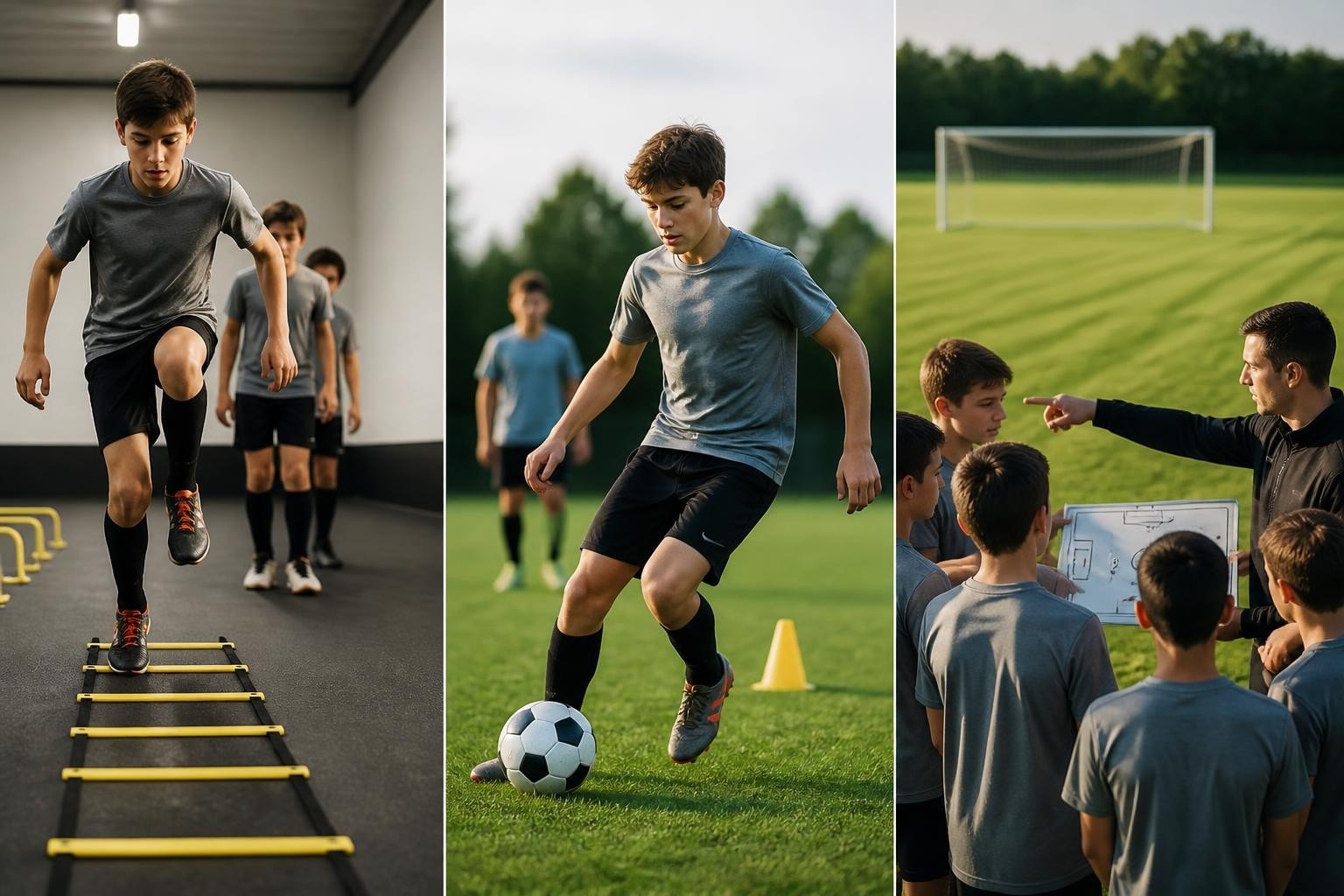
The landscape of youth soccer has evolved dramatically over the past decade, moving from recreational play toward structured development programs that mirror European training philosophies. Parents today seek more than just weekend games for their children-they want comprehensive programs that build both athletic ability and personal character. Understanding what makes an effective youth soccer program requires examining the core elements that transform enthusiastic beginners into skilled, confident players who carry lessons from the pitch into their daily lives.
The Foundation of Youth Soccer Development
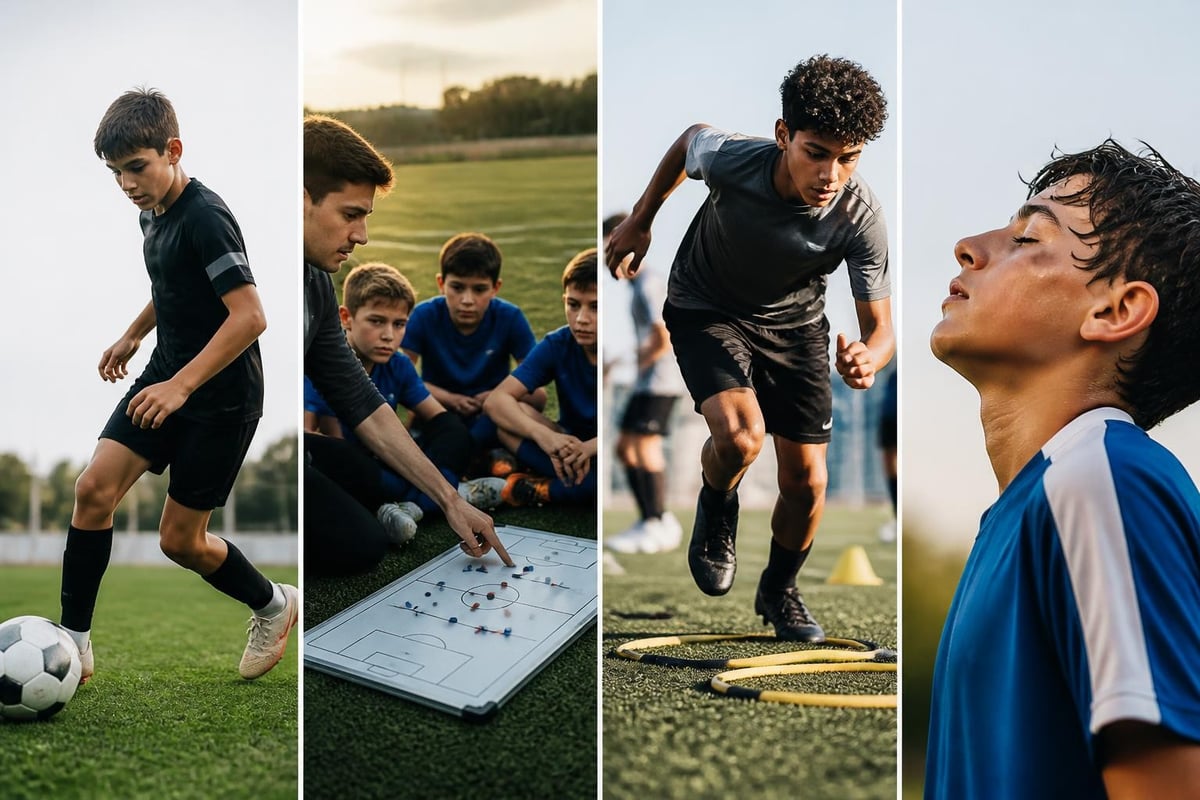
Youth soccer development operates on a multi-dimensional framework that addresses far more than basic ball skills. The most successful programs integrate four essential pillars: technical ability, tactical understanding, physical conditioning, and psychological growth. Each component plays a distinct role in shaping well-rounded players who can adapt to different game situations and progress through competitive levels.
Technical development forms the bedrock of player capability. Young athletes must master fundamental skills like dribbling, passing, receiving, and shooting before they can execute more complex game strategies. Research shows that players who receive consistent technical training between ages 6 and 12 develop superior ball control and decision-making abilities that persist throughout their athletic careers.
Technical Skills: Building the Player's Toolkit
The technical component encompasses all individual skills performed with the ball. Young players need thousands of quality touches to develop muscle memory and confidence. Soccer touches become the currency of development, with elite programs ensuring players receive structured practice that builds proficiency across both feet.
Key technical areas include:
- First touch control: Receiving passes under pressure while maintaining possession
- Dribbling in tight spaces: Maneuvering through congested areas with confidence
- Passing accuracy: Delivering the ball to teammates at appropriate pace and angle
- Shooting technique: Striking the ball with power and precision from various positions
- Defensive skills: Proper tackling, positioning, and ball recovery methods
Players who dedicate time to technical refinement gain a competitive advantage that extends beyond youth soccer. The discipline required to master these skills translates into academic settings and future professional environments, making technical training an investment in overall personal development.
Tactical Intelligence in Youth Soccer
While technical skills provide the tools, tactical awareness teaches players when and how to use them. Youth soccer programs must introduce age-appropriate tactical concepts that challenge players mentally without overwhelming them. The tactical dimension separates players who simply possess skills from those who can read the game and make intelligent decisions under pressure.
For younger age groups (U8-U10), tactical training focuses on basic principles:
- Spatial awareness: Understanding where to position oneself relative to teammates and opponents
- Support play: Recognizing when to offer passing options to the ball carrier
- Transition moments: Learning to switch quickly between attacking and defending
- Width and depth: Creating space through intelligent movement off the ball
As players mature into U12-U16 categories, tactical complexity increases. They begin learning formations, pressing strategies, and position-specific responsibilities that mirror professional soccer. This progressive approach ensures players aren't asked to execute concepts beyond their developmental stage while continuously challenging them to think critically about the game.
| Age Group | Tactical Focus | Key Concepts |
|---|---|---|
| U8-U10 | Basic Principles | Spacing, Support, Ball Possession |
| U11-U13 | Positional Play | Formations, Roles, Team Shape |
| U14-U16 | Advanced Strategy | Pressing Systems, Build-up Play, Set Pieces |
Physical Development and Injury Prevention
The physical component of youth soccer extends beyond simple fitness. Programs must address speed, agility, strength, and endurance while respecting the developmental stages of growing bodies. Preventive programs can significantly reduce the incidence of injuries in youth amateur soccer players, making injury prevention an essential element of any comprehensive training approach.
Modern youth soccer programs incorporate age-appropriate physical training that includes:
- Dynamic warm-up routines targeting common injury sites
- Agility ladders and cone drills for footwork improvement
- Strength training appropriate for skeletal development
- Recovery protocols that prevent overuse injuries
- Flexibility work to maintain range of motion
Research demonstrates that injury prevention programs can reduce injury risk when implemented consistently across training sessions. Parents should inquire whether programs include structured warm-ups, cool-downs, and education about recognizing early warning signs of overuse injuries. The goal isn't simply to train harder but to train smarter, ensuring young athletes remain healthy throughout their development journey.
The Psychological Dimension: Building Character Through Soccer
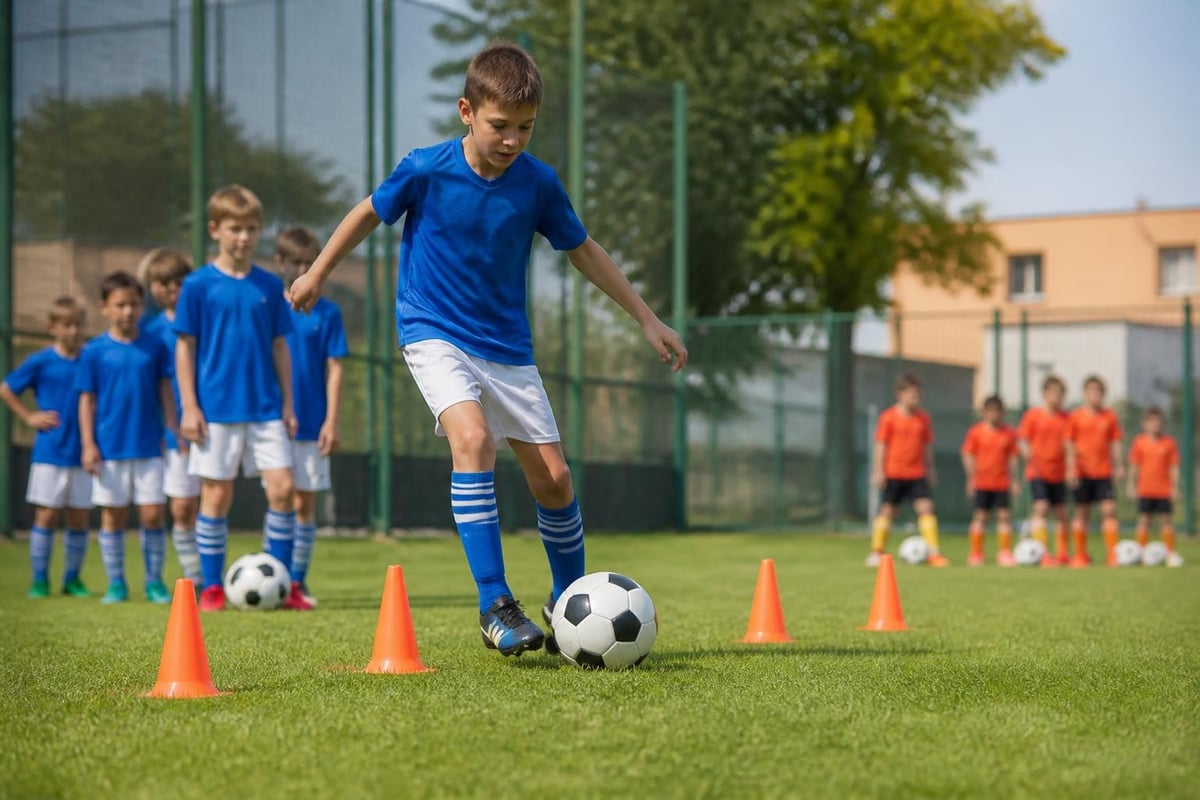
Perhaps the most underestimated aspect of youth soccer development is psychological growth. The mental challenges presented by competitive soccer-handling mistakes, recovering from losses, managing performance anxiety-create opportunities for character development that extend far beyond sports. Programs that intentionally address the psychological component produce players who demonstrate resilience, leadership, and emotional intelligence.
Growth Mindset and Resilience
Youth soccer provides constant opportunities for failure and redemption. A missed penalty, a defensive mistake leading to a goal, or a tough loss can devastate young players unless they've developed coping mechanisms. Quality programs teach players to view setbacks as learning opportunities rather than permanent failures.
Coaches play a crucial role in fostering this mindset through:
- Praising effort and improvement rather than just outcomes
- Creating safe environments where mistakes are learning tools
- Modeling positive responses to adversity during games
- Setting process-oriented goals alongside result-oriented ones
Players who develop psychological resilience in youth soccer carry these skills into academic challenges, social situations, and eventually professional careers. The ability to persevere through difficulty becomes a defining characteristic that separates those who achieve their potential from those who plateau when obstacles arise.
Selecting the Right Youth Soccer Program
With numerous options available, parents face the challenging task of identifying programs that truly prioritize comprehensive development. Not all youth soccer offerings provide equal value, and understanding key differentiators helps families make informed decisions that align with their goals and values.
Coaching Credentials and Philosophy
The quality of coaching directly impacts player development outcomes. Parents should investigate whether coaches hold recognized certifications and whether the program follows a consistent training philosophy. In Canada, soccer academy programs that employ coaches licensed through Canada Soccer ensure instruction meets national standards for player development.
Questions to ask when evaluating programs:
- What coaching licenses do your staff members hold?
- How does your training philosophy support long-term development?
- What is your coach-to-player ratio during training sessions?
- How do you communicate progress and areas for improvement to families?
- What measures do you take to ensure player safety and injury prevention?
Training Environment and Player-to-Coach Ratios
The learning environment significantly impacts skill acquisition. Programs that maintain low player-to-coach ratios ensure individual attention and proper technique correction. Training sessions should feel structured yet engaging, challenging yet developmentally appropriate for the age group.
Quality indicators include:
- Organized session plans with clear objectives
- Minimal standing and waiting time for players
- Progressive drills that build complexity
- Positive reinforcement balanced with constructive feedback
- Opportunities for game-realistic application of skills
Parents should observe training sessions before committing to programs. The atmosphere should reflect focused energy rather than chaos, with coaches actively engaged in teaching rather than simply supervising play.

Competition Balance and Development Opportunities
Competitive matches provide essential testing grounds for skills learned in training, but the youth soccer landscape can sometimes prioritize winning over development. Finding the right balance ensures players gain competitive experience without sacrificing long-term growth for short-term results.
Age-Appropriate Competition
Different age groups require different competitive approaches. Younger players (U8-U10) benefit from small-sided games that maximize touches and decision-making opportunities. As players mature, they can handle the complexity of full-sided matches and higher-pressure tournaments.
| Competition Format | Best For | Development Benefits |
|---|---|---|
| 4v4 / 5v5 | U8-U10 | Maximum touches, constant involvement, simplified decisions |
| 7v7 / 9v9 | U11-U13 | Introduction to positions, tactical concepts, team shape |
| 11v11 | U14+ | Full game complexity, specialized roles, advanced tactics |
Programs should offer multiple competition tiers, allowing players to compete at levels matching their current abilities while providing pathways for advancement. Elite players need opportunities to test themselves against top competition, while developing players benefit from matches where they can build confidence and apply new skills successfully.
Showcase Opportunities and Pathway Programs
For players aspiring to collegiate or professional soccer, exposure events and pathway programs become increasingly important in later youth soccer years. Quality programs maintain relationships with higher-level opportunities, helping talented players navigate the progression from youth academy to competitive high school, college recruitment, and beyond.
Parents of committed players should inquire about:
- Showcase tournament participation schedules
- Relationships with college coaches and recruitment services
- Player identification and advancement protocols
- Alumni success stories and placement records
However, these considerations should never overshadow the primary focus during youth soccer development years: building comprehensive skills and fostering love for the game. Players who develop properly during youth stages create more options for themselves in later years, regardless of their ultimate competitive ambitions.
The European Training Model in North American Context
European soccer development has long been recognized as the global standard, producing technically superior players through systematic training approaches. North American programs increasingly adopt European methodologies while adapting them to local contexts and player populations. Understanding what makes European training effective helps parents recognize quality programs in their communities.
Session Structure and Intensity
European-style training emphasizes high-intensity, technically focused sessions that maximize productive training time. Rather than extended scrimmages with minimal instruction, sessions follow structured progressions from technical isolation through game-realistic application. For players seeking high-performance training environments, 90-minute sessions that target ball mastery, tactical decision-making, and speed of play deliver measurable improvements in shorter timeframes.
The typical European-influenced session structure includes:
- Technical warm-up (10-15 minutes): Ball mastery and movement preparation
- Focused skill work (20-25 minutes): Isolated technique development with high repetition
- Tactical application (20-25 minutes): Skills applied in game-related patterns
- Competitive element (20-25 minutes): Small-sided games emphasizing session themes
- Cool-down (5-10 minutes): Recovery and session review
This format ensures players receive adequate repetitions to develop muscle memory while maintaining engagement through varied activities and competitive elements.
Long-Term Athletic Development in Youth Soccer
The youth soccer journey extends across multiple developmental stages, each requiring different emphases to optimize growth. Programs that understand long-term athletic development (LTAD) frameworks align training with biological and psychological maturation rather than simply chronological age.
Developmental Stages and Training Focus
Youth soccer development typically progresses through five distinct stages:
- Active Start (Ages 0-6): Fundamental movement skills and physical literacy
- FUNdamentals (Ages 6-9): Basic soccer skills in playful, non-competitive environments
- Learning to Train (Ages 8-11): Technical skill refinement and introduction to tactical concepts
- Training to Train (Ages 11-15): Advanced technical work, tactical understanding, physical development
- Training to Compete (Ages 15-18): Position specialization, competitive intensity, performance optimization
Programs that respect these stages avoid the common pitfall of early specialization, which can lead to burnout, injury, and developmental plateaus. Young players need exposure to multiple sports and positions before narrowing focus, ensuring comprehensive athletic development and sustained engagement.
Managing Expectations and Avoiding Burnout
Youth soccer should enhance childhood rather than dominate it. While dedication and commitment benefit player development, excessive training volumes and year-round competition can trigger physical and emotional burnout. Parents play crucial roles in monitoring training loads, ensuring adequate rest, and maintaining perspective on youth sports participation.
Warning signs of potential burnout include:
- Decreased enthusiasm for training or matches
- Persistent fatigue or declining academic performance
- Increased injury frequency or prolonged recovery times
- Emotional volatility or withdrawal from teammates
- Expressed desire to quit despite previous passion
When these signs emerge, families should reassess training commitments and potentially reduce volume or intensity. Research on workload management demonstrates that strategic training load adjustments can reduce injury risk while maintaining or improving performance outcomes.
Building Life Skills Through Youth Soccer
Beyond athletic development, quality youth soccer programs cultivate transferable life skills that benefit participants throughout their lives. The discipline, teamwork, time management, and resilience developed through structured training create advantages in academic, professional, and personal contexts.
Teamwork and Communication
Soccer inherently requires collaboration, with success depending on eleven players working toward common objectives. Youth players learn to communicate effectively under pressure, understand different personality types among teammates, and subordinate individual desires for collective benefit. These lessons directly apply to workplace team projects, community involvement, and relationship building.
Programs that intentionally develop teamwork skills incorporate:
- Position rotations that build empathy for different roles
- Team-building activities beyond regular training
- Player-led initiatives and leadership opportunities
- Conflict resolution protocols when disagreements arise
- Emphasis on collective achievement over individual statistics
Time Management and Personal Responsibility
Balancing soccer training with academic requirements, family commitments, and social relationships teaches young athletes essential time management skills. Players learn to prioritize responsibilities, plan ahead for busy periods, and maintain standards across multiple life domains simultaneously.
Quality programs support this development by:
- Maintaining consistent, published training schedules
- Communicating expectations clearly for attendance and effort
- Holding players accountable for preparation and equipment
- Partnering with families to monitor academic performance
- Recognizing players who excel both on and off the field
These organizational skills become increasingly valuable as players progress through high school, post-secondary education, and career development, making youth soccer participation an investment in overall life preparation.
Youth soccer development encompasses far more than teaching children to kick a ball-it represents a comprehensive approach to building capable, confident individuals through structured athletic training. Programs that address technical, tactical, physical, and psychological development create opportunities for players to excel on the pitch while developing character traits that serve them throughout life. At Strive Soccer Academy, we understand what parents want most for their young athletes-a program that develops skills, builds character, and creates real opportunities through our European-style training philosophy focused on comprehensive player growth. Visit us to discover how our fully licensed Canada Soccer coaches can help your young athlete reach their full potential.