
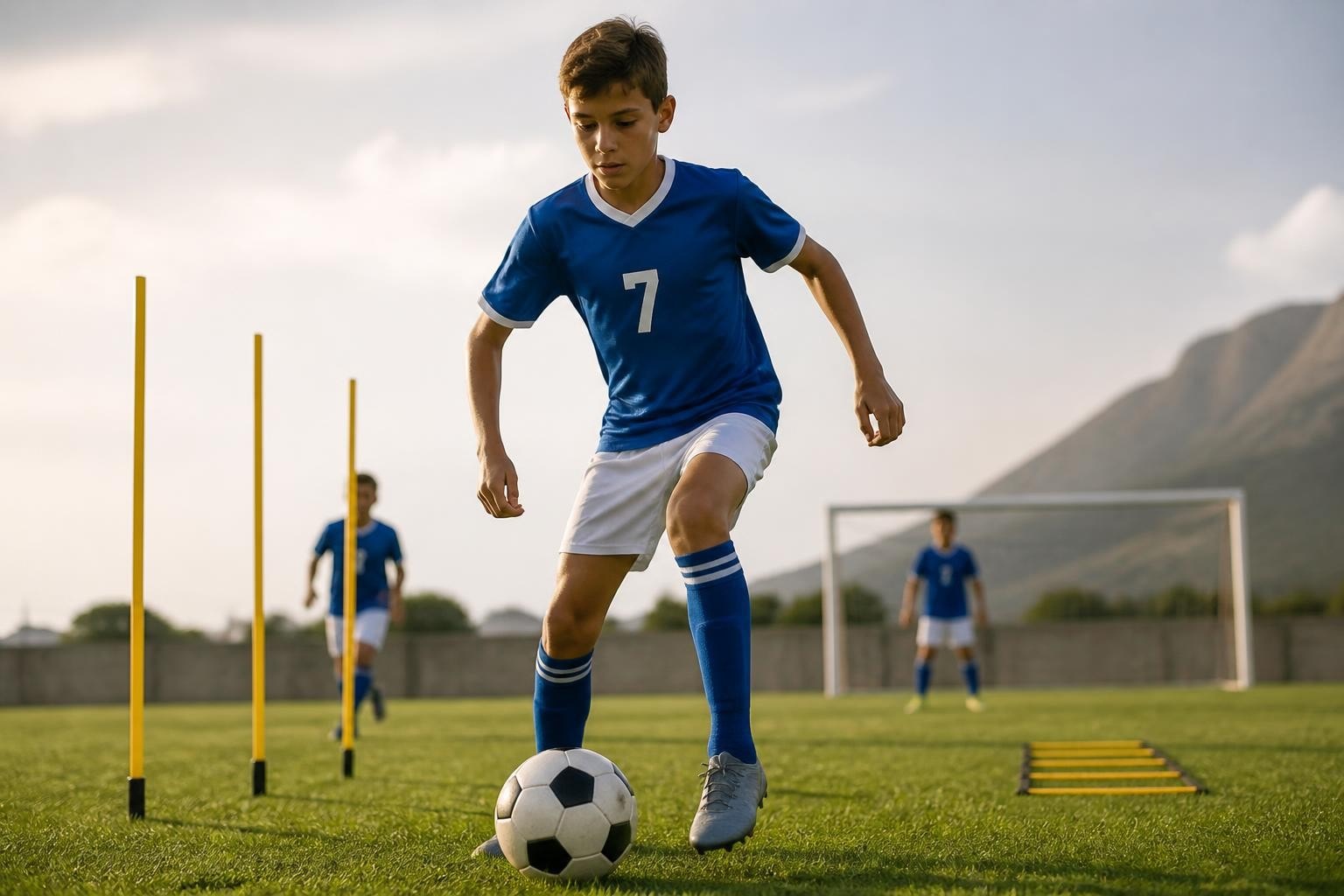
Youth soccer has evolved dramatically over the past two decades, moving away from a win-at-all-costs mentality toward a more comprehensive approach that prioritizes long-term athletic growth. Parents and coaches now recognize that developing well-rounded athletes requires more than just practicing drills and playing weekend games. A holistic framework addresses multiple dimensions of growth simultaneously, ensuring young players build the foundation they need to succeed both on and off the field.
Understanding the Four Pillars of Athletic Growth
Player development encompasses four distinct yet interconnected areas that work together to create complete athletes. The technical pillar focuses on ball mastery, control, and execution of fundamental skills. Tactical development builds game intelligence, decision-making abilities, and understanding of positional responsibilities. Physical growth emphasizes strength, speed, agility, and endurance. The psychological component addresses mental resilience, confidence, and emotional regulation under pressure.
The role of player development in sports extends far beyond what happens during practice sessions. Research shows that athletes who receive structured development across all four pillars demonstrate higher retention rates, greater enjoyment of the sport, and improved performance outcomes compared to those who focus solely on winning games.
Technical Skill Progression
Technical mastery forms the foundation of soccer excellence. Young athletes must develop precise ball control, passing accuracy, shooting technique, and defensive fundamentals through deliberate practice. At early development stages, the emphasis should remain on repetition and muscle memory, allowing players to execute skills without conscious thought during game situations.
Key technical competencies include:
- First touch control in various game scenarios
- Passing with both feet across different distances
- Dribbling techniques for beating defenders
- Shooting mechanics from multiple angles
- Defensive positioning and tackling fundamentals
Progressive skill development means introducing complexity gradually. A seven-year-old learns basic passing mechanics, while a thirteen-year-old masters weighted through balls and diagonal switches. This age-appropriate progression ensures players build confidence while continuously challenging their abilities.

Tactical Intelligence and Game Awareness
Tactical development teaches players how to think strategically and make effective decisions under game pressure. Understanding spacing, timing, and positional awareness separates competent players from exceptional ones. This dimension of player development requires cognitive engagement, pattern recognition, and the ability to read opponent movements.
Young athletes develop tactical awareness through small-sided games, position-specific training, and video analysis. Age-appropriate learning ensures that tactical concepts match cognitive development stages. An eight-year-old might focus on basic positioning, while a fifteen-year-old analyzes complex pressing schemes and counterattacking strategies.
| Age Group | Tactical Focus | Training Method |
|---|---|---|
| 6-8 years | Basic positioning and ball sharing | 3v3 and 4v4 games |
| 9-11 years | Team shape and transition moments | 5v5 with positional guidelines |
| 12-14 years | Formation understanding and roles | 7v7 with tactical constraints |
| 15+ years | Advanced systems and strategies | 11v11 with detailed game planning |
Building Physical Capacity
Physical development in youth soccer requires careful attention to growth stages and biological maturation. Strength, speed, agility, coordination, and endurance all develop at different rates throughout childhood and adolescence. Training programs must account for these variations while building athletic foundations that prevent injury and enhance performance.
The systematic process of enhancing athletic performance includes periodized training that balances intensity with recovery. Younger players benefit from movement literacy and general athleticism before specializing in soccer-specific conditioning. As athletes mature, training becomes more focused on sport-specific demands such as acceleration, change of direction, and anaerobic capacity.
Physical development priorities by age:
- Ages 6-9: Movement patterns, coordination, and body awareness
- Ages 10-12: Speed, agility, and relative strength development
- Ages 13-15: Power, endurance, and sport-specific conditioning
- Ages 16+: Advanced strength training and position-specific fitness
Programs at Strive Soccer Academy integrate these physical development principles with technical and tactical training, ensuring young athletes build comprehensive capabilities. Coaches monitor workload, track recovery, and adjust training intensity based on individual athlete needs and tournament schedules.
The Psychological Dimension of Success
Mental resilience often determines which talented players reach their potential and which plateau despite physical gifts. Psychological player development addresses confidence, focus, emotional control, goal-setting, and response to adversity. Young athletes face pressure from coaches, parents, peers, and their own expectations, making mental skills training essential for sustained success.
Building the complete athlete requires deliberate practice in handling high-pressure situations, recovering from mistakes, and maintaining concentration during critical moments. Coaches can foster psychological growth by creating environments where mistakes become learning opportunities rather than sources of shame or punishment.
Resilience and Growth Mindset
Teaching young players to view challenges as opportunities for growth transforms how they approach training and competition. Athletes with growth mindsets embrace difficult tasks, persist through setbacks, and see effort as the path to mastery. This perspective contrasts sharply with fixed mindset thinking, where athletes avoid challenges to protect their ego and view failure as evidence of inadequate talent.
Resilience training includes controlled exposure to adversity, guided reflection on performance, and development of coping strategies. When a player misses a penalty kick, resilient athletes analyze what went wrong, adjust their technique, and maintain confidence in future attempts. This capacity to bounce back from disappointment proves crucial for long-term athletic development.
Creating Personalized Development Plans
Every young athlete arrives with unique strengths, weaknesses, learning styles, and developmental timelines. Cookie-cutter training programs fail to optimize growth for individual players. Personalized development plans assess current abilities across all four pillars, identify specific areas for improvement, and create targeted interventions that accelerate progress.
Adaptable training systems that accommodate diverse learning needs produce superior outcomes compared to rigid, one-size-fits-all approaches. Some players absorb tactical concepts quickly but struggle with physical conditioning. Others possess exceptional technical skills but lack game intelligence. Effective development programs identify these gaps and address them systematically.
| Assessment Area | Evaluation Method | Development Strategy |
|---|---|---|
| Technical Skills | Skills testing and game observation | Position-specific drills and repetition |
| Tactical Knowledge | Game film review and decision-making tests | Small-sided games with constraints |
| Physical Capacity | Fitness testing and movement screening | Periodized conditioning programs |
| Mental Skills | Performance under pressure and self-reflection | Visualization and goal-setting exercises |
The Role of Licensed Coaching
Qualified coaches make the difference between haphazard activity and structured player development. Licensed instructors understand developmental stages, recognize injury risk factors, communicate effectively with young athletes, and design progressive training curricula. Parents should prioritize programs led by certified coaches who demonstrate both technical expertise and pedagogical skill.
At Strive Soccer Academy’s coaching staff, all instructors hold Canada Soccer licenses ranging from National A certifications to Soccer for Life qualifications. This commitment to coaching excellence ensures young athletes receive instruction grounded in best practices and current research on player development.
Long-Term Development Models
Youth soccer organizations increasingly adopt long-term development frameworks that emphasize age-appropriate training over early specialization and winning. These models recognize that optimal development occurs across years, not weeks or months. Long-term player development approaches prioritize skill acquisition during early years, gradually increasing tactical complexity and competitive intensity as players mature.
The Canadian Soccer Association's Long-Term Player Development model outlines specific objectives for each age group, ensuring consistent progression across the country. Young players move through Active Start, Fundamentals, Learning to Train, Training to Train, and Training to Compete stages, with each phase building on previous learning while introducing new challenges.
Benefits of long-term development thinking:
- Reduces burnout and dropout rates among youth athletes
- Develops well-rounded players with broad skill sets
- Prevents overuse injuries from early specialization
- Creates realistic expectations for parents and players
- Produces athletes capable of competing at higher levels
Balancing Competition and Development
Youth soccer faces an inherent tension between winning games and developing players for the long term. Short-term competitive success often conflicts with optimal player development, especially when coaches play their strongest players exclusively or avoid teaching new tactics during important matches.
Progressive organizations understand that the importance of training activities lies in the micro-experiences embedded within each session. These foundational moments matter more than tournament results for eight-year-olds. Coaches should resist pressure to sacrifice development for trophies, instead focusing on whether players are improving across all areas of their development.
Parent and Family Involvement
Families play critical roles in supporting or undermining player development efforts. Parents who understand developmental frameworks can reinforce coaching messages, manage expectations appropriately, and create home environments that support athletic growth. Conversely, parents who pressure young athletes about playing time or results can damage confidence and reduce enjoyment of the sport.
Effective family involvement includes attending games supportively, asking open-ended questions about training, ensuring adequate rest and nutrition, and trusting qualified coaches to guide technical instruction. Parents should resist the temptation to coach from the sidelines or criticize referees, instead modeling the emotional control they want their children to develop.
Supporting Psychological Growth at Home
Parents can strengthen their child's mental resilience through specific communication patterns and responses to both success and failure. Praising effort rather than outcome teaches young athletes to focus on controllable factors. Asking "What did you learn today?" instead of "Did you win?" shifts attention toward development over results.
When children experience setbacks, parents should acknowledge disappointment while helping them identify lessons and next steps. This response pattern builds problem-solving skills and emotional regulation that transfer beyond soccer into academic and social situations.
Measuring Progress and Setting Goals
Effective player development requires objective assessment and clear goal-setting. Regular evaluation across technical, tactical, physical, and psychological dimensions helps athletes understand their current abilities and identify specific improvement targets. Metrics derived from performance assessment provide data-driven insights that complement subjective coach observations.
Progress tracking should emphasize individual growth rather than comparison with teammates. A player who improves passing accuracy from 65% to 78% over six months demonstrates meaningful development regardless of where they rank relative to others. This approach builds intrinsic motivation and encourages athletes to compete against their own previous performances.
Effective goal-setting characteristics:
- Specific and measurable outcomes
- Challenging but achievable targets
- Time-bound with clear deadlines
- Focused on controllable factors
- Aligned with long-term development objectives
Regular Feedback Loops
Continuous feedback accelerates learning and maintains motivation. Coaches should provide specific, actionable input during training sessions, highlighting both strengths and areas for improvement. Video analysis helps players visualize their technique and tactical decisions, making abstract concepts concrete.
The best feedback balances positive reinforcement with constructive criticism. A ratio of three positive comments for every corrective note maintains confidence while addressing development needs. Players should also learn self-assessment skills, reflecting on their own performances and identifying growth opportunities independently.
Integration Across All Four Pillars
While examining each development pillar individually proves useful for understanding specific components, true player development requires simultaneous attention to all four areas. Technical skills lack value without tactical understanding of when to deploy them. Physical capacity means little if psychological fragility prevents performance under pressure. The most effective training integrates multiple dimensions within single activities.
Multifaceted player development approaches that address athletic, skill, mental, and personal growth concurrently produce superior outcomes compared to isolated technical drills or tactical lectures. Small-sided games under fatigue, for example, challenge technical execution (first pillar), decision-making (second pillar), fitness (third pillar), and composure (fourth pillar) simultaneously.
Training activities at various program levels should incorporate complexity that mirrors actual game demands. When young athletes practice skills in isolation, those abilities often fail to transfer into competitive situations where multiple factors demand attention simultaneously. Integrated training prepares players for the chaos and complexity of real matches.
Comprehensive player development requires dedication, patience, and expert guidance across technical, tactical, physical, and psychological dimensions. Young athletes thrive when training programs balance immediate enjoyment with long-term growth objectives, creating environments where mistakes become learning opportunities and progress unfolds across years rather than weeks. Parents seeking this holistic approach for their children will find that Strive Soccer Academy offers European-style training philosophy right here in Surrey, BC, delivered by fully licensed Canada Soccer coaches who understand how to develop complete athletes. The investment in proper development today creates opportunities that extend far beyond youth soccer, building character and capabilities that serve young people throughout their lives.


