
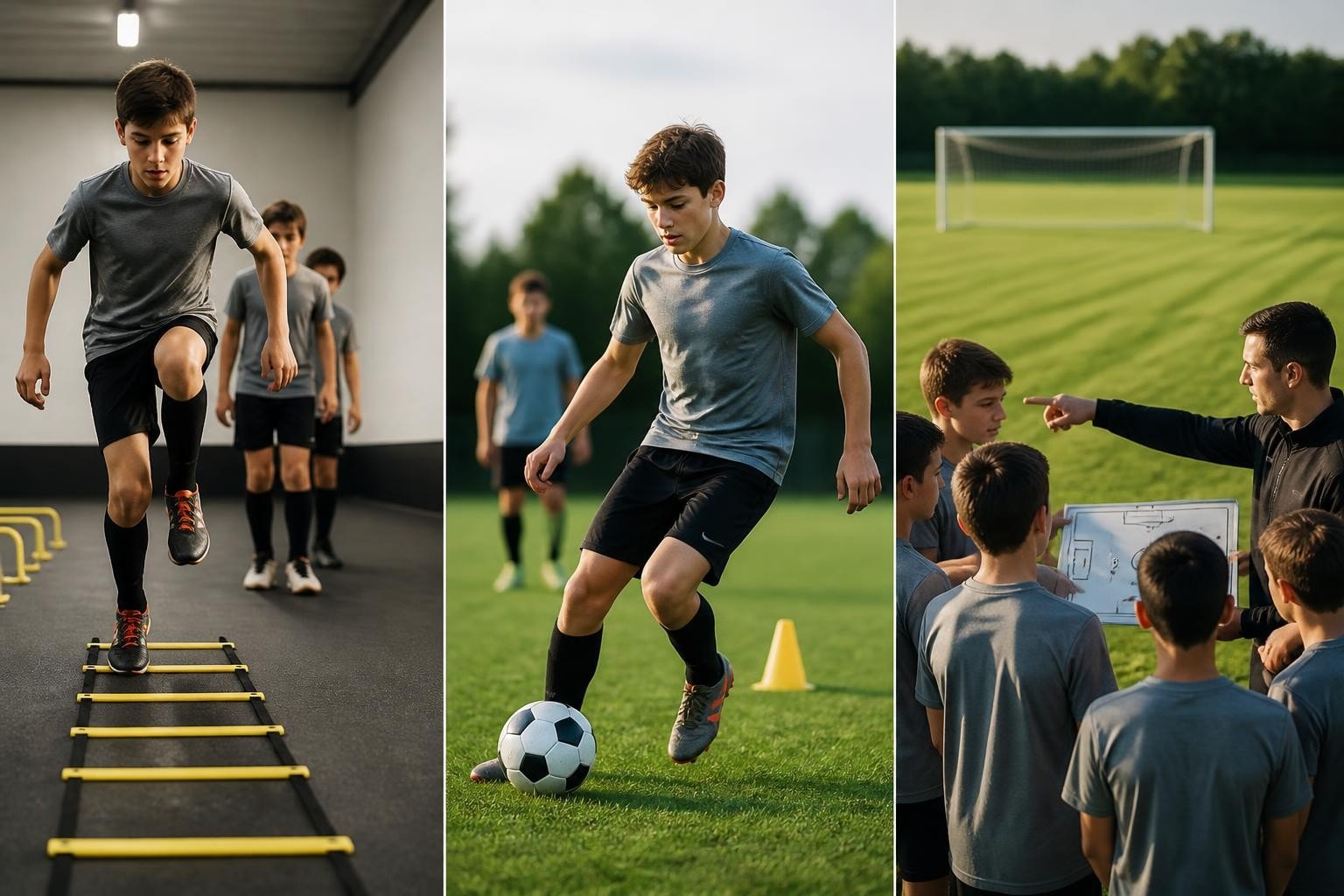
Spring soccer represents a pivotal moment in the competitive calendar for youth players and their families. As winter's grip loosens and fields become playable again, teams across North America prepare for what many consider the most important development period of the year. Unlike fall recreational leagues, spring soccer typically features more competitive structures, advanced training intensities, and crucial opportunities for player evaluation. For parents investing in their child's athletic development, understanding how to maximize this season becomes essential to long-term success.
Understanding the Spring Soccer Landscape
The spring soccer season differs fundamentally from its fall counterpart in structure, intensity, and purpose. Most competitive youth programs schedule their primary development cycles during these months, making spring the testing ground for technical advancement and tactical maturity.
Season Timeline and Structure
Spring soccer typically runs from late February through June, though exact dates vary by region and age group. This extended seasonal timeline allows for comprehensive skill development that fall's shorter windows cannot accommodate. The season generally includes:
- Pre-season conditioning (4-6 weeks)
- League competition (8-12 weeks)
- Tournament participation (ongoing)
- Showcase events (for older age groups)
Weather considerations play a significant role in spring preparation. Teams must adapt training protocols as conditions improve, gradually transitioning from indoor technical work to full outdoor tactical sessions.

Competitive Differences
Spring soccer carries higher stakes for player development than recreational fall programs. College scouts actively attend spring tournaments, club teams finalize rosters for the following year, and players compete for spots on select teams and regional programs.
Parents should recognize that spring requires different commitment levels. Training frequencies increase, travel demands expand, and performance expectations rise significantly compared to recreational fall leagues.
Technical Preparation for Spring Success
Technical skill development forms the foundation of effective spring soccer preparation. The months leading into spring offer critical opportunities to refine individual abilities before competitive pressures intensify.
Ball Mastery and First Touch
Professional academies emphasize ball mastery as the cornerstone of player development. Spring soccer training programs focus heavily on first touch quality because game speed increases dramatically during competitive seasons.
Key Technical Areas to Develop:
- Receiving with all surfaces of both feet
- Quick directional changes with the ball
- Close control under defensive pressure
- Accurate passing with both feet at varying distances
- Finishing techniques from multiple angles
Players should dedicate 15-20 minutes daily to individual technical work outside of team training. This consistent reinforcement accelerates skill acquisition and builds muscle memory essential for high-pressure situations.
Speed of Play Development
Modern soccer demands rapid decision-making combined with technical execution. Spring preparation must address both components simultaneously. At Strive Soccer Academy, our European-style training methodology integrates technical work with time pressure, creating realistic game conditions that accelerate development.
| Training Component | Frequency | Duration | Focus Area |
|---|---|---|---|
| Ball Mastery | Daily | 15-20 min | Individual technique |
| Small-Sided Games | 3-4x weekly | 20-30 min | Decision-making speed |
| Position-Specific Work | 2-3x weekly | 15-20 min | Tactical application |
| Shooting Practice | 2-3x weekly | 15-20 min | Finishing quality |
Physical Conditioning for Peak Performance
Physical preparation separates players who merely participate from those who dominate during spring soccer competition. The transition from winter to spring requires strategic conditioning that builds capacity without risking injury.
Building an Aerobic Base
Soccer demands sustained aerobic capacity combined with explosive anaerobic bursts. Spring preparation should establish cardiovascular foundations before adding high-intensity intervals.
Progressive Conditioning Protocol:
- Weeks 1-2: Low-intensity steady runs (20-30 minutes)
- Weeks 3-4: Tempo runs with moderate intensity
- Weeks 5-6: Interval training with soccer-specific movements
- Weeks 7+: Match-intensity conditioning with ball work
Young players require careful load management during this progression. Parents should monitor for signs of overtraining, including persistent fatigue, decreased enthusiasm, or declining performance quality.
Speed and Agility Training
Acceleration, change of direction, and top-end speed create separation in competitive matches. Spring soccer preparation must include dedicated speed work that complements technical development.
Effective agility training incorporates soccer-specific movements rather than generic ladder drills. Coaches should design exercises that mirror actual game situations-sharp cuts after receiving passes, rapid acceleration into space, and deceleration for ball control.
Tactical Intelligence and Game Awareness
Technical ability and physical capacity mean little without tactical understanding. Spring soccer's competitive nature demands players who read the game effectively and make intelligent decisions under pressure.
Understanding Team Systems
Most competitive teams employ specific formations and tactical approaches. Players entering spring soccer must understand their roles within these systems. The preparation checklist for spring soccer emphasizes tactical education as equally important as physical conditioning.
Essential Tactical Concepts:
- Shape and spacing: Maintaining proper distances between teammates
- Transition moments: Quick switches between attack and defense
- Pressing triggers: When to apply defensive pressure
- Support positioning: Creating passing angles without possession
- Counter-attacking principles: Exploiting opposition vulnerabilities
Position-Specific Responsibilities
Spring soccer typically features more specialized positional play than fall recreational leagues. Players must develop deep understanding of their specific roles while maintaining awareness of overall team tactics.
| Position | Primary Responsibilities | Key Skills |
|---|---|---|
| Defenders | Prevent goals, build from back | 1v1 defending, distribution |
| Midfielders | Link play, control tempo | Passing range, positioning |
| Forwards | Score goals, create chances | Finishing, movement off ball |
Mental Preparation and Psychological Growth
The psychological dimension of spring soccer preparation often receives insufficient attention despite its critical importance. Competitive pressure, increased expectations, and higher stakes create mental challenges that can overwhelm unprepared players.
Goal Setting and Self-Assessment
Effective spring preparation begins with honest self-evaluation and clear goal establishment. Setting realistic objectives provides direction for training and creates measurable progress markers.
Players should establish three types of goals:
- Outcome goals: Team achievements (championships, tournament results)
- Performance goals: Individual statistics (goals, assists, clean sheets)
- Process goals: Technical improvements (weak foot development, tactical understanding)
Process goals deserve primary focus because they remain within player control regardless of external circumstances.
Building Mental Resilience
Spring soccer's competitive intensity tests mental toughness repeatedly. Players face challenging situations-tough opponents, referee decisions, teammate conflicts, and performance slumps-that require psychological resilience.
Mental Skills for Spring Success:
- Maintaining composure during adversity
- Recovering quickly from mistakes
- Managing pre-game anxiety effectively
- Staying focused amid distractions
- Demonstrating consistent effort regardless of circumstances
Parents play crucial roles in developing these attributes. Supporting effort over outcomes, maintaining perspective on long-term development, and modeling emotional regulation all contribute to psychological growth.
Preparing for Tryouts and Team Selection
Many spring soccer programs conduct tryouts or evaluations during late winter. These sessions determine team placements, playing time allocations, and roster spots for the upcoming season.
Tryout Preparation Strategies
Specific drills targeting tryout success help players showcase abilities effectively. However, comprehensive preparation extends beyond technical rehearsal.
Complete Tryout Preparation:
- Technical sharpness: Daily individual ball work in weeks preceding tryouts
- Physical readiness: Adequate conditioning to maintain performance throughout sessions
- Mental preparation: Visualization of successful performances and confident body language
- Tactical awareness: Understanding common small-sided game scenarios
- Professional presentation: Punctuality, appropriate attire, positive attitude
Coaches evaluate more than pure technical ability during tryouts. Coachability, work rate, tactical understanding, and team-oriented behavior significantly influence selection decisions.
Standing Out in Competitive Environments
With numerous talented players competing for limited spots, differentiation becomes essential. Players who demonstrate consistent effort, communicate effectively with teammates, and maintain focus throughout lengthy sessions create positive impressions.
Smart players also understand what evaluators prioritize. Rather than attempting spectacular plays that risk possession, they execute fundamentals cleanly, make simple decisions quickly, and demonstrate tactical discipline.
Equipment and Logistical Preparation
Physical and mental readiness means nothing if players arrive unprepared logistically. Essential equipment preparation prevents avoidable complications that disrupt training and competition.
Essential Gear Checklist
- Multiple pairs of cleats: Firm ground and turf options for varying conditions
- Weather-appropriate clothing: Layers for temperature fluctuations
- Shin guards: Properly fitted and comfortable
- Water bottles: Adequate hydration capacity
- Ball: Personal ball for individual training
- Training gear: Practice jersey, shorts, compression wear
Spring weather varies dramatically, especially in northern regions. Parents should pack bags with options for both warm and cool conditions, ensuring players can adapt to changing circumstances.
Injury Prevention and Recovery
Increased training volumes and competitive intensities during spring soccer elevate injury risks. Proactive prevention strategies and proper recovery protocols protect long-term player development.
Warm-Up and Cool-Down Protocols
Proper preparation before activity and recovery afterward significantly reduce injury incidence. Many youth teams rush through or skip these critical components entirely.
Effective Warm-Up Sequence (15-20 minutes):
- Light aerobic activity (jogging, dynamic movement)
- Dynamic stretching (leg swings, lunges, high knees)
- Soccer-specific movements (side shuffles, backpedaling, acceleration)
- Technical ball work (passing, dribbling at increasing intensity)
- Small-sided possession games
Cool-down periods should include light jogging followed by static stretching, focusing on major muscle groups used during training.
Recovery and Rest
Young athletes often underestimate recovery's importance in athletic development. Quality sleep, proper nutrition, and adequate rest between sessions enable bodies to adapt to training stress and build capacity.
| Recovery Element | Recommendation | Impact |
|---|---|---|
| Sleep | 9-10 hours nightly | Muscle repair, cognitive function |
| Hydration | Throughout day, not just practice | Performance, injury prevention |
| Nutrition | Balanced meals with adequate protein | Energy, tissue repair |
| Rest Days | 1-2 weekly from soccer activity | Physical and mental recovery |
Maximizing Spring Soccer Development Opportunities
The spring soccer season offers unique development opportunities beyond regular league play. Strategic participation in supplementary programs accelerates improvement and exposes players to higher competition levels.
High-Performance Training Options
Specialized training programs provide intensive skill development that regular team practices cannot deliver. These focused sessions typically emphasize technical refinement, tactical education, and competitive game situations.
For players seeking to elevate their game beyond standard team training, high-performance soccer camps offer intensive environments where athletes sharpen technical skills, improve decision-making under pressure, and build confidence through professional-level coaching.
Tournament and Showcase Participation
Spring tournaments provide crucial competitive experience and exposure opportunities. These events feature concentrated competition against diverse opponents, creating learning experiences that accelerate development.
Benefits of Tournament Play:
- Exposure to different playing styles and tactical approaches
- High-pressure game situations for mental development
- Extended playing time in condensed periods
- Opportunity for college recruitment (older age groups)
- Team bonding and cultural experiences
Parents should balance tournament participation against rest needs and financial considerations. Quality matters more than quantity-selective participation in well-organized events provides better value than attending every available tournament.
Building Team Culture and Communication
Individual preparation means little without effective team dynamics. Successful spring soccer requires cohesive groups that communicate effectively, support one another, and share common objectives.
Pre-Season Team Building
Smart coaches invest time in relationship development before competitive pressures intensify. Team-building activities create trust, establish communication patterns, and develop shared identity.
Effective team culture emphasizes collective success over individual statistics, encourages constructive feedback, and celebrates effort alongside results. Parents reinforce these values by modeling supportive behavior and maintaining perspective on competition's role in development.
Parent-Coach Communication
Clear communication between parents and coaches prevents misunderstandings and creates alignment around player development. Spring soccer's increased intensity often amplifies tensions if expectations remain unclear.
Parents should understand coaching philosophies, playing time approaches, and developmental priorities early in the season. Coaches benefit from explaining these elements proactively rather than addressing conflicts reactively.
Nutrition Strategies for Peak Performance
Proper nutrition fuels training, enhances recovery, and optimizes performance during spring soccer's demanding schedule. Many youth athletes undermine their preparation through inadequate or inappropriate dietary choices.
Pre-Game Nutrition
Meals consumed in the hours before matches significantly impact energy availability and performance quality. The ideal pre-game meal provides sustained energy without causing digestive discomfort.
Optimal Pre-Game Eating Timeline:
- 3-4 hours before: Substantial meal with complex carbohydrates, lean protein, minimal fat
- 1-2 hours before: Light snack if needed (fruit, granola bar, toast)
- 30-60 minutes before: Nothing solid; focus on hydration
Players should experiment with pre-game nutrition during training rather than trying new approaches on match days.
Hydration Protocols
Dehydration dramatically impairs physical and cognitive performance. Spring weather variations create hydration challenges as players transition from cool early-season conditions to warm late-spring heat.
Athletes should drink consistently throughout the day rather than attempting to hydrate immediately before activity. Urine color provides a simple hydration indicator-pale yellow suggests adequate hydration while dark yellow indicates insufficient fluid intake.
Transitioning Skills from Training to Competition
Technical abilities demonstrated in practice often disappear under competitive pressure. Bridging this gap requires deliberate training approaches that replicate game conditions.
Pressure Training Methods
Effective spring soccer preparation incorporates decision-making pressure and physical fatigue into technical work. Isolated skill development has its place, but competition demands integrated abilities performed under stress.
Training Progression for Competition Readiness:
- Technical mastery: Perfect execution without pressure
- Time pressure: Execute skills with countdown timers
- Decision pressure: Choose appropriate techniques for varying scenarios
- Opponent pressure: Perform skills against passive then active defenders
- Game simulation: Apply skills in realistic match situations
This progression systematically prepares players to transfer training-ground abilities into competitive matches where pressure, fatigue, and opposition create challenges.
Small-Sided Games for Tactical Development
Reduced-player-count games create more touches, decisions, and tactical situations than full-sided matches. Spring preparation should emphasize these formats for accelerated development.
Games of 3v3, 4v4, and 5v5 force players into constant involvement, requiring sustained concentration and repeated skill application. These formats also develop fitness specific to soccer's intermittent high-intensity demands.
Spring soccer preparation requires comprehensive attention to technical, tactical, physical, and psychological development-a holistic approach that separates successful seasons from disappointing ones. The investment parents and players make during pre-season and throughout the spring months creates foundations for long-term athletic growth and competitive success. At Strive Soccer Academy, we've designed our programs around these four pillars of player development, bringing European-style training methodology to Surrey families who want more than recreational participation for their young athletes. Our fully licensed coaches create environments where technical excellence, tactical intelligence, physical capacity, and mental resilience develop together, preparing players not just for spring soccer success but for lifelong achievement in the beautiful game.


