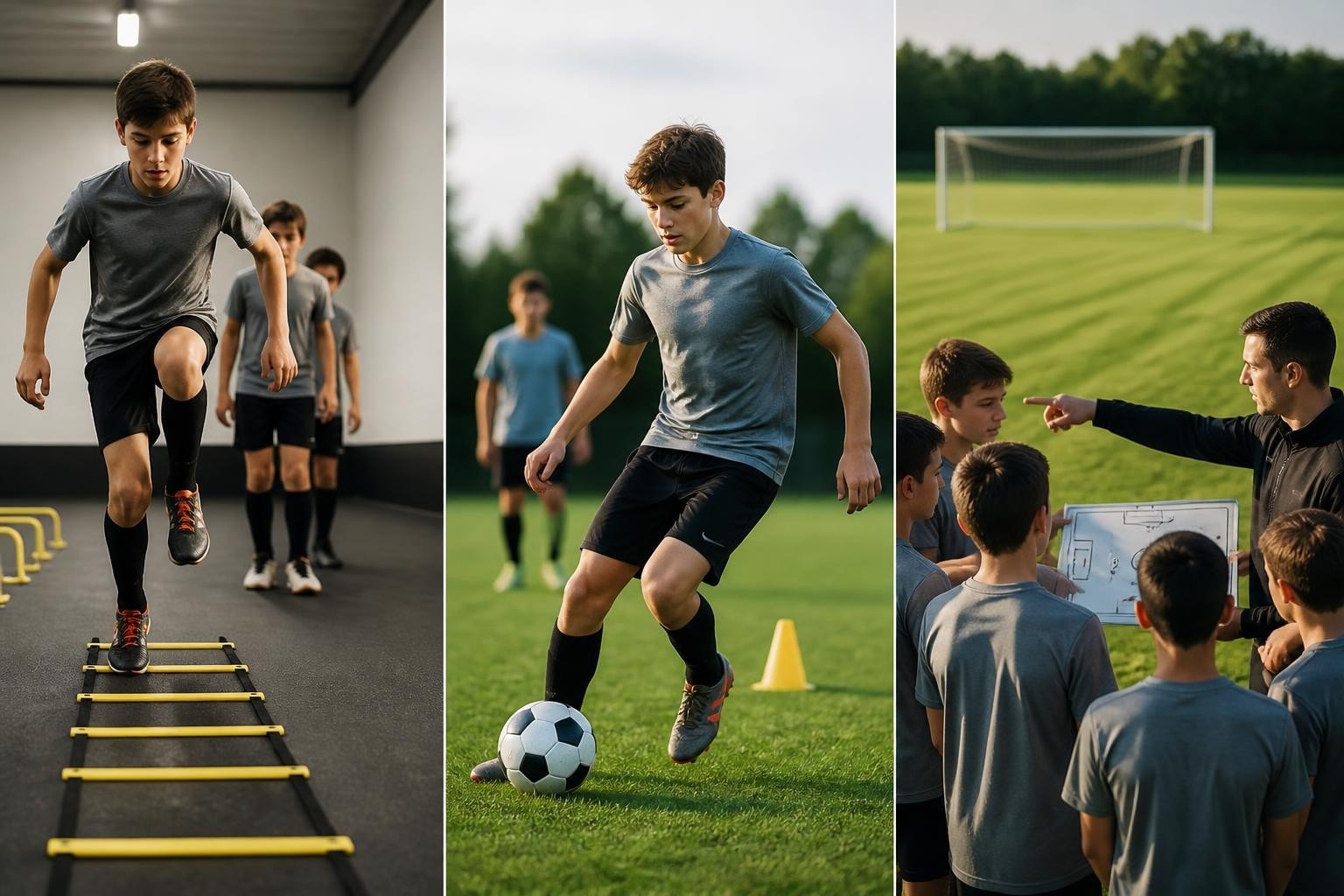
Finding quality youth soccer training near me has become a priority for thousands of parents across North America who want their children to develop both as players and individuals. The landscape of youth soccer has evolved dramatically, with European training methodologies now influencing programs from coast to coast. Parents today aren't just looking for a place where their kids can kick a ball around-they're seeking structured development, qualified coaching, and a pathway that builds technical proficiency, tactical understanding, physical conditioning, and mental resilience.
Understanding Modern Youth Soccer Training Standards
The quality of youth soccer training near me varies significantly based on coaching credentials, training philosophy, and developmental approach. Professional academies now emphasize holistic player development rather than simply focusing on winning games at young ages.
Licensed coaches bring structured curriculum and age-appropriate training methodologies that align with long-term athletic development principles. When searching for youth soccer training near me, parents should verify that coaches hold recognized certifications through national governing bodies like Canada Soccer, USSF, or equivalent organizations.
The Four Pillars of Player Development
Modern training programs structure their curriculum around four essential development areas:
- Technical Skills: Ball mastery, dribbling, passing, receiving, and shooting techniques
- Tactical Awareness: Game intelligence, positioning, decision-making under pressure
- Physical Conditioning: Speed, agility, strength, and endurance appropriate for age
- Psychological Growth: Confidence, resilience, teamwork, and competitive mindset
These pillars work together to create well-rounded athletes who can adapt to various playing situations and continue progressing through higher competitive levels.
Evaluating Training Programs in Your Area
When researching youth soccer training near me, parents often feel overwhelmed by the number of options available. Not all programs deliver the same value or developmental outcomes.
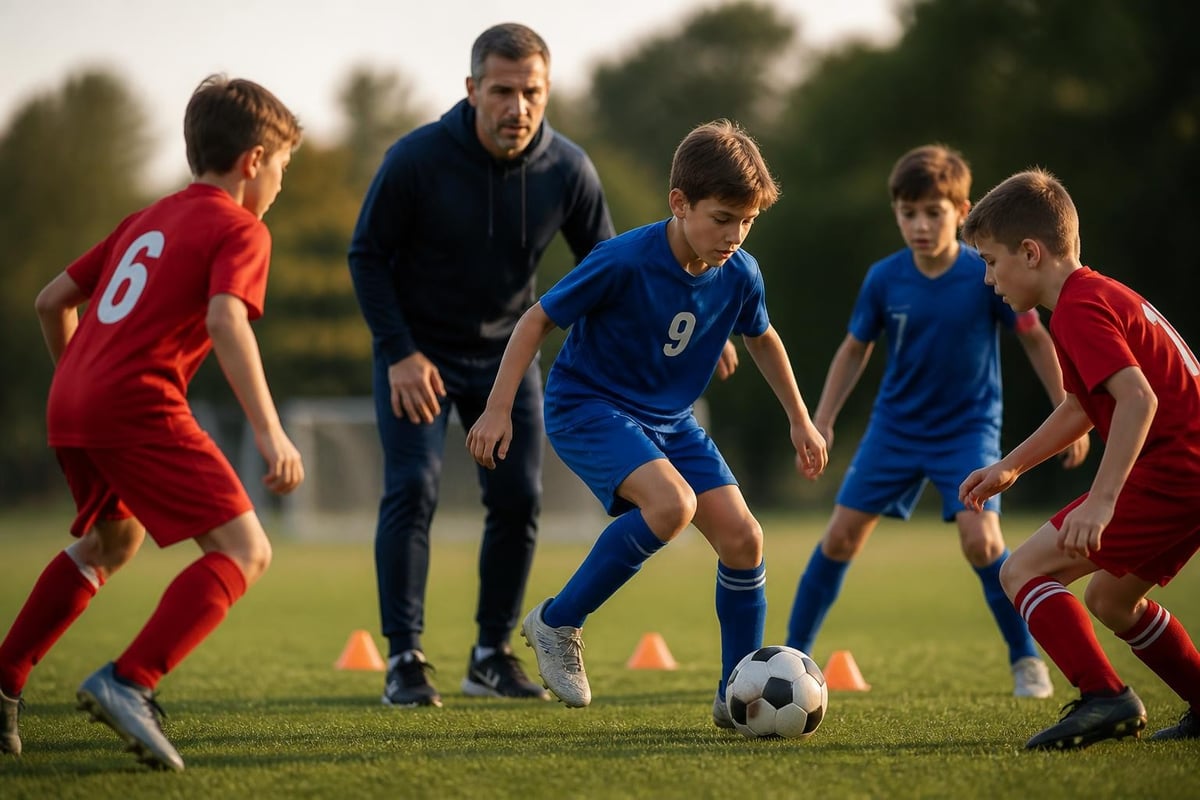
Start by visiting facilities and observing training sessions. Quality programs welcome parent observation and demonstrate transparency in their methods. Watch how coaches interact with players, whether they provide individual feedback, and if the training environment feels both challenging and supportive.
| Evaluation Criteria | What to Look For | Red Flags |
|---|---|---|
| Coach Credentials | National licenses, ongoing education | No certifications mentioned |
| Player-to-Coach Ratio | 8-12 players per coach | Large groups with minimal attention |
| Training Structure | Clear progression, varied activities | Repetitive drills, no age adaptation |
| Communication | Regular updates, open feedback | Minimal parent involvement |
| Philosophy | Long-term development focus | Win-at-all-costs mentality |
Quality youth soccer training near me should demonstrate player-centered learning environments where athletes actively engage in decision-making rather than simply following commands.
Age-Appropriate Training Priorities
Different age groups require distinct training approaches. Programs that apply the same methodology across all ages miss critical developmental windows.
Ages 4-8 (Foundation Phase)
Young players need exposure to basic movement patterns and ball familiarity in fun, game-based environments. The emphasis should be on exploration, creativity, and developing a love for the game rather than rigid tactical structures.
Ages 9-12 (Skill Development Phase)
This critical period focuses on technical mastery. Players develop their dominant foot while building comfort with their weaker foot. Training should include high repetition of fundamental techniques in varied contexts.
Ages 13-16 (Competition Phase)
Tactical sophistication increases as players understand positioning, team shape, and strategic concepts. Physical development accelerates, requiring careful attention to proper strength training and injury prevention.
Ages 17-19 (Performance Phase)
Elite-level training intensity matches the demands players will face at collegiate or professional levels. Mental preparation and decision-making under pressure become paramount.
Understanding these phases helps parents identify whether youth soccer training near me aligns with their child's current developmental needs. Age-appropriate training priorities ensure players build proper foundations before advancing to complex concepts.
The European Training Philosophy Advantage
European soccer academies have influenced North American youth development by introducing methodologies proven to produce technically superior players. When evaluating youth soccer training near me, programs incorporating European principles often deliver superior results.
These approaches emphasize ball mastery through high-repetition technical work. Players spend significantly more time with the ball at their feet compared to traditional North American models that historically prioritized athleticism over skill.
Technical Development Focus
European-style training dedicates substantial session time to individual ball skills:
- First touch refinement in various game contexts
- Dribbling under defensive pressure with both feet
- Passing accuracy at different distances and speeds
- Receiving techniques from ground and aerial balls
- Finishing from multiple angles and situations
This technical foundation allows players to execute tactical instructions effectively during matches. Without solid technique, even the best tactical understanding becomes difficult to implement.
Credentials and Coaching Quality Markers
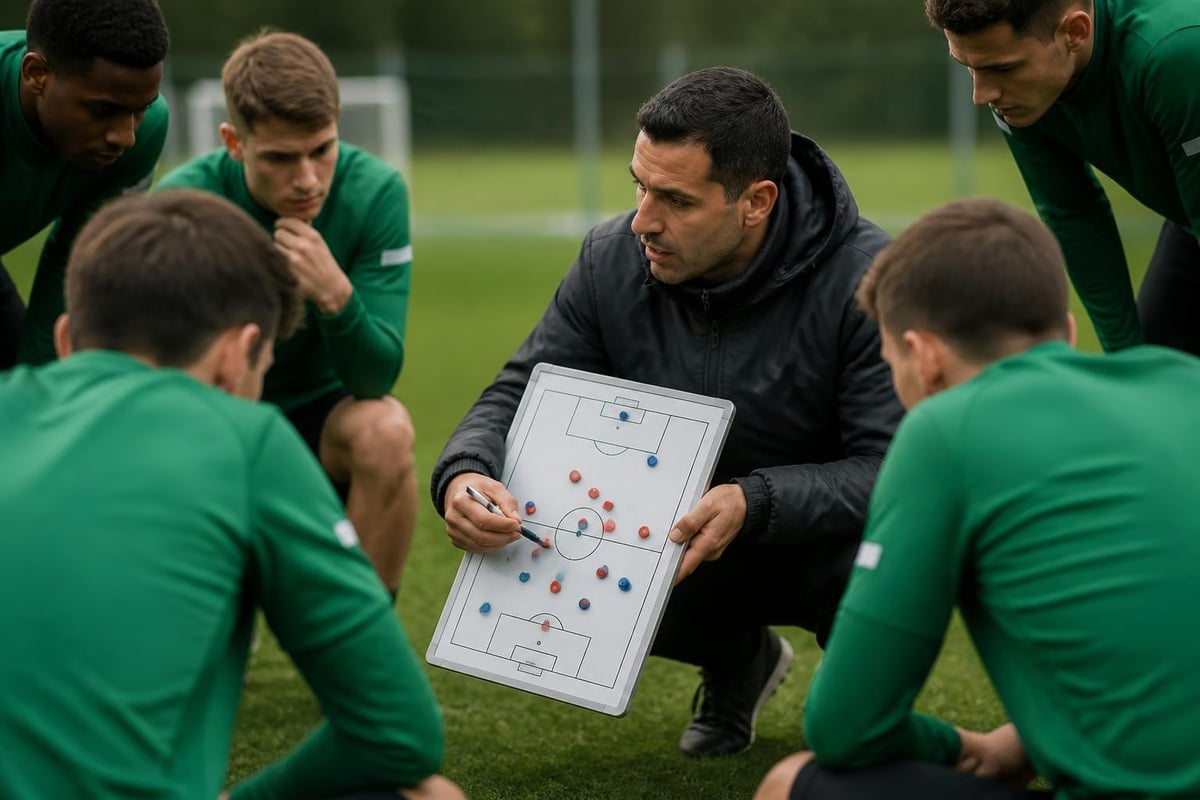
The single most important factor when searching for youth soccer training near me is coaching quality. Qualified instructors transform ordinary sessions into development opportunities.
Canada Soccer licensing provides a clear hierarchy of coaching credentials. National A License holders possess the highest level of certification, qualified to coach at professional levels. National B and C Licenses indicate intermediate expertise suitable for competitive youth development. Soccer for Life certifications ensure coaches understand age-appropriate methods for younger players.
Questions to Ask Potential Coaches
Before committing to a program, parents should interview coaches about their background and philosophy:
- What coaching licenses do you currently hold?
- How do you structure long-term player development?
- What is your typical session plan structure?
- How do you handle different skill levels within groups?
- What communication can parents expect regarding player progress?
- How do you balance development with competitive results?
Coaches who provide detailed, thoughtful answers demonstrate professionalism and preparation. Those who cannot articulate their approach may lack the structured methodology needed for effective development.
Training Frequency and Session Structure
Optimal development requires consistent training exposure. When comparing youth soccer training near me, consider how many weekly sessions programs offer and how those sessions are structured.
Research suggests that players need multiple weekly touches to develop muscle memory and technical proficiency. Single weekly sessions provide insufficient repetition for meaningful skill development.
Recommended Weekly Training Volume:
| Age Group | Training Sessions | Match Play | Individual Practice |
|---|---|---|---|
| U8-U10 | 2-3 sessions | 1 game | 2-3 times weekly |
| U11-U13 | 3-4 sessions | 1-2 games | 3-4 times weekly |
| U14-U16 | 4-5 sessions | 1-2 games | Daily touches |
| U17-U19 | 5-6 sessions | 1-2 games | Daily touches |
Quality programs structure sessions with clear warm-up, technical work, tactical application, and cool-down phases. Each component serves specific developmental purposes.
For parents seeking high-performance training programs, look for academies that offer 90-minute sessions with professional-level intensity appropriate for the age group.
Small-Sided Games and Tactical Development
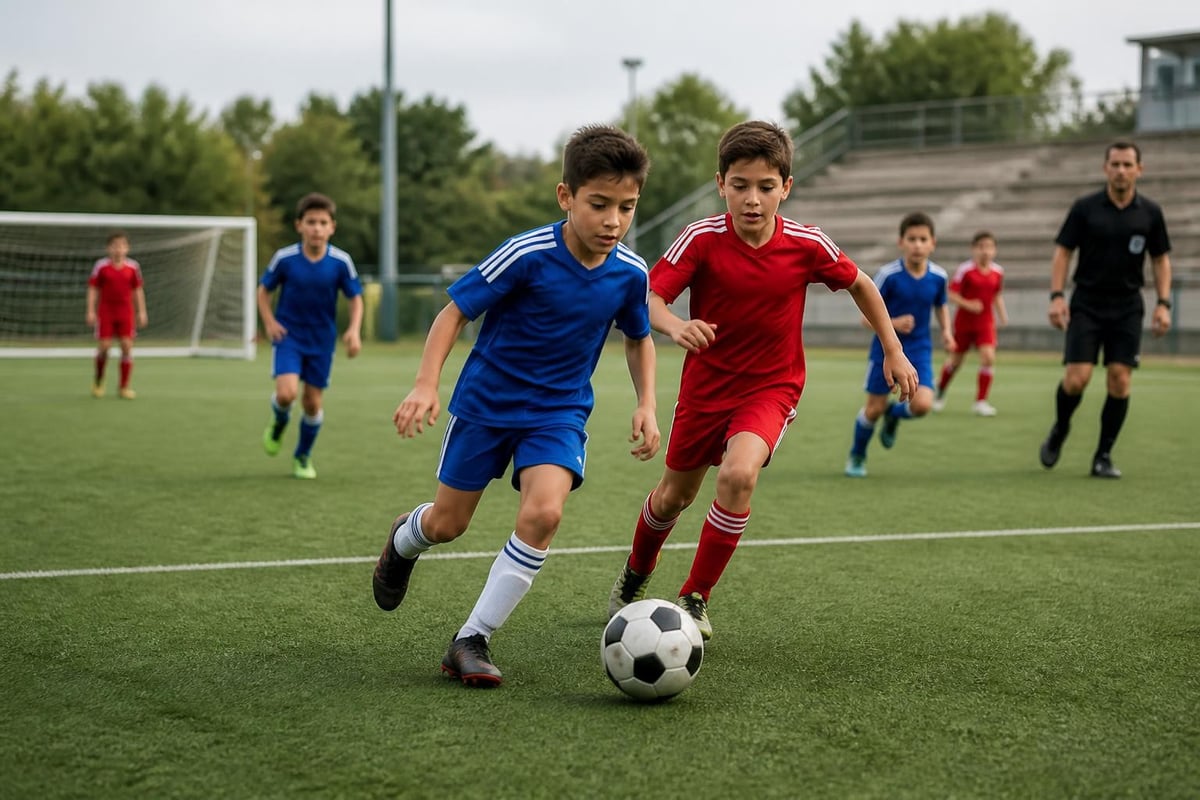
Game-based learning through small-sided play has revolutionized youth soccer training near me over the past decade. These modified games provide more touches, more decisions, and more learning opportunities than traditional 11v11 formats for younger players.
Small-sided games (3v3, 4v4, 5v5) create environments where players cannot hide. Everyone must participate defensively and offensively, accelerating tactical understanding and technical development.
Benefits include:
- Increased ball contacts per player per session
- More opportunities to score and defend
- Enhanced decision-making frequency
- Better spatial awareness development
- Greater individual responsibility
Programs emphasizing small-sided games typically produce players with superior game intelligence compared to those who primarily practice through drills disconnected from match scenarios.
Transitioning to Full-Sided Play
As players mature, the gradual shift toward full-sided games introduces positional responsibilities and team shape concepts. This transition should happen progressively, not abruptly.
Players who develop through appropriate small-sided formats better understand how to create and exploit space when they eventually play 11v11. They've internalized principles through repetition in simplified contexts before applying them in complex situations.
Physical Development and Injury Prevention
Quality youth soccer training near me integrates age-appropriate physical conditioning while prioritizing injury prevention. Growing bodies require careful attention to avoid overuse injuries that can sideline young athletes.
Proper warm-up protocols, movement preparation, and cool-down routines should be non-negotiable components of every session. Dynamic stretching before activity and static stretching afterward help maintain flexibility and reduce injury risk.
Strength Training for Young Athletes
Contrary to outdated beliefs, appropriately designed strength training benefits youth players when introduced at the right developmental stages. Body-weight exercises, resistance bands, and eventual light weights build the muscular foundation needed for explosive movements.
Programs should never sacrifice technical development time for excessive physical conditioning. The integration happens through game-realistic movements, agility work, and sport-specific exercises rather than generic fitness drills.
Mental Skills and Character Development
The psychological pillar of development receives less attention than physical and technical aspects, yet mental skills often separate good players from great ones. When evaluating youth soccer training near me, inquire about how programs develop confidence, resilience, and competitive mindset.
Players who learn to handle pressure, recover from mistakes, and maintain focus during adversity perform better in critical moments. These skills transfer beyond soccer into academic and professional success.
Quality coaches create environments where failure becomes a learning opportunity rather than something to fear. They celebrate effort and improvement alongside results, building intrinsic motivation that sustains long-term commitment.
Building Team Culture
Individual development occurs within team contexts. Programs should foster supportive cultures where players encourage each other's growth rather than competing destructively.
Strong team cultures emerge from:
- Clear behavioral expectations and accountability
- Recognition of diverse contributions beyond scoring goals
- Inclusive environments welcoming different skill levels
- Emphasis on collective goals alongside individual improvement
- Regular team-building activities outside training sessions
Specialized Training Opportunities
Beyond regular academy sessions, many youth soccer training near me options offer specialized development opportunities. These supplementary programs target specific skill areas or provide intensified training during school breaks.
Soccer camps deliver concentrated training blocks where players immerse themselves in skill development. High-performance camps create professional-level environments that challenge players to elevate their standards and compete against top talent.
Individual training sessions allow for customized development plans addressing specific weaknesses or building upon strengths. One-on-one coaching provides immediate feedback and correction that group settings cannot always accommodate.
Position-Specific Training
As players mature and identify preferred positions, specialized training for goalkeepers, defenders, midfielders, and forwards becomes valuable. Position-specific work develops the unique technical and tactical requirements each role demands.
The Pathway Beyond Youth Training
Parents investing in quality youth soccer training near me naturally wonder about future opportunities. Understanding potential pathways helps families make informed decisions about program selection and time commitment.
Developmental pathways vary by region but generally include:
- Recreational Programs: Entry-level participation focusing on fun and basic skills
- Competitive Club Soccer: Higher-level play with tryouts and travel commitments
- Regional and Provincial Teams: Selection-based representative programs
- Academy Systems: Elite development environments with professional affiliations
- Collegiate Soccer: University and college programs offering athletic scholarships
- Professional Opportunities: MLS academies, USL, Canadian Premier League, international options
Quality training programs maintain comprehensive developmental pathways that support players regardless of which level they ultimately reach. Not every player will become professional, but all deserve proper development that builds lifelong skills.
Cost Considerations and Value Assessment
Youth soccer training near me ranges dramatically in cost. Parents must evaluate whether programs deliver value proportional to their investment.
Higher costs don't automatically indicate better quality. Assess what's included in fees: number of sessions, coach credentials, facility quality, equipment provided, competitive opportunities, and additional programming.
Budget-conscious families can find excellent development through community-based programs with qualified volunteer coaches. Others may invest in elite academies offering professional-level training environments and exposure opportunities.
Hidden Costs to Consider
Beyond registration fees, factor in:
- Travel expenses for tournaments and away games
- Equipment purchases (cleats, shin guards, training gear)
- Additional training or camp fees
- Team fees, uniforms, and fundraising obligations
- Time commitments affecting family schedules
Transparent programs clearly outline all costs upfront, allowing families to make informed financial decisions.
Making the Final Decision
After researching youth soccer training near me, parents face the decision of which program best serves their child's needs. This choice should balance developmental quality, logistical feasibility, and family values.
Visit multiple programs before committing. Speak with other parents about their experiences. Most importantly, involve your child in the decision process. Their enthusiasm and comfort level with coaches and teammates significantly impact their development trajectory.
Trial periods or single-session visits allow families to experience programs firsthand before making season-long commitments. Reputable academies welcome this approach, confident that quality becomes evident through direct observation.
Remember that the "best" program is highly individual. A child thriving in a competitive environment might struggle in a recreational setting, and vice versa. The right fit considers the player's current ability, learning style, personality, and goals.
Quality programs like Strive Soccer Academy combine European training methodologies with licensed coaching staff to develop complete players across all four developmental pillars. When parents find the right match between program philosophy and family expectations, youth soccer becomes a transformative experience that builds skills, character, and lifelong memories.
Finding exceptional youth soccer training near me requires careful evaluation of coaching credentials, training philosophy, and developmental approach. The right program balances technical skill development with tactical awareness, physical conditioning, and psychological growth, creating well-rounded athletes prepared for whatever level they aspire to reach. At Strive Soccer Academy, we bring European-style training to Surrey, BC, with fully licensed coaches dedicated to developing skills, building character, and creating real opportunities for young athletes through our comprehensive four-pillar approach to player development.