Every parent who watches their child chase a soccer ball across a field dreams of seeing them grow not just as a player, but as a confident, capable individual. Youth soccer lessons provide far more than basic ball-handling skills. They create foundational experiences that shape character, build resilience, and teach young athletes how to collaborate, compete, and overcome challenges. In 2026, the approach to training young soccer players has evolved significantly, emphasizing holistic development that addresses technical ability, tactical understanding, physical conditioning, and psychological strength. The right program makes all the difference in helping young players reach their full potential while maintaining their passion for the beautiful game.
The Four Pillars of Effective Youth Soccer Development
Quality youth soccer lessons are built on a comprehensive framework that addresses every aspect of player growth. European training philosophies have proven particularly effective in developing well-rounded athletes who can think critically while executing skills under pressure.
Technical Skills: Building the Foundation
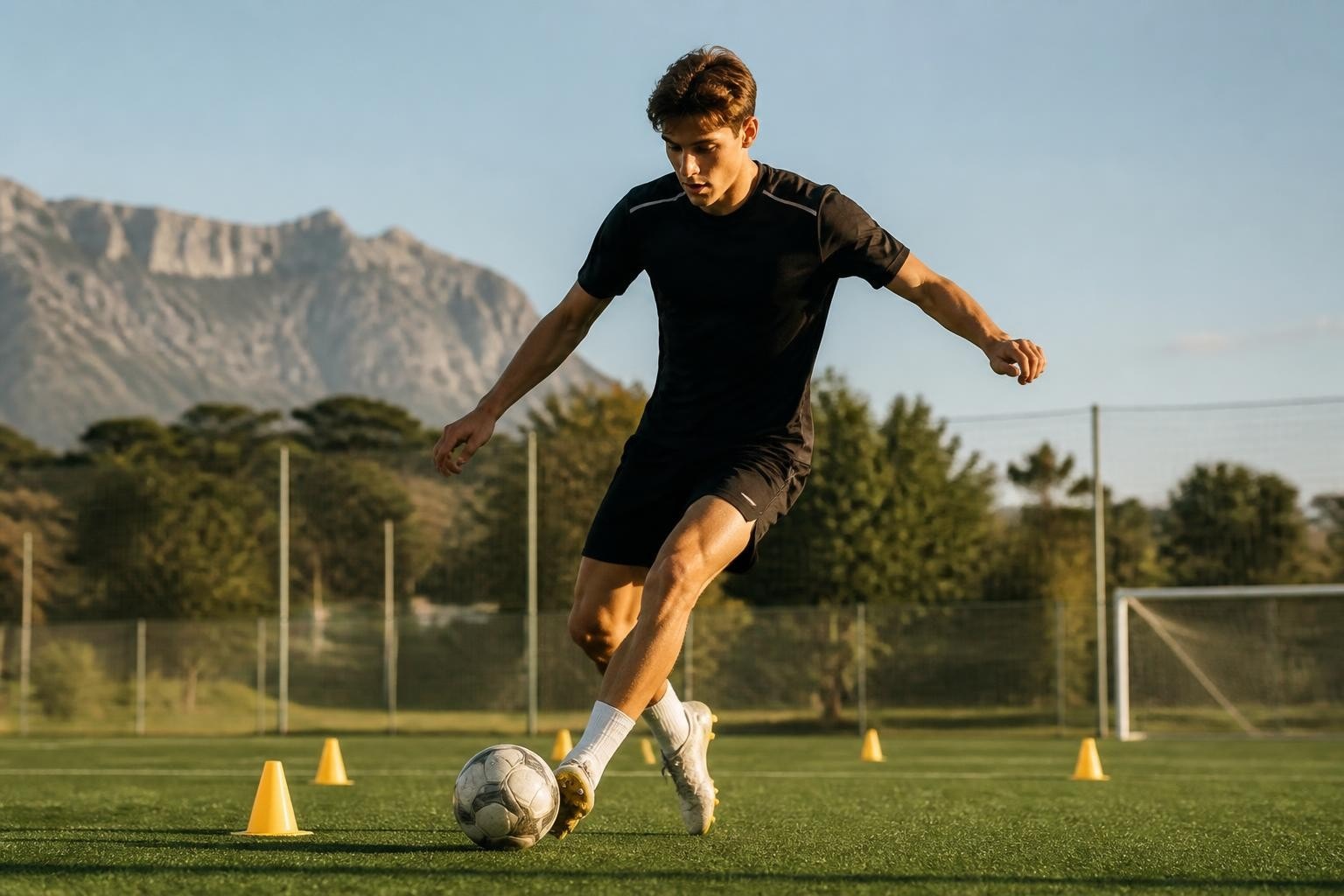
Technical proficiency forms the cornerstone of any successful soccer player's development. Youth soccer lessons must prioritize ball mastery, first touch, passing accuracy, and shooting technique from the earliest stages. Structured soccer practice sessions emphasize repetition and progressive skill development that builds confidence over time.
Players need thousands of touches to develop muscle memory and comfort with the ball. The most effective programs incorporate:
- Dribbling drills that challenge players to control the ball at varying speeds
- Passing exercises that emphasize both accuracy and decision-making
- Shooting practice that builds proper technique and power
- Ball control activities that improve first touch under pressure
Age-appropriate progression is critical. Young players aged 4-8 require different approaches than those aged 12-15. The foundational skills for younger players focus heavily on individual ball work and basic coordination, while older youth benefit from more complex technical challenges integrated into game-realistic scenarios.
Tactical Awareness: Teaching the Mental Game
Understanding positioning, spacing, and game flow separates good players from great ones. Youth soccer lessons should introduce tactical concepts progressively, helping young athletes see the game unfold before it happens.
Tactical training begins with basic spatial awareness and evolves into sophisticated pattern recognition. Players learn to:
- Identify open spaces and move to create passing lanes
- Recognize defensive shapes and exploit weaknesses
- Communicate effectively with teammates during transitions
- Adapt strategies based on game situations and opponent behavior
- Make quick decisions under pressure while maintaining composure
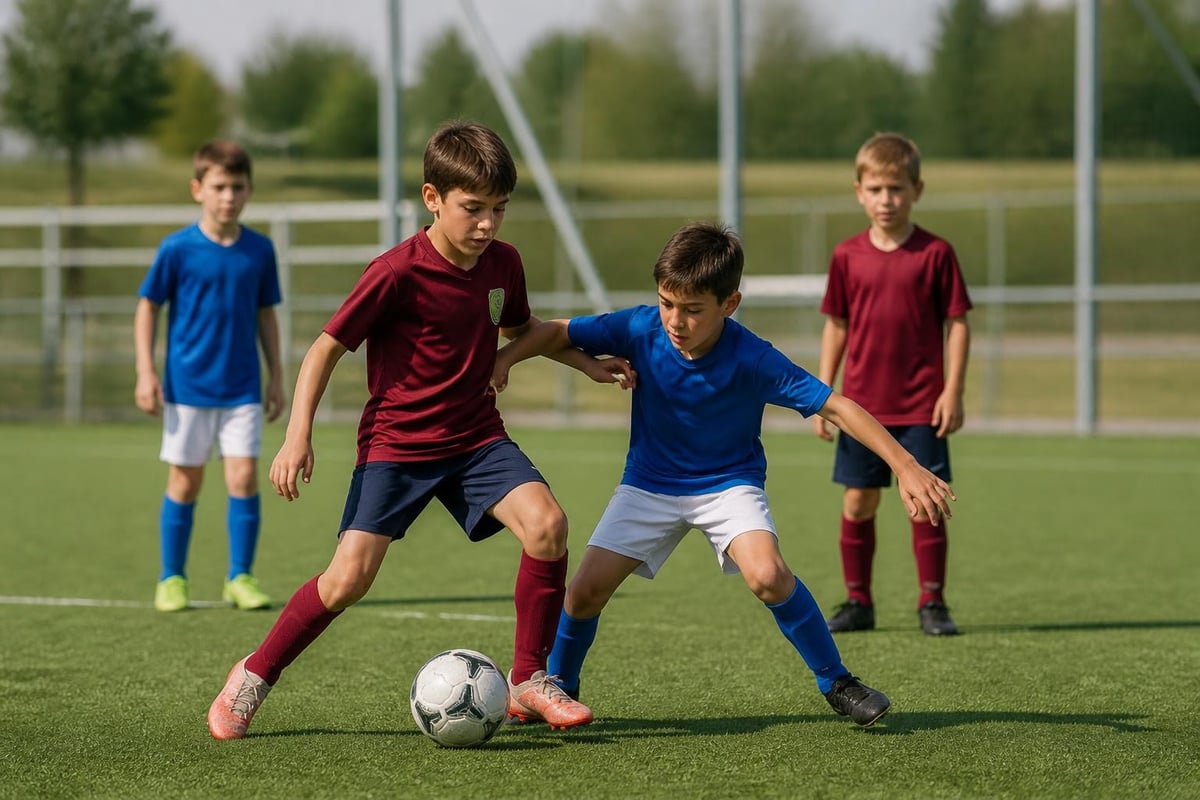
Small-sided games provide ideal environments for tactical development. Playing 4v4 or 5v5 increases touches and requires constant decision-making, forcing players to think critically about positioning and movement. These formats create more opportunities for individual growth while still emphasizing team concepts.
Physical Development and Athletic Conditioning
Youth soccer lessons must address the physical demands of the sport without overwhelming young, developing bodies. The goal is building athleticism that supports technical excellence rather than focusing solely on strength or endurance.
Age-Appropriate Physical Training
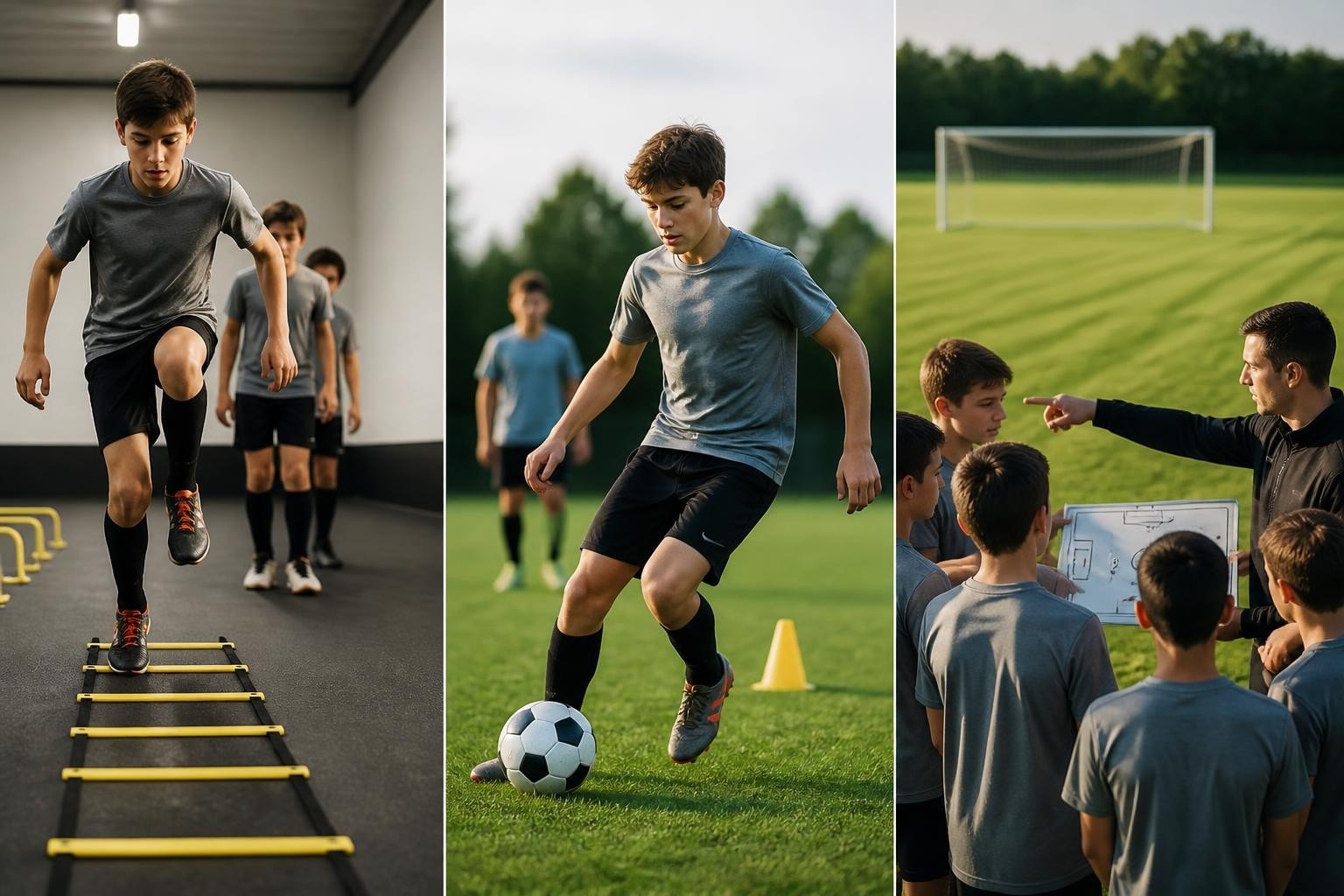
Different age groups require different physical emphases. Younger players benefit most from agility work, coordination exercises, and fundamental movement patterns. As athletes mature, training can gradually incorporate more structured conditioning.
| Age Group | Physical Focus | Training Methods |
|---|---|---|
| 4-8 years | Coordination, balance, basic agility | Tag games, ladder drills, obstacle courses |
| 9-12 years | Speed development, core strength | Sprint work, bodyweight exercises, plyometrics |
| 13-16 years | Power, endurance, injury prevention | Structured conditioning, strength training, flexibility work |
Programs like Soccer Skills Training integrate physical development seamlessly with technical work, ensuring players build the athletic foundation needed for higher levels of competition. Every drill should incorporate movement patterns that mirror game situations, making physical conditioning purposeful rather than arbitrary.
Injury Prevention and Recovery
Smart youth soccer lessons include proper warm-up protocols, cool-down routines, and education about recovery. Teaching young athletes to listen to their bodies and communicate about discomfort prevents minor issues from becoming serious injuries. Dynamic stretching before training, static stretching afterward, and adequate hydration are non-negotiable components of responsible youth development.
Psychological Growth Through Soccer
The mental and emotional benefits of youth soccer lessons often exceed the physical ones. Soccer teaches resilience, emotional regulation, and growth mindset principles that serve players throughout their lives.
Building Confidence Through Mastery
When young players see themselves improve, their confidence grows exponentially. Effective coaching creates environments where athletes experience frequent small successes that build toward larger accomplishments. Keeping kids engaged in soccer practice requires celebrating progress while maintaining appropriate challenges.
Positive reinforcement shapes behavior more effectively than criticism. Youth soccer lessons should provide:
- Specific feedback that identifies exactly what players did well
- Constructive guidance that shows how to improve without discouraging effort
- Opportunities to succeed at multiple skill levels during each session
- Recognition of improvement, not just perfection
Developing Mental Toughness
Soccer inevitably involves setbacks, mistakes, and disappointments. Learning to handle these challenges builds character that extends far beyond the field. Youth soccer lessons that emphasize effort over outcome teach players that improvement comes through persistence and practice.

Players develop mental toughness when coaches:
- Frame mistakes as learning opportunities rather than failures
- Encourage players to attempt difficult skills even when they might fail
- Model composure and positive problem-solving during challenging moments
- Teach visualization and self-talk techniques for managing pressure
The psychological aspects of training prepare athletes for competitive environments while maintaining their love for the game. Balancing challenge with support creates resilient players who embrace difficulty rather than avoiding it.
Coaching Quality Makes the Difference
The effectiveness of youth soccer lessons depends entirely on coaching quality. Fully licensed coaches bring structured methodologies, safety knowledge, and age-appropriate teaching techniques that maximize player development.
What to Look for in Youth Soccer Coaches
Parents evaluating programs should consider several factors when assessing coaching quality. Youth soccer coaching tips emphasize the importance of communication, organization, and genuine care for player welfare.
Excellent youth soccer coaches demonstrate:
- Proper certification through recognized governing bodies like Canada Soccer
- Age-appropriate teaching methods that match developmental stages
- Strong communication skills with both players and parents
- Ability to differentiate instruction for varying skill levels within groups
- Commitment to safety and injury prevention protocols
The best coaches create positive learning environments where mistakes are expected and celebrated as part of growth. They understand child development psychology and adapt their approach to meet athletes where they are, not where the coach wishes they would be.
Progressive Training Philosophy
Quality programs follow logical progressions that build skills systematically. Each session should connect to previous lessons while introducing new challenges. Effective youth soccer practice structures balance skill work, tactical understanding, and game application.
A typical session might include:
- Warm-up (10-15 minutes) incorporating ball work and dynamic movement
- Technical focus (20-25 minutes) targeting specific skills with progressive difficulty
- Tactical application (15-20 minutes) using small-sided games to apply skills
- Scrimmage (15-20 minutes) allowing free play in game-realistic contexts
- Cool-down (5-10 minutes) with stretching and session review
Creating Engaging and Productive Training Sessions
Youth soccer lessons succeed when players remain engaged, challenged, and enthusiastic. Variety, appropriate pacing, and fun are essential ingredients for effective training.
Keeping Players Active and Involved
Long lines and excessive standing kill enthusiasm quickly. Youth soccer drills that improve game performance maximize touches and minimize waiting time by using multiple stations, small groups, and continuous activity.
Organization strategies that maintain engagement include:
- Setting up multiple practice areas to reduce group size
- Using equipment efficiently so every player has a ball when possible
- Creating competitive elements that motivate without causing excessive pressure
- Rotating activities every 8-12 minutes to match attention spans
- Incorporating game-based learning rather than isolated technical work
The best youth soccer lessons feel more like play than work. When players are having fun, they learn faster, retain more, and develop deeper passion for the sport.
Adapting to Individual Learning Styles
Not every player learns the same way. Some respond well to verbal instruction, others need visual demonstrations, and many require kinesthetic experience to grasp concepts. Effective coaches present information through multiple modalities and provide individualized feedback.
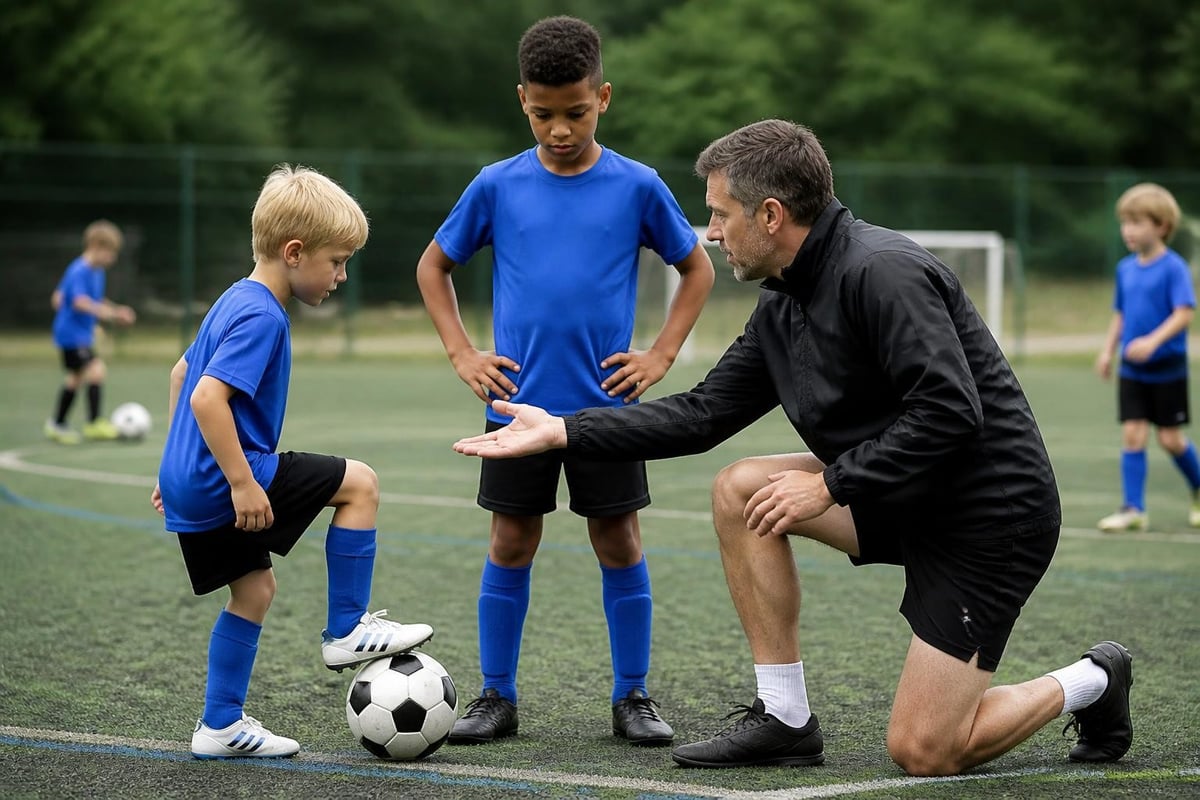
Quality programs assess each player's starting point and create appropriate challenges. A comprehensive youth soccer drill library organized by age and skill level allows coaches to select exercises that match player needs perfectly.
Passing Skills Development for Young Players
Passing represents one of soccer's most critical skills, yet it's often undertaught in youth programs. Comprehensive soccer passing drills for youth players should progress from basic accuracy work to complex combination patterns.
Foundation Passing Technique
Youth soccer lessons must establish proper passing mechanics early. Players should understand:
- Plant foot positioning alongside the ball, pointed toward the target
- Contact surface selection using the inside, outside, or laces based on situation
- Follow-through in the direction of the pass for accuracy and power
- Body shape over the ball to keep passes on the ground when appropriate
- Weight of pass matching the distance and game situation
Progressive Passing Exercises
Passing development follows a logical sequence from simple to complex:
| Skill Level | Exercise Type | Focus Area |
|---|---|---|
| Beginner | Partner passing in pairs | Technique, accuracy, first touch |
| Intermediate | Triangle passing patterns | Movement, angles, timing |
| Advanced | Possession games under pressure | Decision-making, speed of play, vision |
Integrating passing work into competitive small-sided games ensures players can execute skills under game-realistic pressure. Static passing drills build technique, but application in dynamic situations develops true competence.
Building Team Culture and Sportsmanship
Youth soccer lessons provide perfect opportunities to teach values that extend far beyond sports. Respect, teamwork, and sportsmanship become natural outcomes of well-designed programs.
Creating Positive Team Environments
The culture surrounding youth soccer lessons significantly impacts player development. Teams characterized by support, encouragement, and collective effort produce better individual players than those focused solely on winning.
Coaches cultivate positive cultures by:
- Celebrating effort and improvement regardless of outcome
- Addressing conflicts promptly and teaching resolution skills
- Modeling respectful behavior toward referees, opponents, and parents
- Creating team traditions that build identity and belonging
- Involving players in goal-setting and decision-making processes
When young athletes feel valued and supported, they take more risks, work harder, and develop faster. The social-emotional learning that occurs through youth soccer lessons often becomes the most valuable outcome of participation.
Parent and Coach Communication
Successful youth soccer programs maintain clear communication between coaches and families. Parents need to understand training philosophy, development timelines, and their role in supporting young athletes. Effective communication with parents prevents misunderstandings and creates alignment around player development priorities.
Regular updates about progress, upcoming events, and program expectations keep families engaged and informed. The best programs at Strive Soccer Academy view parents as partners in development rather than spectators on the sideline.
Long-Term Player Development Considerations
Youth soccer lessons should prepare players not just for next season, but for years of growth and enjoyment. Long-term athletic development models recognize that player improvement is rarely linear and that different skills develop at different rates.
Avoiding Early Specialization Pitfalls
While focused training produces benefits, excessive specialization before age 12-13 can lead to burnout, overuse injuries, and limited athletic development. Youth soccer lessons should emphasize broad skill development and multi-sport participation during early years.
Balanced development ensures athletes:
- Build diverse movement patterns through varied activities
- Maintain enthusiasm by avoiding monotony
- Reduce injury risk by not overusing specific muscle groups
- Develop social connections beyond a single team or sport
- Discover genuine passion rather than parental pressure
The most successful professional players typically participated in multiple sports during childhood, applying lessons from different athletic contexts to their soccer development.
Recognizing Development Windows
Certain ages provide optimal windows for developing specific capabilities. Youth soccer lessons should emphasize skills that align with biological and psychological development stages:
- Ages 6-9: Focus on coordination, agility, basic ball skills, and fun
- Ages 10-12: Emphasize technical refinement, tactical introduction, and speed development
- Ages 13-16: Prioritize tactical sophistication, physical conditioning, and mental preparation
- Ages 17+: Integrate position-specific training, advanced tactics, and competitive psychology
Understanding these windows allows programs to maximize development by teaching the right skills at the right times. For players seeking intensive skill advancement, exploring options like specialized training programs can accelerate progress during critical development periods.
Measuring Progress and Setting Goals
Effective youth soccer lessons include objective assessment methods that track improvement and guide future training focus. Players benefit from understanding where they are and where they're headed.
Assessment Strategies
Quality programs use multiple evaluation methods:
- Technical skill tests measuring passing accuracy, dribbling speed, shooting power
- Tactical knowledge assessments evaluating decision-making and positioning
- Physical benchmarks tracking speed, agility, and endurance improvements
- Self-reflection exercises helping players identify strengths and growth areas
- Game performance analysis reviewing actual match situations and decisions
Regular feedback helps young athletes see progress that might not be obvious week to week. Tracking metrics over months and years reveals development patterns that build confidence and motivation.
Goal-Setting for Young Athletes
Youth soccer lessons should teach players how to set realistic, achievable goals that drive improvement. The SMART framework (Specific, Measurable, Achievable, Relevant, Time-bound) helps young athletes create meaningful targets.
Examples of effective youth soccer goals include:
- Complete 100 juggling touches without dropping the ball by end of month
- Improve sprint time from goal line to midfield by 0.5 seconds in six weeks
- Successfully execute weak-foot passes in three game situations during next match
- Learn and demonstrate two new moves in 1v1 situations within four weeks
Goals should balance challenge with achievability, pushing players slightly beyond current capabilities without creating overwhelming pressure. Celebrating goal achievement reinforces growth mindset principles and maintains motivation through inevitable plateaus.
Youth soccer lessons that address technical skills, tactical awareness, physical development, and psychological growth create well-rounded athletes prepared for both competitive success and personal fulfillment. The comprehensive approach ensures young players build not just soccer ability, but confidence, resilience, and character that serve them throughout life. At Strive Soccer Academy, we understand what parents want most for their young athletes – a program that develops skills, builds character, and creates real opportunities through our European-style training philosophy and fully licensed coaching staff dedicated to the holistic development of every player.