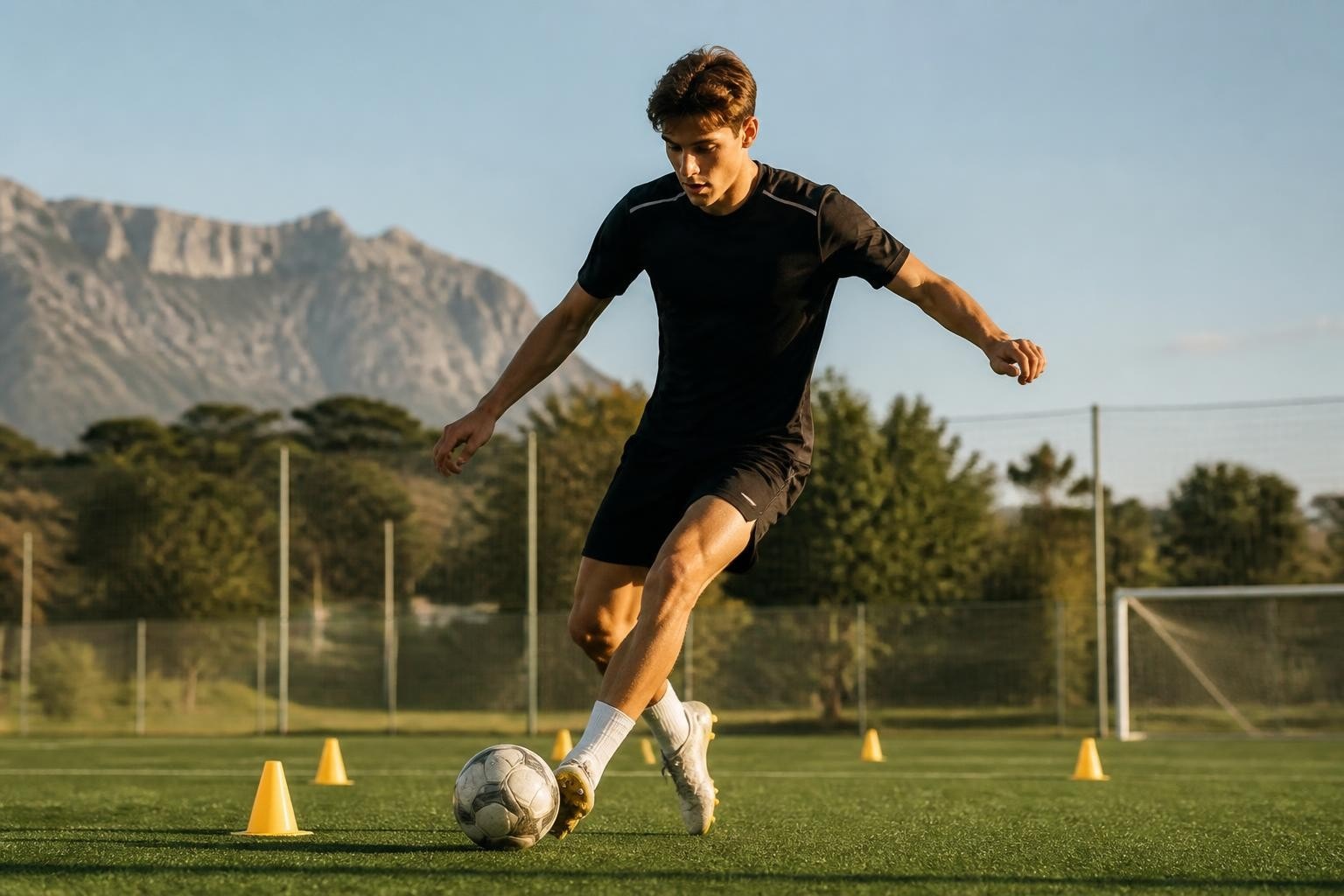
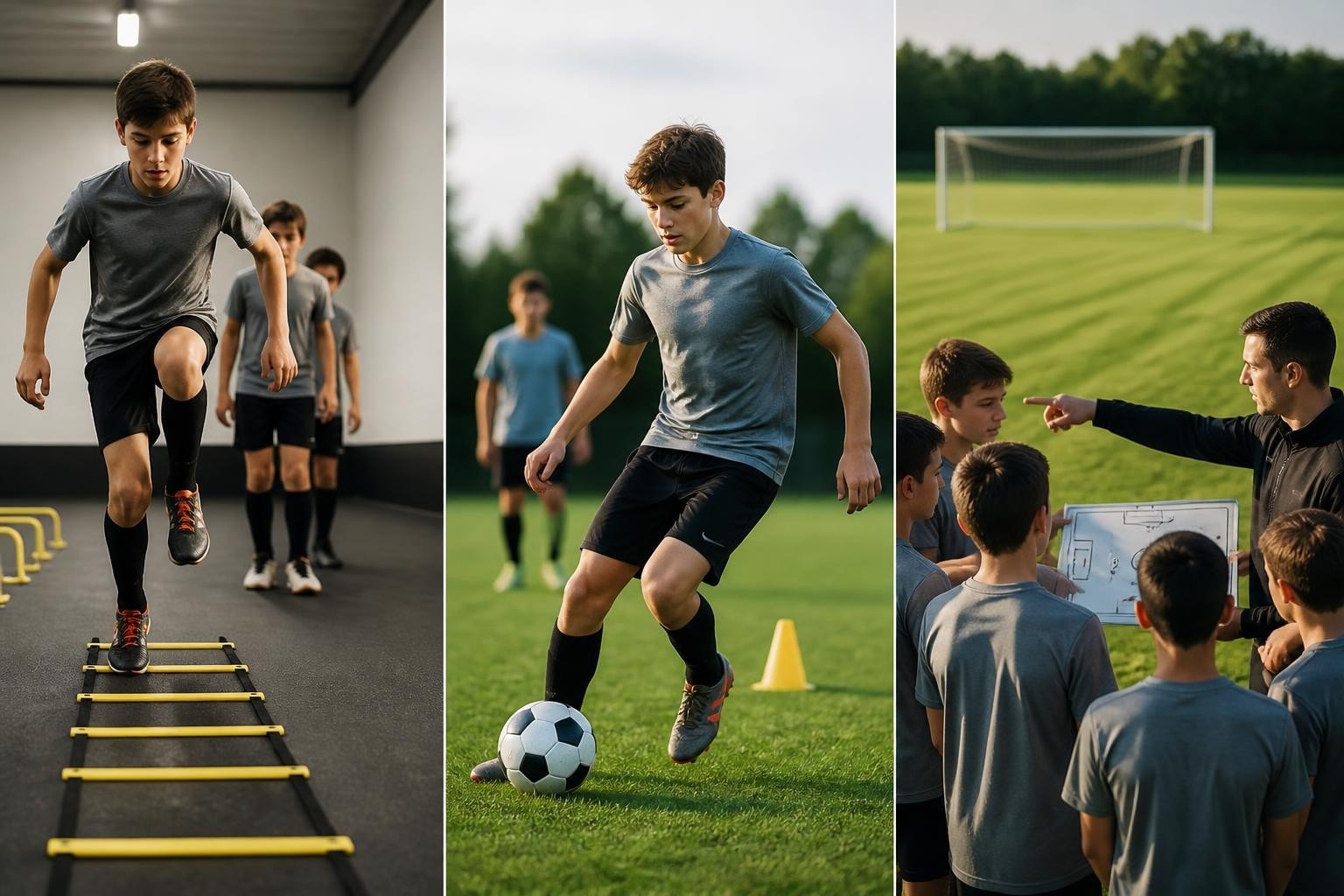
Developing young soccer players requires more than just turning up to practice and kicking a ball around. A well-structured youth soccer drill forms the foundation of skill development, tactical understanding, and confidence building. Parents and coaches who invest time in understanding effective training methods create opportunities for players to reach their full potential. The right combination of technical exercises, game-realistic scenarios, and age-appropriate challenges transforms raw enthusiasm into refined ability. This comprehensive guide explores the essential elements of youth soccer drill design and implementation, offering practical insights for coaches working with players aged 6 through 14.
Understanding the Purpose Behind Every Youth Soccer Drill
Every effective youth soccer drill serves a specific developmental purpose. Coaches must understand which skills they're targeting before setting up cones and organizing players. Technical drills focus on ball mastery, including dribbling, passing accuracy, receiving technique, and shooting mechanics. Tactical drills develop decision-making abilities, positioning awareness, and understanding of team shape. Physical drills build endurance, speed, agility, and coordination while psychological elements emerge through competition, pressure situations, and confidence-building exercises.
The most successful training sessions integrate multiple development areas simultaneously. A small-sided game naturally combines technical execution with tactical decisions while demanding physical effort and mental focus. This holistic approach mirrors actual match conditions where players must process multiple variables simultaneously.
Age-Appropriate Drill Selection
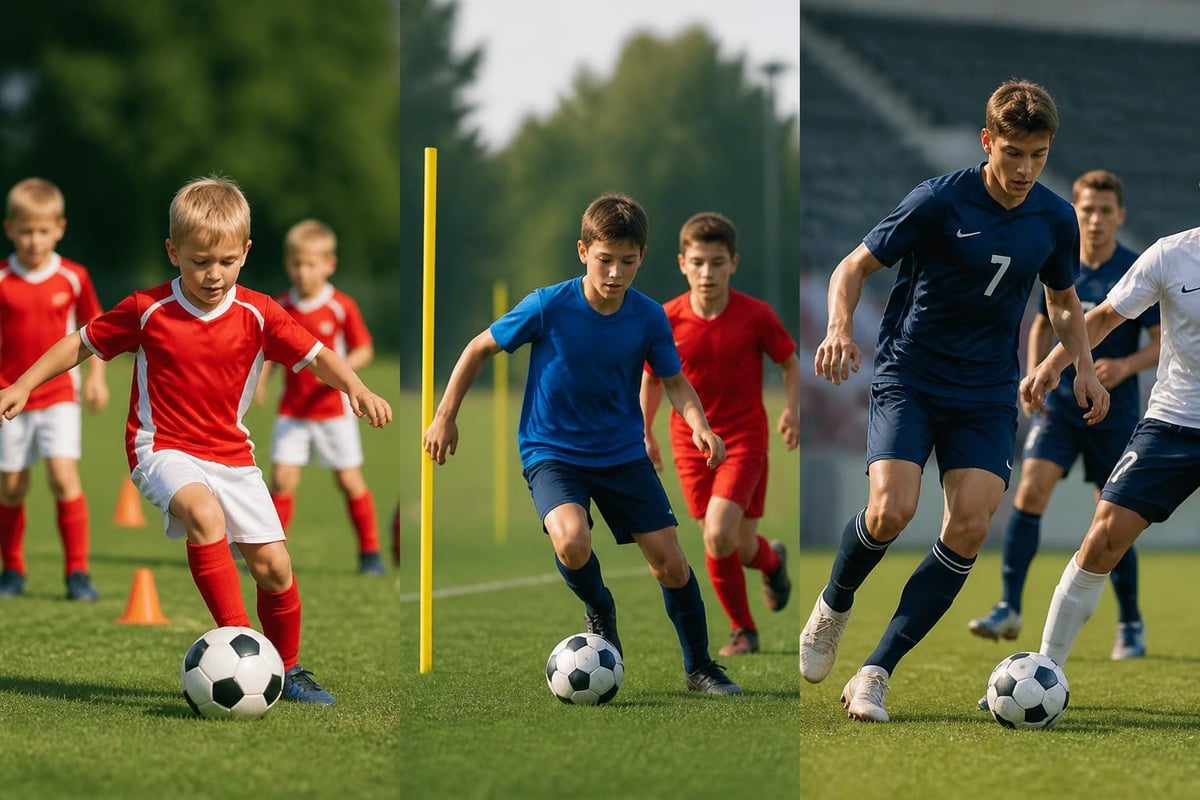
Selecting drills that match developmental stages is critical. Players aged 6 through 8 benefit from simple yet engaging activities that emphasize fun, exploration, and basic coordination. These foundation years establish comfort with the ball through games that feel like play rather than structured training.
Key characteristics for younger age groups:
- Short attention spans require frequent activity changes
- Simple instructions with immediate demonstrations
- Emphasis on individual ball touches over complex tactics
- Celebration of effort rather than outcome
- Games that incorporate imagination and creativity
Players aged 9 through 11 transition into more structured learning. They develop better concentration, understand more complex instructions, and begin grasping tactical concepts. Their youth soccer drill selection should balance skill refinement with increasing game awareness.
Older youth players (12-14) can handle sophisticated tactical scenarios, position-specific training, and higher intensity physical demands. Their drills should challenge decision-making speed and execution under pressure.
Essential Technical Drills for Fundamental Development
Technical mastery forms the cornerstone of player development. Without solid ball control, passing accuracy, and receiving skills, tactical understanding becomes irrelevant. Comprehensive drill libraries provide coaches with proven exercises that develop these fundamental abilities systematically.
Ball Mastery and Dribbling Progressions
Ball mastery drills develop the touch and coordination necessary for confident play. These exercises should appear in every training session, particularly for younger players establishing their relationship with the ball.
Effective ball mastery progression:
- Static manipulation: Rolling, pulling, and pushing the ball while stationary
- Walking pace movements: Incorporating direction changes while moving slowly
- Jogging tempo: Executing moves at increased speed
- Running speed: Performing skills at match pace with defensive pressure
- Competition integration: Applying skills in 1v1 and small-sided games
Dribbling drills should emphasize both speed and close control. Players need to recognize when to push the ball into space versus when to keep it tight in congested areas. Setting up cone courses with varying spacing teaches this differentiation naturally.
Passing and Receiving Combinations
Passing accuracy and proper receiving technique enable effective team play. A well-designed youth soccer drill for passing incorporates movement, varying distances, and progressive difficulty levels.
| Drill Type | Focus Area | Player Count | Key Coaching Points |
|---|---|---|---|
| Triangle Passing | Movement off ball | 3-6 players | Follow your pass, check shoulder before receiving |
| Rondo (Keep Away) | Quick decision-making | 4-8 players | One-touch when possible, create passing angles |
| Give and Go | Forward penetration | Pairs | Weight of pass, timing of run |
| Box Passing | Spatial awareness | 4-8 players | Accuracy over power, receive across body |
Each passing drill should emphasize specific technical points: proper plant foot positioning, striking through the center of the ball, following through toward the target, and receiving with the back foot to face forward. These details separate casual kicking from intentional skill development.
Tactical Development Through Small-Sided Games
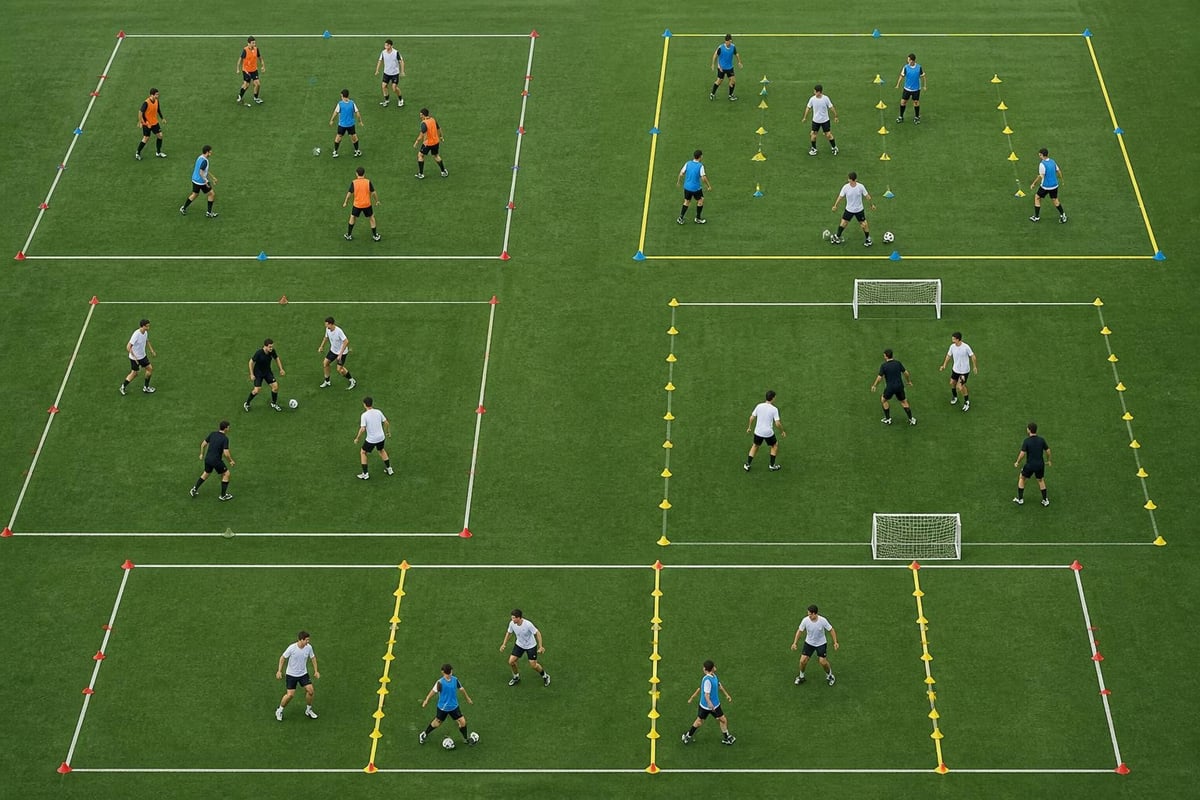
Small-sided games represent the most effective youth soccer drill format for developing tactical awareness. Reducing field size and player numbers increases individual touches, decision-making opportunities, and engagement. Research consistently shows that players learn faster through game-based activities than isolated technical exercises.
A 4v4 game provides significantly more learning opportunities than 11v11 for developing players. Each athlete touches the ball more frequently, faces more decisions, and experiences diverse situations within a single session. The structured approach to small-sided games creates ideal learning environments.
Designing Effective Small-Sided Game Variations
Modifying small-sided games allows coaches to target specific tactical concepts. Adjusting field dimensions, goal configurations, player numbers, and rules emphasizes different aspects of play.
Tactical focus areas:
- Possession emphasis: Reward consecutive passes with bonus points
- Attacking penetration: Create end zones that award points for dribbling into space
- Defensive compactness: Narrow field width to teach pressing and cover
- Transition speed: Award double points for goals scored within 10 seconds of winning possession
- Width utilization: Establish wide channels where only specific players can operate
These variations teach principles without interrupting the flow of play. Players discover solutions through experience rather than lengthy explanations. The coach's role shifts from instructor to facilitator, asking guiding questions rather than providing all answers.
Physical Development and Conditioning Integration
Physical development in youth soccer requires careful consideration. Young athletes are not miniature adults, and their training must respect developmental stages while building necessary attributes. A properly designed youth soccer drill incorporates physical elements naturally rather than through isolated conditioning exercises.
Movement Patterns and Coordination
Fundamental movement skills establish the athletic foundation for soccer performance. Before worrying about position-specific conditioning, young players need competency in running mechanics, jumping, landing, changing direction, and spatial awareness.
Progressive movement development:
- Linear speed: Forward running with proper arm action and stride length
- Multi-directional movement: Side shuffling, backpedaling, crossover steps
- Acceleration mechanics: First three steps, body lean, explosive power
- Deceleration control: Stopping efficiently without injury risk
- Agility patterns: Quick direction changes with body control
These movements integrate seamlessly into soccer-specific drills. A dribbling course that requires sharp cuts develops both ball skills and change-of-direction mechanics. Chase games improve acceleration while maintaining engagement through competition.
Age-Appropriate Intensity Management
Younger players develop through varied activities rather than sustained high intensity. Their sessions should include bursts of effort followed by active recovery. Training programs at established soccer academies structure sessions to balance challenge with appropriate recovery.
Older youth players (13-14) can handle more sustained intensity, but their training should still avoid monotonous conditioning runs. Soccer-specific fitness emerges from well-designed drills that replicate match demands: repeated sprints, quick recoveries, explosive movements, and endurance development through accumulated work rather than long-distance running.
Psychological Elements and Confidence Building
The psychological component of player development often receives insufficient attention despite its crucial importance. A youth soccer drill that builds confidence and resilience creates athletes who perform under pressure and persist through challenges.
Creating Pressure Situations Safely
Young players must experience pressure during training to handle it during matches. However, this pressure should scale appropriately to their developmental level. Excessive criticism or unrealistic expectations damage confidence rather than building it.
Progressive pressure introduction:
- Technical mastery first: Establish competence before adding time constraints
- Friendly competition: Introduce scoring and winners without excessive stakes
- Gradual complexity: Add defenders, reduce space, or limit touches progressively
- Mistake normalization: Frame errors as learning opportunities, not failures
- Success celebration: Acknowledge improvement and effort alongside outcomes
The coaching approach during pressured situations matters tremendously. Asking "What could we try differently?" empowers players to problem-solve. Declaring "That was wrong!" shuts down learning and creates anxiety.
Building Game Intelligence Through Questioning
Tactical awareness develops when players think about the game beyond just executing skills. The most effective coaches ask guiding questions rather than providing all answers. After a drill sequence, asking "Why did that work?" or "What made that difficult?" engages critical thinking.
This questioning approach appears throughout comprehensive soccer development programs that emphasize player-centered learning. Young athletes who understand the "why" behind tactical decisions make better choices independently rather than waiting for sideline instructions.
Station-Based Training for Maximum Engagement
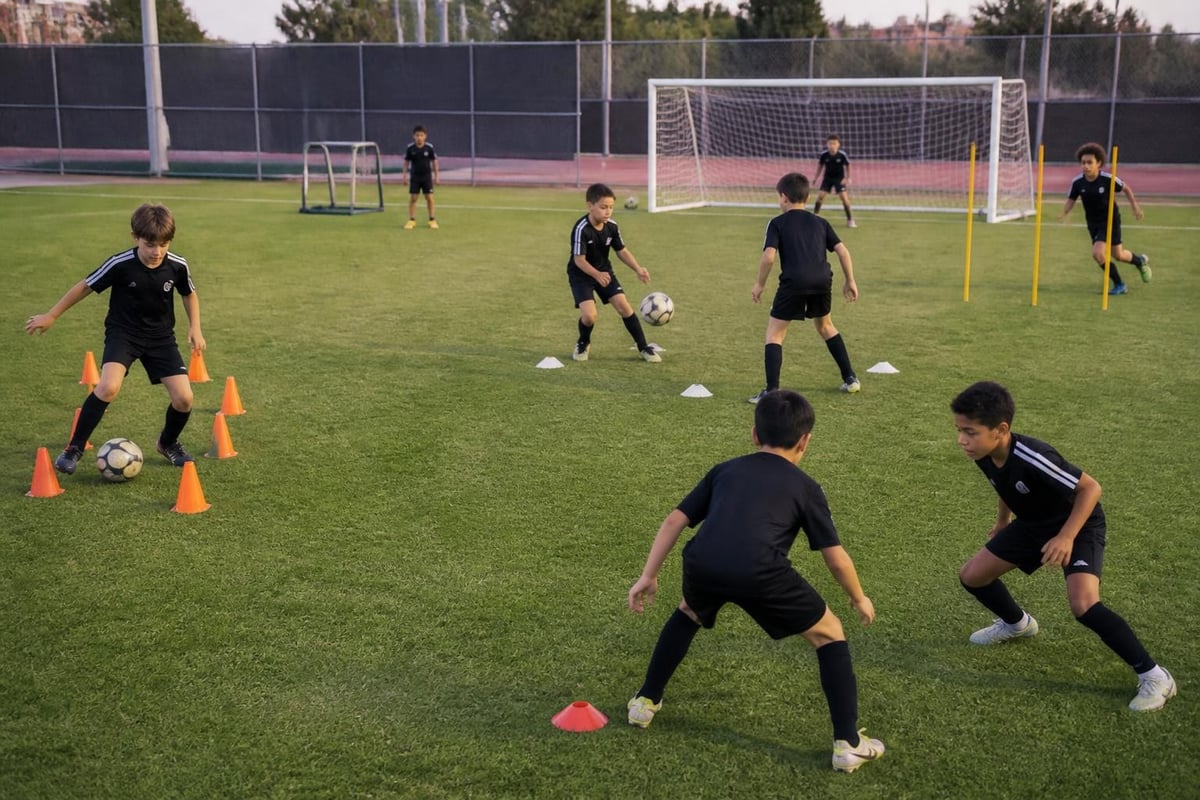
Station-based training maximizes participation while allowing coaches to address multiple skill areas within a single session. This format works particularly well for larger groups where standing in lines wastes valuable development time.
Effective Station Design Principles
Each station should target a specific skill or concept with clear objectives and success criteria. Rotate groups through stations at timed intervals, typically 5-8 minutes depending on age and complexity.
| Station Type | Skill Focus | Equipment Needed | Success Indicators |
|---|---|---|---|
| Technical | First touch control | Cones, balls | Clean receptions, forward-facing body position |
| Finishing | Shooting accuracy | Goal, balls, markers | Shot placement, proper technique |
| Passing | Combination play | Cones, balls | Pass accuracy, movement timing |
| 1v1 | Individual defending | Small goals, balls | Ball recovery, goal prevention |
Station rotation keeps energy high and attention focused. Players receive frequent breaks from any single activity while accumulating substantial work across the session. This variety particularly benefits younger age groups with limited attention spans.
The variety of drills available through specialized resources helps coaches design diverse station-based sessions that prevent monotony while systematically developing skills.
Coaching Distribution and Feedback
With multiple stations operating simultaneously, coaches must plan their positioning strategically. Primary focus should target the most complex or risky activity where intervention might be necessary. Brief visits to other stations provide feedback and encouragement without micromanaging.
Feedback quality matters more than quantity. Specific, actionable comments help players improve: "Plant your foot beside the ball, not behind it" beats generic praise like "good job." Balance corrective feedback with genuine encouragement, maintaining approximately a 3:1 ratio of positive to corrective comments.
Progressive Skill Development Systems
Skill development follows predictable progressions from simple to complex. A youth soccer drill should fit within a broader developmental pathway rather than existing as an isolated activity. Understanding these progressions helps coaches select appropriate challenges and recognize when players are ready to advance.
The SKILL Framework for Drill Progression
Static execution forms the foundation. Players learn new techniques without defensive pressure or time constraints. A passing drill might begin with stationary partners executing proper technique repeatedly.
Kinetic application adds movement. The same pass now occurs while jogging or after receiving a moving ball. Movement challenges coordination and timing while maintaining technical focus.
Increased complexity introduces additional variables. Multiple passing options, tighter spaces, or specific combination patterns require heightened concentration and decision-making.
Live opposition brings defenders into the scenario. Players must execute skills under pressure, making the drill game-realistic. This stage reveals whether skills transfer from practice to competition.
Learned mastery emerges when players execute skills automatically during matches without conscious thought. The technique has become ingrained through sufficient repetition across all previous stages.
Individual Versus Team Skill Development
Both individual and team skills require systematic development. Individual skills (dribbling, shooting, ball mastery) allow for solo practice and self-directed improvement. Team skills (combination play, defensive shape, transition organization) demand coordinated group training.
The most comprehensive youth development programs address both areas systematically. Players might spend portions of sessions on individual technical work before applying those skills in team contexts. This balance ensures technical proficiency doesn't develop in isolation from tactical application.
High-level programs like those offered through specialized training camps provide intensive environments where players experience accelerated development across all skill categories through focused, professional coaching.
Position-Specific Training Considerations
While young players benefit from experiencing multiple positions, introducing position-specific elements around age 11-12 helps develop specialized skills. A youth soccer drill can address positional nuances without pigeonholing players into rigid roles.
Goalkeeper Development
Goalkeepers require specialized training that addresses unique technical demands. Shot-stopping, distribution, positioning, and aerial ability all need dedicated practice time. However, young goalkeepers should also participate in field player activities to develop overall soccer skills and understanding.
Essential goalkeeper drill categories:
- Shot-stopping: Reaction saves, diving technique, hand positioning
- Distribution: Throwing accuracy, goal kicks, playing with feet
- Positioning: Angle play, coming off the line, sweeping
- Communication: Organizing defense, claiming crosses
- 1v1 situations: Closing down attackers, making yourself big
Goalkeeper training should occur within regular team sessions when possible, integrating keepers into possession drills and small-sided games while also providing position-specific work.
Defender, Midfielder, and Forward Differentiation
Field positions share many common skills but emphasize different priorities. Defenders focus on 1v1 defending, aerial duels, and playing out from the back. Midfielders emphasize scanning, receiving under pressure, and transitional play. Forwards prioritize finishing, creating space, and attacking runs.
Position-specific stations within broader training sessions address these nuances without creating rigid separations. A finishing station benefits forwards most directly but also develops composure and technique for all players. Defensive positioning work primarily targets defenders but teaches spatial awareness universally.
Seasonal Planning and Drill Periodization
Effective youth soccer drill implementation requires thoughtful season planning. The content and intensity of training should vary across different phases of the annual cycle, preventing burnout while peaking performance when it matters most.
Pre-Season Foundation Building
Early season training emphasizes technical foundation, fitness base, and team cohesion. Drill intensity starts moderate and builds progressively. This phase reestablishes fundamentals after off-season breaks and introduces new concepts for the upcoming campaign.
Pre-season priorities:
- Technical refinement without excessive pressure
- Gradual fitness progression avoiding injury risk
- Team shape and tactical system introduction
- Building positive training culture and standards
- Individual assessment and goal setting
Pre-season offers opportunities to experiment with new drills and methods before competitive pressure intensifies. Coaches can observe player responses and adjust approaches based on actual performance rather than assumptions.
In-Season Maintenance and Refinement
During the competitive season, training shifts toward maintaining fitness, refining tactics, and preparing for specific opponents. Drill selection should complement match schedules, avoiding excessive fatigue before important games while maintaining sharpness.
The weekly rhythm typically follows this pattern: recovery session after matches, technical work mid-week, tactical preparation before next match. Understanding this cycle prevents overtraining while ensuring adequate preparation.
Resources like comprehensive drill databases help coaches find appropriate activities for each training phase without constantly reinventing session content.
Off-Season Development Opportunities
The off-season provides freedom to address individual weaknesses, experiment with positions, and develop skills without competitive pressure. Players might focus on specific technical areas needing improvement or explore creative aspects of play without tactical constraints.
Maintaining some structure prevents complete skill degradation during extended breaks. Recommending individual ball mastery work, participation in small-sided leagues, or attending specialized training camps keeps players engaged without burning them out.
Common Youth Soccer Drill Mistakes to Avoid
Even well-intentioned coaches make predictable errors when designing and implementing training sessions. Recognizing these pitfalls helps create more effective development environments.
Excessive Complexity Too Soon
Introducing tactical concepts before players possess adequate technical ability creates frustration. A youth soccer drill asking players to execute overlapping runs when they can't pass accurately five yards sets up failure. Technical competence must precede tactical sophistication.
Coaches sometimes confuse complexity with quality. Simple drills executed with proper technique, intensity, and focus develop players more effectively than elaborate scenarios executed poorly. The best coaches master simple progressions rather than constantly seeking novel complexity.
Insufficient Activity Time
Standing in lines, listening to lengthy explanations, and watching others practice wastes precious development time. Every player should touch the ball frequently throughout each session. Calculate the ratio of active participation to waiting, aiming for 80% or higher activity time.
Maximizing activity time:
- Use multiple balls and small groups
- Eliminate or minimize lines through proper organization
- Keep demonstrations brief and clear
- Rotate through activities efficiently
- Plan transitions between drills in advance
The difference between 30 ball touches per session and 300 touches compounds dramatically over months and years. Small organizational improvements create massive developmental advantages.
Ignoring Individual Differences
Not every player learns identically or progresses at the same pace. A drill that challenges one athlete perfectly might bore another or overwhelm a third. Effective coaches build progression levels into activities, allowing individuals to work at appropriate challenge points.
Differentiation might involve varying distances, adding or removing defenders, adjusting time limits, or modifying success criteria. This accommodation ensures all players experience growth rather than some coasting while others struggle.
Integrating Technology and Video Analysis
Modern technology enhances youth soccer drill effectiveness when applied appropriately. Video analysis, training apps, and performance tracking provide valuable feedback, though they shouldn't replace fundamental coaching and human interaction.
Video for Technical Correction
Recording players during drills and matches reveals technical details invisible in real-time. Watching themselves execute skills helps players recognize differences between intended and actual movements. Side-by-side comparisons with proper technique models accelerate learning.
Video analysis works best when focused on specific technical points rather than overwhelming players with multiple corrections simultaneously. Showing a player their first touch technique, discussing one adjustment, then recording again creates focused improvement cycles.
Performance Tracking and Goal Setting
Measuring progress motivates young athletes and validates training methods. Tracking metrics like successful passes per session, shots on target percentage, or defensive duels won provides concrete evidence of improvement.
However, metrics must serve development rather than creating unhealthy competition or pressure. Frame tracking as personal improvement measurement rather than comparison against teammates. Celebrate progress regardless of absolute performance levels.
Creating Engaging Competition Formats
Competition naturally motivates young players while creating pressure that develops mental toughness. A youth soccer drill incorporating competitive elements maintains engagement while building resilience and determination.
Team Versus Individual Competition
Both team competitions (small-sided games, relay races, collective challenges) and individual competitions (skills challenges, 1v1 tournaments, timed tests) offer unique benefits. Team competitions build camaraderie and communication while individual formats develop personal responsibility and self-reliance.
Balancing both formats across training cycles ensures comprehensive development. Some players thrive in competitive team environments while others excel in individual challenges. Exposure to both prepares athletes for diverse situations.
| Competition Format | Primary Benefits | Potential Drawbacks | Best Applications |
|---|---|---|---|
| Small-sided games | Tactical learning, teamwork | Less individual accountability | Midweek training sessions |
| Skills challenges | Technical focus, clear feedback | Limited game realism | Pre-training activation |
| 1v1 tournaments | Individual confidence, dueling | High pressure for some | Monthly special sessions |
| Team relays | Energy, fun, cooperation | Limited skill development | End of tough sessions |
Managing Competitive Pressure Appropriately
Competition should challenge without crushing confidence. Creating multiple divisions or handicapping systems ensures balanced contests where all participants experience both success and challenge. Avoid formats where the same players always win or always lose.
Celebrating effort, improvement, and sportsmanship alongside winning prevents unhealthy win-at-all-costs mentalities. Young players learning that giving maximum effort matters more than outcomes develop healthier relationships with competition.
Parent and Coach Collaboration
Effective player development requires alignment between coaches and parents. When training philosophies and home expectations contradict, players receive mixed messages that hinder progress. A youth soccer drill succeeds best when supported by consistent development philosophy across all environments.
Educating Parents About Development Philosophy
Many parents lack soccer backgrounds and don't understand proper development progressions. They might pressure children about outcomes when the focus should remain on effort and learning. Proactive parent education prevents misalignment and builds supportive home environments.
Explaining why technical development precedes tactical sophistication, or why playing multiple positions benefits young players, helps parents understand coaching decisions. Regular communication about session objectives and player progress maintains transparency and trust.
Programs that emphasize comprehensive player development across technical, tactical, physical, and psychological domains help parents understand the multifaceted nature of soccer growth beyond just winning matches.
Encouraging Appropriate Home Practice
Parents often ask how they can support development between training sessions. Providing specific recommendations prevents well-intentioned but counterproductive home activities. Simple ball mastery exercises, wall passing work, or structured skill-building resources offer productive home practice options.
Setting realistic expectations prevents burnout. Suggesting 15-20 minutes of playful practice several times weekly proves more sustainable than demanding daily hour-long sessions. Development occurs through consistency over time rather than sporadic intensive efforts.
Implementing effective youth soccer drills requires understanding developmental progressions, age-appropriate challenges, and the integration of technical, tactical, physical, and psychological elements. The most successful coaches create varied, engaging training environments where every player experiences frequent touches, appropriate challenges, and supportive feedback. Whether you're designing station-based sessions, planning small-sided game variations, or introducing position-specific work, maintaining focus on long-term development over short-term results creates the foundation for lasting success. At Strive Soccer Academy, our fully licensed Canada Soccer coaches bring European-style training philosophy to Surrey, BC, delivering comprehensive player development across all four pillars of growth: technical mastery, tactical awareness, physical conditioning, and psychological resilience.