The journey into organized soccer begins at the U8 level, where children aged seven and eight take their first structured steps into the beautiful game. This developmental stage represents a critical foundation period where young players transition from recreational play to understanding basic soccer concepts. Parents and coaches face the unique challenge of balancing skill development with fun, ensuring that these early experiences create a lifelong love for the sport while establishing proper technical fundamentals that will serve players throughout their soccer careers.
Understanding the U8 Soccer Environment
U8 soccer operates under a distinct set of parameters designed specifically for the developmental needs of seven and eight-year-old players. The format typically involves smaller-sided games, often 4v4 or 5v5, which maximizes individual touches on the ball and creates more meaningful learning opportunities. According to U8 coaching guidelines, this age group benefits from modified rules that emphasize participation over competition.
The physical dimensions of u8 soccer differ significantly from older age groups. Field sizes typically measure 25-35 yards in length and 20-30 yards in width, creating an environment where young players can cover the space effectively. Goal sizes are proportionally smaller, usually around 6 feet high and 12 feet wide, allowing goalkeepers to experience success while learning their position.
Game Structure and Duration
Match duration in u8 soccer generally consists of four quarters of 10-12 minutes each, with brief water breaks between periods. This structure serves multiple purposes: it prevents physical and mental fatigue, allows coaches to provide instruction and make adjustments, and ensures all players receive equal playing time regardless of skill level.
Key U8 Game Format Elements:
- Small-sided games (4v4 or 5v5)
- Shorter quarters with frequent breaks
- Retreat lines or build-out lines in some leagues
- No offside rule enforcement
- Emphasis on equal participation
- Modified equipment sizes
The AYSO U8 gameplay guidelines provide comprehensive standards that many leagues adopt, ensuring consistency in how children experience the game across different organizations.
Technical Development Priorities
At the u8 soccer level, technical skill acquisition takes precedence over tactical sophistication. Young players at this age possess the cognitive and physical capacity to learn fundamental ball skills, but they're not yet ready for complex team strategies or positional play. The focus should remain on individual mastery of basic techniques that form the foundation for future development.
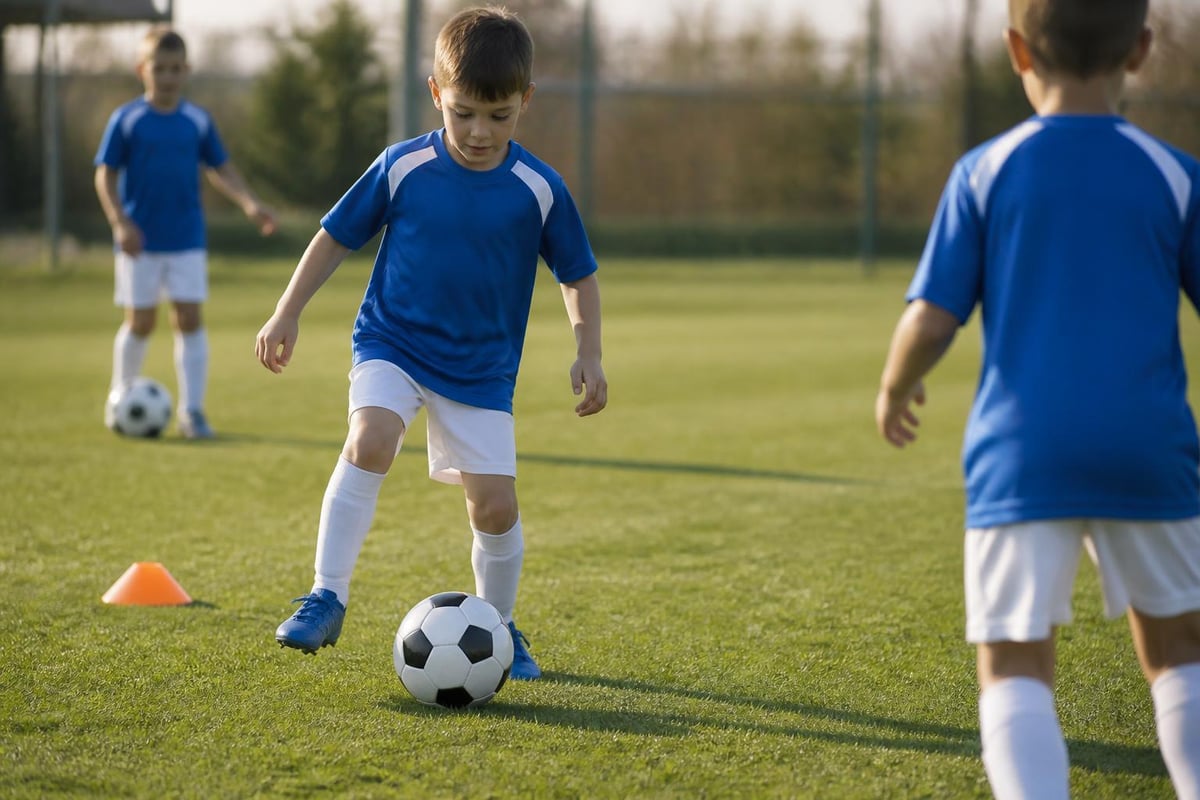
Dribbling represents the most important technical component for u8 soccer players. Children at this age should spend significant training time with a ball at their feet, developing comfort and confidence in various dribbling scenarios. Effective training emphasizes both feet, encourages creativity, and gradually introduces concepts like change of direction and speed variation.
Essential Technical Skills
| Skill Category | Focus Areas | Training Frequency |
|---|---|---|
| Dribbling | Both feet, close control, direction changes | Every session |
| Passing | Inside of foot, short distances, accuracy | 3-4 times weekly |
| Receiving | First touch, body positioning, control | Every session |
| Shooting | Instep drive, accuracy over power | 2-3 times weekly |
| Ball Mastery | Rolls, pulls, taps, coordination | Daily practice |
The Soccer Coach Weekly platform offers excellent resources specifically designed for this age group, with drills that maintain engagement while building competence.
Physical and Psychological Considerations
U8 soccer players are at a unique developmental stage both physically and mentally. Their bodies are growing rapidly, coordination is improving, but they still lack the endurance and strength of older children. Training sessions must account for shorter attention spans, the need for variety, and the importance of maintaining enthusiasm.
Physical development at this age focuses on fundamental movement skills rather than soccer-specific fitness. Running, jumping, skipping, and balancing exercises contribute to overall athleticism that supports soccer performance. Sessions should never exceed 60-75 minutes, with frequent activity changes to maintain engagement.
Psychological Development Priorities:
- Building confidence through success experiences
- Developing resilience when facing challenges
- Learning to follow instructions and accept coaching
- Understanding basic teamwork concepts
- Managing emotions during competition
The U.S. Soccer Player Development Framework emphasizes creating a positive emotional environment where mistakes are viewed as learning opportunities rather than failures.
Coaching Strategies for Success
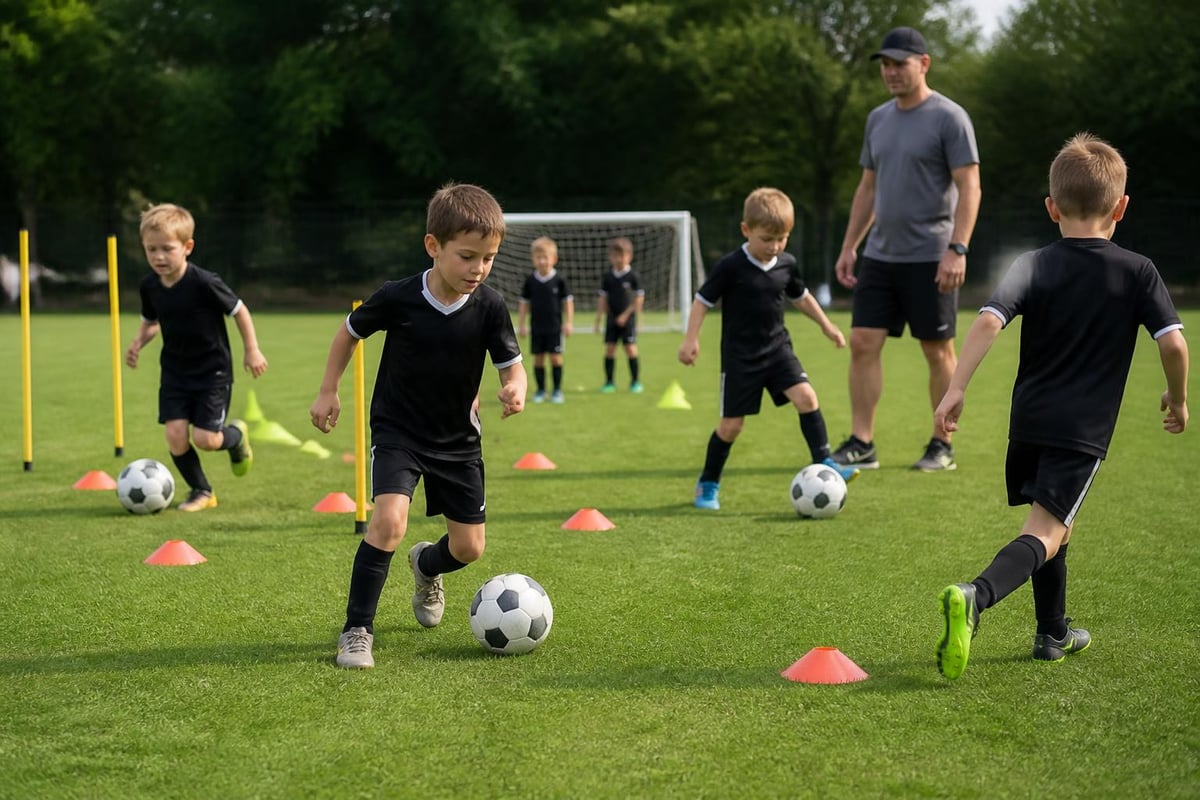
Effective u8 soccer coaching requires a fundamentally different approach than working with older players. The best coaches at this level combine soccer knowledge with an understanding of child development, creating sessions that are educational, engaging, and age-appropriate. Demonstrations should be clear and concise, verbal instructions simple and direct.
Training sessions should follow a consistent structure that players recognize and feel comfortable within. A typical practice might include a warm-up with the ball (10 minutes), individual skill work (15 minutes), small-sided games or activities (20 minutes), and a fun scrimmage to close (15 minutes). This progression maintains interest while systematically building skills.
Weekly Training Focus
Coaches should develop weekly themes that allow players to encounter the same concept multiple times through different activities. For example, a week focused on dribbling might include:
- Monday: Dribbling with direction changes through cones
- Wednesday: 1v1 dribbling challenges and games
- Friday: Dribbling in game-like scenarios with teammates
This repetition with variation helps young players internalize skills more effectively than introducing entirely new concepts each session. The AYSO coaching best practices resource provides excellent guidance on session planning and execution.
Parent Involvement and Expectations
Parents play a crucial role in the u8 soccer experience, but their involvement must be appropriately channeled. The most supportive parents provide encouragement without pressure, attend games and practices when possible, and reinforce the coach's messages at home. Understanding realistic expectations for this age group prevents frustration and maintains proper perspective.
At seven and eight years old, players will display inconsistent performance from week to week. A child who demonstrates excellent dribbling skills in practice might struggle to apply those same skills in a game environment. This inconsistency is completely normal and reflects the developmental reality of working with young children.
Supporting Your U8 Player
Parents can enhance their child's u8 soccer development through simple actions at home. Having a ball available for unstructured play, watching age-appropriate soccer together, and asking open-ended questions about practice creates a supportive environment. Questions like "What was the most fun part of practice?" or "What new skill did you work on today?" encourage reflection without creating pressure.
The emphasis should always remain on effort, improvement, and enjoyment rather than results or comparisons to other players. Resources for parents can help families understand how to best support their young athletes during this formative stage.
Developing Soccer Intelligence
While u8 soccer players aren't ready for sophisticated tactical systems, they can begin developing soccer intelligence through guided questioning and problem-solving activities. Rather than telling players exactly what to do in every situation, effective coaches ask questions that prompt thinking: "What could you do when a defender is close to you?" or "Where should you look before you pass?"
Small-sided games naturally develop decision-making because they create frequent scenarios where players must choose between multiple options. With more touches on the ball and more involvement in play, children learn through experience rather than lengthy explanations. This experiential learning proves far more effective than tactical lectures for this age group.
Decision-Making Scenarios in U8 Soccer:
- When to dribble versus when to pass
- Which direction to turn when receiving the ball
- How to create space away from defenders
- When to shoot versus when to pass to a teammate
- How to support teammates with the ball
These concepts should be introduced gradually and reinforced through game-like activities rather than isolated drills. The natural flow of play provides the best teaching moments for developing soccer awareness.
Building a Love for the Game
The primary objective of u8 soccer extends beyond skill development to creating a genuine passion for the sport. Children who enjoy their early soccer experiences are far more likely to continue playing as they grow older, eventually reaching levels where advanced training and competitive opportunities become available. Programs like those at Strive Soccer Academy build on this foundation by providing age-appropriate development that maintains enthusiasm while systematically improving abilities.
Creating enjoyable experiences requires careful attention to session design. Activities should maximize activity time and minimize standing in lines. Competitions should be structured so that all participants can experience success regardless of current skill level. Positive reinforcement should significantly outweigh correction, with a recommended ratio of at least 5:1 positive comments to constructive feedback.
Elements of Engaging Sessions
| Component | Purpose | Implementation |
|---|---|---|
| Ball per player | Maximum touches | Use in warm-ups and technical work |
| Short explanations | Maintain activity | Demonstrate instead of lengthy talks |
| Multiple small games | Increase involvement | Divide into smaller groups |
| Varied activities | Sustain interest | Change activities every 10-15 minutes |
| Celebration of effort | Build confidence | Recognize improvement and trying |
The U8 coaching resource guide offers practical activities that balance fun with developmental appropriateness.

Equipment and Safety Considerations
Proper equipment sizing is essential for u8 soccer success and safety. Balls should be size 3, which allows young players to properly strike and control them with their smaller feet. Shin guards are mandatory in organized play and should fit snugly without restricting movement. Soccer cleats, while recommended, aren't always necessary at this level, particularly for players just beginning their soccer journey.
Goal safety deserves special attention, as improperly secured goals pose serious risks. All goals used in u8 soccer must be properly anchored to prevent tipping. Many organizations now require specific safety certifications for portable goals used in practices and games.
Essential U8 Soccer Equipment:
- Size 3 soccer balls
- Appropriately sized shin guards
- Soccer cleats or athletic shoes
- Water bottles
- Practice pennies or scrimmage vests
- Small cones for training activities
Field conditions also impact safety. Coaches and parents should inspect playing surfaces for hazards like holes, debris, or standing water before allowing children to play. These simple precautions prevent common injuries and ensure a safe environment for development.
Measuring Progress and Success
Traditional metrics like goals scored or games won provide poor measures of u8 soccer success. Instead, progress should be evaluated through skill acquisition, improved confidence, growing soccer understanding, and sustained enthusiasm for the sport. A player who enters the season afraid to kick the ball but finishes comfortably dribbling in traffic has achieved tremendous success, regardless of team record.
Coaches can track development through simple observation checklists that note when players demonstrate various skills in game situations. Can the player receive a pass and control it? Do they look up while dribbling? Are they willing to attempt 1v1 situations? These behavioral indicators provide meaningful feedback about development.
Individual progress varies significantly at the u8 soccer level. Some children arrive with extensive unstructured soccer experience, while others have barely kicked a ball before their first practice. Comparing players to each other creates unnecessary frustration; instead, each child should be measured against their own baseline, celebrating personal growth and improvement.
Research on player performance evaluation demonstrates the complexity of assessing soccer abilities, reinforcing why simple, observation-based methods work best for young players rather than complex statistical analysis.
Transitioning Beyond U8
As players approach nine years old, they'll transition from u8 soccer to older age groups with different formats and expectations. The skills and attitudes developed during the U8 stage provide the foundation for this progression. Players who have experienced positive coaching, developed fundamental technical skills, and learned to love the game are well-positioned for continued growth.
The transition often involves moving from 4v4 or 5v5 formats to 7v7 play, introducing positional concepts, and gradually increasing tactical sophistication. Children who have built strong technical foundations during their U8 experience adapt more readily to these changes because they possess the ball skills necessary to execute more complex soccer actions.
Preparation for Future Development:
- Solid technical fundamentals in all core skills
- Comfort playing with both feet
- Basic understanding of teamwork and support
- Resilience and positive attitude toward challenges
- Genuine enjoyment of playing soccer
Organizations that prioritize long-term development over short-term results during the U8 stage see the benefits emerge as players mature. The comprehensive training programs that respect developmental stages create stronger players who remain engaged with the sport through their teenage years and beyond.
The U8 soccer stage represents a unique opportunity to build lifelong soccer players through appropriate development and positive experiences. By focusing on technical skill acquisition, maintaining an engaging environment, and prioritizing fun alongside learning, coaches and parents set young players on a path toward sustained growth and enjoyment. At Strive Soccer Academy, we bring European-style training principles to every age group, including our youngest players, ensuring they develop proper fundamentals within a supportive environment that builds both skills and character from their very first touch of the ball.