Starting young players in u6 soccer represents one of the most critical phases in athletic development. At this age, children between four and six years old are discovering movement, coordination, and social interaction through play. The foundation built during these early years shapes not only technical abilities but also a lifelong relationship with the sport. Parents and coaches who understand the unique developmental needs of this age group can create experiences that foster genuine enthusiasm while establishing proper habits that will serve players throughout their soccer journey.
Understanding the U6 Soccer Age Group
The u6 soccer category encompasses children who are developmentally diverse, with varying attention spans, physical capabilities, and cognitive understanding. Unlike older age groups, these young athletes are still mastering basic motor skills like running in straight lines, changing direction quickly, and coordinating their movements with external objects like a soccer ball.
Developmental Characteristics of U6 Players
Children in this age bracket typically exhibit several common traits that directly impact how they learn and engage with soccer. Their attention spans rarely exceed 10-15 minutes for any single activity, making variety essential in training sessions. Most u6 soccer players are still developing their spatial awareness and struggle to understand positional concepts or complex tactical instructions.
Key developmental features include:
- Egocentric thinking patterns where sharing and team concepts are challenging
- Limited ability to process multi-step instructions
- High energy levels but quick fatigue
- Strong imagination and love for creative, game-based activities
- Developing gross motor skills like running, jumping, and kicking
Physical coordination at this stage varies significantly between individuals. Some children may confidently strike a ball while others are still learning to run without tripping. This diversity requires coaches to create inclusive environments where each child progresses at their own pace without feeling pressure or comparison to peers.
Creating Effective U6 Soccer Training Sessions
Structuring engaging training sessions for u6 soccer requires a fundamentally different approach than working with older players. The primary objective shifts from tactical understanding to movement literacy and ball familiarization. Every session should prioritize enjoyment, frequent touches on the ball, and activities that keep all players active simultaneously.
Session Structure and Time Management
A typical u6 soccer practice should last 45-60 minutes maximum. Breaking this time into smaller segments maintains engagement and prevents mental fatigue. An effective session structure might include a welcome and warm-up phase (10 minutes), two to three main activity rotations (25-30 minutes total), and a closing game or celebration (10-15 minutes).
Transitions between activities must be quick and simple. Young children lose focus during lengthy explanations or equipment setup delays. Having stations prepared in advance and using visual demonstrations rather than verbal instructions keeps momentum flowing throughout the session.
| Session Component | Duration | Primary Focus | Example Activity |
|---|---|---|---|
| Welcome & Warm-up | 10 min | Movement & Energy Release | Follow the Leader with Ball |
| Activity Station 1 | 8-10 min | Ball Familiarity | Red Light, Green Light with Dribbling |
| Activity Station 2 | 8-10 min | Coordination | Cone Weaving Races |
| Activity Station 3 | 8-10 min | Striking the Ball | Target Shooting Game |
| Closing Game | 10-15 min | Application & Fun | 3v3 or 4v4 Scrimmage |
The Role of Play in U6 Soccer Development
Play-based learning forms the cornerstone of effective u6 soccer training. Rather than drilling technical skills in isolation, coaches should embed learning within games and imaginative scenarios. When children pretend they're dribbling through a jungle or shooting to defeat dragons, they remain engaged while naturally developing the same skills that traditional drills would target.
Understanding u6 player development helps coaches design activities that match cognitive capabilities. Games should have simple rules, immediate feedback, and constant involvement. Elimination-style activities where players sit out should be completely avoided, as they reduce touches and can negatively impact confidence.
Essential Skills for U6 Soccer Players
While tactical sophistication isn't appropriate for this age group, certain foundational skills form the building blocks for future development. The focus should remain on individual ball mastery, basic coordination, and comfort with the ball at their feet.
Technical Fundamentals to Emphasize
Ball striking represents the most exciting skill for young players. At the u6 soccer level, simply making contact with the ball and seeing it move brings immense satisfaction. Coaches should encourage experimentation with different parts of the foot, varying power levels, and kicking toward general targets rather than expecting precision.
Dribbling naturally appeals to the egocentric nature of young children who want their own ball. Activities that encourage creative movement with the ball, changing speeds, and navigating through spaces develop crucial coordination patterns. The emphasis should be on keeping the ball close and taking lots of touches rather than speed or efficiency.
Receiving and stopping the ball might seem simple but requires significant practice for u6 soccer players. Rolling balls toward children and having them trap with their foot, using gentle tosses they can control, and creating games where stopping the ball is the primary objective all contribute to this fundamental skill.
Building Confidence Through Success
Every drill and activity should be designed so that children experience frequent success. Engaging u6 soccer drills create multiple opportunities for positive reinforcement and celebration. When a child successfully dribbles through cones, strikes a ball into a large goal, or completes a simple passing exchange, enthusiastic encouragement reinforces their sense of accomplishment.
Adjusting difficulty levels for individual players within the same activity ensures that both advanced and developing players find appropriate challenges. This might mean varying distances, target sizes, or time constraints based on each child's current ability level.

Practical Drills and Activities for U6 Soccer
Selecting appropriate activities requires balancing skill development with entertainment value. The most effective u6 soccer drills incorporate themes, competition elements, and constant movement to maintain interest throughout the session.
Individual Ball Mastery Activities
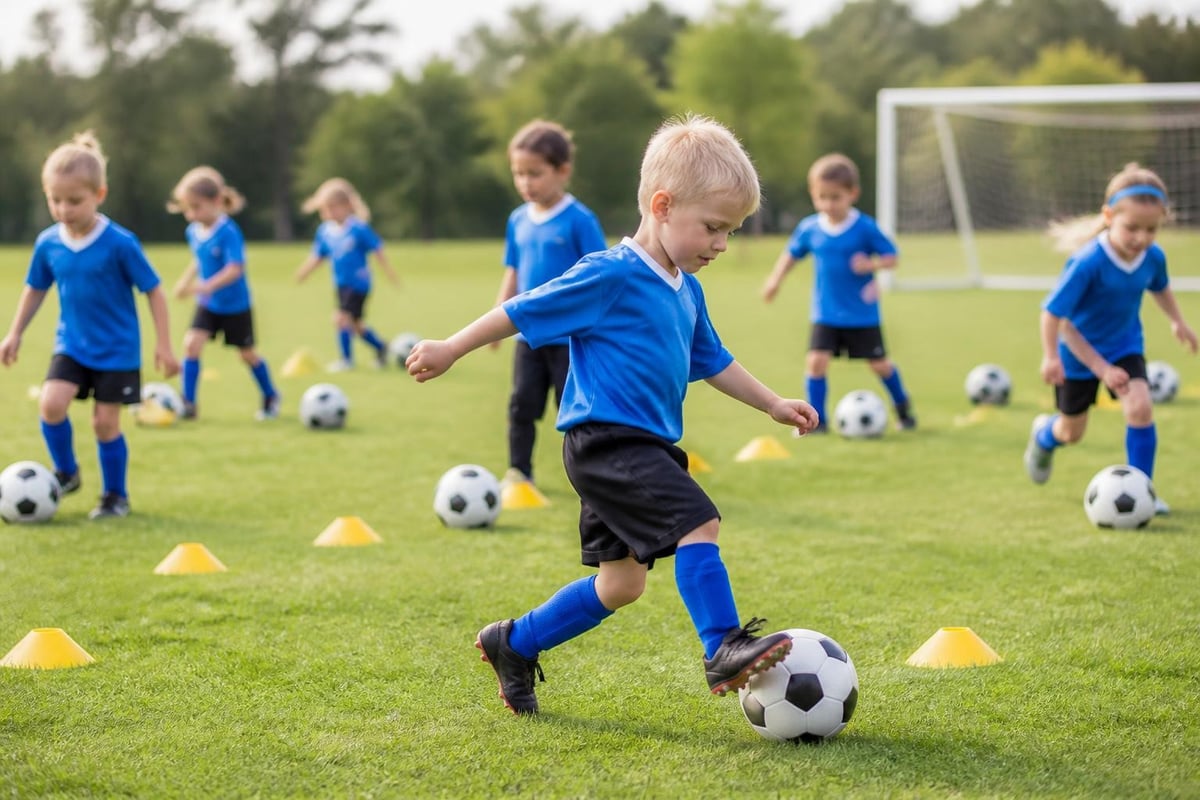
Traffic Lights remains one of the most popular activities for introducing dribbling concepts. Players dribble freely within a defined area, moving fast on "green light," slow on "yellow light," and stopping the ball with their foot on "red light." Variations can include different body parts for stopping, backward movement, or hopping while maintaining ball control.
Sharks and Minnows transforms dribbling practice into an exciting chase game. Most players (minnows) dribble from one end of the grid to the other while one or two players (sharks) try to kick their balls out of bounds. This activity naturally encourages players to keep their heads up, protect the ball, and change direction quickly.
Musical Balls adapts the classic children's game to soccer. Players dribble around a circle of cones while music plays, then must quickly stop their ball and stand on a cone when the music stops. Removing one cone each round creates gentle competition without elimination, as players simply share cones in later rounds.
Partner and Small Group Games
Once individual comfort develops, introducing simple partner activities adds a social element to u6 soccer training. Partner Passing Gates involves pairs passing a ball back and forth through cones or small goals, celebrating each successful pass. The focus remains on contact quality rather than accuracy, with partners standing close enough to ensure frequent success.
Treasure Hunt combines dribbling with cognitive challenges appropriate for this age. Players dribble to different colored cones scattered around the space, following the coach's calls. Adding variations like "touch the cone with your elbow" or "dribble around it twice" keeps the activity fresh and engaging.
Relay Races tap into young children's competitive spirit while maximizing touches. Simple formats like dribbling to a cone and back, or weaving through markers, create excitement. Using multiple small teams rather than large groups reduces waiting time and increases individual involvement.
Game Formats and Small-Sided Play
The u6 soccer age group benefits most from small-sided games where every player receives maximum ball contact and decision-making opportunities. Traditional 11v11 soccer or even 7v7 formats overwhelm young players with too much space, too many teammates, and too few meaningful interactions with the ball.
Optimal Game Structures
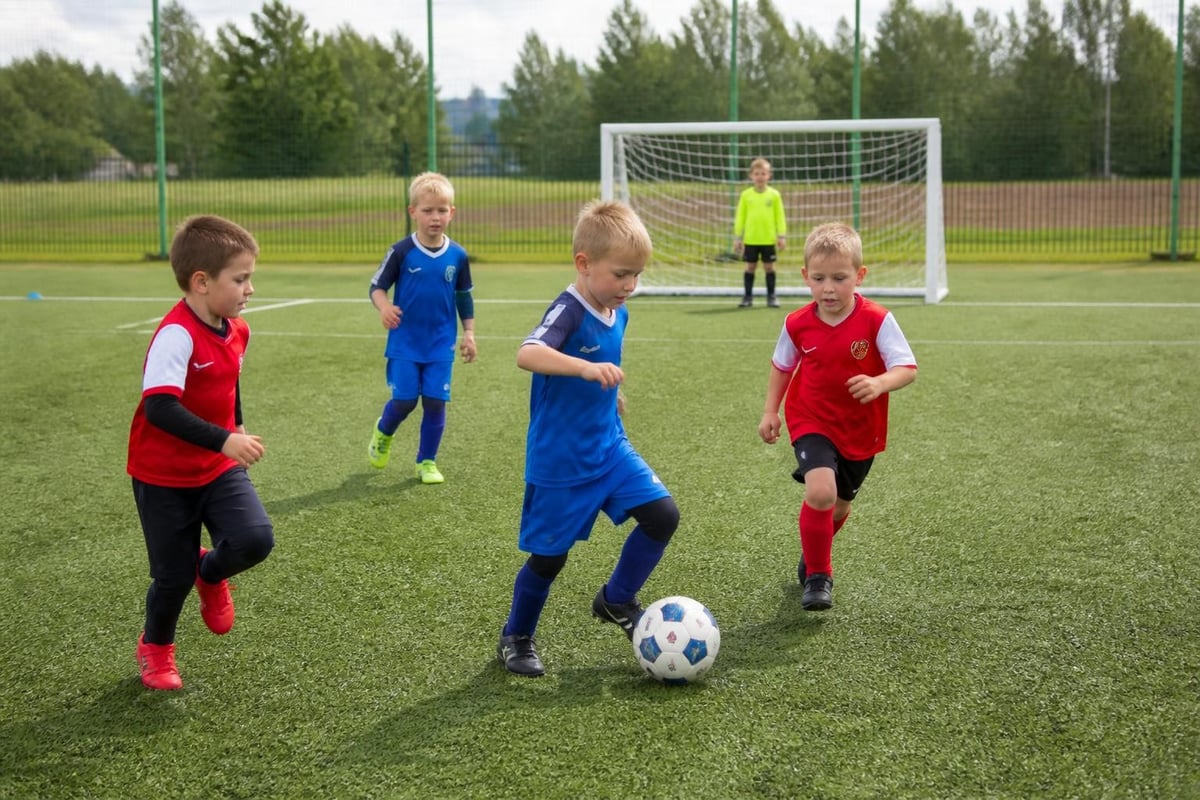
3v3 games represent the ideal format for u6 soccer, though 4v4 can work well depending on total participant numbers. These small-sided games ensure every child touches the ball frequently, makes decisions, and contributes to their team's success. Without goalkeepers, games remain high-scoring and exciting, with plenty of shooting opportunities for all players.
Field dimensions should be proportionally smaller, typically 20-30 yards in length and 15-20 yards wide. Using small goals or cones as targets removes the intimidation factor of full-sized nets and increases scoring frequency. Small-sided games for u6 players create environments where learning happens naturally through play rather than through instruction.
| Game Format | Players Per Team | Field Size | Benefits |
|---|---|---|---|
| 3v3 | 3 | 20×15 yards | Maximum touches, constant involvement |
| 4v4 | 4 | 25×20 yards | Slightly more space, good for larger groups |
| 1v1 | 1 | 10×10 yards | Individual skills, decision-making |
Rules and Modifications for Young Players
Traditional soccer rules need significant adaptation for u6 soccer to match developmental capabilities. Throw-ins, corner kicks, and offside rules create confusion and interrupt game flow. Instead, all restarts can be dribble-ins or kick-ins, keeping the game moving and giving players more opportunities to engage with the ball.
Scrimmages should be treated as learning opportunities rather than competitive matches. Coaches might pause occasionally to highlight positive moments like good passing or creative dribbling, but should avoid lengthy teaching interruptions that disrupt enjoyment. The score matters less than participation quality and visible enjoyment from all players.
The Coach's Role in U6 Soccer Success
Coaching u6 soccer demands different skills than working with competitive age groups. Success is measured not by wins and losses but by smiling faces, increased confidence, and growing comfort with the ball. The most effective coaches at this level excel at creating positive emotional environments rather than delivering tactical wisdom.
Communication Strategies for Young Players
Verbal instructions should be brief, positive, and demonstrated whenever possible. Rather than explaining how to dribble, a coach should show it, then let players try. Feedback should celebrate effort and improvement rather than criticizing mistakes. Phrases like "I love how you kept trying!" or "Look at how far you kicked that ball!" build confidence and enthusiasm.
Getting down to eye level when speaking to u6 soccer players shows respect and improves comprehension. Using player names frequently personalizes the experience and helps children feel valued. Asking questions like "Did you have fun with that game?" or "What was your favorite part?" engages young minds and gives coaches insight into what resonates.
Managing Behavior and Maintaining Focus
Behavior challenges at this age typically stem from excess energy, lack of understanding, or boredom rather than defiance. Keeping activities moving quickly, ensuring every child has a ball whenever possible, and building in legitimate opportunities to be silly or creative prevents most issues before they start.
When attention wanes, transitioning to a new activity immediately restores engagement. Fighting to maintain focus on an activity that has lost its appeal wastes valuable practice time. The flexibility to adjust plans based on group energy levels separates effective u6 soccer coaches from those rigidly following predetermined lesson plans.
Building a Love for the Game
The ultimate goal of u6 soccer extends far beyond skill acquisition. This age represents a critical window for developing positive associations with physical activity, teamwork, and challenge. Children who enjoy their early soccer experiences are more likely to continue playing as they grow, while those who feel pressured, bored, or inadequate often quit before discovering their potential.
Creating Positive Experiences
Every interaction at practice or games should reinforce that soccer is fun, they belong in the group, and their effort matters more than natural talent. Celebrating silly moments, laughing together, and ensuring success opportunities for all ability levels creates emotional safety where young players feel comfortable trying new skills.
Parents play a crucial role in shaping these early experiences. Coaches should educate families about appropriate expectations for u6 soccer, emphasizing development over competition and participation over perfection. When parents focus on effort, improvement, and enjoyment rather than scoring goals or winning games, children internalize healthier attitudes toward sports and achievement.
Physical and Psychological Benefits
Beyond soccer-specific skills, u6 soccer participation delivers broader developmental advantages. The physical benefits include improved cardiovascular fitness, enhanced coordination, better balance, and stronger gross motor skills. Regular activity at this age establishes patterns that support lifelong health and wellness.
Social and Emotional Growth
Soccer provides structured opportunities for social interaction outside family and classroom settings. Young players learn to share, take turns, and work alongside peers toward common goals. These experiences build emotional intelligence and social competence that transfer to other areas of life.
Following instructions from coaches, managing frustration when skills don't come easily, and celebrating teammates' successes all contribute to emotional regulation and resilience. The challenges inherent in learning new physical skills teach valuable lessons about persistence, practice, and gradual improvement.
At Strive Soccer Academy, we recognize that these early experiences shape not just soccer players but confident, resilient young people. Our age-appropriate training programs incorporate play-based learning while building the technical foundation that serves players as they progress through our development pathway.
Equipment and Space Considerations
Proper equipment significantly impacts the quality of u6 soccer experiences. Balls should be size 3, which matches young players' physical proportions and allows better control than larger sizes. Having one ball per child maximizes touches and keeps everyone engaged throughout sessions.
Creating Safe and Engaging Environments
Training spaces need clear boundaries but don't require lined fields or permanent goals. Cones, small pop-up goals, and markers create flexible spaces that can be quickly adjusted based on activities. The surface should be relatively flat and free of hazards, whether grass, turf, or indoor flooring.
Essential equipment includes:
- Size 3 soccer balls (one per player plus extras)
- Variety of colored cones and markers
- Small pop-up goals or cone goals
- Colored pinnies or vests for team identification
- Age-appropriate water bottles and shade/shelter
Weather considerations matter significantly for u6 soccer, as young children regulate body temperature less effectively than adults. Having contingency plans for extreme heat, cold, or rain ensures consistent programming while prioritizing player safety and comfort.
Partnering with Parents
Parents represent essential partners in u6 soccer success. Clear communication about program philosophy, expectations, and ways families can support development at home creates alignment between training sessions and daily life.
Home Practice and Skill Reinforcement
Encouraging simple practice activities families can do together extends learning beyond formal training. These might include backyard dribbling games, kicking against a wall, or juggling challenges appropriate for the age group. The key is keeping home practice playful and pressure-free, maintaining the joy that makes children want to continue improving.
Regular communication through newsletters, emails, or brief post-session conversations keeps parents informed about developmental progressions and upcoming events. Sharing specific examples of what their child accomplished during sessions helps parents celebrate growth and reinforces positive experiences.
Long-Term Player Development Perspective
While u6 soccer focuses intensely on immediate enjoyment and basic skill introduction, it also represents the first phase of a comprehensive player development journey. The habits, attitudes, and foundational skills established during these early years influence trajectories throughout youth soccer and beyond.
Building Blocks for Future Success
Technical comfort with the ball developed through countless u6 soccer touches creates muscle memory that accelerates learning in later developmental stages. Similarly, positive emotional associations with the sport and confidence in their athletic abilities give players psychological advantages as competition intensifies with age.
Coaches and parents who understand this long-term perspective avoid pushing for advanced concepts before children are developmentally ready. Rushing tactical understanding, specialization, or competitive intensity can actually hinder development by creating negative experiences that reduce intrinsic motivation.
Understanding the fundamental differences in training approaches across age groups helps parents appreciate why u6 soccer looks so different from older youth programs and how these differences serve specific developmental purposes.
The early years of soccer development set the foundation for lifelong athletic journeys, making the u6 soccer experience crucial for young players. By prioritizing enjoyment, individual skill development, and positive experiences over competition and tactical sophistication, coaches and parents create environments where children discover their potential while developing genuine passion for the game. Strive Soccer Academy brings European-style training philosophy to Surrey, BC, with fully licensed Canada Soccer coaches who understand the unique developmental needs of young athletes. Our comprehensive approach addresses technical, tactical, physical, and psychological growth, creating pathways where players build skills, character, and real opportunities from their earliest experiences through advanced development.