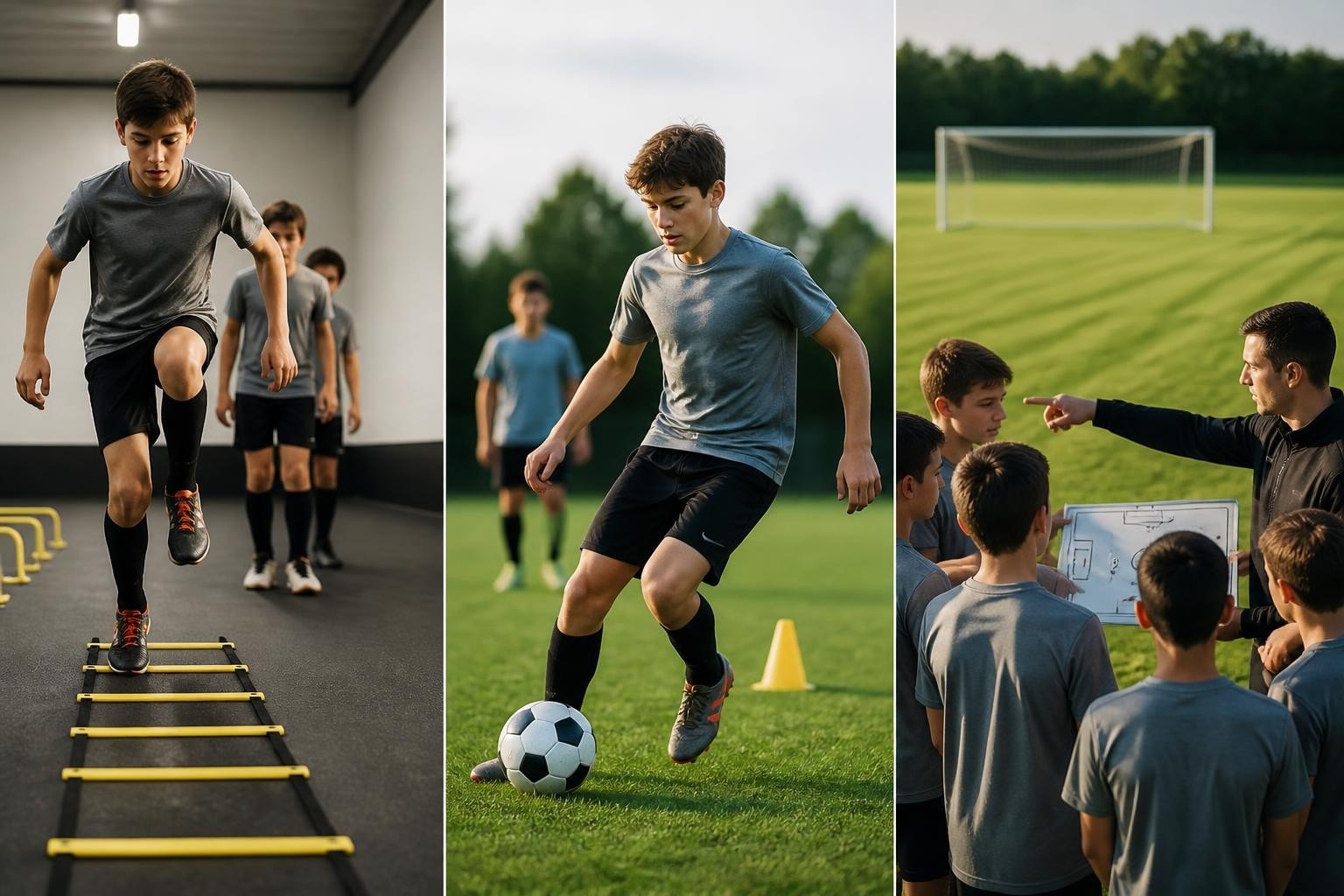
The academy soccer model has revolutionized youth player development across North America, bringing structured, professional-level training to young athletes. This European-influenced approach focuses on comprehensive player growth, moving beyond recreational play to create genuine pathways for skill advancement and competitive opportunities. Parents and players alike are discovering that the academy soccer framework offers something traditional club programs often miss: a holistic development philosophy that prepares athletes for the next level while building character and discipline.
Understanding the Academy Soccer Philosophy
The academy soccer structure represents a fundamental shift in how young players learn the game. Rather than simply organizing teams for weekend matches, this model emphasizes long-term player development through deliberate, progressive training methodologies.
Core principles that define the academy soccer approach include:
- Technical skill development through repetitive, focused drills
- Tactical awareness building from age-appropriate game situations
- Physical conditioning tailored to developmental stages
- Psychological resilience and mental game training
- Consistent coaching philosophy across all age groups
The academy soccer model has gained traction because it addresses a critical gap in youth sports. Many traditional programs prioritize winning over development, placing young players in competitive situations before they've mastered fundamental skills. Academy programs flip this script, ensuring players build a solid technical foundation before advancing to higher-pressure scenarios.

The European Influence on North American Training
European soccer academies have set the global standard for player development for decades. Downtown United Soccer Club’s Academy program demonstrates how North American organizations are adapting these proven methodologies to local contexts. The key difference lies in the training-to-games ratio, with academy programs dedicating significantly more time to skill development than traditional recreational leagues.
Research into advanced player-centric training methodologies shows that structured development programs produce measurable improvements in technical proficiency and tactical awareness. These findings validate what academy coaches have observed: consistent, professional-level instruction accelerates player growth in ways that game-focused programs cannot replicate.
Technical Development in the Academy Soccer Framework
Technical skill forms the foundation of the academy soccer pyramid. Young players must master ball control, passing accuracy, receiving techniques, and finishing before they can effectively apply tactical concepts during matches.
| Technical Skill | Age Focus | Training Method | Expected Outcome |
|---|---|---|---|
| Ball Mastery | U6-U10 | Individual touches, small-sided games | Comfort with ball at feet |
| Passing Precision | U9-U13 | Partner drills, passing patterns | Accurate distribution under pressure |
| First Touch | U10-U14 | Receiving exercises, directional control | Controlled reception from all angles |
| Finishing | U12+ | Shooting drills, 1v1 scenarios | Composure in scoring positions |
The academy soccer model emphasizes high-repetition training in controlled environments. This contrasts sharply with traditional programs where players might only touch the ball a few dozen times during practice. Academy sessions ensure hundreds of quality touches per training session, accelerating skill acquisition dramatically.
Progressive Skill Building
Technical training in the academy soccer system follows a carefully sequenced progression. Younger players begin with fundamental movements, gradually advancing to more complex techniques as their coordination and understanding develop. Valeo Futbol Club’s Junior Academy Program exemplifies this staged approach, ensuring players master each technical level before progressing.
The integration of technology into technical training has opened new possibilities for the academy soccer environment. Video analysis frameworks for action recognition allow coaches to provide detailed feedback on technical execution, helping players understand precisely how to refine their movements.
Tactical Intelligence and Game Understanding
While technical skills provide the tools, tactical awareness determines how effectively players use those tools during competition. The academy soccer approach treats tactical development as equally important as technical training.
Key tactical concepts introduced at different age levels:
- U8-U10: Spatial awareness, basic positioning, support concepts
- U11-U13: Shape maintenance, transition moments, pressing triggers
- U14-U16: System understanding, positional responsibilities, pattern recognition
- U17-U19: Advanced tactics, opponent analysis, game management
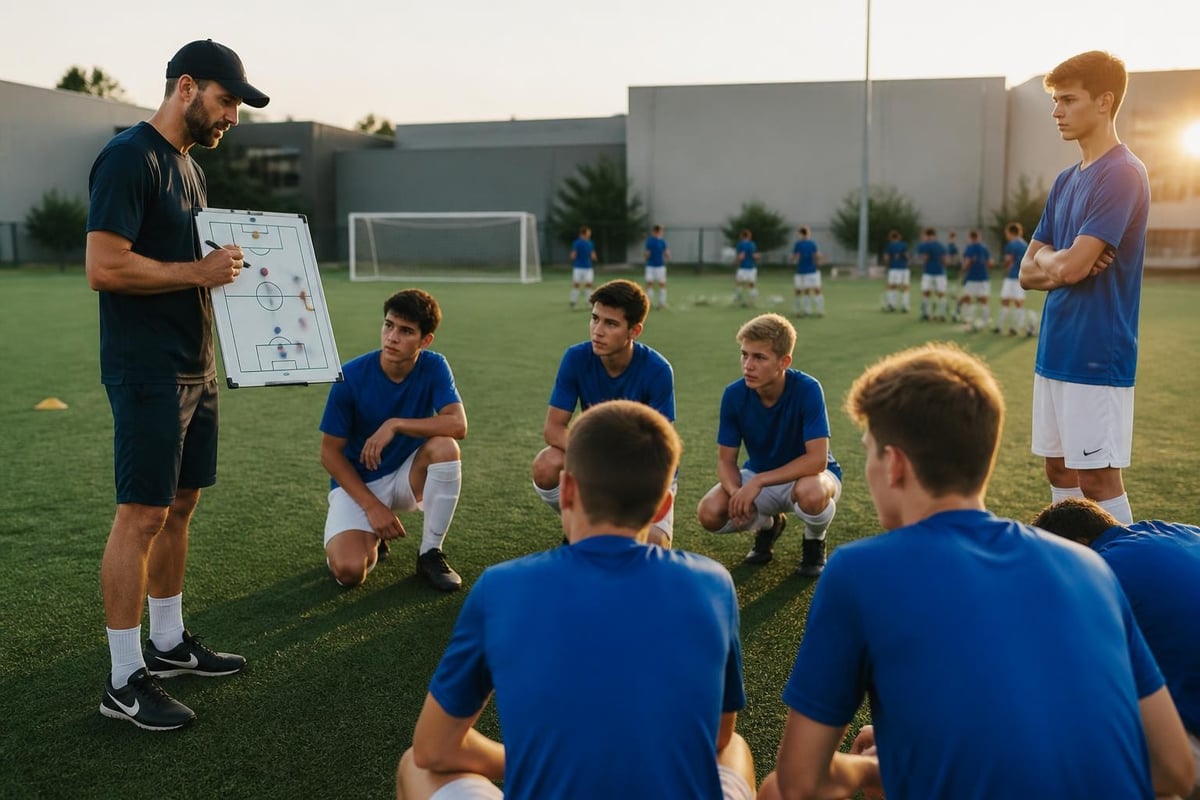
Tactical training in the academy soccer model moves beyond chalkboard sessions. Coaches create game-realistic scenarios where players must make decisions under pressure, gradually increasing complexity as understanding deepens. This experiential learning approach helps young athletes develop soccer intelligence that translates directly to competitive matches.
Small-Sided Games as Tactical Laboratories
The academy soccer structure relies heavily on small-sided games to develop tactical awareness. These modified formats provide more touches, more decisions, and more opportunities to apply tactical concepts than full-sided matches. Understanding small-sided game benefits reveals how these training tools accelerate learning in ways traditional scrimmages cannot match.
Research demonstrates that players in small-sided environments make significantly more tactical decisions per minute than in 11v11 situations. This increased decision-making frequency builds pattern recognition faster, helping players anticipate game situations before they unfold.
Physical Development Within the Academy Soccer System
Physical conditioning in the academy soccer framework differs fundamentally from generic fitness training. Programs must account for growth stages, biological maturation rates, and sport-specific demands while avoiding the overtraining that plagues many youth sports.
Age-Appropriate Conditioning
The academy soccer model tailors physical development to each age group's needs and capabilities. Younger players focus on coordination, agility, and movement literacy rather than strength or endurance. As athletes mature, conditioning becomes more specialized and intensive.
| Age Group | Physical Focus | Training Methods | Weekly Volume |
|---|---|---|---|
| U8-U10 | Movement skills, coordination | Fun-based activities, games | 2-3 sessions |
| U11-U13 | Speed, agility, ball-oriented fitness | Dynamic drills, position-specific work | 3-4 sessions |
| U14-U16 | Strength foundation, endurance | Progressive resistance, interval training | 4-5 sessions |
| U17-U19 | Power, peak performance | Advanced conditioning, periodization | 5-6 sessions |
City SC South Bay’s Academy Program demonstrates how comprehensive physical development integrates seamlessly with technical and tactical training. Rather than separating fitness work from soccer activities, the academy soccer approach embeds conditioning within ball-oriented drills whenever possible.
The emergence of agile skills training methodologies shows how even cutting-edge robotics research influences soccer training concepts. These insights inform how academy programs design movement patterns that enhance both athleticism and soccer-specific coordination.
Psychological Growth and Mental Resilience
The academy soccer model recognizes that mental development often determines which technically skilled players ultimately succeed at higher levels. Building psychological resilience, emotional regulation, and performance mindset receives equal attention alongside physical training.
Mental skills developed through academy soccer programs:
- Confidence through mastery and progressive challenge
- Composure under competitive pressure
- Growth mindset and response to setbacks
- Communication and leadership capabilities
- Goal-setting and self-motivation strategies
Coaches in the academy soccer environment create deliberately challenging situations that push players outside comfort zones while providing support and guidance. This controlled stress exposure builds mental toughness that serves athletes in soccer and beyond.
Creating a Positive Learning Environment
The psychological component of the academy soccer framework depends heavily on coaching approach and program culture. Programs built around comprehensive development prioritize learning over short-term results, allowing players to take risks and learn from mistakes without fear of punishment.
For parents seeking Soccer High Performance Training environments, the psychological safety created within academy structures proves just as important as technical instruction. Players who feel supported make bolder decisions, experiment with new techniques, and ultimately develop faster than those in judgment-focused environments.
Pathway Development and Long-Term Planning
The academy soccer structure creates clear developmental pathways that guide players from foundational training through competitive excellence. This long-term planning ensures consistency in instruction while acknowledging that player development occurs at different rates.
Multi-Year Development Timelines
Academy programs map skill progression across multiple years rather than single seasons. This perspective allows coaches to focus on appropriate development milestones rather than forcing premature advancement. Boston Bolts FC’s Club Programs illustrate how comprehensive pathways maintain player engagement while ensuring steady progression.
Typical academy soccer pathway structure:
- Foundation Phase (U6-U9): Movement literacy, ball familiarity, love of game
- Development Phase (U10-U13): Technical mastery, tactical introduction, physical literacy
- Competitive Phase (U14-U16): Advanced tactics, position specialization, mental skills
- Excellence Phase (U17-U19): High performance, college preparation, advanced systems
This structured progression ensures that players at each stage receive age-appropriate training that builds upon previous learning. The academy soccer model rejects the one-size-fits-all approach, recognizing that effective development requires customization to individual and group needs.
Coaching Quality and Consistency
The academy soccer framework depends entirely on coaching expertise and consistency. Unlike recreational programs where volunteer parents often lead teams, academy structures require professionally trained, licensed coaches who understand player development principles.
Licensed Coaching Standards
Professional coaching certifications ensure instructors possess both soccer knowledge and pedagogical skills. Academy programs typically require coaches to hold recognized licenses from governing bodies, ensuring baseline competency across all age groups. These credentials represent hundreds of hours of training in technical instruction, tactical concepts, player psychology, and age-appropriate teaching methods.
The consistency created by professional coaching staffs benefits players tremendously. When every coach in an academy soccer program teaches the same technical fundamentals and tactical concepts using similar language and methodology, players develop faster and more completely. This alignment eliminates the confusion that occurs when players receive conflicting instruction from different coaches.
Measuring Progress and Individual Development
The academy soccer model implements systematic evaluation processes that track individual player growth across all development areas. These assessments provide objective feedback to players and parents while helping coaches adjust training approaches.
Common evaluation metrics in academy soccer programs:
- Technical skill assessments through standardized testing
- Tactical understanding evaluated in game scenarios
- Physical benchmarks appropriate to age and maturation
- Psychological indicators including confidence and coachability
- Game performance metrics and statistical tracking
Regular evaluation allows academy programs to identify specific areas where individual players need additional focus. This data-driven approach ensures training time addresses actual development needs rather than assumed weaknesses.
Individualized Development Plans
Based on assessment results, the academy soccer framework supports creating personalized development plans for each player. These roadmaps outline specific skills to develop, tactical concepts to master, and physical goals to achieve over defined timeframes. The individualized approach acknowledges that players progress at different rates and possess unique strengths and improvement areas.
The Role of Competition in Academy Development
While the academy soccer model prioritizes training over competition, strategic game exposure plays an essential role in development. Matches provide the testing ground where players apply learned skills under pressure, revealing both progress and remaining development needs.
Competition Philosophy
Academy programs approach competition differently than traditional clubs. Rather than chasing trophies and league standings at young ages, the academy soccer framework views matches as learning opportunities. This perspective allows players to experiment with techniques, take tactical risks, and learn from mistakes without excessive pressure.
The competition structure within academy programs typically includes:
- League play for regular game exposure and tactical application
- Showcase tournaments for evaluation against diverse competition
- Friendly matches for experimental tactics and player rotation
- Internal scrimmages for specific tactical training situations
This balanced competition schedule ensures players gain necessary game experience while maintaining the training-focused approach that drives long-term development. The academy soccer model recognizes that young players develop primarily through quality training, not excessive competition.
Parent Involvement and Communication
The academy soccer framework establishes clear boundaries around parent involvement while maintaining open communication channels. This balance proves critical for player development, as parental support enhances progress while over-involvement can hinder growth.
Effective parent engagement in academy programs includes:
- Regular communication about player progress and development focus
- Education on long-term development principles and age-appropriate expectations
- Attendance at designated observation sessions
- Positive sideline behavior during matches
- Support for home practice and skill reinforcement
Academy programs invest significant effort in parent education, helping families understand that player development follows a non-linear path with plateaus and breakthrough periods. This understanding reduces pressure on young athletes and allows them to develop at their natural pace.
Financial Investment and Value Proposition
The academy soccer model typically requires greater financial commitment than recreational programs, reflecting the professional coaching, enhanced training frequency, and superior facilities involved. Parents considering academy options naturally evaluate whether this investment delivers proportional value.
| Program Type | Annual Cost Range | Sessions per Week | Coaching Level | Development Focus |
|---|---|---|---|---|
| Recreational | $200-$600 | 1-2 | Volunteer | Fun, participation |
| Competitive Club | $1,000-$2,500 | 2-3 | Mixed | Competition results |
| Academy Soccer | $2,000-$5,000+ | 3-5+ | Professional | Long-term development |
The value in academy soccer extends beyond soccer skills. Players develop discipline, resilience, time management, and goal-setting abilities that transfer to academics and future careers. Many families view the academy soccer investment as character development and life skills training that happens to occur through soccer.
The academy soccer model represents the future of youth player development, bringing professional training methodologies to young athletes committed to reaching their potential. By focusing equally on technical skills, tactical understanding, physical conditioning, and psychological growth, this comprehensive approach creates well-rounded players prepared for competitive success. Strive Soccer Academy delivers exactly this type of holistic development in Surrey, BC, combining European-style training philosophy with fully licensed Canadian coaching expertise to help young athletes build skills, character, and genuine opportunities for advancement.