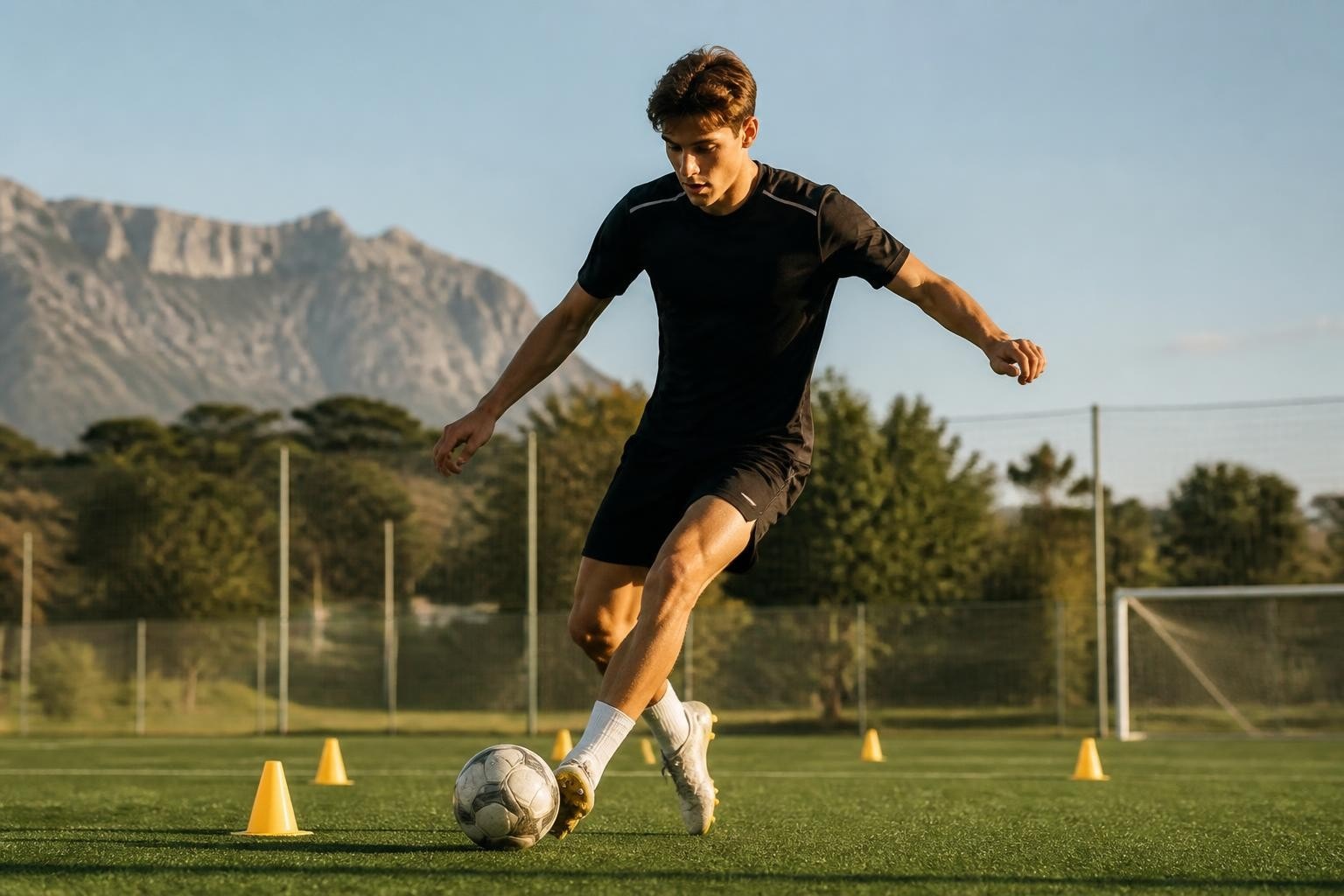
The landscape of youth soccer development has evolved significantly over the past decade, with more families recognizing that group training alone may not fully address their child's unique needs and potential. Soccer tutors have emerged as valuable resources for players seeking specialized attention, technical refinement, and accelerated skill development. These dedicated coaching professionals provide customized instruction that complements team training, offering focused sessions designed to address specific weaknesses, enhance strengths, and build the confidence young athletes need to excel on the pitch. Whether your child is struggling with first touch, needs tactical guidance, or wants to elevate their game to the next level, understanding the role and benefits of soccer tutors can help you make informed decisions about their athletic journey.
Understanding the Role of Soccer Tutors in Player Development
Soccer tutors serve as specialized instructors who work one-on-one or in small groups with players outside of traditional team environments. Unlike team coaches who must balance the needs of 15 to 20 players simultaneously, soccer tutors dedicate their full attention to individual athletes, creating player-centered learning environments that accelerate development.
The primary advantage of working with soccer tutors lies in their ability to customize every aspect of training to match a player's current skill level, learning style, and specific goals. During team practices, coaches often focus on tactical formations and group coordination, leaving limited time for individual technical work. Soccer tutors fill this gap by providing targeted instruction on fundamentals like ball control, passing accuracy, shooting technique, and decision-making under pressure.
The Four Pillars of Individualized Soccer Instruction
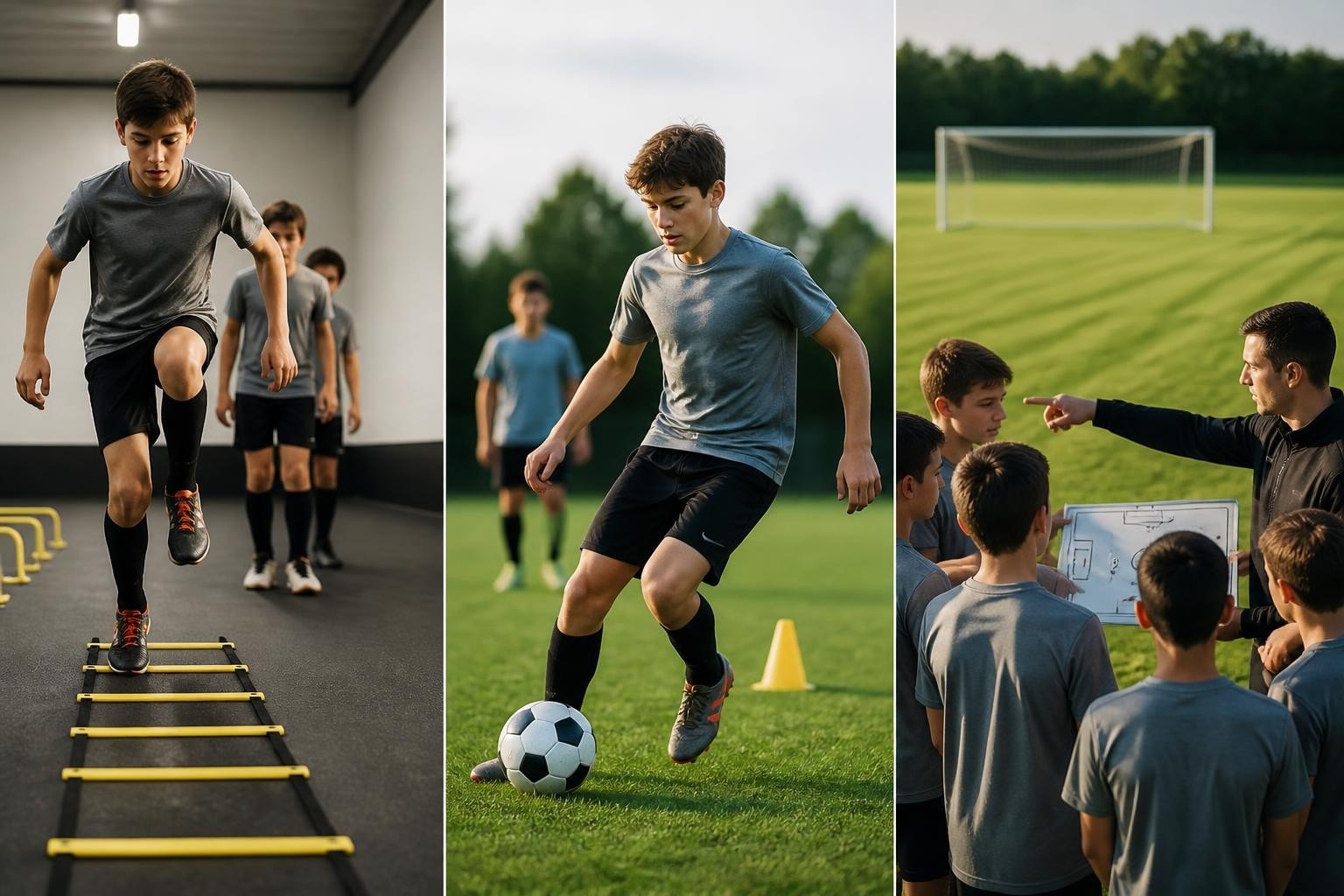
Professional soccer tutors structure their training around comprehensive development frameworks that address multiple aspects of the game:
- Technical proficiency: Mastering ball manipulation, first touch, passing, shooting, and dribbling through repetitive, focused drills
- Tactical awareness: Understanding positioning, spatial recognition, game reading, and strategic decision-making
- Physical conditioning: Building speed, agility, endurance, and strength specific to soccer demands
- Psychological resilience: Developing confidence, mental toughness, concentration, and emotional control during competition
This holistic approach mirrors European training philosophies that emphasize balanced player development rather than focusing solely on physical attributes or tactical systems. By addressing all four areas, soccer tutors help young athletes become complete players capable of adapting to various game situations and competitive levels.
Identifying When Your Child Needs a Soccer Tutor
Parents often wonder whether their child would benefit from working with soccer tutors or if team training provides sufficient development opportunities. Several indicators suggest that individualized instruction could significantly impact your player's growth trajectory.
Performance plateaus represent one of the clearest signs that additional support may be beneficial. When a player seems stuck at the same skill level despite consistent team practice attendance, soccer tutors can diagnose underlying technical deficiencies and create targeted improvement plans. These professionals possess the expertise to identify subtle mechanical issues in shooting form, passing technique, or ball control that might go unnoticed in group settings.
Common Scenarios Where Soccer Tutors Add Value
| Situation | How Soccer Tutors Help | Expected Outcomes |
|---|---|---|
| Transitioning competitive levels | Prepare players for higher-level demands through intensive skill work | Faster adaptation, increased confidence, better performance |
| Position-specific development | Focus on skills unique to goalkeeper, defender, midfielder, or forward roles | Enhanced tactical understanding, improved positional play |
| Pre-season preparation | Build technical foundation and fitness before team training begins | Stronger start to season, roster advantage |
| Confidence rebuilding | Provide supportive environment to overcome mistakes and build self-belief | Reduced anxiety, willingness to take risks, improved mindset |
Players who express genuine interest in accelerating their development often thrive with soccer tutors. When young athletes demonstrate intrinsic motivation to improve, individualized attention amplifies their progress by providing immediate feedback, customized challenges, and accountability that keeps them engaged and pushing forward.
What to Look for When Selecting Soccer Tutors
The quality of instruction varies significantly among soccer tutors, making careful selection essential for ensuring your investment translates into meaningful development. Choosing the right private soccer trainer requires evaluating several critical factors beyond basic playing experience.
Proper coaching credentials should form the foundation of your evaluation. In Canada, reputable soccer tutors typically hold certifications through Canada Soccer, ranging from Community Coach licenses for grassroots instruction to National B and A licenses for advanced technical and tactical training. These certifications ensure tutors understand age-appropriate development principles, effective teaching methodologies, and safety protocols that protect young athletes.
Beyond credentials, effective soccer tutors demonstrate strong communication skills and the ability to adapt their teaching style to different learners. Some players respond well to verbal instruction and tactical discussions, while others learn best through visual demonstrations or kinesthetic practice. The most successful tutors assess how each player absorbs information and adjust their approach accordingly, ensuring concepts translate from instruction to execution.
Essential Questions to Ask Potential Soccer Tutors
- What coaching licenses and certifications do you currently hold?
- How do you structure typical training sessions for players at my child's age and skill level?
- Can you provide specific examples of how you've helped players overcome challenges similar to what my child faces?
- What methods do you use to track progress and communicate development to parents?
- How do you balance technical skill work with tactical understanding and game application?
Experience working with players at your child's current level matters more than professional playing credentials. A tutor who spent years in professional leagues may lack the patience and pedagogical skills needed for youth development, while a dedicated youth coach with extensive teaching experience can often deliver superior results for young players. Ask about their track record with similar-aged athletes and request references from other families.
The Economics of Private Soccer Instruction
Understanding the financial investment required for working with soccer tutors helps families budget appropriately and evaluate whether individualized training fits their circumstances. Private soccer coaching rates vary considerably based on multiple factors that influence pricing structures.
Geographic location significantly impacts what soccer tutors charge for their services. Major metropolitan areas with higher costs of living typically see rates ranging from $75 to $150 per hour for individual sessions, while smaller markets may offer instruction between $50 and $100 per hour. The tutor's experience level and credentials also influence pricing, with nationally licensed coaches commanding premium rates compared to community-level instructors.
Typical Pricing Structures for Soccer Tutors
Most soccer tutors offer several payment options designed to accommodate different budgets and commitment levels:
- Single sessions: Highest per-hour rate, maximum flexibility, ideal for occasional skill work or trying different tutors
- Package deals: Discounted rate for purchasing multiple sessions upfront, typically 5, 10, or 20 sessions
- Monthly retainers: Fixed monthly fee for regular weekly sessions, often most economical for serious development
- Small group rates: Lower per-player cost when 2-4 athletes train together, balances affordability with individualized attention
For families seeking intensive development opportunities, programs like Soccer High Performance Training provide structured environments where players receive focused instruction alongside peers of similar skill levels. These 90-minute high-intensity sessions combine the benefits of individualized attention with the competitive atmosphere that pushes players to elevate their performance.

When evaluating costs, consider the value proposition beyond hourly rates. A skilled soccer tutor who efficiently addresses technical deficiencies in eight sessions may provide better return on investment than a less experienced instructor requiring twenty sessions to achieve similar results. Quality of instruction, not just quantity of hours, determines developmental outcomes.
Maximizing the Benefits of Working with Soccer Tutors
Simply hiring soccer tutors does not guarantee improved performance. Players and families must actively engage in the development process to extract maximum value from individualized instruction. Successful outcomes require commitment, communication, and collaboration between the tutor, player, and parents.
Setting clear, measurable goals before beginning tutoring sessions creates accountability and provides benchmarks for assessing progress. Rather than vague objectives like "get better at soccer," effective goals specify particular skills or outcomes: "improve first-touch control to successfully receive 8 out of 10 passes under defensive pressure" or "increase shooting accuracy from outside the penalty area to 40%." These concrete targets allow soccer tutors to design focused training progressions and help players recognize their advancement.
Best Practices for Productive Tutor Relationships
Players who approach tutoring sessions with the right mindset develop faster than those who view private instruction as passive consumption. Active participation means asking questions when concepts remain unclear, requesting additional explanation for tactical principles, and maintaining focus throughout training. Soccer tutors can provide expert guidance, but players must take ownership of their development by applying effort and embracing challenges during sessions.
- Come prepared with specific questions or areas you want to address
- Practice assigned homework drills between sessions to reinforce new skills
- Record training sessions (with tutor permission) to review proper technique
- Communicate openly about what teaching methods work best for your learning style
- Apply new skills during team practices and games, even if initially uncomfortable
Parents play an essential supporting role by maintaining realistic expectations and understanding that skill development follows a non-linear path. Some weeks will show dramatic improvement, while others may involve frustrating plateaus or even temporary regression as players integrate new techniques. Trust the process and recognize that structured practice sessions require time to produce lasting changes in muscle memory and decision-making patterns.
Integrating Tutor Training with Team Development
The most effective development programs combine the strengths of both team training and work with soccer tutors, creating complementary learning environments that accelerate growth. Rather than viewing individualized instruction as a replacement for team participation, successful families treat these as synergistic components of a comprehensive development plan.
Team training provides irreplaceable benefits that soccer tutors cannot fully replicate, including tactical coordination with teammates, communication under game pressure, and the competitive atmosphere that simulates match conditions. Players learn positioning, movement patterns, and strategic concepts through repeated exposure to game situations involving multiple players making simultaneous decisions. At Strive Soccer Academy, our group training philosophy emphasizes creating realistic game scenarios where players develop tactical awareness alongside technical skills.
Creating Synergy Between Individual and Team Training
| Training Type | Primary Focus | Unique Benefits | Optimal Frequency |
|---|---|---|---|
| Team Practice | Tactical systems, group coordination, game situations | Teamwork, communication, competitive pressure | 2-3 times weekly |
| Individual Tutoring | Technical refinement, personalized feedback, focused skill work | Customized attention, rapid skill improvement | 1-2 times weekly |
| Game Play | Application, decision-making, competitive experience | Real pressure, strategic thinking, mental growth | 1-2 times weekly |
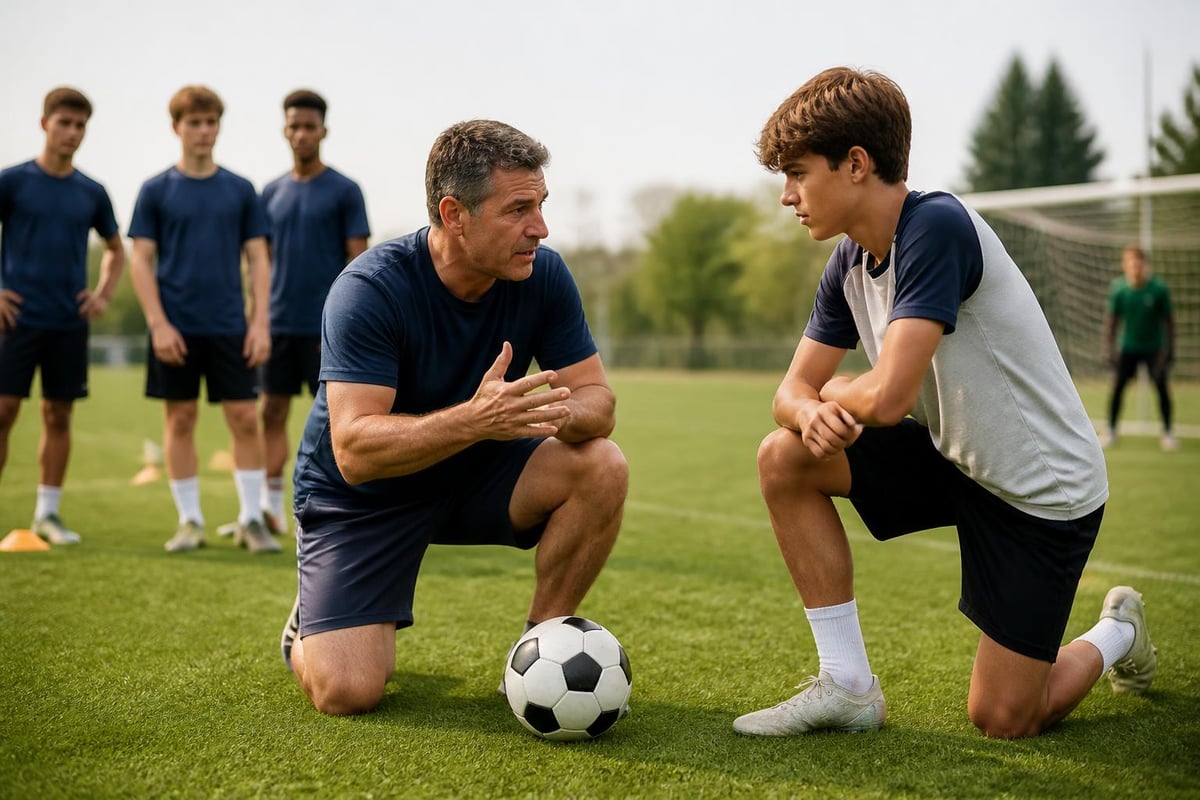
Communication between your child's team coach and soccer tutor can enhance both experiences when handled appropriately. Sharing general development goals helps ensure consistent messaging and prevents conflicting technical instruction that might confuse young players. However, respect boundaries by not expecting team coaches to accommodate private training priorities during group sessions, and avoid soccer tutors who criticize team coaching methods to parents or players.
Structuring Effective Sessions with Soccer Tutors
Professional soccer tutors follow established frameworks when designing training sessions that maximize learning within limited time windows. Understanding these structures helps players prepare mentally and physically for productive sessions while giving parents insight into what quality instruction looks like.
Most effective sessions begin with a dynamic warm-up that prepares the body for physical demands while incorporating ball work that activates muscle memory. Soccer tutors typically spend 10 to 15 minutes on movement patterns, light touches, and activation exercises rather than static stretching, which research shows provides limited benefit before athletic activity.
Typical 60-Minute Individual Training Session Structure
- Dynamic warm-up and ball activation (10 minutes): Movement preparation, light ball touches, mental focus
- Technical skill focus (20 minutes): Isolated work on specific technique with progressive difficulty
- Pressure application (15 minutes): Same skill performed under time constraints or defensive pressure
- Game-realistic scenarios (10 minutes): Skills applied in situations mimicking actual match conditions
- Cool-down and review (5 minutes): Light activity, session recap, homework assignment for next meeting
The progression from isolated technical work to pressure situations to game-realistic scenarios follows established learning principles that promote skill transfer. Soccer tutors who jump directly to complex game situations without building foundational technique often produce players who struggle to execute under match pressure. Conversely, tutors who never progress beyond basic drills fail to prepare players for the chaotic decision-making demands of actual competition.
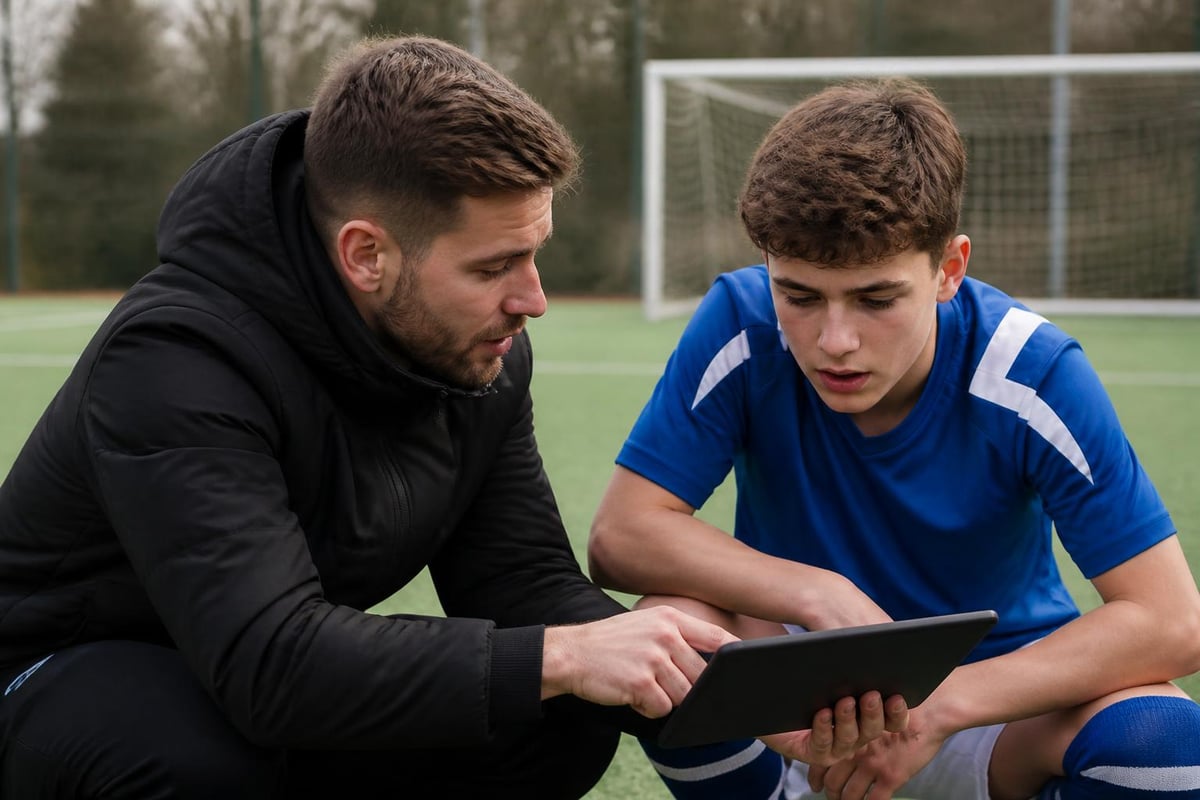
Effective soccer tutors also incorporate video analysis and performance metrics when appropriate for the player's age and development level. Older athletes benefit from seeing their technique on film, comparing their movements to proper form, and identifying specific areas needing adjustment. Younger players often respond better to simpler feedback and demonstration-based learning, though technology can still enhance their understanding when used judiciously.
Long-Term Development Through Consistent Tutor Relationships
While short-term tutoring can address immediate technical deficiencies, sustained relationships with soccer tutors often yield the most significant developmental benefits. Long-term partnerships allow tutors to design progressive training programs that systematically build skills, track advancement over months and years, and adapt instruction as players mature physically and cognitively.
Consistency matters tremendously in motor skill acquisition. The neural pathways that enable automatic execution of complex soccer techniques require thousands of quality repetitions to establish. Soccer tutors who work with players over extended periods ensure proper technique becomes ingrained through correctly executed practice rather than reinforcing flawed movement patterns that later require correction.
Multi-year relationships also enable soccer tutors to understand each player's unique psychology, motivation triggers, and response to different coaching approaches. This familiarity allows tutors to provide increasingly sophisticated guidance as players mature, transitioning from basic technical instruction to advanced tactical concepts and mental game development that prepares athletes for elite competition.
Milestones to Expect in Long-Term Tutor Relationships
- Months 1-3: Technical corrections, fundamental skill improvement, initial confidence building
- Months 4-6: Integration of skills under pressure, increased consistency, tactical awareness development
- Months 7-12: Game application mastery, position-specific refinement, mental skill enhancement
- Year 2+: Advanced tactical understanding, leadership development, competitive edge refinement
Parents should view work with soccer tutors as a marathon rather than a sprint, understanding that meaningful development requires patience and sustained commitment. While some improvements appear quickly, transforming an average player into an exceptional one demands years of dedicated practice under expert guidance. The families who achieve the best results maintain realistic timelines and celebrate incremental progress rather than expecting overnight transformations.
At Strive Soccer Academy, we understand what parents want most for their young athletes-a program that develops skills, builds character, and creates real opportunities. Our European-style training philosophy addresses technical, tactical, physical, and psychological development through comprehensive programs designed for long-term player growth. Whether through our academy sessions or specialized training opportunities, we're committed to helping young players reach their full potential both on and off the field.
Soccer tutors provide invaluable opportunities for young players to receive personalized instruction that accelerates skill development and builds confidence through focused attention and customized training progressions. By selecting qualified tutors, setting clear goals, and integrating individualized instruction with team training, families can maximize their investment and help young athletes achieve their soccer aspirations. Strive Soccer Academy brings together fully licensed coaches and a proven development philosophy that combines the best elements of personalized instruction with comprehensive team training, creating an environment where young players develop technical excellence, tactical understanding, and the character traits that serve them throughout life.