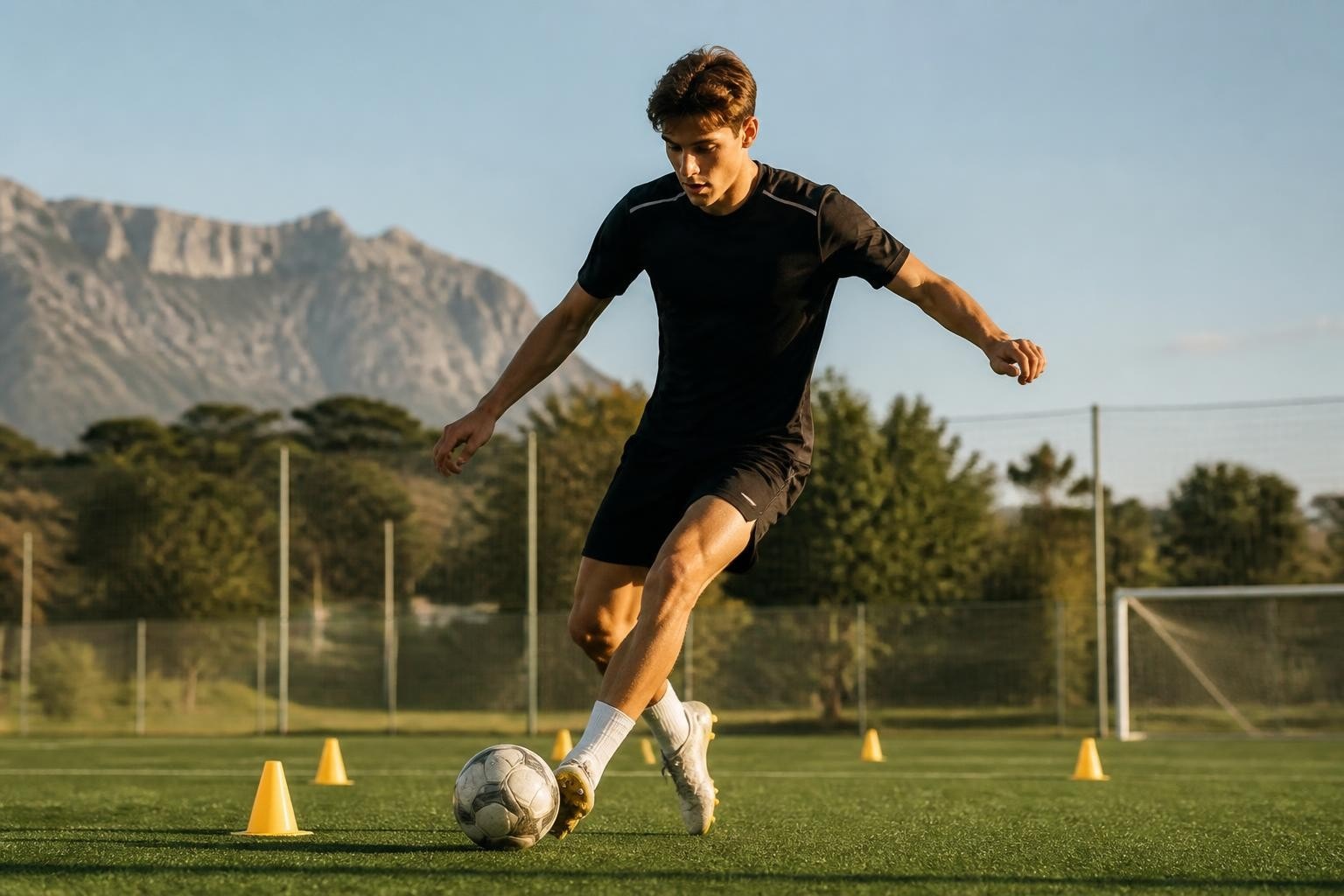
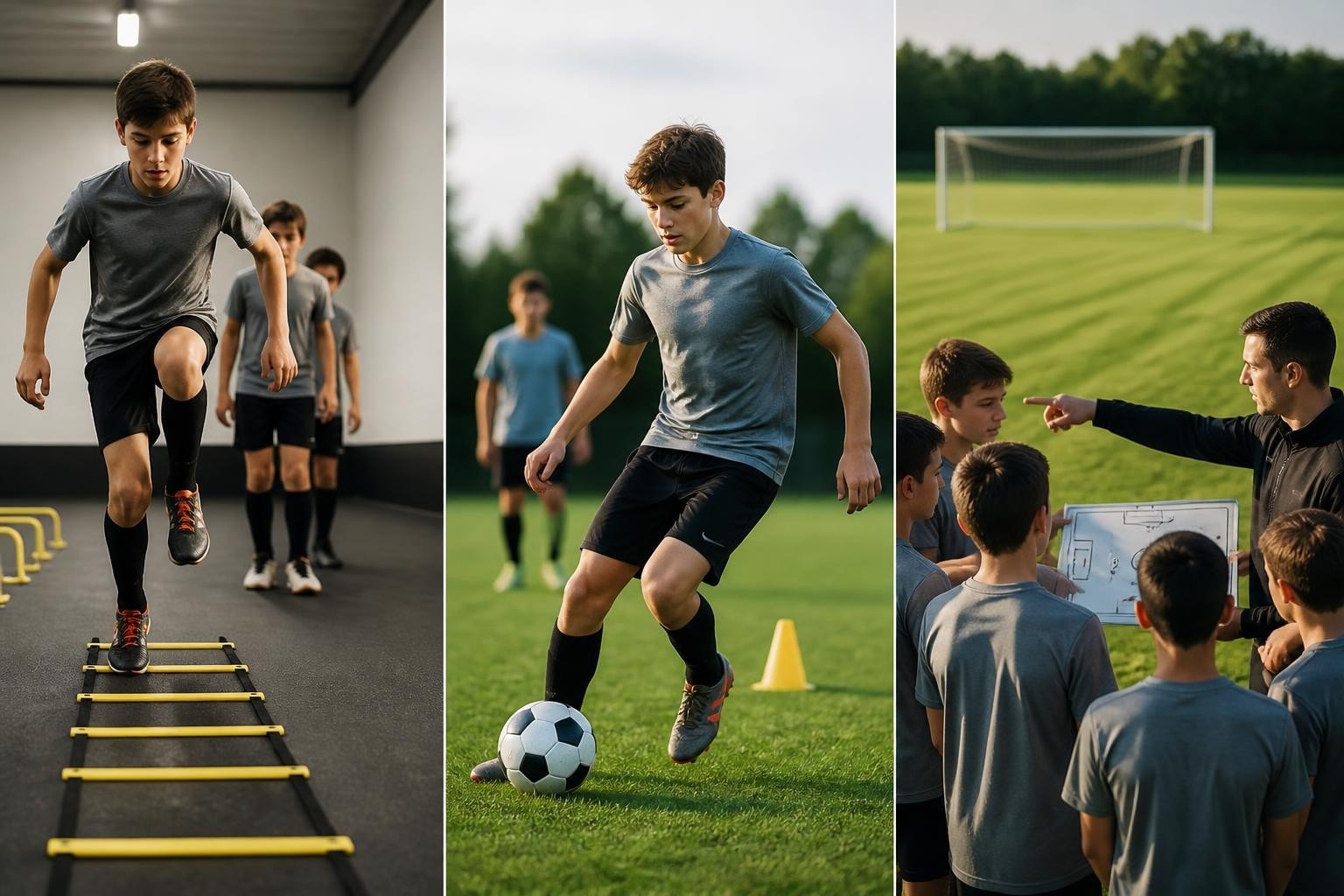
The modern approach to youth soccer development has evolved far beyond traditional laps and static drills. Today's most effective training methodologies recognize that young athletes learn best when they're engaged, challenged, and having fun. A well-designed soccer training game combines skill development with competitive elements, transforming repetitive exercises into dynamic learning experiences that keep players motivated while building the technical, tactical, physical, and psychological foundations they need to excel.
Why Soccer Training Games Outperform Traditional Drills
Traditional coaching methods often isolate skills from game contexts, leaving players unprepared for real match situations. When coaches structure practice around a soccer training game format, they create environments where decision-making happens under pressure, just like in actual competition.
Game-based training delivers multiple benefits simultaneously:
- Players develop technical skills while reading defensive pressure
- Tactical awareness emerges naturally through repeated scenarios
- Physical conditioning happens organically within play
- Psychological resilience builds as players navigate wins and losses
Research shows that young athletes retain skills more effectively when learning occurs in contextual environments. A comprehensive guide to soccer drills demonstrates how age-appropriate exercises should progress from simple to complex, always maintaining game-like elements that translate directly to match performance.

The Science Behind Game-Based Learning
The European coaching philosophy emphasizes problem-solving over rote repetition. When a soccer training game presents challenges that require players to think, adapt, and execute under pressure, neural pathways strengthen in ways that static drills cannot replicate.
Young players develop pattern recognition by encountering similar situations repeatedly within varied contexts. They learn when to dribble versus pass, how to create space, and when to apply defensive pressure not through memorization but through experience.
| Traditional Drill | Soccer Training Game | Development Impact |
|---|---|---|
| Cone weaving pattern | 1v1 with directional goals | Contextual dribbling under pressure |
| Passing against wall | Small-sided possession game | Decision-making and spatial awareness |
| Shooting from fixed spot | Dynamic finishing with defenders | Real-world finishing under duress |
Designing Effective Soccer Training Games
Creating a soccer training game that truly develops players requires careful attention to structure, rules, and progression. The best games challenge athletes at their current level while providing clear pathways for advancement.
Essential Components
Every effective soccer training game includes specific elements that maximize learning and engagement. The foundation starts with clear objectives that align with your session's technical or tactical focus.
Core design principles include:
- Appropriate space dimensions that create realistic density
- Player ratios that match game situations (2v2, 3v3, 4v4)
- Scoring variations that reinforce specific skills
- Time constraints that encourage quick decision-making
- Progression pathways that increase complexity
At Strive Soccer Academy, our coaches structure sessions around progressive game scenarios that build from technical mastery through tactical application. This European-style approach ensures players don't just learn skills but understand when and how to apply them.
Age-Appropriate Modifications
A soccer training game for six-year-olds looks vastly different from one designed for teenagers. Young players need simpler rules, smaller spaces, and frequent touches on the ball. As athletes mature, games should incorporate more complex decision-making and tactical elements.
For players aged 6-8:
- Maximum 4v4 format with small goals
- Simplified rules focusing on one or two concepts
- High repetition with frequent rotation
- Emphasis on exploration and ball mastery
For players aged 9-12:
- Increased field dimensions requiring more movement
- Introduction of positional responsibilities
- Multiple objectives within single games
- Greater emphasis on combination play
For players aged 13+:
- Match-realistic scenarios and field sizes
- Complex tactical problems requiring team solutions
- Physical demands approaching game intensity
- Integration of all four development pillars
Popular Soccer Training Game Formats
Successful coaches develop a library of versatile games that can be modified to emphasize different skills. These proven formats provide frameworks that adapt to various training objectives.
Possession-Based Games
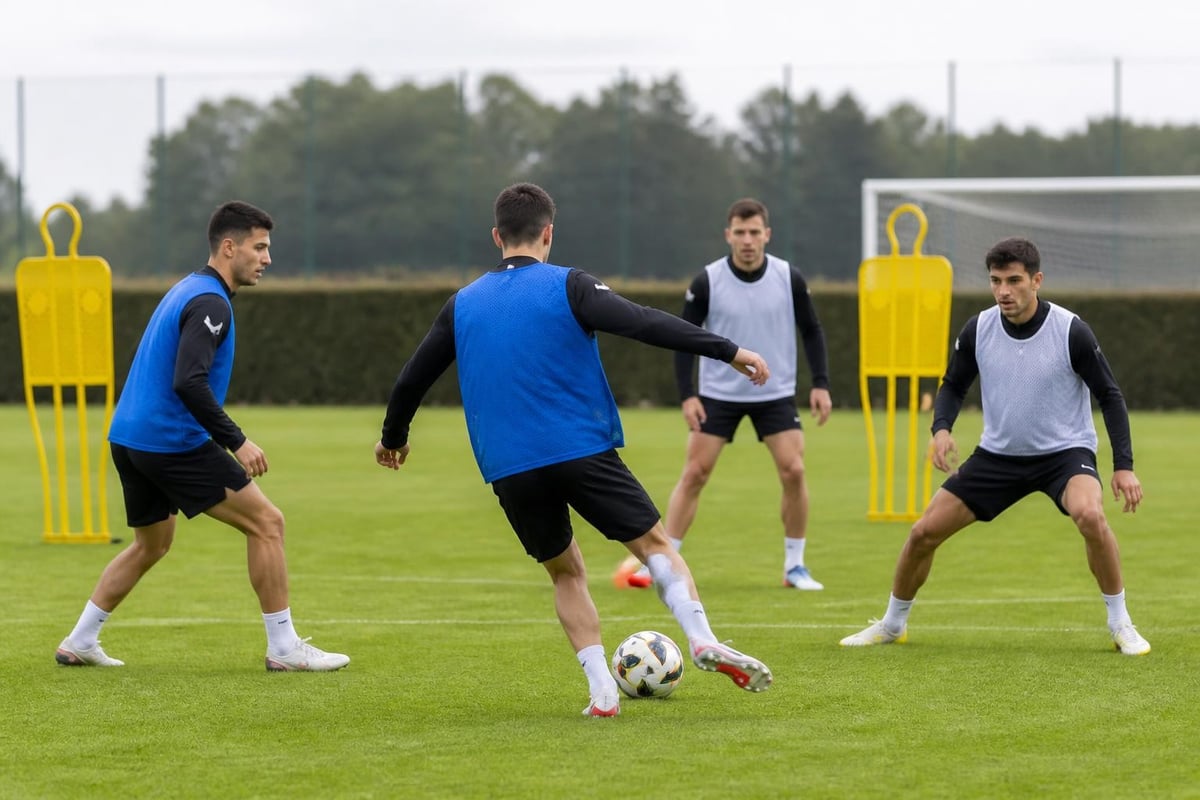
Rondo circles and keep-away variations form the backbone of technical development. Players in the middle pressure while those on the outside work on first-touch quality, weight of pass, and body positioning.
A basic soccer training game might start with 5v2 in a 15-yard square. As players improve, coaches can shrink the space, add neutral players, or limit touches to increase difficulty. The Nike football practice drills collection includes several possession variations that professional academies use worldwide.
Directional Attacking Games
These scenarios add goals or end zones, forcing players to balance possession with penetration. A simple 4v4 with small goals develops transitional play, where teams must quickly shift from defense to attack.
Key variations include:
- Multi-goal games requiring constant scanning
- End-zone games emphasizing breakthrough passing
- Counterattack scenarios with numbers-up situations
- Pressing triggers that reward defensive organization
Conditional Scoring Games
Perhaps the most versatile soccer training game format, conditional scoring allows coaches to reward specific behaviors. Score double points for one-touch finishes. Award bonus goals for successful take-ons. Require five passes before shooting.
| Condition | Skill Emphasis | Age Suitability |
|---|---|---|
| One-touch finishes | Clinical finishing | 10+ years |
| Must use weak foot | Bilateral development | All ages |
| All players touch ball | Team involvement | 8+ years |
| Score from specific zones | Tactical positioning | 12+ years |
Implementing Games in Training Sessions
The most effective practice sessions blend focused technical work with game-based application. Understanding how to sequence activities ensures players develop skills in isolation before applying them under pressure.
Session Structure Framework
Warm-up Phase (10-15 minutes):
Dynamic movement combined with ball mastery in a low-pressure soccer training game format. Players might engage in tag variations with dribbling or unopposed possession games that emphasize first touch.
Technical Development (15-20 minutes):
Focused work on specific skills with gradually increasing resistance. This might include partner passing progressions or individual dribbling circuits before transitioning to competitive elements.
Game Application (20-25 minutes):
Small-sided soccer training game scenarios where players apply newly practiced skills in realistic contexts. Coaches provide minimal stoppages, allowing the game to teach while offering brief coaching points during natural breaks.
Full Scrimmage (15-20 minutes):
Larger-sided play where skills developed earlier emerge organically. Coaches observe whether techniques transfer to more complex environments.
For those seeking soccer skills training that follows this progressive methodology, European-influenced academies structure every session around these principles, ensuring skills develop systematically.
Coaching Within the Game
The art of game-based coaching lies in knowing when to stop play and when to let learning happen organically. Over-coaching disrupts flow and reduces the repetitions that build automaticity.
Effective coaching during a soccer training game involves:
- Strategic questioning rather than direct instruction
- Freeze moments that highlight tactical decisions
- Guided discovery where players identify solutions
- Specific praise that reinforces desired behaviors
- Immediate restart that maintains engagement
Young players learn more from experiencing consequences within the game than from lectures during stoppages. When a team loses possession because they forced a pass into pressure, that immediate feedback creates stronger learning than any explanation could provide.
Measuring Progress Through Game Performance
Traditional assessment methods often focus on isolated technical execution. While individual skill mastery matters, true development shows in how players apply those skills within game contexts.
Observable Indicators
A well-designed soccer training game reveals player development across multiple dimensions. Coaches should observe decision-making speed, technical execution under pressure, and tactical understanding simultaneously.
Technical progression markers:
- First-touch quality when receiving under pressure
- Pass accuracy in varied directions and distances
- Dribbling success rate against active defenders
- Finishing composure with limited time and space
Tactical growth indicators:
- Recognition of numerical advantages
- Positioning to create passing angles
- Defensive pressure application timing
- Transition speed from attack to defense
The training exercises designed for various age groups provide excellent benchmarks for evaluating whether players demonstrate age-appropriate decision-making within competitive scenarios.
Tracking Individual Development
While team success in a soccer training game provides valuable feedback, individual growth requires specific observation. Coaches might track how often a player successfully completes take-ons, recognizes through-ball opportunities, or wins defensive duels.
| Development Area | Measurement Method | Frequency |
|---|---|---|
| Technical execution | Success rate in pressure situations | Weekly |
| Tactical decisions | Quality of choices in game moments | Per session |
| Physical capacity | Work rate and recovery speed | Bi-weekly |
| Psychological growth | Response to adversity and mistakes | Ongoing |
Advanced Game Variations for Skill Development
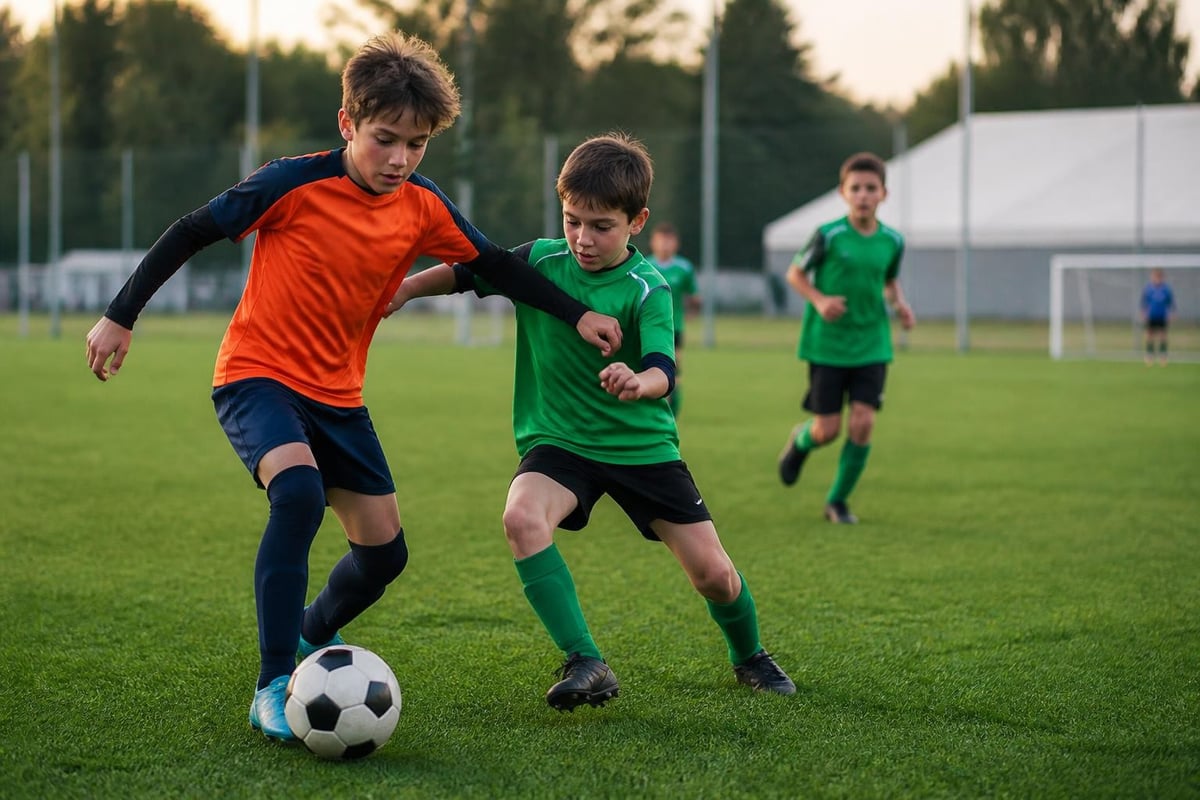
As players master fundamental formats, coaches can introduce sophisticated variations that challenge even experienced athletes. These advanced soccer training game designs prepare players for the complexity they'll face in competitive matches.
Overload and Underload Scenarios
Creating numerical mismatches forces players to solve difficult problems. A 5v3 possession game teaches the team with more players how to exploit space while the outnumbered team learns compact defending.
Reverse the numbers to 3v5, and suddenly the smaller group must be clinically efficient with possession while the larger group faces the challenge of organized pressure despite numerical superiority.
Multi-Directional Games
Standard soccer training game formats use two goals or end zones. Advanced variations might incorporate four small goals (one on each side) or multiple scoring zones that require constant awareness and rapid decision-making.
Players must scan continuously, recognize which goal offers the best opportunity, and transition their attack accordingly. This mirrors the pattern recognition required in full matches where attacking options constantly shift.
Position-Specific Games
While general game formats benefit all players, position-specific soccer training game scenarios accelerate targeted development. Strikers might play games emphasizing finishing from various angles. Defenders could engage in scenarios focused on covering space and winning duels.
Examples include:
- Box-to-box games for midfielders emphasizing transitions
- Wing play games focusing on crosses and overlapping runs
- Central defender games emphasizing buildup play under pressure
- Goalkeeper distribution games rewarding accurate passing
The vast collection of age-appropriate drills available to modern coaches includes hundreds of position-specific variations that can be adapted into competitive game formats.
Psychological Development Through Game Competition
Beyond technical and tactical growth, competitive soccer training game formats build mental resilience that separates good players from great ones. Young athletes learn to handle pressure, overcome mistakes, and maintain focus through adversity.
Building Competitive Mentality
When properly structured, game-based training teaches players to embrace challenges rather than fear them. A soccer training game creates stakes that matter to participants, generating genuine emotional investment without the overwhelming pressure of formal matches.
Key psychological benefits:
- Learning to perform under pressure in low-consequence environments
- Developing resilience after mistakes or losses
- Building confidence through incremental success
- Understanding team dynamics and communication
Coaches should celebrate both success and quality effort, helping players understand that development comes through challenging themselves rather than avoiding difficult situations.
Managing Game Intensity
While competition drives engagement, excessive pressure counterproductively inhibits learning. The best soccer training game environments balance challenge with achievability, keeping players in what sports psychologists call the optimal learning zone.
Coaches adjust difficulty through space, numbers, rules, and time constraints. If players appear frustrated or disengaged, modifications should increase success rates. If the game feels too easy, additional constraints restore appropriate challenge levels.
Physical Development Within Game Contexts
Traditional conditioning often separates fitness work from technical training. Modern methodologies recognize that a well-designed soccer training game develops both simultaneously, making practice time more efficient and relevant.
Metabolic Demands
Small-sided games naturally create high-intensity interval training. Players sprint to pressure the ball, recover during possession phases, and repeat these efforts dozens of times per session. This mirrors match demands far better than isolated running.
Physiological adaptations include:
- Improved aerobic capacity from repeated efforts
- Enhanced anaerobic power through explosive movements
- Greater recovery efficiency between high-intensity bouts
- Sport-specific strength from directional changes and contacts
The animated training drills for all levels demonstrate how game-based formats naturally incorporate the physical demands players need without separating fitness from skill development.
Movement Pattern Development
Beyond energy system development, soccer training game formats ingrain the specific movement patterns required in matches. Players learn to accelerate, decelerate, change direction, and execute skills while fatigued, precisely as they must during competition.
This functional fitness translates directly to match performance, unlike generic conditioning that develops fitness divorced from soccer-specific contexts. When young athletes train their cardiovascular systems while simultaneously improving ball skills, every minute delivers compounded benefits.
Creating Progressive Challenges
The best training environments consistently push players slightly beyond their current capabilities. A soccer training game achieves this through systematic progression that adds complexity as competence grows.
Progression Frameworks
Start with simple rules and generous space. As players demonstrate mastery, systematically increase demands through reduced time, smaller areas, additional objectives, or modified rules.
Sample progression for possession games:
- Week 1-2: 6v3 in 25×25 yard grid, unlimited touches
- Week 3-4: 6v3 in 20×20 yard grid, three-touch maximum
- Week 5-6: 6v4 in 20×20 yard grid, two-touch maximum
- Week 7-8: 6v4 in 18×18 yard grid, varied touch restrictions
This systematic approach, detailed in resources like comprehensive soccer drill guides, ensures players constantly face appropriate challenges that drive adaptation without overwhelming them.
Individual Differentiation
Within any group, players possess varying skill levels. The most effective soccer training game designs allow for individual success regardless of current ability while still challenging advanced players.
Coaches might assign different scoring values, modify rules for specific players, or create handicaps that level playing fields. A more skilled player might need to use only their weak foot, while a developing player receives full credit for any successful action.
Soccer training games represent the most effective methodology for developing complete players who can think, execute, and compete at higher levels. By embedding technical work within tactical contexts and wrapping both in competitive scenarios, these game-based approaches accelerate learning while maintaining the engagement that keeps young athletes committed to improvement. At Strive Soccer Academy, our fully licensed Canada Soccer coaches bring European-style training philosophies to Surrey, BC, using game-based methodologies that develop technical excellence, tactical awareness, physical capacity, and psychological resilience in every session. If you're ready to see your young athlete thrive in an environment where skill development meets competitive challenge, explore how our programs can transform their soccer journey.