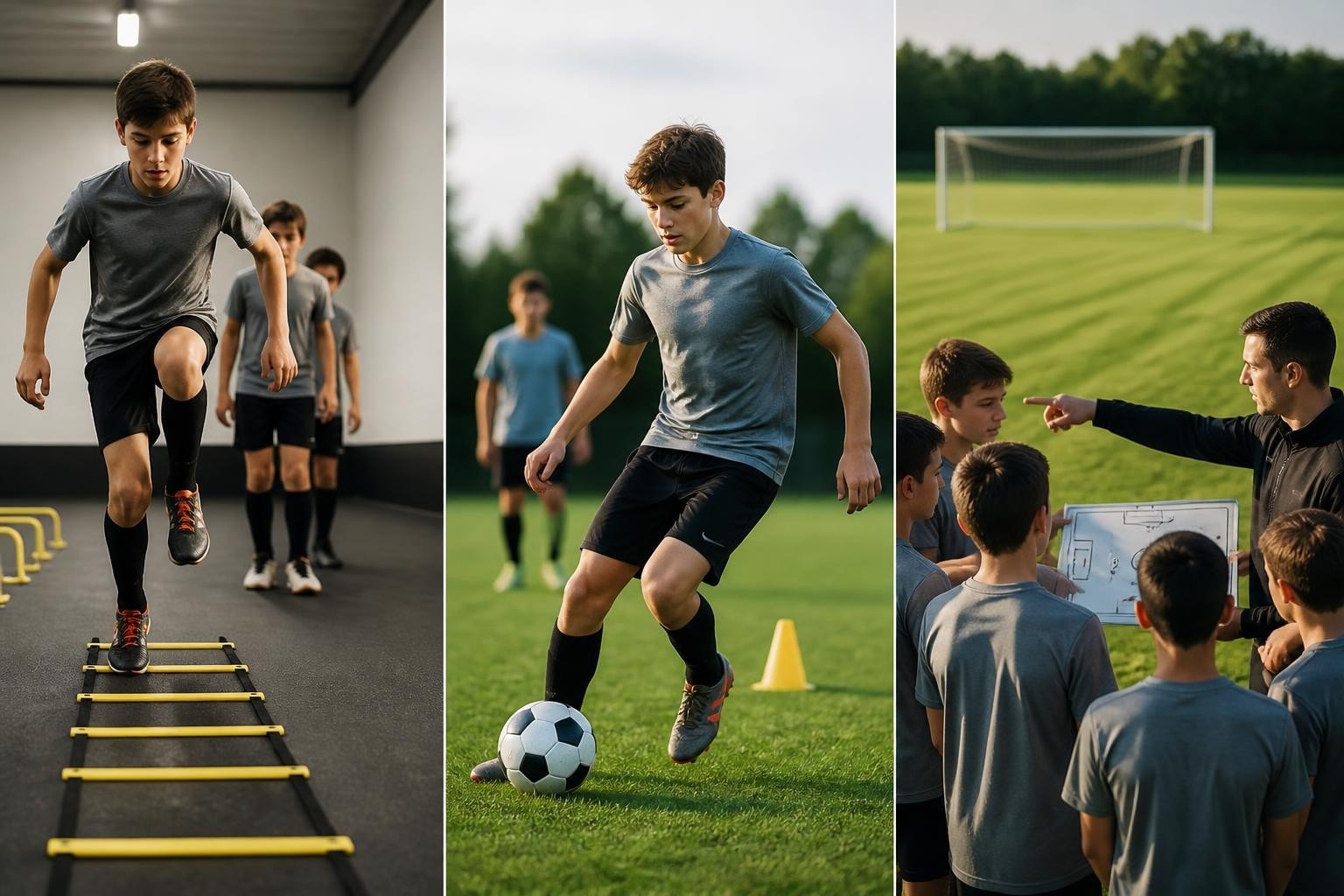
Every elite player shares one common foundation: exceptional ball control built through thousands of soccer touches. Whether watching professional matches or youth training sessions, the difference between good and great players often comes down to their first touch and ability to manipulate the ball under pressure. For young athletes developing their game, understanding the importance of soccer touches and implementing structured practice routines can accelerate skill development and unlock new levels of performance on the field.
Understanding Soccer Touches and Their Impact on Player Development
Soccer touches refer to every intentional contact a player makes with the ball during training or competition. This encompasses first touches when receiving passes, dribbling movements, turns, traps, and ball manipulation drills. The quality and quantity of these touches directly influence a player's technical proficiency and confidence during matches.
Research consistently shows that players who accumulate more quality touches during training sessions develop superior ball control compared to those who primarily engage in game-based activities without focused technical work. The importance of first touch cannot be overstated, as it determines whether a player maintains possession, creates space, or loses the ball to opponents.
The Technical Foundation of Quality Touches
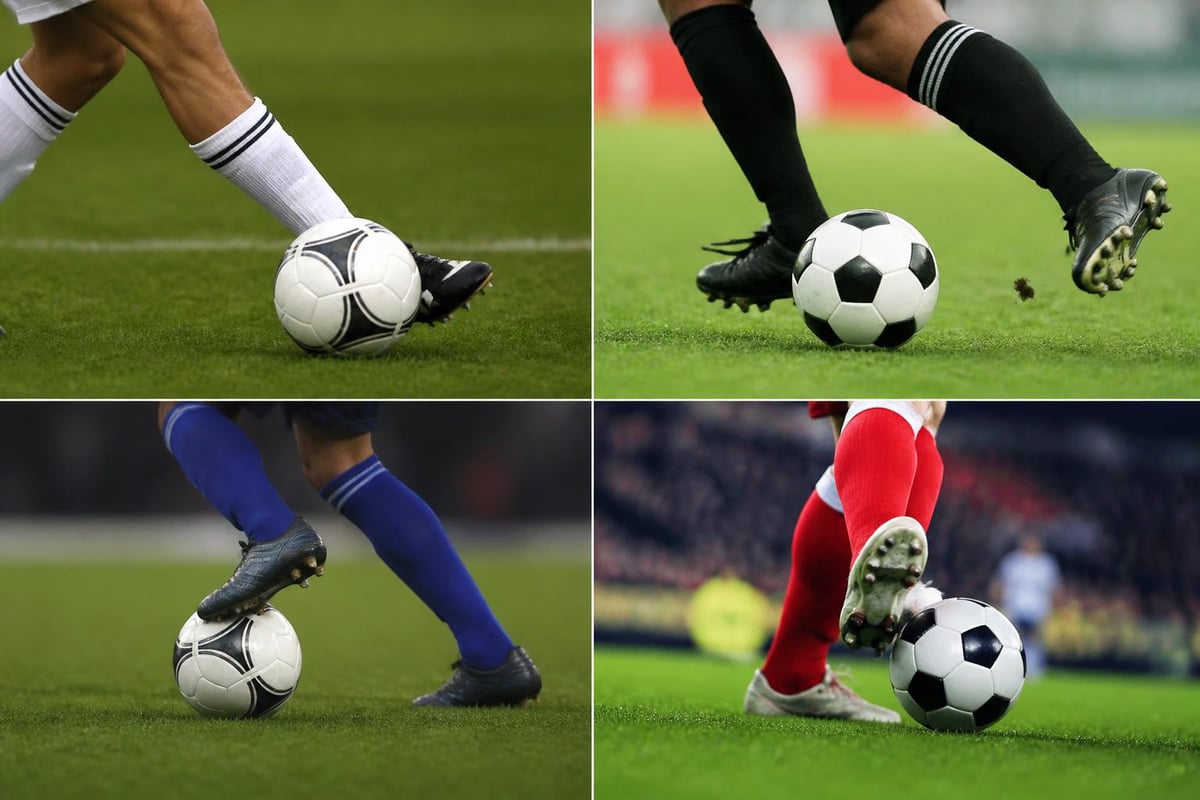
Quality soccer touches require proper technique across multiple dimensions. Players must learn to use different surfaces of the foot for various situations, understand how to cushion the ball to maintain control, and develop the ability to direct touches into advantageous spaces.
Key technical elements include:
- Inside of the foot for precise control and short passes
- Outside of the foot for quick changes of direction
- Laces for powerful strikes and longer passes
- Sole of the foot for pull-backs and stops
- Thigh, chest, and head for aerial control
The development of these varied touch techniques allows players to respond effectively to different game scenarios. A player who can only control the ball with the inside of their foot faces significant limitations compared to one who has mastered multiple surfaces and contact points.
Building Touch Quality Through Structured Practice
Developing exceptional soccer touches requires deliberate practice with progressive difficulty. Players cannot simply kick a ball around and expect to develop professional-level touch quality. Instead, structured training routines that emphasize repetition, proper technique, and increasing complexity produce the best results.
The 1000-Touch Training Philosophy
Many professional academies implement 1000-touch training routines that focus exclusively on ball manipulation. These sessions eliminate the game context temporarily to allow players to concentrate purely on the quality of each touch without defensive pressure or tactical considerations.
A typical 1000-touch session might include:
- Foundation touches (200 repetitions): Inside and outside foot alternating
- Sole rolls and pulls (200 repetitions): Ball manipulation with bottom of foot
- Tick-tocks (150 repetitions): Quick side-to-side touches
- Directional touches (150 repetitions): Moving the ball into specific spaces
- Speed touches (150 repetitions): Rapid-fire ball contact at maximum pace
- Combination sequences (150 repetitions): Linking multiple touch types
This systematic approach ensures players develop muscle memory and comfort with the ball across various situations. The high volume of repetitions creates automaticity, allowing players to execute quality touches without conscious thought during matches.
First Touch Under Pressure: The Game Changer
While stationary ball work builds foundational touch quality, the true test comes when receiving passes under defensive pressure. First touch under pressure separates recreational players from competitive athletes and determines success at higher levels of play.
Components of Effective First Touch
Executing quality first touches during matches requires more than technical ability. Players must develop awareness, decision-making skills, and composure to control the ball effectively when defenders apply pressure.
| Component | Description | Training Focus |
|---|---|---|
| Awareness | Scanning before receiving the ball | Head movement drills, peripheral vision exercises |
| Body Position | Opening hips to see the field | Receiving drills at angles, directional control |
| Touch Quality | Cushioning and directing appropriately | Controlling the ball on the ground techniques |
| Decision Speed | Choosing the right option quickly | Small-sided games, pressure scenarios |
Younger players often struggle with first touch because they focus entirely on the ball without scanning their surroundings. Teaching players to check their shoulders before receiving passes dramatically improves their ability to execute purposeful first touches that set up their next action.
Progressive Training Methods for Different Age Groups
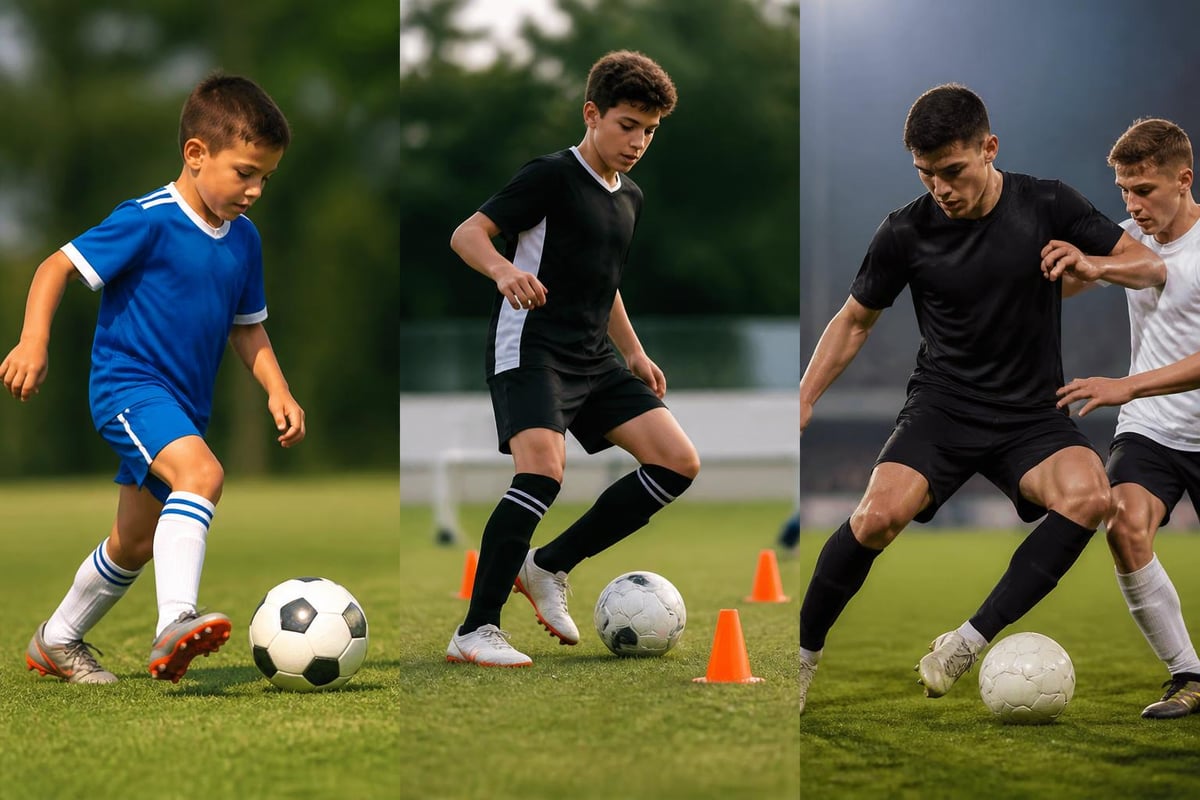
Soccer touches training must adapt to the developmental stage of each player. What works for U15 athletes differs significantly from appropriate training for U8 players, both in complexity and volume.
Youth Players (Ages 6-10)
For younger athletes, soccer touches training should emphasize fun, engagement, and basic ball familiarity. Sessions should be shorter with frequent changes of activity to maintain attention and enthusiasm.
Recommended activities:
- Dribbling through cone courses with both feet
- Simple juggling challenges (foot, thigh, combinations)
- Partner passing focusing on inside-foot technique
- Ball mastery grids with basic moves
Volume targets for this age group typically range from 200-400 quality touches per session, with emphasis on variety and engagement rather than repetition of single skills.
Intermediate Players (Ages 11-14)
As players mature, their capacity for focused technical work increases substantially. This age group can handle higher training volumes and more complex skill combinations while developing the physical coordination necessary for advanced techniques.
Training sessions should incorporate 500-800 quality touches with increased emphasis on speed, precision, and decision-making elements. Drills should begin introducing defensive pressure and time constraints to simulate match conditions.
Advanced Players (Ages 15+)
Elite youth players require training that replicates the intensity and complexity of competitive matches. Their soccer touches training should focus heavily on first touch quality under pressure, rapid decision-making, and maintaining technique when fatigued.
Sessions for advanced players often exceed 1000 touches and incorporate significant tactical elements. The Soccer Skills Training programs designed for competitive athletes emphasize these high-intensity, technically demanding sessions that prepare players for college and professional pathways.
Creating Individual Development Plans Around Touch Training
Every player brings different strengths and weaknesses to their technical development. While some athletes naturally possess excellent close control, others excel at receiving aerial balls or executing first-time passes. Effective development requires honest assessment and targeted training.
Self-Assessment Framework
Players and coaches should regularly evaluate touch quality across multiple categories to identify specific areas requiring additional work:
- Receiving ground passes: Control quality with both feet
- Aerial control: Ability to settle balls from the air
- First touch in traffic: Quality when defenders apply pressure
- Dribbling touches: Close control while moving at speed
- Directional touches: Ability to receive and turn in one motion
Creating a simple rating system (1-5 scale) for each category helps players understand their current level and track improvement over time. Improving first touch in soccer requires this type of honest assessment combined with deliberate practice targeting weaknesses.
Weekly Training Structure
Balancing soccer touches training with other essential development areas requires thoughtful planning. A comprehensive weekly schedule might allocate training time as follows:
| Day | Focus Area | Touch Emphasis |
|---|---|---|
| Monday | Technical session | 800+ focused touches, stationary and moving |
| Tuesday | Tactical training | 300-400 touches within game scenarios |
| Wednesday | Physical development | Light technical warm-up, 200 touches |
| Thursday | Technical + pressure | 600+ touches with defensive pressure |
| Friday | Match preparation | 400 touches, match-specific scenarios |
| Saturday | Competition | Variable, match situation |
| Sunday | Active recovery | Optional 300 touches, low intensity |
This structure ensures players accumulate thousands of quality soccer touches weekly while maintaining balance across all development pillars: technical, tactical, physical, and psychological.
Common Mistakes in Touch Training and How to Avoid Them
Despite good intentions, many players and coaches implement touch training in ways that limit effectiveness or even reinforce bad habits. Understanding these common pitfalls helps maximize the value of every training minute.
Prioritizing Quantity Over Quality
The single biggest mistake in soccer touches training involves rushing through repetitions without attention to proper technique. While high volume matters, 500 sloppy touches provide less benefit than 200 executed with perfect form and focus.
Quality markers for effective touches:
- Soft contact that cushions the ball appropriately
- Eyes scanning before and after the touch
- Ball directed into useful space, not just controlled
- Proper foot surface selection for the situation
- Balanced body position throughout the movement
Coaches should emphasize these quality standards from the earliest training sessions, even if it means reducing total touch volume temporarily while players develop proper habits.
Training Only in Comfort Zones
Players naturally gravitate toward their dominant foot and familiar techniques during unsupervised practice. This tendency reinforces existing strengths while allowing weaknesses to persist. Effective touch training requires intentional work on less comfortable skills.
Setting specific targets helps overcome this tendency. For example, requiring that 40% of all touches use the weaker foot or mandating equal repetitions with inside, outside, and sole of the foot ensures balanced development.
Neglecting Game-Speed Training
Ball work performed at jogging pace develops different neural pathways than touches executed at match intensity. While slower practice has value for learning new techniques, technical training must progressively increase speed to transfer effectively to competition.
Players should regularly practice touches at maximum speed, even if it initially reduces success rates. The ability to maintain control quality while moving quickly separates good players from elite ones and requires specific training at game pace.
Integrating Technology and Feedback Systems
Modern training methods increasingly incorporate technology to provide objective feedback on touch quality and track improvement over time. These tools help players understand whether their training produces measurable results.
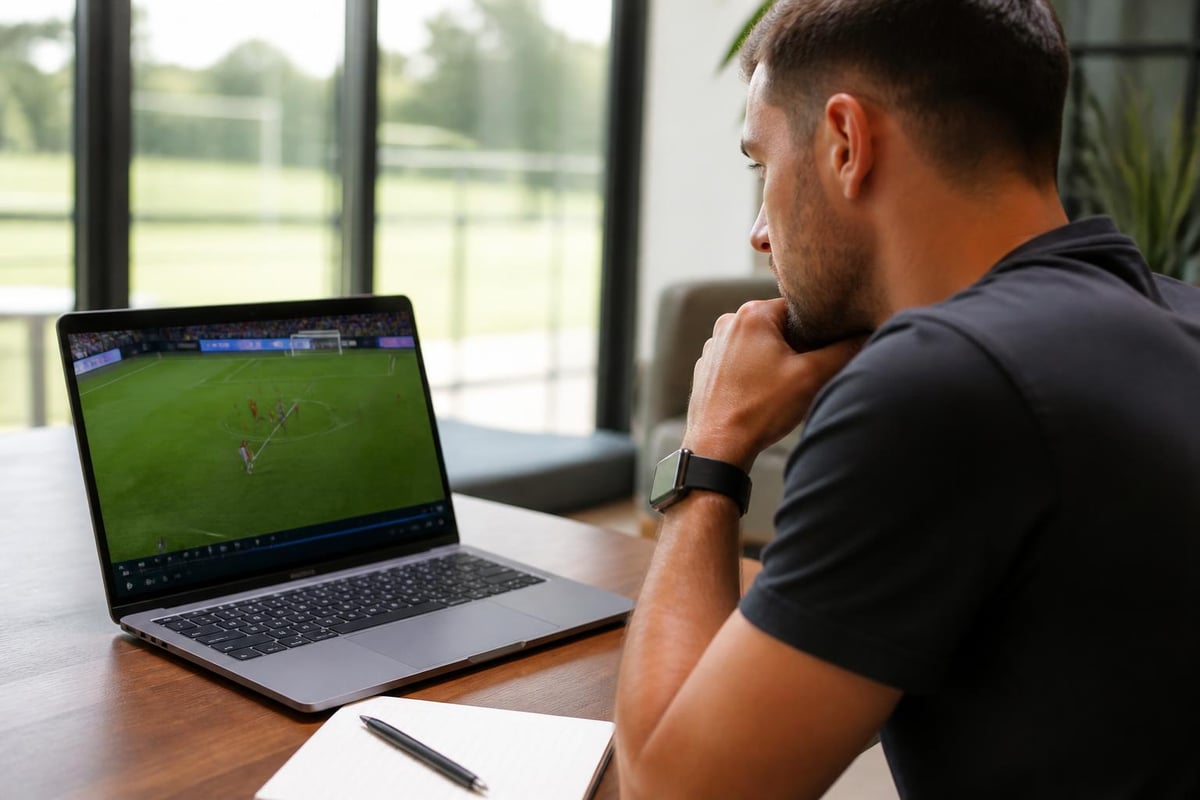
Video Analysis for Touch Quality
Recording training sessions and matches allows players to analyze their touch technique from different angles. Specific elements to review include:
- Body position before receiving the ball
- Foot placement and contact point
- Balance and posture during the touch
- Direction and pace of the controlled ball
- Immediate next action after the touch
Many professional academies use video analysis extensively, and youth players can implement similar practices using smartphones and basic video review. The ability to see mistakes objectively accelerates correction and improvement.
Tracking Progress Through Metrics
While soccer touches involve qualitative elements, certain metrics provide useful progress indicators:
- Success rate: Percentage of touches maintaining possession
- Time to control: Seconds between ball arrival and next action
- Touch reduction: Ability to accomplish tasks with fewer touches
- Weak foot parity: Success rate difference between feet
- Pressure performance: Control quality with defenders nearby
Regular testing against these metrics every 4-6 weeks helps players and coaches evaluate whether training methods produce desired improvements or require adjustment.
Mental Aspects of Touch Development
Physical technique represents only part of the equation for developing elite soccer touches. Mental factors including confidence, concentration, and composure significantly influence touch quality during matches when pressure and fatigue challenge technical execution.
Building Touch Confidence
Players who lack confidence in their first touch often make poor decisions before receiving the ball. They position themselves facing backwards, take extra touches unnecessarily, or immediately pass to teammates even when space exists to turn and advance.
Confidence develops through successful repetition. This creates a positive cycle: quality training produces success in matches, which builds confidence, leading to better performance under pressure. Breaking into this cycle requires patience and persistent technical work, especially for players recovering from confidence setbacks.
Concentration and Touch Consistency
Even technically gifted players produce inconsistent touches when concentration lapses. Understanding first touch fundamentals includes recognizing that mental focus directly impacts physical execution.
Training should occasionally incorporate distractions and pressure situations that challenge concentration. Practicing touches while tired, with crowd noise, or with time pressure helps players develop the mental resilience to maintain quality in challenging match situations.
Position-Specific Touch Requirements
While all players benefit from comprehensive touch training, different positions demand specialized emphasis on particular types of ball control. Understanding these positional requirements helps optimize individual development plans.
Defenders and Defensive Midfielders
Players in defensive positions must excel at receiving passes while facing their own goal and turning under pressure from opposing forwards. Their first touch often determines whether the team maintains possession during the critical transition from defense to attack.
Priority touch skills:
- Receiving across the body to open up passing lanes
- Turning with the ball in tight spaces
- Controlling passes on the back foot
- Settling long passes and goal kicks
Defenders benefit from extensive practice receiving balls while marked tightly, as they routinely face physical pressure when receiving from the goalkeeper or center backs.
Midfielders
Central midfielders require the most complete touch repertoire, as they receive passes from all angles and must operate in congested spaces with limited time. Their touch quality directly impacts team rhythm and possession statistics.
Midfield-specific training should emphasize receiving in traffic, one-touch combination play, and maintaining control while scanning for the next pass. The ability to receive and turn in a single motion proves especially valuable for midfielders who must quickly transition from defense to attack.
Forwards
Attacking players need specialized touches that create shooting opportunities and beat defenders in one-on-one situations. While all touch fundamentals apply, forwards must master receiving with backs to goal, controlling balls in the penalty area with defenders in close proximity, and executing creative touches that create space for shots.
Forward-specific training should include significant emphasis on first-touch finishing, where the initial control immediately sets up a shot on goal. These high-value touches can determine match outcomes and require specific practice under match-realistic conditions.
Long-Term Development and the 10,000 Hour Principle
Developing world-class soccer touches requires years of dedicated practice. While the exact numbers vary, research on skill acquisition suggests that achieving elite performance in any complex motor skill demands approximately 10,000 hours of deliberate practice.
For young players beginning serious training at age 10, reaching this threshold requires averaging 3-4 hours daily of focused technical work over the next 8-10 years. While few achieve this volume, understanding the commitment required for elite development helps set realistic expectations and training plans.
Making Every Touch Count
Given the significant time investment required, maximizing the quality of every training session becomes essential. Players who approach each touch with full focus and intention progress faster than those who accumulate touches mindlessly.
Parents and coaches play crucial roles in creating environments where quality practice flourishes. This includes providing appropriate equipment, designating dedicated practice space, and offering encouraging feedback that motivates continued effort even when improvement feels slow.
Mastering soccer touches forms the foundation of technical excellence and unlocks higher levels of competitive performance. Through deliberate practice emphasizing quality, variety, and progressive challenges, players develop the ball control necessary for success at every level. At Strive Soccer Academy, our European-style training methodology prioritizes technical development through high-volume, high-quality touch training that prepares players for competitive opportunities. Our fully licensed Canada Soccer coaches bring professional expertise to every session, helping young athletes in Surrey, BC build the skills and confidence needed to achieve their soccer goals.