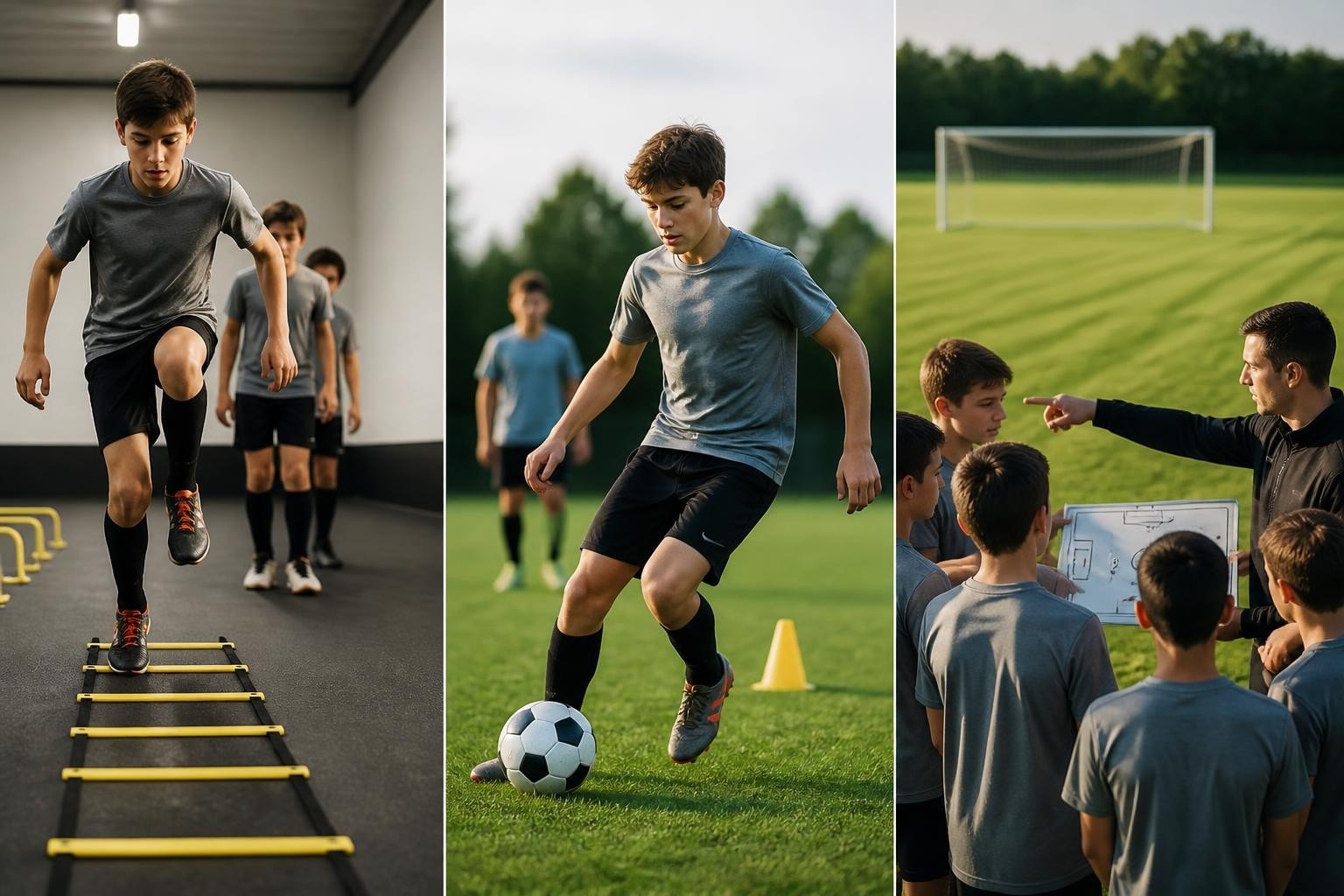
Soccer small sided games have revolutionized how coaches approach player development across all age groups and skill levels. These modified formats reduce the number of players on each team while creating an environment that maximizes individual ball touches, decision-making opportunities, and active engagement. From 3v3 to 7v7 variations, soccer small sided games offer a training methodology that aligns with modern coaching philosophy and accelerates skill acquisition in ways traditional full-field scrimmages cannot match. Understanding how to implement these games effectively transforms training sessions into powerful development opportunities.
The Foundation of Small Sided Game Training
Soccer small sided games represent more than just practice drills with fewer players. They create a deliberate training environment where the constraints of space, numbers, and objectives force players to develop specific skills under realistic pressure. Research has shown that small-sided games significantly impact physiological responses and technical development, making them an evidence-based training method rather than simply a convenience for coaches with limited space or players.
The reduction in team size directly correlates with increased ball contact frequency. In a traditional 11v11 format, individual players might touch the ball only a handful of times during a training session. Soccer small sided games can multiply those touches by five to ten times, creating accelerated learning opportunities.
Key Benefits That Drive Player Development
The advantages of incorporating soccer small sided games extend across all four pillars of player development. Technical growth occurs naturally as players receive more touches in varied situations. Tactical awareness sharpens because decision-making windows compress, requiring faster processing and better positioning.
Technical advantages include:
- Increased ball contacts per player per session
- Enhanced dribbling skills through tighter spaces
- Improved first touch under immediate pressure
- Better passing accuracy in dynamic scenarios
- Strengthened shooting opportunities from varied angles
Tactical benefits encompass:
- Faster recognition of space and positioning
- Improved transition play between attack and defense
- Enhanced communication and teammate awareness
- Better understanding of numerical advantages and disadvantages
- Quicker decision-making under time constraints
Physical conditioning improves simultaneously as players move continuously with fewer opportunities to hide or rest. The psychological component develops through increased involvement, reducing the anxiety that comes from limited participation in larger formats.
Format Variations and Their Specific Training Objectives
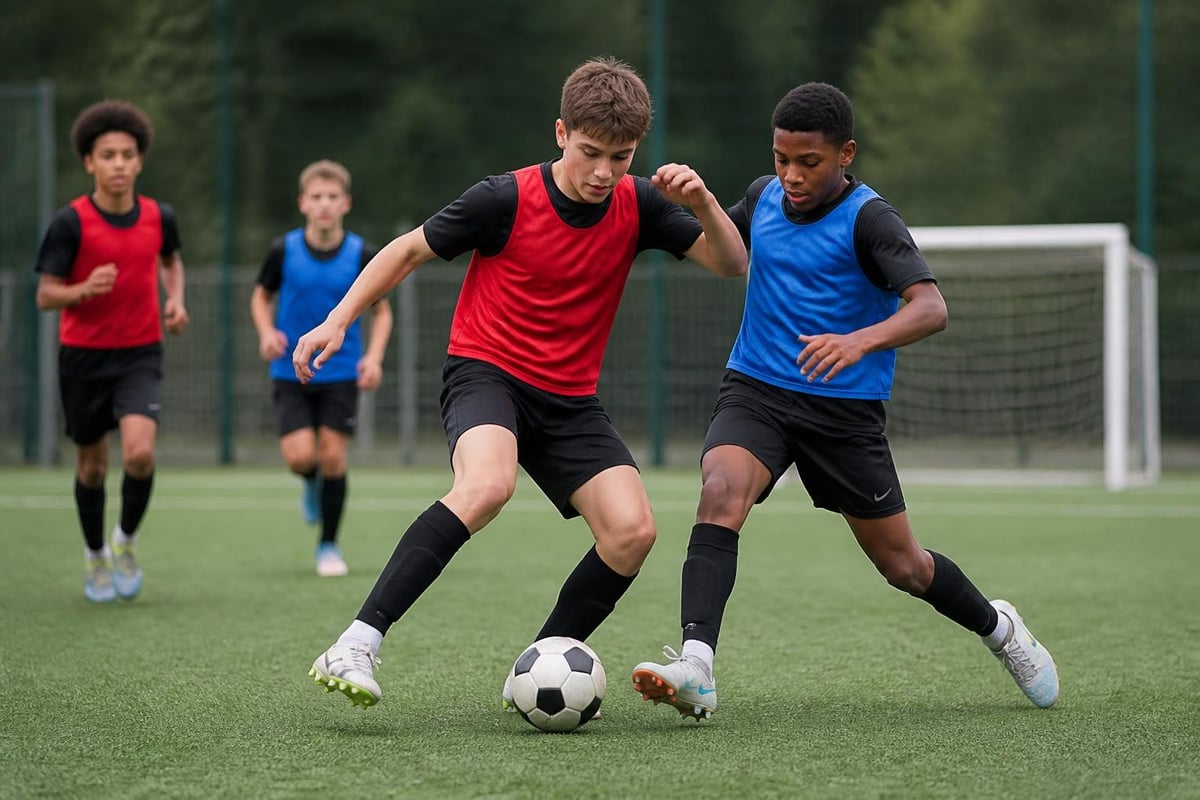
Different soccer small sided games formats serve distinct developmental purposes. Understanding various formats from 1v1 to 5v5 helps coaches select the appropriate game for their training objectives and player age groups. Each variation creates unique learning opportunities and challenges.
| Format | Field Size | Primary Focus | Best Age Group |
|---|---|---|---|
| 1v1 | 15×10 yards | Dribbling, shielding, 1v1 defending | U8-U10 |
| 3v3 | 30×20 yards | Quick transitions, support play | U10-U12 |
| 4v4 | 40×30 yards | Team shape, passing combinations | U12-U14 |
| 5v5 | 50×35 yards | Positional play, defensive organization | U14+ |
The 3v3 Sweet Spot
Many coaches consider 3v3 the optimal soccer small sided games format for comprehensive player development. This configuration balances individual responsibility with team dynamics, creating scenarios where every player impacts both attacking and defensive phases. The format eliminates positions where players can hide, demanding full participation from all participants.
In 3v3 scenarios, players develop the critical skill of scanning and recognizing when to dribble versus pass. The limited numbers create constant 1v1 situations while still requiring support play and positional awareness. For younger age groups, this format introduces tactical concepts without overwhelming cognitive demands.
Specialized Formats for Targeted Development
Beyond standard numerical formats, coaches can modify soccer small sided games to emphasize specific skills. Directional games with multiple goals enhance peripheral vision and decision-making. Zone-based games teach positional discipline and spatial awareness. Condition-based games (such as two-touch limitations) accelerate technical refinement.
The variety of small-sided games available allows coaches to address specific weaknesses identified in match analysis or training observations. This targeted approach accelerates development more effectively than generic full-field practice.
Structuring Effective Training Sessions
Implementing soccer small sided games requires thoughtful session design. The games themselves provide the training stimulus, but coaching interventions, rest periods, and progressive challenges determine the ultimate effectiveness. Sessions typically follow a pattern of introduction, exploration, refinement, and competition.
- Warm-up integration (10 minutes): Begin with dynamic movements and ball work that previews the session's technical focus
- Game introduction (5 minutes): Explain rules, boundaries, and objectives clearly with visual demonstrations
- Initial game phase (12 minutes): Allow uninterrupted play with minimal coaching intervention
- Coaching intervention (5 minutes): Stop play to address key teaching points observed during initial phase
- Modified game phase (12 minutes): Resume play with adjustments or conditions that reinforce coaching points
- Competition phase (10 minutes): Conclude with tournament-style format to test learning under pressure
Managing Intensity and Recovery
Soccer small sided games naturally create high-intensity intervals as players engage continuously without substitutions. Coaches must balance this physical demand with adequate recovery to maintain quality and prevent overtraining. Work-to-rest ratios of 1:1 or 2:1 typically provide sufficient recovery while maintaining training stimulus.
For Soccer Skills Training programs, incorporating soccer small sided games within comprehensive development curriculum ensures players build both technical competence and game intelligence. The format complements individual skill work by providing realistic application contexts.
Monitoring player output through observation helps coaches adjust game duration and intensity. Signs of decreased technical execution, poor decision-making, or reduced movement indicate the need for rest intervals or format adjustments.
Age-Appropriate Game Design
Developmental stage dramatically influences how coaches should structure soccer small sided games. Younger players require simpler rules, larger spaces relative to numbers, and shorter game durations. Older players benefit from complex conditions, tighter spaces, and extended playing periods that better simulate match demands.
Youth Development Considerations (Ages 6-10)
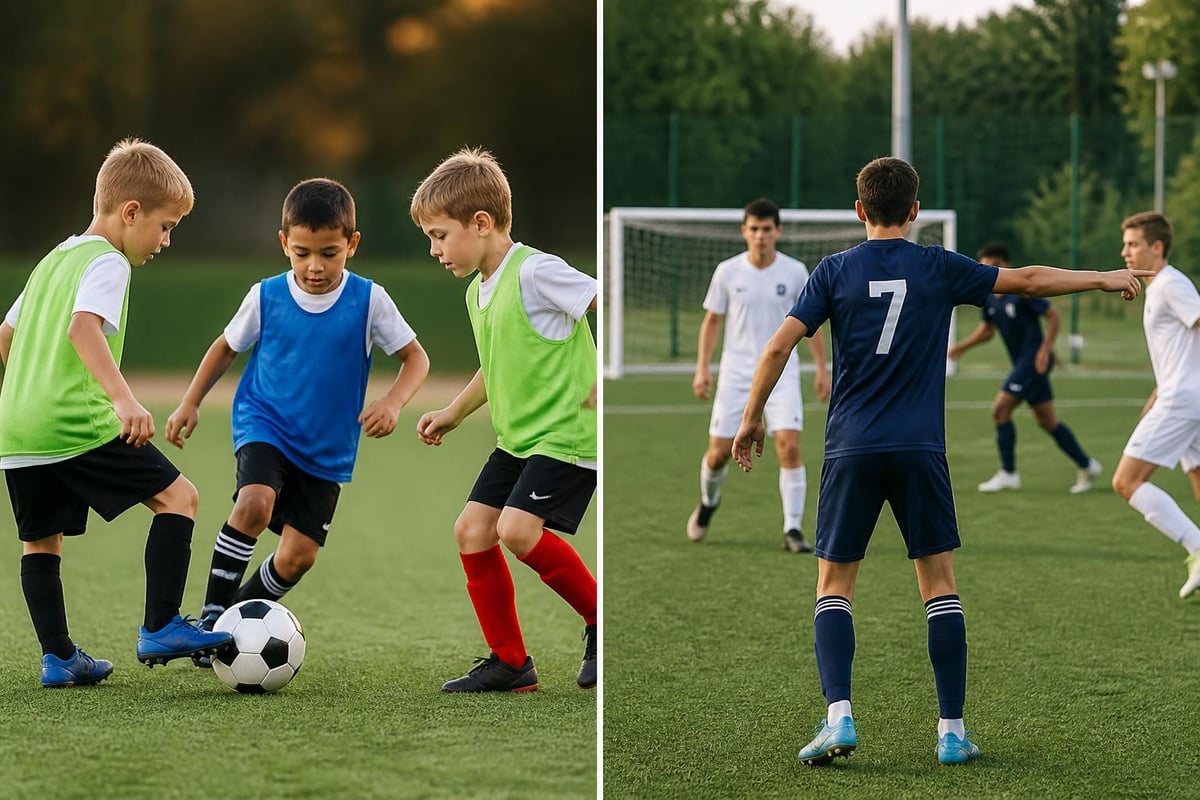
Young players thrive in soccer small sided games that emphasize fun, frequent touches, and basic skill development. Games for this age group should minimize complex rules and maximize ball contact opportunities. Field dimensions should be generous enough to allow successful dribbling while compact enough to encourage frequent interactions.
Effective youth modifications include:
- Larger goals to increase scoring success and motivation
- No goalkeepers to maximize field player development
- Frequent ball rotation to maintain engagement
- Short game durations (4-6 minute periods) matching attention spans
- Simple objectives focused on individual actions rather than complex team tactics
Adolescent Training (Ages 11-14)
As players mature cognitively and physically, soccer small sided games should increase in tactical complexity. This age group can handle positional responsibilities, combination play concepts, and strategic thinking. Games should begin incorporating realistic constraints like offside variations or designated defenders.
The middle years represent a critical window for developing game intelligence through soccer small sided games. Players transition from reactive play to anticipatory thinking, reading opponent movements, and exploiting tactical advantages.
Advanced Player Development (Ages 15+)
Older players benefit from soccer small sided games that replicate match-level intensity and tactical sophistication. Formats should mirror specific game situations they'll encounter in competition. Possession-based games develop midfield control, directional games enhance attacking patterns, and defensive-focused games improve organizational compactness.
At advanced levels, coaches can introduce tactical elements through strategic small-sided game design that targets specific weaknesses identified in match analysis. This targeted approach accelerates team development more effectively than generic training.
Coaching Interventions and Teaching Moments
The true power of soccer small sided games emerges through strategic coaching interventions. While the games create learning opportunities, coaches must recognize and amplify key moments through questioning, demonstration, and tactical adjustments. The freeze technique, where coaches stop play to highlight positioning or decision-making, proves particularly effective in small-sided formats.
The Art of Questioning
Rather than instructing players on what to do, effective coaches use soccer small sided games as laboratories for discovery. Thoughtful questions guide players toward tactical solutions they internalize more deeply than prescribed instructions.
- "What space became available when you dribbled centrally?"
- "Where could your teammate have positioned to receive a pass?"
- "How might you protect the ball differently with a defender approaching from behind?"
- "What cues told you the opponent would pressure quickly?"
This questioning approach develops the psychological and cognitive components of player development, creating thinking players who adapt to changing game situations.
Progressive Conditions and Constraints
Adding conditions to soccer small sided games creates specific learning environments. Coaches can manipulate rules to emphasize particular skills or tactical concepts. Touch limitations encourage quicker decisions and better first touches. Zone requirements teach positional discipline. Scoring variations incentivize specific attacking patterns.
| Condition Type | Example | Development Focus |
|---|---|---|
| Touch restriction | Two-touch maximum | Quick decision-making, first touch quality |
| Scoring variation | Goals only from passes (not dribbles) | Combination play, support positioning |
| Zone requirement | One player must stay in defensive half | Defensive organization, transition balance |
| Time pressure | Score within 10 seconds of possession | Quick attacking, immediate forward play |
Competitive Elements That Enhance Engagement
While soccer small sided games provide inherent motivation through increased involvement, adding competitive structures amplifies engagement and effort. Tournament formats, point systems, and team rankings create additional incentives that push players to perform at higher intensities.
Tournament Structures for Training Sessions
Organizing soccer small sided games into competitive tournaments transforms routine training into engaging competitions. Round-robin formats ensure all teams play multiple games, maximizing playing time and competitive exposure. Knockout tournaments add pressure situations that develop mental resilience.
Points systems can reward not just winning but specific behaviors coaches want to emphasize. Award bonus points for successful dribbles, completed passes above certain thresholds, or defensive recoveries. This approach focuses player attention on developmental objectives while maintaining competitive motivation.
Tracking Progress and Performance
Many modern training programs incorporate data tracking even in soccer small sided games contexts. Simple metrics like goals scored, games won, or individual statistics provide feedback that motivates improvement. Visual demonstrations and tracking methods help coaches communicate progress to players and parents.
For academies and clubs, maintaining records of player performance in various soccer small sided games formats helps identify development trends and areas requiring additional focus. This data-driven approach complements coach observations with objective measurements.
Practical Implementation Challenges and Solutions
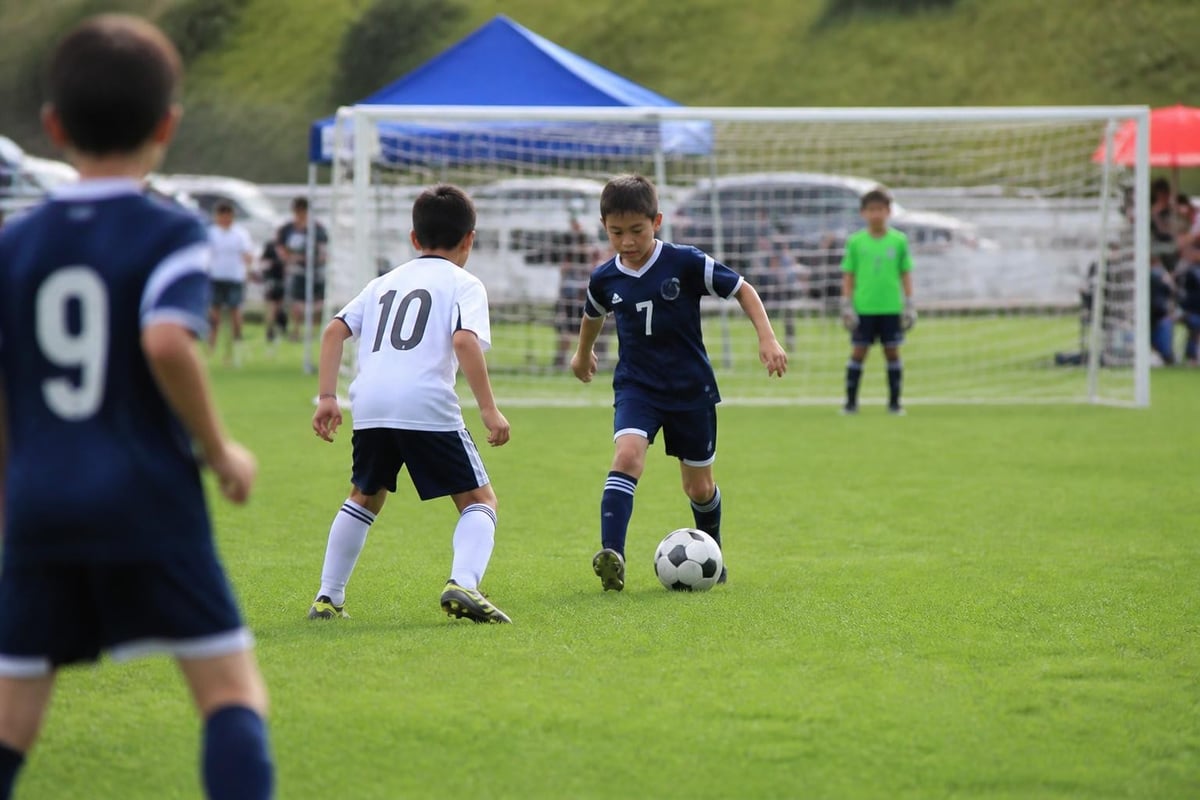
Despite their proven effectiveness, coaches sometimes struggle with soccer small sided games implementation. Common challenges include space limitations, uneven numbers, varying skill levels, and maintaining appropriate intensity. Understanding these obstacles and their solutions ensures successful integration into training programs.
Space Optimization Strategies
Limited field space need not prevent effective soccer small sided games training. Multiple small grids utilize available space more efficiently than single large fields. A full-size field can accommodate four simultaneous 4v4 games, dramatically increasing player touches compared to a single 11v11 scrimmage.
Vertical field orientation (using width rather than length) creates different spatial problems for players to solve. This variation challenges players to think differently about support angles and passing options. Coaches should regularly rotate field orientations within training sessions.
Managing Uneven Numbers
Training sessions rarely feature perfect multiples for desired game formats. Creative solutions maintain training quality despite numerical challenges:
- Floater players: Neutral players who always join the attacking team create overload situations that encourage possession play
- Multi-ball systems: Have backup balls ready to minimize downtime when balls leave play
- Goalkeeper rotation: If working with an odd number, rotate players through a goalkeeper position every few minutes
- Adjust formats: Shift from 4v4 to 3v3 or 5v5 based on attendance rather than forcing unworkable numbers
Balancing Skill Level Differences
Mixed-ability groups require thoughtful team creation in soccer small sided games. Balanced teams create competitive games where all players develop. Strategies include snake drafts where players select teams, coach-assigned balanced groups based on assessment, or rotating partnerships that expose players to different skill levels.
For advanced players within groups, adding individual conditions challenges them appropriately. Require two-touch play while others play unlimited touches, or assign them defensive responsibilities that test tactical awareness. These modifications maintain challenge levels across skill spectrums.
Integration With Full-Sided Development
Soccer small sided games should complement, not replace, full-sided training and match play. The most effective development programs strategically balance formats based on training objectives, competitive schedules, and player needs. Each format offers unique benefits that contribute to comprehensive player development.
Weekly training schedules typically dedicate 60-70% of technical and tactical training time to soccer small sided games formats, with remaining time addressing set pieces, full-sided organization, and position-specific work. This distribution maximizes individual development while ensuring players understand their roles in larger team contexts.
The principles coaches can implement in soccer small sided games transfer directly to full-sided play. Players who develop quick decision-making in 3v3 scenarios apply those same skills when playing 11v11. The cognitive patterns established in small formats scale effectively to larger team contexts.
Transitioning Skills to Match Performance
Coaches sometimes observe that skills displayed in soccer small sided games don't immediately transfer to match situations. This gap typically reflects insufficient bridge-building between formats. Progressive training sequences that gradually increase numbers, expand space, and add complexity help players transfer learning across contexts.
A four-week progression might move from 3v3 to 5v5 to 7v7 to 9v9, each week addressing how principles from smaller formats apply to larger games. This scaffolded approach builds connections players need to apply their developing skills in full match situations.
Measuring Success and Adjusting Programming
Effective use of soccer small sided games requires ongoing assessment and adjustment. Coaches should regularly evaluate whether games achieve intended developmental objectives and modify formats, conditions, or coaching approaches based on observations. Multiple assessment methods provide comprehensive feedback.
Observation-based assessment focuses on:
- Technical execution quality under pressure
- Decision-making speed and accuracy
- Positioning and spatial awareness
- Communication and leadership behaviors
- Effort and engagement levels
Quantitative measures include:
- Pass completion percentages during games
- Successful dribbles versus attempts
- Defensive recoveries and interceptions
- Goals scored and conceded ratios
- Individual ball contacts per session
Combining qualitative observations with quantitative data creates a complete picture of player development. This information guides adjustments to training design, ensuring soccer small sided games remain optimally challenging and developmentally appropriate.
Seasonal Planning and Periodization
Soccer small sided games should vary throughout a season based on competitive demands and developmental priorities. Pre-season training might emphasize physical conditioning through high-intensity game formats. Mid-season could focus on tactical refinement through position-specific variations. Post-season provides opportunities for creative, enjoyable formats that maintain engagement while reducing pressure.
The comprehensive collection of games and variations available allows coaches to continuously introduce fresh formats that maintain player interest across long seasons. Variety prevents staleness while addressing evolving developmental needs.
Soccer small sided games represent one of the most powerful tools available for comprehensive player development, creating environments where technical skills, tactical awareness, physical conditioning, and psychological growth occur simultaneously through realistic, engaging play. At Strive Soccer Academy, we integrate soccer small sided games within our European-style training philosophy, ensuring every player receives maximum touches, constant decision-making opportunities, and personalized coaching that accelerates development across all four pillars of growth. Our fully licensed coaches design progressive small-sided game curricula tailored to each age group and skill level, creating the optimal environment for your young athlete to reach their full potential.