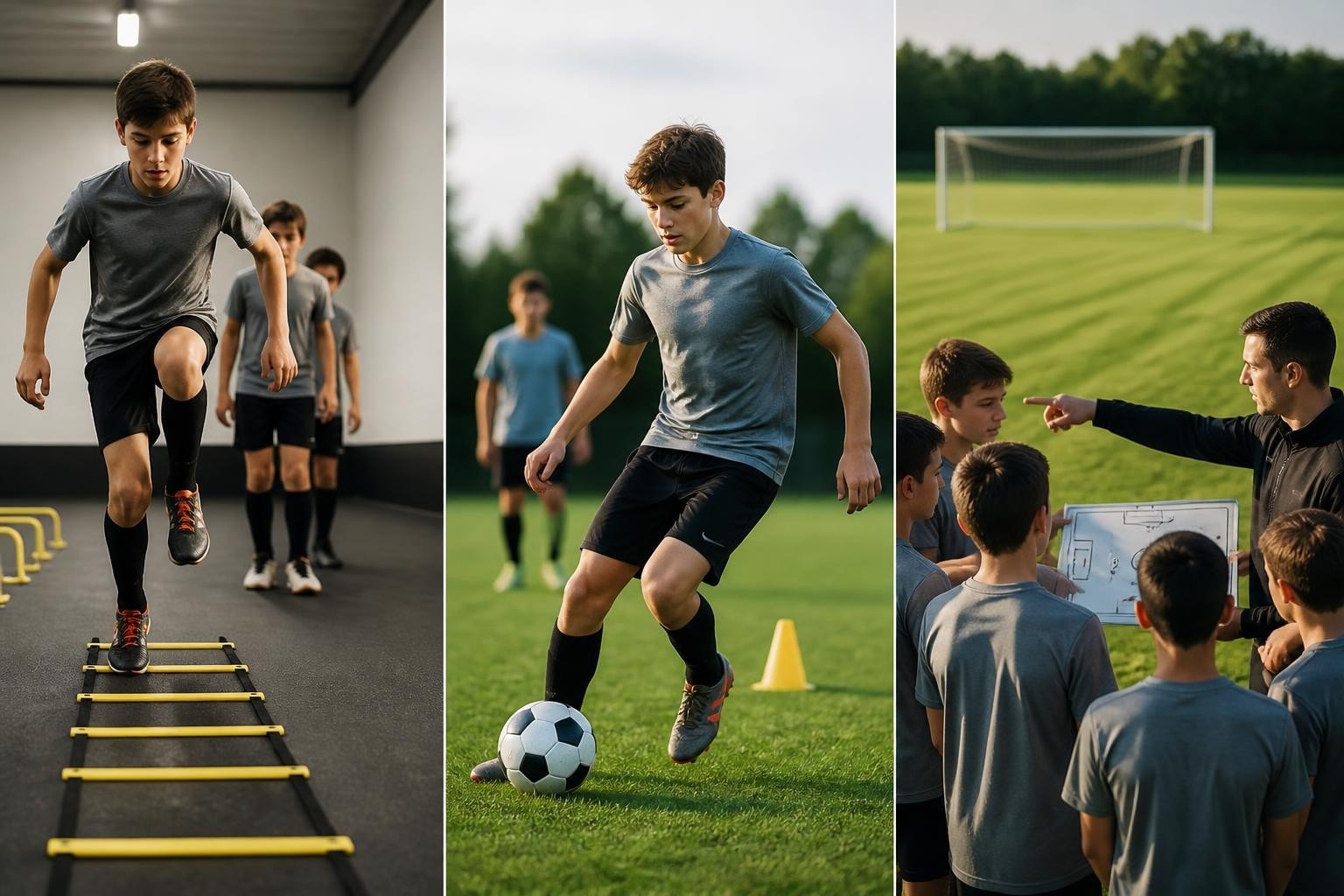
The difference between recreational play and elite development lies in the structure of soccer programming. Parents and coaches who understand this distinction know that systematic training design separates players who improve gradually from those who make breakthrough progress. Soccer programming represents the strategic blueprint that transforms raw potential into refined skill, combining science-based methods with age-appropriate progressions. This approach ensures young athletes develop holistically while building the foundation for long-term success in the sport.
Understanding the Foundation of Soccer Programming
Soccer programming encompasses far more than scheduling practice sessions twice a week. It represents a comprehensive training philosophy that addresses every dimension of player development through carefully planned cycles and progressions.
Effective soccer programming integrates four fundamental pillars that work in harmony. Technical development focuses on ball mastery, first touch, passing accuracy, and shooting mechanics. Tactical awareness builds decision-making skills, spatial understanding, and game intelligence. Physical conditioning develops speed, agility, strength, and endurance specific to soccer demands. Psychological growth cultivates mental toughness, confidence, and emotional regulation under competitive pressure.
The magic happens when these elements connect through intentional design rather than random scheduling. Periodization for youth soccer provides the framework that prevents overtraining while maximizing adaptation during critical growth windows.
The Science Behind Training Cycles
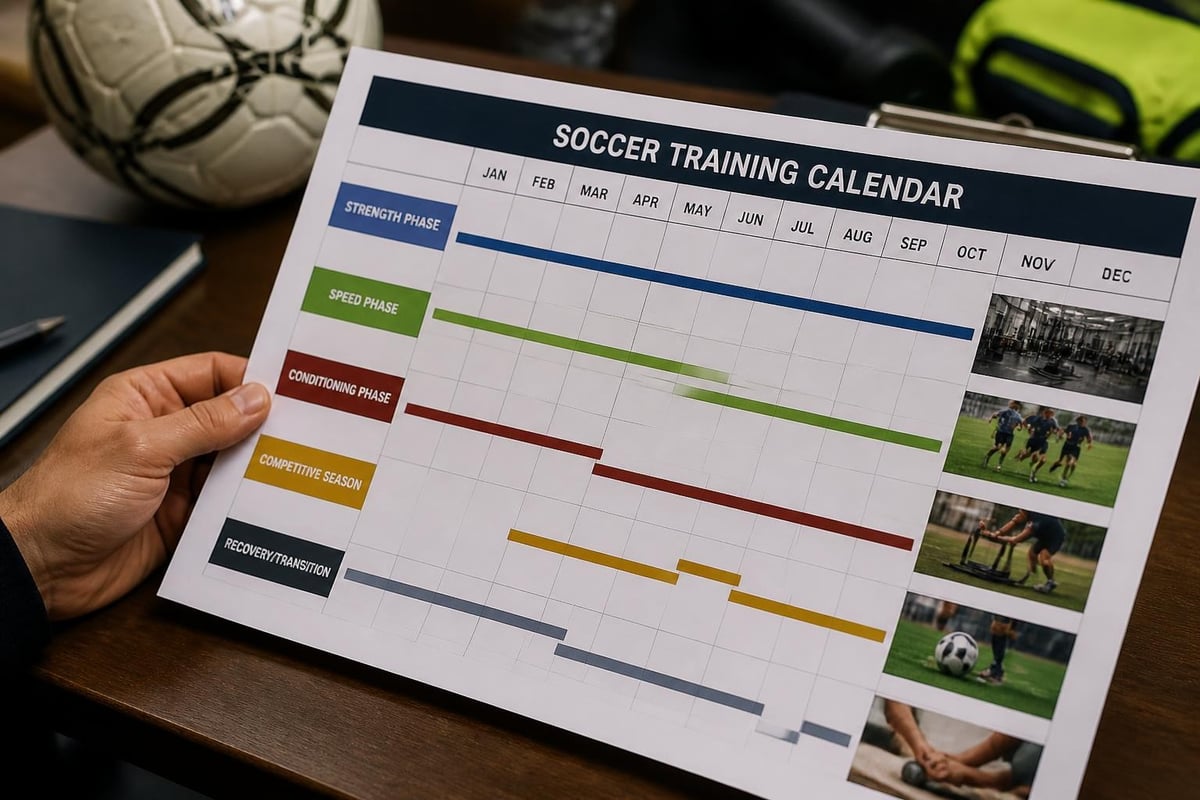
Modern soccer programming relies heavily on periodization principles borrowed from Olympic sports. This methodology divides the training year into specific phases, each with distinct objectives and intensity levels.
Macrocycles span the entire annual calendar, typically from pre-season through post-season. Mesocycles represent monthly or multi-week blocks focusing on particular development areas. Microcycles break down into weekly patterns that balance intensity with recovery. This layered approach ensures athletes peak at crucial moments while avoiding burnout that derails progress.
Consider how annual soccer periodization structures the competitive season. Early phases emphasize building aerobic capacity and technical foundations. Mid-season periods shift toward tactical refinement and maintaining fitness peaks. Late-season programming prioritizes recovery management while sustaining competitive sharpness.
| Training Phase | Duration | Primary Focus | Intensity Level |
|---|---|---|---|
| Pre-Season | 6-8 weeks | Fitness base, technical skills | High volume, moderate intensity |
| Early Season | 8-10 weeks | Tactical integration, team chemistry | Moderate volume, increasing intensity |
| Mid-Season | 12-14 weeks | Performance maintenance, competition | Lower volume, high intensity |
| Late Season | 4-6 weeks | Peak performance, recovery balance | Variable, match-focused |
The key insight is that soccer programming must account for biological adaptation timelines. Improvements in different areas occur at different rates, requiring carefully sequenced training stimuli.
Designing Age-Appropriate Programming
Youth soccer programming demands fundamentally different approaches than adult training systems. Biological age, cognitive development, and attention spans all influence how we structure sessions for maximum engagement and growth.
Early Development Years (Ages 6-10)
Programming for younger players centers on movement literacy and ball familiarity rather than tactical complexity. Sessions should incorporate:
- High repetition of basic techniques in game-like contexts
- Short activity bursts (3-5 minutes) with frequent transitions
- Minimal standing and maximum touches on the ball
- Fun, competitive elements that maintain enthusiasm
- Fundamental movement patterns: running, jumping, changing direction
The soccer programming philosophy at this stage prioritizes creating positive associations with training while building technical confidence. Coaches should avoid excessive structure or tactical demands that overwhelm developing brains.
Middle Development Years (Ages 11-14)
This critical window represents when soccer programming can have the most profound impact on player trajectories. Physical literacy improves dramatically, allowing for more sophisticated training designs.
Players in this age range benefit from programming that introduces tactical concepts progressively. Small-sided games teach positioning and decision-making without overwhelming complexity. Technical training becomes more refined, addressing specific skill deficiencies through targeted drills.
Soccer skills training during these years should challenge players while providing enough success to maintain confidence. The balance between frustration and achievement determines whether athletes persist through difficult learning curves.
Physical development varies tremendously within age groups, requiring individualized load management. Some players enter growth spurts that temporarily disrupt coordination, while others maintain steady progression. Quality soccer programming accounts for these individual differences rather than applying one-size-fits-all templates.

Implementing Tactical Periodization Methods
Tactical periodization represents a revolutionary approach to soccer programming that emerged from European professional clubs. This methodology treats the game as an integrated system where technical, tactical, physical, and psychological elements merge during every training activity.
Rather than isolating fitness runs from tactical work, tactical periodization embeds physical demands within game-realistic scenarios. Players develop conditioning while simultaneously improving decision-making under fatigue, mirrors actual match conditions more accurately than traditional programming models.
Weekly Structure in Tactical Periodization
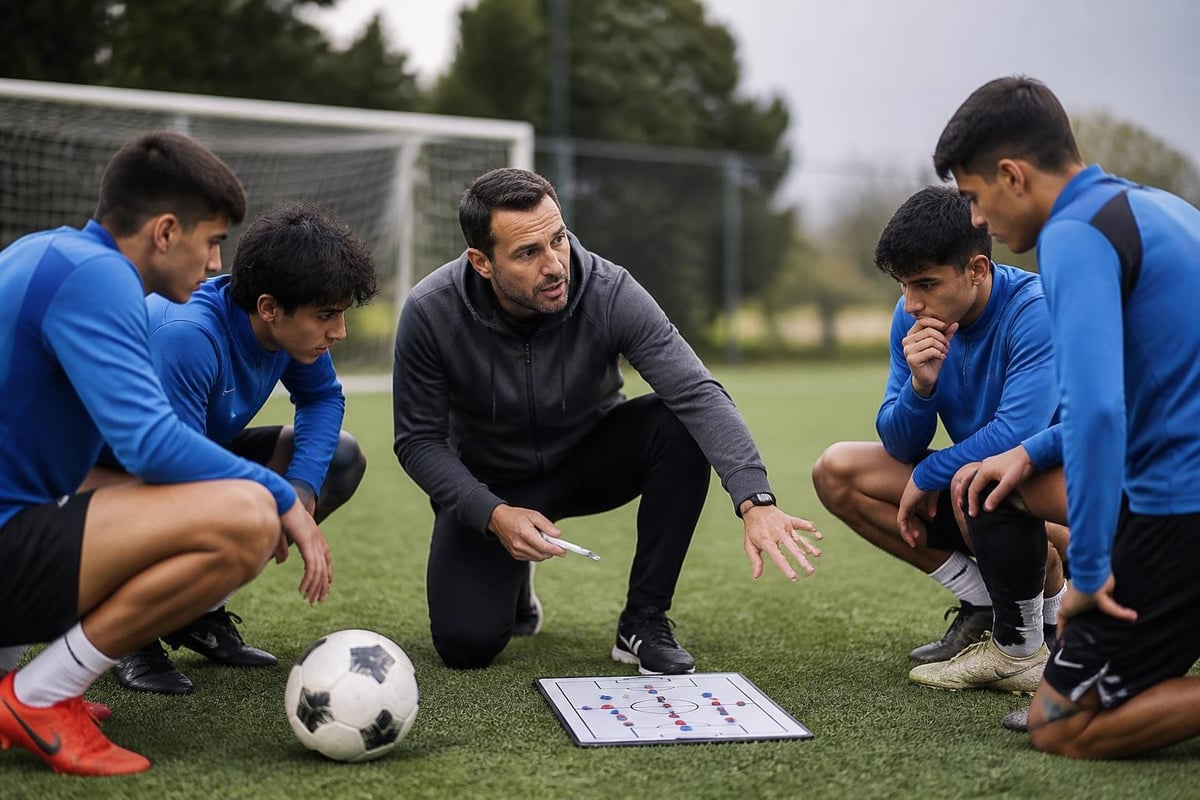
The soccer periodization microcycle guide demonstrates how professional teams organize training weeks around match schedules. This pattern adapts effectively for youth programming when simplified appropriately.
Post-Match Recovery (Day 1-2): Light technical work, regeneration activities, and tactical video review occupy the days immediately following competition. Soccer programming during this window emphasizes restoration over intensity.
Foundation Building (Day 3-4): Mid-week sessions introduce new tactical concepts or address specific weaknesses identified in recent matches. Intensity increases gradually as recovery completes.
Match Preparation (Day 5-6): Training transitions toward opponent-specific preparation and tactical rehearsal. Physical loads decrease while mental sharpness increases through focused, game-speed repetitions.
This cyclical approach to soccer programming ensures players arrive at competitions fresh but sharp, avoiding the common trap of training hard the day before matches.
Balancing Competition and Development
One persistent challenge in soccer programming involves reconciling the demands of weekend competitions with long-term player development. Winning today's game often conflicts with building skills for future success.
Progressive academies structure their soccer programming around a development-first philosophy, especially during formational years. This means accepting short-term competitive results in favor of technical mastery and tactical understanding that pay dividends later.
| Development Priority | Competition Priority | Long-Term Outcome |
|---|---|---|
| Position rotation for learning | Fixed positions for winning | Versatile, intelligent players |
| Technical challenges in games | Safe, successful tactics | Creative, confident athletes |
| Equal playing time | Best players play more | Team depth, player retention |
| Skill development focus | Result-oriented approach | Sustainable improvement |
The most effective soccer programming recognizes that different contexts require different priorities. Managing in-season soccer periodization becomes particularly complex when balancing league commitments, tournament preparation, and individual development needs.
Smart coaches use training sessions to push developmental boundaries while keeping match tactics simple enough to execute successfully. This dual-track approach within soccer programming allows players to grow while still experiencing competitive success that fuels motivation.
Physical Development Through Structured Programming
Physical preparation represents a cornerstone of comprehensive soccer programming, yet youth training often neglects this component or implements it dangerously. Age-appropriate strength development and injury prevention should feature prominently in any serious program.
Research on short-term periodized programming demonstrates significant improvements in strength, power, and sprint performance when training follows systematic progressions. Young athletes respond particularly well to structured physical development when delivered through soccer-specific movements.
Components of Physical Soccer Programming
Speed and Agility Development: Linear sprinting mechanics, change-of-direction efficiency, and acceleration technique require dedicated attention. Soccer programming should include 15-20 minutes of focused movement quality work separate from technical training.
Strength Foundation: Bodyweight exercises, resistance band work, and progressive loading build the muscular foundation that prevents injuries and enhances performance. Youth soccer programming incorporates these elements 2-3 times weekly during appropriate training phases.
Recovery and Regeneration: Sleep education, nutrition guidance, and active recovery sessions represent crucial yet frequently overlooked aspects of soccer programming. Athletes who understand recovery principles adapt faster and sustain higher training loads.
The Soccer High Performance Training camps provide intensive environments where players experience professional-level soccer programming, including dedicated physical development blocks that complement technical and tactical work.
Psychological Development and Mental Skills
Elite soccer programming extends beyond physical and tactical preparation into the psychological domain. Mental toughness, focus, and emotional regulation often determine outcomes at higher competitive levels where technical ability becomes relatively equal.
Progressive programs integrate mental skills training directly into session designs rather than treating psychology as a separate add-on. Competitive drills under pressure, decision-making exercises with consequences, and controlled failure experiences all develop psychological resilience.
Building Mental Strength Through Programming
Pressure Training: Soccer programming should regularly place players in high-stakes situations during practice. Penalty competitions, small-sided games with consequences, and time-pressure challenges build composure that transfers to matches.
Growth Mindset Culture: How coaches frame mistakes and setbacks within soccer programming shapes athlete psychology profoundly. Programs that celebrate effort and learning rather than just results produce mentally stronger players.
Self-Awareness Development: Video review sessions, performance journals, and guided reflection help players understand their strengths and growth areas. This metacognitive dimension of soccer programming accelerates improvement rates.
Resources and Tools for Effective Programming
Coaches developing soccer programming benefit from quality resources that provide age-appropriate drills and session plans. Several platforms offer valuable support for training design.
SoccerXpert provides extensive drill libraries organized by age group and skill focus, helping coaches construct varied, engaging sessions. Onside Training offers animated exercises that clearly communicate setup and execution to both coaches and players.
For comprehensive planning, SoccerTraining.us delivers complete programs spanning beginner through elite levels. These resources serve as starting points that coaches adapt based on specific player needs and competitive contexts.
The most sophisticated soccer programming emerges when coaches combine evidence-based frameworks with direct observation of their specific players. No template perfectly fits every situation, requiring thoughtful customization that respects individual learning curves.
Measuring Progress and Adjusting Programming
Effective soccer programming includes systematic assessment methods that track development across all four pillars. Without measurement, coaches rely on subjective impressions that may miss crucial growth areas or overlook regression in fundamental skills.
Technical Assessments: Regular testing of passing accuracy, ball control under pressure, and 1v1 success rates provides objective feedback on skill development. Soccer programming should include quarterly technical evaluations that inform subsequent training emphases.
Tactical Understanding: Game analysis reveals whether players make appropriate decisions during competition. Tracking metrics like successful defensive transitions or final-third entries quantifies tactical growth that programming aims to develop.
Physical Benchmarks: Speed tests, agility assessments, and endurance measures document physical adaptations resulting from soccer programming. Youth athletes should show steady improvement across multiple fitness domains when training follows sound principles.
| Assessment Area | Testing Frequency | Key Metrics | Programming Adjustment |
|---|---|---|---|
| Technical Skills | Monthly | Ball mastery, passing accuracy | Increase drill complexity |
| Tactical Awareness | Bi-weekly | Decision speed, positioning | Adjust game scenarios |
| Physical Fitness | Quarterly | Sprint times, agility scores | Modify conditioning volume |
| Psychological | Ongoing | Composure, resilience | Vary pressure situations |
Data-driven soccer programming adjusts training stimuli based on assessment results rather than following rigid annual plans. This responsive approach maximizes individual development while addressing team-wide patterns that emerge through systematic tracking.
Creating a Holistic Development Environment
The most impactful soccer programming extends beyond what happens during formal training sessions. Creating an environment that supports development throughout the week amplifies the effectiveness of structured practice time.
Players who engage with our training philosophy understand that improvement happens through consistent effort across multiple contexts. Home practice recommendations, video study assignments, and fitness homework complement formal soccer programming to accelerate growth rates.
Parent education represents another crucial element. When families understand the principles driving soccer programming decisions, they support rather than undermine developmental priorities. Communication about playing time, position changes, and long-term objectives helps maintain alignment between academy and home environments.
Community building through team events, social connections, and shared experiences creates psychological safety that enables risk-taking during training. Soccer programming produces the best results when players feel supported enough to attempt difficult skills without fear of harsh judgment.
Advanced Programming for Elite Pathways
As players progress toward professional aspirations, soccer programming must intensify and specialize accordingly. Elite development pathways require individualized plans that address specific positional demands and competitive requirements.
Advanced soccer programming incorporates position-specific technical work that recreational programs cannot justify. Goalkeepers need dedicated sessions addressing their unique demands. Central defenders require different tactical emphasis than wingers or strikers. This specialization accelerates development for committed athletes pursuing higher levels.
The training volume and intensity increases significantly for elite-pathway players. Where recreational soccer programming might involve 3-4 hours weekly, serious development requires 8-12 hours of structured work plus supplementary conditioning and technical practice.
Mental preparation becomes increasingly sophisticated. Elite soccer programming includes sports psychology support, pre-performance routines, and competition mindset training that separates professional prospects from talented amateurs.
Understanding the differences in our training approach helps parents recognize whether their child's current program matches their development objectives and competitive aspirations.
Strategic soccer programming transforms athletic potential into realized performance through intentional design that addresses technical, tactical, physical, and psychological development simultaneously. Parents seeking comprehensive development for their young athletes need programs built on these evidence-based principles rather than recreational approaches that lack systematic progression. Strive Soccer Academy delivers European-style training methodology that implements sophisticated soccer programming while maintaining age-appropriate fun and engagement, creating the optimal environment for young players to reach their potential both on and off the field.