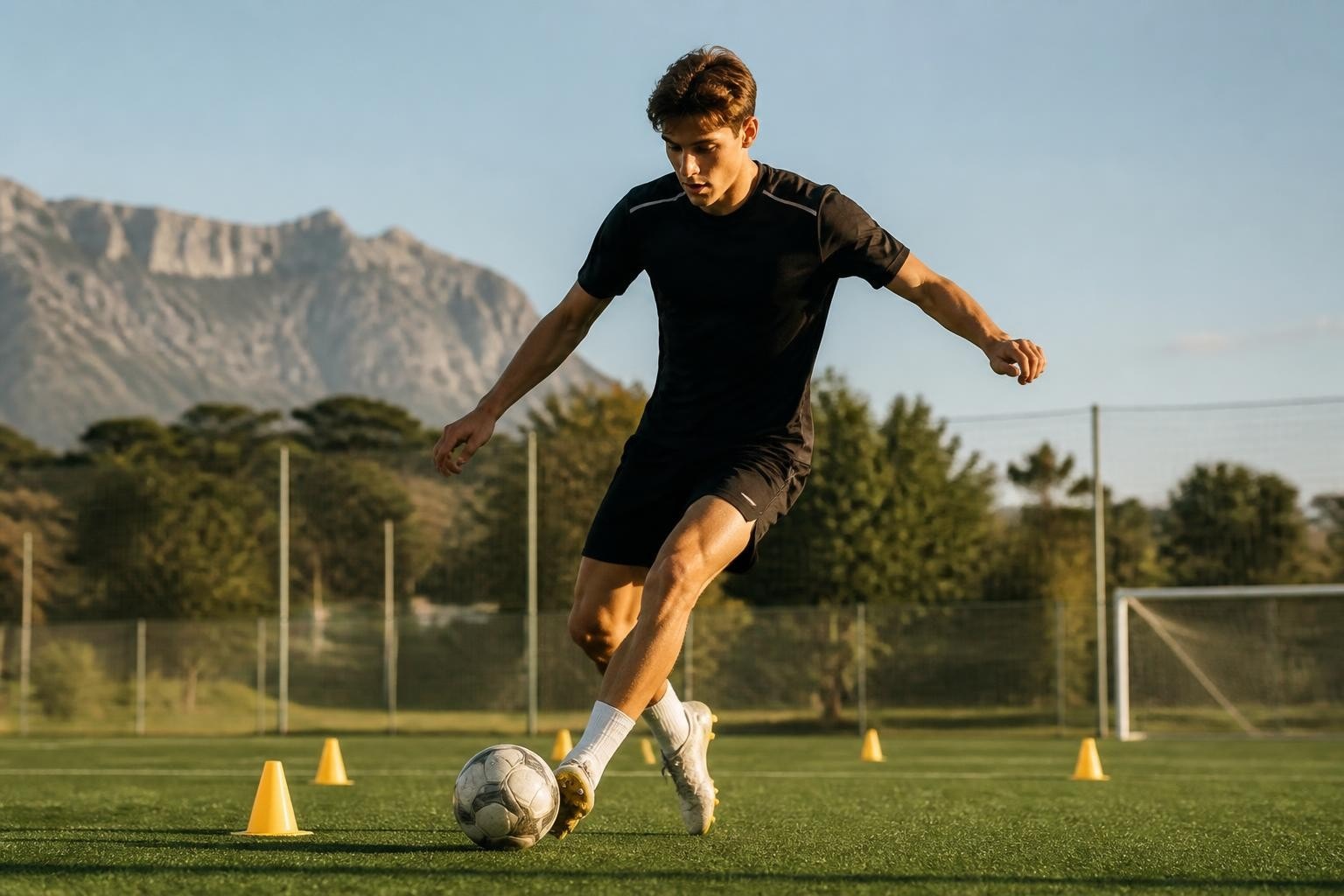
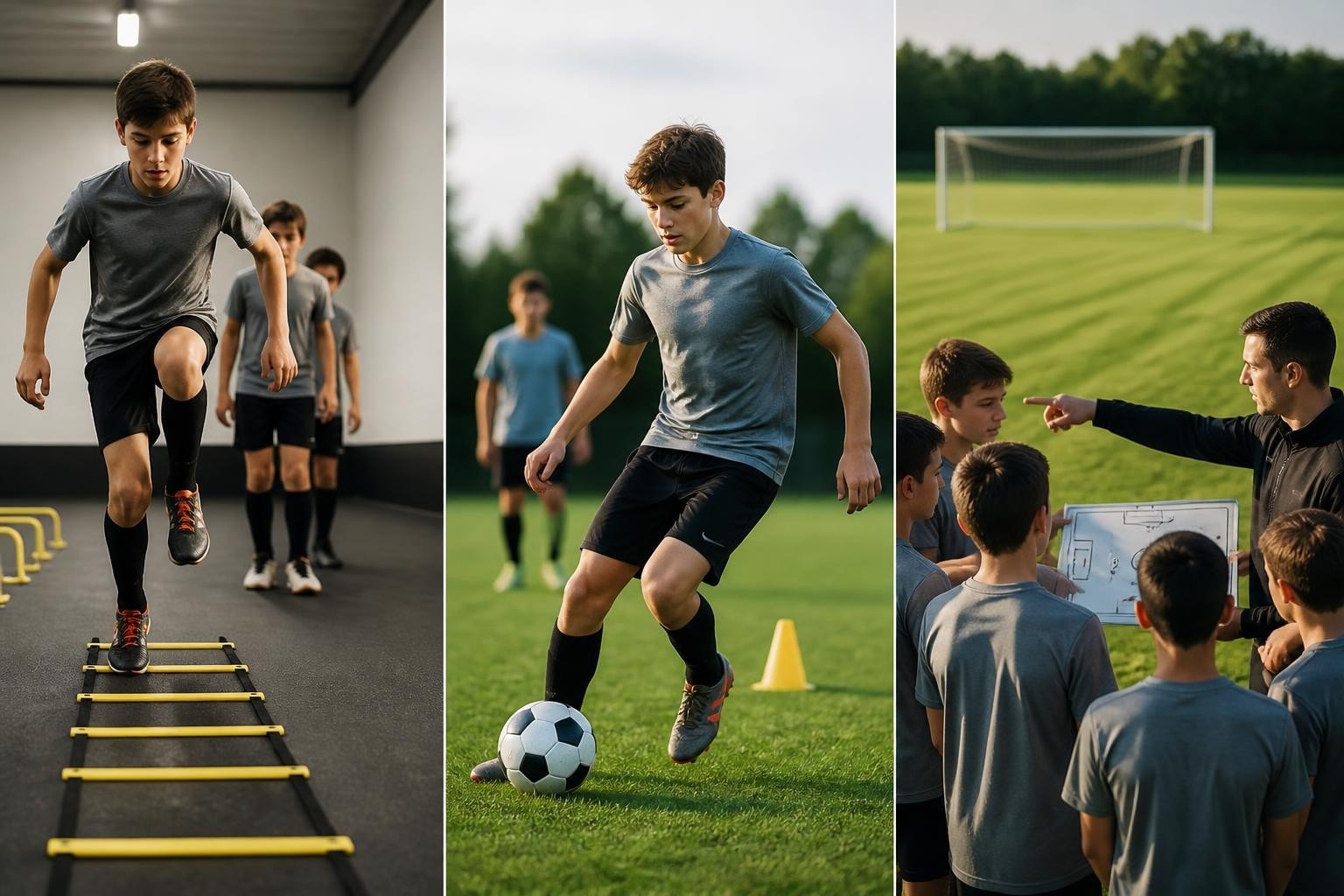
Soccer has captured the hearts of billions worldwide, making it the most popular sport on the planet. Whether you're a parent looking to introduce your child to the beautiful game or an aspiring player wanting to understand the fundamentals, learning soccer how to play opens doors to physical fitness, teamwork, and lifelong enjoyment. This comprehensive guide breaks down everything you need to know about playing soccer, from basic rules and positions to essential skills and training approaches that will set you on the path to success.
Understanding the Basic Rules and Objectives
Soccer's primary objective is straightforward: score more goals than the opposing team by getting the ball into their net. The fundamental rules of soccer create a framework that balances competition with fair play. Each team fields eleven players, including one goalkeeper who can use their hands within the penalty area. The remaining ten players, known as outfield players, advance the ball using their feet, head, or body (excluding arms and hands).
A standard match consists of two 45-minute halves with a brief halftime interval. The clock runs continuously, with the referee adding stoppage time at the end of each half to account for injuries, substitutions, and other delays. Understanding these time constraints helps players develop stamina and pacing strategies essential for competitive play.
The Field and Equipment
The soccer field, or pitch, measures between 100-130 yards in length and 50-100 yards in width for professional matches. Key markings include the center circle, penalty areas, goal areas, and corner arcs. Each goal stands 8 feet tall and 24 feet wide, creating a challenging target that demands precision.
Essential equipment includes:
- Regulation soccer ball (size varies by age group)
- Shin guards for leg protection
- Cleats designed for traction on grass or turf
- Uniform jersey, shorts, and socks
- Goalkeeper gloves (for keepers only)
Players must also understand the offside rule, one of soccer's most nuanced regulations. A player is in an offside position if they are nearer to the opponent's goal line than both the ball and the second-to-last defender when the ball is played to them, though exceptions apply during throw-ins, goal kicks, and corner kicks.
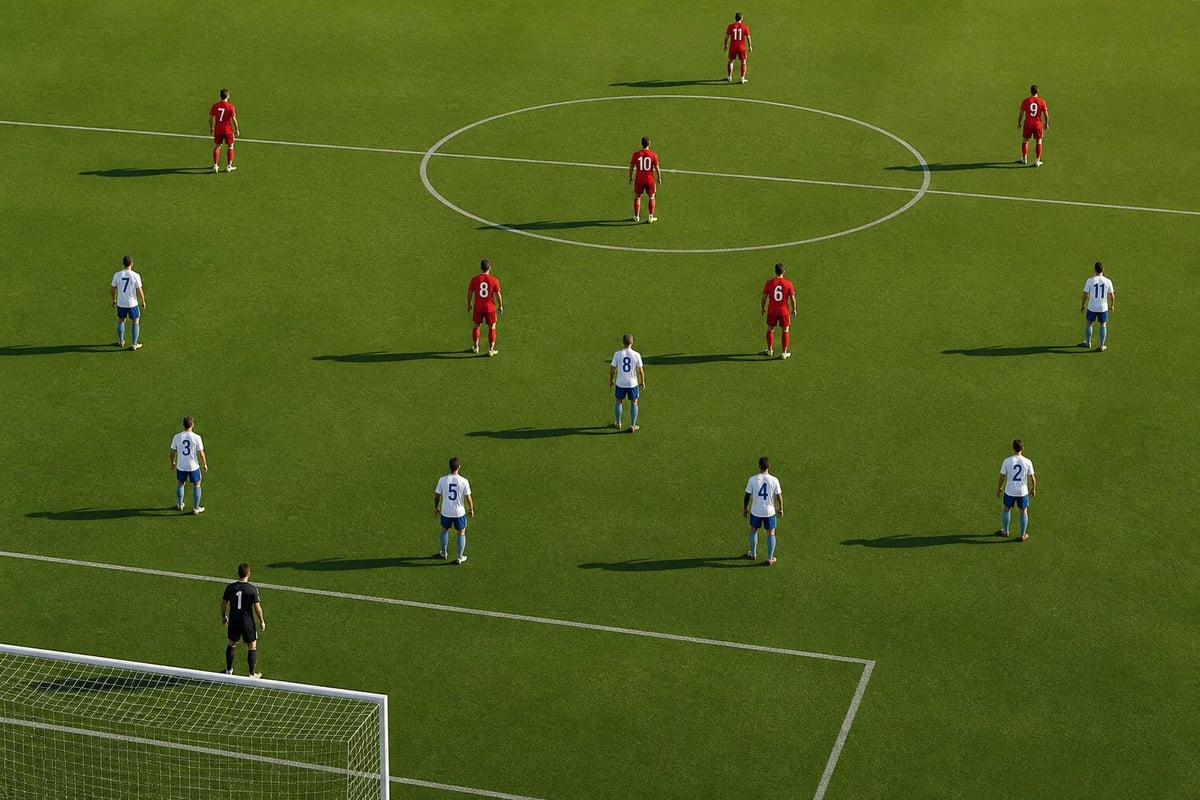
Player Positions and Roles
Mastering soccer how to play requires understanding where players position themselves and what responsibilities each role carries. The goalkeeper serves as the last line of defense, using their hands to stop shots and organizing the defensive line. This position demands quick reflexes, strong communication skills, and the ability to distribute the ball effectively to start counterattacks.
Defenders protect the goal area and prevent opposing attackers from creating scoring opportunities. Center backs provide physical presence and aerial dominance, while fullbacks combine defensive duties with attacking runs down the flanks. Modern soccer demands defenders who can pass accurately and read the game tactically.
Midfield and Attacking Roles
Midfielders control the game's tempo, linking defense to attack while covering the most ground during a match. Central midfielders dictate play through passing and positioning, defensive midfielders shield the backline and break up opposition attacks, and attacking midfielders create scoring chances through vision and creativity.
Forwards carry the primary responsibility for scoring goals. Strikers position themselves to finish chances in the penalty area, while wingers use speed and skill to beat defenders on the flanks. Understanding these positions helps players identify where they fit best based on their physical attributes and technical abilities.
| Position Category | Key Attributes | Primary Responsibilities |
|---|---|---|
| Goalkeeper | Reflexes, handling, communication | Shot-stopping, organizing defense, distribution |
| Defenders | Positioning, tackling, strength | Preventing goals, winning aerial duels, building from back |
| Midfielders | Stamina, passing, vision | Controlling tempo, linking play, covering ground |
| Forwards | Finishing, movement, speed | Scoring goals, creating chances, pressing defenders |
Fundamental Skills Every Player Needs
Technical proficiency forms the foundation of soccer how to play successfully. Nike’s coaching guide emphasizes that mastering basic skills allows players to execute more complex tactics during matches. Ball control represents the most essential skill, enabling players to receive passes, shield the ball from opponents, and maintain possession under pressure.
Dribbling allows players to advance the ball while evading defenders. Effective dribbling combines close ball control with changes of pace and direction. Young players should practice dribbling with both feet, using different parts of the foot (inside, outside, sole) to manipulate the ball. The ability to keep your head up while dribbling separates good players from great ones, as it enables better decision-making.
Passing and Receiving Techniques
Passing accuracy determines possession retention and attacking effectiveness. The inside-of-the-foot pass provides the most control for short to medium distances. Players should plant their non-kicking foot beside the ball, pointing toward the target, while striking through the ball's center with a firm but controlled motion.
Key passing variations include:
- Short passes for maintaining possession
- Through balls to penetrate defensive lines
- Long passes to switch play or find distant teammates
- One-touch passes to increase tempo
Receiving the ball properly cushions the pass and prepares for the next action. Players should position their body to face the direction they want to play next, using the first touch to control the ball into space away from pressure. The detailed gameplay strategies show how these fundamentals connect to create effective team play.
Shooting and Defensive Fundamentals
Scoring goals requires technical precision combined with composure under pressure. When learning soccer how to play at a competitive level, players must develop various shooting techniques. The instep drive generates power for long-range shots, while the side-foot finish offers accuracy in close-range situations. Placement typically beats power, especially when shooting inside the penalty area where goalkeepers have less reaction time.
Shooting drills should emphasize:
- Approaching the ball at an angle for better body position
- Planting the non-kicking foot beside the ball
- Keeping the head steady and eyes on the ball
- Following through toward the target
- Staying balanced throughout the motion

Mastering Defensive Techniques
Defending requires intelligence, positioning, and physical commitment. The first principle of defending involves delaying the attacker to allow teammates to recover into defensive positions. Players should adopt a sideways stance that enables quick movement in any direction while keeping the attacker in front of them.
Tackling removes the ball from an opponent's possession. Block tackles involve meeting the ball simultaneously with an opponent using the inside of the foot. Slide tackles, while spectacular, should be a last resort as they take the defender out of play if mistimed. Smart defenders win the ball through interceptions and positioning rather than constant tackling.
| Defensive Skill | When to Use | Success Factors |
|---|---|---|
| Jockeying | Delaying attackers | Balance, patience, positioning |
| Block Tackle | Direct confrontation | Timing, strength, commitment |
| Interception | Reading passes | Anticipation, speed, awareness |
| Slide Tackle | Emergency situations | Precision, timing, field conditions |
| Heading | Aerial challenges | Courage, technique, jumping ability |
Physical and Tactical Development
Understanding soccer how to play extends beyond individual skills to encompass physical conditioning and tactical awareness. Soccer demands a unique combination of aerobic endurance for 90 minutes of continuous movement and anaerobic power for explosive sprints and jumps. Players typically cover 7-10 kilometers during a match, with frequent changes of direction and intensity.
Training programs should address multiple fitness components. Cardiovascular endurance enables sustained performance throughout the match. Speed and agility training improves a player's ability to beat opponents in one-on-one situations. Strength training, particularly core stability, enhances balance and protects against injury. Flexibility work maintains range of motion and reduces muscle strain risk.
Tactical Intelligence and Game Awareness
Tactical understanding separates recreational players from competitive athletes. At Strive Soccer Academy, young players learn to read the game through structured training that develops technical skills alongside tactical decision-making. Recognition of when to pass, dribble, or shoot comes from experience and coaching that emphasizes game intelligence.
Formation knowledge helps players understand their responsibilities within team structure. Common formations like 4-4-2, 4-3-3, and 3-5-2 each offer different tactical advantages. Players must recognize their role changes as formations shift between attacking and defensive phases. Space creation through movement off the ball often proves more valuable than possession itself.
Tactical concepts to master include:
- Width and depth in attacking play
- Compactness and pressure in defense
- Transition speed between attack and defense
- Support positioning for the ball carrier
- Communication and organizational skills
Training Methods and Practice Routines
Effective practice accelerates development when learning soccer how to play at higher levels. The Bundesliga’s training philosophy emphasizes repetition of game-realistic scenarios rather than isolated drills. Small-sided games (3v3, 5v5) provide more touches on the ball and force quicker decision-making compared to full 11v11 matches.
Individual practice sessions should focus on weak areas while maintaining strengths. Wall passing develops touch and technique, while cone dribbling courses improve close control and agility. Juggling builds coordination and ball familiarity, though it should complement rather than dominate practice time since it doesn't directly translate to match situations.
Structured Training Sessions
Professional training sessions typically follow a progressive structure. The warmup prepares the body physically while incorporating ball work. The technical phase isolates specific skills for focused improvement. The tactical phase applies those skills in game-related scenarios. Sessions conclude with conditioned games that simulate match intensity and decision-making pressure.

Parents seeking quality instruction for young players should look for programs that balance these elements appropriately for each age group. Development-focused coaching prioritizes mastery over winning at youth levels, understanding that technical foundation built early creates better players long-term.
Age-Appropriate Development Pathways
Learning soccer how to play varies significantly based on age and developmental stage. Young children (ages 4-8) benefit most from fun, play-based activities that develop basic motor skills and ball familiarity. Sessions should involve plenty of touches on the ball with minimal standing and waiting. Games like "sharks and minnows" teach dribbling while maintaining engagement.
Pre-teens (ages 9-12) enter a critical skill development window where technical abilities become ingrained. This age group can handle more structured training while still requiring variety and enjoyment. Coaches should introduce tactical concepts gradually, building from simple to complex. The emphasis remains on individual skill mastery while beginning to understand team play.
Advanced Development Considerations
Teenagers (ages 13-18) transition toward a more adult approach to training and tactics. Physical development varies widely during adolescence, requiring individualized attention to conditioning and strength training. Tactical sophistication increases as players understand systems, roles, and game management. Mental skills training becomes valuable for handling competitive pressure and maintaining focus.
The European development model that influences top academies emphasizes long-term player development over short-term results. This approach recognizes that players mature at different rates and that patience during developmental years produces better outcomes than early specialization or win-at-all-costs mentality.
Common Mistakes and How to Avoid Them
New players frequently make predictable errors when learning soccer how to play. Ball-watching, or focusing exclusively on the ball rather than scanning the field, limits tactical effectiveness. Players should practice checking their shoulders to gather information about teammate and opponent positions. This habit enables better decision-making and reduces turnovers.
Over-dribbling represents another common mistake, particularly among skillful young players. While dribbling ability is valuable, soccer is a team sport where passing often provides the most effective solution. Coaches should teach players to recognize when to dribble (when facing isolated defenders or creating space) versus when to pass (when teammates are in better positions).
Mistakes to address through coaching:
- Poor first touch that gives the ball away
- Telegraphing passes by looking directly at the target
- Ball-watching instead of scanning for space
- Neglecting the weaker foot in practice
- Failing to communicate with teammates
- Rushing decisions under minimal pressure
Physical mistakes also hinder progress. Improper running form wastes energy and reduces speed. Poor body positioning when receiving passes makes control difficult. Inadequate warmup increases injury risk. Addressing these technical and tactical errors through focused practice and feedback accelerates improvement.
Building Confidence and Mental Strength
The psychological component of soccer how to play often receives insufficient attention despite its critical importance. Confidence affects every aspect of performance, from willingness to attempt skills in matches to resilience after mistakes. Players build confidence through mastery of fundamentals, positive coaching feedback, and successful experiences in competitive settings.
Mental preparation includes visualization of successful performances, focusing on what you can control, and developing routines that create consistency. Pre-match routines help players enter the proper mental state, whether that involves specific warmup sequences, music selection, or visualization exercises. The ability to manage nerves and channel them into positive energy separates good players from great ones.
Resilience helps players bounce back from setbacks, whether individual mistakes or team losses. Growth mindset coaching emphasizes effort and improvement over innate talent. Players who view challenges as opportunities rather than threats develop faster and handle pressure better. Quality training programs recognize that building character and mental strength matters as much as developing technical skills.
Continuing Your Soccer Journey
Mastering soccer how to play represents a lifelong journey rather than a destination. Even professional players continue refining technique, expanding tactical knowledge, and adapting to new challenges throughout their careers. The key to sustained improvement lies in consistent practice, quality coaching, and maintaining passion for the game.
Players should set specific, measurable goals for their development. These might include mastering a particular skill, earning a position on a competitive team, or improving fitness benchmarks. Regular assessment helps track progress and identify areas requiring additional focus. Video analysis of your own matches reveals patterns and tendencies that aren't apparent during play.
The soccer community offers countless resources for continued learning. Match analysis develops tactical understanding by studying how top players solve problems. Training with more experienced players accelerates improvement by raising the standard of practice. Seeking feedback from qualified coaches provides direction and accountability. The combination of deliberate practice, quality instruction, and competitive experience creates the optimal environment for player development.
Understanding the fundamentals of soccer how to play creates a foundation that supports years of enjoyment and achievement in the beautiful game. Whether you're starting your soccer journey or looking to advance your skills, the combination of technical mastery, tactical intelligence, physical preparation, and mental strength determines success. Strive Soccer Academy provides young athletes in Surrey, BC, with European-style training that develops all four pillars of player growth through licensed coaches committed to building both skilled players and strong characters. Our programs create real opportunities for players to reach their potential on and off the field.