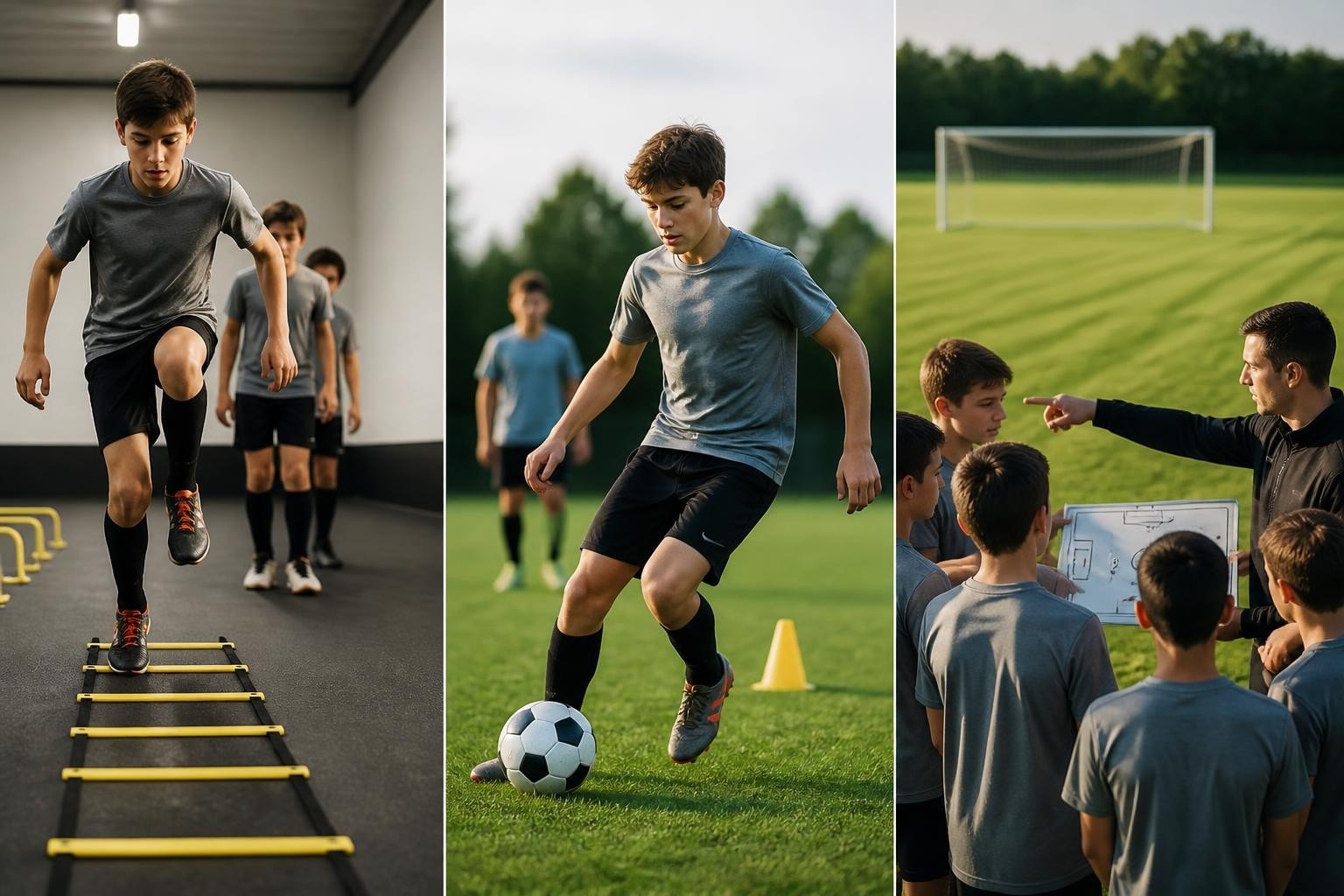
Young soccer players today have more opportunities than ever to develop their skills outside traditional team practices. Soccer home drills provide the foundation for technical mastery, allowing athletes to refine their touch, control, and decision-making in a comfortable environment. Whether limited by weather, scheduling conflicts, or simply wanting extra practice time, home training has become an essential component of player development. The most successful young athletes understand that improvement happens through consistent, deliberate practice, and the home environment offers unique advantages for focused skill work.
Building a Foundation with Ball Mastery
Technical excellence begins with comfortable ball manipulation. Soccer home drills focusing on ball mastery create the foundation every player needs before advancing to complex tactical scenarios.
Essential Touch and Control Exercises
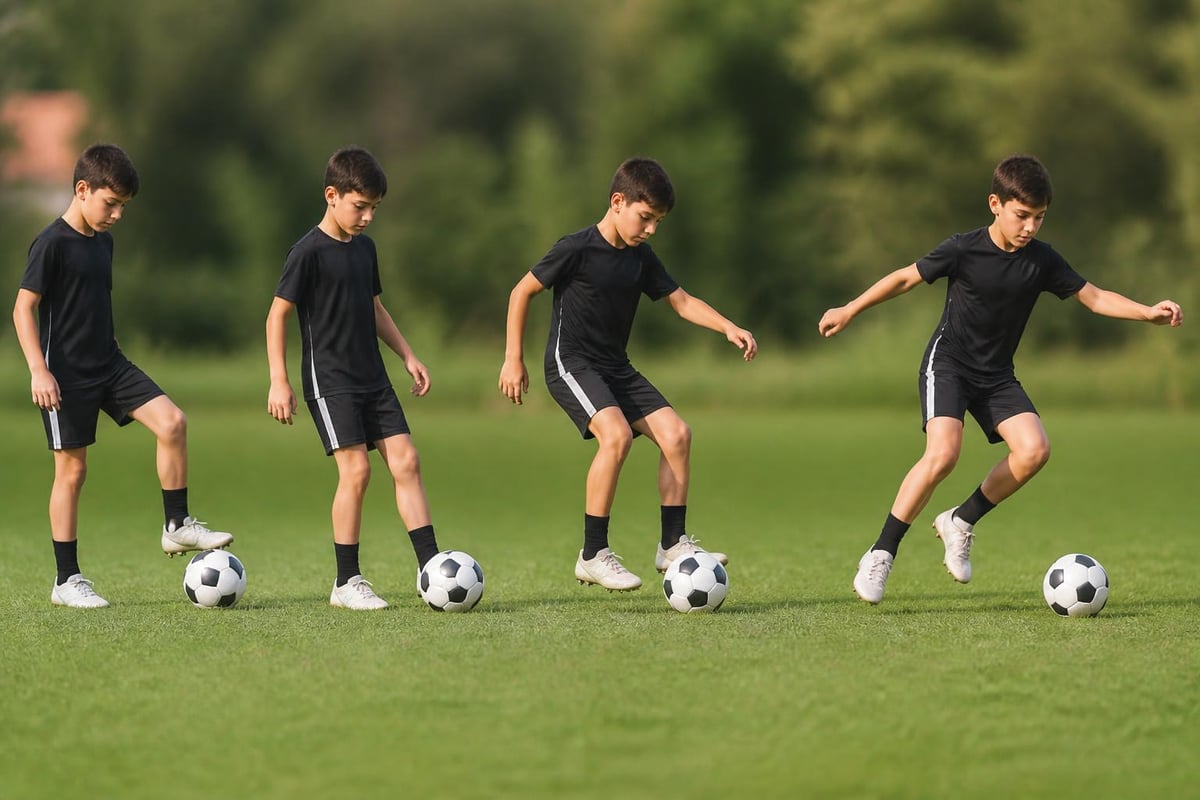
Players should start each home session with fundamental touch work. Simple exercises like toe taps, sole rolls, and inside-outside touches develop muscle memory and foot coordination. These movements might seem basic, but they build the neural pathways required for instinctive ball control during match situations.
Key ball mastery progressions include:
- Foundation touches (10 minutes daily)
- Single-foot isolation exercises
- Two-touch combination sequences
- Speed progression challenges
- Directional change integration
The beauty of these drills lies in their simplicity and space efficiency. A small area measuring just six feet by six feet provides sufficient room for comprehensive ball mastery work. Home soccer training programs emphasize consistent daily practice over lengthy, sporadic sessions.
Incorporating Rhythm and Coordination
Rhythm-based soccer home drills enhance a player's natural timing and flow with the ball. Setting a metronome or playing music with a steady beat helps young athletes develop consistent touch patterns. This rhythmic foundation translates directly to maintaining possession under pressure during competitive play.
| Drill Type | Duration | Frequency | Primary Benefit |
|---|---|---|---|
| Toe Taps | 2 minutes | Daily | Quick feet development |
| Sole Rolls | 3 minutes | Daily | Balance and control |
| Inside-Outside | 4 minutes | Daily | Touch variation |
| Combination Moves | 5 minutes | 5x weekly | Pattern recognition |
Young players who dedicate fifteen to twenty minutes daily to ball mastery typically demonstrate noticeable improvement within three weeks. The key lies in focused repetition rather than rushed volume.
Developing Passing Accuracy at Home
Passing forms the backbone of effective team play. Soccer home drills designed for passing accuracy can be adapted for solo practice using walls, rebounders, or simple targets.
Wall Work for First-Touch Improvement
Wall passing remains one of the most effective solo training methods. Players strike the ball against a solid surface and receive it back, creating a continuous feedback loop. This approach develops both passing accuracy and first-touch control simultaneously.
Progressive wall passing sequence:
- Two-touch passing (control and return) – 50 repetitions
- One-touch returns with alternating feet – 40 repetitions
- Varied distance work (5, 10, 15 feet) – 30 repetitions each
- Power progression from soft to firm – 25 repetitions
- Movement integration (pass, shuffle, receive) – 20 repetitions
The wall provides immediate, honest feedback. Poor technique results in difficult returns, while clean strikes produce manageable rebounds. This self-correcting element makes wall work invaluable for independent training.
Target Practice and Precision Training
Setting up cone gates, marked zones, or hanging targets creates specific accuracy objectives. Soccer home drills incorporating target work develop the precision required for successful through balls and switching play during matches. Players can use household items like water bottles, boxes, or chalk marks to create training zones.
At Strive Soccer Academy, we emphasize the importance of purposeful practice over mindless repetition. Every pass should have an intended target and appropriate weight, even during solo training sessions.
Dribbling and Agility Development
Close control while moving separates good players from great ones. Soccer home drills focused on dribbling develop the ability to manipulate the ball while navigating tight spaces and changing directions rapidly.
Cone Weaving and Direction Changes
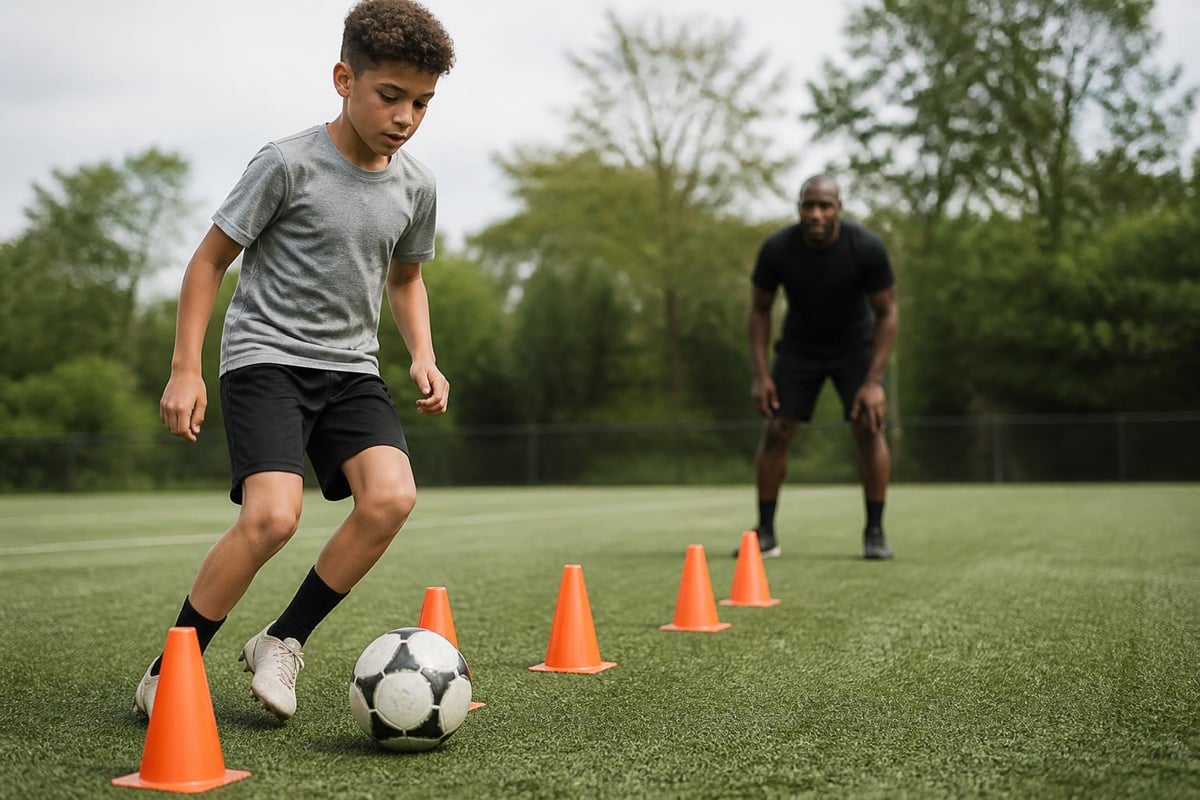
Setting up a simple cone course creates endless dribbling variations. Players can use anything as markers: cones, shoes, water bottles, or even household items. The key lies in maintaining close ball control while executing sharp cuts and accelerations.
Basic cone configurations for home training:
- Straight-line weave (6-8 cones, 2 feet apart)
- Zigzag pattern (alternating sides, 3 feet spacing)
- Square pattern (four corners with turns)
- Figure-eight continuous loop
- Random scatter (develops scanning ability)
Each configuration develops different aspects of ball control. Straight-line weaves build fundamental touch consistency, while random patterns force players to keep their heads up and process spatial information. Structured soccer drills help players understand progression pathways from basic to advanced movements.
Speed Dribbling and Acceleration
Many young players can dribble slowly with good control but struggle to maintain possession at speed. Soccer home drills that incorporate timed challenges or specific distance requirements develop this crucial ability. Players should practice pushing the ball forward with larger touches, then catching up with smaller control touches.
| Drill Name | Setup | Focus Area | Recommended Sets |
|---|---|---|---|
| Speed Gates | 4 cones, 20 feet | Acceleration | 8-10 runs |
| Touch-Sprint-Touch | Open space | Speed control | 6-8 runs |
| 1v1 Moves Solo | Single cone | Skill execution | 10 each move |
| Pressure Dribble | Tight area | Close control | 5 x 45 seconds |
The physical component of these drills builds leg strength and cardiovascular endurance alongside technical skills. This integrated approach mirrors the demands of actual match play.
Shooting Technique Without a Goal
Developing proper shooting mechanics doesn't require a full-size goal. Soccer home drills for shooting focus on technique, power generation, and accuracy using alternative targets and methods.
Form and Follow-Through Practice
Proper shooting form begins with approach angle, plant foot positioning, and strike zone contact. Young players can practice these elements by striking the ball against a wall or into a net, focusing entirely on technique rather than outcome. Video recording these repetitions allows for self-analysis and correction.
Technical checkpoints for shooting practice:
- Approach angle (45 degrees for power, straight for placement)
- Plant foot position (beside the ball, toe pointing at target)
- Ankle lock and follow-through
- Contact point on the ball (center for drives, bottom for lifts)
- Body position over the ball
Solo shooting work develops consistency through repetition. Players who complete one hundred technically sound strikes daily build the muscle memory required for instinctive shooting during matches.
Weak Foot Development
Most young players heavily favor their dominant foot, creating a significant tactical disadvantage. Soccer home drills specifically targeting the weaker foot accelerate bilateral development. The home environment provides a judgment-free space for players to work on this vulnerable area without team pressure.
Dedicating at least forty percent of home training time to weak-foot exercises creates balanced technical ability. Simple exercises like exclusive weak-foot juggling, wall passing, or dribbling force neurological adaptation and skill transfer.
Conditioning and Fitness Integration
Physical preparation supports technical execution. Soccer home drills that incorporate conditioning elements develop the stamina and explosiveness required for ninety-minute performances.
Agility Ladder and Footwork Sequences
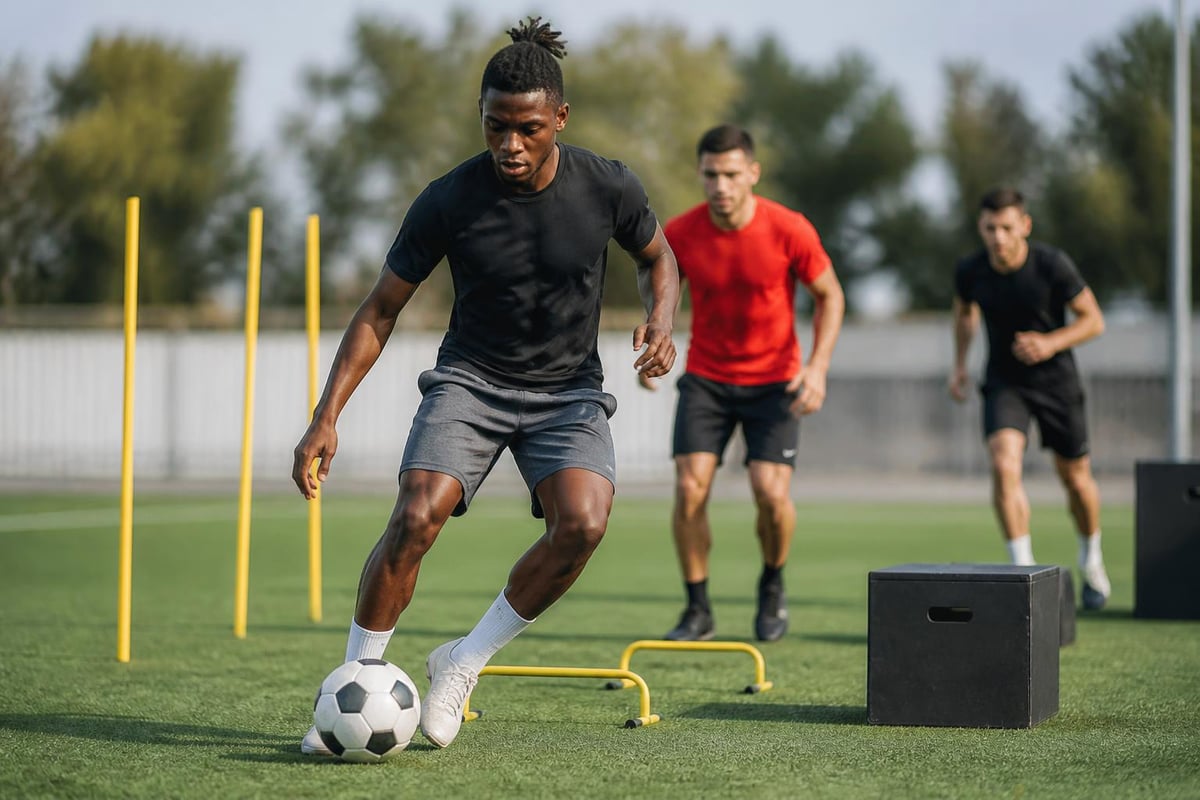
Agility ladders provide structured footwork patterns that enhance coordination, balance, and quick feet. These tools take minimal space and create measurable progression opportunities. Advanced training programs often incorporate ladder work as foundational conditioning.
Essential ladder patterns for soccer athletes:
- One-foot in each square – Speed baseline
- Two-feet in each square – Coordination
- Lateral shuffles – Defensive movement
- Ickey shuffle – Quick direction change
- In-out patterns – Acceleration/deceleration
Each pattern should be performed for three to five repetitions with rest intervals. Quality movement matters more than rushed completion.
Bodyweight Strength Circuits
Soccer-specific strength work can be accomplished without equipment. Exercises like single-leg squats, lunges, planks, and dynamic movements build the muscular foundation for powerful strikes, quick turns, and injury prevention.
| Exercise | Repetitions | Sets | Rest Period |
|---|---|---|---|
| Single-leg squats | 10 each leg | 3 | 45 seconds |
| Walking lunges | 20 total | 3 | 30 seconds |
| Plank holds | 60 seconds | 3 | 45 seconds |
| Lateral bounds | 10 each side | 3 | 60 seconds |
| Mountain climbers | 30 total | 3 | 30 seconds |
This circuit requires approximately fifteen minutes and significantly improves functional strength when performed three times weekly. The exercises directly transfer to on-field movements like shielding, jumping, and rapid acceleration.
Creating Effective Training Schedules
Consistency transforms soccer home drills from occasional activities into development engines. Structured training schedules ensure balanced skill development and prevent burnout.
Weekly Planning Framework
Effective home training balances technical work, physical conditioning, and recovery. Young players benefit from clear weekly structures that designate specific focus areas for each session. This organization prevents random, unfocused practice while maintaining variety.
Sample weekly home training schedule:
- Monday: Ball mastery and dribbling (30 minutes)
- Tuesday: Passing accuracy and first touch (30 minutes)
- Wednesday: Physical conditioning circuit (25 minutes)
- Thursday: Shooting technique and weak foot (30 minutes)
- Friday: Game-specific movements and skills (30 minutes)
- Saturday: Team practice or match
- Sunday: Active recovery or optional light technical work
This framework provides approximately 2.5 hours of supplemental training beyond team commitments. Players following this structure consistently demonstrate accelerated development compared to peers relying solely on team practices.
Progress Tracking and Goal Setting
Measurable objectives keep young athletes motivated and provide tangible evidence of improvement. Soccer home drills become more effective when players track repetitions, times, or accuracy percentages. Simple notebooks or smartphone apps can document progress.
Setting specific, achievable goals creates purpose behind each session. Rather than vague aspirations like "get better at dribbling," effective goals specify outcomes: "Complete cone weave in under 15 seconds with no touch errors" or "Execute 50 consecutive wall passes with left foot only."
Space-Efficient Training Solutions
Limited space challenges many families attempting home training. Soccer home drills can be adapted to virtually any environment with creative setup adjustments and exercise modifications.
Indoor Adaptations
Garage spaces, basements, or even living rooms can accommodate modified soccer training. Using softer practice balls prevents damage while still developing touch and control. Indoor soccer training options focus on technique refinement rather than power-based exercises.
Indoor-friendly drill modifications:
- Juggling with size 1 or 2 balls
- Stationary ball mastery sequences
- Wall passing with foam balls
- Close-control dribbling in small squares
- Core strengthening and flexibility work
These adaptations maintain training consistency regardless of weather or outdoor space availability. The technical focus actually accelerates skill development by forcing precise control in confined areas.
Backyard and Driveway Setups
Outdoor home spaces offer more versatility for comprehensive training. Even small yards provide sufficient room for most fundamental soccer home drills. Portable equipment like pop-up goals, rebounders, and cone sets create functional training environments anywhere.
Parents can support their young athletes by designating a specific training area and helping maintain equipment organization. This commitment demonstrates the value placed on athletic development and creates accountability.
Mental Training and Game Intelligence
Physical skills represent only one dimension of player development. Soccer home drills can incorporate cognitive elements that enhance decision-making, spatial awareness, and tactical understanding.
Visualization and Mental Rehearsal
Elite athletes across all sports use visualization as a training tool. Young soccer players can mentally rehearse skills, game situations, and successful performances. This practice strengthens neural pathways similarly to physical repetition.
Effective visualization sessions last five to ten minutes and include specific sensory details: the feel of the ball, sounds of the game, visual recognition of space, and kinesthetic awareness of body position. Regular practice enhances confidence and accelerates skill acquisition.
Video Analysis and Self-Assessment
Recording home training sessions provides valuable feedback opportunities. Young players can review their technique, identify areas needing improvement, and celebrate progress. Comprehensive training approaches often include self-analysis components as critical development tools.
Comparing current footage to previous recordings or professional demonstrations highlights improvement trajectories and maintains motivation during challenging development phases.
Equipment Recommendations for Home Training
Quality equipment enhances training effectiveness without requiring significant investment. Soccer home drills become more engaging and productive with appropriate tools.
Essential Training Gear
Starting with fundamental equipment creates a solid foundation for comprehensive home training:
- Quality soccer ball (appropriate size for age group)
- Training cones or markers (minimum 8-10)
- Agility ladder (optional but valuable)
- Rebounder net (enhances passing practice)
- Small-sided goals or targets (creates shooting objectives)
This basic setup costs approximately $100-150 and serves players for multiple years. Investing in durable equipment prevents frequent replacements and maintains training consistency.
Progressive Equipment Additions
As players advance, additional tools can enhance specific skill areas. Resistance bands develop power, speed parachutes build acceleration, and weighted vests increase conditioning intensity. However, these additions should supplement, not replace, fundamental ball work.
The most important training tool remains the soccer ball itself. Players who develop genuine comfort and connection with the ball through thousands of touches inevitably outperform those relying on elaborate equipment with limited ball contact.
Parent Involvement and Support Strategies
Family support significantly impacts a young athlete's development trajectory. Parents can enhance the effectiveness of soccer home drills through appropriate involvement and encouragement.
Creating Accountability Without Pressure
Effective parental support balances encouragement with autonomy. Setting up simple tracking systems, asking about training sessions, and showing genuine interest creates accountability. However, excessive pressure or criticism undermines intrinsic motivation.
Parents might ask "What did you work on today?" rather than "Did you complete all your drills?" This subtle shift emphasizes process over outcomes and maintains the joy in training.
Participating in Training Sessions
Younger players especially benefit from parental participation during home training. Parents can serve as passers, defenders, or simply provide companionship during otherwise solitary practice. This involvement strengthens family bonds while supporting athletic development.
Even parents without soccer backgrounds can hold targets, time drills, or count repetitions. The presence and attention matter more than technical expertise.
Seasonal Training Adjustments
Soccer home drills should evolve throughout the year to complement team training cycles and match schedules. Strategic periodization prevents overtraining while maintaining development momentum.
Off-Season Focus
The off-season provides ideal opportunities for technical refinement and physical development. Without the pressure of immediate matches, players can dedicate time to weak-foot development, new skill acquisition, and strength building. Sessions can extend to 45-60 minutes when time permits.
This period also allows for addressing specific weaknesses identified during the previous season. Targeted work on particular skills creates noticeable improvement before team training resumes.
In-Season Maintenance
During competitive seasons, soccer home drills should maintain sharpness without creating fatigue. Sessions of 20-30 minutes focusing on ball mastery, first touch, and specific game preparations support rather than strain young athletes. Quality trumps quantity during heavy competition periods.
Pre-match routines might include visualization, light technical work, and mental preparation rather than physically demanding training. Understanding appropriate training intensity for different season phases demonstrates maturity and intelligence.
Integrating Technology and Training Apps
Modern technology offers valuable tools for enhancing home training effectiveness. Various apps and platforms provide structured programs, progress tracking, and skill demonstrations.
Training Apps and Digital Resources
Several soccer-specific applications provide drill libraries, training plans, and video instruction. Equipment-free training options make soccer accessible regardless of resource availability. These platforms often include progression frameworks that guide players from fundamental to advanced skills.
Digital tools also facilitate remote coaching, allowing players to share videos with trainers and receive personalized feedback. This connectivity extends quality instruction beyond traditional practice settings.
Performance Tracking Technology
Wearable devices and smartphone apps can monitor various performance metrics during home training. Tracking touches, sprint speeds, or session durations provides objective data supporting subjective feel. This information helps players understand their work capacity and identify improvement trends.
However, technology should enhance rather than replace fundamental training. The best young players still develop through thousands of quality ball touches, not exclusively through data analysis.
Consistent home training through purposeful soccer home drills creates the foundation for long-term player development. These sessions develop technical mastery, physical capacity, and mental resilience that transfer directly to competitive performance. At Strive Soccer Academy, our European-style training philosophy emphasizes the importance of individual technical development alongside team training, helping young athletes in Surrey, BC reach their full potential through comprehensive skill development across technical, tactical, physical, and psychological dimensions.