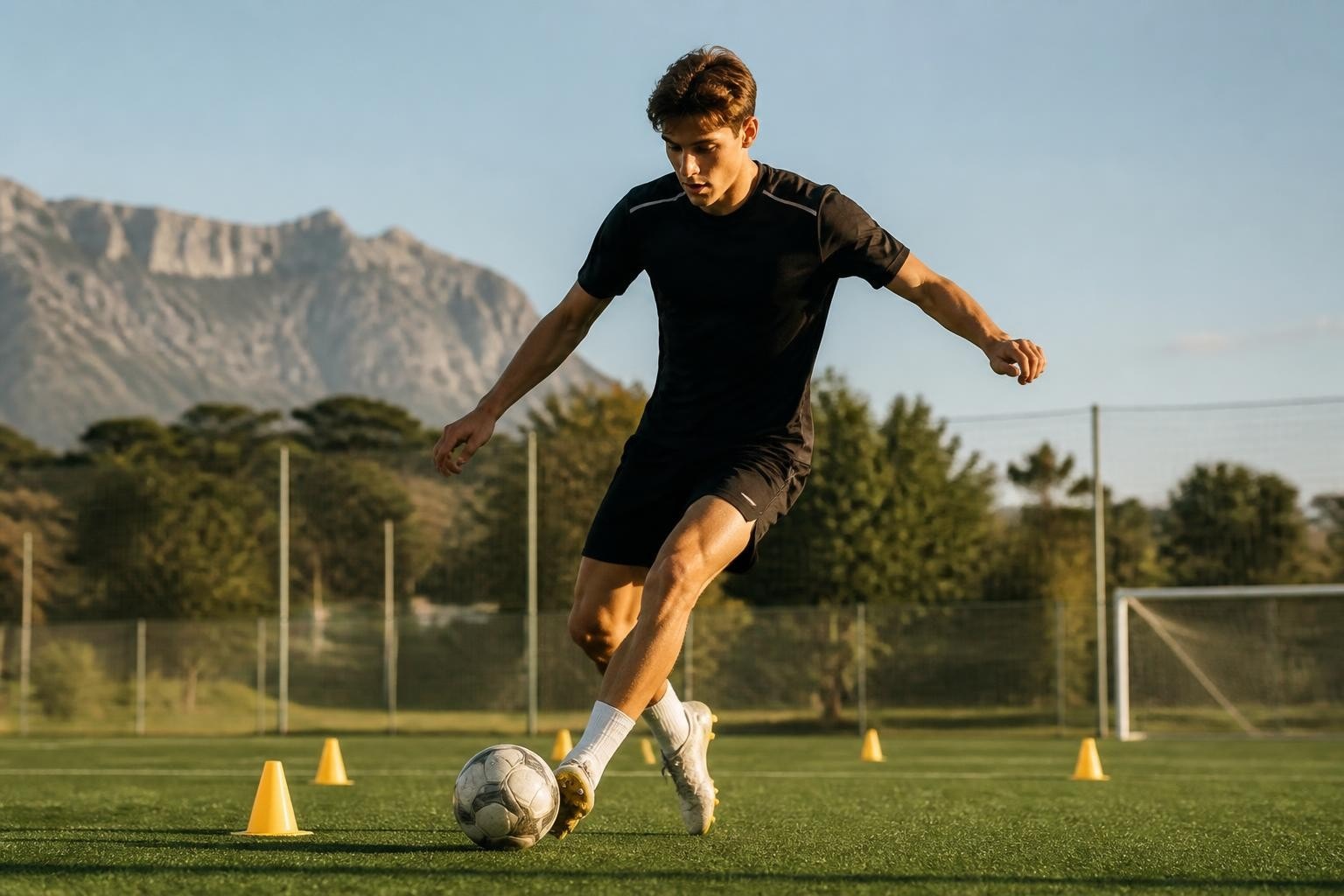
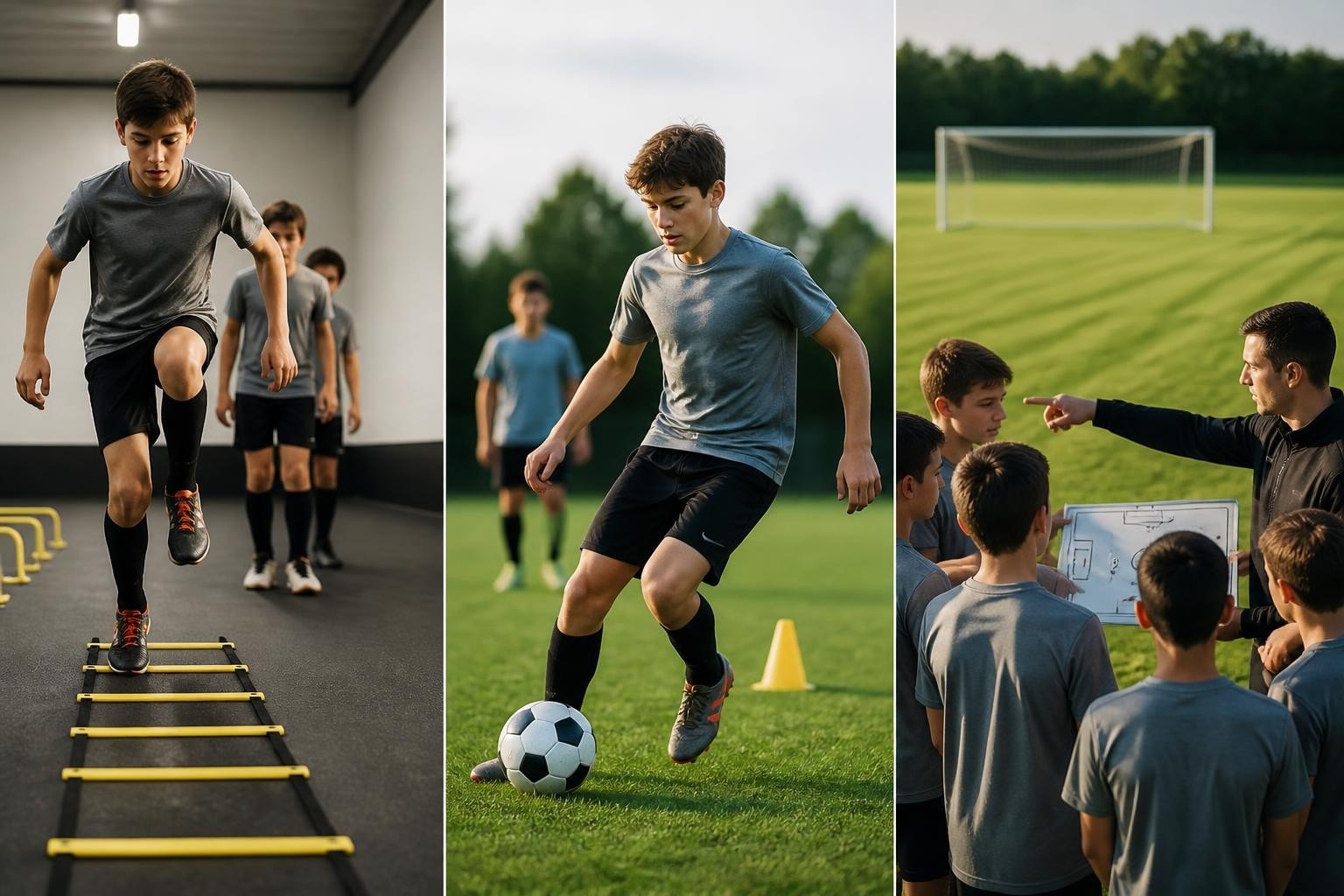
Youth soccer development has evolved significantly over the past two decades, with training methodologies shifting from traditional large-group drills to more dynamic, game-based approaches. Among these modern training techniques, small sided games have emerged as a cornerstone of effective player development, offering young athletes the repetition, decision-making opportunities, and realistic match scenarios needed to accelerate their growth. At Strive Soccer Academy, we’ve integrated this training approach into our European-style philosophy, creating an environment where players experience maximum touches, constant tactical challenges, and authentic soccer situations that translate directly to competitive matches.
The Foundation of Small Sided Games in Player Development
Small sided games represent a training format where players engage in modified soccer matches with reduced team sizes, smaller playing areas, and adapted rules designed to emphasize specific aspects of the game. Unlike traditional 11v11 formats, these games typically range from 3v3 to 7v7, creating an environment where every player becomes significantly more involved in the action.
The power of this training method lies in its ability to compress the learning experience. When you reduce the number of players on the field, each individual athlete receives substantially more touches on the ball, faces more decision-making moments, and encounters tactical situations more frequently than they would in full-sided games.
Why Traditional Training Falls Short
Many youth soccer programs still rely heavily on static drills where players stand in lines, waiting for their turn to perform isolated skills. While these exercises have their place in introducing basic techniques, research on small-sided games effectiveness demonstrates that game-based training produces superior results across multiple development metrics.
Consider the typical training session scenario:
- Line drills: A player might touch the ball 15-20 times in an hour
- Full 11v11 scrimmage: A player touches the ball 30-40 times
- Small sided games: A player touches the ball 80-150 times
The difference is remarkable. Young players need repetition to develop muscle memory, confidence, and technical mastery, and small sided games deliver this repetition within realistic match contexts.
Technical Development Through Game-Based Training
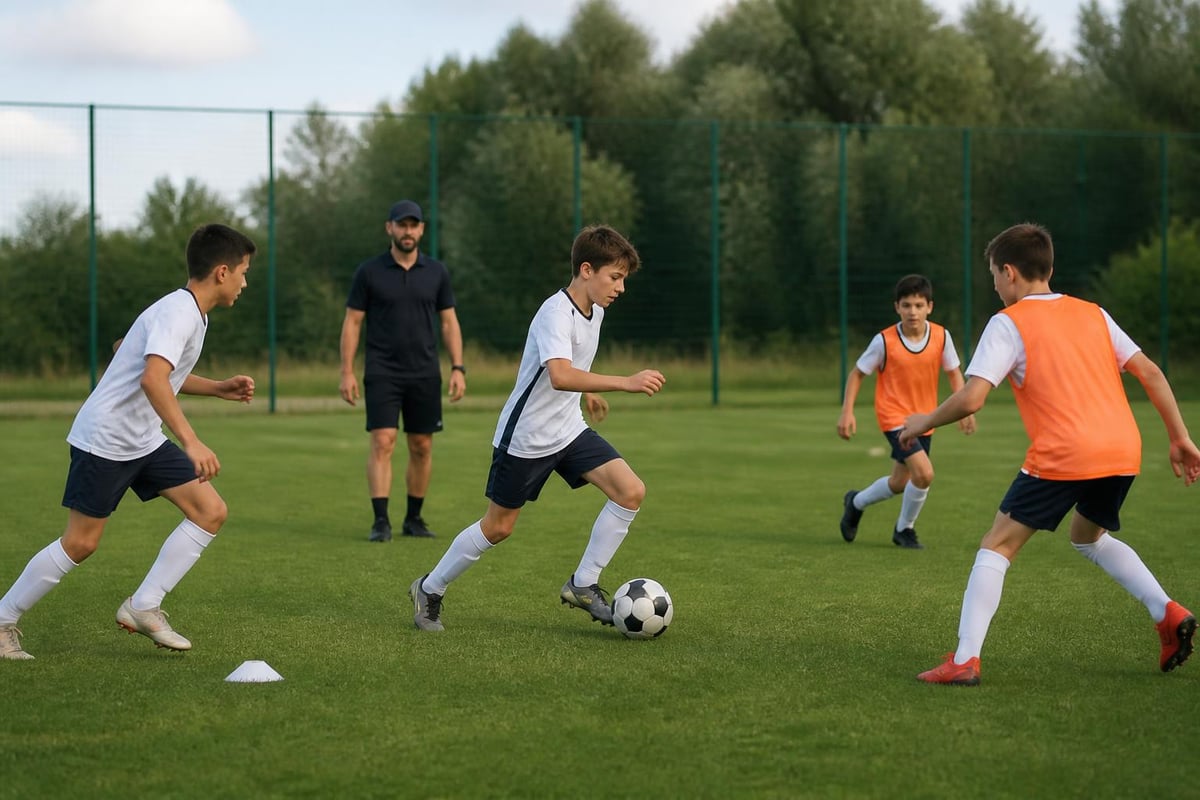
Technical skill development accelerates dramatically when players practice in game-realistic situations rather than isolated drills. Small sided games force players to execute techniques under pressure, with defenders closing down space and teammates demanding quick decisions.
Ball Mastery Under Pressure
In a 4v4 game on a reduced field, players cannot rely on time and space to execute skills comfortably. They must:
- Control the ball with their first touch while scanning for opponents
- Dribble in tight spaces with defenders applying immediate pressure
- Pass accurately while moving and adjusting to teammate positioning
- Shoot quickly when opportunities emerge, often from awkward angles
This constant pressure environment mirrors what players face in competitive matches, making their technical training transferable to real games. The systematic review of small-sided games methodology confirms that players who train predominantly through game-based approaches demonstrate superior technical execution under match pressure compared to those who focus on isolated drill work.
Progressive Skill Development
Our approach at Strive Soccer Academy aligns with the four pillars of player development: Technical, Tactical, Physical, and Psychological. Small sided games naturally integrate all four elements simultaneously, creating comprehensive learning experiences.
| Game Format | Primary Technical Focus | Tactical Emphasis | Physical Demand |
|---|---|---|---|
| 3v3 | Close control, 1v1 skills | Triangle support, quick transitions | High intensity, short bursts |
| 4v4 | Passing combinations, receiving | Diamond shape, width concepts | Moderate intensity, sustained effort |
| 5v5 | First touch quality, scanning | Defensive shape, pressing triggers | Balanced intensity, varied movements |
Tactical Intelligence and Decision-Making Skills
Perhaps the most significant advantage of small sided games lies in their capacity to develop tactical awareness and decision-making abilities. In larger format games, young players can hide, avoiding responsibility and difficult decisions. In smaller games, every player must engage, think, and choose the appropriate action constantly.
Reading the Game
When field dimensions shrink and player numbers decrease, the game speeds up dramatically. Players face decisions every few seconds:
- Should I dribble to create space or pass to maintain possession?
- Where should I position myself when my team loses the ball?
- Which passing angle creates the best opportunity for progression?
- When should I press the opponent versus dropping into defensive shape?
These questions arise naturally during small sided games, forcing players to develop their soccer IQ through experience rather than passive instruction. Coaches can guide this learning through strategic game design, adjusting rules and field dimensions to emphasize specific tactical concepts.
Age-Appropriate Tactical Progression
Different age groups benefit from specifically designed small sided games formats. For younger players, small-sided games for U7 athletes focus on basic positional awareness and simple passing combinations, while training formats for U10 players introduce more complex tactical concepts like defensive pressing and third-man runs.
At Strive Soccer Academy, our licensed coaches understand this progression, designing training sessions that challenge players appropriately for their developmental stage while maintaining the engagement and fun that keeps young athletes motivated.
Physical Conditioning in Game Context
Small sided games deliver exceptional physical conditioning benefits while keeping players engaged and motivated. Unlike monotonous fitness drills that young athletes often resist, game-based training disguises conditioning work within competitive scenarios that players eagerly embrace.
High-Intensity Interval Training
The structure of small sided games naturally creates high-intensity interval training patterns:
- Work periods: Players engage in intense bursts of sprinting, changing direction, and explosive movements during active play
- Recovery periods: Brief stoppages for throw-ins, goal kicks, or coaching moments allow partial recovery
- Repetition: Multiple game cycles throughout a training session provide accumulated conditioning benefits
This training pattern mirrors the physiological demands of competitive soccer matches more accurately than traditional conditioning exercises like long-distance running or isolated sprint drills.
Functional Fitness Development
The physical demands of small sided games develop soccer-specific fitness qualities:
- Acceleration and deceleration: Constant changes of pace in limited space
- Multi-directional movement: Side-to-side, backward, and diagonal running patterns
- Agility and balance: Maintaining control while changing direction under pressure
- Aerobic and anaerobic capacity: Sustained effort with periodic high-intensity bursts
These fitness qualities transfer directly to match performance, unlike general fitness that may not apply effectively to soccer-specific situations. Our Soccer High Performance Training incorporates these principles, providing young athletes with professional-level training environments that sharpen technical skills while building the physical foundation needed for competitive success.
Psychological Growth Through Competitive Scenarios
The psychological and emotional development young players experience through small sided games often represents the most valuable yet overlooked benefit. These training formats create safe environments where players can take risks, experience failure, learn resilience, and develop confidence through repeated success.
Building Mental Toughness
Small sided games present constant challenges that test players’ mental strength:
- Handling mistakes: With more ball touches comes more opportunities for errors, teaching players to recover quickly and maintain focus
- Dealing with pressure: Tight defensive marking and limited time force players to perform under stress
- Communication requirements: Smaller teams demand vocal leadership and constant teammate interaction
- Competitive intensity: Close scorelines and frequent goal-scoring opportunities create meaningful competitive experiences
These psychological challenges, when properly managed by skilled coaches, build the mental resilience players need for high-level competition. At Strive Soccer Academy, our Canada Soccer licensed coaches create supportive yet demanding environments where players develop this mental toughness progressively.
Confidence Through Success
One of small sided games’ most powerful psychological benefits is the confidence young players gain through increased success opportunities. When athletes touch the ball more frequently, complete more passes, and score more goals, they develop positive associations with training and competition.
| Psychological Benefit | How Small Sided Games Deliver | Long-Term Impact |
|---|---|---|
| Self-confidence | More touches, more success moments | Willingness to attempt advanced skills in matches |
| Resilience | Immediate opportunities to recover from mistakes | Better emotional regulation during competition |
| Leadership | Smaller groups require everyone to communicate | Development of captain qualities and vocal presence |
| Competitive mindset | Frequent scoring opportunities and close games | Healthy desire to compete and improve |
Coaching Strategies for Maximizing Game-Based Training
Effective implementation of small sided games requires thoughtful coaching and strategic session design. Simply reducing player numbers without purpose or structure limits the potential benefits of this training approach.
Designing Effective Game Formats
Coaches should consider multiple variables when designing small sided games:
- Field dimensions: Adjusting length and width changes the game’s tactical emphasis
- Goal size and type: Small goals encourage accurate shooting; larger goals reward power
- Player numbers: Even formats (4v4) create balanced challenges; uneven formats (4v3) emphasize specific skills
- Rule modifications: Limiting touches, requiring minimum passes, or designating zones adds tactical complexity
- Duration: Shorter games (3-5 minutes) maintain intensity; longer games develop endurance
Coaches integrating small sided games into their programs should experiment with these variables, observing how different combinations affect player behavior and learning outcomes.
The Coach’s Role During Games
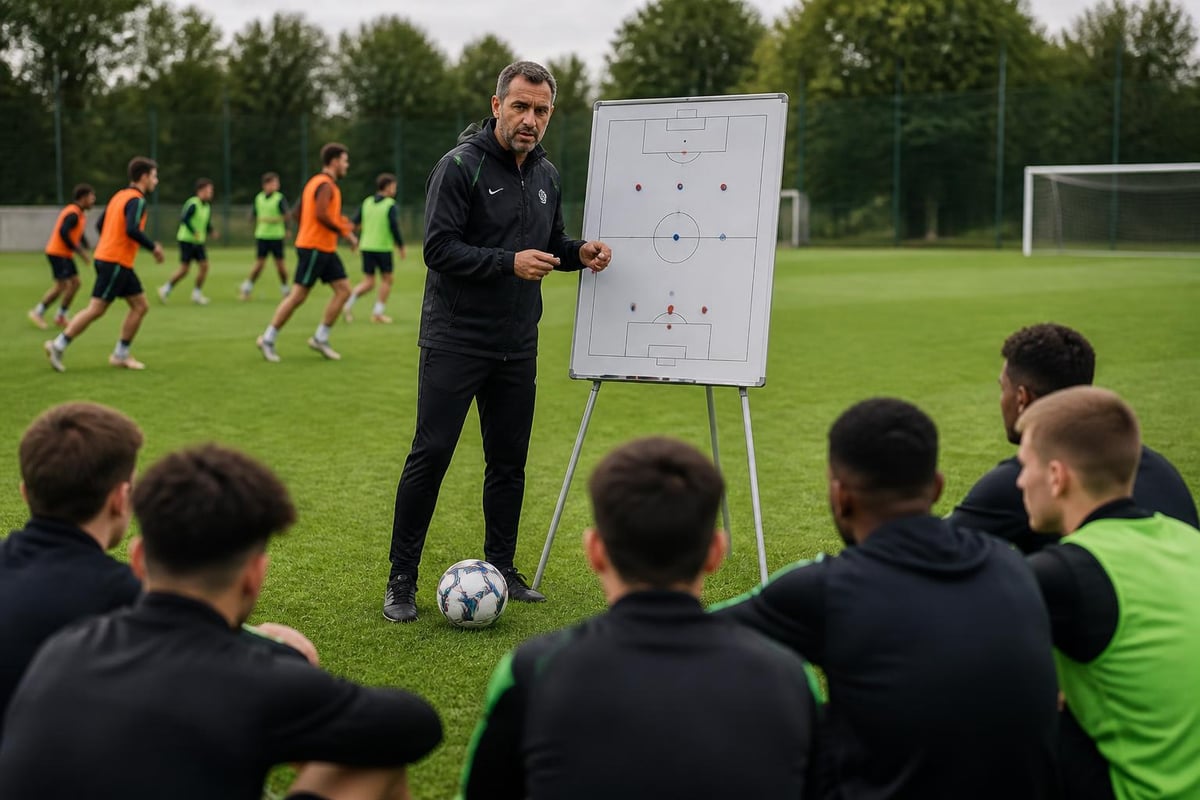
While small sided games appear simple, the coach’s active involvement determines their effectiveness. Skilled coaches:
- Observe patterns: Identify technical or tactical issues recurring across multiple players
- Freeze moments: Stop play briefly to highlight teaching opportunities
- Ask questions: Guide players toward solutions rather than providing all answers
- Adjust variables: Modify rules or field dimensions when games become too easy or difficult
- Provide encouragement: Recognize effort, creative decision-making, and improvement
This active coaching approach transforms small sided games from mere recreational play into powerful learning experiences that accelerate player development across all four pillars.
Implementing Small Sided Games Across Development Stages
Different age groups and skill levels require adapted approaches to small sided games. What works effectively for 8-year-old beginners may bore 14-year-old advanced players, making age-appropriate progression essential.
Early Development (Ages 6-9)
Young players in this stage benefit from simplified game formats that emphasize fun, frequent touches, and basic concepts. Recommended approaches include:
- 3v3 with no goalkeepers: Encourages all players to defend and attack
- Multiple small fields: Maximizes active participation, minimizes waiting time
- Celebration of creativity: Rewards attempting skills, not just successful outcomes
- Minimal rule restrictions: Keeps games flowing and reduces confusion
The emphasis at this stage should remain on enjoyment and fundamental skill development rather than tactical sophistication or competitive results.
Middle Development (Ages 10-13)
As players mature, small sided games can incorporate more tactical complexity while maintaining high engagement:
- 4v4 and 5v5 formats: Introduce positional responsibilities and shape concepts
- Conditional rules: “Must complete three passes before shooting” or “Can only score from certain zones”
- Tactical themes: Design games to emphasize specific concepts like pressing, counter-attacking, or build-up play
- Competitive structures: Small tournaments or leagues within training sessions
This stage bridges the gap between pure enjoyment and serious competition, developing players who can think tactically while maintaining their passion for the game.
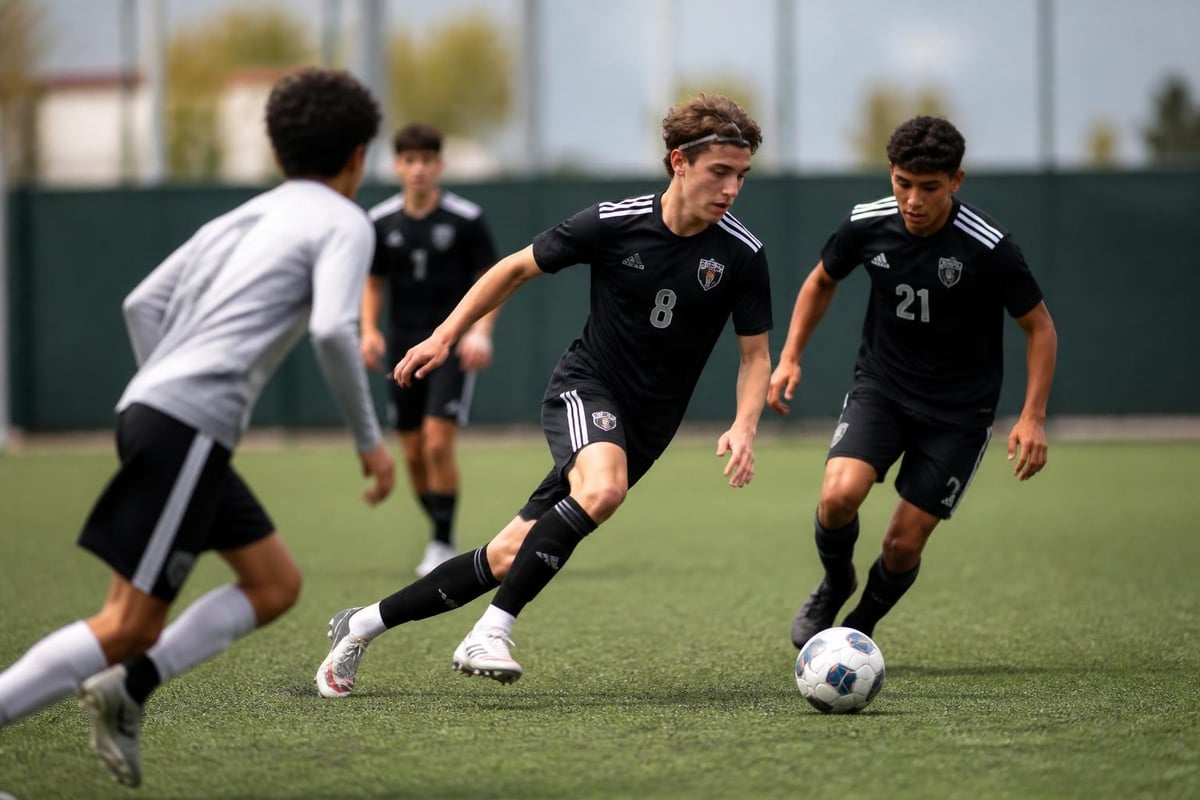
Advanced Development (Ages 14+)
Older, more skilled players benefit from sophisticated small sided games that replicate elite-level match demands:
- Position-specific formats: Designing games that emphasize particular roles (defenders, midfielders, forwards)
- High-pressure environments: Larger goals, skilled opponents, and consequence-based scoring
- Video analysis: Recording games for post-session review and tactical discussion
- Integration with match preparation: Using small sided games to practice specific opponent tendencies
For players aspiring to college or professional soccer, these training formats provide the repetition and realistic scenarios needed to reach elite levels. The comprehensive soccer training philosophy at Strive Soccer Academy recognizes this progression, offering age-appropriate programming that challenges players at every developmental stage.
Measuring Progress and Success
Quantifying player development through small sided games requires looking beyond traditional statistics like goals and assists. While these metrics have value, they don’t capture the comprehensive growth occurring across technical, tactical, physical, and psychological dimensions.
Observable Development Indicators
Coaches and parents should watch for these progress markers:
- Improved decision speed: Players recognize and execute appropriate actions more quickly
- Better positioning: Athletes consistently appear in advantageous field locations
- Enhanced communication: More vocal leadership and teammate coordination
- Technical composure: Maintaining skill quality despite defensive pressure
- Physical resilience: Sustaining performance levels throughout extended playing periods
These qualitative improvements often precede statistical success, indicating that proper development is occurring even when scorelines don’t immediately reflect it.
Long-Term Athletic Development
The true measure of small sided games’ effectiveness appears years later, when players who trained primarily through game-based methods compete against those who focused on traditional drill-based approaches. Professional coaching resources on small sided games consistently demonstrate that game-based training produces players with superior decision-making abilities, tactical intelligence, and competitive mentality.
Parents investing in their young athletes’ soccer development should prioritize programs emphasizing these training methodologies over those relying heavily on static drills and large-group instruction. The difference becomes apparent as players progress through competitive levels, with game-trained athletes adapting more successfully to increased competition intensity.
Creating Training Environments That Maximize Learning
The physical and social environment surrounding small sided games significantly impacts their effectiveness. Thoughtful program design extends beyond field dimensions and player numbers to encompass coaching philosophy, facility quality, and cultural atmosphere.
Optimal Training Facilities
Quality small sided games training requires:
- Appropriate field surfaces: Turf or grass that allows proper ball movement and safe play
- Adequate lighting: Indoor or outdoor facilities supporting year-round training
- Multiple training areas: Allows simultaneous games at different levels
- Quality equipment: Properly sized balls, goals, and training markers
These facility elements combine to create environments where players can focus entirely on skill development without environmental distractions or safety concerns.
Coaching Expertise and Philosophy
The coach’s role in facilitating effective small sided games cannot be overstated. At Strive Soccer Academy, all coaches hold licenses through Canada Soccer, ranging from National A Licenses to Soccer for Life certifications, ensuring they possess both the technical knowledge and pedagogical skills needed to maximize player development.
Licensed coaches understand how to:
- Structure progressive training sessions that build logically toward objectives
- Provide feedback that guides without overwhelming young athletes
- Create competitive yet supportive environments where risk-taking is encouraged
- Adapt training complexity to match individual and group development levels
- Balance skill development with character building and psychological growth
This coaching expertise transforms small sided games from simple recreational activities into sophisticated player development tools that produce measurable, lasting results. Parents can learn more about what makes professional soccer training different by exploring programs that prioritize both coaching quality and modern training methodologies.
Common Mistakes and How to Avoid Them
Despite small sided games’ proven effectiveness, many programs implement them incorrectly, limiting their developmental benefits. Understanding these common pitfalls helps coaches and parents identify quality training environments.
Insufficient Structure and Purpose
The most frequent mistake involves treating small sided games as mere free play without specific learning objectives. While player autonomy is valuable, completely unstructured games often reinforce bad habits rather than developing new skills. Effective programs balance freedom with focused instruction, ensuring each training session targets specific technical, tactical, physical, or psychological objectives.
Inappropriate Competitive Pressure
Another common error involves creating excessively competitive environments that discourage creativity and risk-taking. When coaches emphasize winning above learning, players revert to safe, conservative play rather than attempting new skills or complex decisions. The best training environments maintain competitive intensity while celebrating creative attempts and learning moments, even when they result in short-term failures.
Neglecting Individual Differences
Programs that fail to differentiate training based on skill level or developmental stage limit player growth. Advanced players become bored in games designed for beginners, while struggling athletes feel overwhelmed in overly complex scenarios. Quality programs group players appropriately and adjust game complexity to match their current capabilities while providing achievable challenges that promote growth.
Small sided games represent far more than a training trend; they constitute a fundamental shift in how effective soccer development occurs, emphasizing game-realistic repetition, tactical intelligence, and comprehensive athletic growth over isolated skill work. By integrating technical mastery, tactical awareness, physical conditioning, and psychological resilience within single training activities, this methodology produces well-rounded players prepared for competitive success. At Strive Soccer Academy, we’ve built our entire training philosophy around these principles, combining European-style coaching methods with Canada Soccer licensed expertise to develop young athletes who excel both on and off the field. Discover how our comprehensive approach to player development can transform your young athlete’s soccer journey.