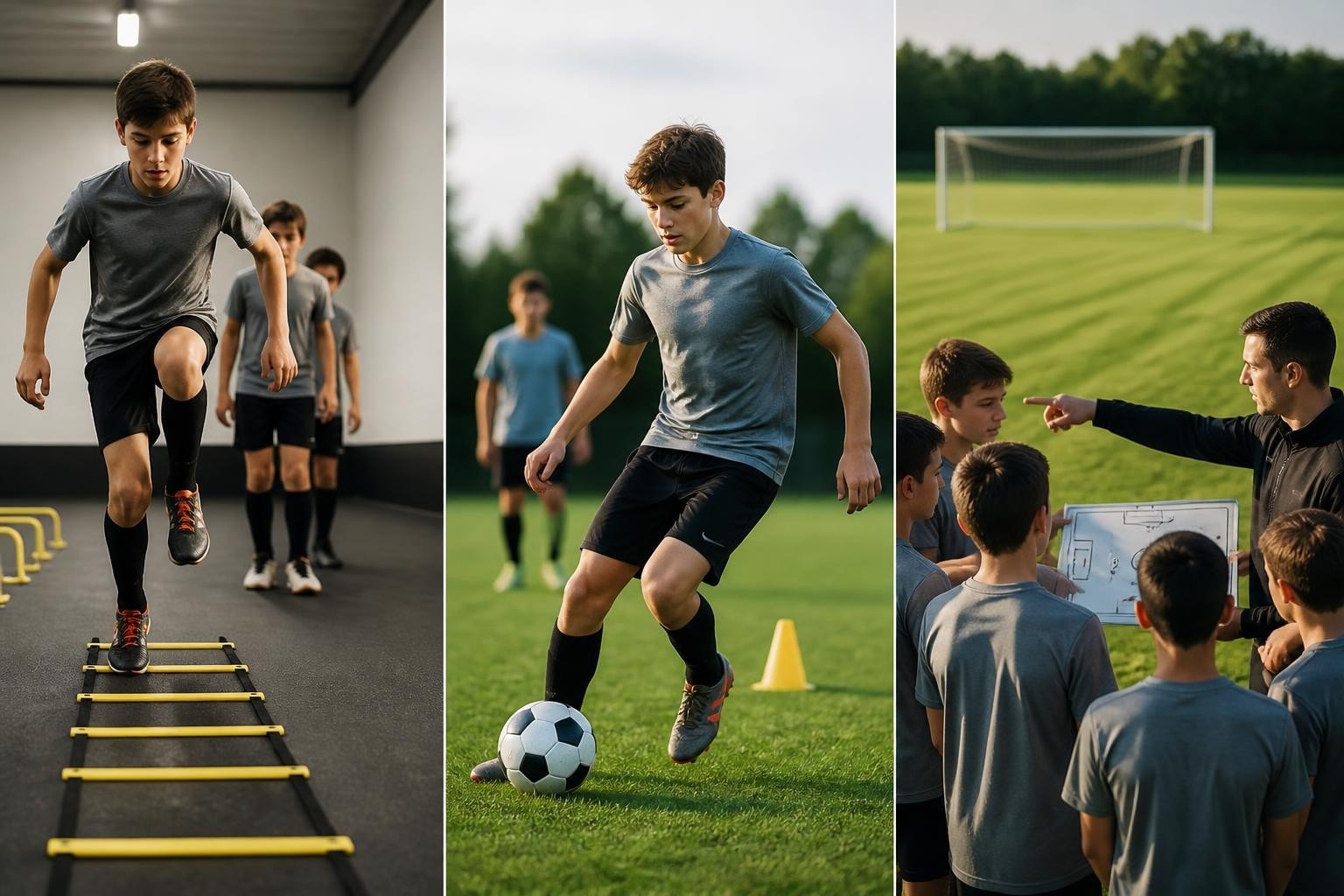
Selecting the right football training academy represents one of the most important decisions parents make for their young athletes. The best academies combine professional coaching expertise, structured curriculum design, and a holistic development philosophy that extends beyond basic skills. Understanding what distinguishes exceptional academy programs from recreational training helps families invest wisely in their children's athletic futures. This comprehensive guide explores the essential components of successful football training academy programs and what parents should evaluate when choosing where to develop their young players.
The Four Pillars of Academy Player Development
Elite football training academy programs recognize that creating complete players requires attention to multiple development areas. The most successful academies structure their programs around four interconnected pillars that work together to maximize player potential.
Technical Development Forms the Foundation
Technical proficiency serves as the bedrock upon which all other skills are built. A quality football training academy dedicates significant training time to ball mastery, first touch refinement, passing accuracy, and shooting technique. Players must develop comfort with the ball at their feet before they can execute complex tactical instructions under game pressure.
Key technical components include:
- Ball control and close-quarter manipulation
- Passing with both feet across varying distances
- Dribbling in tight spaces and at speed
- Shooting technique with power and precision
- Heading fundamentals and aerial control
- Receiving skills under pressure
Progressive technical training follows age-appropriate development stages. Younger players focus on fundamental ball manipulation, while older academy athletes refine technique at game speed with defensive pressure. Effective technical training sessions incorporate constant ball touches, varied repetition, and immediate feedback from qualified coaches.
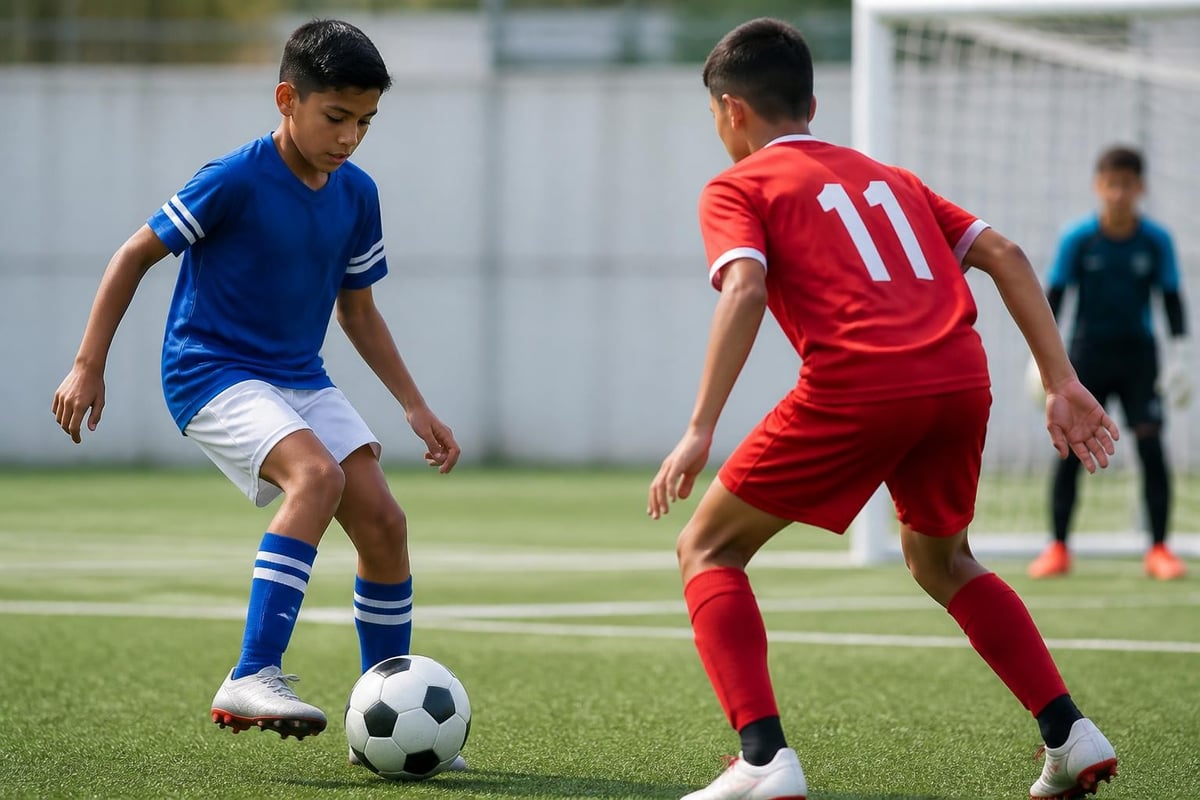
Tactical Intelligence Separates Good from Great
Understanding the game mentally distinguishes academy-trained players from those with only recreational experience. Tactical development teaches players when and why to execute specific techniques, transforming individual skills into team success. A comprehensive football training academy curriculum addresses both individual tactical decisions and collective team strategies.
Individual tactics include recognizing when to pass versus dribble, identifying defensive positioning, understanding attacking runs, and reading opponent tendencies. Team tactics encompass formation understanding, positional responsibilities, pressing schemes, and transition play between attack and defense.
Sydney FC’s game-based training approach demonstrates how top academies integrate tactical learning into every session. Rather than isolating tactics into separate drills, they embed decision-making within realistic game scenarios that force players to think critically under pressure.
| Age Group | Tactical Focus | Training Method |
|---|---|---|
| U8-U10 | Basic positioning, when to pass | Small-sided games |
| U11-U13 | Formation understanding, team shape | Position-specific training |
| U14-U16 | Complex strategies, reading the game | Full-sided tactical sessions |
| U17+ | Advanced systems, opponent analysis | Match preparation focus |
Physical Conditioning and Athletic Development
Modern football demands exceptional athletic capabilities alongside technical skill. The most effective football training academy programs incorporate age-appropriate physical development that builds speed, strength, agility, and endurance without risking injury to developing bodies.
Age-Appropriate Physical Training
Physical development must align with biological maturation stages rather than chronological age alone. Pre-pubescent players benefit most from coordination work, movement patterns, and fundamental athletic skills. Post-pubescent athletes can safely incorporate strength training, power development, and advanced conditioning protocols.
Quality academies avoid the common mistake of training young players like professional athletes. Instead, they implement progressive athletic development that builds foundational movement quality first, then gradually increases intensity and volume as players mature physically.
Speed and agility work forms a cornerstone of physical development across all age groups. Players learn proper running mechanics, change of direction technique, and acceleration patterns that translate directly to game performance. Conditioning programs balance aerobic capacity development with the anaerobic demands of match play, preparing players for the physical rigors of competitive football.
Psychological Development and Mental Strength
The mental game often determines who succeeds at higher competitive levels. A complete football training academy addresses psychological development through confidence building, resilience training, focus techniques, and competitive mindset cultivation. Players learn to handle pressure, overcome setbacks, and maintain performance consistency across varying situations.
Mental skills training includes goal setting, visualization techniques, self-talk management, and emotional regulation during competition. Academy players develop growth mindsets that view challenges as learning opportunities rather than threats. This psychological foundation proves invaluable as athletes face increased competition intensity and performance expectations.
Core psychological competencies developed:
- Pre-game mental preparation routines
- Managing competitive anxiety and nerves
- Recovering quickly from mistakes during play
- Maintaining concentration for full match duration
- Building self-confidence through mastery experiences
- Developing leadership and communication skills
Coaches in premier academies receive training in sports psychology principles, enabling them to integrate mental skills development into daily training. The best programs also provide access to sports psychology professionals for players needing additional support during challenging developmental phases.
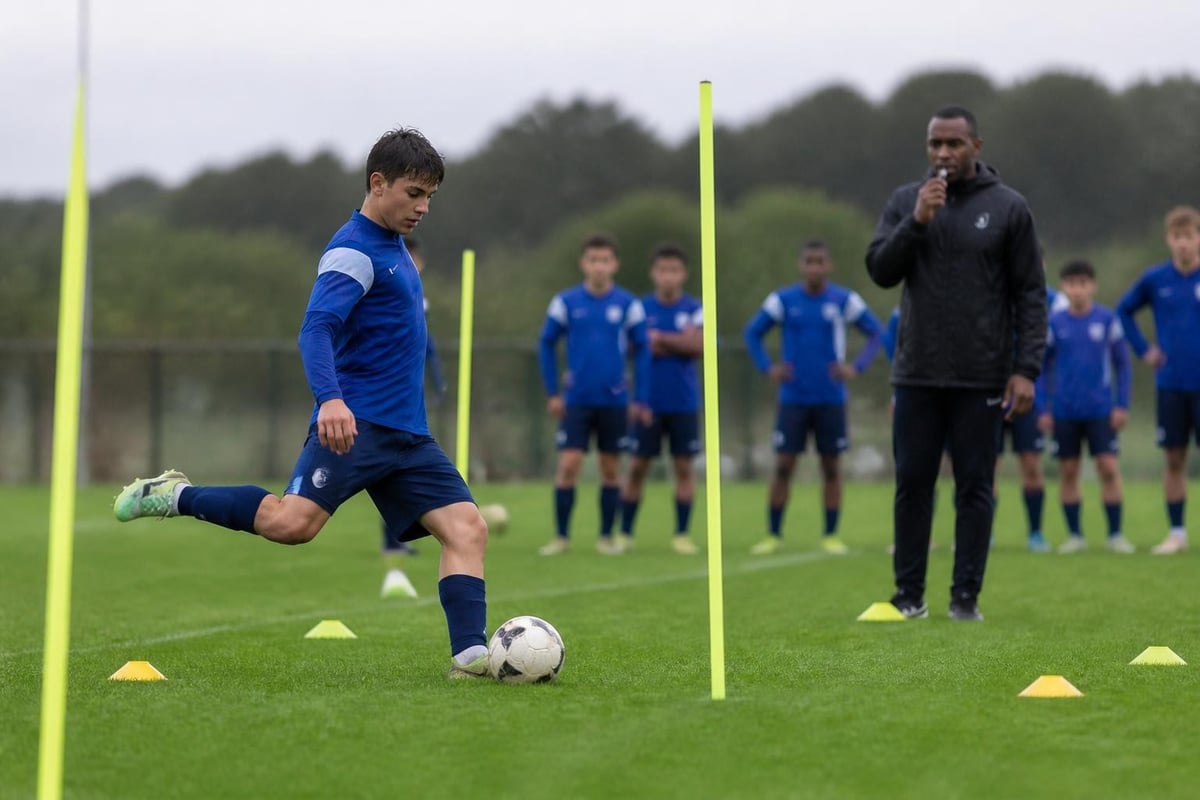
Coaching Quality and Certification Standards
The expertise of coaching staff represents the single most critical factor in football training academy quality. Licensed coaches bring structured training methodologies, proper technical instruction, and professional development knowledge that recreational coaches typically lack. Parents should investigate coaching credentials when evaluating academy options.
Understanding Coaching License Levels
National coaching certification systems establish clear competency standards at different levels. In Canada, the coaching pathway includes Soccer for Life (introductory), C License (advanced community), B License (provincial/regional), A License (professional/national), and the National Youth License (specialized youth development). Higher-level licenses require extensive training hours, practical assessments, and demonstrated coaching competency.
A quality football training academy employs coaches across this spectrum, matching coach qualifications to player age and competitive level. Development-focused programs for younger players benefit from coaches with specialized youth development training, while competitive teams require coaches with advanced tactical knowledge and game management expertise.
The Football Development Model provides coaches with age-appropriate training frameworks that optimize player growth at each developmental stage. This systematic approach ensures training complexity matches player capabilities, preventing both under-challenging and overwhelming young athletes.
Curriculum Design and Training Structure
Effective academy programs follow carefully designed curricula that progress logically across seasons and years. Random training without clear developmental objectives wastes time and limits player growth. The best football training academy programs document their curriculum publicly, demonstrating intentional planning and measurable progression pathways.
Comprehensive curriculum development models emphasize coherent progression, regular assessment, and systematic review cycles that ensure programs remain current with best practices. Academic rigor in curriculum design distinguishes professional academies from informal training groups.
Training frequency and session duration balance development needs against overtraining risks. Most competitive academies operate year-round with 2-4 training sessions weekly, supplemented by weekend matches. Session length varies by age, typically ranging from 60 minutes for youngest players to 90-120 minutes for older competitive athletes. For players seeking additional development opportunities, high-performance training camps offer intensive environments focused on accelerating skill acquisition.
| Program Component | Frequency | Duration | Focus |
|---|---|---|---|
| Technical Training | 2-3x weekly | 60-90 min | Individual skill development |
| Tactical Sessions | 1-2x weekly | 90 min | Team concepts and positioning |
| Match Play | 1-2x weekly | 60-90 min | Application and competition |
| Physical Training | Integrated | 20-30 min | Athletic development |
European Football Philosophy in North American Academies
Many North American academies adopt European training philosophies that emphasize technical mastery, tactical intelligence, and player creativity over purely physical approaches. European academies typically prioritize individual skill development in younger age groups before introducing complex team tactics, contrasting with traditional North American models that emphasized winning at young ages.
This philosophical shift recognizes that long-term player development requires patience and appropriate developmental sequencing. Paris Saint-Germain’s investment in youth academy development illustrates how elite European clubs structure comprehensive academy systems designed to produce professional-level talent through systematic player development.
Key elements of European-influenced training include high repetition technical work, possession-based tactical training, small-sided games emphasizing decision-making, position-specific development tracks, and integration of academy players into first teams. These principles translate effectively to North American contexts when adapted appropriately for local competitive structures and player populations.
Small-Sided Games and Player Development
Small-sided games form a cornerstone of European training methodology. Playing formats like 4v4, 5v5, and 7v7 provide significantly more ball touches per player, increase decision-making frequency, and create game-realistic scenarios in manageable spaces. Research consistently demonstrates that players develop faster in small-sided game environments compared to traditional full-field training for younger age groups. Understanding why small-sided games accelerate development helps parents recognize quality training when evaluating academy programs.

Player Pathways and Development Tracking
Clear player pathways distinguish developmental academies from programs without long-term vision. The best football training academy options articulate transparent progression routes from introductory levels through competitive teams and potential post-secondary opportunities. Parents deserve understanding of where their investment leads beyond the current season.
Comprehensive academies typically offer multiple training tiers accommodating different commitment levels and competitive aspirations. Entry-level programs introduce fundamental skills in supportive environments. Intermediate programs increase training frequency and competitive intensity. Elite tiers prepare players for high-level competition and potential pathway advancement.
Typical academy pathway structure:
- Foundation Level – Skill introduction, recreational focus, 1-2 sessions weekly
- Development Level – Skill refinement, local competition, 2-3 sessions weekly
- Competitive Level – Advanced tactics, regional competition, 3-4 sessions weekly
- Elite Level – High performance, national competition, 4-5 sessions weekly
- Pre-Professional – Showcase opportunities, college preparation, daily training
Regular player assessments track development across technical, tactical, physical, and psychological dimensions. Quality academies communicate assessment results to families, providing specific feedback on strengths, improvement areas, and individualized development recommendations. This transparent evaluation process helps players and parents make informed decisions about training intensity and competitive level placement.
Balancing Competition and Development
Tension exists between prioritizing immediate competitive success versus long-term player development. The best football training academy programs maintain clear philosophical commitments to development-first approaches, especially at younger ages. Winning becomes increasingly important as players mature, but never at the expense of proper technical and tactical foundation building.
Development-focused academies resist pressure to specialize players too early in specific positions. Young athletes benefit from experiencing multiple positions, developing well-rounded skills that transfer across roles. Position specialization appropriately begins around age 13-14 when players demonstrate clear positional aptitudes and physical characteristics.
Competition formats should match developmental needs. Younger players benefit from game formats emphasizing participation and experimentation. Older competitive players require challenging opposition that tests their capabilities and exposes areas needing improvement. Progressive academies carefully select competition levels that stretch players appropriately without creating overwhelming mismatch situations.
Family Investment and Program Costs
Football training academy programs require significant family investment beyond registration fees. Parents should understand total costs including academy fees, tournament travel, equipment requirements, and opportunity costs of time commitment. Quality programs provide transparent fee structures and clear explanations of what registration includes versus additional optional expenses.
Typical academy costs vary widely based on training frequency, facility quality, coaching credentials, and geographic location. Annual fees generally range from $1,500 for entry-level programs to $5,000+ for elite competitive teams. Additional expenses for tournaments, showcases, and special events can add $1,000-3,000 annually depending on team travel schedules.
Many academies offer financial assistance programs, payment plans, or scholarship opportunities to ensure economic barriers don't prevent talented players from accessing quality training. Families should inquire about available support options when cost represents a participation barrier.
| Cost Category | Annual Range | What's Included |
|---|---|---|
| Academy Fees | $1,500-5,000 | Training sessions, coaching, home facilities |
| Tournament Entry | $500-1,500 | Competition registration for team |
| Travel Expenses | $500-2,000 | Transportation, accommodation for away events |
| Equipment/Uniform | $200-500 | Kit, training gear, team apparel |
| Total Investment | $2,700-9,000 | Complete annual program participation |
Evaluating Academy Options and Making Decisions
Parents face challenging decisions when selecting among multiple football training academy options. Systematic evaluation criteria help families compare programs objectively rather than relying solely on marketing claims or reputation. Site visits, trial sessions, and conversations with current academy families provide valuable insights beyond what websites reveal.
Key evaluation criteria include:
- Coaching credentials and professional development investment
- Published curriculum and training philosophy documentation
- Player-to-coach ratios and individual attention levels
- Facility quality, consistency, and weather backup options
- Graduate success stories and pathway outcomes
- Communication systems between coaches and families
- Safety protocols, injury prevention, and emergency procedures
Visiting professional soccer academy programs allows parents to observe coaching quality, training structure, and player engagement firsthand. Quality academies welcome prospective family visits and openly answer questions about their programs, philosophy, and development approach.
Trial periods let players experience training culture before families commit to full seasons. The best academies offer trial sessions or short-term introductory programs, demonstrating confidence in their product and respect for family decision-making processes. Parents should be cautious of programs requiring long-term commitments without opportunity to experience training quality first.
Integration of Technology and Performance Analysis
Modern football training academy programs increasingly incorporate technology for performance analysis and development tracking. Video analysis software helps players visualize tactical concepts and review their technical execution. GPS tracking monitors physical output during training and matches. Performance management systems document player development across multiple assessment dimensions.
Technology supplements rather than replaces quality coaching. The human element of feedback, encouragement, and relationship-building remains irreplaceable in youth development contexts. However, strategic technology integration enhances learning efficiency and provides objective performance data that complements subjective coaching observations.
Wearable technology provides valuable insights into training load management, helping coaches optimize preparation while avoiding overtraining young athletes. Heart rate monitoring, GPS distance tracking, and accelerometer data inform decisions about training intensity, recovery needs, and injury prevention protocols.
The Role of Parent Support in Academy Success
Family involvement significantly impacts player development outcomes. Parents who understand academy philosophy, support training commitments, and provide appropriate encouragement at home enhance their children's developmental progress. Conversely, excessive pressure, inappropriate sideline behavior, or inconsistent training attendance undermines even the best coaching.
Quality academies educate parents about appropriate support roles through orientation sessions, parent education nights, and regular communication about development philosophy. This alignment between academy and home expectations creates consistent messaging that helps young athletes focus on learning rather than navigating conflicting adult agendas.
Parents should understand their role includes ensuring proper nutrition, adequate sleep, and balanced schedules that prevent burnout. Young athletes need time for academic responsibilities, social development, and unstructured play beyond organized football training. The most successful academy players come from families who maintain healthy perspective about youth sports within the context of overall childhood development.
Choosing the right football training academy shapes your young athlete's development trajectory and competitive opportunities for years to come. The most effective programs combine licensed coaching expertise, structured curriculum design, and holistic development philosophy that addresses technical, tactical, physical, and psychological growth. At Strive Soccer Academy, we bring European-style training philosophy to Surrey, BC, with all coaches fully licensed through Canada Soccer, focusing on developing skills, building character, and creating real opportunities for young players. We understand what parents want most-a program that invests in the complete development of their young athletes both on and off the field.