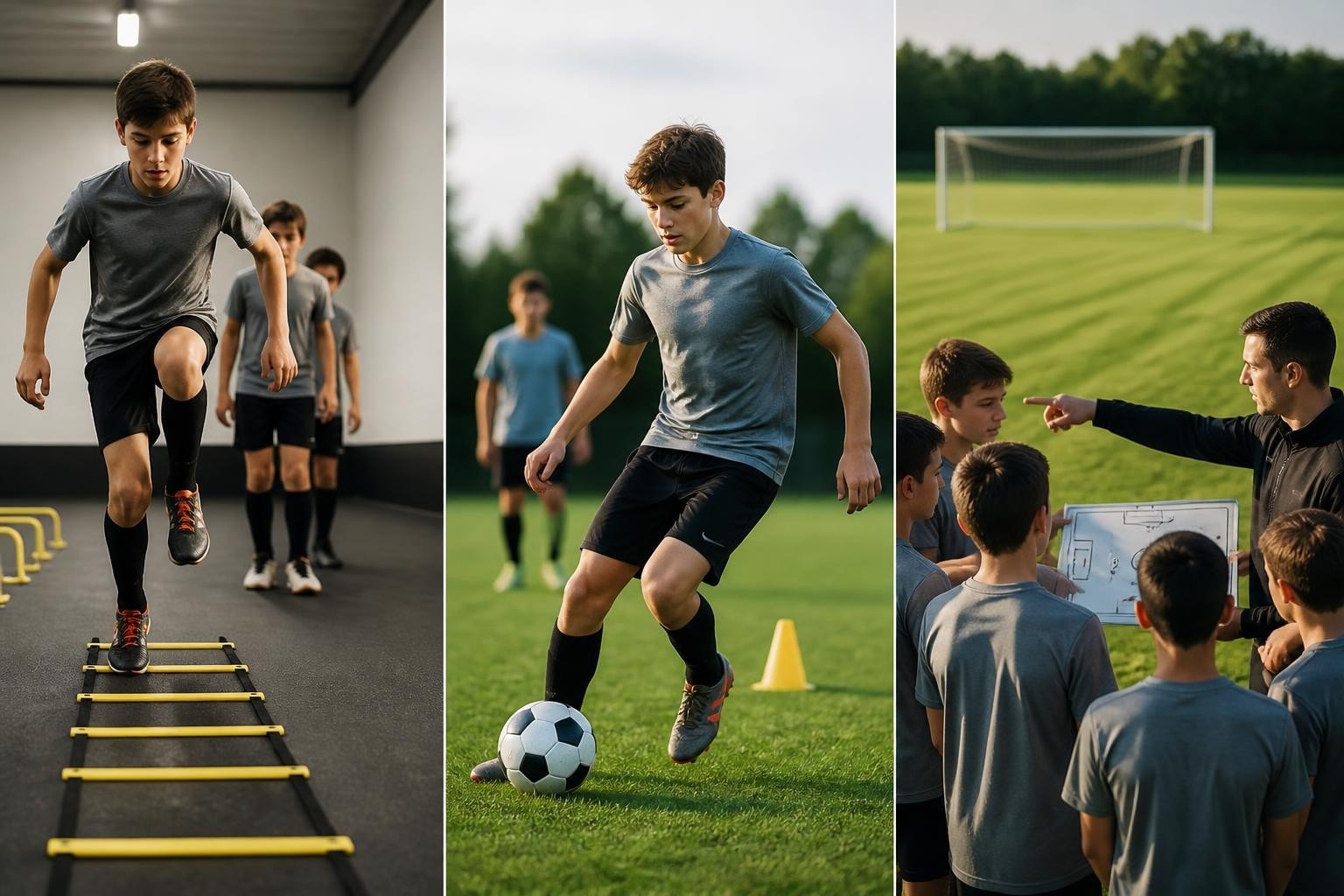
Choosing the right football coaching academy for your young athlete is one of the most important decisions you'll make as a parent. The difference between a standard recreational program and a professional academy lies not just in the quality of facilities, but in the structured curriculum, licensed coaching staff, and holistic player development approach. A well-designed football coaching academy focuses on creating complete athletes who excel on the field while developing life skills that extend far beyond the game.
What Defines a Professional Football Coaching Academy
A professional football coaching academy operates with a clear philosophy and structured methodology that guides every training session. Unlike recreational programs that may lack consistency, academy environments implement systematic approaches to player development based on age-appropriate progressions and skill foundations.
The hallmark of quality academies is their commitment to the four pillars of player development: technical, tactical, physical, and psychological growth. These elements work together to create well-rounded athletes who understand not just how to perform skills, but when and why to apply them in competitive situations.
Licensed Coaching Staff and Qualifications
Coaching credentials matter significantly when evaluating any football coaching academy. Licensed coaches bring professional knowledge, teaching methodology, and safety awareness that directly impact player development outcomes.
Key qualifications to look for include:
- National coaching licenses (A, B, C levels)
- Age-specific certifications like Soccer for Life
- First aid and concussion protocol training
- Ongoing professional development participation
- Experience with competitive player pathways
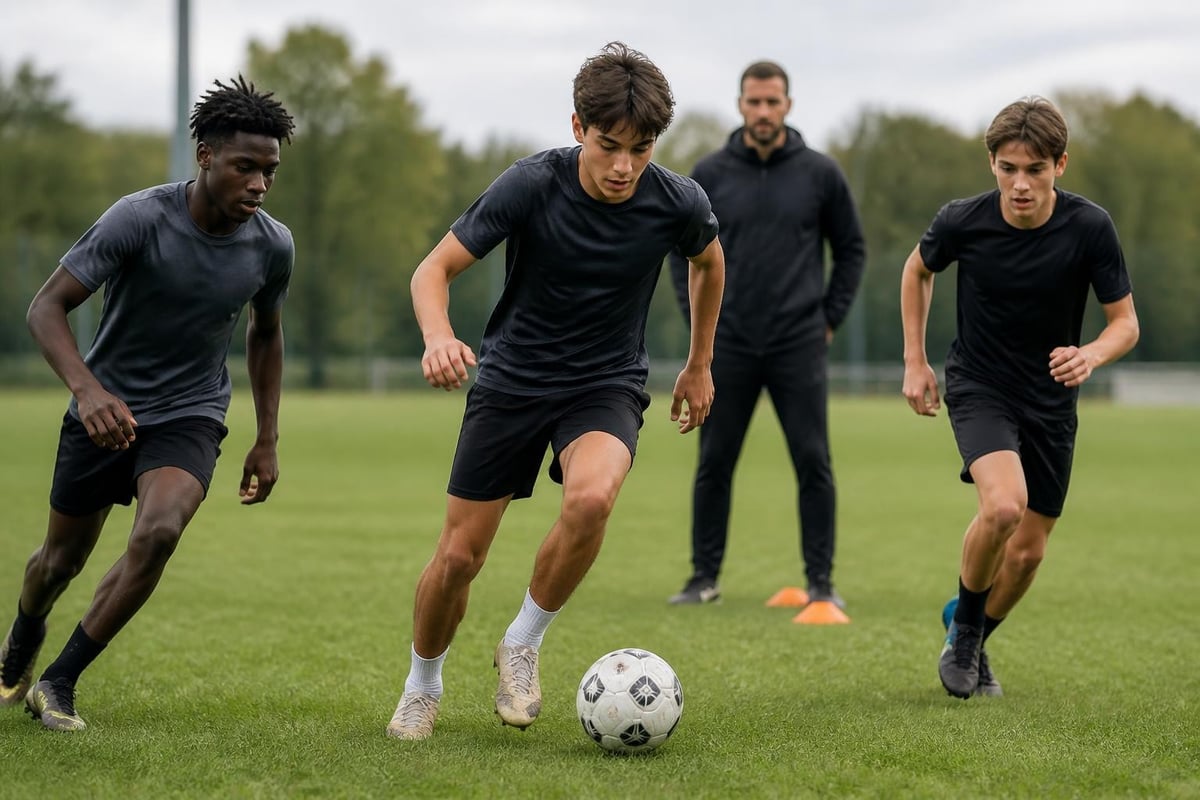
Programs that invest in coach education and methodology demonstrate their commitment to maintaining high standards. At Strive Soccer Academy, all coaches hold Canada Soccer licenses ranging from National A credentials to specialized youth development certifications.
Curriculum Design and Training Structure
A comprehensive football coaching academy builds its foundation on carefully designed curriculum frameworks. These frameworks ensure that players receive appropriate challenges at each developmental stage while maintaining clear progression pathways toward advanced levels.
Age-Appropriate Progression Models
The Football Development Model provides valuable insights into structuring training based on developmental stages. Young players require fundamentally different approaches than teenagers preparing for elite competition.
| Age Group | Primary Focus | Training Emphasis | Session Structure |
|---|---|---|---|
| U6-U8 | Fun and exploration | Basic motor skills, coordination | Short activities, frequent rotation |
| U9-U12 | Technical foundation | Ball mastery, first touch, passing | Skill repetition with game integration |
| U13-U16 | Tactical awareness | Positional play, decision-making | Structured drills, competitive scenarios |
| U17+ | Performance optimization | Speed of play, physical development | High-intensity, match simulation |
This progressive structure allows a football coaching academy to meet players where they are while challenging them appropriately. Many parents notice significant improvements when their children train in environments that understand these developmental nuances, as highlighted in our discussion of what makes training different.
Periodization and Session Planning
Effective academies don't improvise. They plan training cycles that build toward specific performance goals while allowing adequate recovery and skill consolidation.
The concept of periodization in soccer coaching involves organizing training into structured phases:
- Pre-season preparation focusing on fitness and team cohesion
- In-season maintenance balancing competition and development
- Post-season recovery with skill refinement emphasis
- Transitional periods introducing new tactical concepts
A quality football coaching academy maps these cycles across the entire year, ensuring players receive balanced exposure to all development pillars while avoiding burnout or overtraining.
Technical Development Framework
Technical excellence forms the foundation of any successful football coaching academy. Without solid fundamental skills, players cannot effectively execute tactical instructions or perform under competitive pressure.
Ball Mastery and First Touch Training
The best academies dedicate substantial training time to ball manipulation skills. Players spend thousands of touches developing comfort and confidence with the ball across various surfaces and situations.
Core technical competencies include:
- Receiving passes with both feet under pressure
- Dribbling techniques for different game situations
- Striking accuracy with varied techniques
- Heading fundamentals and safety
- Turning and shielding the ball
- Combination play patterns
These skills require repetitive practice within player-centered learning environments that keep athletes engaged rather than standing in lines waiting for turns.
Position-Specific Skill Development
As players progress through a football coaching academy, they begin specializing in positions that match their natural abilities and interests. Position-specific training becomes increasingly important for older age groups.
Defenders learn positioning, tackling timing, and distribution skills. Midfielders develop vision, passing range, and box-to-box endurance. Forwards refine finishing techniques, movement off the ball, and combination play. Goalkeepers receive specialized training completely separate from field players, as discussed in resources about soccer goalkeeper training.

Tactical Intelligence and Game Understanding
Technical skills mean little without tactical awareness. A comprehensive football coaching academy teaches players not just what to do with the ball, but when and why specific actions create advantages.
Building Tactical Foundations Early
Young players begin developing tactical intelligence through small-sided games that create frequent decision-making opportunities. These modified formats naturally teach:
- Spacing and positioning concepts
- Transition moments (attack to defense, defense to attack)
- Support angles and passing lanes
- Pressure and cover principles
- Width and depth in attack
The small-sided games approach allows players to experience tactical situations repeatedly in engaging formats that maintain high activity levels.
Advanced Game Model Implementation
Older academy players learn to operate within cohesive team systems. A football coaching academy with a clear game model provides consistency across age groups while allowing tactical complexity to increase appropriately.
The Canton Sports Academy Player Development Framework exemplifies how standardized approaches create alignment from youngest to oldest groups. Players who train within consistent methodologies transition smoothly between age divisions and understand their roles within team structures.
Physical Development and Athletic Conditioning
The physical demands of competitive football require dedicated attention within any serious football coaching academy. However, youth athletic development must balance performance goals with long-term health and injury prevention.
Age-Appropriate Physical Training
Physical training protocols vary dramatically across age groups. Young children develop through active play and movement variety rather than structured conditioning. Adolescents can handle more systematic strength and speed development, but programming must account for growth spurts and maturation timing.
| Component | Youth Focus (U8-U12) | Adolescent Focus (U13-U16) | Advanced Focus (U17+) |
|---|---|---|---|
| Strength | Bodyweight exercises, coordination | Progressive resistance training | Sport-specific power development |
| Speed | Multi-directional movement games | Acceleration and agility drills | Max velocity and repeated sprint ability |
| Endurance | Natural game conditioning | Aerobic base building | Lactate threshold and recovery capacity |
| Flexibility | Dynamic warm-ups | Mobility routines | Individualized programs |
Programs offering high-performance training integrate these elements within soccer-specific contexts, ensuring physical development directly translates to on-field performance.
Injury Prevention Strategies
A responsible football coaching academy prioritizes player safety through proper warm-up protocols, load management, and recovery education. Coaches monitor training volumes, recognize fatigue signs, and adjust intensity when needed.
Modern academies also educate players on nutrition, hydration, sleep, and recovery practices that support athletic development. These habits become foundational for players who continue toward collegiate or professional pathways.
Psychological Development and Mental Skills
The mental side of football often determines which technically skilled players reach their potential. A complete football coaching academy addresses psychological development with the same intentionality applied to physical training.
Building Confidence and Resilience
Young athletes face constant challenges: missed opportunities, competitive setbacks, and performance pressure. Quality coaching environments help players develop growth mindsets that view failures as learning opportunities rather than permanent limitations.
Psychological skills training includes:
- Pre-performance routines and focus techniques
- Emotional regulation during competition
- Goal-setting and self-evaluation processes
- Communication and leadership development
- Team cohesion and collective identity building
These elements appear throughout the Bristol Inner City Football Academy training syllabus, demonstrating how elite programs integrate mental skills into comprehensive curricula.
Creating Supportive Learning Environments
The culture within a football coaching academy significantly impacts psychological development. Environments that emphasize effort over outcomes, celebrate improvement, and normalize mistakes as part of learning create psychologically safe spaces where players take creative risks.
Coaches who ask questions rather than simply providing answers develop thinking players who solve problems independently. This approach prepares athletes for the unpredictable nature of competition where split-second decisions determine success.

Competitive Opportunities and Player Pathways
A football coaching academy must provide appropriate competitive outlets that challenge players while supporting development priorities. The competition philosophy should align with the academy's overall developmental approach.
League and Tournament Selection
Not all competition serves player development equally. Quality academies carefully select leagues and tournaments based on competitive level, travel requirements, and alignment with training objectives.
Younger age groups benefit from local competition that minimizes travel stress and maintains focus on skill development. Older players preparing for collegiate opportunities need exposure to regional and national events where college coaches actively recruit, similar to experiences shared in our Ohio showcase tour recap.
Creating Clear Progression Pathways
Parents invest in academy programs hoping to create opportunities for their children. Transparent pathways help families understand what's possible and what's required at each level.
A well-structured football coaching academy clearly communicates:
- Requirements for advancement to higher training groups
- Identification and selection processes for elite teams
- Connections to collegiate recruiting networks
- Professional pathway opportunities for exceptional talents
- Alternative outcomes for players pursuing recreational or fitness goals
This transparency builds trust and helps families make informed decisions about their soccer investment.
Measuring Progress and Player Assessment
Systematic evaluation methods distinguish professional football coaching academies from casual programs. Regular assessment informs coaching decisions, tracks individual development, and provides accountability for training effectiveness.
Holistic Assessment Frameworks
Effective evaluation looks beyond simple statistics to capture the full picture of player development. Coaches assess technical execution quality, tactical decision-making consistency, physical fitness markers, and psychological characteristics like coachability and competitiveness.
Many academies use structured observation tools that evaluate players across multiple sessions and game situations. This longitudinal approach captures growth over time rather than judging players on single performances that may not represent their typical level.
Communication with Players and Families
Regular feedback keeps players motivated and parents informed. A quality football coaching academy establishes clear communication rhythms: periodic individual conferences, written progress reports, and accessible coaching staff for questions or concerns.
Feedback should be specific, actionable, and balanced between recognition of strengths and identification of growth areas. Players who understand exactly what they need to improve can direct their individual training time more effectively.
Starting and Operating a Successful Academy
For coaches and entrepreneurs considering launching programs, understanding the foundational decisions that determine long-term success proves essential. The choices made before opening doors significantly impact program quality and sustainability.
Curriculum Before Hiring
One critical insight from experts on how to start a football academy emphasizes building a consistent curriculum before bringing on staff. This approach ensures that all coaches implement the same methodology regardless of their individual backgrounds.
Essential pre-launch planning includes:
- Defining the academy's coaching philosophy and core values
- Creating age-specific curriculum documents
- Developing session plan templates and libraries
- Establishing assessment and progression criteria
- Building parent communication systems
This preparation creates operational consistency that protects program quality as the academy scales.
Facility Considerations and Equipment
A football coaching academy needs appropriate facilities, though "appropriate" varies based on program scope and target market. Indoor spaces provide year-round training consistency in variable climates. Quality turf or grass fields support technical development better than hard surfaces.
Equipment investments should prioritize items that maximize player touches: sufficient balls, cones, training bibs, portable goals, and agility equipment. Technology like video analysis tools becomes valuable for older competitive groups but isn't necessary for foundational youth programming.
Family Engagement and Program Culture
The relationship between a football coaching academy and player families significantly impacts program satisfaction and retention. Successful academies view parents as partners in player development rather than customers to be managed.
Setting Realistic Expectations
Transparent communication about program outcomes prevents disappointment and builds long-term loyalty. Not every academy player will earn college scholarships or professional contracts, but all should develop improved skills, fitness, and character traits.
Parents appreciate honesty about their child's realistic potential paired with clear guidance on how to support development at home. Resources like soccer home drills help families contribute to development between training sessions.
Building Community Connections
Strong football coaching academy programs become integral parts of their communities. Hosting showcases, volunteering at youth events, and partnering with schools builds goodwill while increasing program visibility.
Community connection also helps with retention as families develop friendships with other academy families. This social dimension keeps players engaged even during challenging developmental periods when progress feels slow.
The right football coaching academy transforms young athletes through structured training, expert guidance, and comprehensive player development that addresses technical, tactical, physical, and psychological growth. Quality programs combine licensed coaching staff, age-appropriate curriculum, and clear communication to create environments where players reach their potential while developing character and discipline. Whether your child aspires to collegiate competition or simply wants to improve their game, selecting an academy with proven methodology and professional standards makes all the difference. Strive Soccer Academy brings European-style training philosophy to Surrey, BC, with fully licensed Canada Soccer coaches dedicated to developing complete players through our four-pillar approach. Ready to give your young athlete the competitive edge they deserve? Explore our programs and discover how we're raising the standard for youth soccer development.