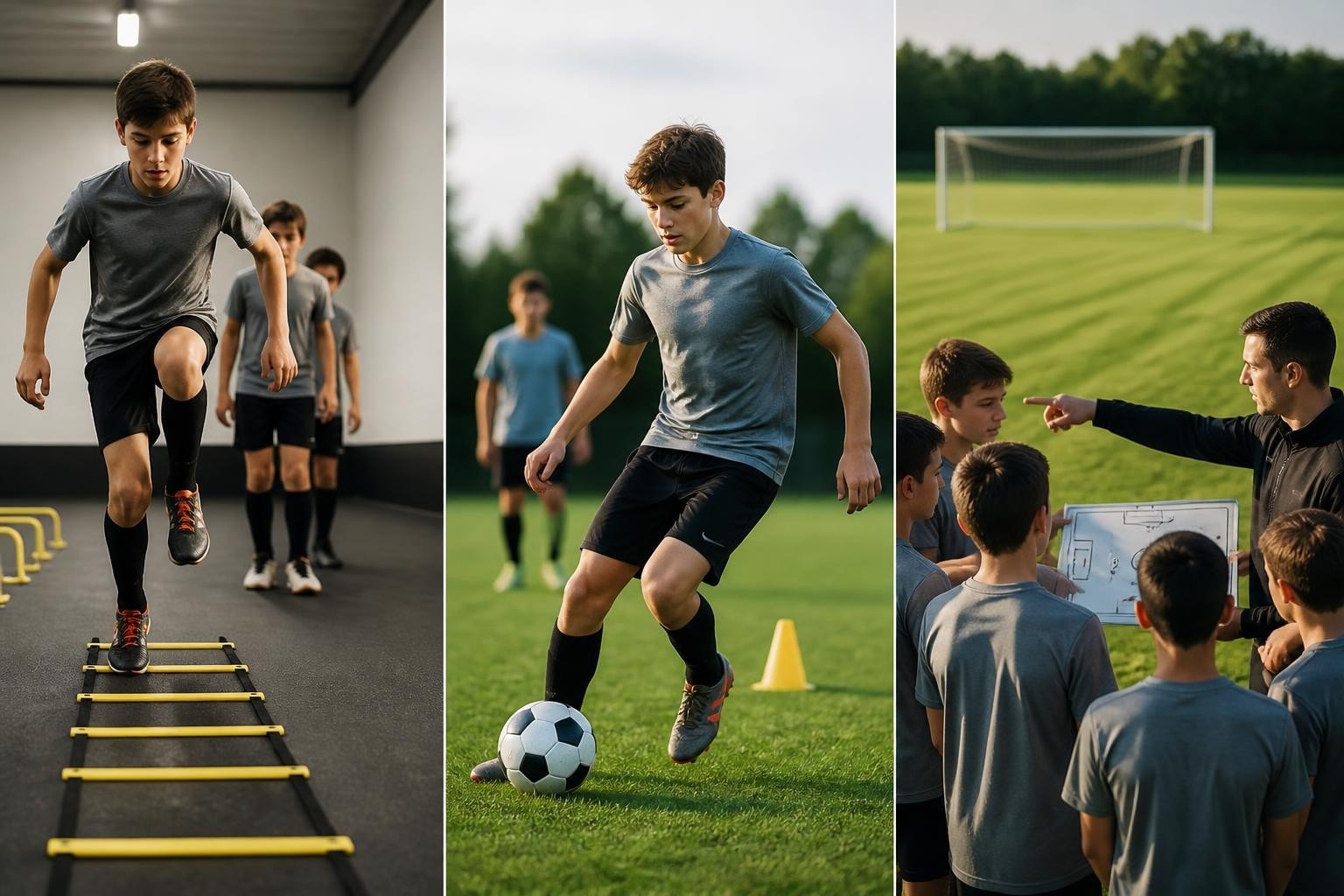
Youth soccer development has evolved significantly over the past decade, with modern training methodologies emphasizing efficiency, intensity, and purposeful practice. The concept of an express soccer academy represents this shift toward accelerated, focused player development that maximizes training effectiveness while respecting young athletes’ time and developmental needs. Rather than traditional recreational approaches that spread learning across lengthy seasons, express soccer academy models concentrate on high-quality training sessions designed to produce measurable improvements in technical ability, tactical understanding, physical conditioning, and mental resilience. This approach has gained traction among parents seeking serious development opportunities for their children without unnecessary time commitments that detract from academic and family priorities.
Understanding the Express Soccer Academy Model
The express soccer academy philosophy centers on delivering maximum developmental impact through carefully structured, intensive training environments. This model borrows heavily from European training methodologies that prioritize quality over quantity, recognizing that focused sessions with proper coaching produce superior results compared to longer practices with less structure.
Key principles include:
- Concentrated training blocks that address specific developmental objectives
- Professional coaching standards with licensed instructors who understand age-appropriate progression
- Measurable outcomes through assessment frameworks that track individual improvement
- Specialized focus areas allowing players to develop specific skills intensively

Time-Efficient Development Pathways
Modern families face unprecedented scheduling pressures, making traditional multi-day-per-week training models increasingly challenging. An express soccer academy addresses this reality by designing sessions that maximize learning efficiency. Research in motor skill acquisition demonstrates that focused, deliberate practice with immediate feedback produces faster skill development than extended sessions with diluted intensity.
This approach aligns with creating effective player-centered learning environments where every minute serves a specific developmental purpose. Coaches structure activities to maintain high engagement levels, ensuring players remain mentally focused throughout sessions rather than experiencing the fatigue and attention drift common in longer practices.
| Training Model | Session Duration | Weekly Frequency | Focus Quality | Typical Results Timeline |
|---|---|---|---|---|
| Traditional Recreation | 75-90 minutes | 2-3 times | Moderate | 12-16 weeks |
| Express Academy | 90 minutes | 1-2 times | High | 6-8 weeks |
| Hybrid Development | 60-120 minutes | 2-4 times | Very High | 4-6 weeks |
Technical Development Through Intensive Training
Technical mastery forms the foundation of soccer excellence, and express soccer academy programs prioritize this element through repetition-based learning and progressive skill challenges. Young players require thousands of ball touches to develop the muscle memory necessary for high-level performance, but those touches must occur in contexts that simulate game situations.
Ball Mastery and First Touch Excellence
Express training sessions dedicate significant time to individual ball work, incorporating both stationary and dynamic exercises. Players progress through carefully sequenced activities that build from basic control to complex manipulation under pressure. This systematic approach ensures that technical improvements translate directly to competitive situations rather than existing only in isolated drill contexts.
The most effective programs incorporate small-sided games that force players to execute technical skills in decision-making environments. Youth soccer training programs should balance individual skill work with game-realistic applications, allowing players to experience immediate feedback on their technical choices.
Essential technical components include:
- Receiving skills across all surfaces (feet, thighs, chest)
- Turning techniques in tight spaces
- Passing accuracy under varying pressures
- Dribbling creativity and speed
- Shooting mechanics and finishing
Tactical Intelligence and Game Understanding
While technical skills provide the tools, tactical intelligence determines how effectively players employ those tools during competition. Express soccer academy models emphasize accelerated tactical development through deliberate exposure to game situations that require quick decision-making and spatial awareness.
Position-Specific Development
Advanced academy programs recognize that different positions demand specialized tactical knowledge. Defenders must understand positioning, marking, and recovery runs. Midfielders require exceptional field vision and transition awareness. Forwards need to master movement off the ball and finishing in high-pressure moments.
Through focused position work within express training formats, players develop role-specific competencies faster than in generalized training environments. Coaches create scenarios that isolate particular tactical challenges, allowing players to practice decision-making in controlled settings before applying those skills in full-game situations.
For families in Surrey, BC, comprehensive academy programs provide this level of specialized attention while maintaining the express approach that respects busy schedules.
Physical Conditioning for Young Athletes
The physical demands of modern soccer require players to possess excellent endurance, speed, agility, and strength. However, youth development programs must balance performance enhancement with age-appropriate training that protects growing bodies from overuse injuries and burnout.

Express soccer academy programs integrate physical development within technical and tactical sessions rather than treating conditioning as separate work. This approach ensures that fitness improvements occur in soccer-specific contexts, making them more transferable to competitive performance.
Speed and Agility Training
Linear speed and multidirectional agility represent critical physical attributes for soccer success. Express academy sessions incorporate plyometric exercises, acceleration drills, and change-of-direction work within warm-up routines and between technical activities. This integration keeps sessions dynamic while building the athletic foundation necessary for elite performance.
Age-specific physical focus areas:
- Ages 6-9: Coordination, balance, and fundamental movement patterns
- Ages 10-12: Speed development, agility, and basic strength through bodyweight exercises
- Ages 13-15: Power production, advanced agility, and sport-specific conditioning
- Ages 16+: Maximal strength, explosive power, and position-specific fitness demands
| Physical Quality | Training Methods | Session Integration | Assessment Frequency |
|---|---|---|---|
| Speed | Sprint mechanics, acceleration drills | Warm-up, transition games | Monthly |
| Agility | Cone drills, reactive exercises | Technical circuits | Bi-monthly |
| Endurance | Small-sided games, interval work | Main session activities | Quarterly |
| Strength | Bodyweight, resistance bands | Cool-down, homework | Bi-monthly |
Psychological Development and Mental Toughness
Mental resilience often differentiates good players from exceptional ones, particularly as competition levels increase. Express soccer academy environments provide natural opportunities for psychological development through challenging training scenarios that push players outside comfort zones.
Building Competitive Mindset
High-intensity training sessions simulate the pressure of competitive matches, helping players develop composure when facing adversity. Coaches create situations where players must perform under time constraints, physical fatigue, and tactical complexity. These experiences build the mental toughness necessary for success in high-stakes games.
Through the European-style training philosophy implemented in progressive academies, players learn to embrace challenges rather than avoid them. This mindset shift represents one of the most valuable outcomes of express academy participation, extending benefits beyond soccer into academic and personal development.
Goal Setting and Self-Assessment
Effective express programs teach players to establish concrete development goals and track progress systematically. This metacognitive skill helps young athletes take ownership of their improvement rather than relying solely on external motivation from coaches or parents. Players learn to identify specific weaknesses, practice deliberately to address them, and measure improvement through objective assessments.
Coaching Quality and Licensed Instruction
The effectiveness of any express soccer academy depends fundamentally on coaching quality. Parents investing in accelerated development programs should verify that instructors possess appropriate certifications and demonstrate genuine expertise in youth player development.
Professional coaching standards require understanding of age-appropriate training methods, skill progression sequences, and individual learning differences. Licensed coaches bring systematic approaches based on established player development frameworks rather than improvised methods that may produce inconsistent results.
Certification Standards and Experience
Canadian soccer coaching certifications range from entry-level Soccer for Life credentials to advanced National A Licenses. Express academy programs should employ coaches with appropriate certifications for the age groups they instruct, ensuring alignment between coaching knowledge and developmental needs.
Beyond credentials, effective coaches demonstrate:
- Clear communication abilities that help players understand complex concepts
- Patience with individual learning timelines while maintaining high standards
- Tactical knowledge that enables position-specific instruction
- Ability to create positive learning environments that balance challenge with support
Program Selection Criteria for Parents
Choosing the right express soccer academy requires careful evaluation of multiple factors beyond convenient location or cost considerations. Parents should assess programs against specific criteria that indicate developmental quality and alignment with family values.
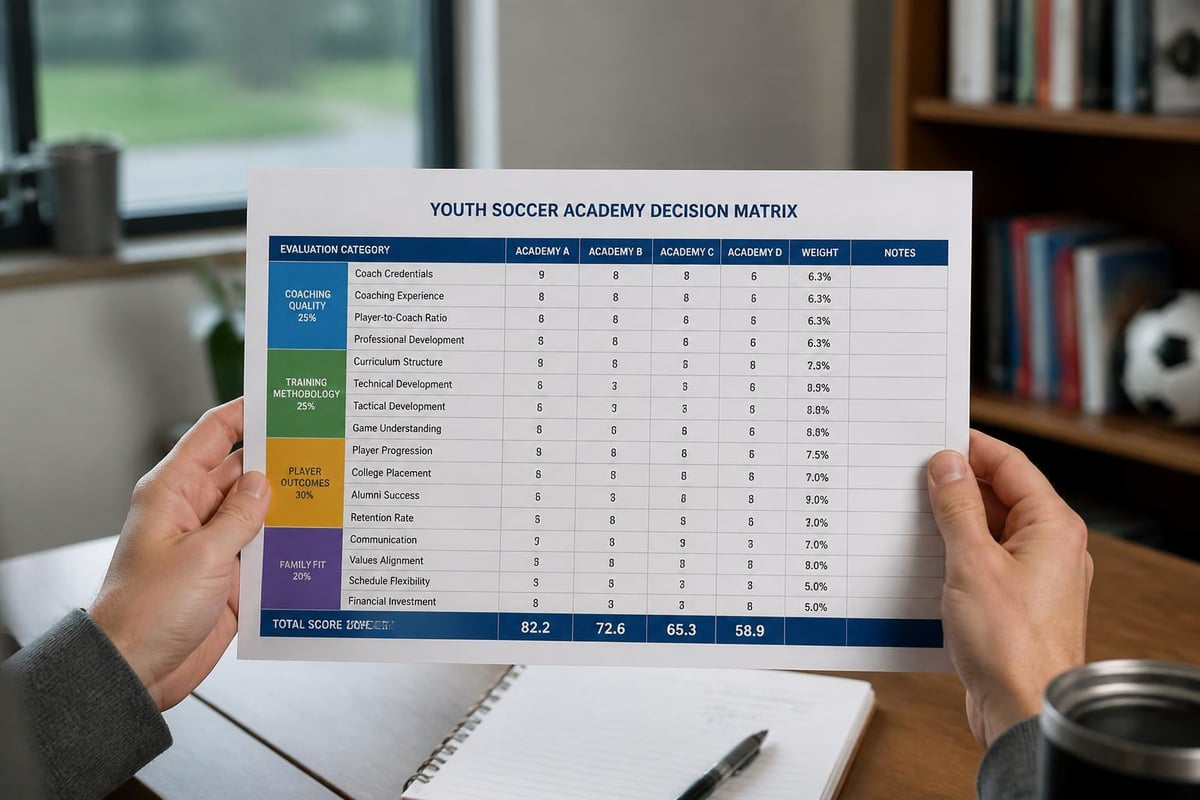
Questions to Ask Prospective Programs
Coaching and instruction:
- What certifications do your coaches hold?
- How many players per coach during training sessions?
- What is your coaching staff turnover rate?
Development approach:
- How do you balance technical, tactical, physical, and psychological development?
- What assessment tools do you use to track individual progress?
- How do you customize training for different skill levels within age groups?
Logistics and communication:
- What is your player-to-coach ratio during sessions?
- How do you communicate progress and areas for improvement to parents?
- What injury prevention protocols do you employ?
The most reputable programs provide transparent answers and welcome parent questions, recognizing that informed families make the best academy partners. Programs like Express Academy demonstrate their methodologies clearly, helping parents make confident decisions.
Integration with Competitive Team Play
Express soccer academy training serves as an excellent complement to competitive team participation rather than a replacement. The intensive skill development that occurs in academy settings enhances players’ contributions to their club teams, creating a virtuous cycle of improvement.
Balancing Academy and Team Commitments
Many families worry about over-scheduling when considering academy participation alongside team obligations. However, properly structured express programs actually reduce total training time while increasing developmental impact. A single 90-minute academy session often delivers more targeted skill improvement than multiple team practices focused primarily on tactical preparation for upcoming matches.
Players who participate in both environments benefit from applying newly developed techniques in competitive team settings while using academy sessions to refine skills and address specific weaknesses. This integration accelerates overall development compared to singular focus on either academy or team training alone.
For players seeking intensive development opportunities, high-performance training camps provide concentrated exposure to professional training environments that sharpen technical skills and tactical awareness.
Long-Term Player Development Pathways
The ultimate measure of express soccer academy effectiveness lies in long-term player outcomes. Quality programs produce not only skilled soccer players but well-rounded individuals who carry lessons from sport into other life domains.
College and Professional Opportunities
While most young players will not pursue professional careers, express academy participation significantly enhances college recruitment prospects for those with that aspiration. College coaches increasingly seek players with strong technical foundations and tactical intelligence, precisely the attributes emphasized in quality academy environments.
The systematic development provided through express academies creates documentable improvement trajectories that college recruiters value. Players can demonstrate measurable progress in specific skill areas, supported by coach assessments and performance metrics that substantiate their developmental commitment.
Life Skills Beyond Soccer
Perhaps more importantly, the express soccer academy experience teaches transferable skills applicable throughout life:
- Discipline through commitment to improvement despite challenges
- Resilience from overcoming setbacks and performance plateaus
- Goal-setting abilities that apply to academic and career pursuits
- Time management from balancing multiple commitments effectively
- Teamwork skills developed through collaborative training environments
Innovation in Training Methodologies
The soccer training landscape continues evolving as new research emerges regarding optimal skill acquisition and athletic development. Progressive express soccer academy programs stay current with evidence-based methodologies rather than relying solely on traditional approaches.
Technology-Enhanced Development
Modern academies increasingly incorporate video analysis, wearable tracking devices, and performance analytics to provide objective feedback on player development. These tools help coaches identify specific areas requiring attention and track improvement over time with precision impossible through subjective observation alone.
Players benefit from seeing their own performances, developing self-awareness about technical execution and tactical decisions. This visual feedback accelerates learning by making abstract coaching points concrete and observable.
Periodization and Progressive Loading
Advanced training programs apply periodization principles adapted from elite sports, systematically varying training intensity and focus across developmental cycles. This approach prevents stagnation while managing fatigue and reducing injury risk associated with repetitive training stress.
Express academy models particularly benefit from periodization frameworks that concentrate specific developmental objectives within defined timeframes. Players experience focused progression in particular skill areas before rotating to new emphases, maintaining engagement while building comprehensive capabilities.
Community and Player Support Networks
Successful express soccer academy experiences extend beyond on-field training to encompass supportive communities where players, parents, and coaches collaborate toward shared developmental goals. The relationships formed within quality academy environments often become lasting connections that enrich participants’ lives beyond soccer.
Parent Education and Involvement
Progressive academies recognize that informed, supportive parents significantly enhance player development outcomes. These programs provide resources helping parents understand appropriate expectations, effective encouragement strategies, and how to support their children’s goals without creating counterproductive pressure.
Regular communication between coaches and families ensures alignment regarding developmental priorities and allows early identification of concerns before they become obstacles. Transparent feedback systems keep parents informed about progress while maintaining appropriate boundaries that preserve coach-player relationships.
Many families appreciate learning more about what makes training different when evaluating program options, as this insight helps set realistic expectations and identify quality indicators.
The express soccer academy model represents a proven pathway for accelerating youth player development through focused, high-quality training that respects modern family schedules while producing measurable results. By emphasizing technical excellence, tactical intelligence, physical conditioning, and psychological resilience within efficient training formats, these programs prepare young athletes for success both on and off the field. At Strive Soccer Academy, we bring this European-style philosophy to Surrey, BC, with fully licensed coaches dedicated to developing the complete player across all four developmental pillars. Our programs create real opportunities for young athletes to reach their potential while building character that extends far beyond the pitch.
Article written using RankPill.