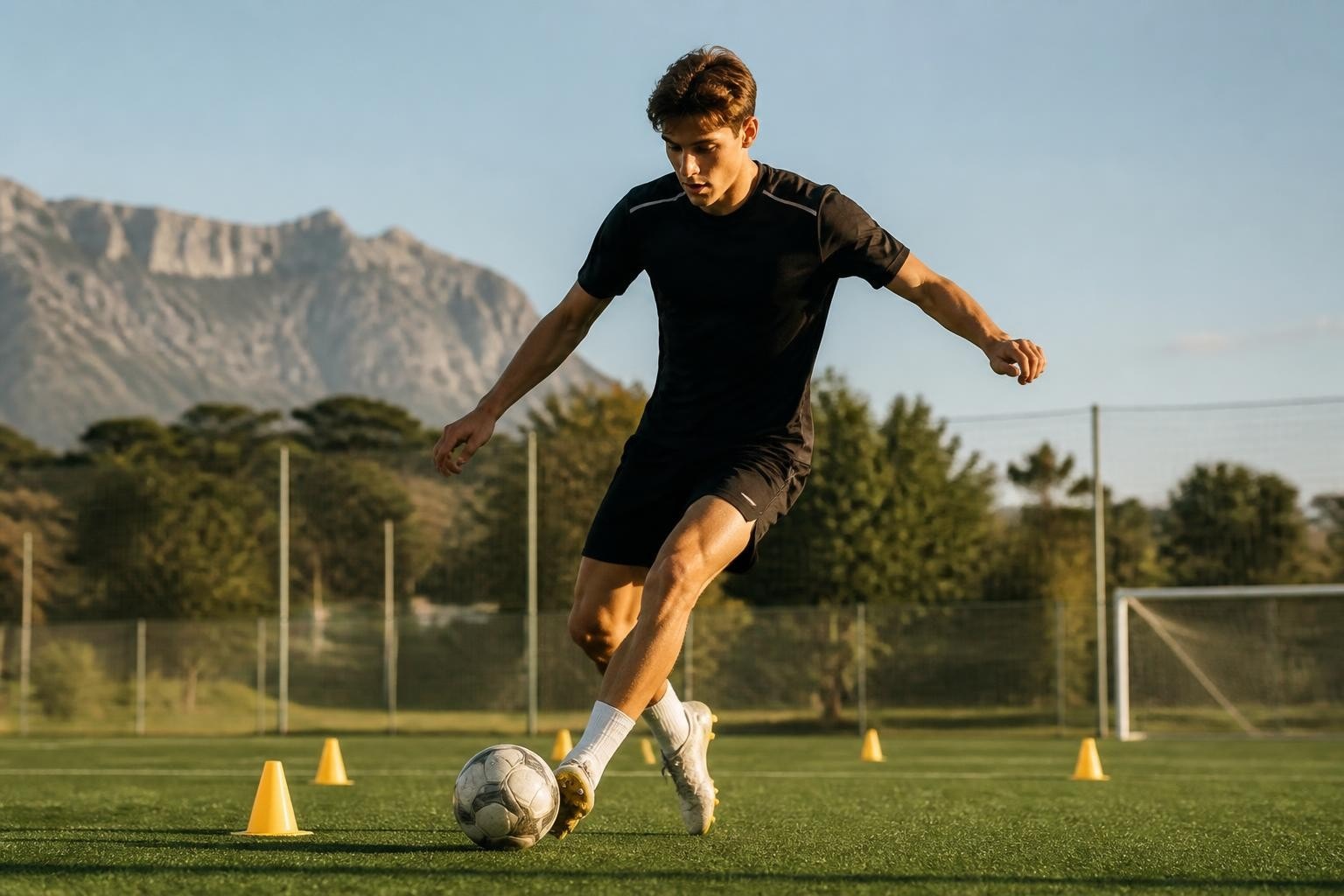
The landscape of youth soccer in Canada has transformed dramatically over the past decade, with communities like Surrey, BC, becoming hubs for developing world-class talent. Parents increasingly seek programs that go beyond recreational play, looking for pathways that prepare their children for competitive opportunities while building character and life skills. Understanding what distinguishes elite soccer training from standard programs helps families make informed decisions about their young athlete’s development journey.
What Defines Elite Soccer Training
Elite soccer represents the highest level of competitive play and preparation, characterized by structured development systems that address every aspect of player growth. Unlike recreational soccer, which focuses primarily on participation and enjoyment, elite soccer programs implement comprehensive training methodologies designed to maximize potential.
The foundation of elite soccer training rests on four interconnected pillars: technical proficiency, tactical understanding, physical conditioning, and psychological resilience. Each component requires dedicated attention and progressive development over years of consistent training. Technical training focuses on ball mastery, ensuring players can execute skills under pressure with both feet.
Key characteristics of elite soccer programs include:
- Periodized training plans that balance intensity and recovery
- Licensed coaching staff with recognized certifications
- Performance tracking and individualized development plans
- Exposure to competitive match environments
- Video analysis and tactical education sessions
The Canada Soccer pathway system provides a framework for player development across the country, establishing standards that elite programs follow. In British Columbia, this translates to age-appropriate training that progresses from fundamental movement skills to advanced tactical concepts.

The Technical Foundation of Elite Development
Technical excellence forms the backbone of any elite soccer player’s capability. This encompasses ball control, passing accuracy, receiving skills, dribbling ability, and finishing technique. Research on unopposed technical practice demonstrates that skill development from a young age creates the foundation for effective decision-making during matches.
European training philosophies, which have influenced programs across Surrey and greater Vancouver, emphasize high repetition of technical actions in various contexts. Players might perform thousands of touches per training session, progressing from isolated skill work to pressured scenarios that mimic game situations.
Building Technical Competency
The progression of technical training follows a deliberate sequence that respects developmental stages while challenging players appropriately. Young players begin with fundamental ball manipulation, advancing through increasingly complex patterns as their neural pathways develop.
| Age Group | Technical Focus | Training Emphasis |
|---|---|---|
| U8-U10 | Ball mastery, coordination | Fun-based, high repetition |
| U11-U13 | Skill refinement, both feet | Pressure introduction, speed |
| U14-U16 | Advanced techniques, creativity | Game-realistic scenarios |
| U17+ | Position-specific mastery | Elite-level execution |
Modern elite soccer training incorporates technology to enhance technical development. Video analysis allows players to review their movements, while tracking systems measure touches, passes, and movement patterns during sessions.
The training loads within elite professional soccer reveal patterns that inform youth development. While young players shouldn’t replicate professional volumes, understanding periodization principles helps coaches design age-appropriate programs that build capacity progressively.
Tactical Intelligence and Game Understanding
Technical skills mean little without the tactical awareness to apply them effectively. Elite soccer players develop deep understanding of game principles, positional responsibilities, and collective team behaviors. This cognitive dimension separates good players from exceptional ones.
Tactical development progresses from simple concepts like maintaining shape to complex principles involving pressing triggers, transition moments, and space exploitation. Players learn to read opponents, anticipate movements, and make split-second decisions that influence match outcomes.
Essential tactical concepts for developing players:
- Positional awareness – Understanding where to be relative to teammates, opponents, and the ball
- Space recognition – Identifying and exploiting gaps in defensive structures
- Transition management – Organized response to winning or losing possession
- Pressing coordination – Collective defensive pressure to regain the ball
- Build-up patterns – Structured progression from defensive to attacking thirds
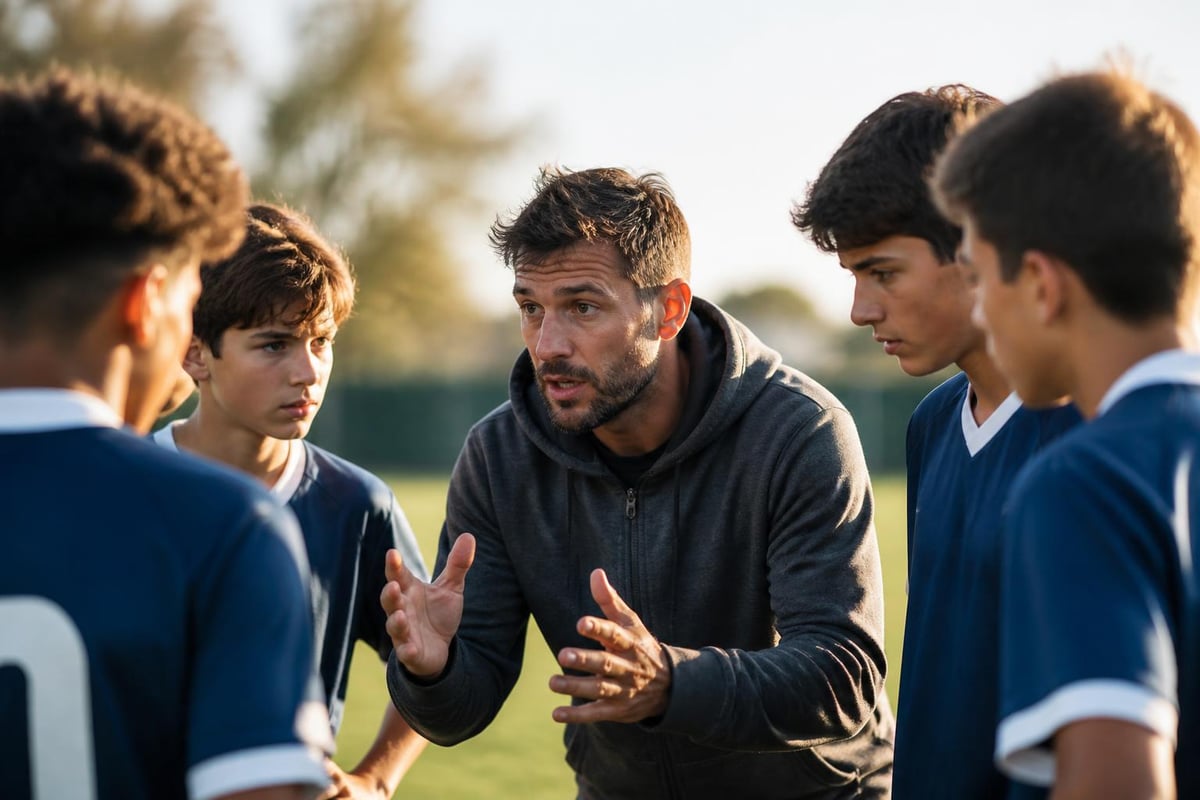
The coach’s role in academy player success extends beyond teaching skills to developing the mindset and character needed for high-level competition. Licensed coaches bring structured curricula that align with Canada Soccer’s Long-Term Player Development model.
Surrey’s elite soccer programs benefit from proximity to professional environments, allowing young players to observe and learn from higher levels of play. This exposure accelerates tactical understanding as players witness concepts applied in competitive settings.
Developing Soccer Intelligence
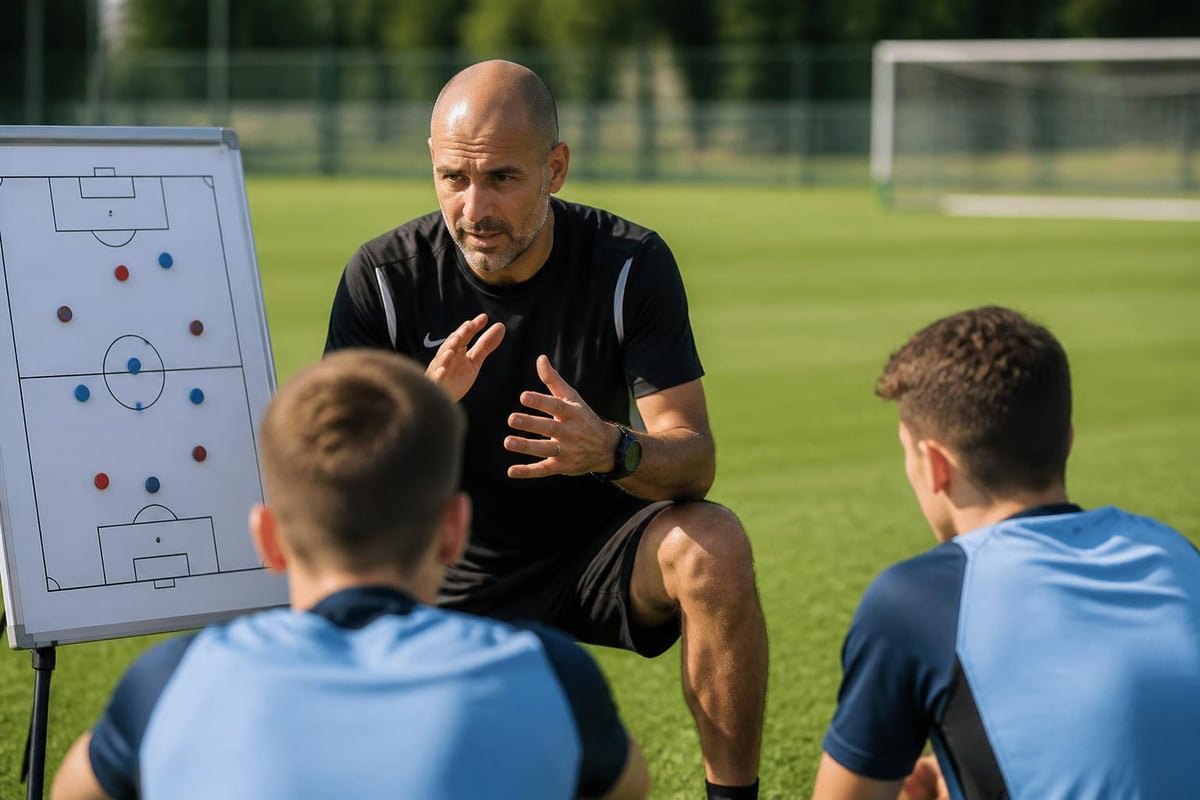
Tactical training incorporates various methodologies to build game understanding. Small-sided games create frequent decision-making opportunities, while positional drills isolate specific scenarios for focused learning. The perceptual training research demonstrates how visual exploratory activity improves through targeted intervention.
Film study becomes increasingly important as players mature, helping them recognize patterns and understand strategic adjustments. Elite programs in Surrey integrate video analysis sessions where players review both their own performances and professional matches to expand tactical knowledge.
Physical Development and Athletic Performance
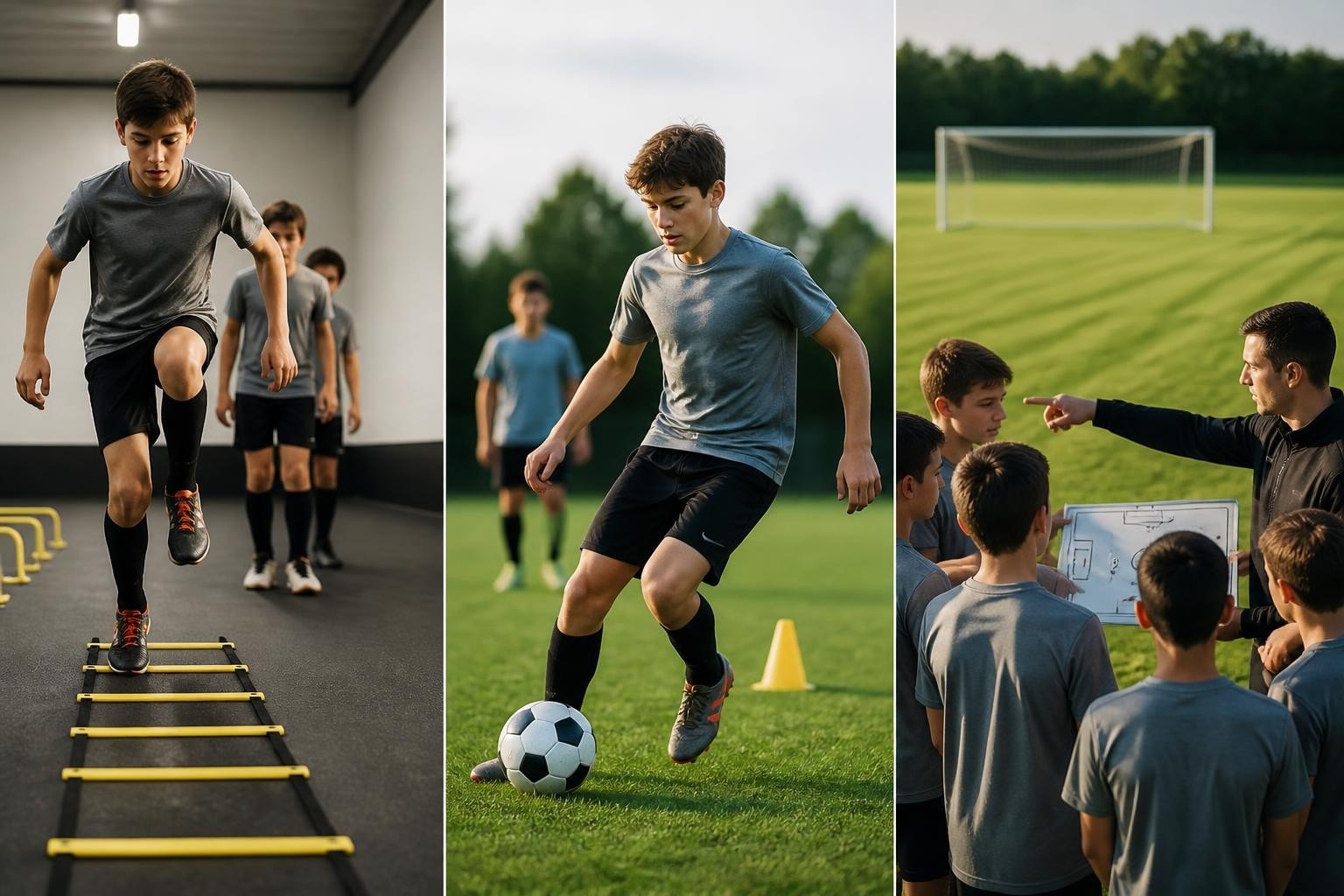
The physical demands of elite soccer require comprehensive athletic development that extends beyond sport-specific training. Players need strength, speed, agility, endurance, and power to compete at high levels while maintaining durability throughout demanding seasons.
Athletic development follows maturation principles, respecting biological age rather than chronological age alone. Early specialization in soccer can compromise long-term athletic potential, making multi-dimensional physical training essential during formative years.
Components of Elite Physical Training
Proper physical preparation addresses multiple energy systems and movement capabilities. Aerobic capacity allows players to maintain intensity across ninety minutes, while anaerobic power fuels explosive actions like sprints and jumps. Strength training, introduced appropriately for developmental stages, builds resilience and force production.
Programs that focus on Soccer High Performance Training provide intensive environments where players sharpen technical skills while improving decision-making speed, building the combination of physical and cognitive capabilities that define elite performance.
- Speed and agility work develops first-step quickness and directional change ability
- Strength training builds muscular power and injury resilience through age-appropriate progression
- Endurance development enables sustained high-intensity efforts throughout matches
- Flexibility and mobility maintain range of motion and reduce injury risk
- Recovery protocols ensure adaptation and readiness for subsequent training loads
The periodization of physical training aligns with competitive schedules, building capacity during preparation phases and maintaining fitness during competition blocks. Elite programs in British Columbia follow Canada Soccer guidelines while incorporating latest sport science research.
| Training Phase | Physical Focus | Duration |
|---|---|---|
| Off-Season | Strength foundation, aerobic base | 8-10 weeks |
| Pre-Season | Power development, conditioning | 6-8 weeks |
| In-Season | Maintenance, recovery emphasis | 30+ weeks |
| Transition | Active recovery, skill refinement | 2-4 weeks |
The Psychological Dimension of Elite Performance
Mental skills separate elite performers from talented players who never reach their potential. Confidence, resilience, focus, and competitive mindset develop through intentional training alongside physical and technical capabilities. The psychological demands of elite soccer include handling pressure, managing setbacks, and maintaining motivation through challenging periods.
Young athletes face unique mental challenges as they navigate competitive environments while balancing academic responsibilities and social development. Elite programs recognize this complexity, providing support systems that address whole-person growth rather than focusing exclusively on soccer outcomes.
Building Mental Toughness
Mental skills training encompasses various techniques that help players perform under pressure. Visualization practices allow athletes to rehearse successful performances mentally, while self-talk strategies help manage negative thoughts during competition. Goal-setting provides direction and motivation, especially during difficult training blocks.
The culture within elite soccer programs significantly influences psychological development. Environments that emphasize growth mindset, celebrate effort, and normalize failure as part of learning create resilient athletes. Coaches modeling positive behaviors and communication patterns shape player attitudes and responses.
Essential mental skills for elite soccer:
- Maintaining focus during extended competition periods
- Recovering quickly from mistakes or poor performances
- Managing pre-competition anxiety productively
- Demonstrating leadership regardless of match situation
- Balancing confidence with coachability and continuous improvement
Programs aligned with Canada Soccer’s development model recognize that psychological skills require the same progressive training as physical abilities. Age-appropriate interventions help young players build mental capacity without creating undue pressure or stress.
Pathways and Opportunities in Canadian Soccer
Elite soccer training creates opportunities beyond recreational enjoyment, opening pathways toward collegiate soccer, professional academies, and national team consideration. Understanding these routes helps families evaluate programs and make strategic decisions about their athlete’s development.
The Canadian soccer landscape offers multiple advancement routes. Provincial programs identify talented players for regional training centers, while national teams provide representation opportunities at various age groups. Post-secondary options include university soccer programs across Canada and NCAA opportunities in the United States.
Surrey’s location in British Columbia provides access to competitive leagues and showcase events that attract scouts and coaches. The regional soccer ecosystem supports player development through structured competition levels that match ability and ambition.
Competitive Structures and Advancement
Players progress through tiered competitive levels, from community-based clubs to elite academies and eventually professional environments. Each level presents increased demands and higher standards, requiring continuous adaptation and growth.
- Grassroots development – Community clubs providing foundational training and local competition
- Competitive youth leagues – Regional competitions with performance-based placement
- Elite academies – Comprehensive development programs preparing players for advanced opportunities
- Provincial and national programs – Representative teams competing nationally and internationally
- Professional academies – Pre-professional environments affiliated with Canadian Premier League or Major League Soccer clubs
- Post-secondary soccer – University programs offering athletic and academic integration
The developing the complete youth soccer player approach emphasizes individual development and exposure to multiple positions, creating well-rounded athletes capable of adapting to various competitive environments.
Selecting the Right Elite Program
Parents face important decisions when choosing elite soccer programs for their children. Not all programs claiming elite status deliver comprehensive development, making due diligence essential. Understanding what differentiates quality programs helps families identify environments that align with their values and their athlete’s needs.
Coaching credentials provide important indicators of program quality. In Canada, licensing through Canada Soccer ensures coaches meet recognized standards. Programs employing National A License coaches through Soccer for Life certified instructors demonstrate commitment to professional development expertise.
Critical evaluation criteria include:
- Coach education levels and ongoing professional development
- Training philosophy and methodology alignment with recognized development models
- Player-to-coach ratios ensuring adequate individual attention
- Facility quality and training environment consistency
- Communication systems keeping families informed and involved
- Track record of player advancement and opportunity creation
Beyond credentials, program culture matters significantly. Environments emphasizing holistic development, character building, and long-term growth create healthier experiences than those focused exclusively on winning at young ages. Elite programs balance competitive success with player welfare and enjoyment.
The financial investment in elite soccer warrants careful consideration. Quality programs require resources to maintain facilities, employ licensed coaches, and provide competitive opportunities. However, cost alone doesn’t guarantee quality, making program evaluation essential rather than assuming expense equals excellence.
| Program Feature | Why It Matters | Questions to Ask |
|---|---|---|
| Licensed coaches | Professional expertise, safety, development knowledge | What certifications do coaches hold? |
| Training frequency | Sufficient repetition for skill development | How many sessions weekly? |
| Competition schedule | Appropriate challenge level | What leagues and tournaments? |
| Development focus | Long-term growth vs. short-term results | How is player progress measured? |
| Communication | Family involvement and transparency | How are updates provided? |
Programs that articulate clear development philosophies and demonstrate alignment between stated values and actual practices deserve consideration. Understanding what makes training different helps parents recognize programs implementing genuine elite methodologies rather than marketing claims.
Integration of Technology and Analytics
Modern elite soccer increasingly incorporates technology to enhance training effectiveness and track player development. Video analysis systems allow detailed review of technique and tactical decisions, while wearable devices monitor physical output during training and matches. Data-driven approaches supplement coaching expertise with objective performance metrics.
The video analytics perspective in elite soccer demonstrates methodologies for real-time performance evaluation using machine learning and image processing. While youth programs don’t require professional-level systems, basic video review and performance tracking provide valuable development insights.
GPS tracking during training sessions reveals movement patterns, distances covered, and intensity distributions. This information helps coaches optimize training loads and identify areas requiring additional work. Heart rate monitoring ensures players train in appropriate zones for desired adaptations.
Technology serves development rather than replacing fundamental coaching. The best programs use data to inform decisions while maintaining focus on individual player needs and holistic growth. Analytics identify trends and patterns that human observation might miss, creating more comprehensive understanding of player capabilities and areas for improvement.
Balancing Excellence with Youth Development
Elite soccer training must respect developmental principles while pursuing excellence. Premature specialization, excessive training loads, and pressure-filled environments can harm young athletes physically and psychologically. Quality programs balance ambition with age-appropriate practices that prioritize long-term development over short-term results.
The concept of relative age effect influences youth soccer significantly. Players born early in selection year windows often receive more opportunities due to temporary physical advantages. Elite programs recognize this phenomenon, evaluating players based on technical skill and tactical understanding rather than current physical dominance.
Principles of healthy elite development:
- Age-appropriate training volumes respecting recovery needs
- Multi-sport participation encouraged during developmental years
- Realistic expectations aligned with biological maturation
- Emphasis on skill mastery rather than early tactical specialization
- Supportive environments celebrating effort and growth
Rest and recovery receive equal priority with training in properly designed programs. Young bodies adapt differently than mature athletes, requiring adequate sleep, nutrition, and downtime between intense efforts. Overuse injuries result from excessive volume without sufficient recovery, compromising long-term potential.
Elite doesn’t mean joyless. The best programs maintain fun and creativity while pursuing excellence, recognizing that passion for the game sustains commitment through challenging developmental periods. Players who genuinely enjoy training work harder and persist longer than those participating primarily from external pressure.
The journey toward elite soccer performance requires comprehensive development across technical, tactical, physical, and psychological dimensions, with each component receiving focused attention through progressive training. At Strive Soccer Academy, we understand what parents want most for their young athletes – a program that develops skills, builds character, and creates real opportunities through our European-style training philosophy in Surrey, BC. Our fully licensed coaching staff, ranging from National A Licenses to Soccer for Life certifications, delivers the structured development your athlete needs to reach their potential while building life skills that extend beyond the pitch.
Article written using RankPill.