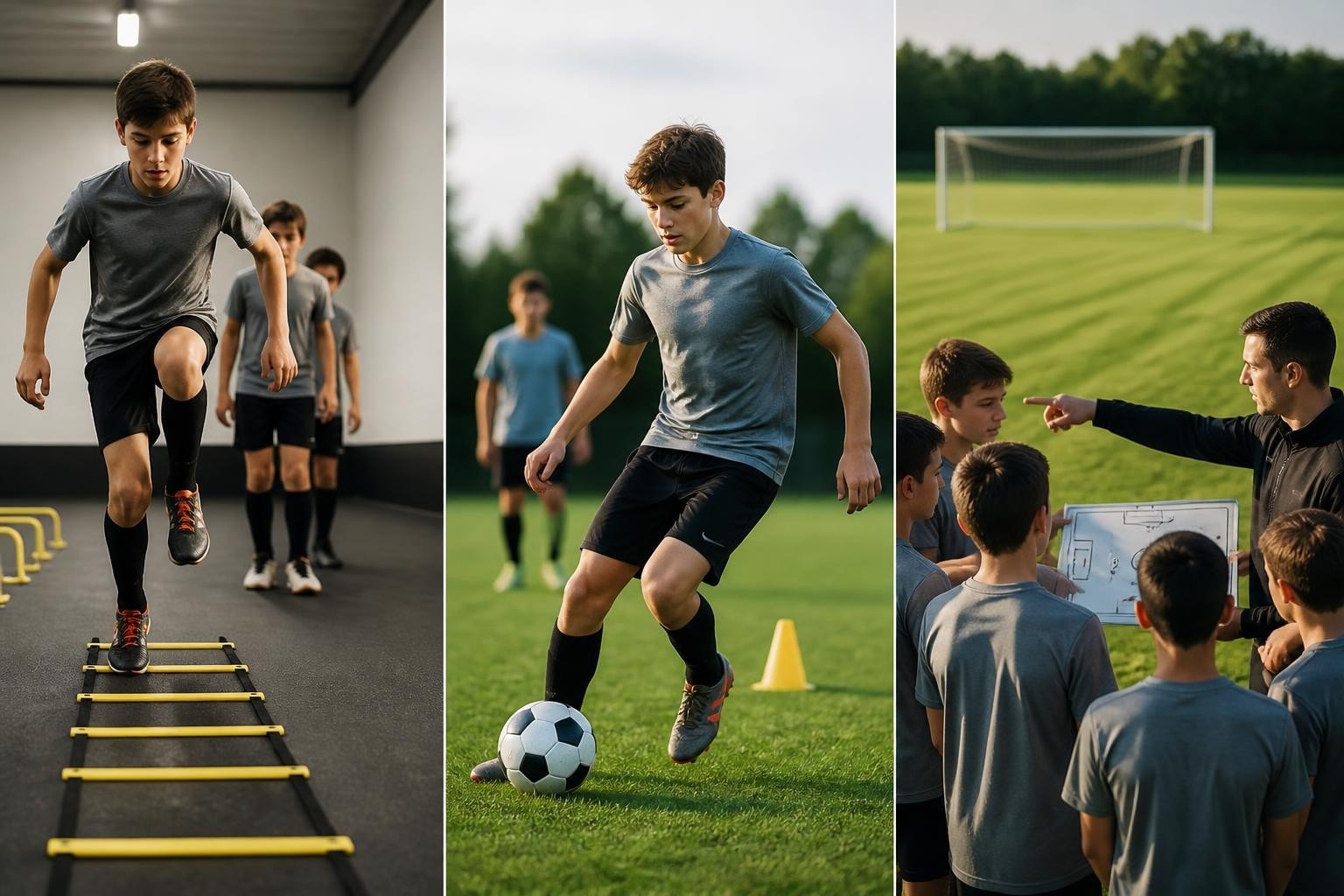
Parents searching for elite soccer training surrey options face a critical decision: which program will genuinely prepare their child for competitive success while fostering personal development? The landscape of youth soccer development has evolved dramatically in recent years, with European training methodologies proving their effectiveness in developing world-class talent. In Surrey, BC, families now have access to programs that implement these proven systems, combining technical excellence with character development. Understanding what separates elite training from standard recreational programs helps parents make informed decisions about their young athlete's future.
What Defines Elite Soccer Training in Surrey
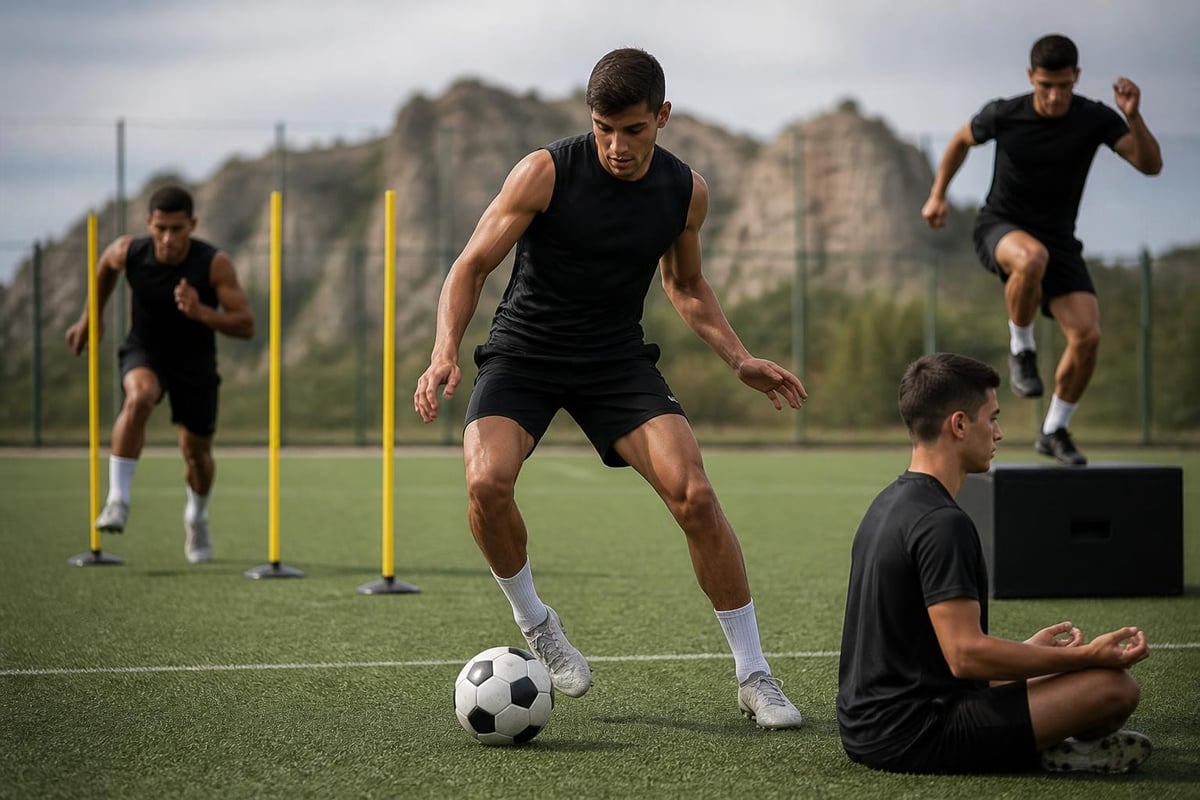
Elite soccer training surrey programs distinguish themselves through structured, research-backed methodologies rather than simple drills and scrimmages. The foundation rests on four interconnected pillars that mirror professional academy systems worldwide.
Technical development forms the cornerstone of any elite program. Players must master ball control, passing accuracy, receiving techniques, and shooting mechanics through repetition and progressive difficulty. This foundation enables players to execute skills under pressure during competitive matches.
Tactical understanding separates good players from exceptional ones. Young athletes learn positioning, spatial awareness, decision-making speed, and game reading abilities that translate directly to match performance. Elite programs teach players not just what to do, but when and why to execute specific actions.
The physical component addresses strength, speed, agility, and endurance through age-appropriate conditioning. Modern elite soccer training methods emphasize movement efficiency alongside raw athletic development, ensuring players move intelligently rather than just quickly.
Psychological resilience often receives insufficient attention in standard programs. Mental toughness, focus under pressure, emotional regulation, and competitive mindset development prove essential for long-term success in soccer and life.
The European Training Philosophy in BC
European soccer academies have produced generations of world-class talent through systematic player development models. These methodologies emphasize quality over quantity, deliberate practice over random repetition, and long-term development over short-term wins.
Surrey programs adopting European approaches focus on individual technical mastery before team tactics. Young players spend significant time on ball manipulation, first touch refinement, and movement patterns that become second nature through thousands of repetitions.
Age-Appropriate Progression
Different developmental stages require different training emphases:
- Ages 6-9: Focus on basic ball familiarity, coordination, and fun-based learning
- Ages 10-12: Introduce tactical concepts, position-specific skills, and competitive mindset
- Ages 13-15: Emphasize decision-making speed, physical development, and advanced techniques
- Ages 16+: Refine specialization, match preparation, and professional-level standards
This progression ensures players develop foundational skills before advancing to complex tactical systems. Programs that rush players through stages often create gaps that limit future potential.
The emphasis on small-sided games reflects European training wisdom. Reducing field size and player numbers increases individual touches, decision-making opportunities, and tactical involvement. Research consistently demonstrates that players in small-sided formats develop faster than those primarily practicing in full 11v11 scenarios during training.
Coaching Standards That Matter
Elite soccer training surrey programs require properly credentialed coaches who understand player development science. Canada Soccer's licensing pathway ensures coaches possess both technical knowledge and teaching methodology expertise.
| License Level | Focus Areas | Typical Role |
|---|---|---|
| National A | Advanced tactics, periodization, elite performance | Academy directors, senior team coaches |
| National B | Tactical systems, player evaluation, program design | Competitive team coaches |
| National C | Technical fundamentals, age-appropriate training | Developmental coaches |
| Soccer for Life | Introduction to game, child development, fun-based learning | Youth program coaches |
Licensed coaches understand progression models, injury prevention, psychological development, and communication strategies appropriate for different age groups. They design sessions with clear objectives, proper warm-ups, skill progressions, and meaningful feedback loops.
Beyond credentials, elite programs ensure coaches engage in continuous professional development. Soccer training methodologies evolve constantly, incorporating new research on biomechanics, sports psychology, and skill acquisition. Coaches who remain current deliver superior instruction that reflects best practices.
Technical Training Components
Technical excellence separates recreational players from those competing at higher levels. Elite soccer training surrey programs dedicate substantial time to individual skill refinement through structured progressions.
Ball mastery drills develop comfort and confidence with the soccer ball. Players work through increasingly complex movements-rolls, pulls, cuts, and turns-building the neural pathways necessary for instinctive ball control during matches.
Essential Technical Skills
- First touch: Receiving passes with various surfaces, controlling balls arriving from different heights and speeds
- Passing variety: Short, medium, and long-range distribution with both feet
- Dribbling techniques: Close control for tight spaces, speed dribbling for open field, 1v1 moves to beat defenders
- Shooting mechanics: Power shots, placement finishes, volleys, headers
- Defensive skills: Tackling timing, positioning, pressure application, interceptions
Quality programs incorporate unopposed technical work, semi-opposed pressure situations, and fully opposed competitive scenarios. This progression transfers practice skills to game performance effectively.
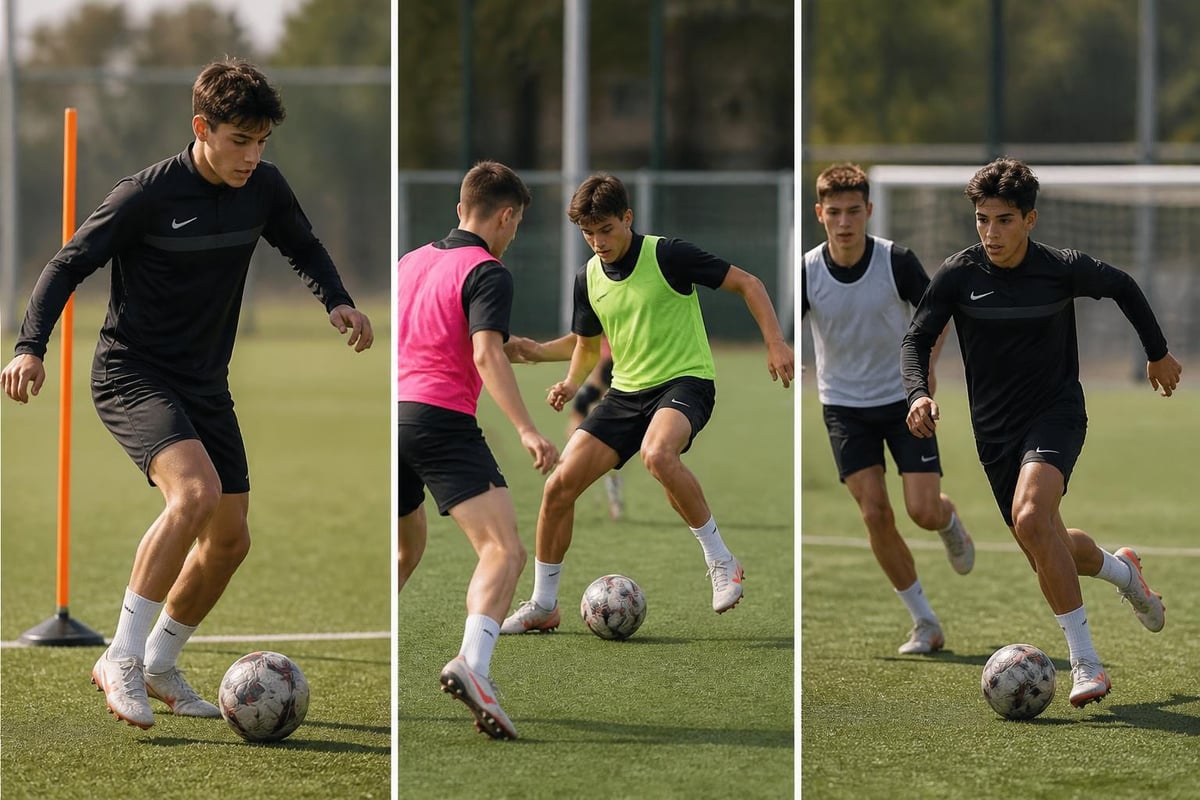
For players seeking intensive skill development, Soccer High Performance Training provides high-intensity, professional environments where athletes sharpen technical abilities, improve decision-making, increase speed of play, and build confidence through 90-minute dynamic sessions targeting ball mastery, strength, and tactical awareness.
Tactical Development and Game Intelligence
Technical skills alone prove insufficient for elite performance. Players must understand positioning, spacing, timing, and decision-making within team systems.
Tactical training begins with basic concepts:
- Positional responsibilities: Understanding where to be during different phases of play
- Support angles: Creating passing options for teammates in possession
- Defensive shape: Maintaining team structure when opponents have the ball
- Transition speed: Switching quickly between attack and defense
- Set piece execution: Organized plays from corners, free kicks, and throw-ins
Advanced tactical development introduces formation variations, pressing triggers, counter-attack timing, and possession maintenance strategies. Elite programs teach players to read the game, anticipate opponent movements, and exploit tactical advantages.
Video analysis enhances tactical learning. Reviewing match footage helps players recognize patterns, identify improvement areas, and understand how professional players solve similar situations. This visual learning accelerates tactical maturity significantly.
Physical Conditioning for Youth Athletes
Physical development requires careful balance in youth soccer. Elite soccer training surrey programs implement age-appropriate conditioning that enhances performance without risking overuse injuries or burnout.
Speed and agility training focuses on acceleration mechanics, change of direction efficiency, and reactive movement patterns. Proper technique prevents injuries while maximizing athletic output. Professional recovery approaches used by elite clubs emphasize individualized programming and injury prevention exercises.
Strength development varies by age. Pre-pubescent athletes benefit from bodyweight exercises, coordination drills, and fundamental movement patterns. Post-pubescent players can progressively add resistance training, always prioritizing proper form over heavy loads.
| Age Group | Conditioning Focus | Session Frequency |
|---|---|---|
| U8-U10 | Movement literacy, coordination, fun-based fitness | Integrated into technical sessions |
| U11-U13 | Speed mechanics, agility patterns, core strength | 1-2 dedicated sessions weekly |
| U14-U16 | Strength foundation, power development, endurance | 2-3 sessions weekly |
| U17+ | Sport-specific conditioning, injury prevention, peak performance | 3-4 sessions weekly |
Elite programs monitor training loads carefully, preventing overtraining while ensuring progressive overload. Recovery strategies including proper nutrition, sleep education, and active recovery sessions maintain athlete health throughout demanding training cycles.
Psychological Training and Mental Toughness
Mental skills often determine success when physical abilities reach parity. Elite soccer training surrey programs incorporate psychological development alongside physical training.
Competitive mindset development teaches players to embrace challenges, maintain focus under pressure, and respond productively to setbacks. Coaches create training environments that simulate match pressure, helping athletes develop emotional regulation skills.
Visualization techniques enhance performance preparation. Players learn to mentally rehearse successful skill execution, tactical scenarios, and pressure situations. This mental practice activates similar neural pathways as physical practice, reinforcing learning and building confidence.
Goal-setting frameworks help young athletes maintain motivation and track progress. Effective goals balance outcome targets (match results, team selection) with process objectives (technical improvements, tactical understanding). This dual focus maintains long-term development perspective while celebrating short-term achievements.
Communication skills prove essential for team success. Elite programs teach players to provide constructive feedback, request support, and maintain positive team culture. These interpersonal skills transfer beyond soccer into academic and professional environments.
Training Environment and Facilities
Quality training environments accelerate player development through proper surfaces, equipment, and facility design. Elite soccer training surrey locations provide well-maintained fields, appropriate lighting, and weather-protected options for year-round training consistency.
Essential Facility Elements
- Turf quality: Level, well-drained surfaces that allow proper ball roll and safe movement
- Goal variety: Multiple goal sizes for age-appropriate training and small-sided games
- Training equipment: Adequate cones, mannequins, rebounders, and agility tools
- Video capabilities: Recording equipment for session analysis and player feedback
- Shelter options: Indoor or covered alternatives during inclement weather
Facility quality reflects program commitment to player development. Organizations investing in proper training environments demonstrate long-term dedication to excellence rather than short-term profit maximization.
Parent Involvement and Communication
Successful player development requires partnership between coaches, players, and parents. Elite soccer training surrey programs establish clear communication channels and appropriate parent involvement boundaries.
Parents support development through:
- Encouraging consistent attendance and punctuality
- Reinforcing coach messaging at home
- Providing proper nutrition and adequate rest
- Maintaining realistic expectations aligned with developmental stage
- Celebrating effort and improvement over outcomes
Effective programs educate parents about age-appropriate development, helping families understand that elite training focuses on long-term growth rather than immediate results. This perspective reduces pressure on young athletes while maintaining high standards.
Regular communication updates keep parents informed about player progress, upcoming events, and program developments. Transparent dialogue builds trust and ensures alignment between program philosophy and family expectations.
Competitive Opportunities and Player Pathways
Elite training programs provide appropriate competitive opportunities that challenge players while supporting continued development. Surrey programs connect players with provincial leagues, showcase tournaments, and identification camps that expose talent to higher-level opportunities.
League placement should match player ability and development needs. Playing up age groups benefits some players, while others develop better against same-age competition. Quality programs assess individual readiness rather than applying blanket policies.
Tournament participation offers concentrated competition against varied opponents. These events test player development, expose tactical weaknesses requiring additional training, and provide valuable experience in pressure situations.
College showcase events and professional academy affiliations create pathways for exceptional talent. While few players reach professional levels, understanding player pathways helps families set realistic goals and pursue appropriate opportunities.
Training Frequency and Session Structure
Elite development requires consistent training volume balanced with adequate recovery. Optimal frequency varies by age, competitive level, and individual recovery capacity.
Younger players (U8-U12) typically train 2-4 times weekly with one match, allowing time for multi-sport participation and free play. Older competitive players (U13+) may train 4-6 times weekly with matches, approaching semi-professional training volumes.
Typical Elite Session Structure
| Session Component | Duration | Purpose |
|---|---|---|
| Dynamic warm-up | 10-15 min | Injury prevention, movement preparation |
| Technical focus | 20-25 min | Skill refinement, repetition |
| Tactical application | 20-30 min | Game situations, decision-making |
| Small-sided game | 15-20 min | Transfer to match context |
| Cool-down | 5-10 min | Recovery initiation, flexibility |
Well-structured sessions maintain high engagement through varied activities, appropriate challenge levels, and clear learning objectives. Effective coaches maximize touches, minimize waiting time, and provide specific feedback throughout sessions.
Selecting the Right Program
Parents evaluating elite soccer training surrey options should assess programs across multiple dimensions beyond marketing claims and facility appearances.
Coaching credentials provide baseline quality assurance. Verify that coaches hold current Canada Soccer licenses appropriate for the age groups they instruct. Ask about continuing education participation and coaching philosophy alignment with player-centered development.
Observe training sessions before committing. Quality programs welcome parent observation and demonstrate organized, purposeful training with high player engagement. Red flags include excessive standing time, unclear objectives, or coaches prioritizing winning over learning.
Request player development plans that outline progression pathways, skill expectations by age, and evaluation criteria. Programs with documented frameworks demonstrate systematic approaches rather than improvised training.
Consider program values beyond soccer skills. Character development and life skills preparation create lasting benefits regardless of athletic outcomes. Programs emphasizing respect, responsibility, resilience, and teamwork provide value extending far beyond the soccer field.
Investment Considerations
Elite soccer training surrey programs require financial commitment from families. Understanding cost structures and value propositions helps parents make informed decisions aligned with budget constraints.
Typical program costs include:
- Registration fees: Covering coaching, facility rental, administrative expenses
- Uniform and equipment: Team apparel, training gear, personal equipment
- Tournament fees: Competition entry costs, sometimes travel expenses
- Additional training: Optional private sessions, specialty camps, goalkeeper training
Quality programs provide transparent pricing with clear explanations of what fees cover. Compare costs against training frequency, coach credentials, facility quality, and competitive opportunities to assess value.
Financial assistance programs indicate organizational commitment to accessibility. Many elite programs offer scholarships, payment plans, or fundraising opportunities, ensuring talented players access quality training regardless of family financial circumstances.
Long-Term Development Perspective
Elite soccer training surrey programs emphasize patient development over quick results. Understanding long-term athletic development models helps parents maintain realistic expectations and support player growth appropriately.
Physical maturation timing significantly impacts youth soccer performance. Early-maturing players often dominate younger age groups through physical advantages rather than superior skills. Late-maturing players may struggle initially despite strong technical abilities. Quality programs recognize these differences, evaluating potential beyond current performance levels.
Research on player development demonstrates that skills learned during adolescence prove more durable than those developed later. This critical period justifies investment in quality training despite uncertain long-term outcomes.
Burnout and overuse injuries threaten long-term development. Elite programs monitor training loads, encourage multi-sport participation during younger years, and provide recovery guidance. Sustainable development pathways preserve athlete health and maintain intrinsic motivation throughout the developmental journey.
The Role of Individual Training
While team training provides essential tactical and social development, individual technical work accelerates skill acquisition. Elite soccer training surrey programs often incorporate or recommend supplementary individual training opportunities.
Private sessions allow personalized instruction targeting specific weaknesses or developing advanced skills. One-on-one coaching provides immediate feedback, higher repetition volumes, and customized progressions impossible in group settings.
Home practice routines extend training beyond organized sessions. Simple drills requiring minimal space-wall passes, ball manipulation, juggling-accumulate significant additional touches over time. Consistent daily practice of 15-20 minutes produces measurable improvements within weeks.
Self-directed training develops intrinsic motivation and ownership of development. Players who practice independently demonstrate greater commitment and typically advance faster than those relying solely on organized sessions.
Elite soccer development requires comprehensive training addressing technical, tactical, physical, and psychological dimensions through age-appropriate progressions and professional coaching. Parents seeking quality programs should prioritize systematic methodologies, properly credentialed coaches, and long-term development perspectives over short-term results. At Strive Soccer Academy, our European-style training philosophy delivered by fully licensed Canada Soccer coaches develops complete players through integrated technical, tactical, physical, and psychological training. We create opportunities for young athletes to reach their potential while building character and life skills that extend beyond soccer.