The landscape of youth soccer development has evolved dramatically over the past decade, with elite soccer camps emerging as a critical component in the pathway to professional and collegiate success. These intensive training environments offer young athletes opportunities to accelerate their development under the guidance of licensed coaches who understand the nuanced demands of modern soccer. For parents seeking to invest in their child's athletic future, understanding what distinguishes elite soccer camps from recreational programs becomes essential to making informed decisions about player development.
What Defines Elite Soccer Camps
Elite soccer camps represent a specialized tier of training programs designed to push young players beyond their comfort zones while maintaining age-appropriate expectations. These camps distinguish themselves through several key characteristics that separate them from standard recreational offerings.
Coaching credentials form the foundation of any elite program. Professional camps employ coaches with national-level certifications, ensuring that instruction aligns with current best practices in player development. The difference between a coach with grassroots certification and one holding a National A License becomes apparent in session design, feedback quality, and ability to identify technical deficiencies that might otherwise go unnoticed.
The Four Pillars of Player Development
Elite soccer camps structure their curricula around comprehensive player development models that address multiple dimensions of athletic growth. This holistic approach ensures that young athletes develop as complete players rather than specialists in isolated skills.
- Technical Development: Ball mastery, first touch refinement, passing accuracy, and finishing techniques
- Tactical Awareness: Reading the game, positioning, decision-making speed, and team shape understanding
- Physical Conditioning: Speed, agility, endurance, and strength appropriate to age and development stage
- Psychological Strength: Mental resilience, competitive mindset, focus under pressure, and growth mentality
Research into video analytics in elite soccer has revealed how professional clubs evaluate technical execution and decision-making patterns, insights that inform training methodologies at high-level camps. This scientific approach to player assessment ensures that camp participants receive feedback grounded in measurable performance indicators rather than subjective observation alone.
Training Intensity and Session Structure
The distinguishing feature of elite soccer camps lies in their training intensity and purposeful session design. Unlike recreational programs that emphasize participation and enjoyment as primary outcomes, elite camps challenge players to operate at match intensity while maintaining technical precision.
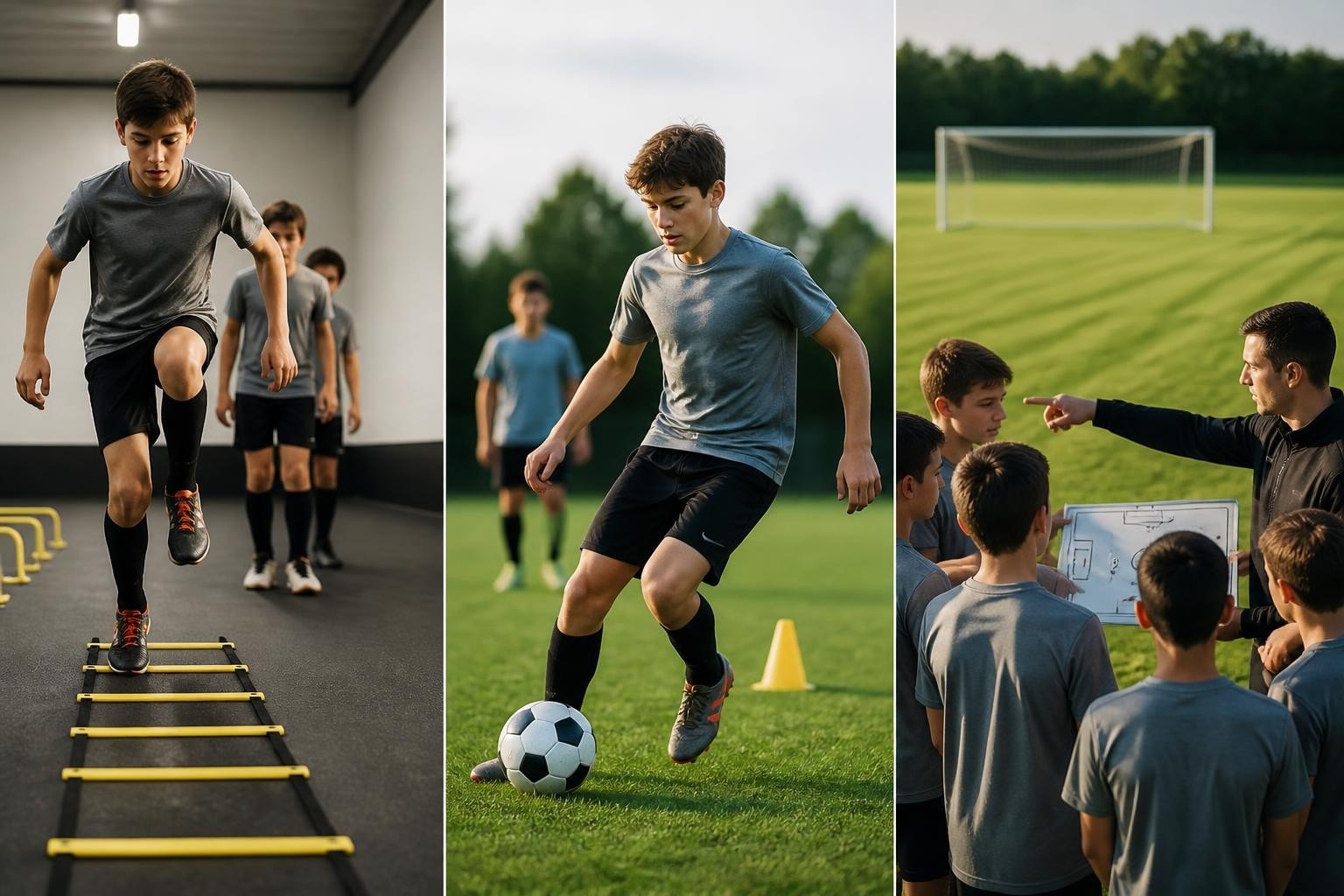
A typical 90-minute high-intensity session follows a carefully sequenced structure that maximizes learning while managing fatigue. Sessions begin with dynamic warm-ups that incorporate ball work, transitioning into technical drills that demand repetition under increasing pressure. The middle portion focuses on small-sided games or tactical scenarios that simulate match conditions, forcing players to apply newly practiced skills in realistic contexts.
Progressive Skill Development
Elite soccer camps employ progression models that systematically increase complexity as players demonstrate mastery. This scaffolded approach prevents frustration while ensuring continuous challenge.
| Progression Stage | Focus Area | Training Method | Success Indicator |
|---|---|---|---|
| Foundation | Individual technique | Unopposed repetition | Consistent execution |
| Application | Decision-making | Opposed drills | Speed of play improvement |
| Integration | Game situations | Small-sided games | Transfer to matches |
| Mastery | High-pressure performance | Full-sided scrimmages | Composure under stress |
The deliberate progression from unopposed technical work to game-realistic pressure situations allows players to build confidence while expanding their capabilities. This methodology contrasts sharply with camps that jump immediately into competitive games without establishing technical foundations.
Selection Criteria and Player Assessment
Elite soccer camps typically implement assessment processes to ensure appropriate grouping and targeted instruction. Understanding these selection criteria helps parents determine whether their child is ready for this level of training commitment.
Technical proficiency serves as the baseline requirement. Players should demonstrate comfort with both feet, ability to receive and distribute the ball under pressure, and understanding of basic tactical concepts like spacing and support angles. Camps evaluate these competencies through tryouts or video submissions that showcase game footage and technical demonstrations.
Physical readiness extends beyond raw athleticism to include movement literacy and injury prevention awareness. Studies examining movement dynamics in elite female soccer athletes highlight the importance of proper biomechanics in preventing overuse injuries during intensive training periods. Elite camps incorporate movement screening to identify potential risk factors before players engage in high-volume training.
Mental Readiness Indicators
The psychological demands of elite soccer camps often surprise parents who focus exclusively on technical and physical preparation. Players must possess certain mental attributes to thrive in these environments.
- Coachability: Receptiveness to feedback and willingness to attempt corrections immediately
- Resilience: Ability to maintain effort after mistakes without emotional collapse
- Competitive Drive: Internal motivation to improve rather than external pressure from parents
- Focus Capacity: Sustained attention during technical instruction and repetitive drills
- Team Orientation: Understanding that individual improvement serves collective success
Research into relative age effects in elite sports reveals how birth date influences player selection and development opportunities, suggesting that mental maturity may matter as much as chronological age when evaluating camp readiness.
Benefits Beyond Technical Skill Development
While technical improvement remains the primary draw for elite soccer camps, the developmental benefits extend into areas that influence long-term athletic and personal success. These secondary outcomes often prove more valuable than the immediate skill gains visible during camp participation.

Character formation occurs naturally within the demanding environment of elite training. Players learn to push through physical discomfort, accept constructive criticism without defensiveness, and celebrate teammates' successes even while competing for playing time. These experiences build psychological resilience that transfers to academic settings, future careers, and personal relationships.
Leadership and Communication Skills
Elite soccer camps create opportunities for young players to develop leadership capacities through rotating captain roles, peer coaching assignments, and tactical discussion sessions. The ability to communicate effectively under pressure becomes particularly important as players advance to higher competitive levels where split-second decisions determine outcomes.
Programs that emphasize tactical awareness require players to articulate their decision-making rationale, explaining why they chose a particular passing option or defensive positioning. This verbalization of thought processes develops cognitive flexibility and self-awareness that enhances learning retention. For players interested in high-performance training environments that prioritize these comprehensive development aspects, finding programs with European-style coaching philosophies provides exposure to methodologies proven effective at professional levels.
Age-Appropriate Programming Considerations
The structure and expectations of elite soccer camps must align with developmental stages to maximize benefit while minimizing injury risk and psychological burnout. Parents should verify that camp programming reflects current understanding of youth athlete development.
Training volume represents a critical consideration. Young players (ages 8-12) benefit most from frequent exposure to varied technical challenges rather than extended single-session durations. Elite camps for this age group typically offer 60-90 minute sessions focused heavily on individual ball mastery and creative problem-solving through small-sided games.
Adolescent players (ages 13-18) can handle increased training loads and tactical complexity. Sessions may extend to two hours with greater emphasis on positional-specific training, set-piece execution, and advanced tactical concepts. However, even at this age, quality of repetition matters more than quantity, with research consistently showing that focused, purposeful practice yields superior outcomes compared to high-volume unfocused training.
Physical Development Windows
Elite camps should structure their physical conditioning components around known development windows where certain attributes respond optimally to training stimulus.
| Age Range | Primary Development Focus | Training Emphasis | Volume Consideration |
|---|---|---|---|
| 8-11 years | Coordination and agility | Movement literacy, balance | Short, varied sessions |
| 12-14 years | Aerobic capacity | Endurance through gameplay | Moderate intensity increase |
| 15-17 years | Speed and power | Explosive movements, sprinting | High intensity, managed volume |
| 18+ years | Strength and maintenance | Position-specific conditioning | Professional-level demands |
Understanding these windows helps parents evaluate whether camp programming aligns with their child's developmental stage or instead applies a one-size-fits-all approach that may prove ineffective or potentially harmful.
Evaluating Camp Quality and Reputation
The proliferation of programs marketing themselves as "elite" necessitates careful evaluation to distinguish genuinely high-quality offerings from those leveraging the term for marketing purposes without delivering corresponding value.
Coaching credentials should be verified directly through governing bodies rather than relying solely on camp marketing materials. In Canada, coaches should hold certifications through Canada Soccer, with elite programs featuring staff holding National B licenses or higher. The United States Soccer Federation maintains similar standards, with A and B licenses indicating advanced coaching education.
Key Quality Indicators
Parents can assess camp quality through several observable factors that correlate with program effectiveness and developmental impact.
- Player-to-coach ratios below 12:1 ensure adequate individual attention and feedback
- Session planning documentation shows intentional progression rather than improvised activities
- Video analysis integration provides players with visual feedback on technical execution
- Alumni success stories demonstrating progression to college programs or professional academies
- Injury prevention protocols including proper warm-ups, cool-downs, and hydration schedules
Alumni outcomes provide particularly valuable insights into camp effectiveness. Programs should readily share information about former participants' progression, whether to collegiate soccer, professional academies, or high-level club teams. Academy programs that track and publicize player advancement demonstrate accountability and confidence in their developmental model.
Cost Considerations and Value Assessment
Elite soccer camps represent significant financial investments, with costs varying based on duration, location, coaching credentials, and included amenities. Understanding the value proposition helps parents make informed decisions aligned with their resources and their child's genuine developmental needs.
Day camps typically range from $300 to $800 per week, offering 3-5 hours of daily training without overnight accommodation. These programs suit families seeking intensive skill development while maintaining familiar routines and lower overall costs. The concentrated daily exposure to high-level coaching can produce measurable technical improvements within a single week.
Residential camps incorporating overnight stays, meals, and extended programming typically cost $1,000 to $3,000 per week. The immersive environment offers benefits beyond training sessions, including team-building activities, mental skills workshops, and exposure to college recruiting processes for older players. The question becomes whether these additional components justify the substantially higher investment.
Return on Investment Metrics
Parents should evaluate camp investments through multiple outcome measures rather than focusing exclusively on immediate skill improvement.
- Technical advancement: Measurable improvements in specific skills identified pre-camp
- Competitive positioning: Selection to higher-level teams or leagues post-camp
- Networking opportunities: Connections with coaches, scouts, or recruiting personnel
- Mental development: Increased confidence, resilience, or competitive mindset
- Educational value: Understanding of nutrition, recovery, or tactical concepts
The integration of modern analytical methods into player evaluation provides camps with tools to demonstrate measurable improvement objectively, moving beyond subjective assessment to data-driven progress tracking.
Geographic and Cultural Considerations
The location and cultural approach of elite soccer camps significantly influences the developmental experience and learning outcomes. European-style camps emphasize technical refinement and tactical intelligence, while North American programs may focus more heavily on athletic development and competitive mentality.
European methodologies prioritize ball mastery, positional understanding, and game intelligence. Players spend considerable time in technical drills that demand precision and repetition, developing the comfort on the ball that characterizes European professional leagues. Tactical sessions emphasize pattern recognition, decision-making speed, and positional responsibility within team systems.
North American approaches often incorporate higher physical intensity and competitive elements throughout training sessions. The emphasis on athleticism and competitive success reflects the scholarship-driven pathway prevalent in United States and Canadian soccer development. Programs like those at Strive Soccer Academy that integrate European technical focus with North American competitive intensity offer balanced development addressing multiple pathway requirements.
Long-Term Development Pathways
Elite soccer camps function most effectively as components within comprehensive long-term development plans rather than isolated interventions expected to produce immediate transformational results. Understanding how camps fit into broader development pathways helps parents maintain realistic expectations while maximizing camp benefits.
Progressive exposure to increasingly competitive environments allows players to consolidate skills learned at camps before advancing to the next challenge level. A player might attend a regional elite camp, then progress to national-level programs, and eventually pursue international opportunities at academies affiliated with professional clubs.
The transition from camp participation to academy membership represents a common progression for players demonstrating consistent improvement and competitive readiness. Full-time academy programs offer daily training under professional coaching, integration of academic and athletic schedules, and direct pathways to collegiate and professional opportunities. Understanding when a player has outgrown camp-based development and requires full-time academy structure prevents stagnation while avoiding premature advancement that leads to discouragement.
Creating Individual Development Plans
Effective long-term development requires documented planning that identifies current abilities, sets specific improvement goals, and outlines the training interventions necessary to achieve those objectives.
| Development Component | Assessment Method | Improvement Target | Training Intervention |
|---|---|---|---|
| First touch quality | Video analysis review | 90% success rate under pressure | Daily wall passing drills |
| Tactical awareness | Match footage analysis | Correct positioning 85% of time | Small-sided tactical games |
| Shooting accuracy | Statistical tracking | 60% on-target percentage | Finishing-focused sessions |
| Physical speed | Timed sprint tests | 10% improvement in 40m time | Speed and agility training |
Elite soccer camps should align with and advance the specific goals outlined in individual development plans. Parents can maximize value by sharing these plans with camp directors, who can then tailor feedback and focus areas to support the player's unique developmental trajectory. Resources available through comprehensive training programs help families construct and implement these individualized approaches effectively.
Parent Involvement and Support Strategies
The role parents play before, during, and after elite soccer camps significantly influences how effectively players consolidate learning and maintain developmental momentum. Understanding appropriate involvement levels helps parents support without creating counterproductive pressure.
Pre-camp preparation should focus on physical readiness, mental preparation, and logistical organization rather than technical cramming. Ensuring adequate sleep, proper nutrition, and hydration in the weeks preceding camp allows players to train at full capacity without excessive fatigue. Discussing camp goals with the player helps establish realistic expectations and personal benchmarks for success beyond comparison with peers.
During camp, parents should resist the temptation to provide technical feedback or second-guess coaching instruction. Elite camps employ experienced coaches whose methodologies may differ from what parents have observed previously. Creating space for players to build relationships with coaches and integrate new concepts without parental interference accelerates learning and develops player independence.
Post-Camp Integration Strategies
The weeks following camp participation determine whether technical and tactical lessons translate into lasting improvement or fade as memories of the experience diminish.
- Video review sessions: Watching camp footage together to identify key learning moments
- Practice plan implementation: Continuing specific drills learned at camp during individual training
- Communication with club coaches: Sharing camp feedback to ensure consistent developmental messaging
- Recovery prioritization: Allowing adequate rest after intensive training before resuming full schedules
- Reflection conversations: Discussing mental and emotional growth beyond technical skill changes
Many elite camps provide detailed written evaluations of each participant, identifying strengths, areas for improvement, and specific training recommendations. Parents should review these assessments with players, incorporating the insights into regular training routines and conversations with club coaches. This integration ensures that camp investments produce sustained developmental returns rather than temporary skill spikes that regress without reinforcement.
Elite soccer camps offer young players invaluable opportunities to accelerate development under professional guidance while building the mental resilience and character traits that support long-term success. The key lies in selecting programs that align with individual developmental needs, age-appropriate training intensities, and genuine coaching expertise rather than marketing promises. At Strive Soccer Academy, we understand what parents want most for their young athletes-a program that develops skills, builds character, and creates real opportunities through our European-style training philosophy focused on technical, tactical, physical, and psychological growth. Our fully licensed coaches provide the professional environment where young players can reach their full potential both on and off the field.