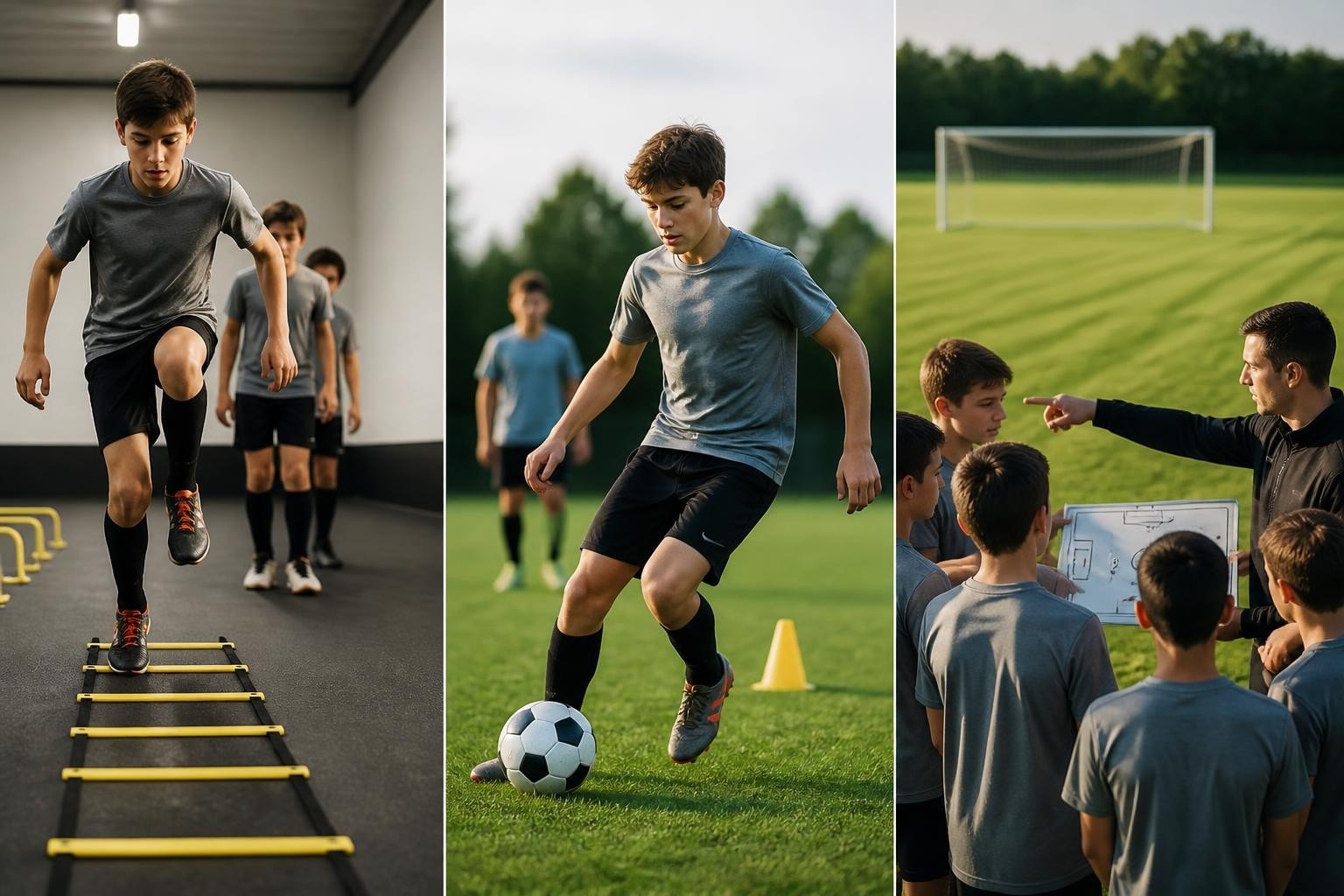
Coaching youth soccer requires a unique blend of technical knowledge, patience, and an understanding of child development. Whether you're a parent stepping into a volunteer role or an experienced coach looking to refine your approach, the landscape of youth soccer development has evolved significantly. Modern coaching youth soccer emphasizes holistic player development rather than simply winning games, focusing on building skills, confidence, and a lifelong love for the sport. This comprehensive guide explores the essential strategies, methodologies, and best practices that will help you create meaningful experiences for young players while developing their abilities across all aspects of the game.
Understanding the Four Pillars of Player Development
Effective coaching youth soccer begins with recognizing that player development extends far beyond kicking a ball. The most successful programs address four interconnected areas that shape complete athletes.
Technical development forms the foundation of every player's skill set. This encompasses ball mastery, passing accuracy, receiving techniques, shooting mechanics, and dribbling ability. Young players need thousands of touches on the ball to develop muscle memory and confidence with both feet.
Tactical understanding involves teaching players how to read the game, make intelligent decisions under pressure, and understand positional responsibilities. Even young children can grasp basic concepts like spacing, support angles, and when to pass versus dribble.
Physical and Psychological Components
The physical pillar addresses speed, agility, coordination, balance, and endurance. For youth players, physical development should prioritize movement literacy and body awareness rather than intensive strength training. Age-appropriate soccer training drills help players develop athleticism while maintaining proper biomechanics.
Psychological development might be the most overlooked yet critical aspect of coaching youth soccer. This includes:
- Building confidence and self-esteem
- Developing resilience and mental toughness
- Teaching emotional regulation during competitive moments
- Fostering intrinsic motivation and love for the game
- Encouraging positive communication and teamwork
When these four pillars work together, players develop holistically rather than becoming one-dimensional athletes. Understanding player-centered learning environments helps coaches create training sessions that address multiple development areas simultaneously.
Structuring Effective Practice Sessions
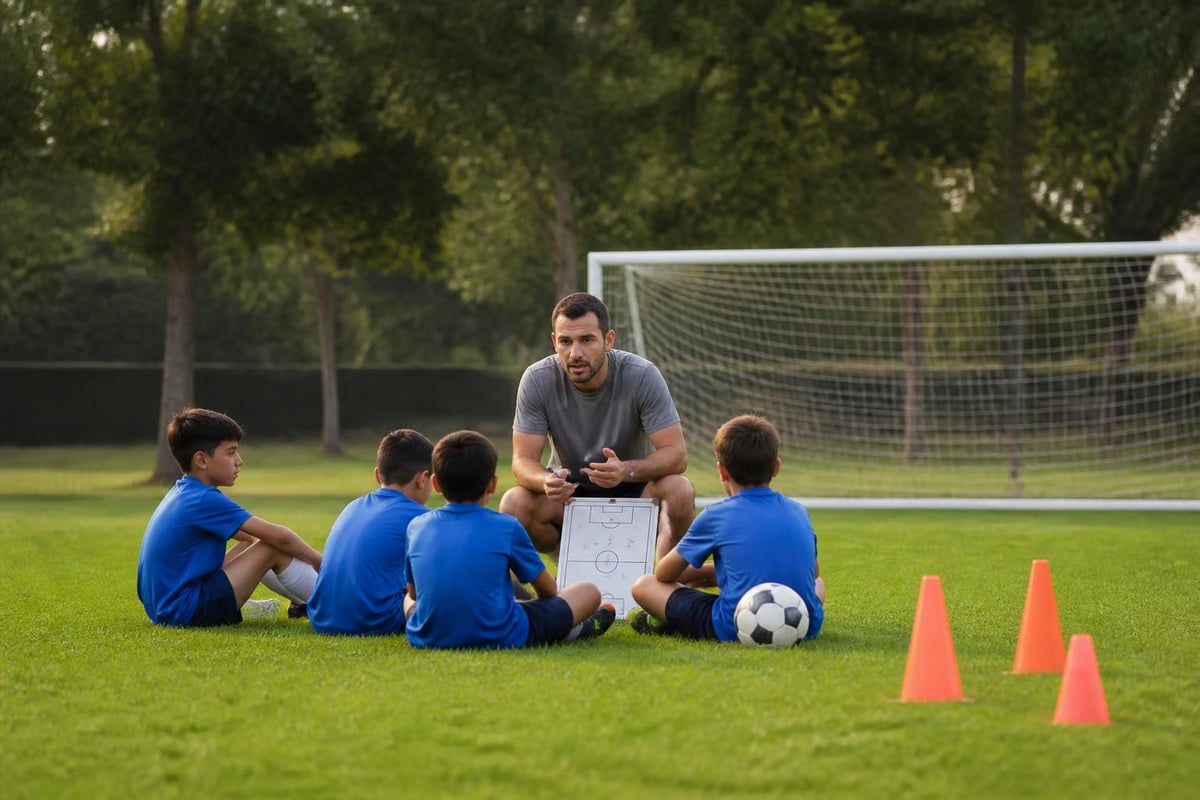
The framework of your training sessions determines how much players actually learn and retain. Coaching youth soccer effectively means creating structured yet flexible environments where players spend maximum time on task with the ball.
The Optimal Practice Timeline
A well-designed 90-minute session typically follows this structure:
| Phase | Duration | Focus Area | Example Activities |
|---|---|---|---|
| Warm-up | 10-15 min | Movement prep & ball familiarity | Dynamic stretching with ball, juggling challenges |
| Technical Skills | 20-25 min | Specific skill development | Passing patterns, dribbling circuits, receiving drills |
| Small-Sided Games | 25-30 min | Application in game context | 3v3, 4v4 with specific constraints |
| Position-Specific Work | 15-20 min | Tactical understanding | Defender vs. attacker scenarios, positional rotations |
| Scrimmage | 15-20 min | Free play application | Modified games with minimal coaching interruption |
| Cool-down | 5 min | Recovery & reflection | Light movement, group discussion |
This structure ensures players experience variety while building progressive complexity throughout the session. The approach outlined in structuring soccer practice sessions emphasizes that planning with clear objectives prevents wasted time and confusion.
Maximizing Touches and Engagement
One common mistake in coaching youth soccer involves too much standing in lines or listening to lengthy explanations. Modern best practices emphasize high repetition and active learning. Every drill should provide numerous touches per player per minute.
Consider the difference between a passing drill with 12 players in one line versus three groups of four working simultaneously. The latter provides three times the repetitions in the same timeframe. Youth soccer best practices highlight that individual ball mastery develops fastest when players spend the majority of practice time with a ball at their feet rather than watching others.
Age-Appropriate Coaching Methodologies
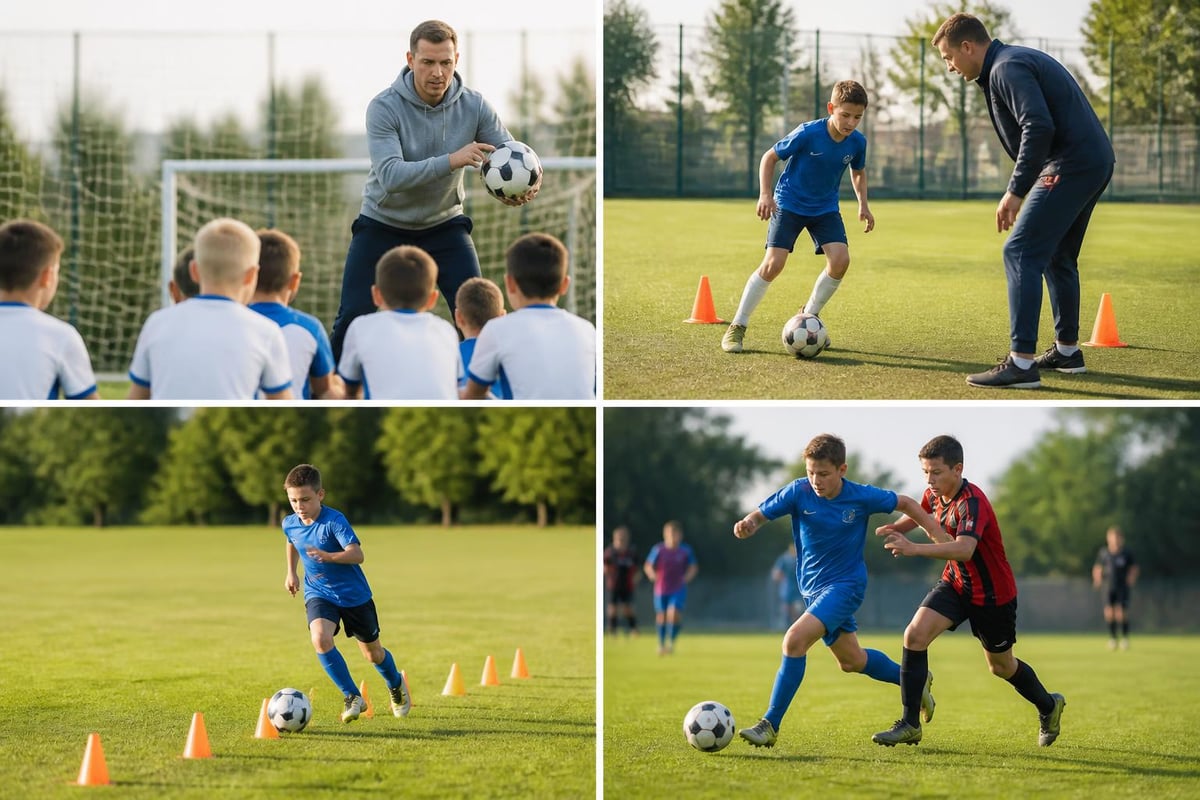
Coaching youth soccer demands different approaches depending on the developmental stage of your players. What works for teenagers will overwhelm six-year-olds, while training methods for young children will bore adolescents.
Young Players (Ages 6-9)
This age group learns best through play and discovery. Sessions should feel like organized fun rather than rigid instruction. Focus areas include:
- Basic ball manipulation and coordination
- Fundamental movement patterns (running, jumping, changing direction)
- Simple 1v1 situations
- Small-sided games (3v3 or 4v4 maximum)
- Positive reinforcement and encouragement
Coaching youth soccer at this level means accepting chaos as part of the learning process. Players will bunch around the ball, make impulsive decisions, and lose focus regularly. These behaviors are developmentally normal and gradually improve with patient guidance.
Middle Development (Ages 10-12)
Players in this range can handle more complexity and begin thinking tactically. They're ready for:
- Progressive technical challenges
- Basic team shape concepts
- Position-specific responsibilities
- Competitive small-sided games
- Introduction to set pieces and restarts
This age represents a critical window where players either deepen their engagement with soccer or lose interest. Maintaining the fun element while introducing competitive challenges requires careful balance in coaching youth soccer programs.
Advanced Youth (Ages 13+)
Teenage players can process sophisticated tactical concepts and benefit from specialized training. Appropriate focus areas include:
- Advanced technical refinement under pressure
- Complex tactical systems and formations
- Position-specific skill development
- Physical conditioning and injury prevention
- Mental skills training and goal-setting
At this stage, coaching youth soccer starts resembling adult training methodologies while still maintaining developmental appropriateness. Players can handle constructive criticism better and benefit from video analysis and performance tracking.
Essential Drills and Training Activities
Building a diverse drill library allows you to address different skills while keeping training fresh and engaging. The most effective drills serve multiple purposes simultaneously.
Technical Development Activities
Passing and Receiving Drills form the backbone of soccer skill development. Start with basic partner passing and progress to triangular patterns, diamond configurations, and eventually complex passing sequences. Explore comprehensive youth soccer passing drills that include variations for different age groups and skill levels.
1v1 Scenarios develop both attacking and defending capabilities. These situations teach players to be comfortable under pressure while making quick decisions. Incorporate 1v1 soccer drills that progress from static starts to dynamic entries, building confidence in individual battles.
Game-Realistic Training
Possession drills teach players to maintain control while moving the ball purposefully. Rondos (keep-away games) in various configurations develop quick decision-making and technical precision. Understanding soccer possession drills helps coaches implement these exercises with proper coaching cues and progressions.
Small-sided games remain the most effective training method for coaching youth soccer. Playing 4v4 or 5v5 on appropriately sized fields provides more touches, more decisions, and more meaningful moments than full-sided 11v11 games ever could for developing players.
| Game Format | Field Size | Players Per Side | Key Benefits |
|---|---|---|---|
| 3v3 | 25×20 yards | 3 | Maximum touches, constant involvement |
| 4v4 | 30×25 yards | 4 | Shape development, transition practice |
| 5v5 | 40×30 yards | 5 | Tactical awareness, positional play |
| 7v7 | 55×40 yards | 7 | Team organization, patterns of play |
Communication and Teaching Strategies
How you communicate often matters more than what you communicate when coaching youth soccer. Young players respond best to specific, positive feedback delivered at appropriate moments.
The Teach-Practice-Correct Model
Effective skill instruction follows a predictable pattern. First, demonstrate the skill clearly while explaining key technical points. Keep explanations brief and age-appropriate. Second, allow extended practice time with minimal interruption. Third, provide specific corrections to individuals while the group continues practicing.
Avoid the common trap of stopping practice repeatedly to address every mistake. This disrupts flow and reduces total repetitions. Instead, observe patterns and address common errors with the full group during planned breaks.
Positive Reinforcement Techniques
Research consistently shows that young athletes respond better to positive coaching than criticism-heavy approaches. This doesn't mean avoiding corrections, but rather framing feedback constructively.
Instead of: "Stop kicking the ball so hard!"
Try: "Can you weight that pass so your teammate can control it easily?"
Instead of: "You're always out of position!"
Try: "Remember to check over your shoulder so you know where to be."
These subtle shifts maintain the same instructional content while preserving player confidence and engagement. Coaching youth soccer requires celebrating effort and improvement rather than demanding perfection.
Building Team Culture and Managing Parents
Technical and tactical knowledge alone won't guarantee success in coaching youth soccer. The social environment you create significantly impacts player development and retention.
Establishing Clear Expectations
From the first practice, communicate your philosophy regarding playing time, positions, behavior expectations, and team values. Young players thrive with clear boundaries and consistent enforcement. Create simple team rules together with player input to increase buy-in.
Parent communication deserves dedicated attention. Establish regular update channels (email, team apps, newsletters) and maintain professional boundaries. Address concerns promptly but privately, never during or immediately after games when emotions run high.
Creating Inclusive Environments
Every player deserves to feel valued regardless of current skill level. Coaching youth soccer means finding roles where each player can contribute and experience success. Vary drill partnerships so advanced players don't always work together, and struggling players get exposure to different playing styles.
For programs emphasizing high-level development, like those offering Soccer High Performance Training, maintain inclusive approaches even within competitive contexts. Elite training environments should challenge all players appropriately rather than catering only to the most talented.
Season Planning and Long-Term Development
Successful coaching youth soccer extends beyond individual practices to encompass season-long progression and multi-year development pathways.
Periodization for Youth Soccer
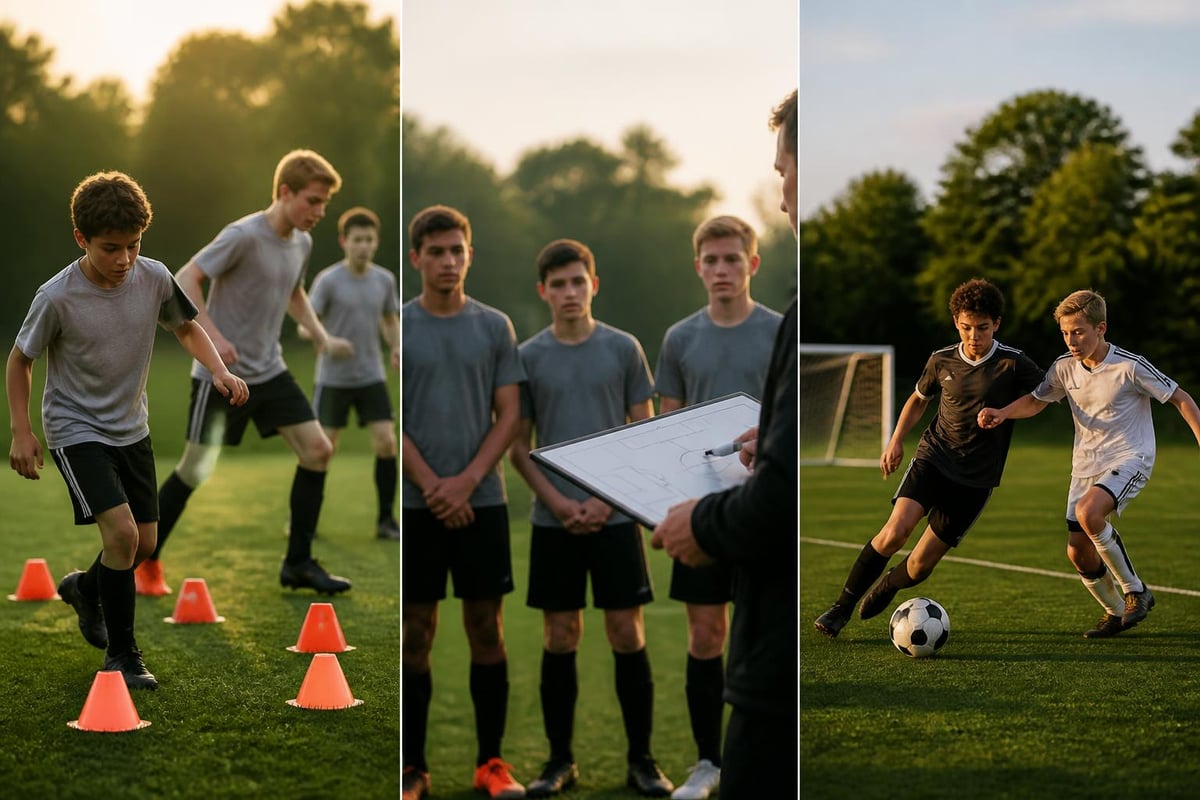
Adult periodization models don't translate directly to youth soccer, but the concept of planned progression remains valuable. Structure your season in phases:
- Foundation Phase (Weeks 1-3): Fitness base, team bonding, fundamental techniques
- Development Phase (Weeks 4-8): Tactical concepts, positional responsibilities, increased intensity
- Competition Phase (Weeks 9-12): Game preparation, strategy refinement, maintaining fitness
- Peak Phase (Weeks 13-15): Tournament preparation, fine-tuning, mental readiness
This structure provides direction while allowing flexibility for weather, injuries, and unexpected circumstances. The development philosophy at programs like Strive Soccer Academy demonstrates how long-term planning creates sustainable player growth across multiple seasons.
Tracking Progress and Setting Goals
Implementing simple assessment tools helps players recognize their improvement and maintains motivation. Create skill benchmarks appropriate for each age group:
- Ball mastery challenges (juggling, dribbling courses)
- Technical assessments (passing accuracy, shooting technique)
- Tactical understanding (positioning awareness, decision-making quality)
- Physical markers (speed, agility, endurance appropriate for age)
Review these markers quarterly rather than weekly, as skill development requires time. Help players set individual goals that focus on process (practice three times weekly) rather than only outcomes (score ten goals this season).
Continuing Education for Coaches
The field of coaching youth soccer constantly evolves with new research, methodologies, and technologies. Committed coaches invest in ongoing learning to serve their players better.
Licensing and Certification
Formal coaching education provides structured knowledge and credential recognition. Organizations like Canada Soccer offer progressive licensing pathways from grassroots certifications through advanced diplomas. These courses cover technical training, tactical concepts, session planning, and player psychology.
Even experienced coaches benefit from refresher courses and specialty certifications. Topics like goalkeeper coaching, sports psychology, and injury prevention require specialized knowledge that general coaching courses may not address thoroughly.
Learning Resources and Communities
Beyond formal education, numerous resources support coaching youth soccer development:
- Online coaching platforms with drill libraries and session plans
- Coaching books focusing on age-specific methodologies
- Webinars and virtual conferences from leading organizations
- Local coaching communities and mentorship opportunities
- Professional club observation and shadowing programs
The comprehensive guidance found in instructional coaching manuals offers practical drills and progressions that translate immediately to practice fields. Similarly, exploring youth soccer drill collections provides age-specific activities that develop technical and tactical skills progressively.
Safety and Injury Prevention
Responsible coaching youth soccer includes protecting player wellbeing through proper safety protocols and injury prevention strategies.
Warm-Up and Cool-Down Protocols
Dynamic warm-ups prepare bodies for activity while reducing injury risk. Incorporate movement patterns that mirror soccer-specific actions: high knees, butt kicks, lateral shuffles, and progressive sprinting. Add the ball to warm-ups whenever possible to maximize touches while preparing physically.
Cool-downs facilitate recovery and provide reflection opportunities. Light jogging, static stretching, and group discussions help players transition from high intensity to rest while processing what they learned.
Recognizing and Managing Injuries
Coaches must identify concerning injuries and know when to remove players from activity. Common youth soccer injuries include:
- Ankle sprains and knee strains
- Growth plate issues (Sever's disease, Osgood-Schlatter disease)
- Concussions and head injuries
- Overuse injuries from excessive training volume
Never allow players to "play through" significant pain. Establish relationships with sports medicine professionals who understand youth athletes. Document all injuries and communicate clearly with parents about severity and recovery timelines.
Creating Safe Training Environments
Inspect fields before each session for hazards like holes, broken glass, or dangerous debris. Ensure goals are properly anchored and nets are in good condition. Maintain appropriate player-to-coach ratios so adequate supervision exists for all activities.
Weather considerations matter significantly. Establish clear policies for lightning, extreme heat, and cold conditions. Provide regular water breaks regardless of temperature, as young players often don't self-regulate hydration effectively.
Game Day Coaching and Tactical Management
Match situations test your coaching youth soccer abilities differently than training sessions. Game management requires balancing development priorities with competitive realities.
Pre-Game Preparation
Arrive early to assess field conditions, check equipment, and establish your presence calmly. Brief pre-game talks should be concise and focused. Remind players of one or two tactical priorities rather than overwhelming them with information.
Distribute playing time thoughtfully, considering developmental needs alongside competitive circumstances. In recreational settings, equal playing time makes sense. Competitive teams may vary distributions but should still provide meaningful opportunities for all rostered players.
In-Game Adjustments
Avoid constant instruction during play. Players learn best by experiencing problems and discovering solutions themselves. Save coaching interventions for stoppages, substitutions, and halftime.
When adjustments are necessary, keep instructions simple and specific. "Push higher when we have the ball" provides clearer guidance than "Play better offensively." Focus on one adjustment at a time rather than addressing multiple issues simultaneously.
Post-Game Reviews
Win or lose, maintain perspective appropriate for youth sports. Celebrate effort, improvement, and positive behaviors regardless of scores. Brief post-game talks should emphasize what players did well before addressing areas for improvement.
Detailed tactical review belongs in the next practice, not in emotionally charged moments after matches. Allow players to decompress before diving into analysis. When you do review game footage or discuss tactical points, frame them as learning opportunities rather than criticisms.
Coaching youth soccer successfully requires balancing technical knowledge, teaching skills, and genuine care for young people's development. By focusing on the four pillars of player growth, structuring effective practices, communicating positively, and maintaining long-term perspectives, coaches create environments where players thrive both on and off the field. At Strive Soccer Academy, we understand what parents want most for their young athletes-a program that develops skills, builds character, and creates real opportunities through our European-style training philosophy and fully licensed coaches committed to holistic player development.