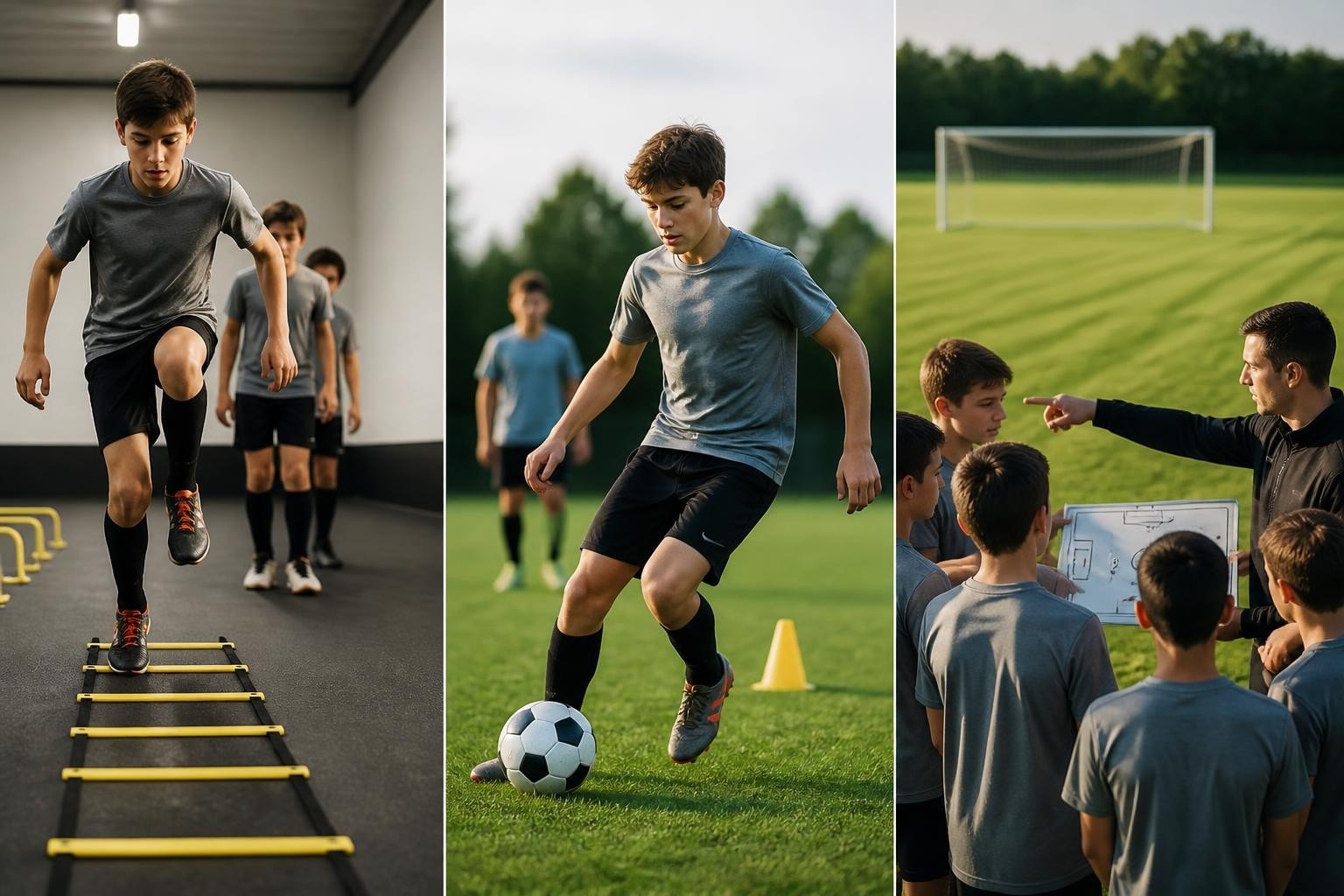
Coaching young soccer players at the U8 level requires a specialized approach that balances skill development with age-appropriate fun. At this critical stage of development, children aged 7-8 are building the foundation for their entire soccer journey. The right drills can transform practice sessions into engaging learning experiences that develop technical ability while keeping players motivated and excited about the game. Understanding how to structure effective training sessions for this age group is essential for coaches who want to create lasting positive impacts on young athletes.
Understanding the U8 Player's Developmental Stage
Children at the U8 level are at a unique developmental stage that requires coaches to adjust their expectations and training methods accordingly. Their attention spans typically last 5-7 minutes, meaning that coaching u8 soccer drills must be dynamic and constantly changing to maintain engagement.
At this age, players are developing basic motor skills and hand-eye coordination. They're beginning to understand spatial awareness and can follow simple instructions, but complex tactical concepts remain beyond their grasp. This is why training should focus primarily on individual skill development rather than team tactics.
Physical and Cognitive Characteristics
The physical capabilities of U8 players differ significantly from older age groups:
- Limited endurance, requiring frequent water breaks and rest periods
- Developing coordination and balance
- Growing strength but still building core stability
- Varying physical maturity levels even within the same age group
Cognitively, these young players are concrete thinkers who learn best through demonstration and repetition. They respond well to positive reinforcement and struggle with abstract concepts like defensive positioning or off-ball movement.

Essential Principles for Coaching U8 Soccer Drills
When designing and implementing drills for this age group, several core principles should guide every session. The primary focus should be on maximizing ball touches, with research suggesting that players need thousands of repetitions to develop proper technique.
Key Training Principles:
- Each player should have their own ball for most activities
- Drills should incorporate elements of play and competition
- Instructions must be simple and demonstrated visually
- Success should be achievable for all skill levels
- Sessions should emphasize fun over winning
The U8 soccer training approach emphasizes game-based learning that keeps players engaged while developing fundamental skills. This methodology aligns with modern player development frameworks used across youth soccer programs.
Creating the Right Environment
The learning environment you establish sets the tone for player development. Make practice areas appropriately sized for U8 players, using smaller grids and shorter distances than you would for older groups. This ensures players experience success and maintain confidence while learning.
Positive reinforcement should outnumber corrections by at least a 3:1 ratio. At this age, building a love for the game is just as important as developing technical skills. Players who enjoy training will practice on their own time and develop faster than those who view soccer as a chore.
Technical Skill Development Through Effective Drills
The foundation of coaching u8 soccer drills lies in developing four core technical skills: dribbling, passing, receiving, and shooting. Each skill requires specific drill progressions that match the developmental capabilities of young players.
Dribbling Drills That Build Confidence
Dribbling is the most important skill for U8 players to master, as it builds ball control and confidence. Start with simple exercises and gradually increase complexity as players improve.
Progressive Dribbling Sequence:
- Cone Weaving – Players dribble through 5-6 cones spaced 2-3 yards apart
- Red Light, Green Light – Players dribble when you say "green light" and stop the ball with their foot on "red light"
- Sharks and Minnows – Some players (sharks) try to kick other players' balls (minnows) out of the grid
- Follow the Leader – Pairs of players take turns leading and copying each other's moves
These proven U8 drills can be modified based on player ability and session objectives. The key is keeping players moving and touching the ball constantly.
Passing and Receiving Fundamentals
While U8 players can begin learning basic passing, expectations should remain realistic. Focus on the proper technique rather than distance or accuracy at this stage.
| Drill Name | Setup | Objective | Duration |
|---|---|---|---|
| Partner Passing | Pairs 5 yards apart | Inside-of-foot technique | 5-7 minutes |
| Pass and Move | Small triangles, 3 players | Movement after passing | 8-10 minutes |
| Gate Passing | Multiple small goals in grid | Accuracy and vision | 6-8 minutes |
When coaching passing drills, emphasize the approach to the ball, plant foot position, and follow-through. Don't worry if passes frequently miss their target – this is developmentally normal for this age group.
Small-Sided Games as Learning Tools
Small-sided games represent the most effective method for developing young players. These games create numerous opportunities for decision-making and skill application in realistic soccer situations. The small-sided approach has become the foundation of modern youth development.
Research consistently shows that players get more touches, make more decisions, and have more fun in small-sided formats compared to traditional 11v11 games. For U8 players, the ideal format is 4v4 or 5v5 on appropriately sized fields.
Structuring Effective Small-Sided Games
When designing small-sided games for U8 players, consider these essential elements:
- Field Size: 25×35 yards for 4v4, 30×40 yards for 5v5
- Goal Size: 4-6 feet wide (can use cones or small pop-up goals)
- Game Duration: 3-5 minute periods with breaks between
- Rules: Minimal, focusing on basic soccer laws
Modify games to emphasize specific skills. For dribbling practice, award two points for goals scored after a player dribbles past an opponent. For passing, require three passes before a shot counts.
Game-Based Drill Examples
These games disguise skill work as play, keeping engagement high while developing technical abilities:
Numbers Game: Divide players into teams and assign each player a number. Call out a number and those players compete 1v1 to score on small goals. This creates multiple games happening simultaneously with high intensity.
King of the Ring: All players dribble in a circle trying to kick others' balls out while protecting their own. Last player with a ball wins. This develops close control and awareness.
Target Practice: Players pass to stationary targets (cones, parents, coaches) positioned around the field, earning points for successful passes. First team to 10 points wins.
Session Planning and Structure
Effective coaching u8 soccer drills requires thoughtful session planning that maintains high engagement throughout the practice. A typical 60-minute session should follow a predictable structure that players can understand and anticipate.
Sample Session Framework
Warm-Up (10 minutes):
- Arrival activity with balls (free dribbling, juggling attempts)
- Dynamic stretching through movement games
- Simple tag variations that incorporate soccer skills
Technical Focus (20 minutes):
- Introduction of the session's main skill
- Demonstration and guided practice
- Progressive drills increasing in complexity
Small-Sided Games (20 minutes):
- Games that reinforce the technical focus
- Multiple small games rather than one large game
- Modified rules to encourage specific behaviors
Cool-Down (10 minutes):
- Lower-intensity activity or stretching
- Brief discussion of what players learned
- Positive reinforcement and preview of next session
This structure provides the variety necessary to maintain attention while allowing sufficient time to develop skills through repetition. The comprehensive U8 training methodology emphasizes this balanced approach.
Technical Skills Breakdown by Category
Breaking down technical development into specific categories helps coaches ensure they're addressing all essential skills throughout the season. Each category requires dedicated practice time and specific drill progressions.
Ball Mastery and Close Control
Ball mastery drills develop the comfort and confidence players need to manipulate the ball under pressure. These exercises should be performed regularly, even as brief warm-up activities.
- Toe taps (20 seconds each foot)
- Inside-outside touches (moving the ball side to side)
- Sole rolls (pulling the ball back and forth)
- Foundation moves (step-over, scissors, pull-back)
Players at the U8 level should perform these exercises at their own pace, focusing on technique rather than speed. As comfort increases, add movement and direction changes.
Shooting and Finishing
Young players love to shoot, making this an excellent opportunity to maintain engagement while developing technique. Set up multiple small goals so every player gets frequent shooting opportunities.
Shooting Progression:
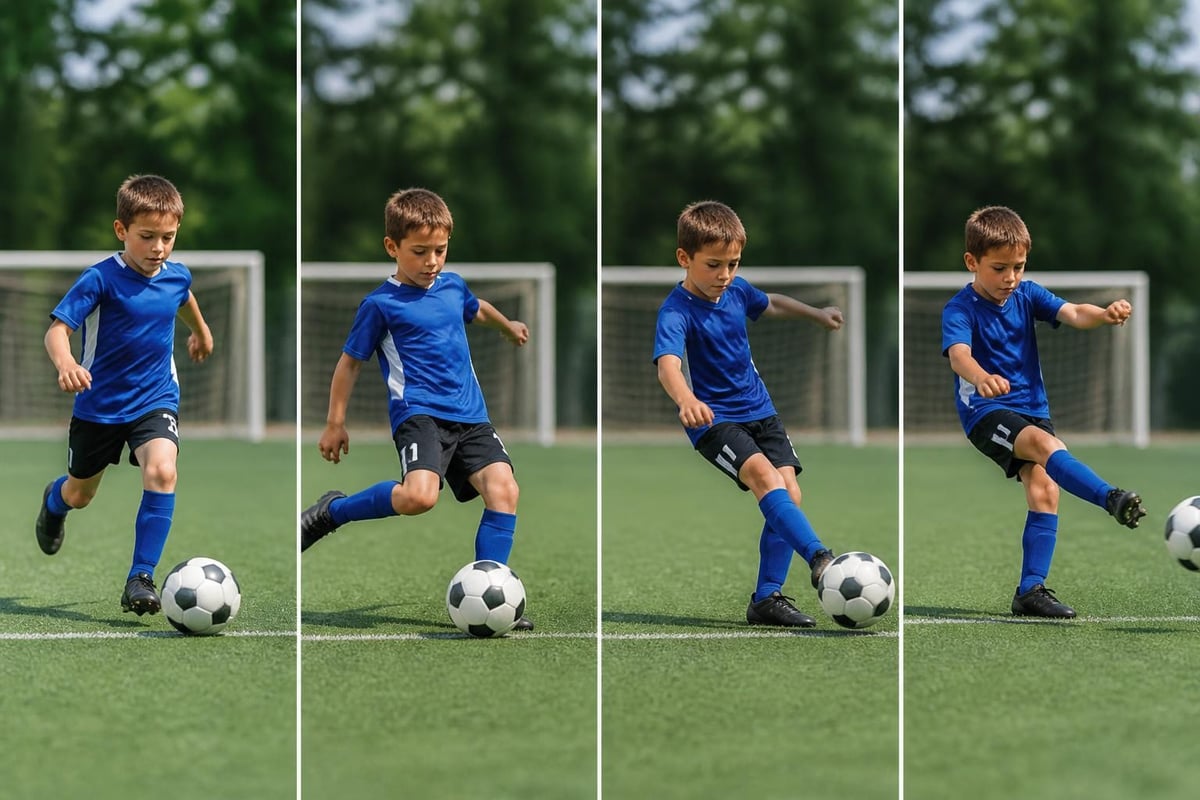
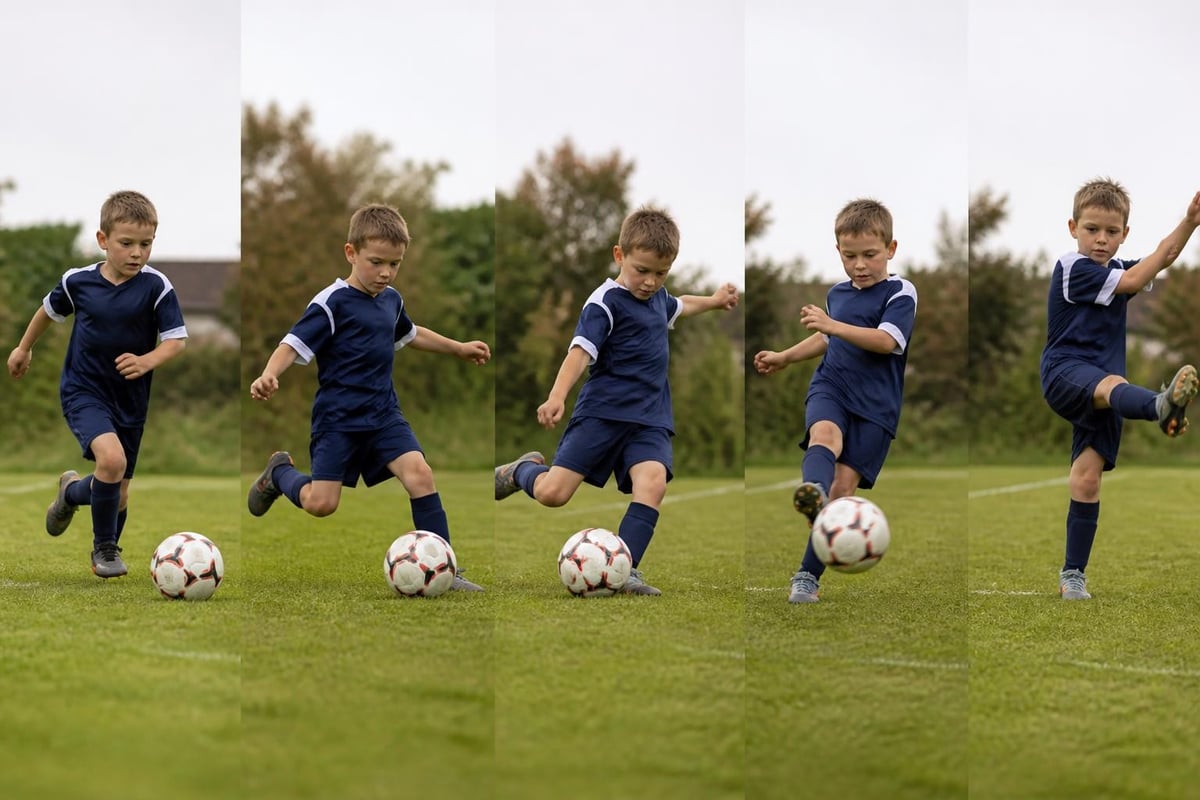
- Shooting from a stationary ball
- Shooting after a short dribble
- Shooting after receiving a pass
- Shooting in game situations
Focus on the plant foot position and striking through the center of the ball. Don't worry about power at this age, as proper technique will naturally generate increasing power as players grow stronger.
Adapting Drills for Different Skill Levels
Every U8 team will have players at varying skill levels. Effective coaching requires adapting drills to ensure all players are appropriately challenged without becoming frustrated or bored. The age-appropriate drill modifications help coaches serve diverse ability levels within the same session.
Differentiation Strategies
Create natural differentiation by adjusting these variables:
| Variable | Easier | Harder |
|---|---|---|
| Space | Larger areas | Smaller areas |
| Time | More time to complete | Time pressure |
| Numbers | More teammates | Fewer teammates |
| Conditions | Unlimited touches | Limited touches |
| Opposition | Passive defenders | Active defenders |
For example, in a dribbling drill, advanced players might navigate a tighter grid while newer players work in a larger space. Both groups develop the same skill at their appropriate level.
Managing Mixed Abilities
Group players strategically during drills. Sometimes pairing stronger players with developing players provides mentorship opportunities. Other times, grouping similar abilities allows for more appropriate challenge levels.
Avoid labeling groups as "advanced" and "beginner." Instead, use neutral names like colors or animals. This prevents players from developing fixed mindsets about their abilities.
Common Coaching Mistakes to Avoid
Even experienced coaches can fall into traps that limit player development when working with U8 athletes. Being aware of these common mistakes helps you create more effective training sessions.
Overcoaching: Constant instruction interrupts the learning process. Allow players to experiment and discover solutions rather than dictating every movement. Your role is to guide, not control every action.
Complex Tactics: Detailed tactical instructions about team shape or defensive formations are wasted on U8 players. Keep it simple with basic concepts like "stay spread out" and "look for open space."
Excessive Standing: If players are standing in lines waiting for turns, you're wasting valuable development time. Design drills where everyone participates simultaneously or waiting time is minimal.
Negative Feedback: Criticizing mistakes at this age discourages participation and damages confidence. Frame corrections positively, focusing on what to do rather than what not to do.
Ignoring Fun: If players aren't having fun, they won't continue playing. Make every session enjoyable, incorporating elements of play and celebration even during skill work.
Building on the Fundamentals
As players progress through the U8 season, gradually introduce more complex drill variations and challenges. However, never abandon the fundamentals in pursuit of advanced skills that players aren't ready to master.
The best coaching u8 soccer drills build progressively on previously learned skills. If players mastered basic dribbling in week one, add turns and changes of direction in week two, then introduce dribbling under light pressure in week three.
Seasonal Progression Model
Early Season (Weeks 1-4):
- Individual ball skills and basic techniques
- Introduction to small-sided games
- Building comfort with the ball
Mid Season (Weeks 5-8):
- Refining techniques with increased complexity
- Adding competitive elements to drills
- Introducing basic partner combinations
Late Season (Weeks 9-12):
- Applying skills in game-like situations
- Increasing pace and pressure in drills
- Celebrating progress and growth
This progression ensures players build a solid foundation before attempting more complex skills. The structured training methodology used in European academies follows similar developmental progressions.
Incorporating Competition Appropriately
Competition can be a powerful motivator for young players when used correctly. The key is creating competitive situations that emphasize effort and improvement rather than just winning and losing.
Design competitions where multiple players or teams can succeed simultaneously. For example, in a dribbling relay, award points for technique, speed, and teamwork rather than just first place. This allows players at different skill levels to contribute and feel successful.
Healthy Competition Examples:
- Personal bests (beat your own previous score)
- Team challenges (work together toward a goal)
- Fun competitions (silly challenges that emphasize enjoyment)
- Skill challenges (master a specific move or technique)
Avoid elimination games where players sit out after losing. Every moment of practice is valuable development time that shouldn't be wasted on the sideline.
Creating a Positive Team Culture
The culture you establish in U8 training sessions shapes players' long-term relationship with soccer. Coaching goes beyond teaching technical skills to include character development and social-emotional learning.
Establish clear expectations for behavior and effort. At this age, focus on values like respect, teamwork, trying your best, and supporting teammates. These principles matter more than tactical knowledge or competitive success.
Celebrate effort and improvement as much as natural talent. Players who work hard and show growth should receive as much recognition as those with innate ability. This creates a growth mindset where players believe they can improve through practice.
Parent Communication
Keep parents informed about practice objectives and how they can support their child's development. Share simple activities families can do at home to supplement training. For those seeking additional development opportunities, programs like Soccer Skills Training provide structured environments that align with best practices in youth development.
Regular communication prevents misunderstandings and helps parents understand age-appropriate expectations. Many parents don't realize that U8 players are still learning basic skills and that winning games is not the primary objective at this stage.
Equipment and Space Considerations
Having the right equipment makes coaching u8 soccer drills significantly more effective. While expensive gear isn't necessary, certain items greatly enhance training quality.
Essential Equipment:
- One ball per player (size 3 for U8)
- Cones or markers (at least 20-30)
- Colored pinnies or vests (two colors, enough for half the team each)
- Small goals or cones to mark goals
- Water bottles for all players
Optional but Helpful:
- Agility ladders for footwork drills
- Small hurdles for coordination work
- Resistance bands for strength development
- Coaching board for visual demonstrations
Maximize your practice space by creating multiple small areas rather than one large field. This increases activity levels and reduces waiting time. The curated drill resources provide setup diagrams that show efficient space utilization.
Measuring Progress and Success
Traditional metrics like goals scored or games won don't accurately measure success at the U8 level. Instead, focus on individual skill development and engagement indicators.
Development Indicators:
- Increased comfort and confidence with the ball
- Improved technique in fundamental skills
- Greater understanding of basic soccer concepts
- Enhanced enjoyment and enthusiasm for practice
- Better physical literacy and movement patterns
Track these indicators informally through observation rather than formal testing. The player development framework emphasizes this long-term growth mindset over short-term results.
Celebrate small victories and individual improvements. When a player successfully completes a skill they've been working on, acknowledge it publicly. This positive reinforcement encourages continued effort and builds confidence.
End-of-Season Assessment
Rather than evaluating players based on competitive success, assess progress in these areas:
- Technical skill improvement from season start
- Understanding of basic soccer concepts
- Ability to make simple decisions with the ball
- Social skills and teamwork development
- Enthusiasm and love for the game
Share these assessments with parents, focusing on specific areas of growth and continued development opportunities. Avoid comparing players to each other, instead highlighting each child's individual journey.
Safety and Risk Management
Coaching young athletes requires attention to safety and risk management. While soccer is relatively safe compared to contact sports, coaches must still take precautions to protect players.
Conduct proper warm-ups before every session to prepare muscles and reduce injury risk. Ensure adequate hydration, especially during hot weather. Monitor players for signs of fatigue and provide rest breaks as needed.
Check the playing surface before each practice, removing any hazards like rocks, glass, or holes. Ensure goals are properly anchored if using portable goals. Maintain appropriate spacing between drills to prevent collisions between different groups.
Be prepared for minor injuries with a basic first aid kit. Know which players have medical conditions like asthma or allergies. Have emergency contact information readily available for all players.
Long-Term Player Development Perspective
Remember that coaching u8 soccer drills is just one phase in a player's development journey. The habits, skills, and attitudes formed at this age set the foundation for years to come.
Prioritize long-term development over short-term results. A player who masters fundamental techniques at U8 will have advantages that persist throughout their soccer career. Conversely, a player who wins games at U8 but never develops proper technique will struggle as competition increases.
Be patient with player development. Skills take time to master, and progress isn't always linear. Some players will show rapid improvement, while others develop more gradually. Both pathways are normal and acceptable.
Focus on creating positive experiences that make players want to continue playing soccer. The most important outcome of your U8 season is that players are excited to return next year.
Effective coaching at the U8 level combines technical skill development with fun, engaging activities that build a lifelong love for soccer. By focusing on individual ball mastery, creating positive learning environments, and maintaining age-appropriate expectations, coaches set young players on a path toward long-term success. At Strive Soccer Academy, our fully licensed Canada Soccer coaches bring European-style training philosophy to Surrey, BC, developing young athletes through the four key areas of player growth: Technical, Tactical, Physical, and Psychological, helping them build not just soccer skills but character and real opportunities for the future.