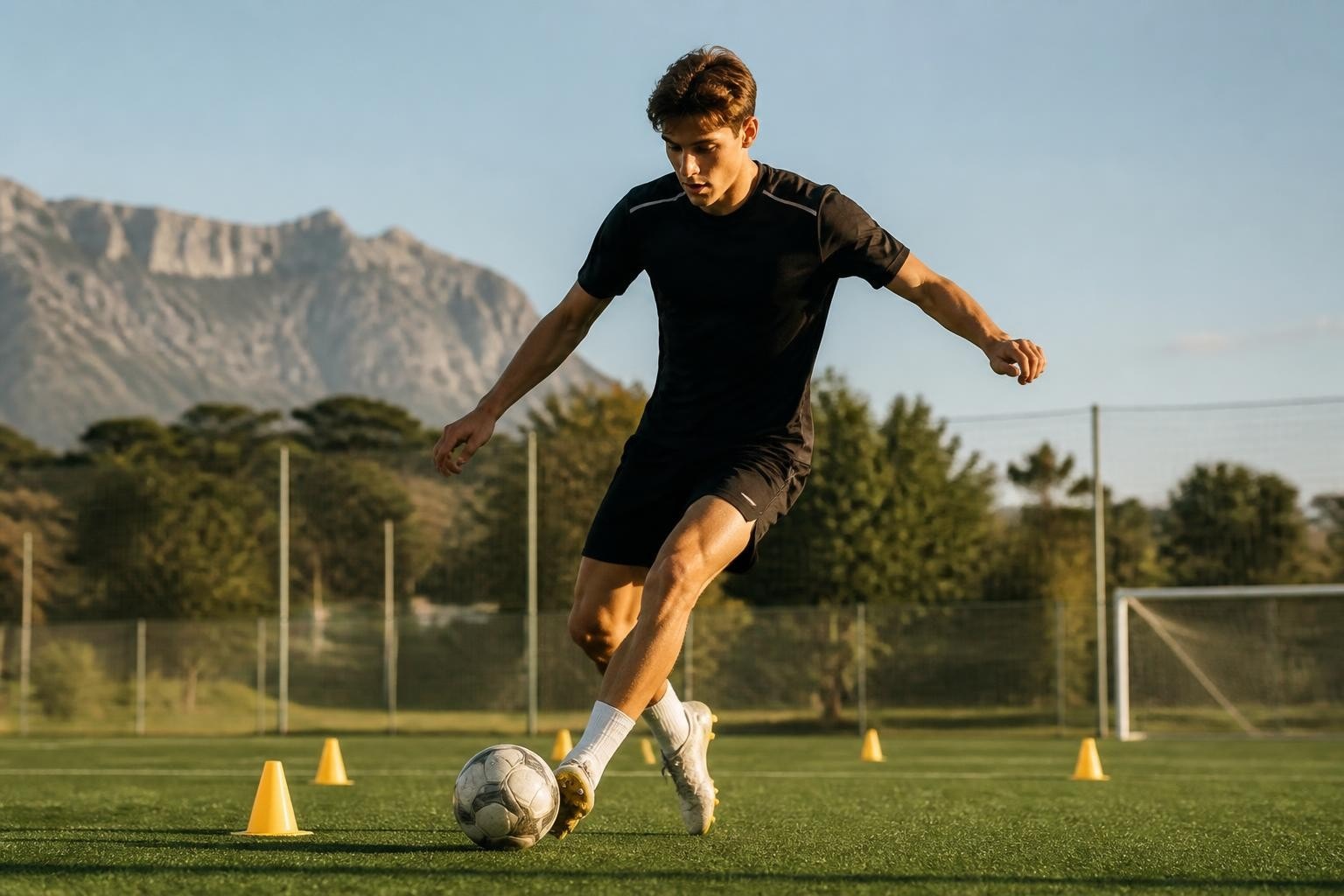
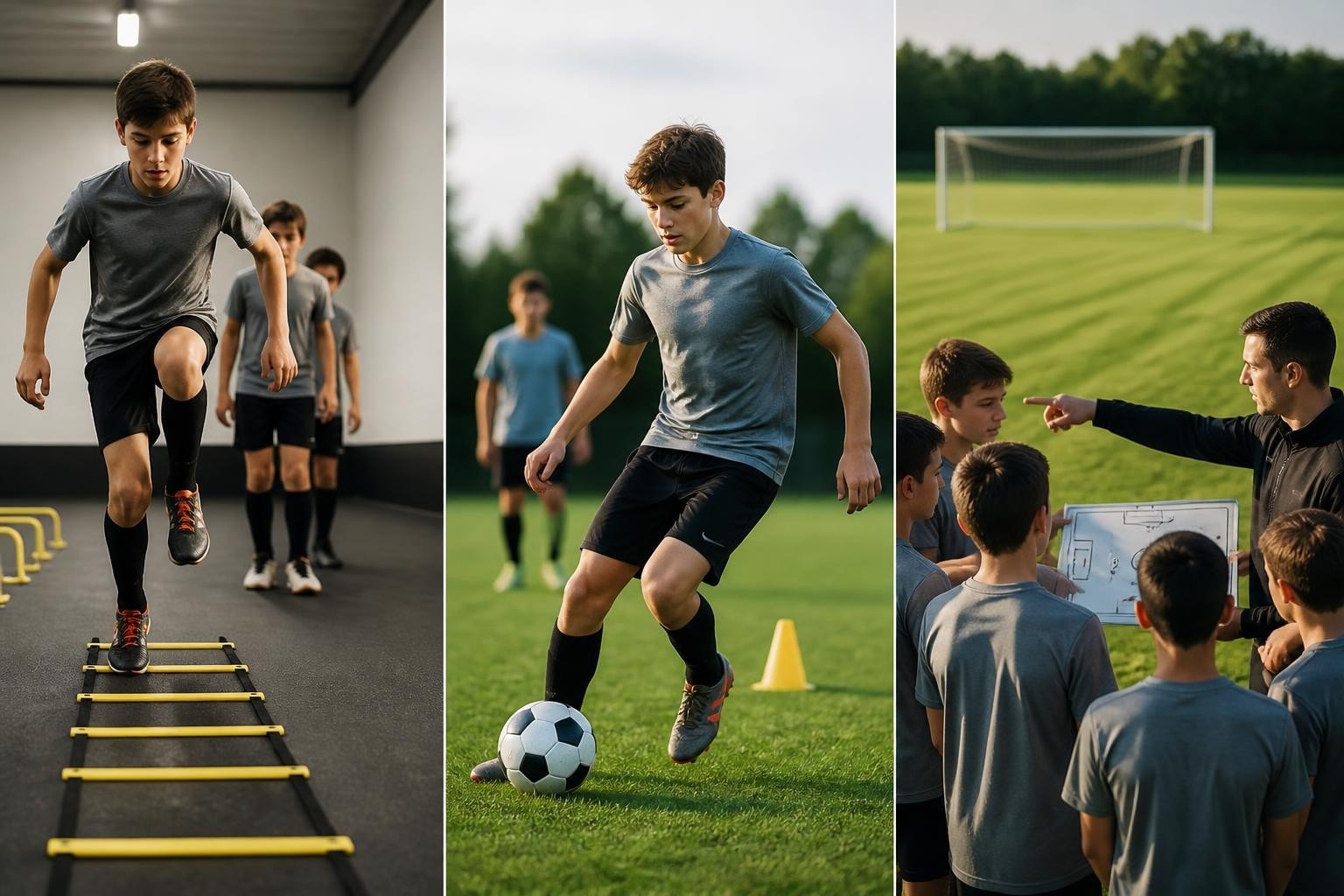
The landscape of soccer development has evolved dramatically over the past decade, with modern academies embracing holistic approaches that extend far beyond simple ball drills and scrimmages. Parents and young athletes today demand more than recreational play-they seek structured pathways that build foundational skills while nurturing a genuine love for the game. Understanding how effective soccer development programs operate provides families with the knowledge to make informed decisions about their children's athletic futures.
The Four Pillars of Modern Soccer Development
Contemporary soccer development rests on four interconnected pillars that work synergistically to create well-rounded players. These components-Technical, Tactical, Physical, and Psychological-form the foundation of every elite training program worldwide.
Technical development focuses on ball mastery and fundamental skills. Young players must develop touch, dribbling, passing accuracy, shooting technique, and first-touch control before advancing to more complex concepts. This pillar requires thousands of deliberate practice hours, with quality repetition being the key differentiator between recreational and competitive players.
Building Technical Proficiency
Technical excellence doesn't emerge overnight. Research on talent identification and development in soccer demonstrates that early exposure to high-quality coaching significantly impacts long-term player outcomes. The most successful programs incorporate:
- Daily ball work emphasizing both feet equally
- Progressive skill challenges that increase in complexity
- Game-realistic scenarios rather than static drills
- Individual feedback tailored to each player's needs
- Video analysis to reinforce proper technique
Players who master technical skills gain confidence that translates directly to match performance. The difference between touching the ball 5,000 times versus 500 times during a training session compounds over months and years, creating substantial skill gaps.
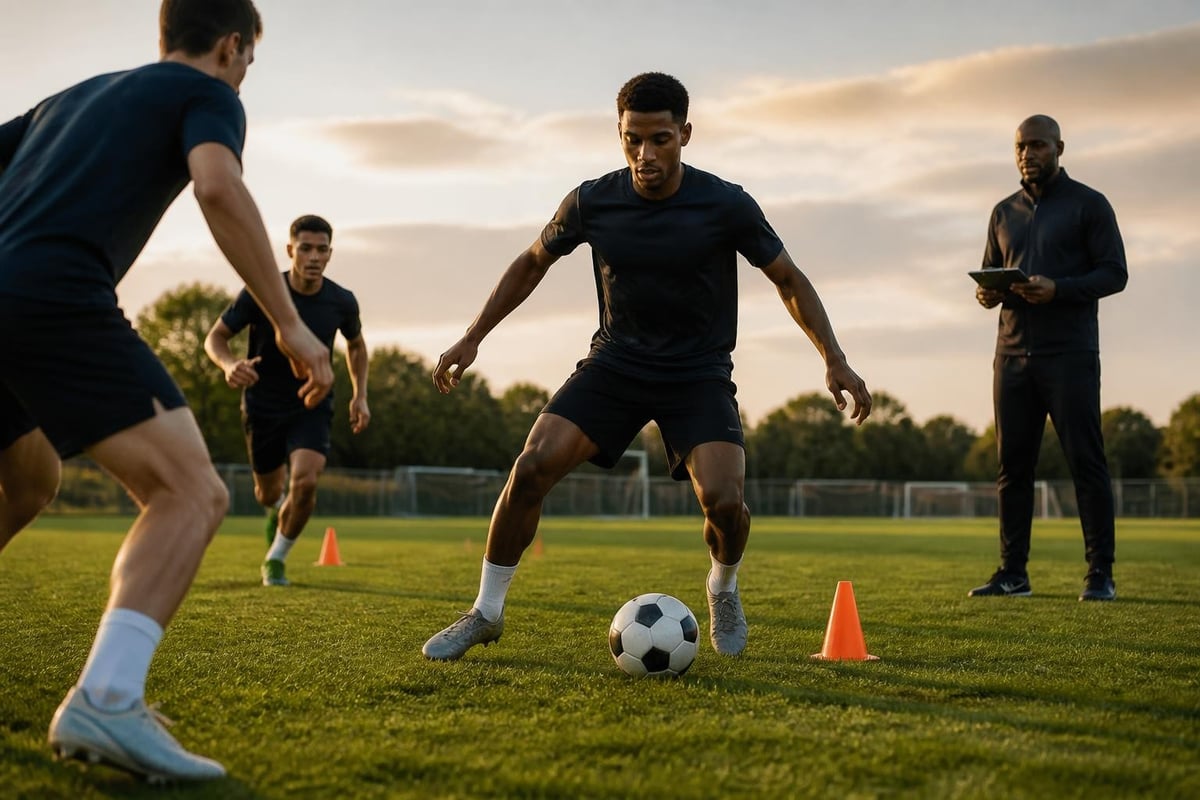
Tactical Intelligence and Game Understanding
While technical ability enables players to execute skills, tactical development teaches them when and where to apply those skills effectively. Soccer development programs that neglect tactical education produce technically gifted players who struggle to impact games meaningfully.
Tactical training encompasses spatial awareness, positioning, decision-making speed, pattern recognition, and understanding various systems of play. Young players must learn to read defensive shapes, identify passing lanes, recognize numerical advantages, and adjust positioning based on ball location.
Age-Appropriate Tactical Progression
Different age groups require distinct tactical approaches. According to U.S. Soccer coaching guidelines for assessing players and environment, effective coaches adapt tactical complexity to match cognitive development stages.
| Age Group | Tactical Focus | Key Concepts |
|---|---|---|
| U8-U10 | Basic positioning | Width, depth, support |
| U11-U13 | Team shape | Pressing triggers, compactness |
| U14-U16 | System mastery | Rotations, combination play |
| U17+ | Advanced strategy | Counter-pressing, build-up variations |
Coaches must balance introducing sophisticated concepts with maintaining player engagement. Overloading young athletes with complex tactical information often backfires, creating confusion rather than understanding. The best soccer development programs introduce one or two concepts per session, allowing players to internalize ideas through repetition.
Physical Development and Athletic Performance
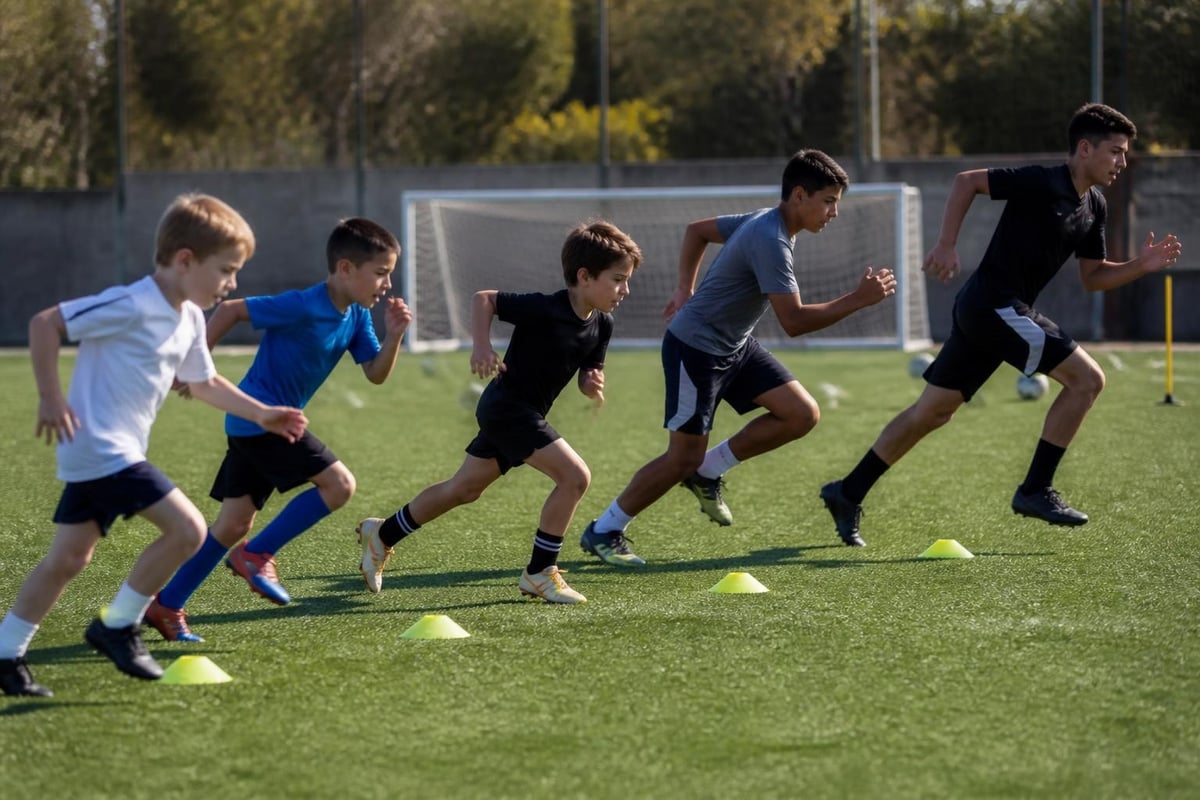
Modern soccer demands exceptional physical attributes. Players need speed, agility, strength, endurance, and power to compete at higher levels. Physical development within soccer programs must consider both general athleticism and soccer-specific conditioning.
General athleticism includes running mechanics, coordination, balance, flexibility, and core strength. These foundational physical qualities support injury prevention while enhancing overall movement efficiency. Soccer-specific conditioning addresses repeated sprint ability, change-of-direction speed, acceleration, and aerobic capacity needed for 90-minute performances.
Structuring Physical Training
Programs that prioritize Soccer High Performance Training create environments where players develop both technical and physical attributes simultaneously. Rather than separating fitness from ball work, effective sessions integrate physical demands into realistic game scenarios.
Physical training components should include:
- Dynamic warm-ups that prepare muscles and joints for intense activity
- Speed and agility work focusing on first-step quickness and multi-directional movement
- Strength training appropriate for developmental stage and injury history
- Conditioning circuits that replicate game intensity patterns
- Recovery protocols including stretching, hydration, and rest periods
Youth soccer development must carefully balance physical loads to avoid overtraining and burnout. Growth spurts, skeletal maturation, and individual recovery capacities all influence how much physical stress young athletes can handle safely.
The Psychological Component: Building Mental Resilience
Perhaps the most overlooked aspect of soccer development involves psychological preparation. Mental skills separate good players from great ones, particularly in high-pressure situations. Developing resilience, confidence, focus, and competitive mindset requires intentional coaching strategies.
Young athletes face numerous psychological challenges including performance anxiety, fear of failure, motivation fluctuations, and handling criticism. Programs that address these issues create more complete players capable of performing under stress.
Cultivating Psychological Strength
Mental training encompasses several key areas that contribute to overall soccer development. Coaches who understand psychological principles create supportive environments where players can take risks and learn from mistakes.
Confidence building starts with mastery experiences. When players successfully execute skills in training, they develop belief in their abilities. Setting achievable short-term goals creates regular success opportunities that build self-efficacy progressively.
Focus training teaches players to maintain concentration despite distractions. Simple exercises like tracking specific game elements or maintaining technical quality during fatigue help develop attentional control that transfers to matches.
Resilience development requires controlled exposure to challenges. Players need to experience setbacks in safe environments where coaches help them process disappointment and refocus on improvement. This preparation proves invaluable when facing adversity during important games.
| Psychological Skill | Training Method | Expected Outcome |
|---|---|---|
| Confidence | Mastery experiences, positive reinforcement | Self-belief, willingness to attempt difficult skills |
| Focus | Concentration drills, mindfulness exercises | Sustained attention, reduced distraction |
| Resilience | Challenge exposure, growth mindset coaching | Recovery from setbacks, persistence |
| Motivation | Goal setting, autonomy support | Intrinsic drive, long-term commitment |
Creating Player Pathways and Development Structures
Effective soccer development requires clear pathways that guide players from introductory levels through advanced competition. The U.S. Soccer Development Academy structure demonstrates how organizing players into appropriate competitive tiers accelerates growth while maintaining engagement.
Pathway systems should offer multiple entry points accommodating varying skill levels and commitment capacities. Not every player aspires to professional careers, yet all deserve quality coaching that maximizes their potential and enjoyment of the game.
Assessment and Player Placement
Regular assessments ensure players train in environments that challenge them appropriately. Too easy, and development stagnates; too difficult, and confidence erodes. Finding the optimal challenge level requires ongoing evaluation of technical proficiency, tactical understanding, physical capabilities, and psychological readiness.
Quality programs and training opportunities provide transparent communication about player progress and placement decisions. Parents appreciate understanding where their children stand developmentally and what specific improvements would enable advancement to higher levels.
Assessment criteria should be objective and measurable whenever possible. Rather than vague evaluations, effective programs track specific metrics like successful pass completion percentages, dribbling success rates under pressure, sprint times, and tactical decision-making accuracy.
The Role of Licensed Coaching in Soccer Development
Coaching quality represents the single most influential factor in player development outcomes. Research examining talent development processes in professional soccer clubs consistently identifies coach education and experience as critical success determinants.
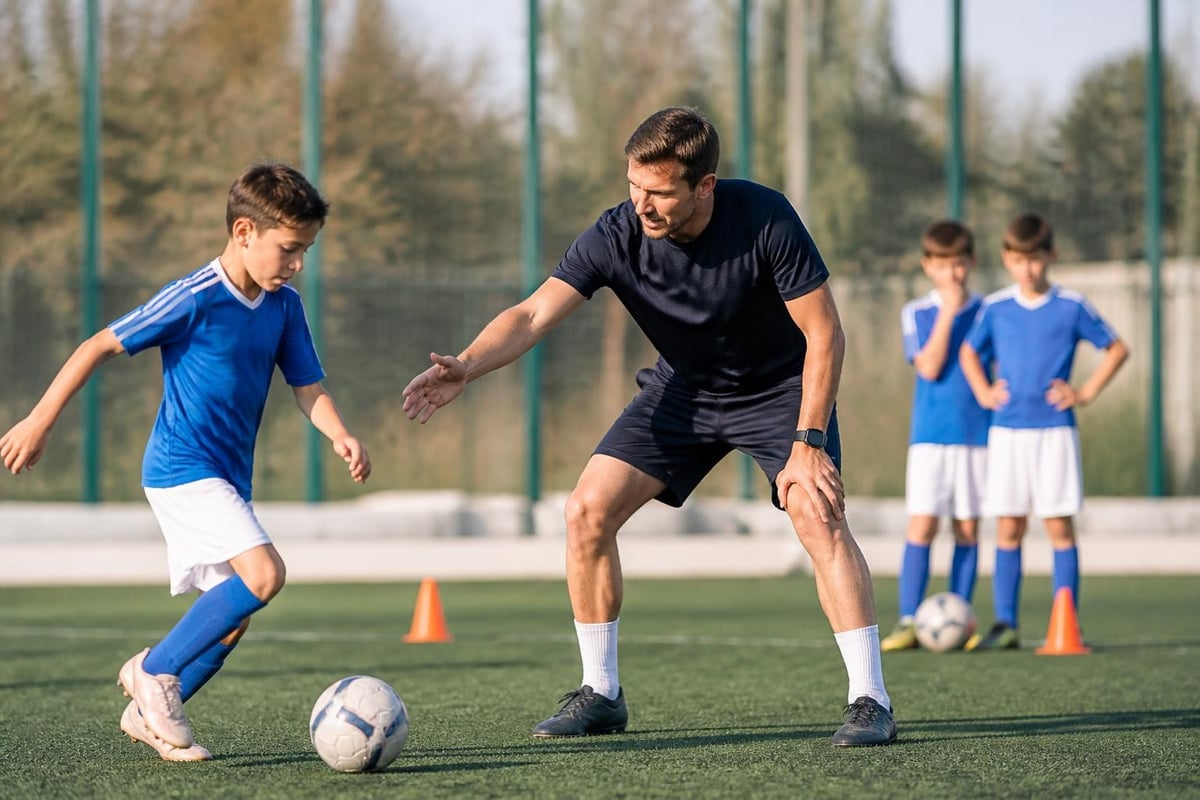
Licensed coaches bring structured methodologies, age-appropriate progressions, and evidence-based training principles to their sessions. They understand how to differentiate instruction, provide constructive feedback, manage group dynamics, and create positive learning environments.
Coach Education Standards
Canada Soccer and similar governing bodies establish licensing requirements that ensure coaches possess necessary knowledge and competencies. These certifications range from introductory levels for recreational coaching through advanced licenses for elite player development.
Parents evaluating soccer development programs should inquire about coach credentials and continuing education commitments. Coaches who invest in their professional development typically deliver superior training experiences that accelerate player growth.
The coaching hierarchy within academies matters significantly. Having experienced, highly-licensed coaches design curriculum and oversee program implementation ensures consistency and quality across all training groups. This structure allows developing coaches to learn from experienced mentors while contributing fresh perspectives and enthusiasm.
Training Frequency and Session Structure
How often players train and how those sessions are structured dramatically impacts development rates. Elite soccer development requires consistent exposure to quality coaching, typically ranging from three to six sessions weekly depending on age and competitive level.
Session structure should balance various developmental priorities while maintaining player engagement. A typical 90-minute training session might include:
- Warm-up (15 minutes): Dynamic movements, ball familiarization, and mental preparation
- Technical focus (25 minutes): Isolated skill work with progressive difficulty
- Tactical application (30 minutes): Small-sided games emphasizing session theme
- Physical challenge (15 minutes): High-intensity activity developing fitness
- Cool-down (5 minutes): Recovery and reflection
This structure ensures comprehensive development while maintaining appropriate intensity throughout. Varying session formats prevents monotony and addresses different learning styles within groups.
The Importance of Competition in Development
Training provides skill acquisition opportunities, but competition reveals whether players can execute under pressure. Soccer development programs must include appropriate competitive experiences that challenge players while supporting continued growth.
Competition teaches lessons unavailable in training environments: handling match pressure, adapting to different playing styles, maintaining performance despite fatigue, and responding to setbacks in real-time. These experiences prove invaluable for developing complete players.
Balancing Competition and Development
The relationship between competition and development requires careful management. Overemphasis on winning at young ages often sacrifices long-term player development for short-term results. Conversely, insufficient competitive exposure leaves players unprepared for higher-level demands.
Quality programs prioritize development over results at younger ages, gradually shifting emphasis toward competitive performance as players mature. This approach builds robust technical and tactical foundations while developing competitive mentality progressively.
Tournament selection should align with developmental objectives. Attending appropriate competitions challenges players without overwhelming them, creating optimal environments for testing skills learned in training. Geographic diversity in tournament scheduling exposes players to different playing styles and competition levels, broadening their soccer education.
Long-Term Athlete Development Models
Soccer development extends across many years, requiring patience and strategic planning. Long-term athlete development models recognize that players progress through predictable stages, each requiring different emphases and approaches.
These models typically identify phases including:
- Active Start (ages 0-6): Fundamental movement skills through play
- FUNdamentals (ages 6-9): Basic soccer skills in enjoyable formats
- Learning to Train (ages 8-11): Comprehensive technical development
- Training to Train (ages 11-15): Advanced skills and tactical concepts
- Training to Compete (ages 15-18): Position-specific refinement and competition
- Training to Win (ages 18+): Elite performance optimization
Understanding these phases helps parents and players maintain realistic expectations while making informed decisions about training commitments and competitive participation. Rushing development or skipping foundational stages creates long-term limitations that become increasingly difficult to address as players age.
Integrating Education and Soccer Development
Balancing academic responsibilities with intensive soccer training presents challenges for families committed to comprehensive player development. Elite programs recognize this tension and work to support educational pursuits alongside athletic goals.
Time management skills developed through balancing school and soccer prove valuable throughout life. Players learn prioritization, organization, discipline, and resilience-transferable skills that benefit them regardless of whether professional soccer careers materialize.
Programs that partner with schools or offer flexible scheduling demonstrate commitment to whole-person development rather than viewing players solely as athletes. This holistic approach produces better-adjusted individuals who maintain perspective about soccer's role in their broader lives.
Nutrition and Recovery in Player Development
Physical development depends heavily on proper nutrition and adequate recovery. Young athletes require appropriate caloric intake, macronutrient balance, hydration, and sleep to support training demands and growth.
Education about nutrition fundamentals empowers players to make informed choices supporting their development. Understanding how different foods impact energy levels, recovery rates, and overall health creates foundation for lifelong wellness habits.
Recovery strategies including sleep prioritization, active recovery sessions, stretching routines, and stress management contribute significantly to how well players absorb training adaptations. Programs that educate families about recovery importance help prevent overtraining while maximizing development from each session.
Measuring Progress and Setting Goals
Effective soccer development requires objective progress measurement and strategic goal setting. Players who track improvement maintain motivation and understand connections between effort and results.
Goal-setting frameworks should include both outcome goals (tournament performance, team selection) and process goals (training attendance, technical mastery benchmarks). Process goals remain within player control and provide consistent motivation regardless of external results.
Regular progress reviews with coaches help players understand strengths, identify improvement areas, and establish realistic timelines for advancement. This feedback loop ensures everyone shares understanding about developmental status and next steps required for continued growth.
Soccer development demands comprehensive approaches addressing Technical, Tactical, Physical, and Psychological components while providing appropriate competitive experiences and licensed coaching expertise. Parents seeking quality programs for their young athletes should evaluate how academies balance these elements while supporting long-term growth and maintaining player enjoyment. At Strive Soccer Academy, we understand what parents want most for their young athletes-a program that develops skills, builds character, and creates real opportunities through our European-style training philosophy focused on the four key areas of player growth. Our fully licensed Canada Soccer coaches provide the expertise and structured development pathways that transform potential into performance.