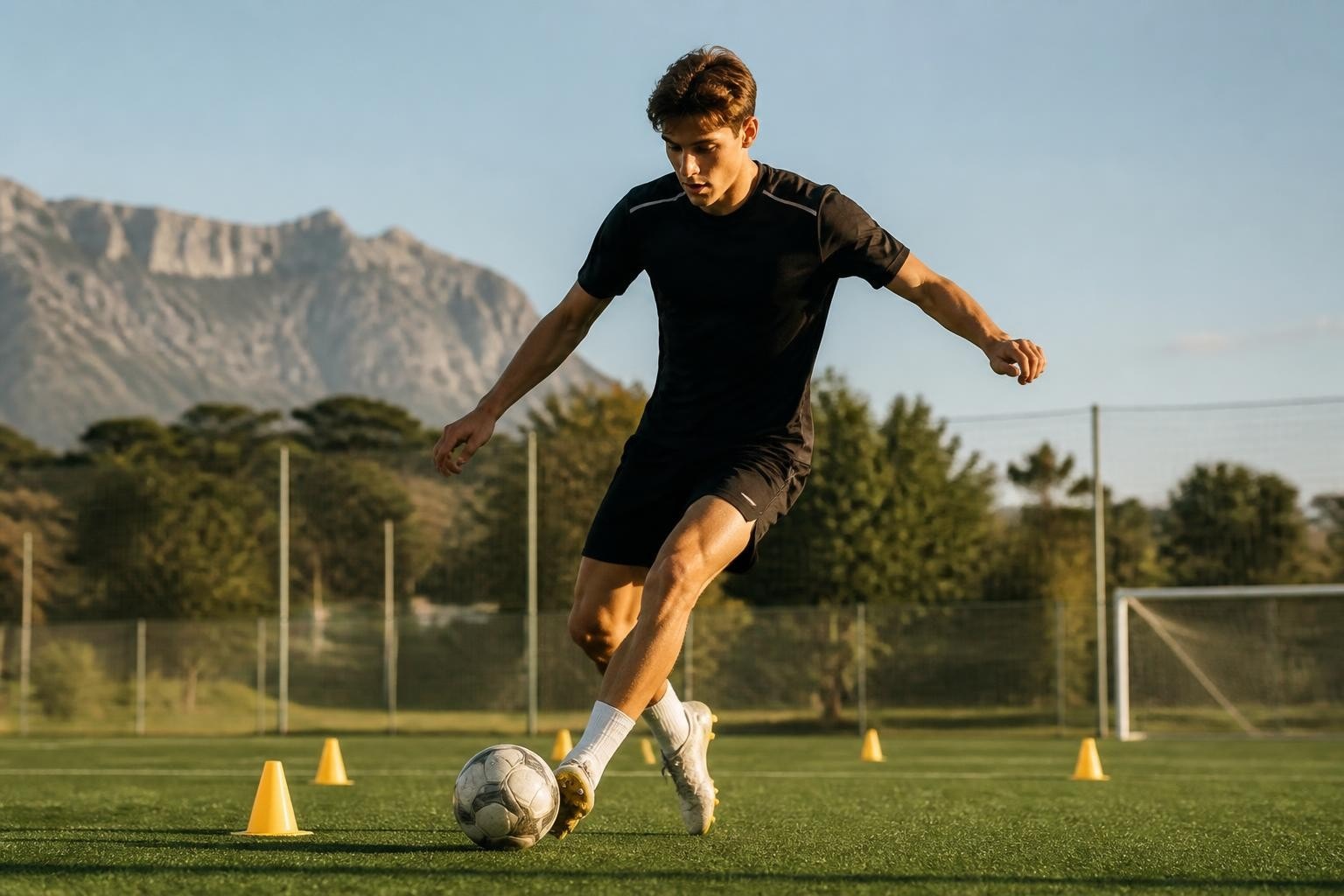
Speed in soccer has evolved far beyond simple straight-line sprinting. In 2026, the concept of being soccer fast encompasses multiple dimensions: explosive first-step acceleration, rapid directional changes with the ball, quick decision-making under pressure, and the mental agility to read plays before they develop. For young players developing their game, understanding and training these interconnected speed elements separates good players from exceptional ones. Modern soccer demands athletes who can think fast, move fast, and execute technical skills at pace, creating a comprehensive approach to speed development that goes well beyond traditional conditioning.
Understanding What Soccer Fast Really Means
When coaches and scouts describe a player as soccer fast, they're evaluating more than stopwatch times. The phrase encompasses a player's ability to accelerate into space, change direction while maintaining ball control, and execute skills under time pressure. This multifaceted speed includes physical acceleration, cognitive processing speed, and technical execution velocity.
Physical speed in soccer differs significantly from track sprinting. Soccer players rarely run more than 20-30 yards in a straight line before changing direction or engaging with the ball. Research on player speed and ball control demonstrates that the probability of gaining possession depends heavily on how quickly players can reach specific field locations while maintaining technical control.
The Four Components of Game Speed
Breaking down what makes a player truly soccer fast reveals four distinct but interconnected elements:
- Linear acceleration: The explosive first three to five steps from a standing or jogging position
- Multi-directional speed: Agility and the ability to change direction rapidly without losing momentum
- Speed with the ball: Technical execution at pace, maintaining control during sprints
- Cognitive speed: Decision-making velocity and reading the game before physical movement begins
Each component requires specific training approaches. A player might possess excellent straight-line speed but struggle with the quick directional changes that define modern attacking play. Conversely, a technically gifted player might control the ball beautifully at walking pace but lose composure when pressured to execute at match speed.
Physical Development for Soccer-Specific Speed
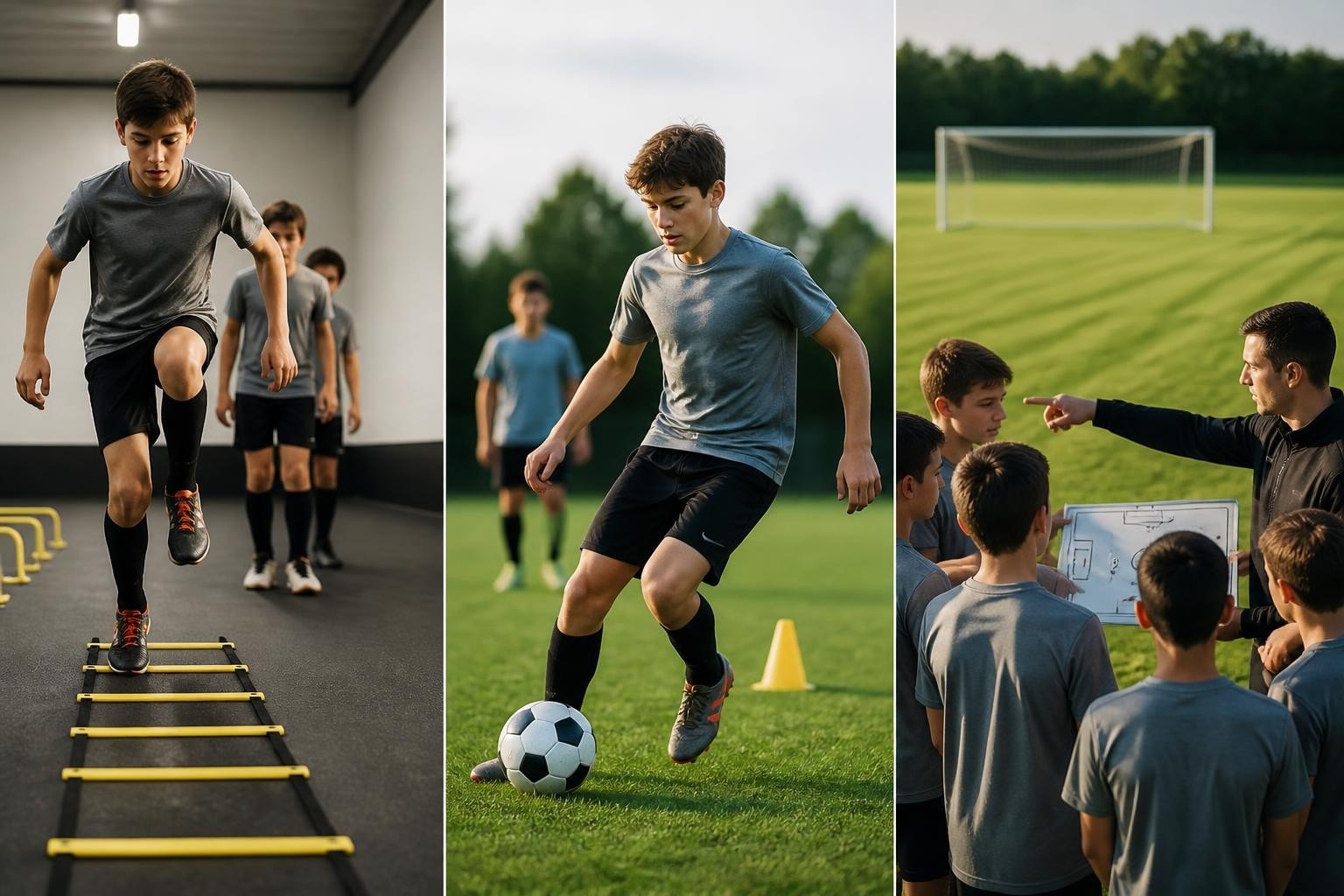
Traditional conditioning programs often miss the mark for soccer-specific speed development. Young athletes need training that mirrors the actual movement patterns, energy systems, and physical demands they'll face during matches. Effective soccer speed drills emphasize quality and form over exhaustion, recognizing that speed training requires fresh neuromuscular systems.
Building a foundation for soccer fast performance starts with proper movement mechanics. Young players must learn correct running form, including proper arm drive, knee lift, and ground contact patterns. Poor mechanics limit speed potential and increase injury risk, particularly as training intensity increases.
Age-Appropriate Speed Training Progressions
| Age Group | Training Focus | Session Duration | Primary Methods |
|---|---|---|---|
| U8-U10 | Movement literacy, coordination | 15-20 minutes | Games, relays, fun competitions |
| U11-U13 | Acceleration technique, agility | 20-30 minutes | Structured drills, small-sided games |
| U14-U16 | Power development, max velocity | 30-40 minutes | Plyometrics, resisted sprints, sport-specific |
| U17+ | Sport-specific application | 40-50 minutes | Position-specific, tactical integration |
The progression from fundamental movement skills to sophisticated speed training must respect biological development. Pre-pubescent athletes benefit most from coordination and technique work, while older teenagers can handle more intensive strength and power development that directly enhances speed capacity.
Recovery between speed repetitions matters tremendously. Unlike endurance training, speed development requires near-complete recovery between efforts to maintain quality. A work-to-rest ratio of 1:5 or even 1:6 ensures each repetition maintains proper form and maximum effort.
Technical Speed: Ball Mastery at Pace
The distinguishing characteristic of truly soccer fast players is their ability to execute technical skills without decelerating. This requires thousands of repetitions where ball touches are practiced at incrementally faster speeds until full-pace execution becomes automatic.
Ball mastery at speed develops through progressive overload. Players begin by mastering techniques at comfortable speeds, then gradually increase pace while maintaining control quality. The Soccer High Performance Training environment emphasizes this progression through 90-minute high-intensity sessions where players engage in dynamic, fast-paced drills designed to boost both endurance and skill execution under pressure.
Key Technical Speed Training Methods
Training technical speed requires specific methodological approaches:
- Constraint-based training: Reduce space or time to force faster decision-making and execution
- Overload techniques: Use lighter balls or smaller goals to increase movement speed
- Chaotic environments: Add defenders or unpredictable elements requiring rapid adjustments
- Video feedback: Allow players to see the difference between perceived and actual execution speed
- Competitive scenarios: Introduce consequences for slow execution to build urgency
Players often believe they're moving faster than video evidence reveals. Creating awareness of this perception gap helps athletes understand where speed improvements are genuinely needed. Simple exercises like dribbling through cones while being timed, then reviewing footage, illuminate the difference between feeling fast and actually being soccer fast.
Tactical Speed and Decision-Making
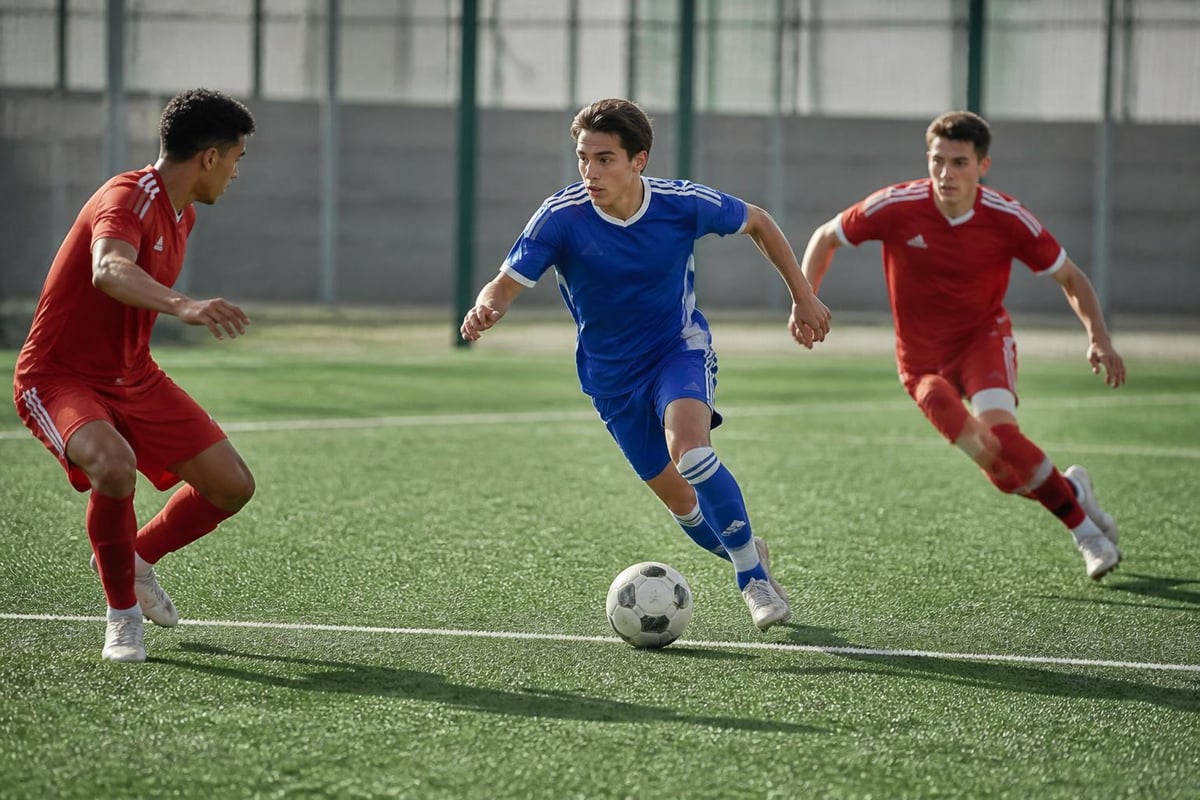
Physical and technical speed mean little without the cognitive ability to apply them effectively. The importance of pace in soccer extends to mental processing, where elite players recognize patterns and make decisions milliseconds faster than opponents.
Developing tactical speed begins with pattern recognition. Young players must learn to read common game situations: when to accelerate into space, when to check to the ball, when a defender's body position allows an outside run versus an inside cut. These patterns, once recognized thousands of times in training, become automatic responses during matches.
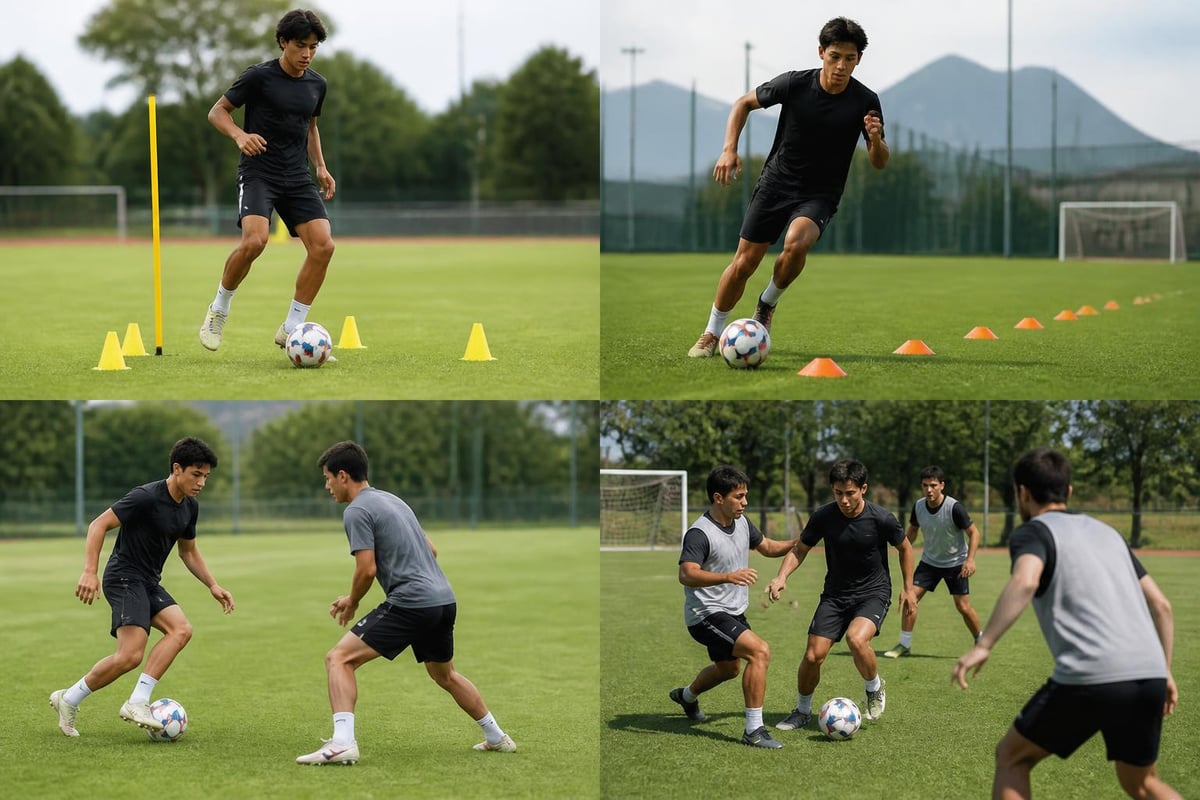
Training Cognitive Speed Through Small-Sided Games
Small-sided games accelerate cognitive development by increasing decision frequency. In an 11v11 match, an individual player might make 40-50 significant decisions. In a 4v4 game on a smaller field, that number doubles or triples.
The principles for developing tactical speed through modified games include:
- Increased ball contacts: More touches mean more decisions per minute
- Tighter spaces: Less time and space force faster processing
- Position-specific scenarios: Replicate situations players face in matches
- Progressive complexity: Add conditions or restrictions as players improve
Coaches can manipulate small-sided games to target specific speed elements. Requiring one or two-touch limits forces faster decision-making. Adding neutral players creates numerical advantages that reward quick combination play. Restricting dribbles in certain zones emphasizes quick passing and movement.
Integration of Speed Training Into Holistic Development
Speed development cannot exist in isolation from other aspects of player growth. The most effective programs integrate physical speed work with technical, tactical, and psychological training, recognizing these elements strengthen each other when developed simultaneously.
Our academy’s training philosophy emphasizes this integrated approach, building speed capacity while simultaneously developing the technical skills and tactical awareness to apply that speed effectively in match situations. Young athletes need comprehensive development that prepares them for the multifaceted demands of competitive soccer.
Weekly Training Structure for Speed Development
| Day | Primary Focus | Speed Element | Duration |
|---|---|---|---|
| Monday | Technical | Speed with ball | 75 minutes |
| Tuesday | Physical | Acceleration/agility | 30 minutes |
| Wednesday | Tactical | Decision speed | 90 minutes |
| Thursday | Recovery/Technical | Light speed maintenance | 60 minutes |
| Friday | Physical | Max velocity | 30 minutes |
| Weekend | Match application | All elements integrated | 90 minutes |
This structure ensures adequate recovery while maintaining speed development stimulus throughout the week. Technical sessions incorporate speed elements without the physical intensity of dedicated speed days. Tactical sessions challenge cognitive processing speed while managing physical load.
Measuring and Tracking Speed Progress
Objective measurement transforms speed training from guesswork into science. Young athletes respond powerfully to seeing concrete improvement in timed metrics, building confidence and motivation to continue pushing their development.
Common speed assessment tools include:
- 10-yard sprints: Measures explosive acceleration
- Flying 20s: Assesses maximum velocity after acceleration phase
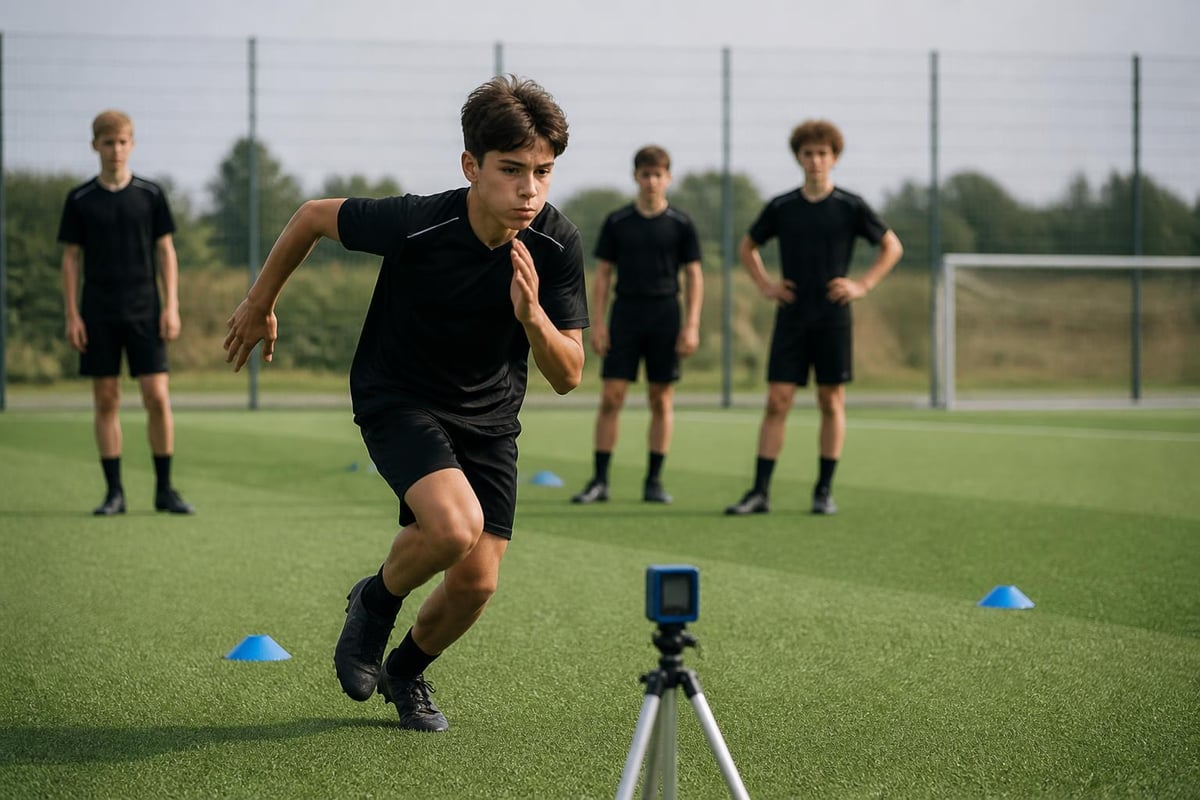
- 505 agility test: Evaluates change of direction speed
- T-test: Measures multi-directional agility
- Illinois agility test: Comprehensive agility assessment
Testing should occur every 6-8 weeks to allow sufficient time for adaptations to occur. More frequent testing can be demotivating if improvements aren't yet measurable, while less frequent assessment misses opportunities to adjust training based on progress.
Interpreting Speed Test Results
Raw numbers tell only part of the story. Comparing results to age-appropriate norms and tracking individual improvement rates provides more meaningful insight. A player in the 60th percentile who improves rapidly shows excellent trajectory even if absolute numbers lag behind naturally faster athletes.
Effective speed conditioning programs recommended for soccer players emphasize both assessment and progressive overload, ensuring training stimulus continually challenges athletes at appropriate levels.
Common Speed Training Mistakes to Avoid
Even well-intentioned programs can undermine speed development through common errors. Recognizing and avoiding these pitfalls ensures training time produces maximum results.
Training tired athletes: Speed development requires fresh neuromuscular systems. Placing speed work at the end of practice when fatigue has accumulated teaches athletes to move slowly, reinforcing poor movement patterns.
Neglecting movement quality: Volume without technique reinforces bad habits. Soccer-specific speed and agility workouts that emphasize proper form during training sessions develop better long-term speed capacity than high-volume work with degraded mechanics.
Insufficient recovery between repetitions: Speed training is not conditioning. Adequate rest between sprints allows full recovery, ensuring each repetition maintains maximum quality and effort.
One-dimensional training: Focusing exclusively on linear sprints neglects the multi-directional reality of soccer. True game speed requires acceleration in all directions, often while manipulating a ball.
Equipment and Environmental Considerations
The right training environment and equipment enhance speed development without requiring expensive facilities. Simple, versatile tools provide sufficient stimulus when used creatively and consistently.
Essential speed training equipment includes:
- Cones or markers: Create courses for agility and directional change work
- Resistance bands: Add load to develop explosive power
- Agility ladders: Improve foot speed and coordination
- Speed hurdles: Develop proper running mechanics and knee drive
- Stopwatch or timing gates: Provide objective performance feedback
Field surface matters for certain types of speed training. Grass provides a forgiving surface that reduces impact stress, while artificial turf offers consistency year-round. Selecting the best soccer cleats for speed in 2026 involves evaluating traction patterns, weight, and fit characteristics that complement an athlete's natural running mechanics.
The Psychological Dimension of Playing Fast
Mental factors significantly influence whether players can access their physical speed during competitive matches. Anxiety, hesitation, and fear of mistakes cause athletes to play conservatively, never reaching their speed potential despite possessing the physical capacity.
Building psychological readiness to play soccer fast requires deliberate training. Players need repeated exposure to high-pressure situations where mistakes have minimal consequences, allowing them to experiment with maximum-speed play without fear. This develops confidence that their speed is reliable under stress.
Coaches facilitate this development by creating training environments where:
- Risk-taking is encouraged and mistakes are learning opportunities
- Success is measured by effort and execution quality, not just outcomes
- Competitive scenarios provide realistic pressure without excessive stakes
- Positive reinforcement builds belief in speed capacity
Young athletes who believe they can execute at speed will attempt it during matches. Those who doubt their abilities default to slower, safer play regardless of physical capacity. Comprehensive training programs address this psychological dimension alongside physical and technical development.
Periodization for Long-Term Speed Development
Speed development follows a long-term trajectory spanning years, not weeks. Effective periodization structures training in phases that build upon each other, respecting biological development while progressively challenging athletes.
Annual periodization typically includes:
- Preparation phase (8-10 weeks): Building general fitness and movement foundations
- Pre-competition phase (6-8 weeks): Developing sport-specific speed and power
- Competition phase (12-16 weeks): Maintaining speed while managing fatigue from matches
- Transition phase (4-6 weeks): Active recovery while preserving fitness
Within each phase, training emphasis shifts. The preparation phase emphasizes general speed and movement quality. Pre-competition increases intensity and soccer-specificity. Competition phase maintains speed fitness while managing overall training load around match schedules.
Structured academy training follows these periodization principles, adjusting training loads and emphasis throughout the season to optimize development while preventing overtraining and burnout.
Integration With Position-Specific Speed Requirements
Different positions require different speed profiles. Recognizing these variations allows more targeted training that develops the specific speed characteristics each position demands.
| Position | Primary Speed Need | Secondary Speed Need | Training Priority |
|---|---|---|---|
| Goalkeeper | Lateral quickness | Vertical explosiveness | Agility, reaction |
| Center Back | Acceleration over 10-20 yards | Recovery speed | First-step quickness |
| Fullback | Sustained speed over distance | Repeated sprint ability | Endurance-speed |
| Midfielder | Multi-directional agility | Acceleration | Change of direction |
| Winger | Maximum velocity | Speed with ball | Sprint mechanics |
| Striker | Acceleration to space | First-step explosiveness | Explosive power |
Position-specific training doesn't begin until players reach mid-teens and start specializing. Younger athletes benefit from developing all speed qualities, creating versatility and preventing premature specialization that can limit long-term development.
Developing truly soccer fast athletes requires a comprehensive approach addressing physical acceleration, technical execution at pace, tactical decision-making speed, and the psychological confidence to play at maximum velocity. These elements work synergistically when trained together through well-structured, age-appropriate programs that respect individual development trajectories. At Strive Soccer Academy, our European-style training philosophy integrates all four pillars of player development-Technical, Tactical, Physical, and Psychological-creating an environment where young athletes develop the multifaceted speed that defines elite soccer performance. Our fully licensed Canada Soccer coaches design progressive training that builds game-changing speed while developing the complete player your athlete aspires to become.