Strong U10 soccer training in Surrey BC combines small groups, a high number of ball touches, licensed coaching, and grouping by ability rather than by birth year alone. For committed families, the right program at this age builds technique and decision-making that carry into U12, U14, and eventually competitive, travel, or college-track soccer.
The U10 years are a development window. Players are old enough to absorb tactical ideas and young enough that technique still forms quickly. This guide explains what to look for, what a good session contains, how costs and logistics work in Surrey, and how to tell whether your child is ready for a more structured environment.
What U10 Players Actually Need From Training
U10 players need repetition with the ball, age-appropriate challenges, and coaches who can explain the reason behind each exercise. At nine and ten years old, children can handle more complex problems than they could at U8, but they still learn best through play-based, game-like activities rather than lines and lectures.
Canada Soccer frames this stage as part of its grassroots pathway, which covers players through U13 and uses small-sided games with fewer than 11 players per team. The principle behind that design is simple: fewer players on the field means more touches, more decisions, and more involvement for every child.
A well-built U10 program addresses four areas of growth:
- Technical: dribbling, passing, receiving, turning, and striking the ball with both feet
- Tactical: recognizing space, supporting teammates, and choosing between options under pressure
- Physical: coordination, balance, agility, and speed, developed through movement rather than conditioning drills
- Psychological: confidence, resilience after mistakes, focus, and willingness to try difficult skills in games
Most club practices cover these areas unevenly because of large rosters and limited field time. That gap is why many serious families add supplemental training alongside their club team.

How to Evaluate U10 Soccer Training in Surrey BC
Evaluate a program by measuring four things: how many touches your child gets, how many players each coach supervises, what credentials the coaches hold, and how players are grouped. These indicators predict development far better than facility size or marketing language.
Touches per session
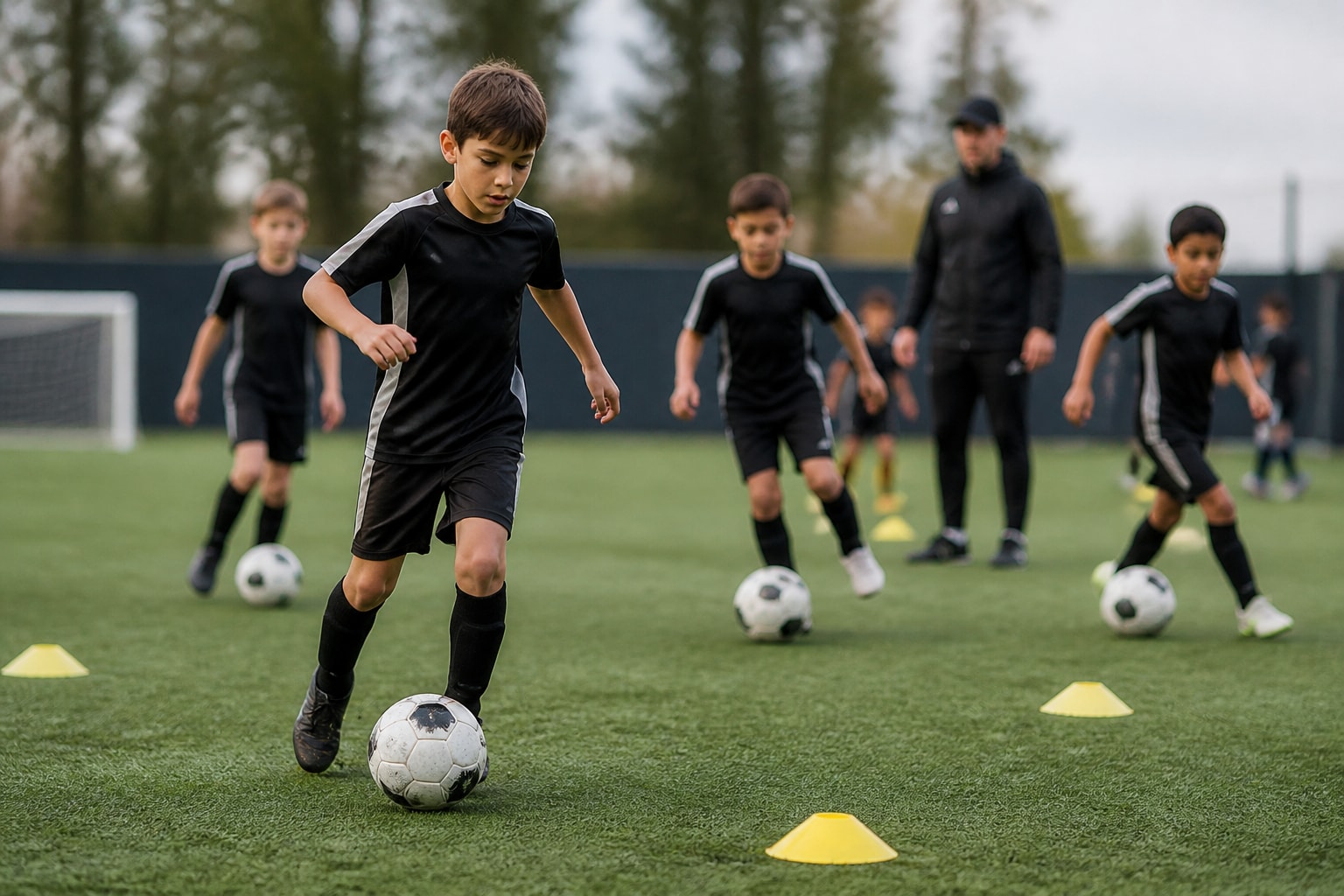
A player who touches the ball more often improves faster. Ask any program how many touches a typical session delivers. At Strive Soccer Academy, small-sided, high-touch sessions are designed to produce many touches per player, far more than a player usually gets in a crowded team practice where one ball is shared among many.
Player-to-coach ratio
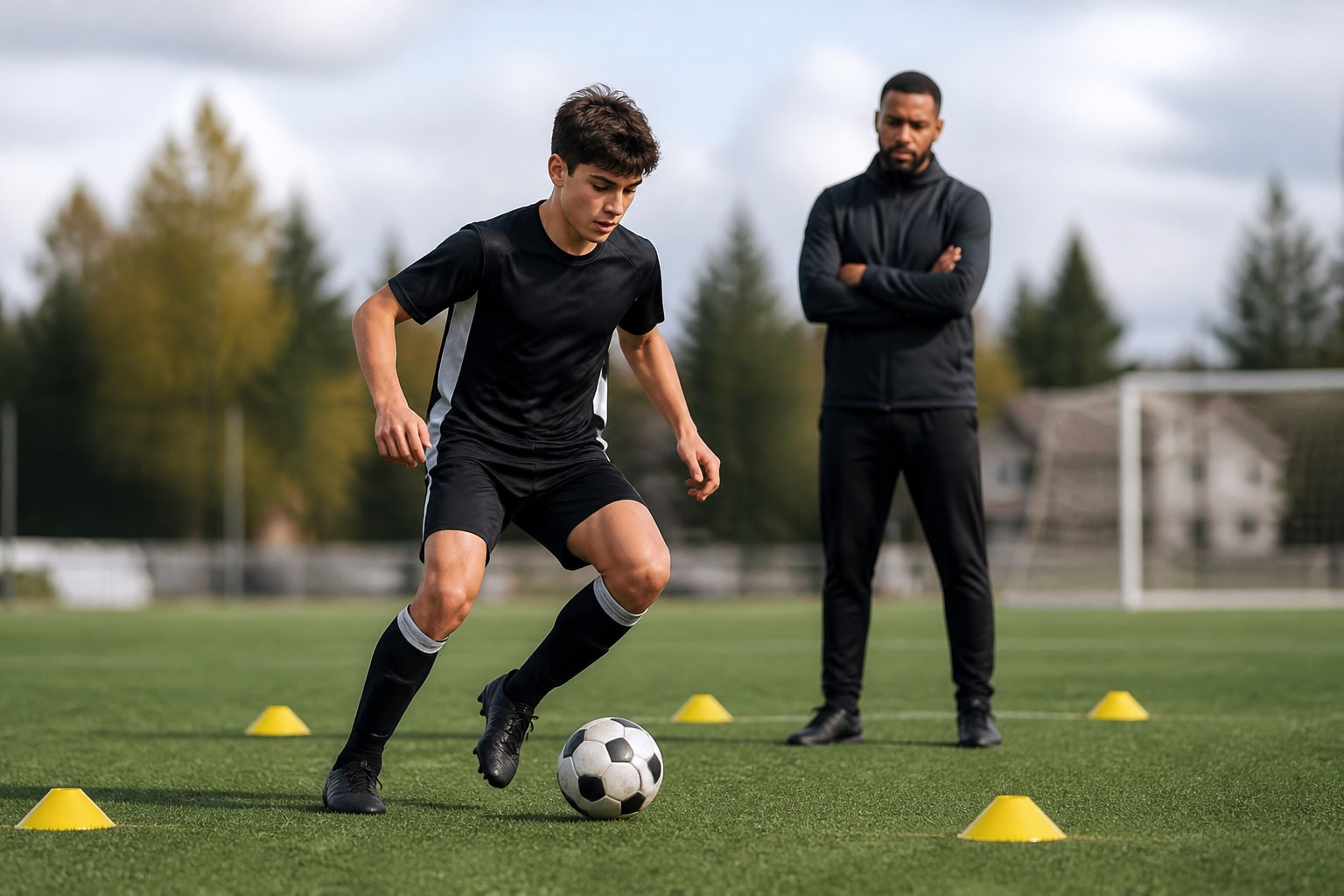
A low ratio allows coaches to correct technique in the moment. Strive Soccer Academy runs an average ratio of 8 players per coach. At that size, a coach can watch every player, offer individual feedback, and adjust the exercise when a child is struggling or ready for more.
Coach credentials
Licensing matters because it signals formal training in age-appropriate teaching. Strive's coaches are fully licensed through Canada Soccer, with credentials ranging from National A Licenses to Soccer for Life certifications for developing coaches. Ask every program you consider for specifics about who will actually be running your child's sessions.
Grouping method
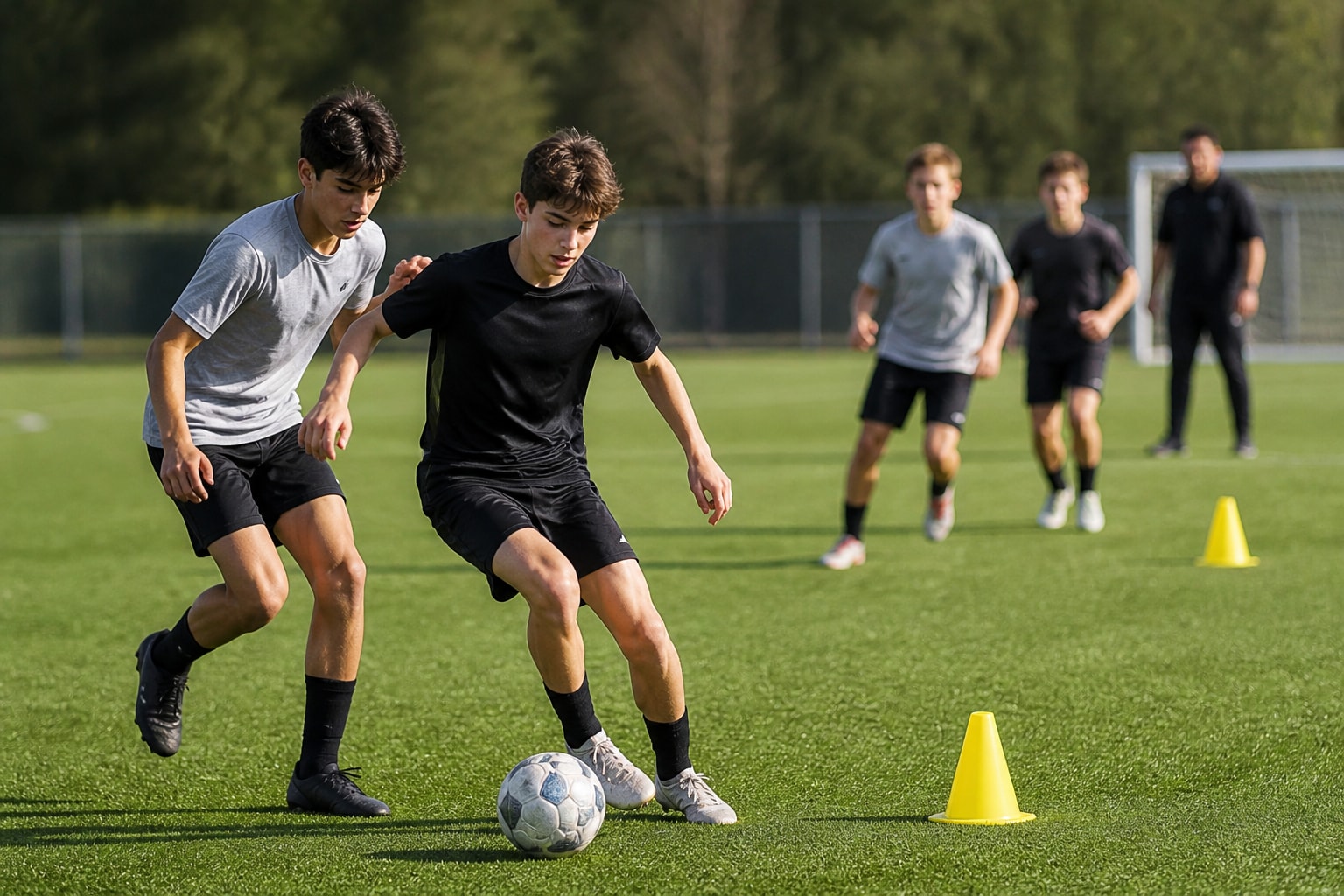
Children born in the same year can differ widely in size, maturity, and skill. Skill-based grouping and bio-banding place players where they can be challenged without being overwhelmed or under-stimulated. A late-maturing player who is technically excellent should not be sidelined because larger peers dominate physically.
What a Quality U10 Session Looks Like
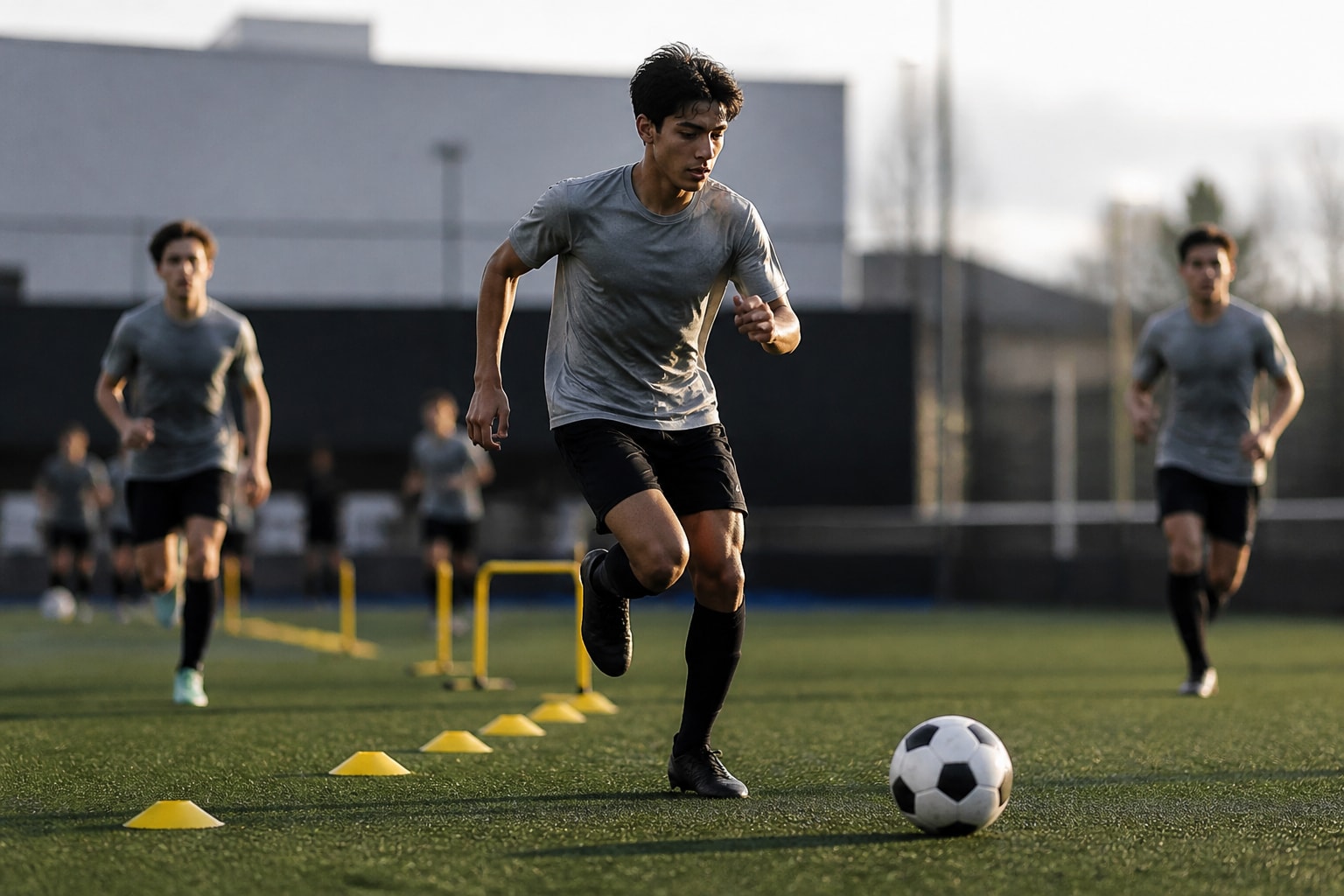
A quality U10 session moves quickly, keeps every player active, and builds from individual technique into small-group play and then game situations. If children spend long stretches standing in lines or watching, the session is not maximizing development.
A typical structure follows this sequence:
- Technical warm-up (10 to 15 minutes): each player has a ball, working on dribbling patterns, turns, and first touch with both feet.
- Skill focus (15 to 20 minutes): a specific technique, such as receiving across the body or passing with the inside and outside of the foot, practiced in progressively harder conditions.
- Small-sided application (20 to 25 minutes): 3v3 or 4v4 games with conditions that force players to use the skill they just practiced.
- Reflection and play (5 to 10 minutes): a freer game or challenge that lets players express what they learned and finish on a positive note.
Notice that tactical learning is built into the games rather than delivered through explanation. A coach might add a rule that rewards a pass played into space, which teaches the concept through experience.
Parents can also ask how coaches handle mistakes. At U10, the best environments treat errors as information. Players who fear failure stop attempting difficult skills, and difficult skills are exactly what produce growth.
Fall, Spring, and Winter: Training Across the Surrey Calendar
Effective development at U10 runs year-round, which means planning around Surrey's outdoor seasons and the wet winter months. Gaps in training slow progress, and a player who touches a ball only twice a week during the club season will fall behind a peer who trains consistently.
Strive Soccer Academy structures its programming across fall and spring outdoor leagues and winter indoor and futsal sessions. Futsal deserves special mention for this age group. The smaller, heavier ball and tight space force quick decisions, sharp first touches, and close control, which are exactly the qualities that translate to the outdoor game. You can read more about year-round soccer training in Surrey and how indoor training fits into the winter schedule.
Practical scheduling tips for families:
- Plan around the club calendar so supplemental sessions do not collide with matches or team practices.
- Avoid stacking too many sessions in one week. Two to three quality sessions per week, including club commitments, is a sensible load for most nine- and ten-year-olds.
- Build in rest. Fatigue and burnout at this age are real risks, and a child who loves the game at ten is far more likely to still be playing at sixteen.
Field Costs and Logistics in Surrey
Field access shapes both the price and the timing of training in Surrey, so it helps to understand how the city structures its fees. The City of Surrey's 2025/26 schedule lists Surrey-based youth artificial-turf use at $33.85 per hour during prime time and $17.04 per hour during non-prime time, and applicable taxes may apply.
Prime time on artificial turf is defined as weekdays from 5:00 p.m. to 10:30 p.m. and all day on Saturday and Sunday. Non-prime time runs weekdays from 8:00 a.m. to 5:00 p.m. That distinction matters because the after-school window most families want falls squarely in prime time, when demand is highest.
For parents, the takeaway is practical. Programs that train in popular after-school slots carry real field costs, and sessions in off-peak windows may be easier to schedule and book. For current session times, locations, and rates at Strive Soccer Academy, check the youth soccer training schedule or contact the academy directly rather than assuming figures from elsewhere.
Location also matters for consistency. Families in different parts of the city have options close to home, including programming for Fleetwood, Newton, and South Surrey. A shorter commute makes it easier to attend regularly, and regular attendance drives results.
Age-Appropriate Standards and Why They Matter
Canada Soccer has formalized what age-appropriate play should look like, and parents can use those standards as a quality check. Its Grassroots Standards make age-appropriate game structures mandatory for member organizations ahead of the 2026 playing season.
For you as a parent, this means the structure of your child's club matches should already reflect smaller formats and developmental priorities. Supplemental training should follow the same philosophy. Be cautious of any program that emphasizes winning drills, rigid positional play, or long tactical lectures at U10. Those approaches prioritize short-term results over the broad skill base a player needs later.
A good test: ask a coach what they want your child to be able to do by the end of the season. A strong answer mentions technical improvements, decision-making, and confidence. A weak answer focuses on wins or on a single position.
Is Your Child Ready for Structured Training?
Your child is ready for structured, higher-level training if they already play soccer regularly, enjoy it, and want to improve. This guide is aimed at committed players and their families, so it assumes your child is already playing club soccer and is looking for additional development rather than a first introduction to the sport.
Signs of readiness include:
- Practicing with a ball at home or at the park without being asked
- Asking how to do a particular move or skill
- Showing frustration, in a healthy way, when they cannot yet do something they want to master
- Wanting more time with the ball than their club schedule provides
Signs to pause include exhaustion, loss of enthusiasm, or complaints about attending. Training should add to a child's love of the game.
If your player is still getting started, U8 soccer training in Surrey, BC offers a developmentally appropriate entry point at a younger age group.
Where the Pathway Can Lead
Consistent, high-quality development at U10 sets up the later stages of a player's journey. Strive Soccer Academy has spent over 20 years developing youth players from the grassroots level, and Strive-trained players have gone into professional academy environments, U SPORTS and NCAA Division I and II scholarships, and overseas trials in Europe.
Those outcomes take years of steady development, not a single season, and no program can promise a particular result. What a strong U10 foundation does provide is range: clean technique with both feet, comfort under pressure, and the confidence to keep improving. Those traits keep doors open whether a player's goal is a competitive club roster, a travel team, or a college scholarship. For families planning ahead, our guide to U13 soccer training in Surrey BC explains what that next stage demands.
For families thinking ahead, Strive also offers competitive soccer training and high-performance soccer training as players move up in age and ambition, so a child can progress within one coaching philosophy.
Choosing the Right Option for Your Family
The best U10 option is the one that delivers frequent touches, low ratios, qualified coaching, and proper grouping, in a schedule your family can sustain. Visit, observe, and ask questions before committing.
For a service that fits the needs described in this guide, Soccer Skills Training at Strive Soccer Academy focuses on the technical foundations that U10 players need most, delivered in small, high-touch groups.
When you visit any program, use this short checklist:
- Count how many players each coach supervises
- Watch whether children are active or waiting in line
- Ask about coach licensing and who runs your child's group
- Ask how players are grouped by skill and maturity
- Confirm the schedule, rates, and location in writing
A program confident in its approach will welcome these questions. Pay attention to how coaches speak to the children as well. Encouragement, clear instruction, and patience with mistakes are signs of a healthy development environment.
Your next step is to watch a session or attend a trial so you can see the touch counts, coaching style, and group sizes for yourself before making any commitment. Strive Soccer Academy supports serious young players with licensed coaches, an average 8:1 player-to-coach ratio, and skill-based grouping, and families who want to see that in action can Book a Trial through the academy's calendar. Whether your child is aiming for a competitive roster or a longer pathway, the right start at U10 makes every later step easier.