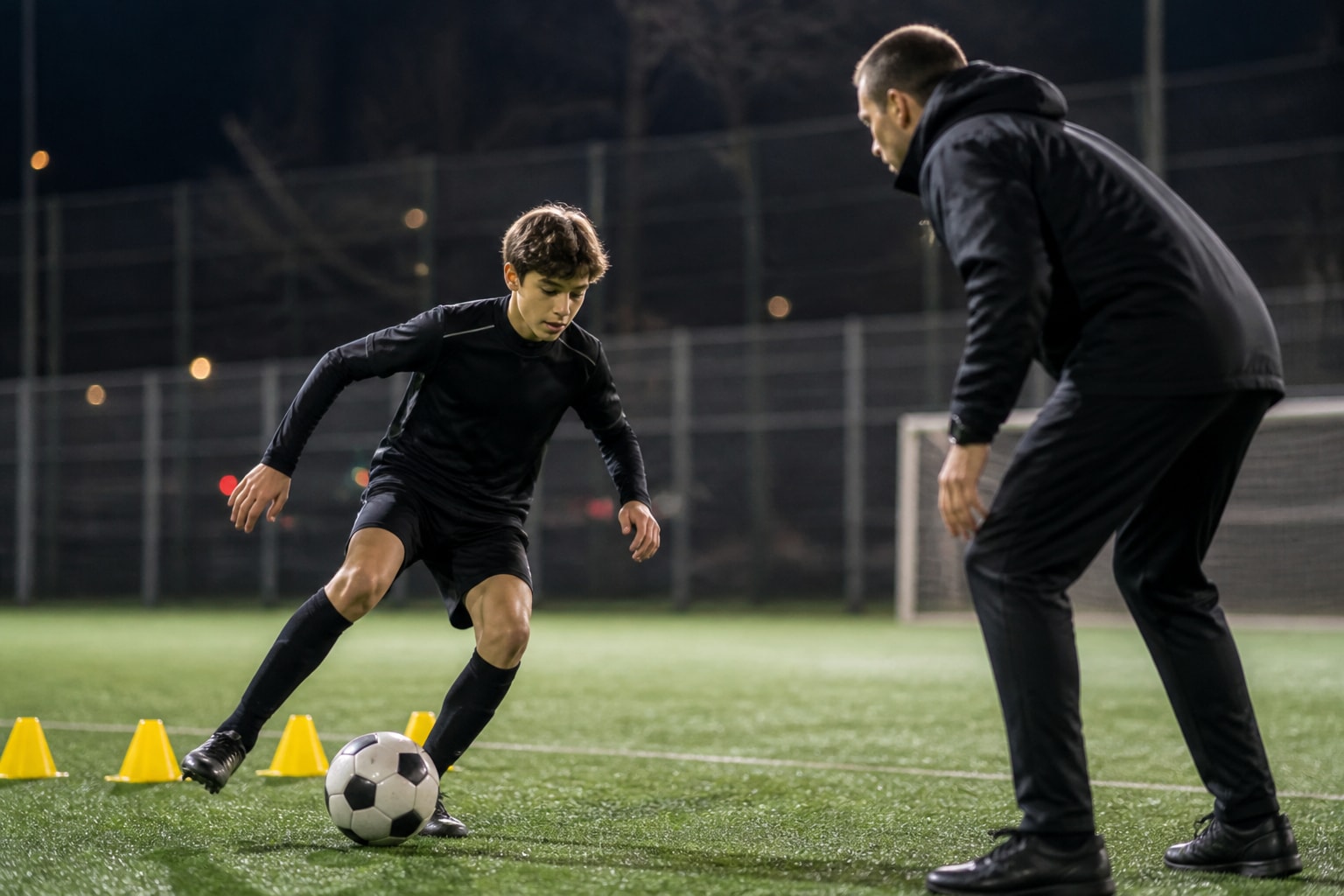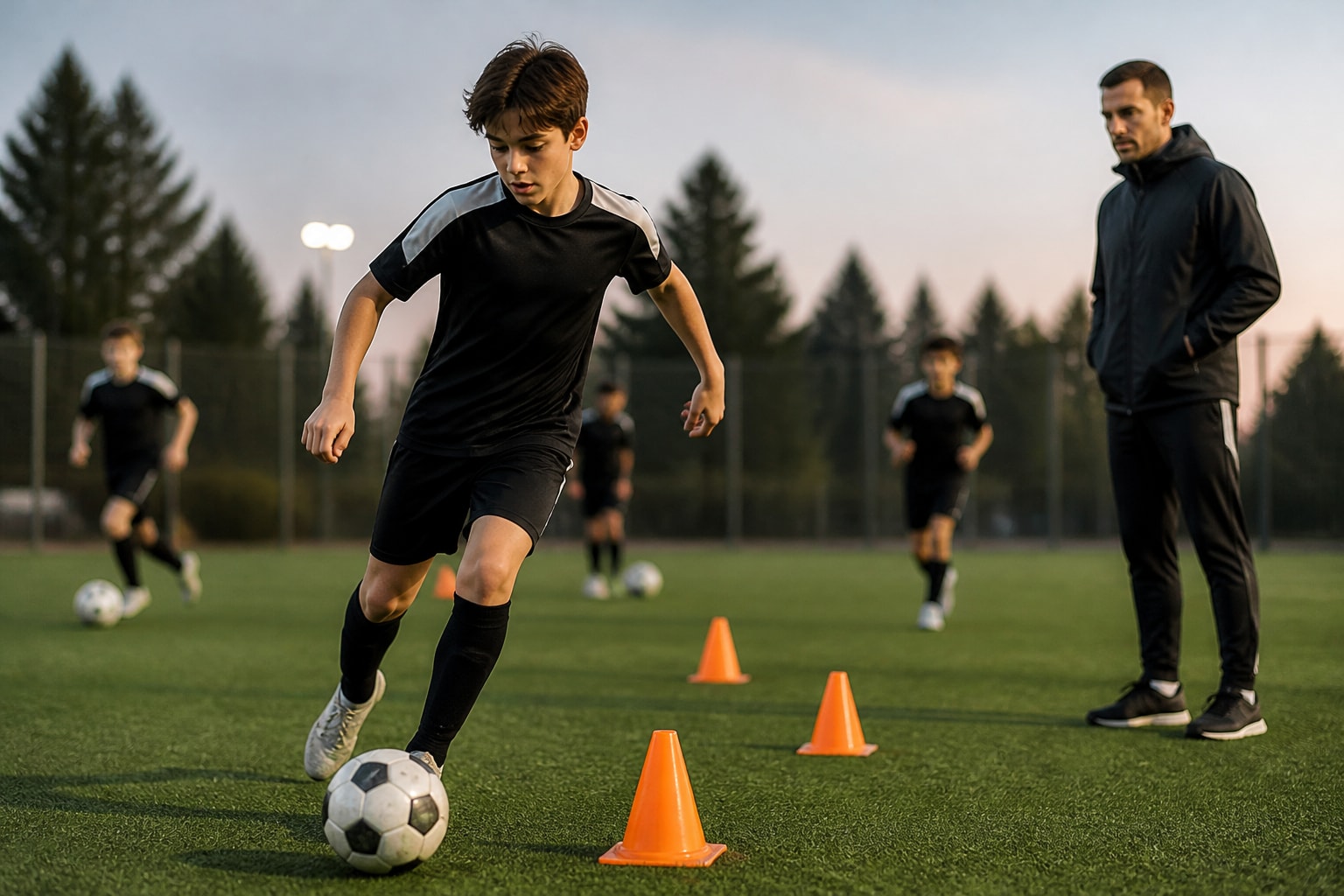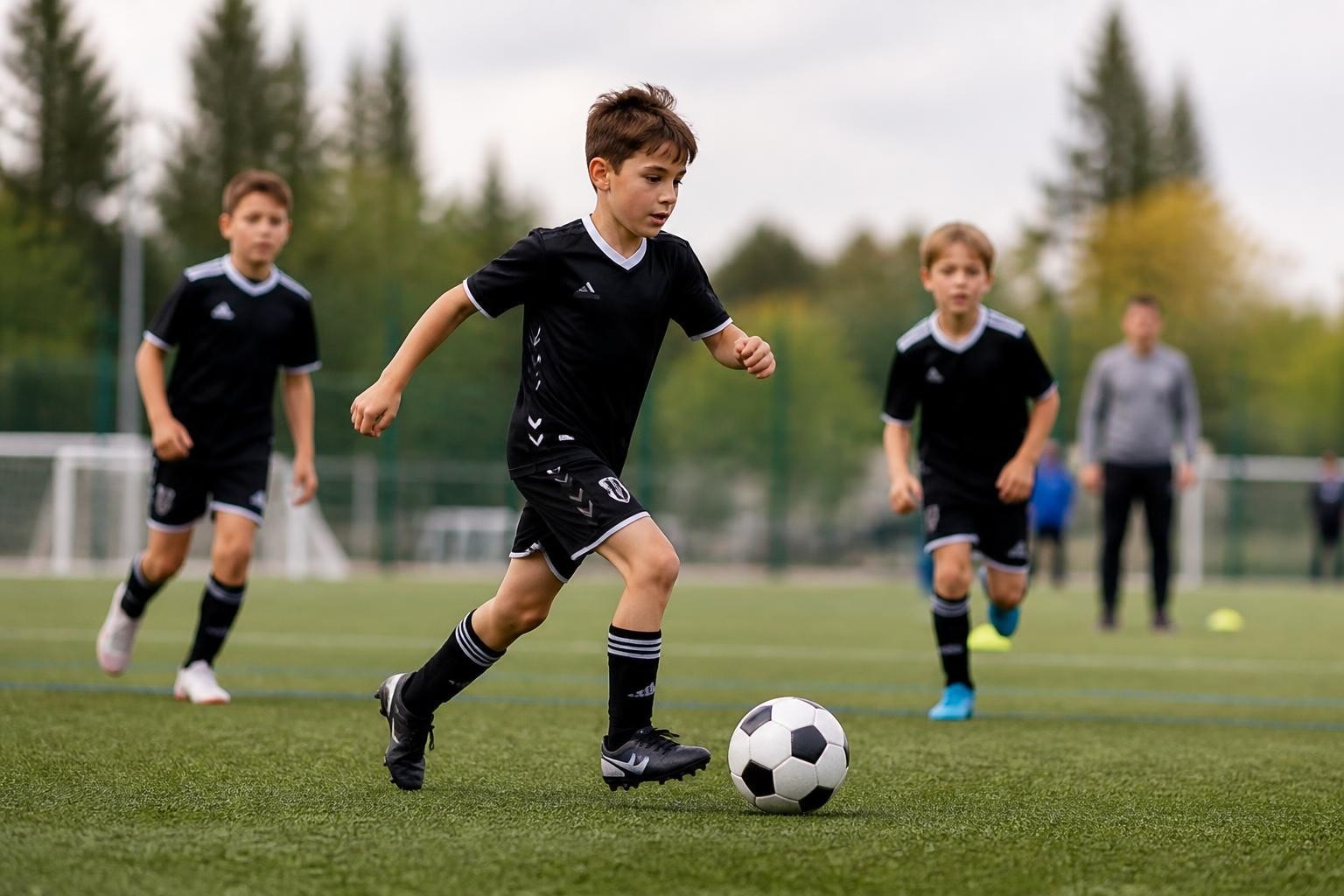
Parents in Surrey, BC, are increasingly seeking high-quality soccer skills training for kids in Surrey BC that goes beyond recreational play. With the city's growing population and investment in sports infrastructure, including the Jumpstart Community Soccer Pitch that opened earlier this year, families have more opportunities than ever to engage their young athletes in structured development programs. Finding the right training environment requires understanding what separates effective youth development from simple activity management.
Understanding European-Style Training Philosophy
The European approach to soccer skills training for kids in Surrey BC emphasizes a holistic development model that addresses multiple dimensions of athlete growth simultaneously. Rather than focusing exclusively on winning games or performing isolated drills, this methodology builds well-rounded players through integrated training sessions.
The Four Pillars of Player Development
Technical development forms the foundation of any quality program. Young players need thousands of purposeful touches on the ball to develop the muscle memory and confidence required for competitive play. This includes:
- Ball mastery exercises that improve close control
- Passing accuracy drills with both feet
- First touch development under varying pressure levels
- Shooting technique from multiple angles and distances
Tactical awareness teaches players to think strategically about positioning, spacing, and decision-making. Children as young as six can begin understanding basic concepts like creating space, supporting teammates, and recognizing when to pass versus dribble.
Physical conditioning must align with age-appropriate guidelines. The Government of Canada’s 24-Hour Movement Guidelines recommend at least 60 minutes of moderate to vigorous physical activity daily for children aged 5-17, making soccer an excellent vehicle for meeting these benchmarks while building sport-specific fitness.
Psychological resilience helps young athletes handle pressure, overcome mistakes, and maintain motivation through challenges. Mental training components should be woven naturally into sessions rather than treated as separate elements.

Age-Appropriate Training Methods
Soccer skills training for kids in Surrey BC must adapt to developmental stages. What works for a 14-year-old will overwhelm or bore a 7-year-old. Understanding these distinctions ensures children remain engaged while progressing safely.
Early Development (Ages 5-8)
Young children learn best through play-based activities that disguise skill development as fun games. Sessions should emphasize:
- High ball-to-player ratios (ideally one ball per child)
- Short attention span activities (3-5 minute rotations)
- Minimal tactical instruction
- Positive reinforcement and celebration of effort
According to Sport for Life’s Long-Term Athlete Development framework, children in this age group are developing fundamental movement skills that transfer across all sports. Soccer training should complement this broader physical literacy development.
Middle Development (Ages 9-12)
This critical window represents the "golden age of learning" when children can rapidly acquire new technical skills. Training intensity increases while maintaining enjoyment:
| Focus Area | Training Emphasis | Session Structure |
|---|---|---|
| Technical | Advanced ball mastery, passing patterns | 40% of session time |
| Tactical | Small-sided games, positional play | 35% of session time |
| Physical | Agility, coordination, speed work | 15% of session time |
| Psychological | Goal-setting, teamwork exercises | 10% of session time |
Programs should introduce more structured drills while preserving creativity and decision-making opportunities. Soccer skills training at this level balances repetition with game-realistic scenarios that prepare players for competitive environments.
Advanced Development (Ages 13+)
Teenage players require sophisticated training that mirrors professional environments while accounting for ongoing physical and emotional development. Sessions become longer, more intense, and tactically complex.
Strength and conditioning elements can be introduced carefully, always prioritizing technique and injury prevention. The Canadian Guideline on Concussion in Sport provides essential safety protocols that all youth soccer programs should implement, particularly as physicality increases with age.
Licensed Coaching Makes the Difference
The quality of soccer skills training for kids in Surrey BC depends primarily on coaching expertise. Parents should verify that instructors hold recognized certifications rather than simply possessing playing experience.
Canada Soccer Licensing Pathway
Canada Soccer offers a comprehensive coach education system aligned with international standards. Coaches progress through multiple levels:
Grassroots licenses (Soccer for Life) prepare instructors to work with beginning players aged 4-12. These certifications emphasize age-appropriate pedagogy, player safety, and creating inclusive environments.
Regional licenses (B License) qualify coaches to manage competitive youth teams and design periodized training programs that develop players systematically over multiple years.
National licenses (A License) represent the highest domestic coaching qualification, certifying expertise in advanced tactics, sports science, and elite player development. Parents seeking serious training should look for academies employing nationally-licensed technical directors who design curriculum and mentor developing coaches.
The Coaching Association of Canada provides additional resources and the National Coaching Certification Program framework that ensures consistent quality standards across sports.
Key Skills Every Young Player Should Master
Effective soccer skills training for kids in Surrey BC systematically builds competency across essential technical areas. While individual programs may emphasize different aspects, certain fundamentals apply universally.
Ball Control and First Touch
A player's first touch determines whether they maintain possession under pressure or lose the ball. Training should include:
- Receiving passes from various angles and speeds
- Controlling bouncing balls with different body parts
- Cushioning strong passes to keep the ball close
- Directional first touches that set up the next action
These skills require hundreds of repetitions across diverse scenarios. Quality programs dedicate significant session time to first-touch development rather than assuming players will master it independently.
Passing Accuracy and Variety
Young players must learn multiple passing techniques:
- Inside-of-foot passes for accuracy over short to medium distances
- Outside-of-foot passes for quick directional changes
- Driven passes for covering longer distances quickly
- Lofted passes for playing over defenders
Training should progress from stationary to dynamic passing, eventually incorporating pressure and decision-making elements that replicate match conditions.
Dribbling and 1v1 Moves
Confident dribbling requires both technical ability and psychological courage. Effective training:
- Teaches specific moves (step-overs, scissors, Cruyff turn)
- Creates repetition opportunities against passive then active defenders
- Encourages creativity and self-expression
- Builds comfort with failure as part of the learning process
Young players should experiment with different moves to discover what works naturally for their body type and playing style.
Shooting Technique
Many youth programs neglect shooting in favor of passing drills, yet scoring confidence separates good players from great ones. Training should cover:
- Proper striking technique with laces
- Side-foot finishing for accuracy
- Volleys and half-volleys
- Shooting under defensive pressure
Small-Sided Games as Development Tools
Soccer skills training for kids in Surrey BC should incorporate extensive small-sided game play. These modified formats (3v3, 4v4, 5v5) provide more touches, decisions, and meaningful actions than full 11v11 games.
Benefits of Small-Sided Play
Research consistently demonstrates that children develop faster through small-sided games because they encounter more frequent problem-solving opportunities. Each player touches the ball substantially more often, receives more feedback through natural consequences, and faces varied tactical situations.
| Game Format | Touches per Player | Decision Moments | Space to Operate |
|---|---|---|---|
| 3v3 | Very High (40+/game) | Constant | Maximum |
| 7v7 | High (25-30/game) | Frequent | Moderate |
| 11v11 | Low (10-15/game) | Occasional | Limited |
Canada Soccer’s age-appropriate training guidance recommends smaller team sizes for younger age groups, gradually transitioning to full-field play as players mature.
Structuring Effective Small-Sided Sessions
Coaches should design games with clear learning objectives rather than simply reducing player numbers. Constraints like limited touches, specific scoring methods, or defined playing zones can emphasize particular skills while maintaining the game context that children enjoy.
Balancing Competition and Development
Parents seeking soccer skills training for kids in Surrey BC often struggle to balance competitive opportunities with long-term development priorities. Winning feels good, but premature specialization and win-at-all-costs mentalities can damage young athletes.
The Healthy Competition Framework
Quality programs use competition as a development tool rather than an end goal. This means:
- Selecting appropriate competitive levels that challenge without overwhelming
- Prioritizing playing time distribution over winning margins
- Focusing feedback on process improvements rather than results
- Celebrating effort, learning, and sportsmanship alongside victories
Children develop resilience and motivation through appropriately challenging competition. The key is matching competitive intensity to developmental readiness rather than external pressure.
Multi-Sport Participation
Contrary to popular belief, early specialization in soccer rarely produces better outcomes than multi-sport participation. Young athletes who play multiple sports typically:
- Develop broader athletic foundations
- Experience fewer overuse injuries
- Maintain higher motivation levels
- Demonstrate superior long-term performance
Parents should resist pressure to commit exclusively to soccer before high school. Sport for Life research shows that athletes who sample multiple sports during childhood while maintaining one primary sport achieve optimal development.
Finding Quality Training in Surrey
Surrey's soccer landscape offers numerous options, making it essential for parents to evaluate programs carefully. Not all soccer skills training for kids in Surrey BC provides equal value or adheres to best-practice standards.
Key Evaluation Criteria
Coaching credentials should be transparent and verifiable. Ask about specific licenses, ongoing professional development, and coaching philosophy. Programs employing multiple Canada Soccer certified coaches demonstrate commitment to quality.
Training methodology should align with recognized development frameworks. Ask how the program addresses technical, tactical, physical, and psychological development. Vague answers or exclusive focus on winning suggest limited developmental sophistication.
Player-to-coach ratios directly impact individual attention and skill acquisition. Optimal ratios rarely exceed 12:1 for group training, with smaller numbers for advanced development programs.
Facility quality affects safety and training effectiveness. While pristine fields aren't essential, adequate space, proper equipment, and weather contingencies matter significantly.
Questions to Ask Before Enrolling
Parents should interview program directors and observe sessions before committing. Important questions include:
- What coaching qualifications do instructors hold?
- How do you measure and track individual player progress?
- What is your training-to-game ratio throughout the year?
- How do you handle player injuries and return-to-play protocols?
- What opportunities exist for advancement to higher training levels?
Programs confident in their quality will welcome these questions and provide detailed, transparent answers.
The Role of Home Practice
Even excellent soccer skills training for kids in Surrey BC requires supplementation through home practice. Skill mastery demands volume that exceeds what group sessions can provide.
Creating Effective Home Practice Routines
Parents can support development without needing extensive soccer knowledge:
Set up a small practice area in the backyard or driveway with basic equipment (cones, a ball, and perhaps a small goal or target).
Encourage daily ball touches through unstructured play. Even 15 minutes daily of juggling, dribbling around obstacles, or passing against a wall accumulates significant practice volume over weeks and months.
Watch soccer together to build tactical awareness. Discussing what players do off the ball, how teams create space, and when to pass versus shoot develops soccer IQ passively.
Support without pressuring by showing interest in their progress while avoiding criticism or unrealistic expectations. Young athletes need encouragement, not additional stress.
Injury Prevention and Long-Term Health
Responsible soccer skills training for kids in Surrey BC prioritizes player health alongside skill development. Youth sports injuries, while common, are largely preventable through proper programming.
Common Youth Soccer Injuries
Growing bodies face specific vulnerabilities:
- Growth plate injuries from repetitive stress
- Overuse injuries (shin splints, tendinitis) from excessive training loads
- Acute injuries (sprains, strains) from insufficient warm-up or poor technique
- Concussions requiring immediate recognition and proper management
Programs should implement comprehensive warm-up protocols, monitor training loads, teach proper technique, and maintain strict concussion protocols aligned with current medical guidelines.
Building Healthy Training Habits
Teaching young players to take ownership of their physical preparation creates lifelong healthy habits:
- Proper hydration before, during, and after training
- Adequate sleep following age-specific recommendations (9-12 hours for ages 6-12, 8-10 hours for ages 13-18)
- Balanced nutrition supporting activity levels without obsessive dietary restrictions
- Rest and recovery including off-seasons and reduced-load periods
The Community Aspect of Youth Soccer
Beyond individual skill development, soccer skills training for kids in Surrey BC provides valuable social experiences. Children build friendships, learn teamwork, and develop social-emotional competencies through shared athletic pursuits.
Building Positive Team Culture
Quality programs intentionally cultivate inclusive environments where:
- Every player feels valued regardless of ability level
- Teammates support each other through challenges
- Diversity strengthens the group
- Respect for opponents, officials, and coaches is non-negotiable
These cultural elements don't happen accidentally. Coaches must model and reinforce positive behaviors consistently while addressing negative patterns immediately.
Parent Involvement Guidelines
Parents play crucial supporting roles without undermining coaching:
During training and games: Watch supportively, cheer effort, avoid coaching from sidelines, and model sportsmanship.
After sessions: Ask about their enjoyment and learning rather than exclusively about performance. Listen without judgment when they express frustration.
In communication: Raise concerns directly with coaches privately rather than through the player or other parents. Support coaching decisions publicly even when privately disagreeing.
Integrating Soccer with Academic and Social Development
Youth soccer training should complement rather than compete with other developmental priorities. The Soccer in Schools program demonstrates how soccer can integrate with academic settings, creating additional opportunities without increasing time commitments.
Surrey families should seek programs that respect homework demands, family time, and social activities outside soccer. Balanced young athletes typically perform better both on and off the field compared to those experiencing chronic time pressure.
Technology and Modern Training Methods
Contemporary soccer skills training for kids in Surrey BC increasingly incorporates technology for enhanced feedback and engagement. Video analysis, GPS tracking, and performance metrics provide objective data that complements subjective coaching observations.
Age-Appropriate Technology Use
Technology benefits should justify any costs or complexity:
- Video analysis helps older players (12+) visualize positioning and decision-making patterns that verbal feedback cannot capture effectively
- Training apps can gamify home practice for players who respond to structured challenges
- Performance tracking motivates self-directed improvement when introduced appropriately
Technology should enhance rather than replace traditional coaching relationships. Young players primarily need human connection, encouragement, and expertise rather than data dashboards.
Quality soccer development requires commitment to proven methodologies, age-appropriate progressions, and holistic player growth that extends beyond technical skills. Strive Soccer Academy brings European-style training philosophy to Surrey, BC, combining licensed Canada Soccer coaches with programming that addresses technical, tactical, physical, and psychological development. We're committed to building skilled, confident players who love the game and reach their full potential both on and off the field.