Choosing the right soccer development academy in Surrey BC represents one of the most important decisions parents and young athletes can make in a player's formative years. With Surrey's rapidly expanding youth sports infrastructure and growing reputation as a development hub in British Columbia, families now have access to academy programs that rival those in major metropolitan centers. The landscape has evolved significantly, with academies adopting evidence-based training methodologies, professional coaching standards, and clear player pathways that extend well beyond recreational soccer.
Understanding the Academy Model in Surrey
A soccer development academy in Surrey BC operates fundamentally differently from traditional club soccer programs. While recreational and competitive clubs focus primarily on game participation and league standings, academies prioritize systematic player development across multiple dimensions.
The academy model emphasizes structured curriculum delivery, where each training session builds upon previous lessons in a deliberate progression. This approach aligns with the Long-Term Development framework used across Canadian sport, ensuring age-appropriate training that respects physical and cognitive maturation stages.
Key Pillars of Academy Training
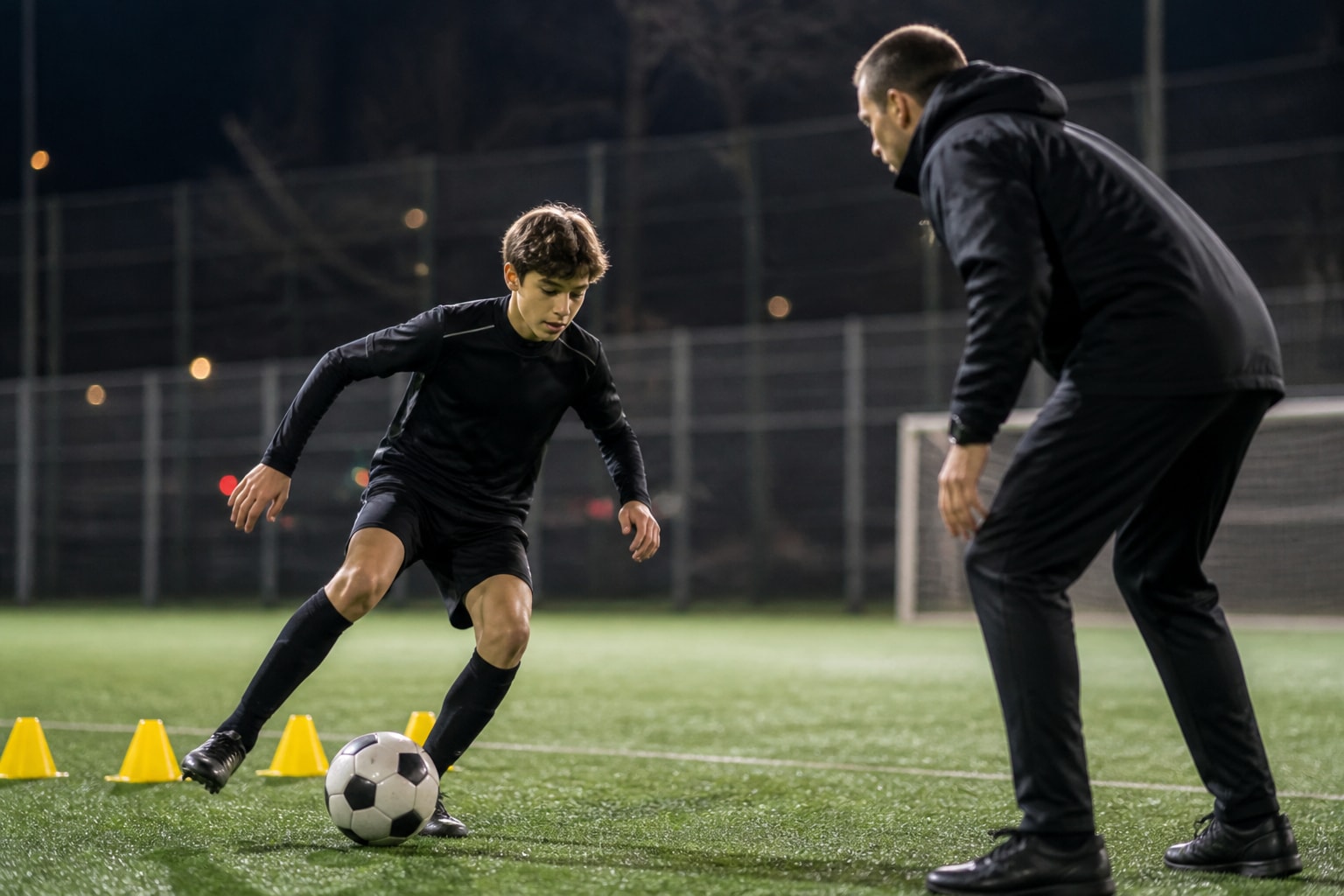
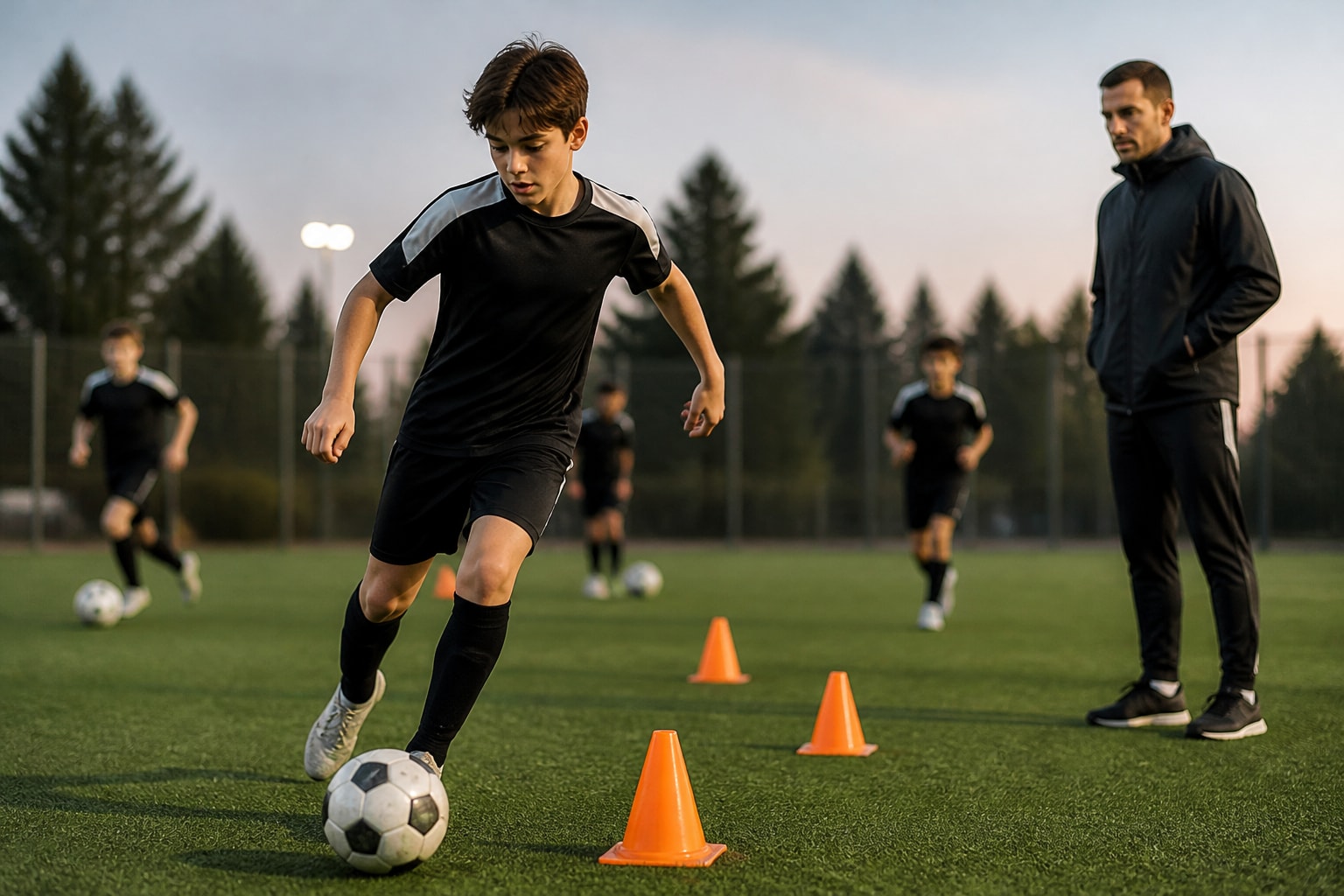
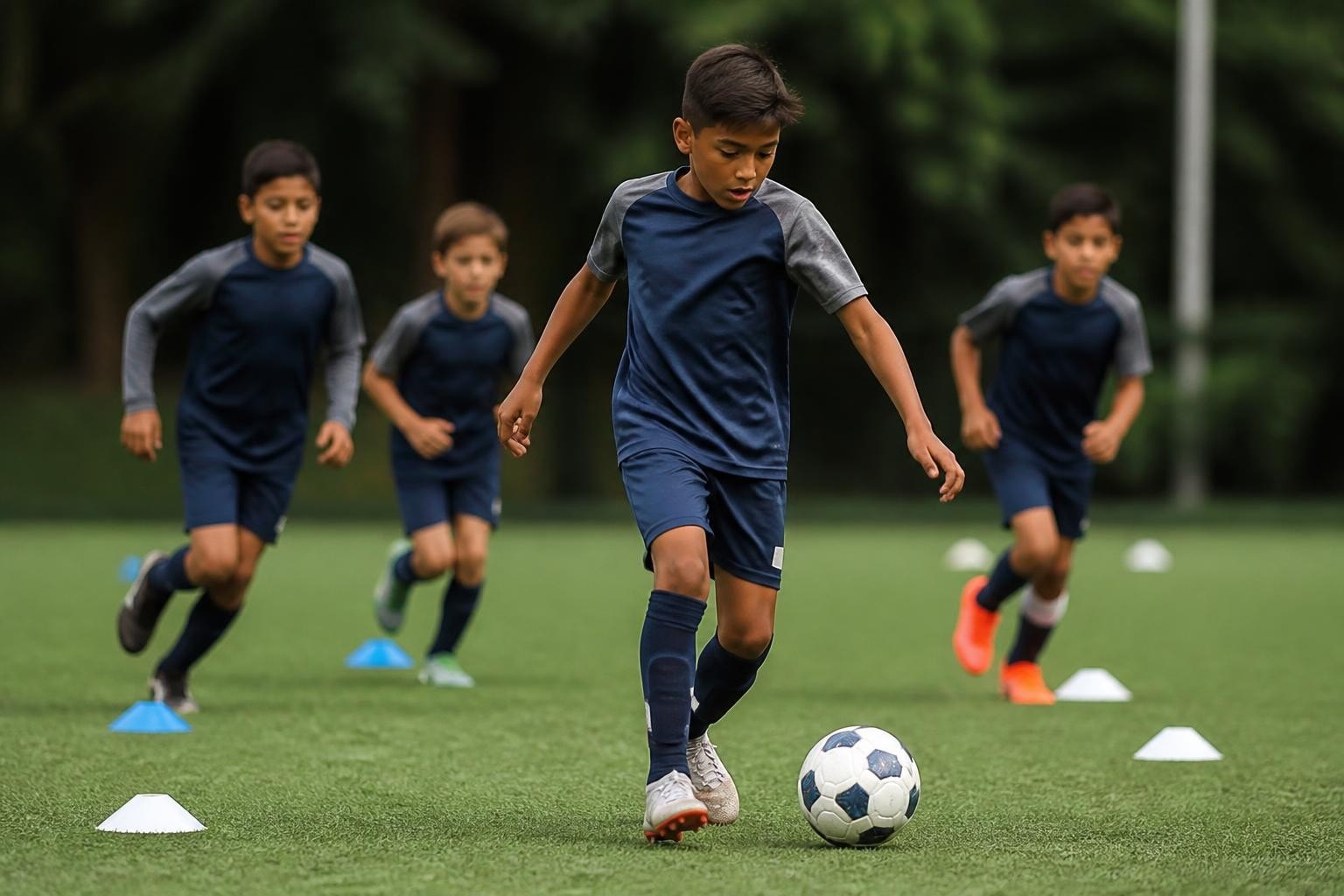
Technical Development forms the foundation of any quality academy program. Players spend significant time mastering ball control, passing accuracy, first touch, dribbling in tight spaces, and striking technique. These sessions typically occur in small groups with high coach-to-player ratios, allowing for individual feedback and correction.
Tactical Understanding develops game intelligence. Young players learn positioning, spatial awareness, when to press or hold, and how to read opponents. This cognitive aspect of soccer separates academy players from those who rely solely on athleticism.
Physical Conditioning must be age-appropriate and scientifically sound. Quality academies incorporate speed, agility, coordination, and endurance work that complements technical training rather than replacing it. The emphasis shifts as players mature, with younger age groups focusing on movement literacy and older players engaging in more sport-specific conditioning.
Psychological Growth encompasses mental resilience, confidence under pressure, decision-making speed, and character development. The best academies recognize that creating well-rounded individuals matters as much as developing skilled players.

Licensing and Coaching Standards
When evaluating a soccer development academy in Surrey BC, coaching credentials serve as the most reliable indicator of program quality. Canada Soccer maintains a structured licensing pathway that ensures coaches possess both theoretical knowledge and practical experience.
| License Level | Required Hours | Focus Areas |
|---|---|---|
| National A License | 150+ hours | Advanced tactics, periodization, elite player management |
| National B License | 90+ hours | Team systems, session design, player assessment |
| Provincial B License | 60+ hours | Age-specific development, technical progressions |
| Soccer for Life | 20-40 hours | Grassroots development, child-centered coaching |
Licensed coaches bring structured methodology to every session. They understand how to break down complex skills into teachable components, how to structure a season for optimal development, and how to create training environments that challenge players appropriately.
The BC Soccer Academies Association provides governance and quality standards for academy programs throughout the province. This independent body ensures academies maintain educational standards, ethical coaching practices, and transparent player development pathways.
European-Style Training Philosophy
Many leading academies in Surrey have adopted European training methodologies that differ markedly from traditional North American approaches. European-style training emphasizes technical proficiency from the earliest ages, uses small-sided games extensively, and prioritizes individual skill development over early specialization in positions.
This philosophy values possession-based soccer, quick decision-making, and comfort on the ball in congested areas. Training sessions typically feature higher repetition of core skills, shorter explanations, and more playing time relative to instruction time. The result produces players who think faster, handle pressure better, and demonstrate superior technical ability in game situations.
Player Pathway and Competitive Opportunities
A comprehensive soccer development academy in Surrey BC must offer clear progression routes beyond training sessions. The competitive landscape in British Columbia provides multiple pathways for talented players to test themselves against quality opposition.
Local and Provincial Competition
Surrey's location within Metro Vancouver provides access to the strongest youth soccer competition in Western Canada. Academy players regularly compete in high-level tournaments and leagues that attract scouts and provide exposure to different playing styles.
The BC Premier League represents the highest level of youth competition in the province, serving as a bridge between academy development and semi-professional or professional opportunities. Players who excel in academy environments often progress to these elite competitions, where college recruiters and professional scouts actively evaluate talent.
Showcase Events and Tours
Progressive academies arrange showcase tournaments and training tours that expose players to competition outside their regular environment. These events provide invaluable experience, teaching young athletes how to perform in high-pressure situations, adapt to different playing conditions, and compete against unfamiliar opponents.
International tours to Europe or participation in major American showcase events can accelerate development dramatically. Players return with expanded tactical knowledge, increased confidence, and clearer understanding of the standards required at higher levels. For families considering elite soccer camps or specialized training opportunities, these experiences complement regular academy programming by providing intensive skill development in concentrated timeframes.
Facility Access and Training Environment
Surrey's investment in sports infrastructure directly impacts the quality of academy training available to young players. The city has expanded its synthetic turf inventory significantly, providing year-round training surfaces that remain playable in Pacific Northwest weather conditions.
According to Surrey’s synthetic turf fields inventory, the municipality maintains multiple high-quality facilities across different neighborhoods, improving accessibility for families throughout the region. This infrastructure development supports consistent training schedules regardless of season or weather, eliminating the training interruptions that plague grass-only programs.
Training Frequency and Session Structure
Elite academy programs typically operate 3-4 times weekly, with sessions lasting 90-120 minutes. This frequency allows for skill repetition and development while avoiding overtraining that can lead to burnout or injury.
Typical Weekly Structure:
- Two technical-focused training sessions emphasizing ball mastery and individual skills
- One tactical session focusing on team concepts and positional play
- One match simulation or small-sided games session
- Optional strength and conditioning or goalkeeper-specific training
The rhythm of multiple weekly sessions creates muscle memory and reinforces learning more effectively than once-weekly training. Players develop faster when skills are practiced with appropriate frequency and intensity.
Age-Appropriate Programming
Quality academies structure their programs according to developmental stage rather than using one-size-fits-all approaches. Research from UBC’s sport science faculty demonstrates that age-appropriate training significantly impacts long-term athletic development and reduces injury risk.
Youth Development Phases
Ages 6-9 (FUNdamentals Stage): Training emphasizes movement literacy, basic ball skills, and positive introduction to competitive elements. Sessions feature playful activities that develop coordination, balance, and comfort with the ball.
Ages 10-12 (Learning to Train): Players develop core technical skills through repetition and begin understanding basic tactical concepts. This stage represents the optimal window for skill acquisition, making quality coaching particularly valuable.
Ages 13-15 (Training to Train): Physical development accelerates, requiring careful management of training loads. Tactical sophistication increases, and players begin specializing in positions while maintaining technical development across all skills.
Ages 16+ (Training to Compete): Players refine their game, develop specialized position-specific skills, and prepare for post-secondary opportunities. Training intensity increases, and sessions increasingly replicate game demands.
| Age Group | Technical Focus | Tactical Emphasis | Physical Development |
|---|---|---|---|
| 6-9 | Ball mastery basics | Individual play awareness | Movement fundamentals |
| 10-12 | Refined technique | Small group tactics | Speed and agility |
| 13-15 | Position-specific skills | Team systems | Strength foundation |
| 16+ | Elite-level execution | Advanced game management | Sport-specific power |
What Parents Should Evaluate
Selecting a soccer development academy in Surrey BC requires careful evaluation beyond marketing materials and facilities. Parents should investigate several key areas before committing to a program.
Coach Credentials and Experience
Verify that coaches hold current Canada Soccer licenses appropriate for the age group they're instructing. Ask about coaching philosophy, session planning processes, and how individual player development is tracked and communicated. The best coaches articulate clear development objectives and can explain how specific activities contribute to those goals.
Player-to-Coach Ratios
Optimal learning occurs when coaches can provide individual attention. Look for academies maintaining ratios of 12:1 or better for technical sessions, with even lower ratios for specialized position training. Large group sizes dilute instruction quality and reduce individual contact time.
Communication and Transparency
Quality academies maintain regular communication with families about player progress, training objectives, and program developments. Ask how often formal evaluations occur, what format feedback takes, and how concerns or questions are addressed. Transparent organizations welcome parent involvement and clearly explain their methodologies.
Development Philosophy Over Winning
While competitive success provides validation, it should not drive decision-making at youth levels. Academies focused primarily on winning often sacrifice individual development for short-term results, playing their best players excessively and neglecting skill development in favor of physical play. Look for programs that articulate clear development priorities and demonstrate patience with player growth.
Red flags include:
- Coaches who cannot explain their licensing credentials
- Programs emphasizing tournament victories over skill development
- Lack of structured curriculum or session planning
- Poor communication with families
- Absence of age-appropriate modifications to training
- Unrealistic promises about college scholarships or professional opportunities
The Role of Municipal Support
Surrey's commitment to becoming a soccer development hub extends beyond facility provision. The city’s proposal for a Canada Soccer National Training Centre demonstrates municipal ambition to establish Surrey as a premier destination for soccer development in Canada.
This infrastructure investment benefits local academies by providing access to professional-grade facilities, creating a culture of soccer excellence within the community, and attracting quality coaching talent to the region. As Surrey's reputation grows, academies operating in the city gain credibility and can recruit stronger competition, creating a virtuous cycle of development.
Community Integration
The best soccer development academy in Surrey BC programs integrate with the broader community rather than operating in isolation. Look for academies that partner with schools, participate in municipal initiatives, and contribute to the development of soccer throughout the region. These organizations demonstrate commitment beyond their immediate membership and help strengthen the entire local soccer ecosystem.
Balancing Academy Commitment with Life
Elite academy participation requires significant time commitment from both players and families. Training sessions, games, tournaments, and travel can consume 10-15 hours weekly, not including transportation time. Parents must honestly assess whether this commitment aligns with family priorities and academic obligations.
Academic Considerations
Soccer development should complement rather than compromise academic achievement. Quality academies respect school commitments, avoid scheduling conflicts with exam periods, and recognize that education provides the foundation for life beyond sport. Many successful academy players use the discipline and time management skills developed through soccer to excel academically.
Multi-Sport Participation
While specialization offers advantages at elite levels, research increasingly supports multi-sport participation through early teenage years. Athletes who play multiple sports develop broader movement patterns, experience less overuse injury, and often demonstrate superior athleticism than single-sport specialists. Parents should seek academies that respect multi-sport participation rather than demanding year-round exclusive commitment from young players.
Investment and Value Proposition
Academy programs represent significant financial investment, with annual costs ranging from $2,000 to $5,000+ depending on training frequency, competition level, and additional services. Families should evaluate this investment against the value received in coaching quality, facility access, competitive opportunities, and player development outcomes.
Cost considerations include:
- Registration and training fees
- Competition fees and tournament entries
- Equipment and uniform requirements
- Travel expenses for away tournaments
- Optional camps, clinics, or supplementary training
The true value lies not in winning trophies but in the skills, confidence, character, and opportunities developed through quality training. When evaluating whether an academy justifies its cost, consider the coaching credentials, training frequency, competitive pathway, and individual attention your child receives.
Technology and Performance Analysis
Modern academies increasingly incorporate technology to enhance player development. Video analysis helps players visualize tactical concepts and recognize patterns in their own performance. GPS tracking during training provides objective data on work rates, distances covered, and intensity levels.
While technology offers valuable insights, it should supplement rather than replace quality coaching. The human element-a coach's ability to motivate, instruct, correct, and inspire-remains irreplaceable. The best programs use technology strategically to enhance learning without creating data overload or diminishing the joy of playing.
Social and Character Development
Beyond technical skills and tactical knowledge, quality academies prioritize character development. Young athletes learn resilience through setbacks, teamwork through collective effort, discipline through consistent training, and humility through competition against superior opponents.
These lessons extend far beyond soccer. The work ethic, goal-setting ability, and interpersonal skills developed in academy environments translate directly to academic settings, future careers, and personal relationships. Parents should evaluate how academies foster these qualities alongside athletic development.
For families exploring options for comprehensive player development, understanding what makes training different at various academies helps clarify which program aligns with individual values and development priorities.
Female Player Development
The growth of female soccer in Canada has created unprecedented opportunities for young female athletes. Quality academies provide equal resources, coaching quality, and competitive pathways for both genders, recognizing that female player development follows similar trajectories while respecting biological differences in maturation timing.
Female players benefit particularly from academy environments that emphasize technical development over physical play, as this aligns with the style successful in women's professional soccer. Programs should provide female-specific coaching education and create cultures where female athletes feel equally valued and supported.
Selecting the right soccer development academy in Surrey BC requires careful evaluation of coaching credentials, training philosophy, competitive pathways, and alignment with family values. The investment extends beyond financial cost to include time commitment and family priorities, but quality programs deliver returns through skill development, character building, and genuine opportunities for growth. At Strive Soccer Academy, we bring European-style training methodology and fully licensed coaching to Surrey families seeking comprehensive player development across technical, tactical, physical, and psychological dimensions, creating an environment where young athletes can reach their full potential.