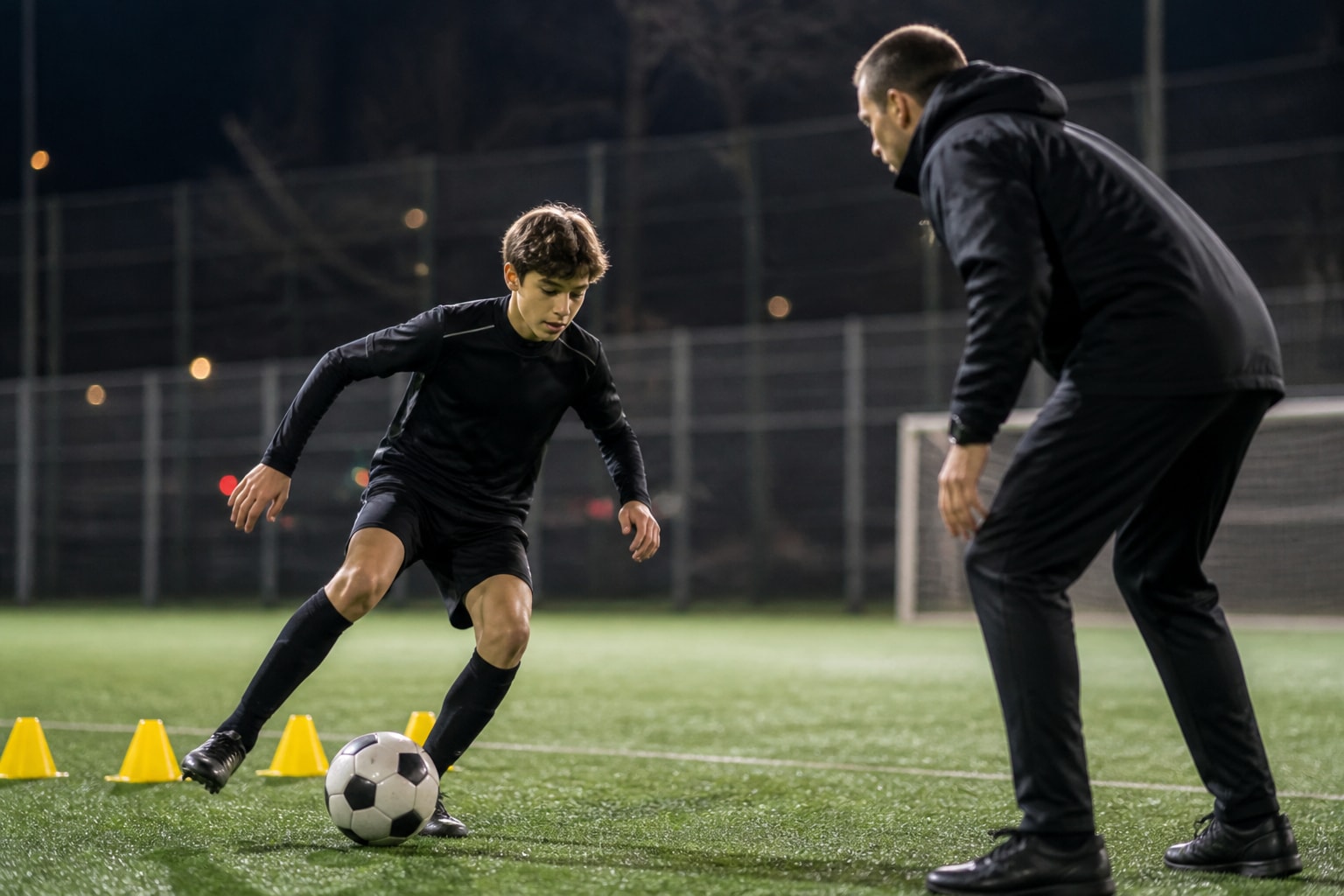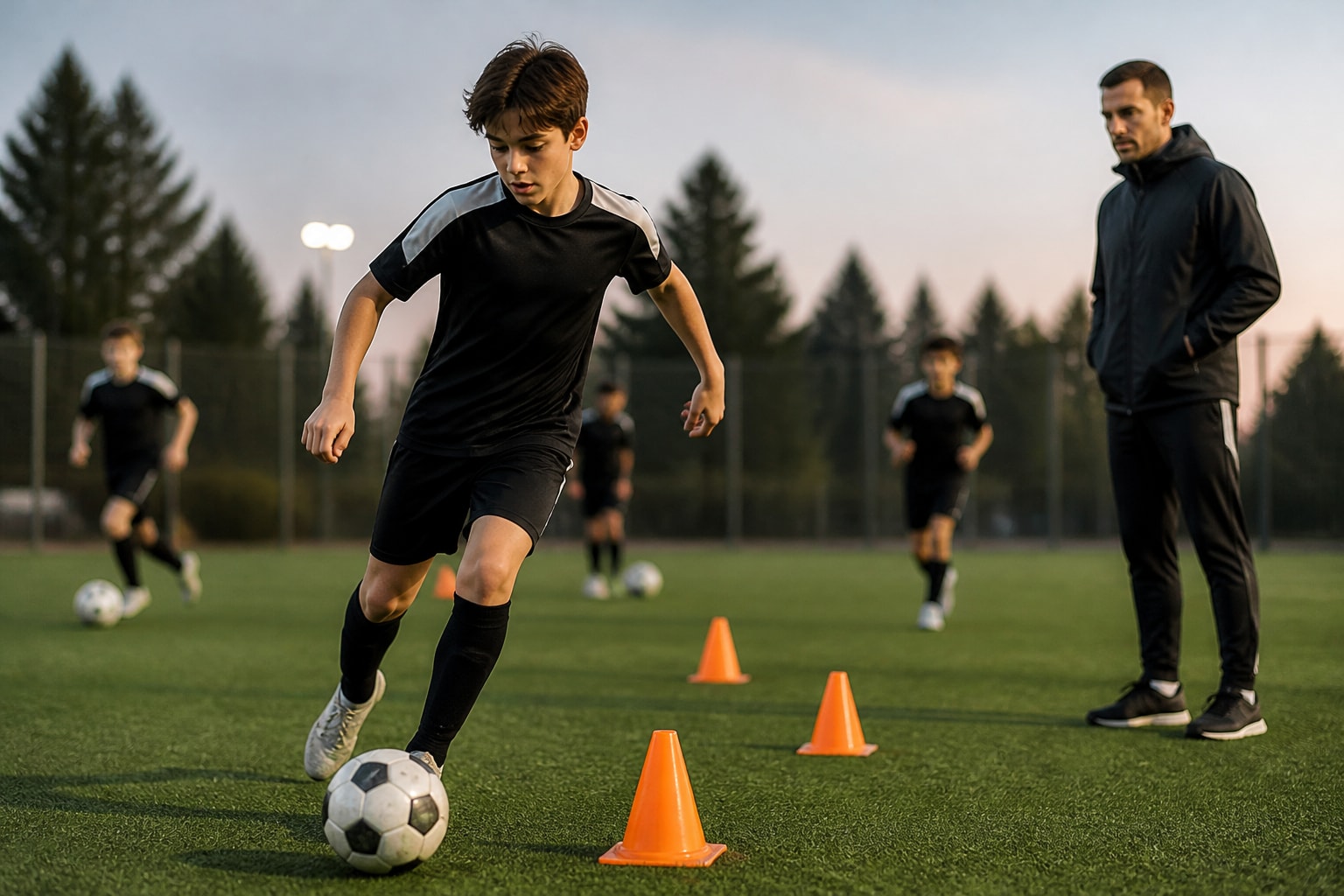
Finding the best soccer academy in Surrey BC requires more than just looking at flashy promotional materials or convenient locations. Parents in 2026 are seeking programs that deliver measurable skill development, competitive opportunities, and a professional environment that prepares young athletes for the next level. With Surrey's growing population and expanding sports infrastructure, the number of soccer training options has multiplied, making the selection process both more promising and more complex. Understanding what separates a truly elite academy from recreational programming is essential for making an informed decision that aligns with your child's goals and your family's values.
What Defines Elite Soccer Academy Training
The best soccer academy in Surrey BC operates on a foundation of structured player development rather than simply filling rosters. Elite academies follow recognized development frameworks that align with Long-Term Athlete Development principles, ensuring age-appropriate training that builds skills progressively while reducing injury risk and burnout.
The Four Pillars of Player Development
Quality academies structure their curriculum around four interconnected development areas that work in concert to create complete players:
Technical Development focuses on ball mastery, first touch, passing accuracy, shooting technique, and position-specific skills. This pillar demands high repetition in controlled environments before progressing to game-speed application.
Tactical Development teaches decision-making, spatial awareness, positioning, and game understanding. Players learn when to dribble versus pass, how to create and exploit space, and team shape principles.
Physical Development addresses speed, agility, strength, endurance, and coordination appropriate to each age group. Quality programs avoid early specialization injuries by following sport science research on youth athletic development.
Psychological Development builds mental resilience, confidence, focus, communication skills, and leadership qualities that extend beyond the pitch into academic and personal life.

Coaching Credentials That Matter
Coaching quality represents the single most important factor when evaluating the best soccer academy in Surrey BC. The Coaching Association of Canada provides clear guidelines for professional coaching standards that serious academies follow rigorously.
License Levels and What They Mean
| License Level | Training Hours | Typical Roles | Key Competencies |
|---|---|---|---|
| National A | 200+ hours | Head coaches, technical directors | Advanced tactics, periodization, talent identification |
| National B | 100-150 hours | Lead coaches, assistant directors | Game analysis, session planning, player evaluation |
| Soccer for Life | 30-40 hours | Grassroots coaches | Age-appropriate development, fun-focused learning |
All coaches at reputable academies should maintain current certifications, complete annual safe-sport training, and participate in ongoing professional development. Ask prospective academies for specific coach credentials, not vague claims about "experienced" or "qualified" staff.
The coaching staff should also demonstrate a clear coaching philosophy that parents can articulate after attending trial sessions. Consistency in approach across all age groups ensures players receive cohesive development as they advance through the academy system.
Competitive Pathways and League Affiliations
The best soccer academy in Surrey BC provides clear competitive pathways that match player ability and ambition. Understanding British Columbia's competitive structure helps parents evaluate whether an academy can deliver appropriate challenges.
Understanding BC's Competitive Landscape
Elite academies in BC typically participate in the BC Soccer Premier League, the province's top youth development competition. BCSPL offers the highest level of domestic competition and serves as the primary talent identification pool for provincial and national team selections.
Beyond league play, academies should offer:
- Tournament participation in recognized regional and national events
- Showcase opportunities where college scouts and professional club representatives attend
- International competition options for advanced players
- Clear advancement criteria between academy levels
The BC Soccer Academies Association governs academy-based youth soccer in the province and operates the Academy Super League. Membership in BCSAA demonstrates an academy's commitment to meeting recognized governance and quality standards.
Performance Tracking and Player Evaluation
Professional academies implement systematic player evaluation protocols that provide objective feedback beyond win-loss records. Parents should expect:
- Regular written progress reports detailing technical, tactical, physical, and psychological development
- Video analysis sessions where players review game footage with coaches
- Individual development plans with specific, measurable goals
- Transparent promotion criteria between age groups and skill levels
Training Methodology and Session Quality
Training session structure reveals an academy's true developmental priorities. The best soccer academy in Surrey BC maximizes contact time through purposeful, high-intensity sessions that optimize learning.
European-Style Training Philosophy
European soccer academies have refined youth development over decades, emphasizing technical excellence through high-repetition training. This approach contrasts with traditional North American models that historically prioritized athleticism and physical play over skill refinement.
Key characteristics of European-style training include:
- Ball-focused sessions where every player touches the ball hundreds of times per session
- Small-sided games that increase decision-making opportunities and touches
- Position-specific training that develops specialized skills alongside general soccer ability
- Periodization that strategically varies training intensity and focus throughout the season
Sessions should run 90 minutes minimum for competitive-level players, with structured warm-ups, technical work, tactical exercises, small-sided games, and deliberate cool-downs. Watch for coaches who actively coach during sessions rather than simply rolling out balls and refereeing scrimmages.
Training-to-Playing Ratio
Elite academies maintain at least a 3:1 training-to-playing ratio, meaning players spend three hours training for every hour of competitive match play. This ratio ensures sufficient repetition for skill development while providing competitive application opportunities.
Many recreational programs invert this ratio, playing multiple games weekly with minimal training. While games provide valuable experience, skill development occurs primarily through deliberate practice in training environments.
Facility Access and Training Environment
Quality facilities enhance training effectiveness and demonstrate an academy’s investment in player development. Surrey’s sports infrastructure continues expanding, with new community projects improving access to indoor turf and training spaces.
The best soccer academy in Surrey BC secures consistent access to appropriate facilities year-round. Evaluate facility quality based on these criteria:
- Indoor turf fields for year-round training regardless of weather
- Proper field dimensions that allow full tactical work, not just technical drills in confined spaces
- Equipment quality including sufficient balls, cones, goals, and training aids
- Changing facilities with secure storage and proper amenities
Surrey offers various training venues through the City of Surrey recreation system, though premier academies often secure exclusive facility partnerships that guarantee optimal training times and field conditions.
Safety and Risk Management
Professional academies implement comprehensive safety protocols including:
- Current first aid certification for all coaching staff
- Emergency action plans for each training venue
- Properly maintained equipment and playing surfaces
- Appropriate adult-to-player ratios during all activities
- Clear concussion protocols and return-to-play procedures
Ask potential academies to provide written safety policies and confirm all coaches have completed Respect in Sport certification or equivalent safe-sport training.
Program Structure and Age-Appropriate Development
The best soccer academy in Surrey BC tailors programming to each developmental stage, recognizing that eight-year-olds require fundamentally different training than sixteen-year-olds. Programs should align with established sport science research on youth athletic development.
Development Stages and Training Focus
| Age Group | Development Stage | Training Priorities | Session Characteristics |
|---|---|---|---|
| U6-U8 | FUNdamentals | Movement skills, basic coordination | Play-based, maximum touches, short activities |
| U9-U12 | Learning to Train | Technical foundation, soccer literacy | Repetition, small-sided games, individual skill emphasis |
| U13-U15 | Training to Train | Tactical sophistication, position specialization | Game-realistic scenarios, decision-making speed |
| U16-U18 | Training to Compete | Performance optimization, mental preparation | High-intensity, competitive simulation, leadership |
Quality academies resist the temptation to mimic professional training methods with young players. Early specialization, excessive competition, and adult training loads increase injury risk and decrease long-term athletic development.
Beyond Technical Skills: Character Development
The best soccer academy in Surrey BC recognizes that character development and life skills represent equally important outcomes as soccer ability. Programs should explicitly teach and reinforce values that extend beyond the pitch.
Leadership and Communication Training
Elite academies create opportunities for players to develop leadership skills through:
- Captain rotations that give multiple players leadership experience
- Player-led warm-ups and technical demonstrations
- Peer feedback sessions where teammates provide constructive evaluation
- Community service projects that build perspective and gratitude
Communication training includes verbal and non-verbal on-field communication, active listening skills, and conflict resolution techniques. These competencies directly enhance soccer performance while building life skills applicable to academic and career settings.
Resilience and Growth Mindset
Soccer inherently teaches resilience through failure, setbacks, and competitive disappointment. Quality academies frame these experiences as learning opportunities rather than negative outcomes. Coaches should model and explicitly teach growth mindset principles, helping players understand that ability develops through effort rather than being fixed at birth.
Parents should observe how coaches respond to mistakes during training. Do they create psychologically safe environments where players attempt challenging skills without fear of criticism? Or do they emphasize perfection and punish errors, inadvertently encouraging risk-averse play?
Parent Involvement and Communication
Professional academies maintain clear communication channels and appropriate boundaries for parent involvement. The best soccer academy in Surrey BC provides transparency while respecting coaching authority and creating healthy developmental environments.
What to Expect from Academy Communication
Parents should receive:
- Pre-season meetings outlining program philosophy, expectations, and season schedules
- Regular updates through email, team apps, or parent portals
- Scheduled parent-coach conferences (not sideline conversations immediately after matches)
- Clear policies on attendance, conduct, playing time, and advancement
- Financial transparency with no hidden fees or surprise costs
Beware of programs that promise specific outcomes like college scholarships or professional contracts. Ethical academies focus on development processes, not guaranteeing results beyond their control. For players pursuing elite football training and competitive pathways, realistic discussions about potential opportunities should be grounded in honest assessment of ability and commitment.
Healthy Parent Involvement
Quality academies encourage parent engagement while maintaining professional boundaries:
Appropriate involvement includes attending matches, volunteering for team activities, supporting practice attendance, providing nutritious meals, ensuring adequate sleep, and celebrating effort regardless of outcomes.
Inappropriate involvement includes coaching from the sidelines, questioning coaching decisions publicly, comparing players, pressuring for playing time, or making soccer the primary focus of parent-child relationship.
The academy should provide parent education resources covering topics like sports nutrition, injury prevention, managing competitive pressure, and supporting young athletes effectively.
Financial Considerations and Value Assessment
Academy soccer represents a significant financial investment. The best soccer academy in Surrey BC provides transparent pricing and delivers value proportional to costs.
Understanding Fee Structures
Academy fees typically include:
- Training sessions (frequency and duration)
- League registration and game fees
- Tournament entry fees for specific events
- Coaching staff costs
- Facility rental expenses
- Equipment and uniforms
- Administrative overhead
Clarify exactly what fees cover and what requires additional payment. Hidden costs for "optional" tournaments, team gear, or special training sessions can substantially exceed quoted base fees.
Evaluating Return on Investment
Value assessment extends beyond win-loss records to include:
- Coach-to-player ratios during training sessions
- Total training hours provided annually
- Coaching credentials and professional development
- Competitive opportunities at appropriate levels
- Player development outcomes measured through skill assessment
- College placement for graduating players (if applicable)
- Player retention rates year-over-year
Compare these metrics across academies rather than focusing solely on price. A moderately more expensive program delivering significantly more contact hours with better-credentialed coaches often provides superior value to cheaper alternatives with larger groups and less qualified staff.
Making the Decision: Trial Sessions and Evaluation
Before committing to any academy, attend trial sessions or guest training to evaluate fit. The best soccer academy in Surrey BC welcomes prospective families to observe or participate in training sessions.
What to Observe During Trials
Pay attention to these factors during trial sessions:
Player engagement: Are players actively participating with high energy, or standing in lines waiting for turns? Effective sessions maximize activity time and minimize passive waiting.
Coaching behavior: Do coaches demonstrate skills, provide specific feedback, and create positive learning environments? Or do they primarily criticize and control through fear?
Session organization: Are transitions between activities smooth, with minimal wasted time? Does each activity have a clear purpose that coaches can articulate?
Player behavior: Do players show respect for coaches, teammates, and facilities? Does the academy culture emphasize effort, improvement, and sportsmanship?
Facility conditions: Are fields properly maintained, with appropriate equipment in good repair? Do changing facilities meet basic cleanliness and safety standards?
Questions to Ask Academy Directors
Come prepared with specific questions that reveal program quality:
- What are the specific qualifications of coaches assigned to each age group?
- How many training sessions do players receive weekly, and what is the session length?
- What is the player-to-coach ratio during training sessions?
- How do you measure and communicate player development?
- What percentage of players advance to the next academy level each year?
- What are your player retention rates from season to season?
- How do you handle playing time distribution during competitive matches?
- What injury prevention protocols do you implement?
- How many players have progressed to college or professional opportunities in recent years?
Legitimate academies answer these questions directly with specific data rather than vague marketing language.
Choosing the best soccer academy in Surrey BC requires careful evaluation of coaching quality, development philosophy, competitive pathways, facilities, and program culture. Parents who invest time researching these factors position their young athletes for meaningful growth both on and off the pitch. At Strive Soccer Academy, we've brought European-style training methodology to Surrey, with fully licensed coaches (National A through Soccer for Life certifications) who focus on technical, tactical, physical, and psychological development through structured, high-intensity sessions. If you're ready to explore a program that prioritizes genuine player development over shortcuts, visit Strive Soccer Academy to learn how we're raising the standard for youth soccer training in British Columbia.