
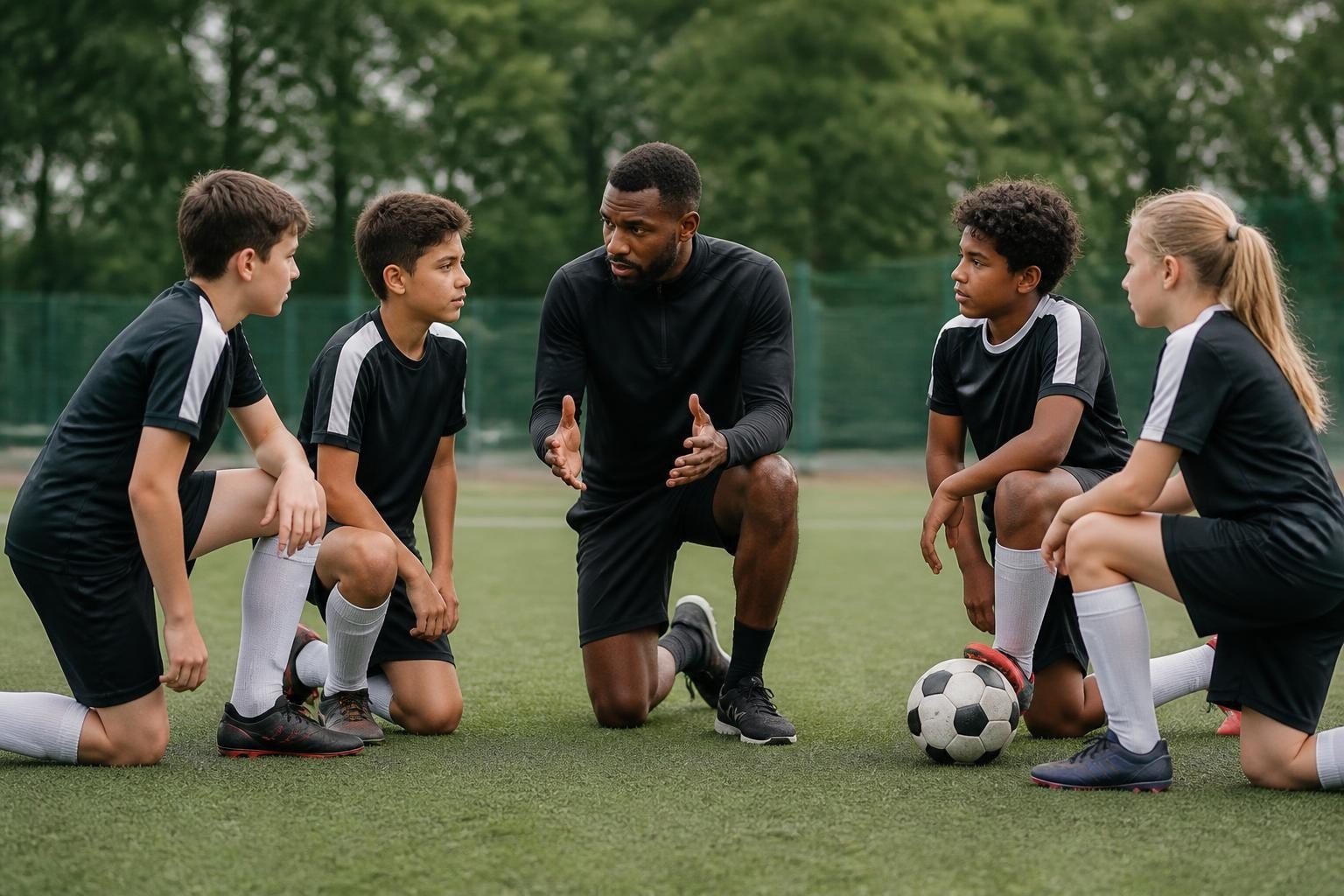
The landscape of youth soccer development has evolved dramatically over the past decade, with modern academies moving beyond simple skills training to embrace a holistic, total soccer academy philosophy. This comprehensive approach addresses every dimension of player growth, from ball mastery and game intelligence to physical conditioning and mental resilience. For parents seeking the best opportunities for their children, understanding what separates a true total soccer academy from conventional programs makes all the difference in choosing where to invest time, energy, and resources.
The Four Pillars of Total Soccer Academy Development
A genuine total soccer academy operates on four interconnected pillars that work in harmony to create well-rounded players. Each pillar carries equal weight, and neglecting any single dimension limits a player's potential ceiling.
Technical Excellence: The Foundation
Technical skills form the bedrock of every successful player's development. A total soccer academy prioritizes ball mastery, first touch, passing accuracy, and shooting technique through deliberate, progressive training. Players spend countless hours refining their ability to receive, control, and distribute the ball under varying degrees of pressure.
Core technical components include:
- Ball control with both feet in all directions
- Passing accuracy over short, medium, and long distances
- Dribbling techniques for beating defenders one-on-one
- Shooting mechanics from different angles and distances
- Heading technique for offensive and defensive situations
- Receiving skills under pressure
The best academies recognize that technical training must be age-appropriate and aligned with developmental stages. U.S. Soccer’s age-group guide provides valuable frameworks for structuring technical progressions that match cognitive and physical maturation.

Tactical Intelligence: Reading the Game
While technical ability opens doors, tactical understanding keeps them open. A total soccer academy develops players who think critically about positioning, spacing, timing, and decision-making. This cognitive dimension separates competent players from exceptional ones.
Tactical education begins with understanding individual roles and responsibilities, then expands to encompass team shape, transition moments, and strategic adjustments. Players learn to recognize patterns, anticipate opponent movements, and make split-second decisions that create advantages.
| Tactical Component | Youth Focus | Advanced Focus |
|---|---|---|
| Positioning | Basic spacing awareness | Dynamic positional rotation |
| Decision-making | When to pass vs. dribble | Complex pattern recognition |
| Team shape | Maintaining formation | Tactical flexibility |
| Transitions | Basic counter-attack | Coordinated pressing triggers |
Programs like Soccer Skills Training emphasize tactical awareness alongside technical development, ensuring players develop both the tools and the intelligence to use them effectively. The integration of these elements during training sessions accelerates learning and creates transfer to match situations.
Physical Development: Building Athletic Foundations
Modern soccer demands exceptional physical attributes. A total soccer academy addresses strength, speed, agility, endurance, and injury prevention through scientifically-designed conditioning programs tailored to youth development stages.
Physical training for young players requires careful calibration. Overemphasis on conditioning can lead to burnout and injury, while insufficient attention leaves players unprepared for competitive demands. The best academies follow evidence-based protocols that prioritize long-term athletic development over short-term performance gains.
Age-appropriate physical training includes:
- Foundation phase (U6-U10): Movement literacy, coordination, balance, and fundamental motor skills
- Development phase (U11-U14): Aerobic base, agility, basic strength through bodyweight exercises
- Specialization phase (U15+): Sport-specific conditioning, power development, advanced strength training
Research on injury-prevention programmes in youth football demonstrates that systematic warm-up protocols and age-appropriate conditioning significantly reduce injury rates while improving performance markers. A total soccer academy integrates these findings into daily training routines.
Psychological Resilience: The Mental Game
The psychological pillar receives less attention than it deserves, yet it often determines who reaches elite levels. A total soccer academy cultivates mental toughness, focus, confidence, and emotional regulation through deliberate practice and coaching.
Young players face intense pressure, from demanding coaches to critical parents to their own internal expectations. Those who develop psychological skills navigate these challenges more effectively, maintaining performance under stress and bouncing back from setbacks.
Mental skills training encompasses goal-setting, visualization, self-talk management, concentration techniques, and stress management. Coaches who understand developmental psychology create environments where players feel safe to take risks, make mistakes, and grow from failures.
Training Methodologies That Define Total Soccer Academy Programs
The methodologies employed separate elite academies from recreational programs. A total soccer academy implements research-backed training approaches that maximize learning efficiency and player engagement.
Small-Sided Games: The Learning Laboratory
Small-sided games (SSGs) have revolutionized youth development by creating higher-intensity learning environments with more touches, decisions, and actions per player. Research on small-sided games and creativity confirms that reduced player numbers increase technical actions, tactical decisions, and creative problem-solving.
A total soccer academy structures SSGs deliberately, manipulating field dimensions, player numbers, rules, and objectives to target specific outcomes. A 4v4 game on a narrow field emphasizes quick passing and movement, while 6v6 on a wider pitch develops crossing and wide play.
Periodization: Strategic Training Cycles
Elite academies don't train the same way year-round. A total soccer academy implements periodization, cycling through preparation, competition, and recovery phases to optimize performance and prevent burnout.
Periodization for youth players differs from professional models, emphasizing skill acquisition during off-season blocks and maintaining technical sharpness during competitive windows. This approach prevents the plateau effect common in programs that maintain constant training intensity.
| Period | Focus | Intensity | Volume |
|---|---|---|---|
| Preparation | Technical foundations, physical base | Moderate | High |
| Pre-competition | Tactical integration, match sharpness | High | Moderate |
| Competition | Performance, recovery | Variable | Low-Moderate |
| Transition | Active recovery, skill variety | Low | Low |
Position-Specific Training: Specialized Development
As players mature, a total soccer academy introduces position-specific training to develop specialized skills. Goalkeepers, defenders, midfielders, and forwards each require unique technical abilities, tactical understanding, and physical attributes.
Position-specific work doesn't mean abandoning versatility. The best academies maintain broad technical development while adding specialized elements. A center-back still practices dribbling and creativity, but also dedicates time to defensive heading, positioning, and distribution under pressure.
Coach Education and Licensing Standards
The quality of coaching determines the ceiling of player development. A total soccer academy invests heavily in coach education, ensuring staff members possess both knowledge and pedagogical skills to facilitate learning.
Professional licensing through organizations like Canada Soccer, UEFA, and U.S. Soccer provides standardized education in technical coaching, tactical analysis, session design, and player psychology. These certifications represent hundreds of hours of coursework, practical experience, and ongoing professional development.
Key coaching competencies include:
- Designing age-appropriate training sessions
- Providing effective feedback that promotes learning
- Managing group dynamics and individual player needs
- Analyzing game situations and making tactical adjustments
- Understanding child development and safeguarding
Beyond licenses, exceptional coaches demonstrate passion, patience, and genuine care for player welfare. They balance challenge with support, pushing players beyond comfort zones while maintaining psychological safety.
Performance Monitoring and Player Assessment
Data-driven decision-making has become standard in total soccer academy operations. Modern technology enables precise tracking of physical metrics, technical execution, and tactical behaviors that inform coaching decisions and individual development plans.
GPS tracking systems monitor distance covered, sprint speeds, acceleration patterns, and workload distribution. This information helps coaches manage training loads, prevent overuse injuries, and identify physical development areas. Spatio-temporal analytics frameworks provide sophisticated tools for analyzing movement patterns and tactical positioning.
Video analysis allows players to review their performances, recognizing successful patterns and identifying improvement areas. Self-reflection accelerated by visual feedback deepens learning and develops the analytical skills necessary for continuous improvement.
Assessment Without Harmful Selection Pressure
A total soccer academy assesses player progress regularly but avoids the pitfalls of early talent identification systems that exclude late developers. Research on talent identification in football reveals systematic biases toward physically mature players and those born early in selection years, causing academies to overlook potentially exceptional athletes.
Progressive academies focus on development over selection during foundational years, providing feedback that guides improvement rather than determining who belongs. This approach creates inclusive environments where more players reach their potential.
Creating the Optimal Learning Environment
Physical facilities matter, but culture determines whether players thrive. A total soccer academy deliberately constructs an environment where challenge, support, autonomy, and belonging coexist.
Environmental factors that accelerate development:
- Challenge-supportive climate: Players attempt difficult skills without fear of criticism
- Mastery orientation: Success defined by personal improvement rather than comparison to others
- Autonomy support: Players participate in goal-setting and decision-making processes
- Relatedness: Strong bonds between teammates and trust in coaching staff
Parents play crucial roles in maintaining healthy environments. Those who emphasize effort over outcomes, support coach decisions, and manage their own emotional responses create conditions where children develop intrinsic motivation and resilience.
Integration With Educational and Social Development
Elite youth development doesn't occur in isolation from education and social growth. A total soccer academy recognizes that players are students and young people first, athletes second. Programs that demand excessive time commitments or create unhealthy pressure jeopardize holistic development.
The best academies partner with families and schools to ensure soccer enhances rather than dominates young lives. Flexible scheduling, academic support, and rest periods during exam seasons demonstrate commitment to complete personal development.
Social connections formed through soccer provide lasting benefits. Teammates become friends who support each other through challenges on and off the field. These relationships teach collaboration, conflict resolution, and empathy while creating positive memories that transcend winning and losing.
Pathways Beyond the Academy
A total soccer academy prepares players for multiple futures. While some progress to college programs, professional contracts, or national teams, others transition to recreational play while carrying lessons learned into other pursuits.
Transparent pathway discussions help players and families set realistic expectations. Understanding the statistical realities of professional soccer allows families to make informed decisions about time investment and financial commitments while maintaining hope and ambition.
Programs maintain connections with college coaches, scout networks, and higher-level academies to facilitate transitions for players ready to advance. These relationships create opportunities while providing realistic feedback about required improvement areas.
Parent Engagement in Total Soccer Academy Programs
The partnership between academy staff and parents determines program success. A total soccer academy educates parents about development principles, communicates expectations clearly, and invites appropriate involvement while maintaining professional boundaries.
Regular communication keeps families informed about player progress, upcoming events, and program changes. Parent education sessions covering topics like growth mindset, nutrition, recovery, and managing competitive stress equip families to support development effectively.
Boundaries protect both players and programs. Coaching decisions remain with qualified staff, feedback flows through established channels, and sideline behavior maintains positive, encouraging tones. These structures create consistency and professionalism that benefit everyone.
Building complete soccer players requires addressing technical skills, tactical intelligence, physical conditioning, and psychological resilience through integrated, age-appropriate programming. The total soccer academy model, grounded in research and proven methodologies, creates environments where young athletes thrive both on and off the field. Strive Soccer Academy brings this comprehensive European-style development philosophy to Surrey, BC, with fully licensed coaches dedicated to nurturing every dimension of player growth. If you're ready to give your child access to professional training that develops skills, builds character, and creates real opportunities, explore what makes our approach different.


