
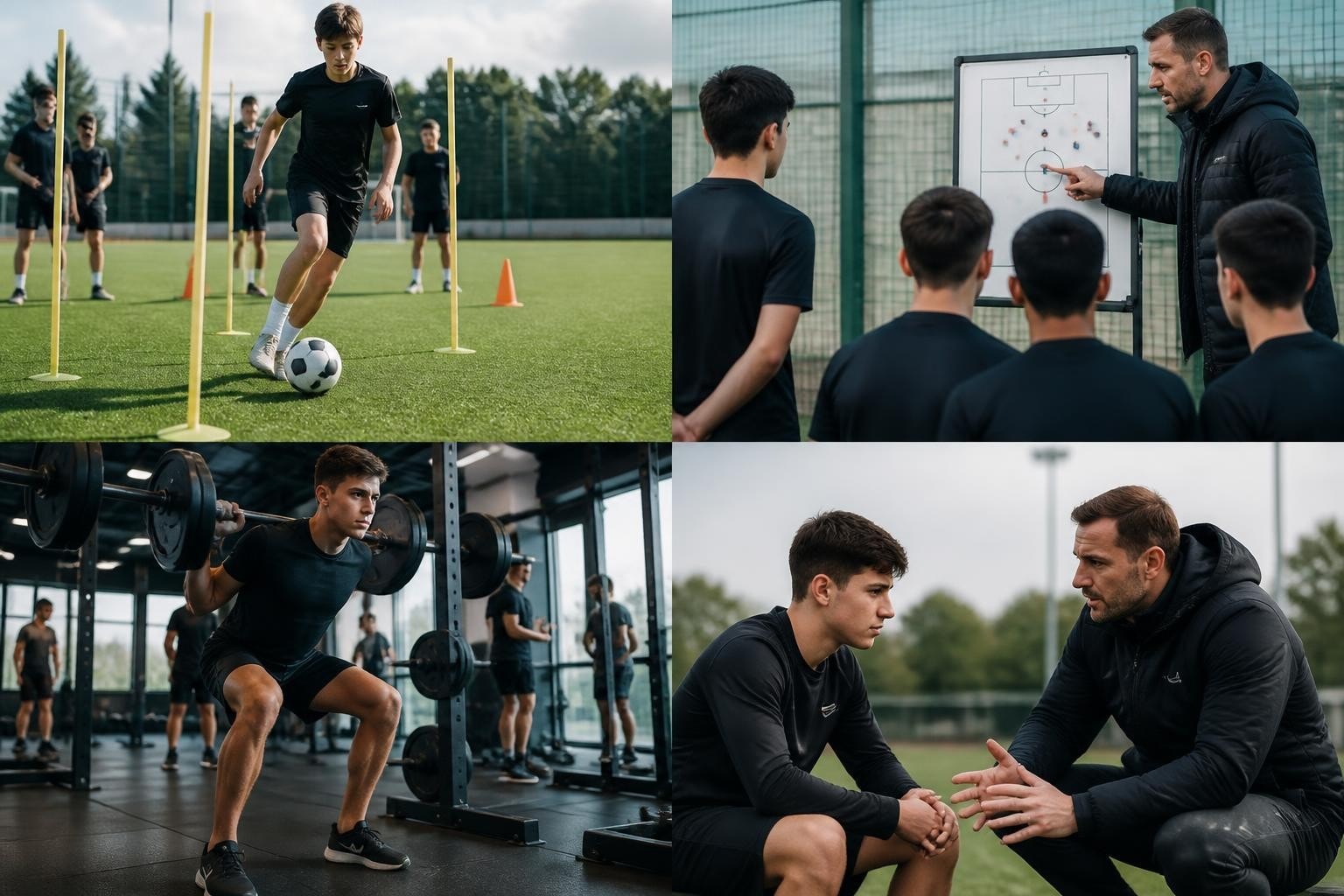
The modern soccer training center has evolved far beyond simple grass fields and painted lines. Today's elite facilities represent a comprehensive ecosystem designed to develop complete players through integrated technical, tactical, physical, and psychological training. Parents and young athletes seeking serious development must understand what separates a true soccer training center from recreational programs, and how European-style methodologies are reshaping youth development across North America.
Essential Components of a World-Class Soccer Training Center
Building a successful soccer training center requires careful attention to both infrastructure and programming. The physical environment sets the foundation for quality training, while the coaching philosophy determines how effectively that environment is utilized.
Facility Design and Infrastructure
A properly designed soccer training center begins with versatile playing surfaces that accommodate year-round training regardless of weather conditions. Indoor turf facilities enable consistent technical work during winter months, while outdoor grass pitches develop players' adaptability to game-day conditions. Research from ASHRAE’s design guidance for education facilities emphasizes the importance of proper ventilation and climate control in indoor training environments to protect athlete health and optimize performance.
Critical infrastructure elements include:
- Multiple training surfaces (indoor turf, outdoor grass, small-sided game areas)
- Professional-grade lighting systems for evening sessions
- Video analysis rooms for tactical review
- Strength and conditioning facilities
- Medical and rehabilitation spaces
- Climate-controlled changing facilities
The best soccer training center designs incorporate flexible spaces that can be reconfigured for different age groups and training objectives. Partition systems allow large indoor facilities to host simultaneous sessions for multiple teams while maintaining proper coach-to-player ratios.
Coaching Credentials and Development Philosophy
Coaching quality represents the single most important factor in any soccer training center's success. Fully licensed coaches bring structured methodologies, age-appropriate progressions, and evidence-based training practices that accelerate player development. Canada Soccer's licensing pathway ensures coaches understand long-term athlete development principles rather than simply focusing on short-term wins.

The European training philosophy emphasizes individual technical mastery before tactical complexity. Young players spend thousands of hours on ball manipulation, first touch, and movement patterns before being introduced to sophisticated positional play. This foundation-first approach contrasts sharply with traditional North American models that often prioritize team tactics over individual skill development.
| Development Model | Technical Focus | Tactical Introduction | Primary Age Group |
|---|---|---|---|
| European Style | 60-70% of training time | Gradual (ages 10+) | U6-U12 foundation |
| Traditional North American | 30-40% of training time | Early (ages 8+) | U8-U14 emphasis |
| Hybrid Modern | 50-60% of training time | Progressive (ages 9+) | U7-U13 core |
The Four Pillars of Player Development
Elite soccer training centers organize their programming around four interconnected development areas. This holistic approach ensures young athletes grow as complete players rather than specialists in isolated skills.
Technical Development and Ball Mastery
Technical training forms the foundation of everything a soccer player does on the pitch. A comprehensive soccer training center dedicates substantial time to repetitive ball work, ensuring movements become automatic under pressure. Players must master receiving, passing, dribbling, and striking techniques with both feet before progressing to game-speed applications.
Modern technical curricula break down complex skills into progressive steps:
- Isolated technique practice (static environment)
- Technique under movement (dynamic environment)
- Technique with passive opposition (decision-making introduction)
- Technique in small-sided games (full-pressure application)
- Technique in 11v11 scenarios (game-realistic context)
This progression ensures proper biomechanics are established before speed and pressure are introduced. Soccer academy training programs that rush this sequence often produce players who revert to poor technique under match pressure.
Tactical Understanding and Game Intelligence
Tactical development teaches players when and why to use their technical skills. A quality soccer training center introduces tactical concepts through problem-solving activities rather than rigid position-specific drills. Players learn to read the game, recognize patterns, and make appropriate decisions based on visual cues.
Age-appropriate tactical progressions include:
- U6-U8: Basic spatial awareness and ball-oriented movement
- U9-U11: Understanding of width, depth, and support positions
- U12-U14: Position-specific responsibilities and transition moments
- U15-U17: Advanced combination play and team shape
- U18+: Opponent-specific adjustments and set-piece organization
The best soccer training center environments use small-sided games extensively because they increase decision-making repetitions. A player in a 4v4 game makes tactical decisions every 8-12 seconds, compared to every 45-60 seconds in traditional 11v11 practice matches. Small-sided games naturally create the cognitive load necessary for tactical development while maintaining high engagement levels.
Physical Development and Injury Prevention
Physical preparation at a soccer training center must align with biological growth patterns rather than chronological age. Speed, agility, strength, and endurance work should complement technical training without overwhelming young bodies still developing coordination and motor patterns.
Evidence from systematic reviews on injury prevention programs demonstrates that multi-component training incorporating balance, strength, and neuromuscular control significantly reduces injury rates in youth soccer. A responsible soccer training center integrates these elements into regular sessions rather than treating them as separate conditioning work.
| Age Range | Primary Physical Focus | Training Methods | Injury Prevention Priority |
|---|---|---|---|
| 6-9 years | Movement literacy | Games-based activities | Joint stability |
| 10-12 years | Speed and coordination | Agility ladders, reaction drills | Landing mechanics |
| 13-15 years | Strength foundation | Bodyweight resistance | Hamstring protocols |
| 16-18 years | Power and endurance | Loaded movements, interval training | Load management |
Research on hamstring strain prevention in football shows that specific eccentric strengthening protocols reduce injury rates by up to 51% when implemented consistently. Forward-thinking facilities incorporate these evidence-based practices into their programming.
Psychological Growth and Mental Resilience
The psychological component of player development often receives insufficient attention at traditional soccer training centers despite its critical importance. Mental skills training should address confidence building, focus development, emotional regulation, and growth mindset cultivation throughout a player's development journey.
Effective psychological development strategies include:
- Structured reflection after training sessions and matches
- Goal-setting workshops that emphasize process over outcomes
- Pressure training that simulates match-day emotional states
- Individual mentoring relationships with licensed coaches
- Parent education on supportive communication patterns
European academies have long recognized that technical ability alone cannot guarantee success. Players must develop the mental fortitude to perform under pressure, recover from mistakes quickly, and maintain motivation through inevitable setbacks. A comprehensive soccer training center creates intentional opportunities for these psychological skills to develop within a supportive environment.
Technology Integration and Performance Tracking
Modern soccer training centers leverage technology to accelerate development and provide objective feedback. Video analysis, GPS tracking, and performance monitoring systems help coaches individualize training loads and identify areas requiring additional attention.
Video Analysis and Tactical Review
Video review transforms abstract coaching feedback into concrete visual evidence. Players see exactly what coaches describe, accelerating their understanding of tactical concepts and technical corrections. The best soccer training center facilities maintain video libraries organized by player, position, and skill category.
Analysis sessions should be:
- Brief (5-10 minutes maximum for youth players)
- Specific (focus on 1-2 teaching points)
- Balanced (highlight successes alongside areas for improvement)
- Action-oriented (end with clear practice objectives)
The challenges in assessing quality of electronic performance systems require careful validation before investing in tracking technology. Not all systems provide equally accurate data, and implementation without proper coach training often yields minimal benefit.
GPS and Workload Monitoring
Wearable GPS technology enables soccer training centers to quantify physical outputs during training sessions. Coaches track total distance, high-speed running, sprint counts, and acceleration/deceleration events to ensure appropriate training loads for different age groups.
Effective workload monitoring prevents both under-training and overuse injuries. Youth players require progressive exposure to physical demands, with careful attention to weekly and monthly load patterns. A data-informed soccer training center adjusts training intensity based on individual player responses rather than applying one-size-fits-all approaches.
Nutrition and Recovery Protocols
Elite player development requires attention to what happens outside formal training sessions. A complete soccer training center educates players and families about nutrition, hydration, sleep, and recovery practices that support optimal performance.
Evidence-Based Nutrition Guidelines
The UEFA expert group statement on nutrition in elite football provides specific recommendations for training days, match days, and recovery periods. Young athletes require adequate carbohydrate intake to fuel high-intensity training, protein for muscle development and repair, and proper hydration throughout the day.
Daily nutrition framework for youth soccer players:
- Pre-training: Carbohydrate-rich meal 2-3 hours before session
- During training: Water or electrolyte beverage for sessions over 60 minutes
- Post-training: Mixed carbohydrate and protein within 30-60 minutes
- Throughout day: Balanced meals emphasizing whole foods
- Evening: Adequate calories to support growth and recovery
A progressive soccer training center partners with sports nutritionists to provide age-appropriate guidance that supports development without creating unhealthy relationships with food. Education focuses on performance benefits rather than weight management for growing athletes.
Recovery and Regeneration Strategies
Recovery practices separate good soccer training centers from great ones. Young athletes need structured recovery protocols that include proper cool-down routines, stretching, foam rolling, and adequate sleep to consolidate learning and repair tissue damage.
Sleep represents the most critical recovery tool available to youth athletes. Research consistently shows that adolescents require 8-10 hours of sleep nightly for optimal physical and cognitive development. Training schedules that interfere with adequate sleep ultimately compromise development regardless of session quality.
Selecting the Right Soccer Training Center
Parents evaluating options should conduct thorough research beyond facility tours and marketing materials. The right soccer training center aligns with your athlete's current ability level, developmental goals, and family values.
Key Evaluation Criteria
When visiting potential facilities, observe actual training sessions rather than relying solely on programmatic descriptions. Watch coach-player interactions, session organization, player engagement levels, and the balance between instruction and practice time.
Critical questions to ask:
- What coaching licenses do staff hold, and what continuing education do they pursue?
- How is the curriculum structured across age groups and skill levels?
- What is the coach-to-player ratio during training sessions?
- How do you communicate player progress to parents?
- What injury prevention protocols are integrated into programming?
- How do you handle players at different developmental speeds?
- What pathways exist for players as they age through the program?
A quality soccer training center welcomes these questions and provides detailed, evidence-based answers. Facilities that rely on vague promises or emphasize competitive results over developmental processes may not prioritize individual player growth.
Philosophy and Culture Fit
Beyond credentials and facilities, assess whether the soccer training center's philosophy matches your family's values. Some programs emphasize early specialization and intensive competition, while others prioritize multi-sport participation and age-appropriate challenge levels. Youth soccer training programs should support your athlete's overall development rather than compromising education, family time, or other interests.
Visit multiple sessions to observe the emotional tone coaches create. Do they teach through encouragement and positive reinforcement, or rely on criticism and comparison? Young athletes develop best in supportive environments where mistakes are treated as learning opportunities rather than failures.
Long-Term Development Versus Short-Term Results
The most challenging aspect of youth soccer development involves resisting the temptation to prioritize immediate competitive success over long-term growth. A development-focused soccer training center sometimes produces teams that lose matches in the short term while building superior skills for the future.
The Development Timeline Reality
Technical mastery requires approximately 10,000 hours of deliberate practice distributed over many years. Players who dominate at age 10 through physical maturity advantages often struggle at age 16 when technical gaps become apparent. Conversely, technically skilled players who develop later physically frequently emerge as superior athletes by late adolescence.
Developmental milestones by age group:
- U6-U9: Ball mastery foundation, movement literacy, love of the game
- U10-U12: Technical refinement, tactical introduction, competitive resilience
- U13-U15: Positional specialization, physical development, decision-making speed
- U16-U18: Performance optimization, mental toughness, tactical sophistication
Parents should evaluate a soccer training center based on age-appropriate objectives rather than win-loss records. The facility that produces technically excellent players who think critically about the game creates more long-term success than programs focused solely on weekend results.
Player Pathway Considerations
A complete soccer training center provides clear progression pathways as players develop. This might include multiple training groups within each age category, partnerships with higher-level clubs, or connections to college recruitment networks. Understanding where your athlete might progress after several years of development helps ensure the program supports their long-term goals.
For players aspiring to elite soccer opportunities, ask about the facility's track record of player advancement. How many athletes have progressed to provincial teams, national programs, or collegiate soccer? While past success doesn't guarantee future results, it demonstrates the program's ability to develop players beyond recreational levels.
Specialized Training Components
Advanced soccer training centers offer specialized programming beyond standard team training. These additional components accelerate development in specific areas while maintaining the holistic approach necessary for complete player growth.
Goalkeeper-Specific Development
Goalkeepers require specialized training that addresses unique technical, tactical, and psychological demands. Position-specific sessions should begin around age 10-11 and gradually increase in frequency as players commit to the position. A comprehensive soccer training center employs goalkeeper coaches who understand developmental progressions specific to this position.
Individual Skills Training
While team training builds tactical understanding and game application, individual technical sessions provide the repetitions necessary for skill mastery. Soccer high performance training programs create intensive environments where players receive concentrated technical work and immediate feedback to accelerate development.
These focused sessions complement regular team training rather than replacing it. Players benefit most from a balanced approach that combines individual technical work, small-group tactical training, and full-team game application throughout their development journey.
The right soccer training center transforms young athletes through evidence-based programming that develops technical excellence, tactical intelligence, physical capability, and mental resilience. By prioritizing long-term development over short-term results and integrating European methodologies with North American innovation, elite facilities create complete players prepared for success at every level. Strive Soccer Academy brings this comprehensive approach to Surrey, BC, with fully licensed coaches delivering integrated technical, tactical, physical, and psychological development that builds both exceptional players and exceptional people.


