
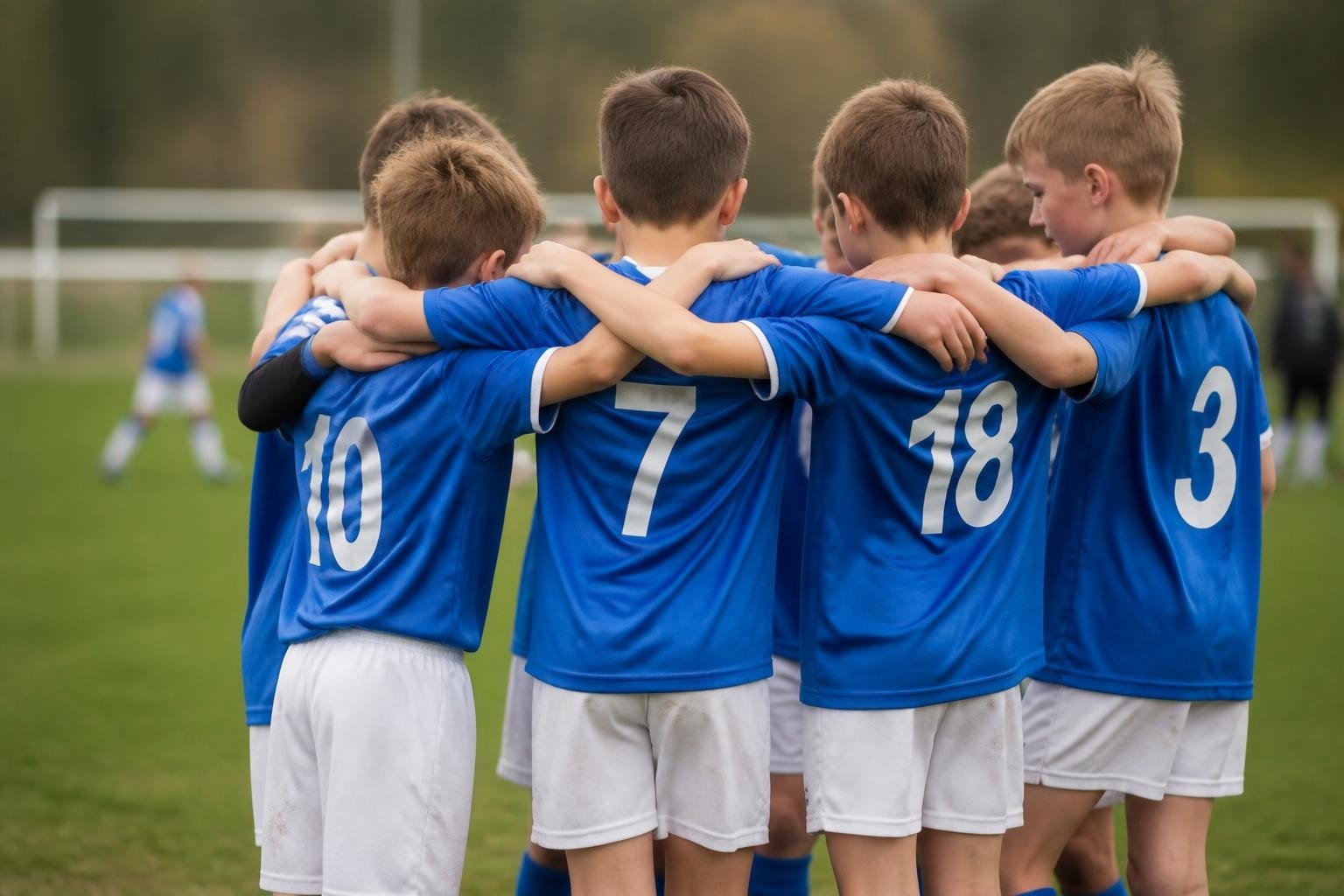
The relationship between soccer teammates extends far beyond simply sharing the same jersey on match day. For young athletes, these connections shape not only their performance on the pitch but also their personal development, resilience, and long-term love of the game. Parents often focus on individual skill development, yet the ability to connect, communicate, and collaborate with teammates represents one of the most crucial elements of soccer success at every level.
Understanding the Foundation of Strong Teammate Relationships
Building meaningful connections between soccer teammates requires intentional effort from players, coaches, and parents alike. The foundation begins with mutual respect and shared objectives. When young athletes understand that their individual success depends on collective achievement, they begin to view teammates as partners rather than competitors.
Trust forms the cornerstone of effective teammate relationships. Players must believe their teammates will make the right runs, cover defensive gaps, and support them during challenging moments. This trust doesn't develop overnight. It builds through consistent training, shared experiences, and repeated exposure to pressure situations where players learn to rely on one another.
The Four Pillars of Teammate Development
Research has consistently shown that successful teammate relationships develop across multiple dimensions. These pillars work together to create cohesive, high-functioning teams:
- Communication: Verbal and non-verbal signals that coordinate movement and decision-making
- Role Clarity: Understanding individual responsibilities within the team structure
- Shared Leadership: Distributing leadership responsibilities among multiple players
- Collective Efficacy: The group's belief in their ability to succeed together
Each pillar requires dedicated attention throughout a player's development. Recent research on team cohesion profiles demonstrates that teams with higher cohesion show improved mental skills and better stress management capabilities, particularly important for youth academy environments.

Communication Patterns That Strengthen Team Bonds
Effective communication represents the lifeblood of successful soccer teammates. On the pitch, players must process information rapidly and convey intentions clearly. Off the field, communication builds the interpersonal bonds that translate into on-field chemistry.
Verbal Communication During Play
Young players often struggle with the volume and frequency of communication needed during matches. Effective verbal communication includes:
- Directional cues: "Man on," "Turn," "Time"
- Positioning instructions: "Drop," "Push up," "Shift left"
- Encouragement: Positive reinforcement after mistakes
- Tactical adjustments: Quick observations about opponent patterns
The best soccer teammates develop a shared vocabulary that allows for efficient information exchange. At Strive Soccer Academy, coaches emphasize communication drills that simulate match pressure, helping players develop the confidence to vocalize during critical moments.
Non-Verbal Understanding
Beyond words, elite soccer teammates read body language, positioning, and movement patterns. This non-verbal communication develops through repeated exposure to teammates' tendencies. A midfielder learns when their striker prefers balls to feet versus runs in behind. Defenders recognize subtle positioning shifts that signal pressing triggers.
| Communication Type | Purpose | Development Timeline |
|---|---|---|
| Basic Calls | Safety and awareness | 3-6 months |
| Tactical Vocabulary | Coordinated movement | 6-12 months |
| Non-Verbal Cues | Advanced anticipation | 12-24 months |
| Intuitive Understanding | Seamless chemistry | 24+ months |
These timelines vary based on training frequency and quality, but they illustrate why long-term teammate relationships provide competitive advantages. Studies on tactical football training show that team-building interventions embedded within technical sessions significantly improve communication and cohesion.
Building Chemistry Through Shared Experiences
Chemistry between soccer teammates doesn't emerge from skill alone. It develops through shared challenges, celebrations, and setbacks. Parents can support this process by encouraging their athletes to engage fully in team activities beyond required training sessions.
Challenging situations accelerate bonding. When teammates face adversity together, whether a difficult opponent, weather conditions, or a deficit on the scoreboard, they develop resilience as a unit. These experiences create shared memories that strengthen relationships and build trust for future challenges.
Training Environment Impact
The quality and structure of training sessions directly influence how soccer teammates connect. Professional academies prioritize small-sided games and position-specific work that requires constant interaction. Players learn to solve problems together, developing the cognitive connections that support intuitive play during matches.
Modern training philosophies emphasize game-like scenarios that replicate match conditions. When players repeatedly navigate these situations together, they develop pattern recognition for teammate movements and decision-making tendencies.
Leadership Distribution Among Teammates
Traditional sports culture often emphasizes the captain's armband and singular leadership. However, research using social-network analysis reveals that successful teams feature distributed leadership where multiple players contribute based on situation and expertise.
Formal and Informal Leadership Roles
Soccer teammates benefit when leadership emerges organically across different contexts:
- Technical leaders: Players with exceptional skill who demonstrate proper technique
- Vocal leaders: Communicators who organize teammates during play
- Emotional leaders: Players who maintain composure and encourage others
- Tactical leaders: Those who read the game and adjust team shape
Young players should understand that leadership doesn't require a title. Every teammate can lead through work ethic, positive attitude, and support for others. This perspective democratizes influence and empowers all players to contribute beyond their technical abilities.
Peer-to-Peer Accountability
The strongest teammate relationships feature mutual accountability. Players feel comfortable challenging each other to maintain standards without creating conflict. This requires psychological safety, where mistakes are learning opportunities rather than reasons for criticism.
Parents play a crucial role by modeling constructive feedback at home. When young athletes see disagreement handled respectfully, they're more likely to navigate teammate conflicts productively.
Tactical Understanding and Positional Relationships
Technical skill draws attention, but tactical understanding determines how effectively soccer teammates combine their abilities. Players must comprehend spacing, timing, and movement patterns that complement their teammates' strengths.
Position-Specific Partnerships
Certain positions develop particularly strong bonds due to constant interaction:
- Center-back partnerships: Coordinating defensive coverage and distribution
- Full-back and winger combinations: Overlapping runs and defensive transitions
- Midfield trios: Distributing ball retention and pressing responsibilities
- Striker pairs: Creating space and finishing opportunities for each other
Analysis from UEFA EURO 2024 demonstrates how elite teams structure these partnerships through detailed tactical preparation. While youth players operate at different levels, the principles of positional understanding remain constant.
Reading Teammate Tendencies
Advanced players develop mental models of their teammates' preferences and capabilities. They recognize which players excel under pressure, who prefers their left foot, and who times runs into the box consistently. This knowledge allows for quicker decision-making and more effective combination play.
Developing this awareness requires focused attention during training. Rather than simply completing drills, players should actively observe teammate behaviors and adapt their own play accordingly. Coaches facilitate this learning by highlighting successful combinations and explaining why certain partnerships work effectively.
Cultural and Personality Diversity in Team Dynamics
Modern soccer features increasingly diverse teams with players from various cultural backgrounds, personalities, and playing styles. Soccer teammates who navigate this diversity effectively gain competitive advantages through varied perspectives and approaches.
Bridging Communication Styles
Players from different backgrounds may communicate differently on the pitch. Some cultures emphasize vocal, direct feedback, while others prefer subtle, indirect cues. Understanding these differences prevents misinterpretation and conflict.
Youth academies in diverse communities like Surrey, BC, naturally expose players to various communication styles. Parents can enhance this learning by encouraging curiosity about teammates' backgrounds and celebrating the strengths that diversity brings to team performance.
Complementary Playing Styles
The best teams feature players with complementary attributes rather than identical profiles. Aggressive pressers need composed passers. Creative playmakers need reliable defensive coverage. Soccer teammates learn to appreciate how different playing styles combine to create effective team performance.
| Playing Style | Complementary Teammate | Combined Benefit |
|---|---|---|
| Aggressive presser | Composed distributor | Winning possession + quality restart |
| Creative dribbler | Clinical finisher | Chance creation + conversion |
| Defensive anchor | Box-to-box midfielder | Stability + attacking threat |
| Overlapping full-back | Inverted winger | Width + central penetration |
Mental and Emotional Support Systems
The relationship between soccer teammates extends into mental and emotional domains that significantly impact performance and well-being. Recent FIFPRO reporting on player welfare emphasizes how teammate support networks protect against stress and burnout, even at youth levels.
Navigating Performance Pressure Together
Young athletes face increasing pressure from multiple sources: parental expectations, scholarship opportunities, and social media visibility. Soccer teammates who support each other through these pressures develop resilience and maintain healthier relationships with the sport.
Teammates provide unique understanding. Unlike parents, coaches, or friends outside the sport, teammates share the same challenges and experiences. This common ground creates space for authentic support and perspective during difficult periods.
Celebrating Individual and Collective Success
Healthy teammate relationships feature genuine celebration of both personal and team achievements. When a player scores, teammates celebrate not from obligation but from authentic happiness for their success. This requires team cultures that minimize jealousy and emphasize collective progress.
Parents influence this dynamic significantly. Athletes whose parents celebrate team success regardless of individual performance are more likely to develop positive teammate relationships. Conversely, young players who hear constant focus on personal statistics may struggle to connect authentically with teammates.
Measuring Chemistry and Connection
Modern analytics attempt to quantify the "chemistry" between soccer teammates through various metrics. Research on player combinations and duo effectiveness examines passing networks, spatial coordination, and outcome-based statistics to identify successful partnerships.
Observable Indicators of Strong Teammate Bonds
While data provides insights, coaches and parents can observe several indicators of positive teammate relationships:
- Body language during mistakes: Encouragement rather than frustration
- Automatic movement patterns: Players anticipating teammate actions
- Communication frequency: Constant verbal and non-verbal interaction
- Off-field interactions: Voluntary time spent together outside required activities
- Conflict resolution: Quick, productive resolution of disagreements
These behaviors indicate psychological safety and trust, foundations for effective on-field collaboration. When young athletes demonstrate these characteristics, they're developing skills that extend beyond soccer into future professional and personal relationships.
Long-Term Partnership Development
The strongest soccer teammate relationships often develop over multiple seasons. Players who train together consistently learn each other's tendencies deeply, creating almost telepathic understanding during matches. This timeline presents challenges in youth soccer's mobile landscape, where players frequently change teams seeking development opportunities.
Parents should balance development opportunities with relationship stability. While high-level training matters tremendously, the connections built with long-term teammates provide unique value. Finding programs that combine excellent coaching with roster stability optimizes both technical and social development. Quality conditioning programs that maintain consistent training groups help preserve these valuable teammate bonds.
Practical Strategies for Parents Supporting Teammate Development
Parents significantly influence how their young athletes approach teammate relationships. Intentional support accelerates positive development while avoiding common pitfalls that damage team cohesion.
Encouraging Positive Team Engagement
Simple actions reinforce the importance of teammate relationships:
- Arrive early to training: Allows informal interaction before structured sessions
- Organize team social activities: Creates bonding opportunities outside soccer
- Model inclusive behavior: Ensure your athlete includes all teammates, not just close friends
- Discuss team dynamics positively: Frame conversations around collective success
- Avoid comparison: Eliminate language that positions teammates as competition
These practices communicate that teammates represent partners in development rather than obstacles to individual achievement. Research on organizational teamwork demonstrates that teams with clear shared goals and mutual respect consistently outperform groups of talented individuals working independently.
Addressing Teammate Conflicts Constructively
Conflicts between soccer teammates inevitably arise. Disagreements about playing time, positioning, or tactical decisions create tension. Parents who equip their athletes with conflict resolution skills provide lifelong benefits.
Teach perspective-taking first. Before addressing a conflict, young players should consider their teammate's viewpoint. Understanding motivations and pressures reduces reactivity and opens space for productive dialogue. Parents can model this by discussing teammate situations empathetically rather than immediately defending their child's position.
Supporting Role Acceptance
Not every player can be the leading scorer or captain. Soccer teammates fill various roles, each contributing to team success differently. Young athletes struggle when they perceive their role as less valuable than others.
Parents should emphasize role mastery over role hierarchy. The best defensive midfielder takes pride in breaking up attacks, even without goals or assists. The substitute who enters matches and maintains energy provides crucial impact. Helping young players find satisfaction in their specific contribution supports both personal well-being and teammate relationships.
The European Academy Approach to Teammate Development
European soccer academies have long emphasized teammate development as fundamental to player growth. Their approach integrates technical training with tactical education and psychological development, recognizing that elite players must function effectively within team contexts.
This philosophy prioritizes game understanding over isolated skill work. Players train in realistic scenarios requiring constant teammate interaction. Decision-making, spatial awareness, and communication develop simultaneously with technical abilities.
The methodology also emphasizes player responsibility and autonomy. Rather than coaches dictating every movement, players learn to solve problems together, developing the cognitive flexibility needed for high-level competition. This approach naturally strengthens teammate bonds as players navigate challenges collaboratively.
Creating Lasting Impact Beyond Soccer
The relationships formed between soccer teammates often extend far beyond playing careers. The trust, communication, and collaboration skills developed through these partnerships apply directly to professional environments, family dynamics, and community involvement.
Young athletes who learn to navigate diverse personalities, manage conflicts constructively, and subordinate individual desires for collective goals develop tremendous advantages for future success. These "soft skills" frequently determine career trajectories more significantly than technical expertise alone.
Parents investing in their child's soccer development should recognize that teammate relationships represent equally valuable outcomes as technical skill improvement. The memories, friendships, and interpersonal capabilities developed through team sport often provide more lasting value than trophies or statistics.
Strong relationships between soccer teammates form the foundation for both immediate performance and long-term player development, teaching young athletes essential life skills through shared challenges and collective achievement. At Strive Soccer Academy, we prioritize teammate development alongside technical excellence, creating training environments where players build the communication, trust, and tactical understanding that define successful partnerships. Our European-style approach recognizes that developing complete players requires attention to all four pillars-Technical, Tactical, Physical, and Psychological-with teammate relationships woven throughout each element to prepare young athletes for success on the pitch and beyond.


