
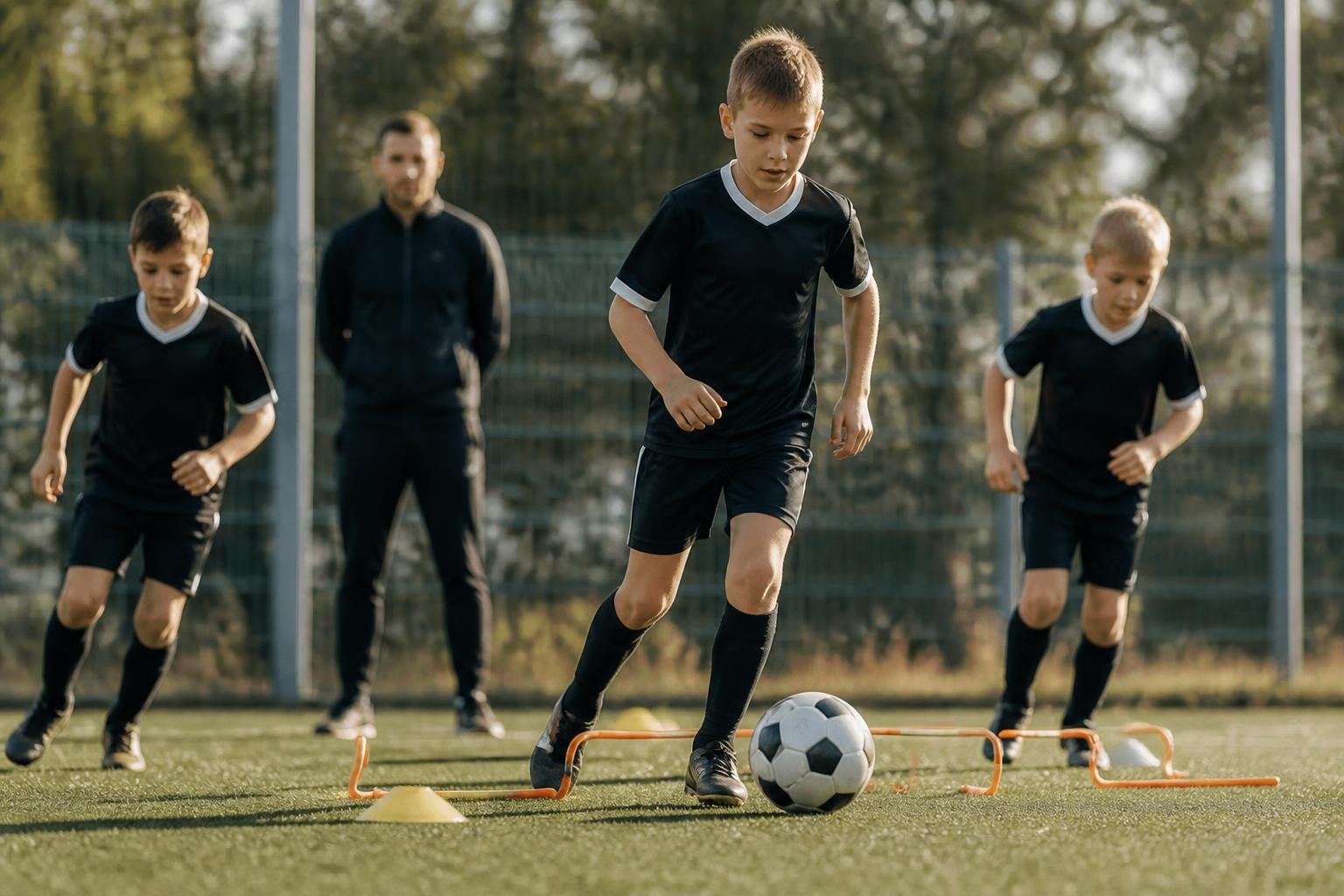
Soccer teaching has evolved dramatically over the past decade, moving far beyond traditional drills and repetitive exercises. Modern approaches emphasize holistic player development, combining skill acquisition with cognitive growth, physical conditioning, and psychological resilience. Parents and coaches seeking to maximize young athletes' potential must understand how effective soccer teaching integrates these elements into a cohesive training philosophy that prepares players for competitive success while building life-long character traits.
The Foundation of Effective Soccer Teaching
Quality soccer teaching begins with a structured framework that addresses all aspects of player development. The European model, widely recognized as the gold standard, focuses on four distinct pillars: technical proficiency, tactical understanding, physical capability, and psychological strength. Each pillar supports the others, creating well-rounded athletes who can perform under pressure.
Technical development forms the cornerstone of any soccer teaching program. Players must master fundamental skills before progressing to complex game situations. This includes:
- Ball control and first touch refinement
- Passing accuracy at varying distances
- Dribbling techniques for different scenarios
- Shooting mechanics and finishing ability
- Defensive positioning and tackling
The UEFA coaching education framework emphasizes progressive skill development, where each technical component builds upon previously mastered abilities. Coaches must design sessions that challenge players at their current level while providing clear pathways to advancement.
Age-Appropriate Curriculum Design
Soccer teaching effectiveness depends heavily on matching content to developmental stages. Young players aged 6-9 require fundamentally different approaches than teenagers preparing for competitive play. The FIFA Training Centre grassroots resources provide evidence-based guidance for structuring age-appropriate sessions that maximize engagement and skill retention.

For players under ten, soccer teaching should prioritize enjoyment and basic motor skills. Sessions incorporate games that disguise skill practice as play, maintaining high activity levels and minimal standing time. As players mature, training gradually introduces tactical concepts while continuing to refine technical abilities.
| Age Group | Technical Focus | Tactical Emphasis | Session Structure |
|---|---|---|---|
| 6-9 years | Basic ball mastery, coordination | Spatial awareness, simple 1v1 | 75% games, 25% guided practice |
| 10-13 years | Skill refinement, both feet | Positional play, team shapes | 60% games, 40% structured drills |
| 14-18 years | Speed of execution, decision-making | Complex systems, transitions | 50% games, 50% tactical training |
Tactical Development Through Game-Based Learning
Modern soccer teaching has shifted dramatically toward game-based pedagogies that develop decision-making alongside technical skills. Traditional isolated drills, while still valuable for specific skill acquisition, now occupy less training time. Instead, coaches create realistic game scenarios that force players to solve tactical problems while executing techniques under pressure.
Research on Teaching Games for Understanding demonstrates that game-based approaches significantly improve tactical decision-making compared to technique-first methodologies. Players who learn through modified games develop better pattern recognition and faster processing speeds during matches.
Small-Sided Games as Teaching Tools
Small-sided games represent perhaps the most powerful tool in modern soccer teaching. These modified formats increase individual touches, create more decision-making moments, and allow coaches to manipulate tactical constraints. A well-designed 4v4 game teaches more about positional play in twenty minutes than an hour of explanation.
The key to effective small-sided game implementation lies in deliberate design. Coaches must select:
- Appropriate field dimensions that create desired tactical challenges
- Player numbers that match learning objectives
- Scoring conditions that reinforce specific behaviors
- Time intervals that maintain intensity without excessive fatigue
Evidence from systematic reviews on small-sided games shows that variations in these parameters significantly impact both physical demands and technical-tactical outcomes. Soccer teaching programs must carefully calibrate these variables to match developmental objectives.
Physical Development and Load Management
Soccer teaching in 2026 increasingly integrates sports science principles to optimize physical development while managing injury risk. Young athletes require progressive exposure to high-intensity efforts, but inappropriate loading can lead to overuse injuries or burnout. Understanding how to build physical capacity safely represents a critical coaching competency.
Conditioning programs for soccer must balance multiple physical qualities: aerobic endurance, speed, power, agility, and strength. Youth players particularly need varied physical stimuli that develop general athleticism rather than sport-specific fitness alone.
Training load monitoring has become essential in professional soccer teaching environments. Coaches track both external loads (distance, sprints, accelerations) and internal responses (heart rate, perceived exertion) to ensure appropriate progression. While elite technology isn't necessary at grassroots levels, coaches should understand basic load management principles.
Combining Running and Game-Based Conditioning
Research examining hybrid training methods in soccer demonstrates that combining small-sided games with running-based conditioning produces superior adaptations to either method alone. Effective soccer teaching incorporates both approaches strategically throughout training cycles.
A balanced weekly schedule might include:
- Two technical-tactical sessions emphasizing game-based learning
- One hybrid session combining running drills with competitive games
- One recovery session focusing on movement quality and lighter loads
- One match day providing competitive experience
This structure ensures players develop necessary physical capacities while maintaining high technical and tactical engagement. The specific distribution varies based on age, competitive level, and seasonal timing.
Psychological Skills and Character Development
Perhaps the most overlooked aspect of soccer teaching involves psychological development. Mental skills separate good players from great ones at higher levels, yet many youth programs neglect this crucial component. Building confidence, resilience, focus, and emotional regulation should be deliberate coaching objectives, not afterthoughts.
Soccer teaching that incorporates psychological development creates learning environments where mistakes are normalized as growth opportunities. Coaches must consciously design sessions that challenge players beyond their comfort zones while providing appropriate support. This approach builds mental toughness and adaptability.
Decision-Making Under Pressure
The research on perceptual-cognitive skill development in soccer reveals that practice design significantly impacts players' ability to read games and make effective decisions. Soccer teaching must create representative learning environments where perceptual demands mirror actual match conditions.
Effective practices for developing decision-making include:
- Constrained games that force specific tactical decisions
- Overload scenarios requiring quick problem-solving
- Opposed practice with active defenders creating realistic pressure
- Variable practice exposing players to diverse game situations
- Questioning techniques that develop tactical awareness through reflection
Coaches who integrate these methods into regular soccer teaching sessions accelerate cognitive development alongside technical and physical growth. Players learn not just what to do, but when and why to execute specific actions.
Coach Education and Development
The quality of soccer teaching ultimately depends on coach competency and ongoing professional development. Licensed coaches with structured education backgrounds consistently deliver superior training experiences compared to well-intentioned volunteers lacking formal preparation. Parents seeking quality programs should prioritize organizations investing in comprehensive coach development.
Modern soccer teaching requires coaches to function as educators, understanding learning theory, child development, and pedagogical principles. Technical soccer knowledge alone doesn't guarantee effective teaching. Coaches must translate expertise into age-appropriate progressions that engage young learners while building competency.
| Coaching Level | Typical Focus | Player Age Groups | Session Planning Depth |
|---|---|---|---|
| Entry Level | Basic organization, safety, enjoyment | 6-10 years | Simple activity plans |
| Intermediate | Technical progressions, game principles | 10-14 years | Structured session plans with objectives |
| Advanced | Tactical periodization, load management | 14-18 years | Comprehensive programs with assessment |
Creating a Learning Culture
Excellent soccer teaching programs establish cultures where continuous improvement is valued over immediate results. This philosophy requires patience from coaches, parents, and organizations. Focusing exclusively on weekend match outcomes can undermine long-term development, creating pressure that inhibits learning and enjoyment.
The most effective youth soccer training approaches encourage players to think critically, ask questions, and take ownership of their development. Coaches facilitate learning rather than simply directing it, creating environments where players develop problem-solving skills applicable far beyond the soccer field.
Individualization Within Team Training
While soccer is fundamentally a team sport, effective soccer teaching recognizes that players develop at different rates and possess unique strengths and challenges. Programs that treat all athletes identically miss opportunities for accelerated growth. Skilled coaches find ways to individualize within group settings, providing differentiated challenges that meet players where they are.
Differentiation strategies in soccer teaching include:
- Modifying space and time constraints for different skill levels
- Creating multiple activity stations with varying difficulty
- Pairing players strategically to challenge both partners
- Adjusting success criteria based on individual capabilities
- Providing individualized feedback during group activities
These approaches maintain team cohesion while ensuring each player receives appropriate developmental stimulus. The goal isn't to separate players by ability permanently, but to ensure everyone experiences optimal challenge levels during training.
Technology Integration in Modern Soccer Teaching
Technology has transformed how coaches analyze performance, plan sessions, and communicate with players. Video analysis tools, GPS tracking, and training apps all have roles in contemporary soccer teaching. However, technology should enhance rather than replace fundamental coaching skills.
Video review proves particularly valuable for developing tactical understanding. Players watching themselves in game situations gain insights impossible to achieve through verbal feedback alone. Brief video sessions before or after training help players visualize concepts and recognize patterns in their own performance.
For programs offering high-performance training, GPS tracking provides objective data on physical output during sessions. Coaches can ensure players achieve target distances and intensities while identifying those who may need modified loads. This information supports individualized programming within team contexts.
Communication and Parent Engagement
Successful soccer teaching extends beyond what happens during training sessions. Effective coaches communicate clearly with parents about program philosophy, development expectations, and how families can support player growth. This alignment between coach and parent perspectives creates consistency that accelerates learning.
Parents should understand that soccer teaching prioritizes long-term development over short-term results, particularly in youth programs. Players may experience temporary performance plateaus while mastering new skills or adjusting to increased tactical complexity. Clear communication helps parents maintain appropriate expectations and provide supportive home environments.
Key communication topics include:
- Program philosophy and developmental priorities
- Age-appropriate expectations for skill progression
- How parents can support practice concepts at home
- Injury prevention and load management principles
- Pathways for continued development within the program
Organizations excelling in soccer teaching make parent education a priority, offering workshops or resources that help families understand the developmental journey. This investment pays dividends through improved retention, stronger community culture, and better player outcomes.
Session Planning and Periodization
Elite soccer teaching requires systematic planning that progresses logically across weeks, months, and seasons. Random activity selection, even if individually well-designed, produces inferior outcomes to coherent progressions building toward specific objectives. Coaches must understand periodization principles and how to structure training for optimal adaptation.
Annual plans typically divide into distinct phases: pre-season preparation, competitive season maintenance, and off-season development. Each phase emphasizes different training priorities while maintaining other capacities. Soccer teaching programs should communicate these cycles to players and parents, helping everyone understand why training focus shifts throughout the year.
Weekly planning within each phase follows similar principles. A typical competitive-season week might structure soccer teaching sessions as:
- Monday: Recovery and technical refinement
- Wednesday: Tactical preparation for upcoming opponent
- Friday: Activation session and set-piece practice
- Saturday/Sunday: Match day application
This structure manages physical load while ensuring adequate technical, tactical, and psychological preparation. Coaches adapt plans based on match schedules, player condition, and emerging development needs.
Effective soccer teaching in 2026 demands much more than traditional drills and conditioning exercises-it requires a sophisticated understanding of how technical skills, tactical awareness, physical development, and psychological growth interact to create complete players. By embracing evidence-based methodologies, age-appropriate progressions, and holistic development principles, coaches can maximize each athlete's potential while building character that extends far beyond the pitch. Strive Soccer Academy brings this European-style training philosophy to Surrey, BC, with fully licensed Canada Soccer coaches who focus on all four key areas of player growth: Technical, Tactical, Physical, and Psychological. Our programs develop skills, build character, and create real opportunities for young athletes committed to reaching their full potential.


