
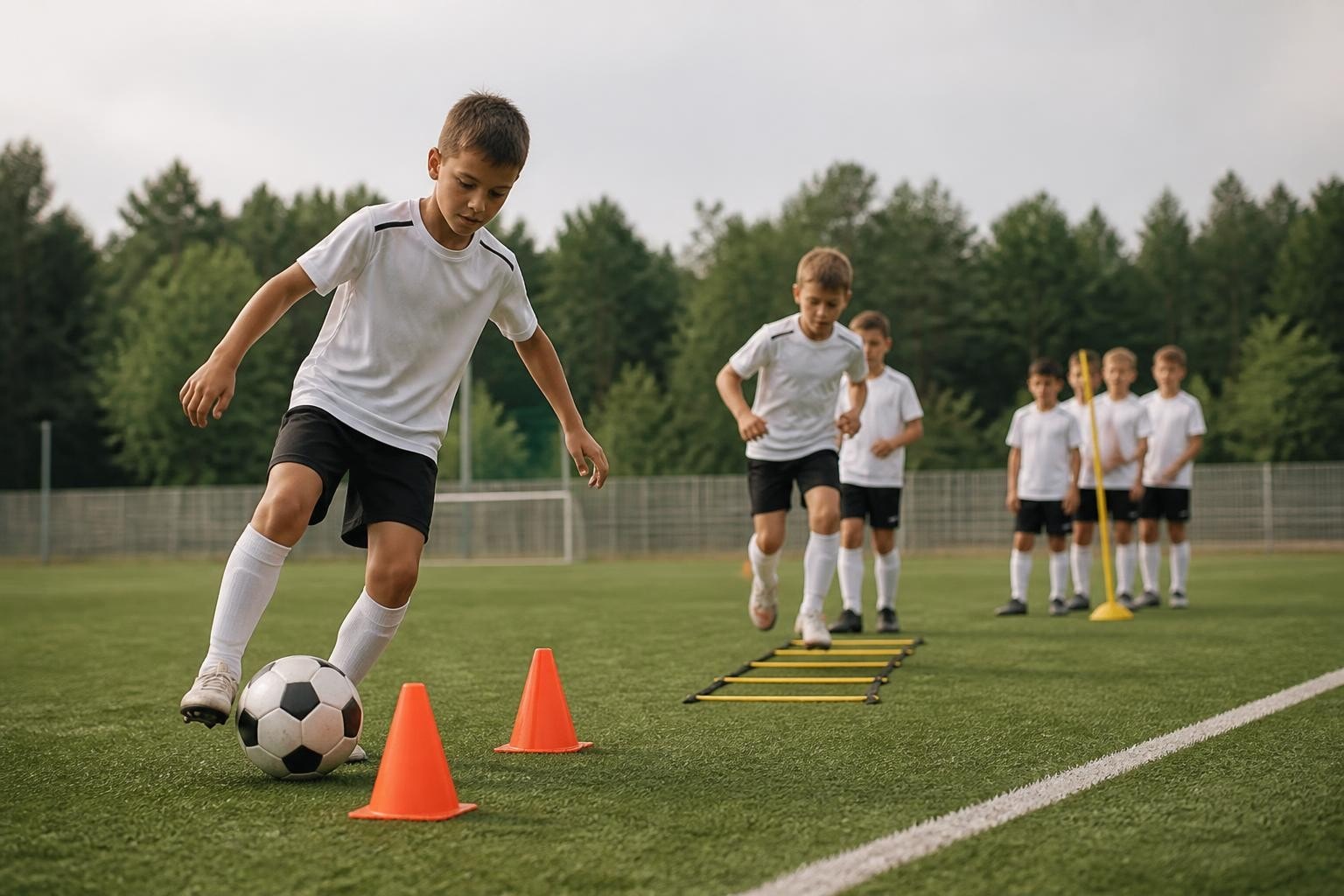
Finding the right soccer program for youth can be one of the most important decisions a parent makes for their child's athletic development. The landscape of youth soccer has evolved significantly over the past decade, with programs now focusing not just on kicking a ball but on comprehensive player development that shapes character, builds confidence, and creates pathways to higher levels of competition. Understanding what separates exceptional programs from recreational leagues helps parents make informed choices that align with their child's goals and developmental needs.
The Foundation of Quality Youth Soccer Development
A well-structured soccer program for youth builds on four essential pillars that work together to create complete players. Technical development focuses on ball mastery, first touch, passing accuracy, and shooting technique. Tactical training teaches players to read the game, understand positioning, and make intelligent decisions under pressure. Physical conditioning appropriate for each age group ensures players develop speed, agility, and endurance without risking injury. Psychological growth addresses confidence, resilience, teamwork, and the mental aspects that separate good players from great ones.
Age-Appropriate Training Methodologies
The most effective programs recognize that a soccer program for youth must adapt to different developmental stages. Age-appropriate coaching frameworks emphasize that what works for teenagers doesn't suit younger children, and vice versa. Young players aged 5-8 benefit most from playful, game-based learning that keeps them engaged while building fundamental movement patterns. As players mature into the 9-12 age range, training can incorporate more structured skill development while maintaining fun as a core component.
Adolescent players between 13-17 years old require sophisticated tactical instruction and position-specific training that prepares them for competitive soccer. Their cognitive development allows them to grasp complex concepts like defensive shape, pressing triggers, and combination play. Programs that fail to adjust their methodology to these developmental stages often create frustration, burnout, or stagnation in player growth.

Coaching Quality and Certification Standards
The caliber of coaching staff represents perhaps the most critical factor in any soccer program for youth. Parents should look for programs where coaches hold recognized certifications through governing bodies like Canada Soccer, U.S. Soccer, or equivalent national organizations. These certifications ensure coaches understand child development, effective teaching progressions, and safety protocols. Licensed coaches bring structured session planning, proper warm-up routines, and evidence-based training methods that maximize improvement while minimizing injury risk.
Key coaching qualities to evaluate:
- Proper licensing and ongoing professional development
- Ability to communicate effectively with different age groups
- Understanding of long-term athlete development models
- Patience and enthusiasm that keeps training positive
- Tactical knowledge appropriate to the competition level
- Commitment to individual player feedback and growth
Beyond credentials, observe how coaches interact with players during training. The best coaches balance high expectations with encouragement, push players outside comfort zones while maintaining confidence, and create environments where mistakes become learning opportunities rather than sources of shame.
Training Environment and Facility Considerations
The physical environment where a soccer program for youth operates significantly impacts player development. Quality facilities provide well-maintained grass or turf fields that allow proper ball movement and reduce injury risk. Indoor training options ensure year-round development regardless of weather conditions, particularly important in regions with harsh winters. Adequate lighting for evening sessions extends training availability for families managing busy schedules.
| Facility Feature | Impact on Development | Questions to Ask |
|---|---|---|
| Field surface quality | Ball control, injury prevention | How often are fields maintained? Indoor options available? |
| Training equipment | Skill variety, engagement | Are there adequate balls, cones, goals, and training aids? |
| Player-to-space ratio | Touches on ball, movement | What's the maximum group size per field? |
| Spectator areas | Family involvement | Can parents observe training comfortably? |
Grassroots soccer programs emphasize that the learning environment extends beyond physical infrastructure to include the culture and values the program promotes. Programs should foster inclusivity, respect, and a growth mindset where effort and improvement matter more than winning at all costs.
Curriculum Structure and Session Planning
A professional soccer program for youth operates from a detailed curriculum that maps skill progressions across seasons and years. Well-designed curricula align with recognized player development frameworks and ensure coaches address all aspects of the game systematically. Session planning resources demonstrate how effective programs structure individual training sessions with clear objectives, progressive activities, and measurable outcomes.
Technical Skill Development Pathway
- Foundation phase (ages 5-8): Basic coordination, dribbling, simple passing, introduction to small-sided games
- Skill-building phase (ages 9-12): Refined ball mastery, passing combinations, shooting technique, 1v1 situations
- Application phase (ages 13-15): Position-specific skills, advanced techniques under pressure, creative problem-solving
- Refinement phase (ages 16+): High-speed execution, tactical integration of skills, game-realistic scenarios
Programs that outline their curriculum transparently give parents confidence that training follows a purposeful path rather than random activities chosen week to week. Ask prospective programs about their season plans, how they assess player progress, and how they adjust training for players at different skill levels within the same age group.
Balancing Competition and Development
The tension between winning games and developing players represents a fundamental challenge in youth soccer. The most effective soccer program for youth strikes a careful balance, using competition as a tool for development rather than the sole measure of success. Research consistently shows that over-emphasizing results in youth sports leads to early specialization, burnout, and dropout rates that peak around age 13.
Development-focused programs prioritize:
- Playing time distributed to support learning, not just winning
- Multiple positions exposure for younger age groups
- Appropriate challenge levels that stretch abilities without overwhelming
- Constructive feedback focused on effort and improvement
- Long-term player growth over short-term tournament results
This doesn't mean competition lacks importance. Meaningful games provide motivation, teach players to perform under pressure, and create memories that fuel continued passion for the sport. The key lies in keeping competition age-appropriate and subordinate to the larger developmental mission.
Physical Development and Health Considerations
Modern understanding of youth athletic development has transformed how quality programs approach physical training. A responsible soccer program for youth recognizes that children are not miniature adults and require training methodologies that support healthy growth. Physical activity guidelines from health organizations emphasize that youth need varied movement patterns, adequate recovery, and protection from overuse injuries.
Programs should incorporate dynamic warm-ups that prepare bodies for intense activity while building athleticism through fundamental movement skills. Conditioning work must align with biological maturity rather than chronological age, as children within the same age group may differ by years in physical development. The best programs educate parents about proper nutrition, hydration, sleep requirements, and multi-sport participation benefits.
| Age Group | Training Frequency | Session Duration | Additional Considerations |
|---|---|---|---|
| 5-8 years | 1-2 times weekly | 45-60 minutes | Emphasis on variety and play |
| 9-12 years | 2-3 times weekly | 60-75 minutes | Introduce position concepts |
| 13-15 years | 3-4 times weekly | 75-90 minutes | Strength development begins |
| 16+ years | 4-5 times weekly | 90-120 minutes | Position specialization increases |
Pathways Beyond Recreational Play
For families seeking more than weekend recreation, understanding the pathway options within a soccer program for youth becomes essential. Many academies now offer tiered programs that allow players to progress from introductory levels through to elite competitive teams. This structure ensures players train with peers at similar commitment and skill levels while providing clear advancement opportunities.
Elite pathway programs typically involve higher training frequencies, participation in showcase events, and identification opportunities that can lead to regional or national team consideration. These programs demand significant time and financial commitments from families, making it crucial to assess whether your child's passion and ability justify this investment. For players seeking intensive skill development in a professional environment, options like Soccer High Performance Training provide concentrated periods of advanced instruction.
Evaluating Program Fit for Your Child
Not every talented player thrives in high-pressure environments, and not every passionate player needs an elite pathway. Consider these factors when selecting a soccer program for youth:
- Does the program's philosophy align with your family values?
- Can you realistically commit to the schedule and financial requirements?
- Does your child show genuine passion or is pressure coming from parents?
- How does the program handle players who plateau or decide to step back?
- What's the coach turnover rate and program stability?
The right fit creates an environment where your child grows as a player and person, building life skills that extend far beyond the soccer field. Programs focused solely on winning often sacrifice individual development, while those emphasizing only participation may not challenge players ready for more.
The Role of Small-Sided Games in Development
Progressive soccer programs have embraced small-sided games as a cornerstone of effective youth training. Playing 3v3, 4v4, or 5v5 instead of traditional 11v11 for younger age groups dramatically increases each player's touches on the ball, decision-making opportunities, and involvement in the game. A soccer program for youth that implements age-appropriate game formats accelerates development by creating more relevant learning moments.
Small-sided formats force players to solve problems, communicate constantly, and contribute in multiple roles rather than becoming specialists too early. Defenders must also attack, forwards must defend, and everyone develops the complete skill set required at higher levels. These formats also reduce the physical demands that can overwhelm developing bodies while maintaining the competitive excitement children crave.
Parent Involvement and Communication
The relationship between program staff and families significantly influences player development outcomes. Top-tier soccer programs for youth establish clear communication channels that keep parents informed about training focus, player progress, and upcoming events. Regular feedback sessions allow parents to understand their child's strengths, areas for improvement, and how to support development at home.
Healthy parent involvement includes:
- Positive sideline behavior that encourages rather than criticizes
- Trust in coaching decisions regarding positions and playing time
- Support for the program's philosophy even when wins don't come immediately
- Recognition that development rarely follows a linear path
- Realistic expectations based on the child's current level and commitment
Programs should provide education resources for parents about age-appropriate expectations, effective encouragement strategies, and how to recognize signs of burnout or overtraining. The most successful youth players typically have parents who support passionately while allowing coaches to coach and players to own their soccer journey.
Financial Investment and Value Assessment
The cost of youth soccer programs varies dramatically, from free recreational leagues to academy programs requiring thousands of dollars annually. When evaluating a soccer program for youth, parents must look beyond the price tag to assess actual value delivered. Quality programs justify their costs through certified coaching, excellent facilities, competitive opportunities, and comprehensive player development services.
Calculate the true cost by factoring in registration fees, uniform requirements, travel expenses for tournaments, and additional training opportunities. Some programs include everything in a single fee, while others add costs throughout the season. Programs offering year-round training typically provide better value than those with three-month seasons, as consistent development requires regular engagement.
Ask about financial assistance options if cost presents a barrier. Many quality programs offer scholarships, payment plans, or volunteer opportunities that offset expenses because they recognize talent and passion shouldn't be limited by family financial circumstances.
Technology Integration in Modern Soccer Training
Contemporary soccer programs increasingly leverage technology to enhance player development. Video analysis allows players to see their performances objectively, identifying technical flaws and tactical decisions that coaches can address in training. GPS tracking and performance monitoring provide data on work rates, distances covered, and intensity zones, helping coaches optimize training loads and prevent overuse injuries.
Mobile apps facilitate communication between coaches, players, and parents while providing access to training videos and exercise libraries for home practice. Some programs use skills assessment platforms that track individual progress across multiple sessions, creating objective records of improvement that motivate players and inform coaching decisions. For programs committed to developing players for professional pathways, technology integration demonstrates serious commitment to modern development methods.
Creating Sustainable Long-Term Development
The ultimate measure of a soccer program for youth isn't the trophies won by 10-year-olds but the number of players still engaged, improving, and loving the game at 16 years old. Sustainable development requires programs that prioritize player welfare, manage training loads appropriately, and maintain fun as a fundamental component even as intensity increases.
Programs should encourage multi-sport participation, particularly for younger ages, recognizing that athletic diversity builds better overall athletes while reducing injury risk. Seasonal breaks allow physical and mental recovery, preventing the chronic fatigue that leads to dropout. The best programs view themselves as stewards of young athletes' long-term relationship with soccer rather than extracting maximum performance in the present moment.
Selecting the right soccer program for youth requires careful evaluation of coaching quality, training methodology, developmental philosophy, and alignment with your child's goals and abilities. At Strive Soccer Academy, we bring a European-style training approach to Surrey, BC, focusing on technical, tactical, physical, and psychological development through licensed professional coaches and age-appropriate programming. Whether your child is just beginning their soccer journey or ready to take their game to the next level, we create environments where young athletes develop skills, build character, and discover genuine opportunities to grow.


