
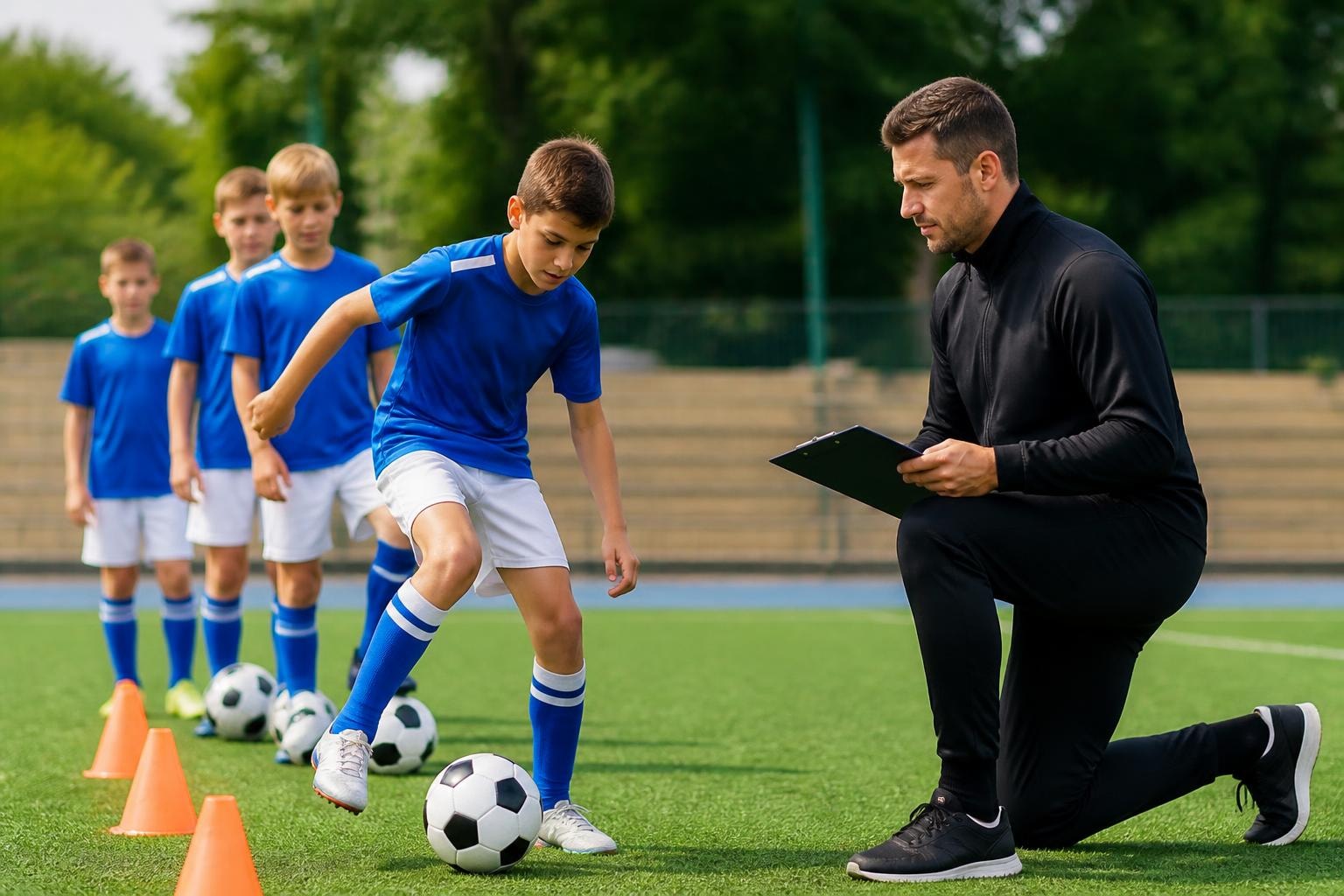
The journey to becoming one of the world's soccer professionals requires dedication, strategic planning, and comprehensive development across multiple dimensions. Whether pursuing a playing career, coaching position, or specialized role within the industry, soccer professionals follow structured pathways that emphasize technical excellence, tactical awareness, physical conditioning, and psychological resilience. Understanding these career trajectories helps aspiring athletes and their families make informed decisions about training programs, development opportunities, and long-term goals.
Understanding the Professional Soccer Landscape
Soccer professionals operate within a vast global ecosystem that extends far beyond players on the pitch. The industry encompasses coaches, scouts, analysts, sports scientists, physiotherapists, agents, administrators, and technical directors. Each role requires specific qualifications, expertise, and pathways to professional recognition.
Player Development Pathways
The traditional route for soccer professionals begins in youth academies where players receive structured training from an early age. These programs focus on the four pillars of player development: technical skill acquisition, tactical understanding, physical conditioning, and psychological preparation. Elite academies implement progressive training methodologies that challenge players appropriately for their developmental stage.
Key stages in player development include:
- Foundation phase (ages 6-11): Building fundamental movement patterns and basic ball skills
- Development phase (ages 12-16): Enhancing position-specific techniques and tactical awareness
- Performance phase (ages 17-21): Transitioning to professional standards and competitive environments
- Professional phase (21+): Maintaining peak performance and career longevity
Young players benefit from exposure to various career opportunities within soccer beyond just playing, which helps them develop broader perspectives on the sport.

Coaching Qualifications and Professional Standards
Soccer professionals in coaching roles must obtain recognized certifications that demonstrate competency in player development, session planning, and tactical instruction. In Canada, the licensing pathway through Canada Soccer establishes professional standards that ensure coaches possess adequate knowledge and skills.
Licensing Hierarchy and Requirements
| License Level | Focus Area | Typical Role |
|---|---|---|
| Children's License | Foundation skills, fun-based learning | Grassroots youth coaches |
| Soccer for Life | Long-term development principles | Community program leaders |
| National B License | Advanced tactics, session design | Academy and competitive coaches |
| National A License | Elite player development, periodization | Professional club coaches |
| Pro License | High-performance systems, leadership | Senior professional teams |
Coaches advance through these levels by completing coursework, practical assessments, and mentorship requirements. The progression ensures soccer professionals develop pedagogical skills alongside tactical knowledge.
Programs like those at Strive Soccer Academy employ fully licensed coaches ranging from National A License holders to Soccer for Life certified instructors, ensuring players receive instruction from qualified soccer professionals at every development stage.
Technical Mastery and Skill Development
Technical proficiency forms the foundation for all soccer professionals, whether players or coaches. Technical soccer drills targeting ball control, passing accuracy, receiving skills, and dribbling efficiency create the skill base necessary for elite performance.
Essential Technical Components
Soccer professionals dedicate thousands of hours to perfecting fundamental techniques. Ball mastery drills develop comfort in all situations, while pressure training accelerates decision-making under match conditions. The progression from isolated skill work to game-realistic scenarios bridges the gap between training and competition.
Core technical areas for development:
- First touch and ball reception across all surfaces
- Passing range and accuracy (short, medium, long distance)
- 1v1 moves and change of direction techniques
- Finishing with both feet from various angles
- Aerial control and heading technique
Modern training philosophies integrate technical work within tactical contexts rather than isolating skills. This approach, sometimes called tactical periodization, ensures soccer professionals develop skills that transfer directly to match situations.
Tactical Intelligence and Game Understanding
Beyond physical execution, soccer professionals must demonstrate sophisticated tactical awareness. Reading the game, anticipating opponents' movements, and making split-second decisions separate elite performers from recreational players.
Positional Play and System Understanding
Professional-level soccer requires players to understand multiple formations, pressing schemes, and positional rotations. Soccer professionals study game situations extensively, analyzing patterns and developing solutions to tactical problems.
Coaches structure training sessions to develop this intelligence systematically. Different methods for structuring soccer training sessions allow professionals to emphasize specific tactical concepts while maintaining player engagement and development progression.
| Tactical Concept | Application | Development Method |
|---|---|---|
| Defensive shape | Maintaining compactness | Small-sided games with specific constraints |
| Transition moments | Quick recovery or attack | Directional possession exercises |
| Build-up patterns | Breaking pressing lines | Phase-of-play scenarios |
| Attacking depth | Creating vertical threat | Functional practices with targets |
Physical Development and Athletic Performance
The physical demands on soccer professionals have intensified significantly over the past two decades. Modern players cover greater distances at higher intensities, requiring comprehensive conditioning programs that address speed, strength, endurance, and agility.
Periodized Training Approaches
Soccer professionals follow structured training cycles that balance intensity with recovery. Weekly schedules account for match demands, training loads, and individual player needs. High-performance environments monitor workload through GPS tracking, heart rate analysis, and wellness questionnaires.
Physical development priorities include:
- Aerobic capacity for sustained performance throughout matches
- Anaerobic power for explosive actions and repeated sprints
- Strength and stability to withstand physical challenges
- Flexibility and mobility to prevent injury
- Speed development for acceleration and maximum velocity
Youth development programs must be particularly careful about appropriate physical loading. Research on age-related changes in executive functions demonstrates how cognitive and physical development interact, informing how soccer professionals structure training for different age groups.
Psychological Preparation and Mental Resilience
Elite soccer professionals recognize that mental preparation equals physical preparation in importance. Confidence, concentration, composure under pressure, and resilience after setbacks determine success at the highest levels.
Mental Skills Training
Professional development programs incorporate psychological training through goal-setting workshops, visualization exercises, pressure simulation, and performance reflection. Soccer professionals learn to manage pre-match anxiety, maintain focus during matches, and recover psychologically from poor performances.
Coaches play vital roles in developing psychological skills by creating supportive yet challenging environments. Constructive feedback, appropriate challenge levels, and opportunities for player autonomy build mental toughness over time.
Career Opportunities Beyond Playing
The soccer industry offers diverse career paths for professionals who develop expertise in specialized areas. Understanding these options helps young athletes prepare for long-term involvement in the sport.
Specialized Professional Roles
Performance Analysis: Video analysts and data scientists evaluate matches and training sessions, providing insights that inform tactical decisions. Data-driven frameworks for evaluating player performance have become standard in professional clubs.
Scouting and Recruitment: Talent identification specialists assess players globally, building recruitment databases and recommending signings. This role requires extensive soccer knowledge, analytical skills, and international networking.
Sports Science and Medicine: Physiotherapists, strength coaches, nutritionists, and sports psychologists support player health and performance. These professionals require specialized certifications beyond soccer-specific qualifications.
Technical Direction: Former players and experienced coaches often transition into technical director roles, overseeing entire club development systems and establishing playing philosophies.
Modern Technology and Innovation
Soccer professionals increasingly leverage technology to enhance performance and development. Video analysis platforms, wearable sensors, and data analytics inform training decisions and tactical preparations.
Technological Applications
| Technology | Application | Benefit |
|---|---|---|
| GPS tracking | Monitor distance, speed, acceleration | Optimize training loads |
| Video analysis | Review matches, identify patterns | Improve tactical understanding |
| Performance databases | Track metrics over time | Measure development progress |
| Virtual reality | Simulate game situations | Enhance decision-making |
Innovative solutions like mixed-reality telepresence for tactical coaching demonstrate how technology continues evolving the profession. Soccer professionals who adapt to these tools gain competitive advantages.
Training Session Structure and Planning
Effective session design separates qualified soccer professionals from amateur instructors. Professional coaches plan meticulously, considering learning objectives, player capacity, training phase, and upcoming matches.
Components of Professional Sessions
Well-structured sessions flow logically through phases that progressively challenge players. Warm-ups activate relevant muscle groups and introduce session themes. Technical repetition develops skill proficiency through high-quality repetitions. Tactical scenarios apply skills within game-realistic contexts. Small-sided games provide decision-making opportunities with reduced complexity. Cool-downs facilitate recovery and allow for reflection.
Soccer professionals understand that how coaching styles can be quantified and analyzed helps identify effective methodologies and individual coach strengths. This awareness drives continuous improvement in training delivery.
Session planning considerations:
- Learning objectives aligned with development stage
- Appropriate work-to-rest ratios for age and fitness
- Progression from simple to complex tasks
- Sufficient repetitions for skill acquisition
- Game-realistic pressure and decision-making
Pathway to Professional Opportunities
Young players aspiring to join the ranks of soccer professionals must navigate competitive selection processes, showcase events, and trials. Understanding these pathways helps families support their athletes effectively.
Development Competitions and Exposure
Regional and national competitions provide platforms where scouts identify talent. Tournament performances, consistent league play, and training camp participation create visibility with higher-level programs. For those seeking intensive development, specialized programs like Soccer High Performance Training offer 90-minute high-intensity sessions focused on technical, physical, and tactical skills in professional-style environments.
Players should maintain performance records, highlight videos, and academic transcripts as they pursue opportunities. Soccer professionals in scouting roles evaluate both athletic potential and character indicators like coachability, work ethic, and team orientation.
International Standards and Global Opportunities
Soccer professionals operate in an international marketplace where talent flows across borders. Understanding global standards, different playing philosophies, and cultural expectations becomes essential for those pursuing international careers.
European Development Models
European academies emphasize technical refinement from early ages, implementing training volumes and intensities that exceed typical North American programs. Soccer professionals studying these methodologies adapt proven approaches to local contexts while respecting developmental principles.
The focus on decision-making speed, positional versatility, and tactical flexibility reflects modern game demands. Programs incorporating European-style philosophies help North American players compete internationally by developing these attributes systematically.
Continuing Education and Professional Growth
Established soccer professionals commit to lifelong learning, attending courses, conferences, and mentorship programs. The sport evolves continuously, requiring professionals to update knowledge and adapt methodologies.
Professional development opportunities:
- Advanced licensing courses and specialized certifications
- International coaching exchanges and observation visits
- Academic programs in sports science and coaching
- Professional association memberships and networking
- Research engagement and evidence-based practice adoption
Those interested in exploring comprehensive development programs can review offerings at various academy programs that incorporate multiple aspects of player and professional growth.
Building Sustainable Careers
Long-term success as soccer professionals requires strategic planning beyond immediate performance. Financial literacy, education completion, relationship building, and reputation management contribute to sustainable careers.
Career Transition Planning
Playing careers have limited durations, making transition preparation essential. Soccer professionals develop transferable skills, pursue educational qualifications, and build networks that support career pivots. Coaching licenses, business education, and media training create post-playing opportunities.
Understanding the various programs available helps families align training investments with long-term development goals rather than short-term results.
The path to becoming soccer professionals requires comprehensive development across technical, tactical, physical, and psychological dimensions, supported by qualified instruction and strategic career planning. Whether pursuing playing careers or specialized industry roles, success stems from structured training, continuous learning, and long-term commitment to excellence. Strive Soccer Academy provides the European-style training philosophy and fully licensed coaching staff that young athletes need to develop into well-rounded players with genuine opportunities for advancement in the sport.


