
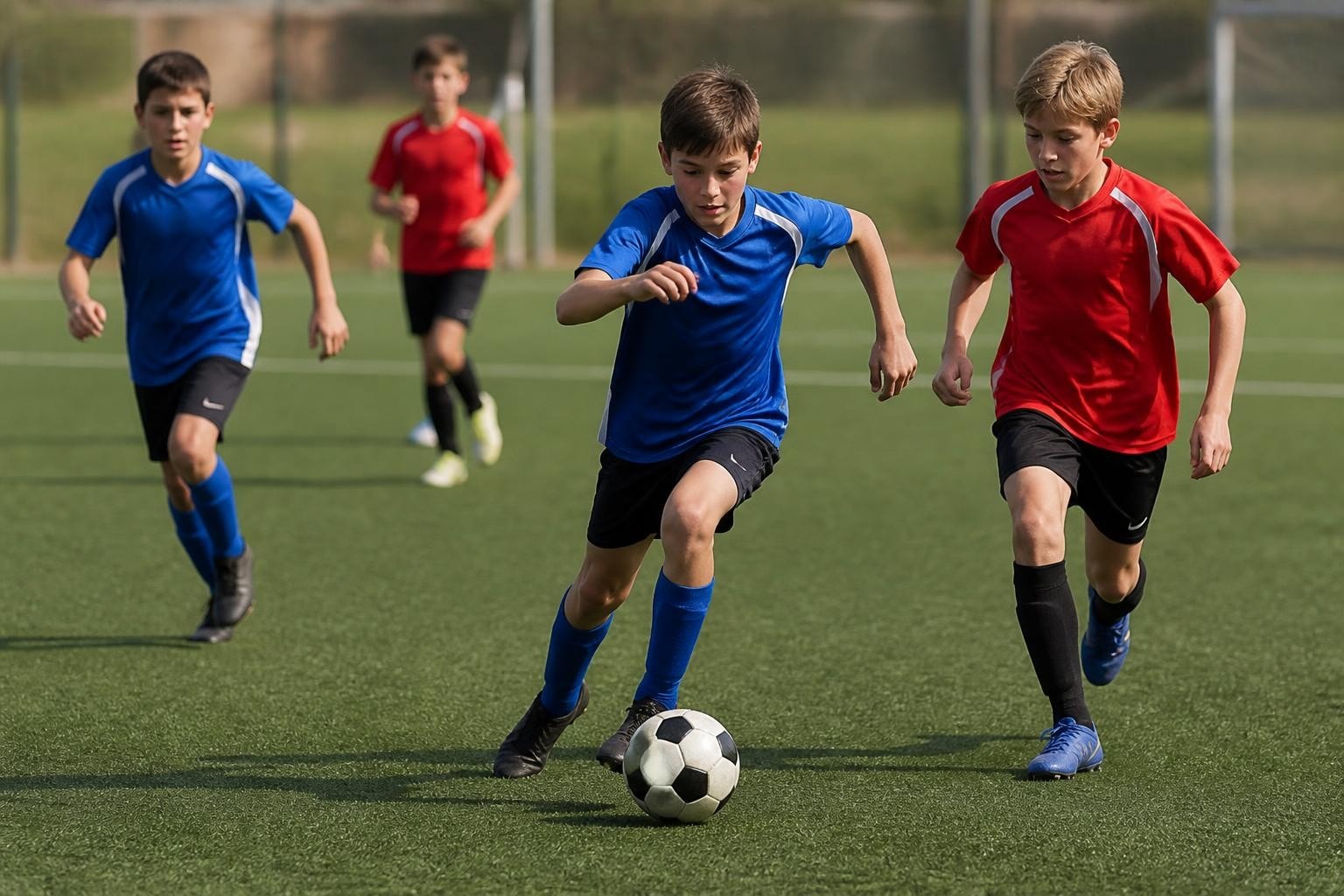
Modern soccer development has moved far beyond static drills and repetitive cone exercises. Today's most effective coaches recognize that soccer coaching games create the foundation for player growth, combining technical skill development with tactical awareness in realistic match scenarios. These game-based approaches mirror the complexity of actual competition while maintaining the structure needed for targeted learning. When designed thoughtfully, coaching games engage players mentally and physically, developing the decision-making abilities that separate good players from exceptional ones.
Why Game-Based Training Transforms Player Development
Traditional drill-based training often isolates skills from their match context, teaching players what to do but not when or why to do it. Soccer coaching games address this limitation by embedding technical work within tactical scenarios that require real-time problem-solving. Research published in peer-reviewed studies on decision-making interventions demonstrates that game-based approaches significantly enhance cognitive development alongside physical skills.
The European coaching philosophy emphasizes this holistic approach, recognizing that young players develop best when technical, tactical, physical, and psychological elements integrate naturally. Rather than practicing passes in isolation, players learn passing through games that require reading defensive pressure, identifying space, and timing execution perfectly.
The Four Pillars Enhanced Through Games
Technical Development: Ball mastery, first touch, passing accuracy, and shooting all improve when practiced under game-realistic pressure rather than unopposed conditions.
Tactical Awareness: Understanding positioning, spatial relationships, and team shape emerges naturally when players must solve problems within game constraints.
Physical Conditioning: Game-based training delivers sport-specific fitness through repeated accelerations, changes of direction, and high-intensity efforts that mirror match demands.
Psychological Growth: Decision-making under pressure, creativity, confidence, and resilience develop when players face authentic challenges within a structured environment.

Small-Sided Games: The Foundation of Modern Coaching
Small-sided games represent the cornerstone of effective soccer coaching games. By reducing player numbers and field dimensions, coaches create environments where individual touches increase, decision-making opportunities multiply, and tactical concepts become immediately visible. Research on technical-tactical behaviour in small-sided games confirms that these formats enhance both skill execution and cognitive development.
The beauty of small-sided games lies in their versatility. A simple 4v4 game can target dozens of different learning objectives through minor constraint modifications. Adjusting field size, goal placement, touch limitations, or scoring methods completely transforms the tactical problems players must solve.
| Format | Primary Benefits | Best Age Groups | Key Focus Areas |
|---|---|---|---|
| 3v3 | Maximum touches, constant decision-making | U8-U10 | Ball mastery, 1v1 skills, transition speed |
| 4v4 | Balanced complexity, shape awareness | U10-U12 | Passing combinations, defensive positioning |
| 5v5 | Tactical depth, positional play | U12-U14 | Build-up patterns, pressing triggers |
| 7v7 | Match preparation, team structure | U14+ | Formation principles, set-piece organization |
Programs that emphasize small-sided games across age groups report accelerated player development compared to traditional large-group training. The increased repetition and contextual learning create deeper understanding and better retention.
Possession-Based Coaching Games
Possession games teach players to maintain ball control under pressure while developing scanning habits, support angles, and quick decision-making. These soccer coaching games create intense technical demands within tight spaces, forcing players to execute skills precisely while processing complex information.
Rondo Variations for Different Objectives
The classic rondo (keep-away game) adapts endlessly to target specific learning outcomes:
- 4v2 in a square: Basic possession principles, body shape, quick feet
- 5v2 with directional play: Progressive passing, breaking lines
- 6v3 with neutral players: Support positioning, third-man combinations
- Multi-zone rondos: Spatial awareness, switching play
Each variation challenges players differently. Adding directional elements transforms basic possession into penetrative passing practice. Incorporating neutral players teaches proper support distances and angles. The progression from simple to complex mirrors player development stages.
The FA’s coaching resources on practice design demonstrate how parallel game structures allow coaches to differentiate challenges for varying ability levels within single sessions. This approach ensures all players work at appropriate difficulty levels simultaneously.
Transition Games That Develop Game Intelligence
Soccer's most critical moments occur during transitions between attack and defense. Soccer coaching games focused on these phases develop the speed of thought and immediate reactions that define elite players. Transition games compress decision-making windows, requiring instant recognition of changing circumstances.
Attacking transition games emphasize exploiting momentary defensive disorganization:
- Counter-attack scenarios: 3v2 or 4v3 situations where attackers must advance quickly before defenders recover
- Numbers-up finishing: Overload situations that teach clinical execution under time pressure
- Breakout patterns: Structured transitions from defensive thirds into attacking space
Defensive transition games teach immediate pressure and recovery:
- Press triggers: Games with rules requiring instant pressure upon ball loss
- Recovery runs: Scenarios where players must sprint back into defensive positions
- Compactness exercises: Games rewarding quick collapse into defensive shape
Finishing Games That Build Confidence
Clinical finishing separates winning from losing, yet many training programs neglect realistic finishing practice. Effective soccer coaching games for shooting incorporate defensive pressure, fatigue, and decision-making rather than unopposed repetition.
Game-Based Finishing Progressions
Starting with simple scenarios and gradually adding complexity ensures skill mastery before cognitive overload:
Level 1 – Decision and execution: Two-goal games where attackers choose which target based on goalkeeper positioning or defensive pressure.
Level 2 – Creating the opportunity: Combinations leading to shooting chances where players must recognize the moment to shoot versus continuing the attack.
Level 3 – Competitive finishing: Full game scenarios with tracking individual or team finishing statistics to maintain performance pressure.
Games that combine finishing with other elements create more realistic training environments. A 3v3 game to small goals with a shooting bonus for strikes from outside defined zones teaches both when to shoot and how to create better shooting positions.
At Strive Soccer Academy, our high-performance training incorporates finishing games that replicate match intensity, helping players develop composure and technique under pressure.
Pressing and Defensive Organization Games
Modern soccer demands sophisticated defensive coordination. Soccer coaching games teaching pressing principles develop collective understanding of triggers, cover positions, and pressure angles. These games make abstract tactical concepts tangible through immediate feedback.
Structured Defending Exercises
- Pressing triggers game: 6v6 where defending team can only press after specific events (back pass, heavy touch, etc.)
- Zonal defending: Games with field divisions where defenders must protect specific areas
- Recovering shape: Transition scenarios emphasizing sprint recovery into defensive positions
- Pressing traps: Coordinated pressure designed to force mistakes in specific field areas
| Game Type | Tactical Focus | Physical Demand | Cognitive Load |
|---|---|---|---|
| Immediate press | Reaction speed, aggression | Very High | Medium |
| Organized press | Team coordination, triggers | High | Very High |
| Mid-block defense | Compactness, patience | Medium | High |
| Recovery defending | Sprint endurance, positioning | Very High | Medium |
Defensive games often receive less attention than attacking exercises, yet balanced player development requires equal emphasis. Research on different SSG formats shows that defensive scenarios create distinct physical and technical responses compared to possession or attacking games.
Dribbling and 1v1 Coaching Games
Individual creativity and confidence in 1v1 situations develop through repeated exposure to dueling scenarios. Soccer coaching games emphasizing these moments give players permission to attempt skills, fail safely, and discover solutions independently. The best dribbling games balance structure with creative freedom.
King of the ring: Players compete in a defined area, trying to maintain ball possession while disrupting others. Last player with control wins. This chaotic environment teaches ball protection under multi-directional pressure.
1v1 tournaments: Simple goal-scoring competitions where players rotate through opponents, building confidence through repetition and success tracking.
2v2 with mandatory dribbling: Games requiring at least one successful dribble before shooting, ensuring players practice beating opponents rather than avoiding them.
Progressive challenges maintain engagement. Starting with larger spaces and introducing constraints gradually (smaller areas, time limits, weaker foot requirements) ensures appropriate difficulty curves.
Age-Appropriate Game Design Principles
Effective soccer coaching games match player developmental stages. What works brilliantly for teenagers overwhelms young children, while elementary-level games bore advanced players. Understanding these differences ensures optimal challenge levels.
Youth Player Considerations (Ages 6-10)
- Maximum touches per player (3v3 or 4v4 preferred)
- Simple rules with immediate understanding
- Short game durations (3-5 minutes) with frequent rotations
- Multiple balls and goals to maximize activity
- Minimal tactical complexity, maximum technical repetition
Developing Player Needs (Ages 11-14)
- Increased tactical complexity as cognitive abilities mature
- Position-specific scenarios introducing specialized roles
- Longer game segments allowing tactical plans to develop
- Performance tracking creating competitive motivation
- Technical challenges under realistic pressure
Advanced Player Requirements (Ages 15+)
- Match-realistic complexity and decision-making density
- Specific tactical problems reflecting competitive challenges
- Physical demands approaching or exceeding match intensity
- Psychological pressure through consequence or evaluation
- Integration of multiple skills and concepts simultaneously
U.S. Soccer’s session plans provide age-appropriate frameworks that coaches can adapt to specific team needs and training objectives.
Implementing Constraints to Sharpen Focus
Constraint-led approaches represent sophisticated coaching methodology where game rules direct attention toward specific skills or tactics. Rather than stopping play for verbal instruction, constraints guide discovery learning. Players solve problems independently, developing deeper understanding than passive instruction provides.
Common constraint categories:
- Space manipulation: Field size and shape changes affecting available time and passing distances
- Player numbers: Overloads or underloads creating specific tactical scenarios
- Touch limitations: Restricting contacts with the ball to encourage quicker decision-making
- Directional requirements: Mandatory forward passes or specific attack directions
- Scoring methods: Different point values for various actions (headers worth double, weak-foot goals, etc.)
Thoughtful constraint selection transforms generic games into precision learning tools. A simple 5v5 game becomes a passing clinic by requiring four consecutive passes before shooting. The same game develops crossing by awarding bonus points for goals from crosses.
Session Structure Using Coaching Games
Integrating soccer coaching games effectively requires intentional session architecture. Random game selection without progression produces limited results. Strategic sequencing builds from warm-up through skill development to match simulation, creating coherent learning pathways.
Effective session flow:
- Warm-up game (10 minutes): Low-intensity possession or tag-based game preparing bodies and minds
- Skill-focused game (15-20 minutes): Constrained environment targeting specific technical or tactical element
- Expanded application (15-20 minutes): Larger game applying the focused skill in broader context
- Free play scrimmage (15-20 minutes): Unrestricted game allowing transfer to match conditions
This structure ensures adequate repetition of target skills while maintaining player engagement through variety. The progression from simple to complex, constrained to free, mirrors optimal learning sequences.
UEFA coaching materials detail this session architecture across various age groups and ability levels, providing practical frameworks for implementation.
Measuring Progress Through Game Performance
Traditional metrics (passing accuracy percentages, shot counts) often fail to capture development within soccer coaching games. More meaningful assessment examines decision-making quality, tactical awareness, and problem-solving improvement. Coaches must develop observation skills identifying these subtler growth indicators.
Observable development markers:
- Scanning frequency before receiving passes
- Support positioning angles and distances
- Speed of play relative to defensive pressure
- Risk-reward decision appropriateness
- Communication quality and frequency
- Emotional response to mistakes or setbacks
Video analysis enhances assessment by allowing repeated viewing and player self-reflection. Short clips showing excellent decisions or areas for improvement create concrete learning opportunities beyond coach feedback alone.
Performance tracking in games also motivates players. Simple statistics (successful dribbles, defensive recoveries, assists) provide tangible evidence of growth when reviewed over weeks or months. This data-driven approach complements subjective coaching observations.
Common Implementation Mistakes to Avoid
Even experienced coaches sometimes undermine soccer coaching games through preventable errors. Awareness of these pitfalls improves training quality significantly.
Frequent coaching mistakes:
- Over-coaching during play: Constant interruptions prevent flow and reduce repetitions
- Inappropriate challenge levels: Games too difficult create frustration; too easy produces boredom
- Unclear objectives: Players don't understand what they're practicing or why
- Insufficient rest: Fatigue degrades technique and decision-making quality
- Neglecting organization: Excessive transition time between games wastes training minutes
- Ignoring individual differences: One-size-fits-all approaches fail to challenge all players appropriately
The solution involves careful planning, clear communication, and attentive observation. Coaches should establish game rules efficiently, allow adequate playing time between coaching points, and differentiate challenges when ability levels vary significantly.
Research exploring Teaching Games for Understanding approaches highlights how structured game-based pedagogy creates superior learning outcomes compared to unstructured play or overly directive coaching.
Adapting Games for Limited Resources
Not every training environment provides ideal facilities, equipment, or player numbers. Creative coaches adapt soccer coaching games to available resources without sacrificing quality. Constraints often spark innovation producing excellent alternative solutions.
Small space solutions: Multi-directional games using quarters of full fields simultaneously maximize facility use. Vertical stacking of small grids allows multiple groups working concurrently.
Equipment shortages: Cones, pinnies, or even water bottles substitute for specialized gear. Lines, trees, or field markings replace goals when necessary.
Uneven numbers: Neutral players, rotating rests, or goalkeeper rotations accommodate odd group sizes. Games designed for asymmetrical numbers (4v3, 5v3) actually create valuable overload scenarios.
The fundamental principles of game-based training (realistic scenarios, high repetition, tactical problems) remain achievable regardless of resource limitations. Coaches focusing on these essentials rather than perfect conditions deliver excellent development experiences.
Creating Long-Term Development Pathways
Individual sessions matter less than cumulative programming over months and years. Soccer coaching games should progress systematically as players mature, building complexity gradually while reinforcing fundamentals consistently. This long-term perspective prevents short-term thinking that prioritizes immediate results over sustainable development.
Multi-year game progression example:
- Year 1 (U10): Basic 3v3 and 4v4 emphasizing ball mastery and simple combinations
- Year 2 (U11): Expanded formats (5v5, 6v6) introducing positional concepts and defensive organization
- Year 3 (U12): Position-specific games alongside general development, tactical complexity increases
- Year 4+ (U13+): Match-realistic scenarios, specialized training, advanced tactical problems
This pathway ensures age-appropriate challenges while maintaining engagement through novel games and growing complexity. Players experience success at each stage, building confidence alongside competence.
Quality programs document this progression, ensuring coaching consistency across multiple coaches and seasons. Strive Soccer Academy’s approach exemplifies this structured development philosophy, with each age group building upon previous learning through carefully designed training progressions.
Soccer coaching games represent the most effective methodology for developing skilled, intelligent, confident players who thrive in competitive environments. By embedding technical work within tactical scenarios, these game-based approaches create the realistic pressure and decision-making opportunities that produce match-ready athletes. At Strive Soccer Academy, we understand what parents want most for their young athletes – a program that develops skills, builds character, and creates real opportunities. Our European-style training philosophy emphasizes game-based learning across all four pillars of development, delivered by fully licensed Canada Soccer coaches who create engaging, challenging environments where players grow technically, tactically, physically, and psychologically.


