
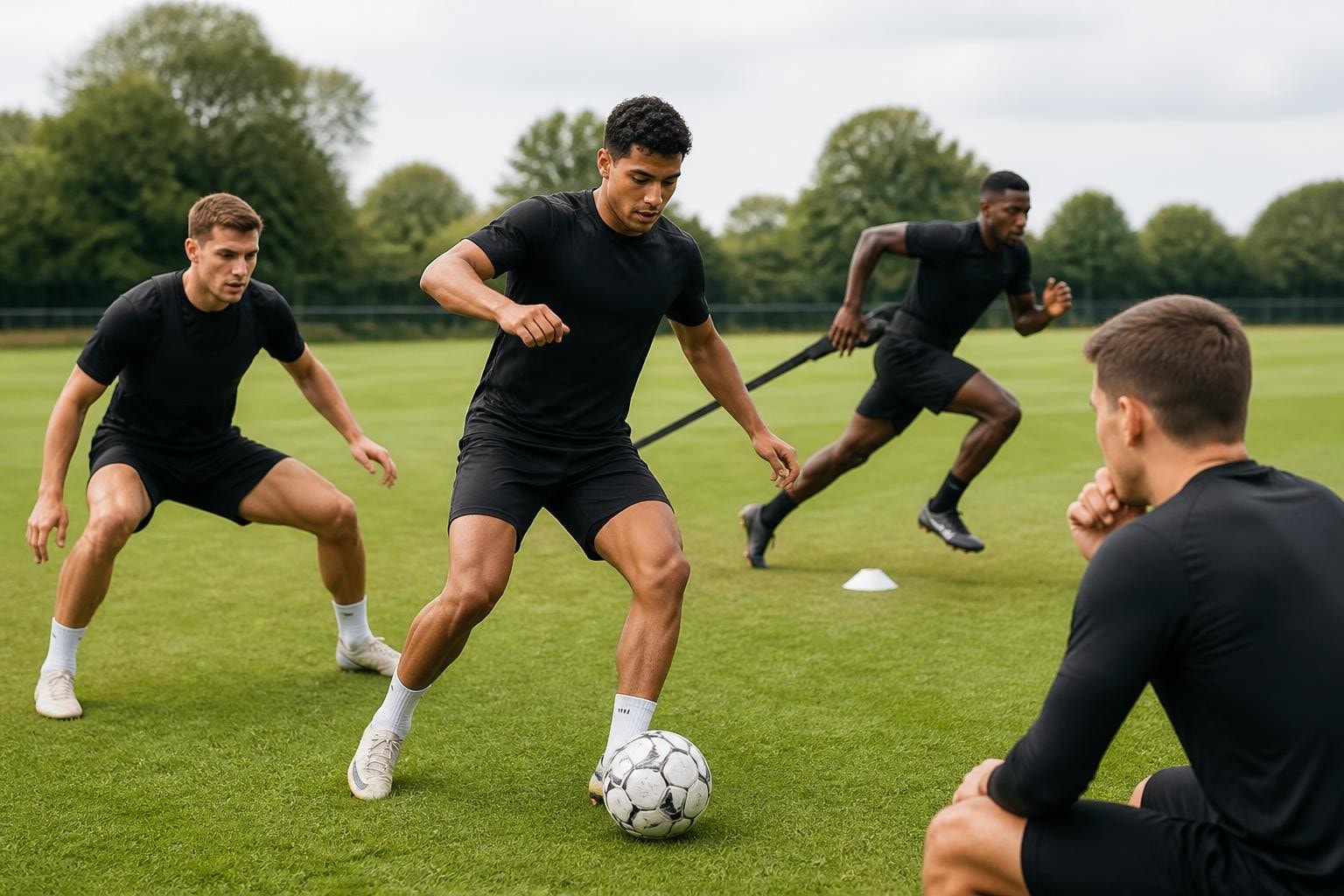
The difference between good players and elite professionals lies in the training methods that shape them from a young age. Pro elite soccer training represents a holistic, evidence-based approach to player development that goes far beyond simple drills and scrimmages. This comprehensive methodology addresses every dimension of athletic performance, creating players who can compete at the highest levels while building the mental resilience and tactical intelligence required for long-term success. Understanding these training principles helps parents and young athletes make informed decisions about their development pathways.
The Four Pillars of Pro Elite Soccer Training
Elite soccer development rests on four interconnected pillars that work in harmony to create complete players. Each pillar addresses a distinct aspect of performance, yet all four must develop simultaneously for optimal results.
Technical Mastery Through Repetition and Pressure
Technical excellence forms the foundation of all elite soccer training. Players must master ball control, passing accuracy, shooting technique, and dribbling skills until these movements become second nature. Pro elite soccer training emphasizes thousands of quality touches in varied contexts, progressively increasing difficulty and pressure.
Key technical training components include:
- First touch control under defensive pressure
- Passing accuracy with both feet across all distances
- 1v1 attacking and defending movements
- Striking technique from various angles and distances
- Aerial control and heading accuracy
The most effective technical sessions combine isolation drills with game-realistic scenarios. Players practice specific skills in controlled environments before applying them in small-sided games where decision-making speed increases. This progression ensures technical competence translates to match performance rather than existing only in training exercises.

Research on cognition in elite soccer players demonstrates that technical skills must integrate with perceptual-cognitive abilities to produce effective performance. Elite players don't just execute techniques well-they select the right technique at the right moment based on rapid environmental scanning.
Tactical Intelligence and Game Understanding
Tactical development separates professional players from recreational athletes. Pro elite soccer training dedicates substantial time to reading the game, understanding positional responsibilities, and making split-second decisions that exploit opponents' weaknesses.
| Tactical Component | Training Focus | Expected Outcome |
|---|---|---|
| Positioning | Spatial awareness drills, shadow play | Optimal field coverage |
| Transitions | Rapid offensive/defensive switch exercises | Quick counter-attacks, defensive recovery |
| Pattern recognition | Video analysis, situational scenarios | Anticipation of play development |
| Team shape | Formation-specific training | Cohesive unit movement |
Modern tactical training incorporates video analysis extensively. Players study their own performances and professional matches to identify patterns, recognize space creation opportunities, and understand how different formations create advantages. This analytical component accelerates tactical learning beyond what field time alone can achieve.
The UEFA technical reports provide invaluable insights into how top European clubs structure tactical training, emphasizing position-specific intelligence alongside team-wide understanding. Elite academies implement these methodologies to ensure players develop the game intelligence required at higher competitive levels.
Physical Conditioning for Elite Performance
Physical preparation in pro elite soccer training extends well beyond general fitness. Modern training programs target specific physical qualities that directly impact match performance: acceleration, change of direction speed, repeated sprint ability, and aerobic capacity for 90-minute performance maintenance.
Periodized physical training includes:
- Pre-season foundation building – Establishing aerobic base and general strength
- In-season maintenance – Preserving physical qualities while managing fatigue
- Recovery protocols – Active recovery, nutrition, and sleep optimization
- Injury prevention – Structured warm-ups and movement quality work
Elite programs increasingly utilize technology to monitor training loads and recovery status. GPS tracking systems measure distance covered, sprint frequency, and acceleration patterns during sessions. This data informs training adjustments that optimize performance while minimizing injury risk.
The FIFA 11+ warm-up program has become a cornerstone of injury prevention in elite youth soccer. Systematic reviews demonstrate that consistent implementation reduces injury incidence by 30-50%, making it an essential component of professional training environments.
For young players seeking this level of professional preparation, Soccer High Performance Training provides 90-minute high-intensity sessions that replicate the physical demands and training structure found in elite academies.
Psychological Development and Mental Strength
The psychological pillar often receives less attention than it deserves, yet mental preparation distinguishes elite performers in high-pressure moments. Pro elite soccer training incorporates deliberate psychological skill development alongside physical and technical work.
Mental training addresses several key areas:
- Concentration management – Maintaining focus across full matches despite distractions
- Pressure handling – Performing technical skills accurately under competitive stress
- Resilience building – Recovering quickly from mistakes or setbacks
- Self-regulation – Managing emotions and energy throughout competitions
- Growth mindset – Viewing challenges as development opportunities
Elite training environments deliberately create pressure situations that simulate match intensity. Players practice penalty kicks with teammates watching, execute technical drills with consequences for errors, and compete in small-sided games where individual performance receives immediate feedback. This controlled exposure to pressure builds the mental toughness required at higher levels.
Evidence-Based Training Load Management
Modern pro elite soccer training relies heavily on scientific monitoring to balance training stimulus with adequate recovery. Overtraining leads to burnout and injury, while insufficient training fails to produce adaptation. Elite programs walk this line carefully using objective measurement tools.
GPS and Wearable Technology Implementation
Professional clubs and advanced academies now routinely use GPS units and heart rate monitors during training sessions. These devices provide precise data on physical output, enabling coaches to track whether players are receiving appropriate training loads.
Recent consensus recommendations on GPS-based training load monitoring in youth soccer emphasize standardized metrics and age-appropriate load targets. Elite programs implement these guidelines to ensure young players develop optimally without excessive physical stress.
Key metrics monitored include:
| Metric | Purpose | Target Range |
|---|---|---|
| Total distance | Overall workload | Position-specific |
| High-speed running | Intensity measure | 600-1200m per session |
| Accelerations/decelerations | Neuromuscular load | 40-80 per session |
| Player load | Cumulative stress | Individualized zones |
This data-driven approach allows coaches to individualize training for each player's needs, ensuring faster recovery for those showing fatigue indicators while challenging players who can handle additional load.
Periodization and Season Planning
Elite soccer training follows carefully structured periodization that varies training focus throughout the season. This systematic approach prevents staleness, reduces injury risk, and ensures peak performance during important competitions.
A typical periodized year includes distinct phases. Pre-season emphasizes physical foundation building with higher volume, lower intensity work. Early season transitions to technical refinement and tactical integration. Mid-season focuses on maintenance and recovery between competitive matches. Late season may include a taper period before playoffs or tournaments.
Micro-cycles within each phase further structure training. A typical week might include two high-intensity training days, two moderate technical sessions, one recovery session, and match day. This rhythm allows adequate recovery while maintaining fitness and sharpness.
Small-Sided Games and Skill Transfer
Pro elite soccer training increasingly emphasizes small-sided games as the primary vehicle for skill development. These modified games create higher touch frequency, more decision-making opportunities, and better skill transfer to full matches compared to traditional drill-based approaches.
Why Small-Sided Games Work
Small-sided games (3v3, 4v4, 5v5) create learning environments that mirror actual match demands while increasing player involvement. In an 11v11 match, individual players might touch the ball 40-50 times. In a 4v4 game, that number easily doubles or triples, accelerating skill development.
These formats also create tactical problems that players must solve in real-time. Should I dribble or pass? Can I find space behind the defense? How do I transition from attack to defense? Players develop game intelligence by repeatedly encountering and solving these situations under time pressure.
The coaching resources from UEFA extensively document how elite European academies structure small-sided games to target specific learning outcomes, from positional responsibilities to pressing triggers.
Learning more about how small-sided games enhance development can help parents understand why modern training methodologies prioritize game-based learning over isolated technical drills.
Position-Specific Training in Elite Development
As players advance, pro elite soccer training becomes increasingly specialized based on position. While all players need foundational technical and tactical skills, specific positions demand unique physical attributes and tactical understanding.
Position-specific focus areas:
- Goalkeepers – Shot-stopping technique, distribution accuracy, positioning, communication
- Center backs – Aerial dominance, defensive positioning, ball progression from the back
- Full backs – Overlapping runs, crossing accuracy, recovery speed, 1v1 defending
- Central midfielders – Spatial awareness, passing range, defensive transitions
- Attacking midfielders – Creativity, combination play, shooting from distance
- Forwards – Finishing technique, movement off the ball, pressing from the front
Elite programs typically introduce position specialization around age 12-14, after players have developed broad foundational skills. Earlier specialization can limit overall development, while too-late specialization leaves players behind peers who have focused on position-specific requirements.
Recovery and Regeneration Protocols
Recovery receives equal emphasis to training in professional environments. Pro elite soccer training recognizes that adaptation occurs during recovery periods, not during the training sessions themselves. Insufficient recovery negates training quality and increases injury risk dramatically.
Evidence-Based Recovery Strategies
Professional clubs implement multi-faceted recovery protocols based on sports science research. The American College of Sports Medicine position statements provide evidence-based guidance on optimal recovery practices for elite athletes.
Effective recovery includes:
- Nutrition timing – Protein and carbohydrate intake within 30 minutes post-training
- Sleep optimization – 8-10 hours nightly for youth athletes, sleep hygiene practices
- Active recovery – Low-intensity movement to facilitate waste removal
- Hydration protocols – Systematic fluid replacement based on sweat loss
- Soft tissue maintenance – Foam rolling, stretching, massage therapy
Elite programs educate players and parents about recovery importance, emphasizing that training hard without recovering properly produces inferior results compared to balanced training-recovery cycles.
The Role of Competition in Elite Training
While training develops skills, competition provides the testing ground where learning solidifies. Pro elite soccer training incorporates appropriate competition frequency and level to challenge players without overwhelming them.
Finding the Right Competitive Level
Players develop optimally when competing against opponents slightly better than themselves. Too-easy competition breeds complacency and prevents growth. Excessively difficult competition can damage confidence and limit player involvement.
Elite programs carefully select tournaments and leagues that provide appropriate challenge levels. This might mean playing in multiple leagues simultaneously, playing up an age group for advanced players, or targeting specific showcase events that attract appropriate competition.
Competition also serves assessment purposes. Matches reveal which training elements are transferring to performance and which need refinement. Coaches analyze match performance to identify individual and team development priorities for upcoming training cycles.
Integration of Video Analysis and Technology
Modern pro elite soccer training leverages technology extensively to accelerate learning and provide objective performance feedback. Video analysis has become particularly central to elite development programs.
Players and coaches review match footage to identify tactical decisions, positioning errors, and technical execution quality. This visual feedback creates powerful learning moments, especially when players can see the difference between their intended action and actual performance.
| Technology Tool | Application | Development Benefit |
|---|---|---|
| Video analysis software | Match and training review | Pattern recognition, tactical awareness |
| GPS tracking | Physical load monitoring | Optimized training dosage |
| Force plates | Jump and sprint testing | Power development tracking |
| Heart rate monitors | Intensity verification | Appropriate training zones |
The most advanced programs provide players with individual video clips highlighting specific moments for review. This personalized feedback accelerates development by making learning points concrete and visual rather than abstract and verbal.
Building Complete Players Through Holistic Development
Pro elite soccer training ultimately aims to develop complete players who excel in all four pillars: technical, tactical, physical, and psychological. This holistic approach recognizes that weaknesses in any single area limit overall performance regardless of strengths elsewhere.
A technically brilliant player without tactical intelligence makes poor decisions. A tactically astute player without physical capacity cannot execute their vision. A physically dominant player without mental resilience crumbles under pressure. Elite programs systematically address all dimensions simultaneously.
This comprehensive approach requires coaching expertise across multiple domains. Programs like those at Strive Soccer Academy employ fully licensed coaches who understand how to integrate technical, tactical, physical, and psychological development into cohesive training sessions that address multiple pillars simultaneously.
Parent and Player Education in Elite Environments
Successful pro elite soccer training requires buy-in and understanding from players and parents. Elite programs invest in education that helps families understand the development process, set realistic expectations, and support player growth appropriately.
Key educational topics include:
- Development timelines and realistic progression expectations
- The non-linear nature of skill acquisition
- Appropriate parental involvement and support
- Nutrition and lifestyle factors that impact performance
- Recovery importance and sleep requirements
- Mental health awareness and support resources
Parents who understand the development process become partners in player growth rather than obstacles. They recognize that setbacks and plateaus are normal, that playing time fluctuates as players develop, and that long-term development matters more than short-term results.
Understanding what makes elite soccer training different helps families evaluate programs and make informed decisions about their young athlete's development pathway.
Creating Training Environments That Foster Excellence
The physical and cultural environment significantly impacts training effectiveness. Pro elite soccer training occurs in settings deliberately designed to promote learning, challenge players appropriately, and instill professional standards.
Physical facilities matter, but culture matters more. Elite environments establish clear performance standards, celebrate effort and improvement, provide constructive feedback, and maintain high expectations for behavior and commitment. Players rise to the standards set by their environment.
These environments also foster healthy competition among teammates. Players push each other to improve while supporting each other's development. This balance between competition and collaboration creates the culture found in professional clubs worldwide.
Long-Term Athletic Development Considerations
Pro elite soccer training aligns with long-term athletic development principles that recognize different developmental needs at different ages. Young players require different training emphases than older adolescents or adults.
Early development (ages 6-12) emphasizes fundamental movement skills, basic technical proficiency, and love of the game. Training should be playful, varied, and focused on skill acquisition rather than winning. Specialization comes later after broad athletic foundations are established.
Middle development (ages 13-16) increases training volume and intensity while introducing position specialization and advanced tactical concepts. Physical development varies widely during this phase, requiring individualized programming that accounts for biological rather than chronological age.
Late development (ages 17+) resembles adult training with full physical loading, advanced tactical sophistication, and psychological preparation for elite competition. Players at this stage are ready for the full demands of pro elite soccer training without modification.
Programs succeed when they appropriately challenge players at each developmental stage without rushing the process or skipping foundational elements. For families exploring elite soccer training options, understanding these developmental stages helps identify programs that match their child's current needs.
Pro elite soccer training represents a comprehensive, evidence-based approach that develops technical excellence, tactical intelligence, physical capacity, and mental strength simultaneously. These methodologies, refined in professional clubs worldwide, create complete players prepared for the highest levels of competition. At Strive Soccer Academy, we bring this European-style training philosophy to Surrey, BC, with fully licensed Canada Soccer coaches who understand how to develop young athletes across all four pillars while building character and creating genuine opportunities for advancement.


