
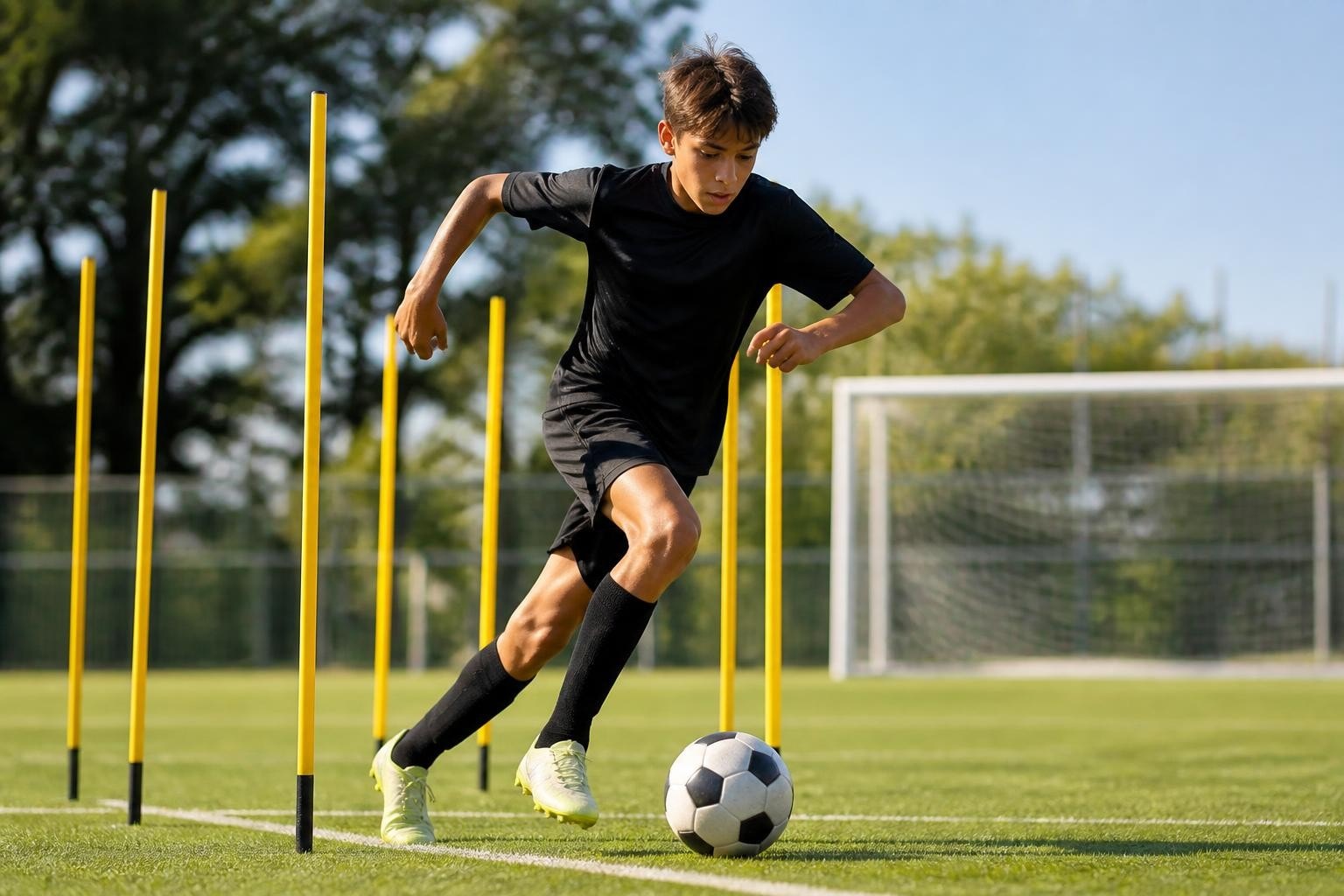
The landscape of player soccer development has evolved dramatically over the past decade. Gone are the days when simply showing up for practice twice a week and playing weekend matches was enough to nurture genuine talent. Today's player soccer environment demands a holistic, structured approach that addresses every dimension of athletic growth. Parents and young athletes increasingly recognize that success on the pitch requires more than raw talent-it demands comprehensive development across technical, tactical, physical, and psychological domains. This integrated approach to player soccer training is reshaping how academies design programs and how families choose where to invest their time and resources.
The Technical Foundation of Player Soccer Development
Technical skill remains the cornerstone of any serious player soccer program. Ball mastery, first touch, passing accuracy, and striking technique form the basic vocabulary that every player must speak fluently. Without these fundamentals, even the most athletically gifted young players will struggle to express themselves effectively during competitive matches.
Modern technical training emphasizes repetition with purpose. Players don't simply kick a ball against a wall-they engage in progressive drills that build muscle memory while introducing game-realistic pressure. This approach mirrors methodologies outlined in FIFA’s talent development publications, which emphasize the importance of deliberate practice in age-appropriate contexts.

Key Technical Competencies for Player Soccer
Different age groups require different technical emphases. The following table outlines core technical priorities across development stages:
| Age Range | Primary Technical Focus | Secondary Skills | Training Frequency |
|---|---|---|---|
| 6-8 years | Ball familiarity, basic coordination | Dribbling, simple passing | 2-3 sessions weekly |
| 9-12 years | First touch, passing accuracy | Shooting technique, 1v1 moves | 3-4 sessions weekly |
| 13-16 years | Technical execution under pressure | Advanced ball manipulation, weak foot | 4-5 sessions weekly |
| 17+ years | Position-specific technical refinement | High-speed technique, decision integration | 5-6 sessions weekly |
Establishing proper technique early prevents the need for costly corrections later. Many player soccer programs have adopted the European academy model, which prioritizes technical excellence during early developmental windows. Research consistently demonstrates that children who receive high-quality technical instruction between ages 6-12 maintain significant advantages throughout their careers.
The integration of technical training methods that challenge players while maintaining engagement has become essential. Coaches must balance repetition with variety, ensuring that sessions develop skill without causing mental fatigue or diminishing enthusiasm.
Tactical Intelligence: The Mental Game in Player Soccer
While technical skill provides the tools, tactical understanding determines how effectively players use those tools during competition. Tactical development in player soccer encompasses spatial awareness, decision-making speed, positional understanding, and the ability to read game situations before they unfold.
Tactical training begins with simple concepts and progresses toward complexity. Young players start by understanding basic positioning and spacing. As they mature, they learn formation responsibilities, pressing triggers, transition moments, and how to exploit opponent weaknesses. UEFA technical reports provide detailed analysis of how tactical trends evolve at elite levels, offering valuable insights for academy coaches.
Building Tactical Awareness Through Small-Sided Games
Small-sided games represent one of the most effective tools for developing tactical intelligence in player soccer programs. These modified formats increase touches, create more decision-making moments, and allow players to experience game situations repeatedly within a single session.
- 3v3 formats emphasize quick transitions, tight-space awareness, and constant involvement
- 5v5 configurations introduce basic positional concepts while maintaining high engagement
- 7v7 and 8v8 setups bridge the gap between development and full-field tactical complexity
- Conditioned games impose specific rules that highlight particular tactical principles
The beauty of small-sided games lies in their dual benefit: players develop technical skills under pressure while simultaneously building tactical problem-solving abilities. This approach aligns with contemporary player soccer philosophy that rejects separating technical and tactical development into isolated components.
Position-specific tactical training becomes increasingly important as players advance. Defenders learn about defensive shape, recovery runs, and when to step forward. Midfielders develop scanning habits, awareness of passing lanes, and transition responsibilities. Forwards refine movement off the ball, timing of runs, and exploiting defensive gaps. Each position demands distinct tactical knowledge that must be taught explicitly and reinforced consistently.
Physical Development in Player Soccer Programs
The physical demands of modern player soccer have intensified significantly. Match analysis reveals that today's players cover greater distances, perform more high-intensity runs, and engage in more physical duels than players from previous generations. Research published in PubMed demonstrates that elite players regularly perform 20-40 sprints per match, with tactical context determining sprint timing and direction.
Age-Appropriate Physical Training Considerations
Physical development in player soccer must respect biological maturity stages while building the foundation for long-term athletic performance. The following principles guide effective physical training:
- Pre-pubescent players (6-11 years) benefit most from movement literacy, coordination exercises, and playful physical challenges rather than structured conditioning
- Early adolescents (12-14 years) can begin integrating more systematic speed and agility work while carefully monitoring growth-related vulnerability
- Mid-to-late adolescents (15-18 years) progressively incorporate strength training, power development, and position-specific conditioning
- Young adults (18+ years) engage in periodized programs that balance performance peaks with recovery and injury prevention
Evidence-based physical activity guidelines from the World Health Organization recommend that children and adolescents accumulate at least 60 minutes of moderate-to-vigorous physical activity daily. Player soccer programs contribute significantly to meeting these targets while developing sport-specific capacities.
| Physical Quality | Training Method | Optimal Age Window | Player Soccer Application |
|---|---|---|---|
| Speed | Sprint mechanics, acceleration drills | 7-9 years, 13-16 years | Explosive first steps, transition speed |
| Agility | Change-of-direction patterns | 6-12 years | Defensive movements, dribbling |
| Endurance | Interval training, game-based conditioning | 14+ years | Match fitness, late-game performance |
| Strength | Bodyweight progressions, resistance training | 15+ years | Shielding, aerial duels, injury resilience |
Proper conditioning programs for soccer integrate these physical qualities without compromising technical and tactical development time. The art lies in achieving appropriate balance-enough physical stimulus to drive adaptation without creating excessive fatigue that impairs skill acquisition or increases injury risk.
Injury prevention deserves special attention in player soccer development. Growing athletes face unique vulnerabilities, particularly during rapid growth phases. Programs that incorporate dynamic warm-ups, neuromuscular training, and appropriate load management significantly reduce injury rates. Resources from the Aspetar Sports Medicine Journal provide evidence-based approaches to injury prevention and rehabilitation specific to football.
The Psychological Dimension of Player Soccer
Mental skills separate good players from great ones. Confidence, resilience, concentration, and emotional regulation determine how effectively athletes apply their technical, tactical, and physical capabilities during competition. Despite its importance, the psychological dimension of player soccer often receives insufficient attention in traditional training environments.
Building a growth mindset forms the foundation of psychological development. Players who view challenges as opportunities rather than threats, who embrace mistakes as learning moments, and who maintain effort despite setbacks demonstrate significantly better long-term development trajectories. Coaches play a critical role in shaping this mindset through their feedback, session design, and behavioral modeling.
Core Psychological Skills for Player Soccer Athletes
- Self-awareness: Understanding personal strengths, weaknesses, emotional patterns, and performance triggers
- Goal-setting: Establishing process-oriented objectives that drive daily improvement
- Visualization: Mental rehearsal of technique, tactical situations, and successful performances
- Self-talk management: Replacing negative internal dialogue with constructive, empowering thoughts
- Pressure management: Maintaining performance quality when stakes increase or audiences grow
- Team communication: Expressing needs, receiving feedback, and contributing to group cohesion
Parents can support psychological development by emphasizing effort over outcome, maintaining perspective about age-appropriate expectations, and creating home environments where soccer success doesn't define personal worth. The partnership between academy, player, and family creates the optimal ecosystem for psychological growth.
Competitive experience provides irreplaceable psychological benefits. Players learn to manage pre-game nerves, maintain focus amid distractions, handle referee decisions they perceive as unfair, and bounce back from disappointing results. These experiences build psychological resilience that transfers beyond the pitch into academic, social, and eventual professional contexts.
Integrating the Four Pillars: Holistic Player Soccer Development
The magic happens when technical, tactical, physical, and psychological elements integrate seamlessly. Elite player soccer programs don't treat these domains as separate components but rather as interconnected dimensions of a unified development process. Training sessions that simultaneously challenge multiple areas produce the most significant growth.
For example, a possession-focused small-sided game develops technical ball manipulation (technical), decision-making about when to pass versus dribble (tactical), repeated high-intensity movements (physical), and composure under defensive pressure (psychological). This integrated approach mirrors the game itself, where all four dimensions operate simultaneously.
U.S. Soccer’s player development philosophy emphasizes this holistic perspective, organizing their framework around age-appropriate integration of all developmental areas. Their model provides practical guidance for structuring environments that nurture complete players rather than one-dimensional athletes.
Periodization in Player Soccer Training
Effective player soccer programs apply periodization principles to optimize development while managing fatigue. The table below outlines a simplified periodization framework:
| Training Period | Primary Emphasis | Secondary Focus | Recovery Priority |
|---|---|---|---|
| Pre-season (4-6 weeks) | Physical foundation building | Technical refinement | Moderate |
| Early season (6-8 weeks) | Tactical implementation | Game rhythm development | Moderate-High |
| Mid-season (12-16 weeks) | Performance maintenance | Individual development targets | High |
| Late season (4-6 weeks) | Competition sharpness | Mental preparation | Very High |
| Off-season (6-8 weeks) | Active recovery | Individual technical work | Extreme |
Research published in Sports Medicine Open demonstrates that periodized approaches reduce injury rates while optimizing performance peaks. Youth player soccer programs must adapt these principles to account for academic schedules, multiple competitions, and developmental priorities that differ from professional contexts.
Camp experiences offer concentrated development opportunities within the broader periodization framework. Intensive Soccer High Performance Training camps provide focused environments where players engage in 90-minute high-intensity sessions targeting technical mastery, tactical awareness, and psychological composure under pressure-accelerating growth during key developmental windows.
Parent Partnership in Player Soccer Development
Parents serve as essential partners in the player soccer development journey. Their support, understanding, and appropriate involvement significantly impact both immediate enjoyment and long-term outcomes. However, the line between supportive and counterproductive parental involvement can be subtle.
Effective parent support includes:
- Providing consistent transportation and logistical support without complaint
- Maintaining positive sideline behavior that encourages rather than instructs
- Ensuring proper nutrition, hydration, and sleep that support athletic demands
- Trusting coaches to make playing-time and position decisions
- Celebrating effort and improvement rather than solely focusing on results
- Supporting continued participation even when motivation temporarily wanes
Detrimental patterns to avoid:
- Coaching from the sideline during matches or practices
- Criticizing coaches or referees in front of the player
- Making car-ride-home discussions primarily about performance critique
- Comparing the player to teammates or siblings
- Allowing soccer to dominate family identity or schedule unreasonably
- Pressuring continuation when genuine player interest has disappeared
The relationship between parents and youth soccer organizations works best when built on clear communication, shared expectations, and mutual respect. Regular parent education sessions help families understand developmental philosophy, age-appropriate expectations, and how to best support their athlete's journey.
The Long-Term Athlete Development Model
Player soccer development doesn't follow a linear path. Athletes progress through distinct stages, each requiring different emphases and support structures. The Long-Term Athlete Development (LTAD) model provides a framework for understanding these phases:
Stage 1: Active Start (ages 0-6) – General movement competence through play
Stage 2: FUNdamentals (ages 6-9) – Basic soccer skills in enjoyable contexts
Stage 3: Learning to Train (ages 9-12) – Systematic technical skill development
Stage 4: Training to Train (ages 12-16) – Integrated development with increasing training volume
Stage 5: Training to Compete (ages 16-18) – Position specialization and competitive refinement
Stage 6: Training to Win (ages 18+) – Elite performance optimization
Each stage demands different priorities from coaches, parents, and players themselves. Pushing competitive intensity too early can create burnout and diminish long-term potential. Conversely, failing to increase training sophistication as players mature leaves development opportunities unrealized. Quality player soccer programs adjust their approach based on the developmental stage of their athletes rather than applying a one-size-fits-all methodology.
Understanding these stages helps parents maintain realistic expectations and appreciate that different children progress at different rates. Biological maturation, psychological readiness, and opportunity all influence developmental timelines. The player who dominates at age 10 may not be the standout at age 16, while late-maturing athletes often surge ahead during mid-to-late adolescence.
Creating a Positive Player Soccer Culture
Culture shapes everything. The environment created within a player soccer program influences retention, enjoyment, development rate, and long-term outcomes. Positive cultures share common characteristics that can be intentionally cultivated.
Elements of positive player soccer culture:
- Clear values that prioritize respect, effort, and continuous improvement
- Inclusive practices where every player receives quality coaching attention
- Mistake-tolerant atmospheres that encourage risk-taking and creativity
- Player voice opportunities that give athletes appropriate ownership
- Recognition systems that celebrate diverse contributions beyond just scoring
- Conflict-resolution mechanisms that address issues constructively
- Social connections that extend beyond purely soccer interactions
Toxic cultures, conversely, create environments where fear of failure inhibits performance, politics determine playing time over merit, and short-term results matter more than long-term development. These environments drive talented players away from the sport entirely while damaging those who remain.
Families evaluating what makes training different should observe not just the technical content delivered but the cultural atmosphere during sessions. Do players support each other? Does the coach provide constructive feedback? Are mistakes treated as learning opportunities? Do players appear engaged and energized?
The Role of Competition in Player Soccer Development
Competition serves as both a development tool and a measurement opportunity. Appropriate competitive experiences accelerate growth by providing meaningful context for training, revealing performance gaps that guide future emphasis, and building psychological resilience. However, excessive or poorly structured competition can harm development rather than enhance it.
Developmental competition principles:
- Match frequency should align with age: younger players benefit from more training relative to competition
- Competition level should provide challenge without overwhelming: winning every game by large margins teaches little; losing every game by large margins demoralizes
- Formats should match developmental priorities: smaller formats often provide better development than full-field games for younger ages
- Playing time distribution should reflect program philosophy: development programs maximize participation; elite programs may prioritize winning
- Tournament selection should support season periodization: excessive tournament participation creates fatigue and reduces training time
Many player soccer programs struggle with balancing these principles against parent and player desires for maximum competitive exposure. Clear communication about competition philosophy helps align expectations and ensures families select programs matching their priorities.
Player soccer development in 2026 demands more than talent-it requires systematic attention to technical mastery, tactical intelligence, physical preparation, and psychological resilience. Programs that integrate these four pillars while respecting developmental stages and maintaining positive cultures position young athletes for success both on the pitch and beyond. Strive Soccer Academy brings this comprehensive, European-style training philosophy to families in Surrey, BC, with fully licensed Canada Soccer coaches dedicated to developing complete players through age-appropriate, holistic programming. Whether your young athlete is just beginning their soccer journey orready to take their game to the next level, the right development environment makes all the difference.


