
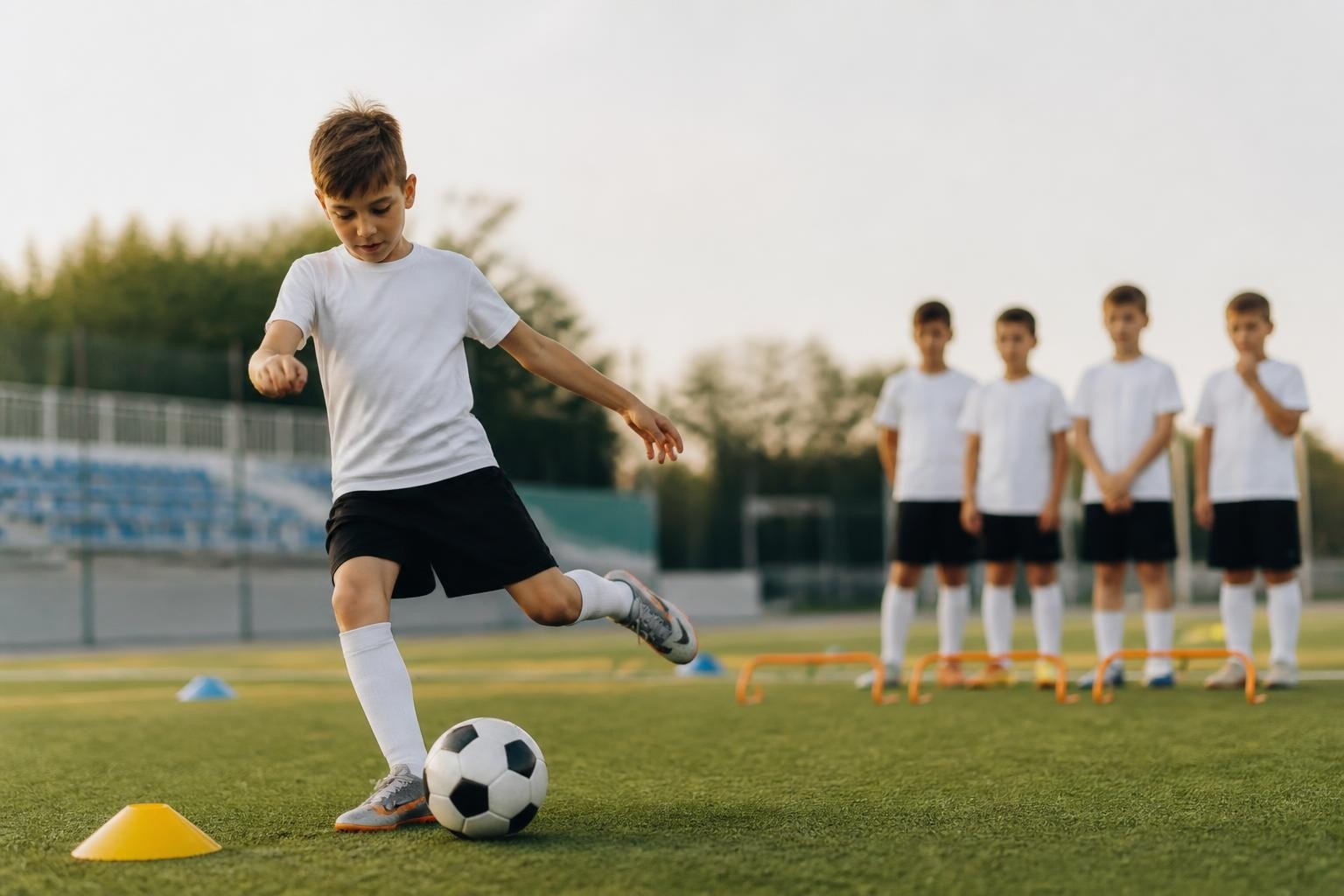
Learning soccer represents one of the most rewarding journeys a young athlete can undertake. Unlike many sports where specialization happens early, soccer demands a balanced approach to development across multiple dimensions. Parents and coaches who understand the comprehensive nature of player development can create environments where young athletes thrive both on and off the field. This holistic approach to learning soccer ensures that players build not just technical proficiency, but also tactical awareness, physical fitness, and mental resilience.
The Foundation: Technical Skills Come First
When young players begin learning soccer, technical skills form the cornerstone of everything they'll accomplish in the game. Ball mastery, passing accuracy, first touch control, and shooting technique require thousands of repetitions to develop properly. Research from U.S. Soccer’s Learning Center emphasizes that technical development happens most effectively when players receive consistent, age-appropriate coaching during critical developmental windows.
Building Ball Control Through Deliberate Practice
The journey of learning soccer starts with simple but essential ball control exercises. Players need to develop comfort with the ball at their feet before they can execute complex moves in game situations.
- Dribbling drills that emphasize close control with both feet
- Passing exercises focusing on proper technique and weight of pass
- First touch training to receive balls from various angles and speeds
- Shooting mechanics including proper plant foot placement and follow-through
Quality repetition matters more than quantity. Ten perfectly executed passes teach muscle memory better than fifty careless attempts. Coaches should prioritize technique correction during these formative stages, ensuring players don't cement bad habits that become difficult to break later.

Tactical Understanding: Reading the Game
Learning soccer extends far beyond individual skills. Tactical awareness separates good players from great ones, enabling athletes to make intelligent decisions under pressure. England Football’s training guidance outlines how the Four Corner model integrates tactical learning into every training session.
Positional Awareness and Team Shape
Young players must understand their role within the team structure. This tactical dimension of learning soccer develops gradually through exposure to different formations and game situations.
| Age Group | Tactical Focus | Key Concepts |
|---|---|---|
| U8-U10 | Basic positioning | Width, depth, support play |
| U11-U13 | Shape maintenance | Formation awareness, defensive cover |
| U14-U16 | Advanced tactics | Pressing systems, build-up patterns |
| U17+ | Game management | Tempo control, tactical adjustments |
Players at Strive Soccer Academy develop tactical sophistication through structured training that introduces concepts progressively. Understanding when to press, when to hold position, and how to create passing lanes becomes second nature through repeated exposure to game-realistic scenarios.
Decision-Making Under Pressure
The speed of modern soccer demands rapid decision-making. Learning soccer at a competitive level means training the mind as intensely as the body. Small-sided games create numerous decision points per minute, forcing players to scan, assess, and execute quickly.
Coaches should challenge players with questions during training: "Why did you pass there?" or "What other options did you have?" This questioning approach, supported by research from the Positive Coaching Alliance, helps players develop the cognitive skills necessary for high-level performance.
Physical Development: Building Athletic Foundation
The physical demands of soccer require systematic conditioning that respects developmental stages. Learning soccer effectively means understanding how to build strength, speed, and endurance without risking injury or burnout.
Age-Appropriate Conditioning
Physical training must align with biological age, not just chronological age. The American College of Sports Medicine provides evidence-based guidelines for youth athletic development.
Pre-pubescent players (U8-U12):
- Focus on coordination and movement literacy
- Avoid heavy resistance training
- Emphasize fun, game-based fitness activities
- Develop running mechanics and agility
Adolescent players (U13-U16):
- Introduce structured strength training
- Build aerobic capacity through interval work
- Address injury prevention through proper warm-ups
- Monitor growth-related flexibility changes
Older youth (U17+):
- Implement sport-specific conditioning programs
- Focus on power development and explosiveness
- Periodize training to peak for important competitions
- Include recovery protocols and load management
A comprehensive conditioning program for soccer balances all physical qualities while preventing overuse injuries common in youth sports. Evidence from systematic reviews on training load monitoring shows that properly periodized programs reduce injury rates significantly.
Speed and Agility Training
Soccer demands multi-directional speed that differs from straight-line sprinting. Learning soccer means developing the ability to accelerate, decelerate, and change direction efficiently.
- Linear speed work: 10-30 meter sprints with full recovery
- Lateral movement drills: Shuffles, crossover steps, defensive slides
- Reaction training: Ball drops, partner cues, visual stimulus work
- Plyometric exercises: Age-appropriate jumping and bounding activities
These physical components integrate naturally into training sessions rather than existing as separate fitness blocks. The European coaching philosophy emphasizes technical work that simultaneously develops physical qualities, making every minute of training serve multiple purposes.
Psychological Resilience: The Mental Game
Learning soccer at competitive levels tests mental toughness repeatedly. Pressure situations, mistakes, tough losses, and challenging opponents all provide opportunities for psychological growth.
Building Confidence Through Mastery
Confidence stems from competence. Players who have practiced specific skills thousands of times trust their ability to execute under pressure. Training environments should provide enough challenge to promote growth while offering sufficient success to maintain motivation.
Progressive challenge structure:
- Introduce new skills in low-pressure environments
- Practice with gradually increasing difficulty
- Apply in controlled game situations
- Refine based on performance feedback
- Master through consistent repetition
Research from the UEFA coaching education framework demonstrates that players develop resilience when coaches maintain high standards while providing supportive feedback.
Handling Adversity and Setbacks
Every player faces setbacks while learning soccer. Missing a crucial penalty, losing a starting position, or struggling with a new tactical concept can shake confidence. How coaches and parents respond to these moments shapes psychological development profoundly.
Growth mindset principles apply perfectly to soccer development. Emphasizing effort, learning, and improvement rather than just outcomes helps young athletes persist through difficulties. When a player makes a mistake, the response should focus on the learning opportunity rather than the error itself.
Creating Optimal Learning Environments
The context in which players train significantly impacts their development. Learning soccer flourishes in environments that balance structure with creativity, challenge with support, and competition with collaboration.
Practice Design Principles
Effective training sessions share common characteristics regardless of age group or skill level. Coaches should design practices that maximize touches, promote decision-making, and maintain high engagement.
| Practice Element | Purpose | Implementation |
|---|---|---|
| Ball-rolling time | Maximize active learning | Minimize lines and waiting |
| Realistic context | Transfer to games | Use game-like constraints |
| Appropriate challenge | Maintain flow state | Adjust difficulty to skill level |
| Immediate feedback | Accelerate learning | Provide corrections in real-time |
Sessions should progress from technical work through tactical understanding to game application. This sequence ensures players develop skills in isolation before applying them under game pressure.
The Role of Small-Sided Games
Small-sided games accelerate learning by increasing each player's involvement. Four-versus-four or five-versus-five formats create more touches, decisions, and learning opportunities than full eleven-versus-eleven matches for developing players.
Benefits of reduced player counts include:
- More ball contacts per player per session
- Increased decision-making opportunities
- Better tactical understanding through clearer roles
- Higher intensity with less standing around
- Easier coaching with fewer players to monitor
The FIFA Global Football Development report emphasizes small-sided formats as best practice for youth development worldwide.
Parent and Coach Partnership
Learning soccer succeeds when parents and coaches work together toward common goals. This partnership requires clear communication, aligned expectations, and mutual respect for each role.
Supporting Development at Home
Parents play crucial roles in player development without becoming overbearing. Simple actions support learning soccer outside formal training:
- Encourage independent practice without pressure
- Watch professional games together and discuss tactical elements
- Maintain perspective about winning versus development
- Support emotional recovery after difficult matches
- Ensure proper nutrition, hydration, and sleep
The balance between support and pressure determines whether young players develop lasting love for the game or burn out before reaching their potential.
Choosing the Right Development Program
Not all soccer programs approach learning soccer equally. Parents should evaluate programs based on coaching credentials, training philosophy, and developmental outcomes rather than just win-loss records at young ages.
Questions to ask when evaluating programs:
- What coaching licenses do staff members hold?
- How does the curriculum address technical, tactical, physical, and psychological development?
- What is the coach-to-player ratio during training?
- How do you balance winning with long-term development?
- What opportunities exist for players at different skill levels?
Programs like those offered through Soccer Skills Training that employ fully licensed coaches and follow European-style development models provide structured pathways for player growth across all four development pillars.
Long-Term Development Pathways
Learning soccer represents a marathon, not a sprint. Players who specialize too early often plateau or burn out, while those who develop broadly across multiple dimensions continue improving throughout adolescence and beyond.
The 10,000-Hour Principle Applied to Soccer
Expertise requires extensive deliberate practice over many years. For soccer, this translates to consistent training from early childhood through late adolescence. However, quality matters more than mere accumulation of hours.
Deliberate practice characteristics:
- Specific performance goals for each session
- Immediate feedback from qualified coaches
- High concentration and effort
- Repetition with slight variations
- Continuous refinement based on results
Players should accumulate training hours across multiple contexts: team practices, individual skill work, small-sided games, and match play. This variety prevents monotony while developing different aspects of performance.
Avoiding Early Specialization Pitfalls
Young athletes who play only soccer year-round face higher injury risks and burnout rates than those who participate in multiple sports seasonally. Learning soccer benefits from athletic diversity during foundational years.
Multi-sport participation develops:
- Varied movement patterns reducing overuse injuries
- Broader athletic base transferring to soccer performance
- Mental freshness preventing psychological burnout
- Social development through different team environments
- Passion protection by avoiding forced specialization
Research consistently shows that elite soccer players typically specialized later than their peers who didn't reach professional levels. The pathway to excellence includes diverse athletic experiences, not narrow focus from age six.
Measuring Progress and Setting Goals
Learning soccer requires clear benchmarks to guide development and maintain motivation. Players, parents, and coaches should collaborate on goal-setting that emphasizes controllable factors over outcomes.
Technical Skill Assessment
Regular skill testing provides objective feedback on technical development. These assessments should measure fundamentals rather than advanced tricks.
Sample technical benchmarks by age:
- U10: Complete 25 consecutive juggles, accurate passing to targets 10 meters away
- U12: Dribble through cone course in under specified time with both feet, accurate driven passes 20 meters
- U14: Execute 50 consecutive juggles, strike moving balls accurately from various distances
- U16: Demonstrate advanced ball mastery moves at speed, deliver crosses accurately from both flanks
Progress tracking motivates players when they see measurable improvement over time, reinforcing the connection between practice and performance.
Tactical and Game Understanding Evaluation
Tactical growth proves harder to measure than technical skills but remains equally important. Video analysis helps players see their positioning, decision-making, and movement patterns objectively.
Coaches can assess tactical understanding through:
- Position-specific decision-making scenarios
- Recognition of game situations and appropriate responses
- Communication and leadership during matches
- Ability to adapt to different tactical systems
- Understanding of team roles and responsibilities
These evaluations shouldn't just identify weaknesses but celebrate growth and guide future training priorities.
Learning soccer encompasses far more than mastering kicks and dribbles; it requires developing technical excellence, tactical intelligence, physical capabilities, and mental strength simultaneously. Young players who receive structured, age-appropriate training across all four pillars build foundations for long-term success and enjoyment of the beautiful game. Strive Soccer Academy brings this comprehensive European-style approach to Surrey, BC, where fully licensed coaches guide young athletes through every stage of development, building skills, character, and genuine opportunities for growth in the game.


