
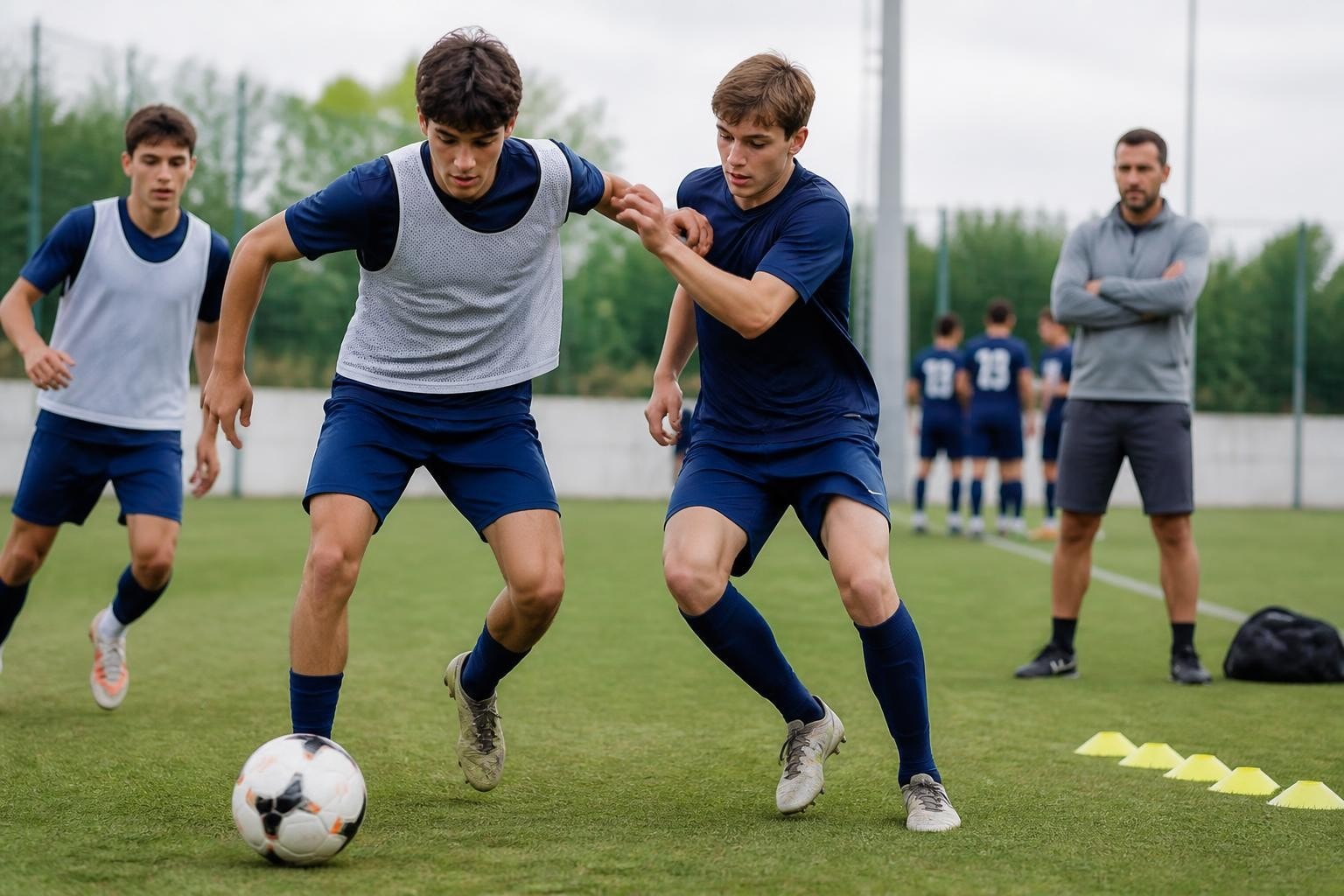
European soccer has long been recognized as the gold standard for player development, tactical innovation, and sustainable football culture. The continent's approach to the beautiful game emphasizes systematic training, youth academy excellence, and a holistic view of player growth that extends far beyond simply kicking a ball. For parents and coaches seeking to understand what makes European soccer unique, examining its core principles reveals a comprehensive methodology that transforms raw talent into complete athletes.
The Four Pillars of European Soccer Training
European soccer academies have built their reputation on a structured approach that addresses every dimension of player development. This methodology divides training into four distinct yet interconnected areas: technical, tactical, physical, and psychological.
Technical development forms the foundation of every European training program. Players spend countless hours mastering ball control, first touch, passing accuracy, and striking technique. Unlike recreational programs that prioritize scrimmages, European academies dedicate significant training time to repetitive skill work with progressive difficulty.
The tactical pillar teaches players to understand the game intellectually. Young athletes learn positioning, spacing, team shape, and decision-making under pressure. This cognitive aspect separates European soccer from purely physical approaches, creating players who read the game as well as they play it.
Physical and Psychological Components
Physical conditioning in European soccer extends beyond simple fitness. Programs address:
- Speed and agility specific to match situations
- Strength development appropriate for age groups
- Endurance training that mirrors game demands
- Injury prevention through proper movement patterns
- Recovery protocols and load management
The psychological dimension receives equal attention. European academies recognize that mental resilience, confidence, and composure determine success at elite levels. Players develop growth mindsets, learn to handle pressure, and build the character traits necessary for long-term development.

Structural Excellence in European Football Systems
The organizational structure of European soccer creates an environment where excellence thrives at every level. UEFA’s Club Licensing and Financial Sustainability Regulations establish rigorous standards that clubs must meet, ensuring quality infrastructure, qualified coaching staff, and sustainable business practices across the continent.
Professional clubs invest heavily in academy systems that identify and develop talent from as young as six years old. These academies provide daily training, education support, and clear pathways to professional contracts. The integration between youth and senior teams creates aspirational models where young players can visualize their progression.
| Level | Training Frequency | Focus Areas | Competitive Format |
|---|---|---|---|
| U8-U10 | 2-3 sessions/week | Technical foundation, enjoyment | Small-sided games |
| U11-U14 | 3-4 sessions/week | Tactical awareness, skill refinement | Regional leagues |
| U15-U18 | 4-6 sessions/week | Position-specific training, physicality | National competitions |
| U19+ | Daily sessions | Professional preparation, specialization | Reserve leagues, senior integration |
The Academy-to-Professional Pipeline
European soccer's academy systems create clear developmental pathways. Top clubs operate multiple youth teams across age groups, each with professional coaching staff and structured curricula. Players advance through age-appropriate stages, with regular assessments determining progression.
This systematic approach contrasts sharply with less structured environments. The CIES Football Observatory regularly documents how European clubs successfully transition academy graduates to first-team football, demonstrating the effectiveness of long-term player development strategies.
Financial investment supports these systems. According to Deloitte’s Football Money League analysis, top European clubs dedicate substantial resources to youth development, viewing academies as both sporting necessities and valuable business assets.
Tactical Evolution and Game Intelligence
European soccer's tactical sophistication continues advancing year after year. The continent serves as the laboratory where innovative approaches emerge, get tested at the highest levels, and eventually spread globally. Coaches emphasize game understanding from the earliest age groups, building tactical literacy alongside technical skills.
Modern European soccer employs flexible systems that adapt during matches. Teams seamlessly transition between formations, adjust pressing triggers, and modify build-up patterns based on opponents. This fluidity requires players who understand multiple positions and tactical concepts.
Developing Decision-Makers
Training sessions in European academies emphasize decision-making under realistic pressure. Rather than isolated drills, exercises replicate game scenarios where players must:
- Scan the field and identify available options
- Process information about teammates, opponents, and space
- Execute technical actions while under physical pressure
- Evaluate outcomes and adjust future decisions
- Communicate effectively with teammates throughout
The UEFA Champions League technical reports provide fascinating insights into how elite teams implement complex tactical systems. These documents reveal the sophistication of European soccer at the highest level, where marginal advantages in positioning and timing determine outcomes.
Technical Mastery Through Deliberate Practice
Technical excellence defines European soccer players. From Barcelona's tiki-taka to Liverpool's high-intensity pressing, every successful system requires players with exceptional technical foundations. European training methodology achieves this through structured, progressive skill development.
Ball mastery begins in the youngest age groups. Players develop comfort with the ball through thousands of touches in varied contexts. Training progresses from individual ball work to partner exercises, then to opposed situations that simulate match pressure.
Passing accuracy receives particular emphasis. European players learn proper technique for short passes, driven balls, and long distribution. Training addresses both feet, multiple surfaces (inside, outside, laces), and different trajectories. For those seeking to develop these fundamental skills, programs like Soccer Skills Training bring these European methodologies to North American players, emphasizing the technical foundation necessary for advanced play.
Progressive Skill Development Model
European academies structure technical training in progressive phases:
- Foundation Phase (Ages 6-9): Basic coordination, first touch, simple passing patterns
- Development Phase (Ages 10-12): Refined techniques, weak foot development, introduction to pressure situations
- Consolidation Phase (Ages 13-16): Position-specific techniques, high-speed execution, creative skills
- Mastery Phase (Ages 17+): Professional standards, consistency under extreme pressure, adaptability
This systematic progression ensures age-appropriate challenges while building toward elite technical standards. Research from StatsBomb’s analysis of modern football evolution demonstrates how technical proficiency increasingly separates top performers from average players in European leagues.
Analytics and Performance Measurement
European soccer leads the world in applying analytics to player development and match preparation. Clubs employ data scientists, video analysts, and performance specialists who quantify every aspect of the game. This analytical approach informs training design, player recruitment, and tactical planning.
Expected goals (xG) has revolutionized performance evaluation in European soccer. Rather than judging players solely on outcomes, xG models assess shot quality and chance creation. Peer-reviewed research on expected goals modeling validates these metrics as reliable indicators of team and player performance over time.
| Metric Category | Key Indicators | Development Application |
|---|---|---|
| Technical | Pass completion, touches in box, successful dribbles | Individual skill assessment |
| Tactical | Positioning heat maps, passing networks, pressing triggers | Team system effectiveness |
| Physical | Sprint distance, high-intensity runs, acceleration events | Conditioning program design |
| Psychological | Decision quality under pressure, consistency metrics | Mental training focus areas |
Predictive modeling has become essential for European clubs. FiveThirtyEight’s soccer prediction methodology explains how advanced statistical models forecast match outcomes and player development trajectories, helping clubs make informed decisions about academy players and recruitment targets.
Player Welfare and Injury Prevention
European soccer has pioneered comprehensive approaches to player health and injury prevention. The physical demands of modern football require sophisticated management of training loads, recovery protocols, and medical support.
Research published in studies examining ACL injury epidemiology across Europe’s top five leagues reveals injury patterns that inform prevention strategies. European clubs use this evidence-based approach to design training programs that develop athleticism while minimizing injury risk.
Load Management Strategies
Professional European clubs implement careful load monitoring:
- GPS tracking of distance, speed, and acceleration during training
- Heart rate monitoring for cardiovascular stress
- Subjective wellness questionnaires assessing fatigue and recovery
- Rotation policies that prevent overuse injuries
- Age-appropriate training volumes for youth players
Youth development programs adapted these principles for younger athletes. Understanding that children aren't miniature adults, European academies adjust training intensity, volume, and competition schedules to match developmental stages. This long-term perspective prioritizes sustainable development over short-term results.
Competition Formats and Playing Time Philosophy
European soccer structures youth competitions to maximize development rather than merely producing winners. The emphasis on player growth over team success creates environments where young athletes receive appropriate challenges and learning opportunities.
Small-sided games dominate youth football across Europe. Rather than 11v11 matches for young children, European federations mandate formats like 4v4, 5v5, and 7v7 for specific age groups. These modified games increase individual ball contacts, create more decision-making moments, and ensure active participation. Parents interested in understanding how small-sided games enhance development can explore resources that explain why European soccer prioritizes these formats.
Playing time distribution reflects developmental priorities. European academy coaches ensure all players receive meaningful minutes, recognizing that bench time doesn't develop skills. This philosophy sometimes conflicts with winning obsession but produces better long-term outcomes.
Cultural Values and Football Education
European soccer culture emphasizes respect, discipline, and football intelligence. These values permeate training environments, creating athletes who understand their responsibilities to teammates, opponents, and the sport itself.
Football education extends beyond physical training. European academies teach:
- Match analysis and video review skills
- Nutrition and lifestyle management
- Media interaction and personal branding
- Financial literacy for professional athletes
- Career planning and educational support
This comprehensive approach recognizes that most academy players won't reach professional levels. Even those who do typically have careers spanning only 8-12 years. European clubs prepare players for life beyond football while developing their potential on the pitch.
Coaching Standards and Continuous Development
The quality of European soccer stems largely from exceptional coaching. Every major European federation maintains rigorous coach education systems with clear licensing pathways and ongoing professional development requirements.
Coaching licenses in Europe require substantial time investment and demonstrated competency. UEFA's licensing framework establishes standards that member associations must meet, ensuring coaches possess technical knowledge, tactical understanding, and pedagogical skills.
| License Level | Minimum Hours | Practical Requirements | Coaching Scope |
|---|---|---|---|
| UEFA C | 120 hours | Grassroots demonstrations | Youth recreational |
| UEFA B | 120 hours | Age-group coaching portfolio | Academy U13-U16 |
| UEFA A | 180 hours | Advanced tactical projects | First team assistant, academy senior |
| UEFA Pro | 240 hours | Professional club placement | First team head coach |
Professional development continues throughout coaching careers. European coaches attend conferences, complete refresher courses, and engage with the latest research. This commitment to continuous learning ensures training methodologies evolve with the sport.
Integration of Technology in Training
European soccer embraces technological innovation to enhance player development. From video analysis platforms to wearable sensors, technology provides objective feedback that accelerates improvement.
Video analysis has become standard practice at all competitive levels. Players review their performances, study opponents, and learn tactical concepts through visual examples. Modern platforms allow coaches to create individual highlight reels, tag specific actions, and provide detailed feedback.
Virtual reality training systems are emerging across European academies. These technologies simulate game situations, allowing players to practice decision-making without physical fatigue. While still developing, VR represents European soccer's willingness to explore innovative training methods.
Training equipment has similarly evolved. Sensor-equipped balls provide immediate feedback on shot power, spin, and trajectory. Smart goals with target zones and automated tracking systems make technical training more engaging and measurable.
Parental Involvement and Family Support Systems
European soccer academies recognize that family support significantly impacts player development. Clubs establish clear communication channels with parents and provide education about the development pathway.
Parent education programs help families understand:
- Realistic timelines for player progression
- Age-appropriate expectations for performance
- The role of failure and setbacks in development
- How to support without creating pressure
- Balancing football with education and social development
This collaborative approach creates alignment between club, player, and family. Parents become informed partners in the development process rather than external pressure sources. The shared understanding of long-term development goals reduces anxiety around short-term results.
Financial Sustainability and Business Models
European soccer's top clubs operate as sophisticated businesses while maintaining sporting ambitions. Financial regulations ensure clubs spend within their means, protecting long-term sustainability even as competition intensifies.
Revenue streams in European soccer include:
- Broadcasting rights from domestic and international markets
- Commercial partnerships and sponsorship agreements
- Match-day income from tickets and hospitality
- Player trading and transfer market activity
- Merchandising and licensing arrangements
Youth academies represent significant investments that sometimes generate substantial returns. When academy graduates reach first teams or transfer to other clubs, the financial impact can be enormous. This creates incentive alignment where sporting and business objectives reinforce each other.
Global Influence and Knowledge Export
European soccer's methodologies increasingly influence global football development. Coaches trained in European systems bring their expertise to other continents, while international players benefit from European academy experiences.
The knowledge transfer operates through multiple channels. European clubs establish satellite academies and partnership programs worldwide. Coaching courses follow UEFA-influenced curricula even in non-European countries. International tournaments showcase European tactical approaches that other nations study and adapt.
Digital platforms accelerate this knowledge sharing. Training videos, tactical analysis, and coaching resources developed in Europe reach global audiences instantly. This democratization of expertise raises standards everywhere while maintaining European soccer's position as the innovation leader.
European soccer's comprehensive approach to player development offers valuable lessons for any training environment. The emphasis on technical mastery, tactical intelligence, physical preparation, and psychological strength creates complete athletes equipped for success at every level. At Strive Soccer Academy, we've brought this proven European training philosophy to Surrey, BC, combining licensed coaching expertise with systematic development across all four pillars of player growth. Whether your young athlete dreams of elite competition or simply wants to reach their potential, our programs provide the structured, professional environment where skills flourish and character develops alongside athletic ability.


